| Global Defense, OSINT & Geopolitics Wire

[🇧🇩] Monitoring the political activities of BNP

[🇧🇩] Monitoring the political activities of BNP
467
23K
More threads by Saif

G Bangladesh Defense
BNP to strengthen business bodies to cut red tape, boost economy: Khosru

UNB
Published :
Jan 05, 2026 19:09
Updated :
Jan 05, 2026 19:09

1767659841751.webp

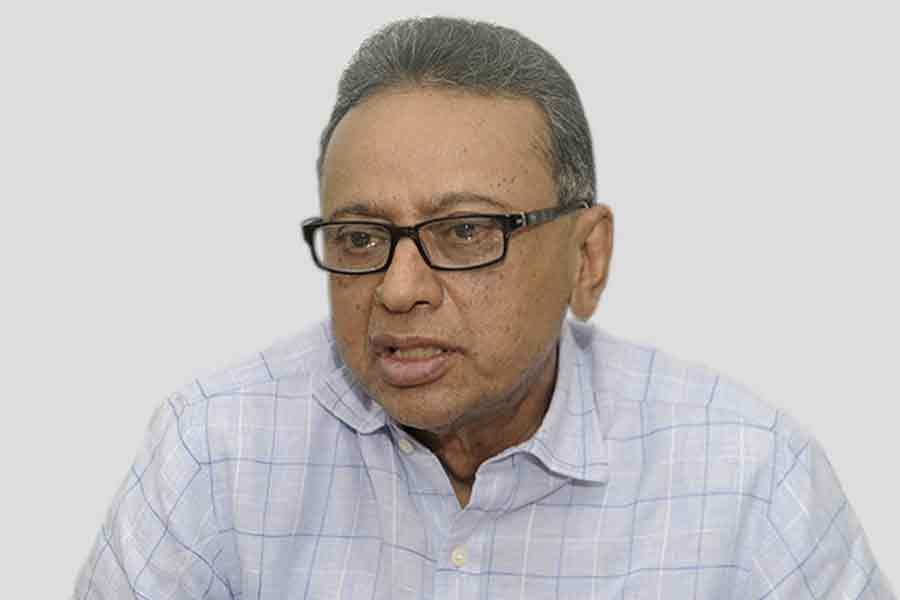
BNP Standing Committee Member Amir Khosru Mahmud Chowdhury on Monday said their party would work to further strengthen Bangladesh’s business organisations to overcome bureaucratic complexities and revitalise the economy.

“From my experience as a former commerce minister, I learned that empowering business bodies helps the economy rebound faster,” Amir Khosru said, citing his decision to delegate an export-oriented certification function of the Export Promotion Bureau (EPB) to the garment sector body BGMEA.

The outcome proved that a strong private sector accelerates economic recovery, he added.

Khosru made the remarks while speaking at a programme titled ‘Memorial and Doa Mehfil for Late Begum Khaleda Zia’, organised by the International Chamber of Commerce Bangladesh (ICC Bangladesh) with 18 business organisations at a city hotel.

Amir Khosru described former prime minister Khaleda Zia as the ‘mother of Bangladesh’s democracy’, saying she had passed on the torch of multi-party democracy—originally introduced by late President Ziaur Rahman—to her son and BNP Acting Chairman Tarique Rahman, whom he termed the current torchbearer of democracy in the country.

Stressing that economic progress is impossible without democracy, he said BNP has always believed in the ‘democratisation of the economy’.

After assuming office for the second time in 2001, BNP raised GDP growth above seven percent. Had the economy been managed properly afterwards, Bangladesh’s GDP growth could have reached double digits today, the BNP leader said.

Khosru mentioned that privatisation and the free-market economy were initiated under BNP leadership, adding that Khaleda Zia governed the country following a multilateral economic model.

“BNP brought the country out of dependence on a single market or a single product,” he said, reaffirming the party’s commitment to an open and liberal economic framework.

Referring to bureaucratic resistance, the BNP leader said Khaleda Zia was determined to dismantle administrative barriers. “Bureaucrats never wanted business bodies to be empowered. Without Khaleda Zia’s full support, it would not have been possible for me to strengthen BGMEA despite bureaucratic opposition.”

He said BNP had been preparing a post–Sheikh Hasina economic model for more than a decade, noting that Khaleda Zia’s Vision 2030 and Tarique Rahman’s 31-point agenda outline the future economic model and reform roadmap for Bangladesh.

“All major economic reforms in the country were initiated by the BNP. We never politicised institutions like Bangladesh Bank or the Bangladesh Securities and Exchange Commission. That is why there was no major banking or capital market scandal during BNP’s tenure,” he claimed.

BNP Secretary General Mirza Fakhrul Islam Alamgir and Standing Committee Member Abdul Moyeen Khan were also present at the programme.

The event, organised by 18 business bodies, included doa and munajat, seeking eternal peace for the departed soul of Khaleda Zia.​
 
EU, BNP discussed upcoming election, post-polls development: Nazrul

Published :
Jan 07, 2026 00:40
Updated :
Jan 07, 2026 00:40

1767745840410.webp

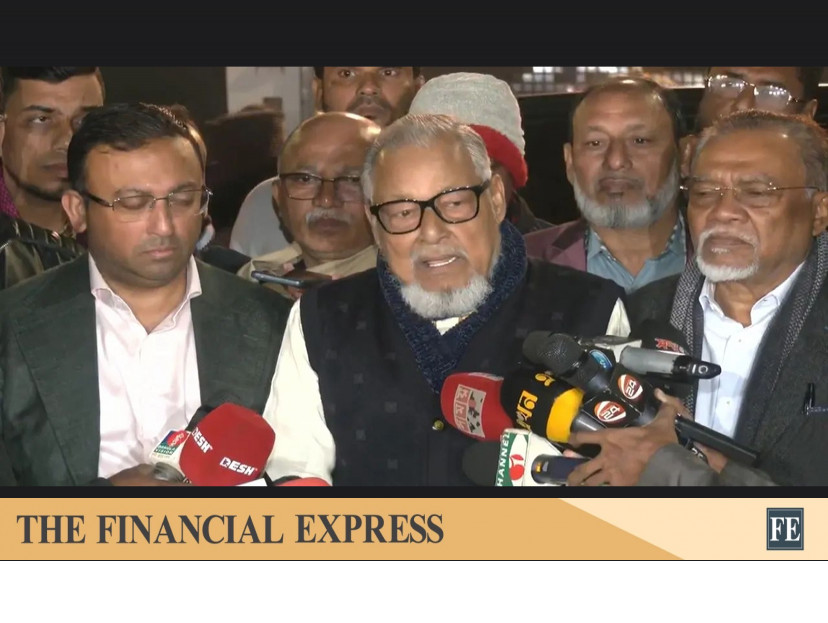
BNP standing committee member Nazrul Islam Khan said the European Union (EU) delegation held discussions with the party on the upcoming 13th national parliamentary election and the country's development outlook after the polls.

A delegation of the EU held the meeting with BNP Acting Chairman Tarique Rahman at the BNP Chairperson's office in Gulshan in the capital this evening. Nazrul briefed journalists about the meeting after it concluded, BSS reports.

The EU delegation expressed its intention to send an observer mission for the election, slated for February 12.

Describing the talks as "fruitful," Nazrul said the EU delegation wanted to know how the forthcoming election is expected to be held in Bangladesh and what role BNP would play in the electoral process.

He added that the delegation also inquired about BNP's vision for national development in the post-election period.

He said the EU plans to deploy a large observer team in the forthcoming election and the delegation met the BNP Acting Chairman to discuss related issues.

Nazrul said BNP would actively participate in the upcoming election and has already completed necessary preparations.

He expressed the party's hope that people would be able to freely express their long-cherished wishes and aspirations through voting.

During the meeting, BNP's role in ensuring workers' welfare was highlighted.

The EU representatives were informed that amendments to the Labour Code and the establishment of the Labour Welfare Foundation were undertaken during the tenure of BNP Chairperson Begum Khaleda Zia.

BNP also reiterated its commitment to further modernising labour laws and improving workers' living standards in the future.

The delegation was led by EU Ambassador Michael Miller.

Payola Pamploni, Deputy Managing Director for Asia and the Pacific region, Monica Bajlait‚, Deputy Head for South Asia, Asia and the Pacific; and Legal Advisor Rastislav Spak were present.

From the BNP's end, member of the Chairperson's Advisory Council Ismail Jabullah, BNP Joint Secretary General Humayun Kabir and Acting Chairman's Advisor Mahdi Amin attended it.​
 
Tarique’s north visit won’t flout polls code, says BNP

Staff Correspondent 08 January, 2026, 23:34

1767921730674.webp

Tarique Rahman. | File photo

Bangladesh Nationalist Party standing committee member Salahuddin Ahmed on Thursday said that there was no question of violating the election code because of the party acting chairTarique Rahman’s upcoming visit to northern Bangladesh.

Speaking to reporters outside the BNP chair’s office at Gulshan, Salahuddin said that the four-day trip, scheduled before the start of the election campaign, was entirely personal and focused on religious, social, and humanitarian purposes.


According to the itinerary, Tarique would leave Dhaka on Sunday and return on January 14.

Without naming any party or leader, Bangladesh Jamaat-e-Islami’s nayeb-e-amir Syed Abdullah Mohammad Taher on Wednesday told reporters that the party was receiving news of certain leaders’ visits.

After a meeting with the chief election commissioner AMM Nasir Uddin, he said that there was no opportunity to conduct political tours or travel under one’s own banner or symbol before 21 January as stipulated by the election code.

Taher added that the matter had been taken to the attention of the CEC and they would observe how the Election Commission responded.

Responding to the Jamaat concern, Salahuddin said that some might view the visit differently, but it was intended to pay respects to the martyrs of the 2024 student uprising.

He said that the acting chair had planned the trip long ago, but various circumstances had delayed it.

Salahuddin further said that visiting the graves and offering tributes to the martyrs was in line with national expectations and no election code violation.

‘We view the matter from this perspective,’ he said, adding that the nation should honour the sacrifice of the 2024 student uprising and elevate their legacy at the national level.

Salahuddin said that if any party had complaints regarding the elections, including issues related to a level-playing field, they should submit the allegations to the Election Commission.

He hoped that the commission, together with the government, would address these concerns appropriately.​
 
Tarique made BNP chairman as per party constitution

UNB
Published :
Jan 09, 2026 22:47
Updated :
Jan 09, 2026 22:47

1768005445283.webp

Tarique Rahman, Chairman of the Bangladesh Nationalist Party (BNP)

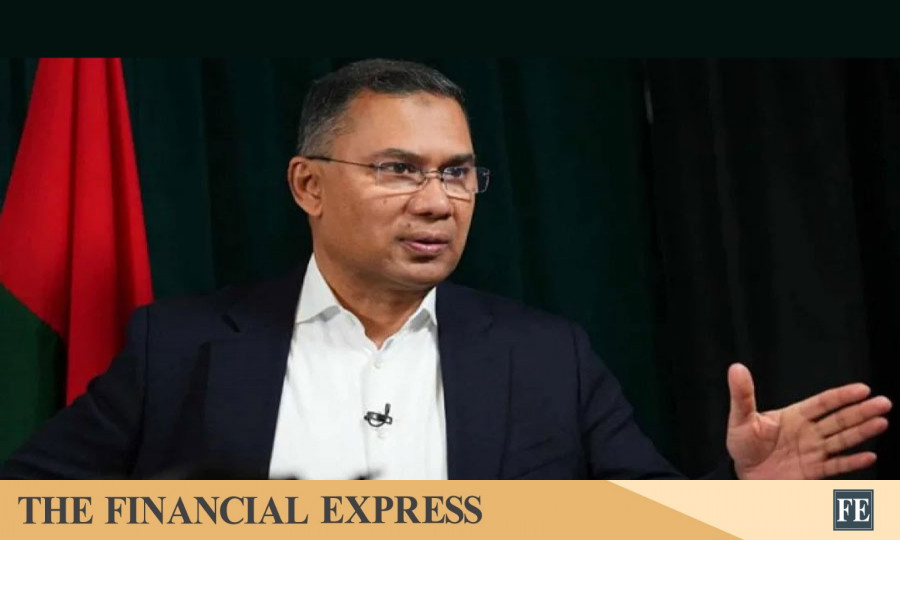
Tarique Rahman has formally become Chairman of the Bangladesh Nationalist Party (BNP) as per the party constitution.

The decision was unanimously approved on Friday night at a meeting of the BNP Standing Committee at the party chairperson’s Gulshan office, BNP Secretary General Mirza Fakhrul Islam Alamgir said.

After the death of former Prime Minister Begum Khaleda Zia, the issue had been discussed within the party as Tarique, serving as Senior Vice Chairman, automatically became chairman under the BNP constitution.

According to article 7 (Ga), sub-clause 3 of the BNP constitution, if the position of chairman falls vacant for any reason, the Senior Vice Chairman shall assume the post for the remainder of the term, and continue until a new chairman is elected under the constitution.

As per sub-clause 2, Tarique Rahman has been serving as Acting Chairman since 8 February 2018, following Khaleda Zia’s imprisonment.​
 
Policy promises, political reality and questions BNP must address

Mostafa Mushfiq
Updated: 10 Jan 2026, 08: 18

1768114870375.webp


BNP flag Prothom Alo

Bangladesh has lived for years on big promises. Campaign season brings speeches, banners, and slogans. Those slogans feel urgent and comforting. But they rarely explain exactly how change will reach people’s lives. That is why BNP’s recent shift matters. For the first time in a long time, a major party has tried to make policy a central part of its campaign.

Long before the fall of Awami League regime, BNP published a 31-point outline. It then produced leaflets and trained organisers to explain the programme face-to-face. That is a useful start. It marks a change from pure rhetoric to something that looks more like planning. Yet a plan on paper is not a plan in practice.

We must now ask how those ideas will reach a classroom, a hospital ward, a rice field, or a kitchen. We must ask too whether the planners have thought enough about who will be excluded by simple technicalities, like a voter list or a digital login. These are not minor details. They will decide whether the next government delivers, or whether it hands out attractive cards that never function for the poorest families.

If BNP’s Family Card is to be meaningful, it must address mobility and registration. It must create ways for urban migrants to claim benefits without losing the limited security they already have in their home communities

Political landscape dominated by rhetoric

Look at the competition. Some parties offer stirring language but few details. Proposals that sound bold on a poster can become confusing in daily life. Ideas like shorter working hours for women or remuneration for housewives have emotional appeal. Yet they also raise immediate questions about feasibility and financing.

Other parties lean on slogans about a new political order (Notun Rajnoitik Bondobosto) or moral revival. These slogans ask voters to imagine a different country. That is a political strategy. It can be energising. But it does not tell teachers how to run a classroom, or farmers where to sell their crops, or a cancer patient how to get chemotherapy this month.


BNP’s difference is procedural. The party has organised training sessions, issued leaflets on health, education, agriculture, women’s welfare, and other topics, and promoted a 180-day economic action plan for the first months in office.

This is the kind of work that can make policy legible for ordinary people. It tells local organisers what to say at a meeting. It gives activists a short script to explain an idea to a shopkeeper or a tea stall worker. That matters. But having leaflets and giving training is only step one. The real test will be whether those ideas survive the messy realities of implementation.

BNP’s policy cards and the missing 'how'

BNP has offered several card concepts: Family Card, Farmer Card, Health Card, and others. Each card is meant to simplify access to services and benefits. Family Card, for example, is designed to empower the female head of household by giving her monthly financial or food support.

Farmer Card aims to record land and crop data, guarantee fair prices, allow easier loans, and deliver market and weather updates via phone. These are sensible directions. They respond to real problems: women who manage households, farmers trapped by middlemen, patients stuck behind long hospital queues.

Yet policy design is rarely simple. How will the Family Card handle internal migrants who work in cities but vote in villages? Will the Farmer Card include fish and livestock producers who have low literacy and little internet access? Who will administer the registries, and what grievance mechanisms will protect people when distribution fails?

Experience matters here. Previous schemes like VGF cards and local rationing show how services can be diverted by local brokers and political figures. If a national programme simply creates another list to be controlled by local power holders, the cards will not help the poorest. They will become another layer of paperwork that benefits those who already have influence.

We must insist on answers to practical questions, such as how eligibility will be verified for people who lack national IDs or for households that move seasonally between village and city. BNP must explain not only what it wants to do but how it will stop local capture from turning a welfare card into a political instrument.

When welfare meets everyday reality

Policy discussions often feel abstract until they touch real life. Think of the woman who works as a domestic helper in Dhaka. She cooks, cleans, and cares for children in a middle-class home. She is hardworking. She sends money back to her family. She needs help with food and health care more than many.

Yet because her voter registration remains in her village, she often cannot access government-sponsored rationing services in the city. The delivery rules of many programmes tie benefits to residency or local voter lists. The result is exclusion that feels cruel and arbitrary.

If BNP’s Family Card is to be meaningful, it must address mobility and registration. It must create ways for urban migrants to claim benefits without losing the limited security they already have in their home communities. It must also ensure that frontline administrators cannot divert benefits to those connected to them. These are not technicalities. They are the difference between a life saved and a family left behind.

Defining poverty and the scale of commitment

The scale of the problem is large and growing. Recent research by the Power and Participation Research Centre found that nearly 27.93 percent of people now live below the upper poverty line, up from 18.7 percent in 2022, while extreme poverty rose to 9.35 percent.

Those figures mean one in four people face daily vulnerability and that many households fall into crisis at the slightest shock. We cannot pretend these are marginal numbers. They shape the baseline for any policy change.

Addressing this scale matters for costs. A simple arithmetic example helps. If 50 lakh families received a monthly transfer of Tk 2,000, the annual cost would be about Tk 12,000 crore. If the transfer were Tk 2,500, the price would rise to Tk 15,000 crore a year. That is a large sum. The national budget for fiscal year 2025–26 totals roughly Tk 7.90 lakh crore.

Any major new expenditure must be set against that reality. It is possible to reallocate, to increase revenue, or to cut elsewhere. But those choices must be explained. Citizens deserve to know which services would be postponed, which taxes might rise, or where savings would be found. Without that clarity, card promises sound like charity rather than a coherent policy programme.


Good intentions are not enough

Governments often launch attractive programmes that fail because they lack sequencing and pilot testing. Good policy design usually begins small. Pilot a district. Learn the problems of registration, delivery, and monitoring. Fix the loopholes. Then scale.

That learning cost is small compared with the price of nationwide failure. Yet political pressure often pushes parties to promise nationwide rollout on day one. The result is the opposite of prudence: programmes that are underfunded, badly monitored, and easy to capture.

We also have structural limits. Bangladesh’s economy runs heavily on informal labour. Tax revenue remains lower than potential. Debt servicing eats a growing share of government spending. In that setting, a pile of new cash transfers will force tough tradeoffs.

The party that asks citizens to choose it must tell them what it will prioritise and why. It must also explain how it will strengthen administrative capacity and reduce leakages. Otherwise, the next government will simply inherit the familiar pattern: energy devoted to headlines, not durable systems.

Credit, leadership and the demand for explanation

BNP deserves credit for starting a conversation about policy, and that matters in a political culture long dominated by slogans and personality clashes. Leaflets, training sessions, and the language of reform are not the destination, but they are a beginning.

People want plans that feel real. They want leaders who will walk with them and show where the money will come from and how the systems will be protected from capture

They signal an attempt to move politics toward accountability, and that shift should be acknowledged. Still, credit cannot become a free pass. Voters are not persuaded by printed promises alone. They are asking for clarity, for timelines that make sense, for budgets that add up.

They want to know whether pilot projects will be tested before nationwide rollouts, whether public audits will be routine rather than exceptional, and whether there will be institutions strong enough to prevent local power brokers from capturing programmes meant for the poor.

Leadership matters here in very ordinary, human ways. People remember leaders who walk streets, not just stages, and who answer uncomfortable questions without irritation. When Tarique Rahman returned and said, “I have a plan,” people listened, because that sentence carried weight after years of absence and anticipation. But that weight now demands explanation. This should not be seen as a political burden. It is an opportunity to demonstrate seriousness.

The next step is not louder slogans but deeper listening, showing in practical terms how a Family Card would work in a Dhaka neighbourhood and in a remote rice-growing village, how Farmer Cards would reach marginal fish farmers, and how health partnerships would ensure treatment without turning patients into customers at the mercy of private overcharging.

The real test will come when BNP places a costed and phased plan on the table, with clear pilots, transparent registries, and independent oversight. If it can do that, it will move decisively from the realm of political promise into the far more difficult, and far more meaningful, realm of governance.

The real test ahead

This election season may reward the party that speaks most strongly to emotion. That has always been part of politics. But democracy also rewards the party that shows how to make good intentions practical. BNP has a chance to close the gap between promise and practice.

It has a chance to answer the basic questions the public now asks: what is the plan, how will it work, who will benefit first, and what happens when things go wrong? Answering those questions once in a public, detailed, and honest way will change the meaning of campaigning in Bangladesh. It will show voters that politics can be about implementation as well as rhetoric.

People want plans that feel real. They want leaders who will walk with them and show where the money will come from and how the systems will be protected from capture. That is a heavy demand. It is also a fair one. If BNP wants to lead, it should be ready to explain and to pilot, to listen and to adjust. That is what real political responsibility looks like.

*Mostafa Mushfiq is an undergraduate student of Anthropology at the University of Dhaka.​