| Global Defense, OSINT & Geopolitics Wire

[🇧🇩] Monitoring the political activities of BNP

[🇧🇩] Monitoring the political activities of BNP
467
23K
More threads by Saif

G Bangladesh Defense
BNP gears up in Sylhet as Tarique Rahman set to launch election campaign

UNB
Published :
Jan 12, 2026 19:56
Updated :
Jan 12, 2026 19:56

1768264111718.webp

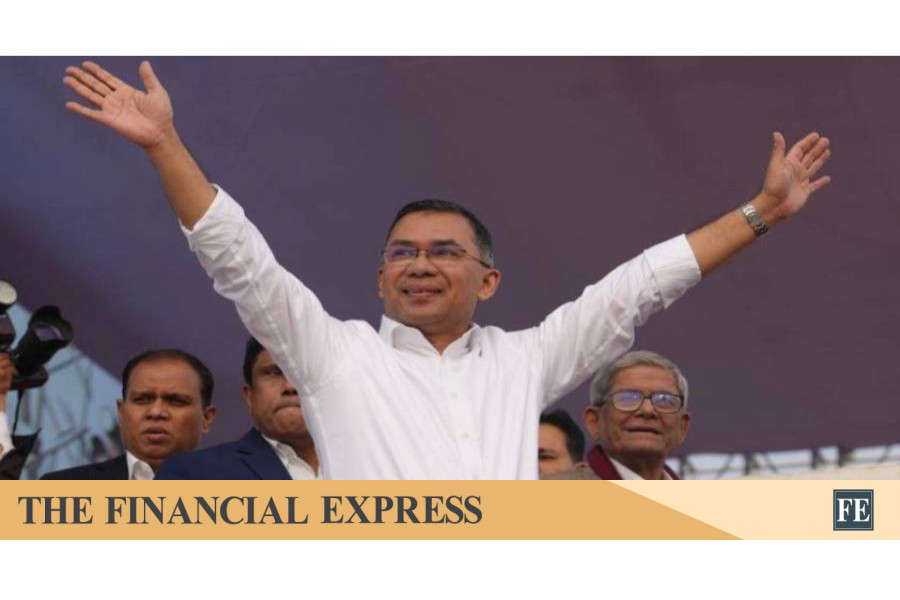
With banners going up, leaders mobilising at ward level and expectations running high among grassroots activists, Sylhet’s district and city BNP units are leaving no stone unturned ahead of party chairman Tarique Rahman’s visit, where he will kick off the BNP’s election campaign on January 22.

“On January 22, Tarique Rahman will begin his election campaign from Sylhet, the spiritual city of 360 saints. In the morning, he will first visit the shrine of Hazrat Shah Jalal (RA) in the city and then the shrine of Hazrat Shah Paran (RA) at Khadimnagar, about eight kilometres away,” said Sylhet district BNP President Qaiyum Chowdhury.

After that, he said, the BNP chairman will address the first election rally at Alia Madrasa ground around 11:00am.

“We have taken extensive preparations to organise the rally on the occasion of the BNP chairman’s visit to Sylhet. After nearly two decades, Tarique Rahman is coming to Sylhet, and the people of Sylhet are eagerly waiting for his arrival. This will be his first visit to the city as party chairman, and Sylhet residents are keen to welcome him as one of their relatives, (son-in-law),” Qaiyum said.

After the Sylhet rally, Tarique will carry out his election campaign along the Sylhet–Dhaka highway, Qaiyum added, saying he will address one rally in each constituency along the route.

He said the BNP Chairman is expected to hold roadside rallies in districts along the Sylhet–Dhaka highway, including Moulvibazar, Habiganj, Brahmanbaria, Kishoreganj, Narsingdi and Narayanganj.

The Sylhet BNP President described the visit as highly significant, as it will be Tarique’s first public rally as party chairman, where he will also present BNP’s election commitments before the people.

However, the full schedule of the Sylhet tour has not yet been officially announced by the central BNP. The election steering committee said the media will be informed in due course once the programme is finalised.

Meanwhile, speaking to journalists at a greetings exchange programme in the capital on Saturday, Tarique said, “The election is coming. I am a member of a political party. Naturally, from the 22nd, we will present all our plans to the people.”

Contacted, BNP Standing Committee member Salahuddin Ahmed said Tarique will formally kick off his election campaign from Sylhet on January 22.

“Tarique Rahman will start his electioneering from Sylhet, known as the land of saints. His official campaign will begin through these shrine visits on January 22,” he said.

Since the formation of BNP, party founder Ziaur Rahman started his presidential election campaign from Sylhet, while Begum Khaleda Zia also launched all her election campaigns from Sylhet starting in 1991. Following that tradition, Tarique will begin his campaign through shrine visits, party leaders said.

Sylhet BNP leaders said Tarique Rahman last visited the city in 2005, when he attended a BNP union representatives’ conference as the party’s senior joint secretary general.

After spending 17 years in exile in the United Kingdom, Tarique returned home with his family on December 25. A few days later, on December 30, his mother and BNP Chairperson Khaleda Zia passed away while undergoing treatment at Evercare Hospital.​
 
Efforts on against level playing field: BNP
Staff Correspondent 14 January, 2026, 00:35

1768354285174.webp


The Bangladesh Nationalist Party on Tuesday alleged that a particular party was deliberately attempting to undermine the level-playing field in the run-up to the Jatiya Sangsad elections, raising the issue during a meeting with the Election Commission.

A BNP delegation led by the party’s election steering committee chair Nazrul Islam Khan met the chief election commissioner AMM Nasir Uddin at the EC headquarters in the capital.


Speaking to reporters after the meeting, Nazrul said that while the BNP was complying with the commission directives, other political forces were allegedly acting in a coordinated manner to tilt the contest in their favour.

The BNP, Nazrul said, is making deliberate efforts to uphold a fair electoral environment by strictly following instructions from the Election Commission.

As an example, he noted, party chair Tarique Rahman has postponed a planned personal visit to the northern districts after the commission requested restraint.

‘Despite our compliance, we are seeing leaders of other political parties continuing open campaigns, holding rallies and seeking votes for their symbols without any apparent restrictions,’ he said, alleging selective enforcement of electoral rules.

Another key issue discussed during the meeting was the disqualification of candidates on grounds of dual citizenship.

Nazrul alleged ‘strategic bias’ in the layout of postal ballots sent to expatriate voters, claiming that the arrangement of party names and symbols unfairly favoured a particular political party ahead of the upcoming parliamentary election.

He said that the postal ballot paper had been designed with five columns and 14 rows, resulting in the names and symbols of three specific political parties appearing on the first line.

By contrast, Nazrul Islam claimed, the BNP’s electoral symbol had been placed in the middle in such a way that it became less visible once the paper was folded.

The BNP requested that the postal ballots yet to be dispatched within the country be corrected to prevent a repetition of the ‘tactical approach’.

The party also raised allegations of irregularities in the distribution of postal ballots in Bahrain.

Nazrul Islam said that the commission had acknowledged its awareness of the incident and confirmed that it had contacted Bangladesh’s ambassador to Bahrain.

The commission said that an investigation was under way and action would be taken if wrongdoing was proven.

Replying to a question, Nazrul Islam said that the BNP was the first to demand reforms and would support the ‘yes’ side in the referendum on the issue.

On broader electoral issues, the BNP reiterated its demand for equal application of the law, particularly regarding the disqualification of candidates over dual citizenship.

Nazrul Islam Khan said that candidates who had renounced foreign citizenship should be eligible to contest, warning that selective disqualification undermined fairness.

He cited the cancellation of candidacy, including of two from the Jamaat-e-Islami, saying that all affected candidates should be given the opportunity for review.​
 
Tarique Rahman’s ‘London experience’ and Bangladesh reality

Nuzrate Aziz
Published: 14 Jan 2026, 08: 18

1768438411474.webp


BNP Chairperson Tarique Rahman at a goodwill exchange meeting with newspaper editors, held last Saturday at a hotel in Banani, Dhaka. Tanvir Ahammed

At a discussion meeting with media editors, BNP Chairperson Tarique Rahman appeared as a mature and attentive political leader. He outlined his plans for development in areas such as water management, health, agriculture, women’s rights, vocational education, skilled overseas employment export, and the IT sector.

However, his proposed Agriculture Card and Family Card schemes remain unclear. Questions have been raised about the purpose of these cards, sources of funding, safeguards against political misuse, the absence of expert consultation, and the lack of pilot projects. In particular, there are serious doubts about the rationale for a universal Family Card and the feasibility of financing such a large-scale programme.

Having spent more than a decade and a half in the United Kingdom, Tarique Rahman has closely observed the planning processes and governance mechanisms of the Westminster system. He has directly witnessed the policy formulation and implementation approaches of the two main political parties—the Labour Party and the Conservatives. He has also seen firsthand the workings of a developed economy, where advanced transport infrastructure, health and medical services, quality education, robust social protection programmes, and institutional social values function in a complementary manner.


But it took more than four hundred years for the British state system to reach this stage. Over this long period, a solid foundation was built in its politics and economy. The plans adopted at Westminster today are effective precisely because they rest on that historical and institutional foundation.

Bangladesh’s reality is different. Therefore, planning here must be tailored to Bangladesh’s specific context. Before adopting any project, the first step should be to assess its likely outcomes. This should be followed by consultations with experienced individuals, researchers, and relevant professionals, as well as academic debate.

If state governance in the Westminster style is to be discussed, it must be remembered that no major plan there is adopted without such deliberation. My long experience of living in England, studying there, teaching, and being involved in research projects clearly demonstrates this. Testing effectiveness through pilot projects before implementing any major programme is a widely accepted practice. It remains unclear whether such initiatives have been undertaken for the proposals in question.

Another important question is tied to political reality. After 5 August 2024, the character, competence, and judgment of the people of Bangladesh—or of political party leaders and activists—did not change overnight. In that case, where is the guarantee that any new card or benefit will not be distributed along party lines?

Already, this card has become a tool of confusion in election-oriented politics. In some places, it is being said that the card will not be given if people do not vote; elsewhere, dummy copies of the card are being handed out to voters. If a state social protection initiative turns into a political instrument in this way, its credibility inevitably comes into question.

In this context, clarity is also needed about the future of the VGF card. If the BNP comes to power, it could choose to expand the scope of this card. It could also decide to hand the card to the mother of the household instead of the male family member. If, in the past, cards were distributed on political considerations, then the correct approach would be to rectify that practice, ensure neutrality in distribution, and deliver the cards to the genuinely eligible families.

We must remember that once a party is elected to form the government, it is no longer just the party’s government; it becomes the government of the country and its people. Therefore, the benefits of social protection programmes should reach the right people in the interest of the nation.

Tarique Rahman has spoken about restructuring vocational institutes with modern courses and content. This is undoubtedly a positive plan, as it can help a portion of the youth acquire the skills needed for employment. His proposal to provide training before sending workers abroad is also highly important, as it can enhance both the skills and income of expatriate workers. He has also emphasised making better use of existing IT infrastructure, which could create opportunities for progress in online and technology-based sectors.

However, the people of the country primarily want clear plans from major political parties on three key issues: how unemployment will be reduced, how corruption will be controlled, and how commodity prices will be kept within the purchasing power of ordinary citizens.

Bangladesh’s position on the issue of corruption is particularly worrying. Out of 180 countries, Bangladesh ranks 151st. According to the 2024 Corruption Perceptions Index, nearly 77 percent of government activities in the country involve some form of corruption. There is still no clear outline of how this corruption would be addressed if a new government comes to power.

Due to time constraints, this topic may not have been discussed in detail, but the nation expects that Tarique Rahman, alongside his other plans, will present a clear and realistic strategy for tackling corruption, reducing unemployment, and controlling commodity prices.

The strength of any political program ultimately depends on its feasibility and ethical acceptability. In that regard, clarity and credibility will be its greatest assets.

*Nusrate Aziz is a researcher and academic​
 

Tarique turns emotional as children of disappeared BNP activists recount years of waiting

UNB
Published :
Jan 17, 2026 23:32
Updated :
Jan 17, 2026 23:32

1768696463965.webp


BNP Chairman Tarique Rahman struggled to hold back his emotions on Saturday as children of several BNP leaders and activists, who became victims of enforced disappearance, broke down in tears while recalling years of waiting for their missing fathers.

The scene unfolded at the Bangladesh-China Friendship Conference Centre in Dhaka during a views-exchange meeting with family members of victims of enforced disappearances, killings and torture during the anti-fascist movement.

Amra BNP Paribar and Mayer Daak jointly organised the programme at the Bangladesh-China Friendship Conference Centre.

The event honoured victims of enforced disappearances, killings and torture during the Awami League government, and paid tribute to the late BNP Chairperson Begum Khaleda Zia.

During the discussion, Tarique briefly wiped his eyes with a tissue as children shared their experiences, drawing silence across the hall.

One of them was Adiba Islam Hridhi, daughter of Parvez Hossain, a leader of the Banani unit of Jatiyatabadi Chhatra Dal who disappeared on 2 December 2013.

Family members have long claimed he was picked up by men identifying themselves as detectives, and they have repeatedly demanded information and justice. A decade later, his daughter said she still waits for him.

“Years pass and new years arrive, but our father never comes home,” Hridhi said, her voice shaking. “My dream has always been to go to school holding my father’s hand, but that dream remains unfulfilled. How long do I have to wait? Will I not get my father back?” she asked before breaking down in tears.

Safa, another child, spoke about her father Md Sohel, a vice-president of the Chhatra Dal’s Bangshal unit, who also went missing in 2013.

She said she was only two months old at the time and has never seen her father since.

“For more than a decade we have searched for him, but found nothing. When others my age learn to walk holding their fathers’ hands, I search for mine. How long must I keep looking?” Safa said.

Relatives of many others shared similar accounts, saying they lost fathers, sons, brothers or husbands during the Awami League’s tenure.

The hall remained heavy with grief as attendees, organisers and even some security staff appeared visibly moved by the testimonies.

BNP Standing Committee member Salahuddin Ahmed, who was subjected to enforced disappearance in 2015 for 62 days, was also seen becoming emotional and wiping his tears with tissues.​
 

Rumeen Farhana warns of ‘August 5 like’ situation if election neutrality is compromised

Authorities sought legal action against Brahmanbaria-2 independent candidate

By Our Correspondent, Brahmanbaria

1768785207144.webp

Photo: Star

Barrister Rumeen Farhana, an independent candidate for the Brahmanbaria-2 constituency, has cautioned that anything resembling the July Uprising could erupt in any constituency if neutrality of the administration, the Election Commission, or the government comes into question during the upcoming national election.

Speaking at a yard meeting at Chanpur Bazar in Kalikachchh union of Sarail upazila, she said, “It is the responsibility of the administration and the Election Commission to ensure that each of the nearly half a million voters in my constituency can go to polling centres safely and cast their votes freely and without fear.”

“If there is any lapse in neutrality, everyone should remember August 5. What happened across Bangladesh on August 5 can happen in any constituency,” Rumeen said.

Her remarks came a day after a mobile court shut down her gathering at Islamabad in Noagaon union of Sarail upazila over alleged violations of the electoral code of conduct. During the operation, one of her supporters was fined Tk 40,000. A video of her heated exchange with the executive magistrate later went viral on social media.

Authorities have since sought legal action against Rumeen. Sarail Upazila Nirbahi Officer (UNO) and Assistant Returning Officer Md Abubakar Sarkar submitted an application to the Election Investigation and Judicial Committee of Brahmanbaria‑2 constituency.

The application alleges that Rumeen organised the January 17 gathering without prior permission, violating Section 18 of the Electoral Code of Conduct 2025.

It further claims she behaved aggressively towards the executive magistrate, making threatening gestures and verbal warnings in English, while her supporters provoked the crowd, creating a “mob‑like” situation.​