| Global Defense, OSINT & Geopolitics Wire

[🇧🇩] Monitoring the political activities of BNP

[🇧🇩] Monitoring the political activities of BNP
467
23K
More threads by Saif

G Bangladesh Defense

Mirza Abbas returns to Dhaka after treatment in Malaysia


1792019176703.webp


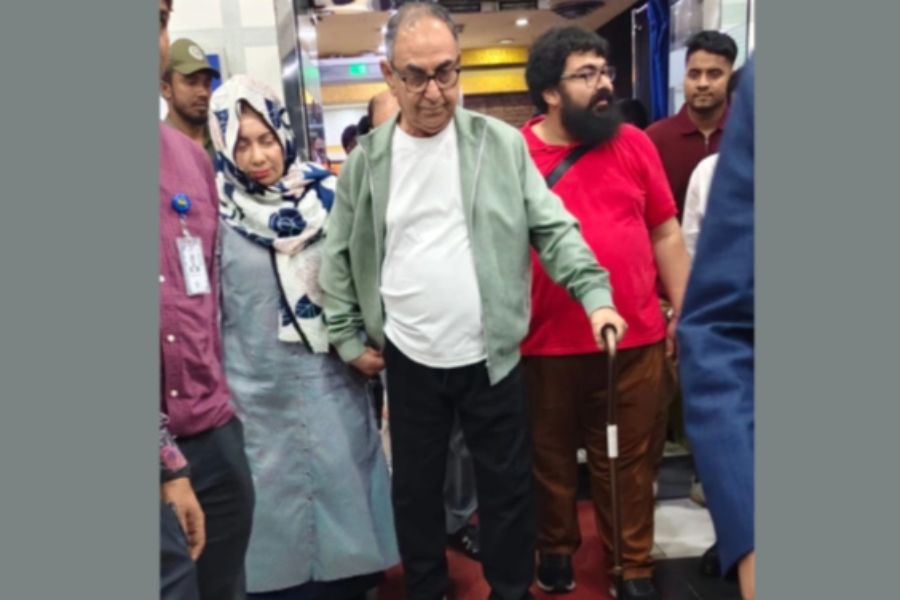
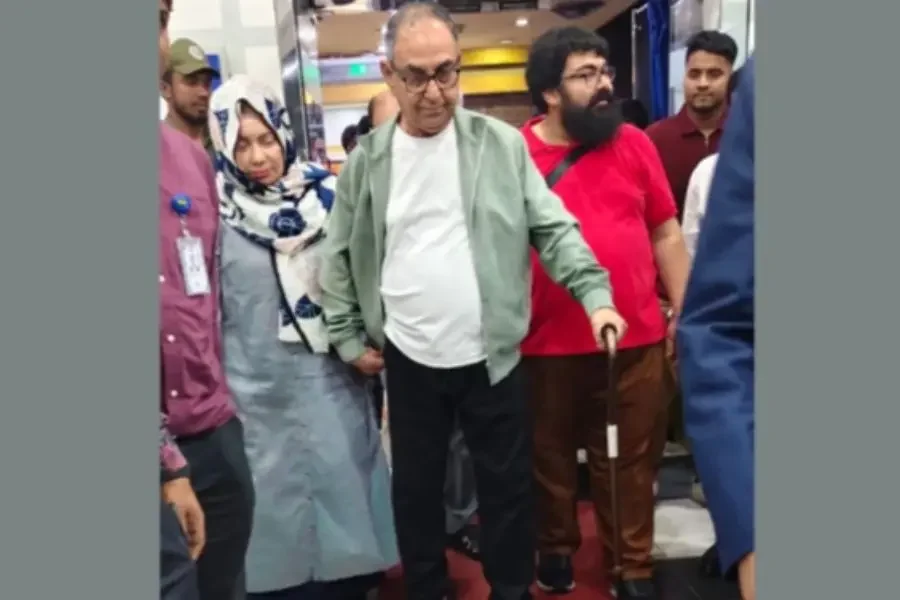
BNP Standing Committee member and Political Adviser to the Prime Minister Mirza Abbas returned home on Wednesday night after receiving medical treatment in Malaysia.

Abbas arrived at Hazrat Shahjalal International Airport aboard a Biman Bangladesh Airlines flight around 9:00 pm, accompanied by his wife Afroza Abbas and son Mirza Yasir Abbas, his Assistant Private Secretary (APS) Mizanur Rahman Sohel said.

"Sir has returned home after completing his treatment and is doing much better now," his APS added.

Mirza Abbas had travelled to Malaysia on September 16 for follow-up treatment at Prince Court Medical Centre, reports bdnews24.com.

Earlier, on March 11, the veteran politician fell ill during Iftar, lost consciousness, and was rushed to Evercare Hospital in Dhaka, where doctors diagnosed him with a brain hemorrhage. Following emergency surgery, he was flown to Singapore via air ambulance and underwent treatment at Singapore General Hospital for one and a half months before being transferred to Prince Court Medical Centre in Malaysia.

After nearly five months of medical care in Singapore and Malaysia, Abbas initially returned to Bangladesh on September 2 before departing again for follow-up care.​
 

People who believe in nationalism will protect cultural heritage: Rizvi

Says Lalon Shah moved beyond conventional framework of religious practice

DU Correspondent

1792281363245.webp

Photo: Star

BNP acting secretary general Ruhul Kabir Rizvi today said people who believe in Bangladeshi nationalism and have basic human values would not allow the country’s cultural heritage to be undermined.

“Those who follow Bangladeshi nationalism and possess basic human qualities will not allow this mosaic of our heritage, this very foundation, to be broken,” he said.

He made the remarks at a cultural programme organised by Bangladesh Jatiyatabadi Chhatra Dal at the Teacher-Student Centre (TSC) of Dhaka University, marking the 136th death anniversary of Fakir Lalon Sai.

“Lalon Shah did not deny God. He acknowledged God, but moved beyond the conventional framework of religious practice,” he said.

Describing Lalon as a rural and folk poet, Rizvi said he did not burden his messages with bookish language.

“There is a saying about philosophers that Socrates brought philosophy down from heaven to earth. This seems profoundly true in Lalon Shah’s case,” he said.

Reacting to remarks by an Indian minister regarding ongoing protests there, Rizvi said the comparison with the Bangladesh mass movement was based on incorrect information.

“I think the example of our country that you [Indian minister] are citing is based on wrong information,” he said.

“What is happening in your country [India] is a different matter. But the nature of mass movements in our country is that when a government loses legitimacy, becomes detached from the people, and commits horrific acts against humanity, such as killings and enforced disappearances, a mass awakening rises against it,” he added.

Rizvi alleged that the neighbouring country had given shelter to those who had been defeated and fled Bangladesh. He said Indian minister’s remarks were an attempt to legitimise those who had committed crimes against humanity.

Dhaka University Pro-Vice-Chancellor (Academic) Dr Abdus Salam, Bangladesh Television Director General Kazi Jesin and Bangladesh Jatiyatabadi Chhatra Dal General Secretary Nasir Uddin Nasir, among others, spoke at the discussion session.

Following the discussion, a Baul music concert was held, featuring performances by Shafi Mondol, Dolly Mondol and Akash Gayan, among other artists.​
 

BNP struggles to enforce party discipline

Nawaz Farhin Antara . Dhaka

1792454888776.webp


Ruling Bangladesh Nationalist Party has been struggling to control its leaders whose actions continue to spark controversies, occasionally resulting in expulsions, suspensions, committee dissolutions and other punitive measures.

The party’s struggle to enforce discipline became clear this month after two of its leaders were embroiled in controversies. One of them resigns as a lawmaker while the other stepped down as state minister.

Despite a series of expulsions, suspensions, and dissolutions of committees, reports of extortion, violence, internal feuds, and abuse of power continue to surface almost by the day.

- 71 expulsions, one suspension between Feb and Sept

- One city leader extorts Tk 50,000–Tk 70,000 a month from a bus company

- Disciplinary drive necessary to keep public trust in party: BNP Whip Dulu

On Monday, State Minister for Liberation War Affairs Ishraque Hossain resigned at a press conference at the National Press Club in Dhaka, following instructions from Prime Minister Tarique Rahman.

Ishraque faced intense public criticism after a video circulated online showing him brandishing a firearm during a self-styled anti-drug operation in Gandaria on Saturday.

The incident caused unease within both the party and the government.

‘I decided to step down because some media outlets had exaggerated the incident, causing embarrassment to our party and government,’ Ishraque told the briefing.

However, the scene at the briefing venue highlighted the precise discipline issues facing the party.

Ishraque arrived there with a large crowd of noisy party workers whose behaviour visibly annoyed him, prompting the lawmaker to stop mid-briefing to scold his own supporters.

Ishraque’s resignation has drawn differing views among party leaders.

A senior BNP leader, commenting on Ishraque’s resignation, said: ‘In my view, the punishment is far too severe in proportion to Ishraque’s offence.’

His departure follows the foced resignation of reserved-seat lawmaker Ferdousi Ahmed Misty on October 1. She also stepped down on the prime minister’s instructions after being linked to an attack on the Radda MCH-FP health centre in Mirpur on September 24.

Political analysts say the two resignations reflect wider divisions within the ruling party and an increasing pattern of politicians and activists overstepping their legal authority.

The party maintains that it takes misconduct seriously.

BNP Organising Secretary Syed Emran Saleh Prince said disciplinary action against members over proven violations and unethical conduct was part of efforts to keep the large organisation in order.

Yet the measures appear to have had limited effect.

A review of 17 disciplinary notices and press releases issued between February and September shows the BNP announced 71expulsions, suspended one leader, and later withdrew or reversed four of the disciplinary actions.

The notices cited offences ranging from defying party decisions and breaking organisational discipline to violence, clashes, and vandalism.

On September 30, the party dissolved its 51-member Dhaka North convening committee, led by Md Aminul Haque and Md Mostafa Zaman.

While the official notice gave no reason for the dissolution, senior leaders later told New Age that the decision came after local party members were linked to the attack on the Mirpur Radda health clinic.

Police files also show serious allegations within the city unit.

An internal Dhaka Metropolitan Police report named at least three members of the Dhaka North committee among several figures linked to extortion over an 18-month period.

The police document alleges that some operated under the protection of Aminul Haque.

They include Ataur Rahman, a Dhaka North joint convener and former Bhatara chairman, and Iqbal Mahmud Ripon, another joint convener.

The report alleges that Ripon extorted between Tk 50,000 and Tk 70,000 every month from the owners of Basumati Paribahan buses. Attempts to reach the men for comment were unsuccessful.

Similar malpractices have been reported from districts.

On February 1, the party expelled leaders in six districts for disobeying decisions.

Further expulsions during March and April followed reports of fighting and vandalism in Pabna, Mymensingh, Netrakona, and Rajshahi.

In February, the party suspended Mithamain upazila BNP President Zahidul Alam Jahangir for cutting down about 20 mahogany trees planted to prevent river erosion.

In May, Dumki Upazila Treasurer Bashir Uddin was expelled over allegations of violence.

However, the party has at times walked back on its decisions of punishments.

It withdrew two expulsions in March, reinstated a leader in April, and pardoned a Narayanganj leader after he agreed to step aside for the party’s official election candidate.

Insiders say while committees have been dissolved reportedly due to the expiry of terms, internal fighting is usually the real reason.

A recent notice from the Prime Minister’s Office also highlighted the party’s discipline issues.

On October 14, the PMO set up an ad hoc committee led by local lawmaker Mustafizur Rahman Bhuiyan and Rupganj UNO SM Abdullah Bin Shafiq to run elections for Purbachal Club following a dispute over its control.

In another case, the food ministry dismissed an assistant private secretary to a minister after he conducted an unapproved official visit to a government food warehouse.

With the Jatiya Sangsad scheduled to meet on November 9, party leaders are warning lawmakers to rein in their workers.

BNP central leader and ruling party whip Ruhul Quddus Talukder Dulu said issues of extortion, injustice, and drug involvement were raised during a recent party meeting.

‘No matter how senior a leader is, there will be no place for them in the party if they commit wrongdoing,’ Dulu said, adding that the disciplinary drive is necessary to keep public trust.

Dulu added that all 300 lawmakers are expected to keep their areas in check. ‘I am trying to keep my own constituency clean. When an incident came to my attention, I have had two people arrested, even though they are my party workers.’

When asked about the situation, BNP standing committee member Khandaker Mosharraf Hossain declined to comment, saying he held no significant position in the party.​
 

Can BNP keep its own ranks in check?

Tasneem Tayeb

1792630248227.webp

VISUAL: SALMAN SAKIB SHAHRYAR

As it transpires, BNP lawmaker Ishraque Hossain has resigned as state minister for Liberation War affairs but has no intention of abandoning the anti-drug campaign that brought him into controversy in the first place. On Monday, he said he would continue the campaign as a BNP activist in his constituency. He also declared himself ready to contest the Dhaka South mayoral election if his party nominated him.

His resignation followed the circulation of videos showing him carrying a pistol during an “operation” in Gandaria, accompanied by associates, some of whom were also armed. One was seen kicking a young man, while another was heard threatening to shoot. Ishraque maintains that his firearm was licensed and carried for self-defence. He disputes reports that Prime Minister Tarique Rahman instructed him to resign, saying he sought permission to step down himself. Reportedly, a police investigation into the incident is under way, but no findings have been announced yet.

Less than three weeks earlier, BNP’s reserve-seat MP Ferdousy Ahmed resigned from parliament following allegations linking her to the attack and demolition of the Radda MCH-FP Centre in Mirpur. The prime minister instructed her to step down then. She denied involvement in the Radda attack, which saw a large group entering the premises, removing medical equipment and demolishing structures amid a long-standing property dispute. The looting and destruction went ahead in the presence of police. The OC of the local police station was subsequently withdrawn.

As of October 16, police arrested 25 people without identifying who organised the attack. Ferdousy lost her parliamentary seat, although no finding of responsibility against her was publicly announced. Police also did not explain why they failed to prevent the demolition.

So, the ruling party has, by now, seen two prominent politicians leave public office in less than three weeks. The leadership’s response was swift, but the incidents have brought renewed attention to the conduct of party members and the supervision they require.

It may be recalled that, in September 2025, Tarique Rahman said more than 7,000 BNP members had faced disciplinary measures over allegations of extortion, corruption and other wrongdoing. Penalties ranged from demotion to expulsion. More have been announced since the party assumed power. But some expulsions have also been reversed. Seven expelled leaders’ memberships were restored in October 2025 following appeals. The next month, the party reinstated 43 leaders expelled for contesting the 2023 Sylhet City Corporation election, violating the party decision to boycott. Their expulsions were mostly in response to breaches of party instructions—not necessarily criminal wrongdoing.

Parties should be able to reconsider penalties, especially when an earlier decision was unjust or excessive. However, BNP’s announcements so far offered little insight into how the appeals were assessed, what evidence was considered, or whether conditions accompanied reinstatement.

Ishraque’s confrontation with Dhaka South City Corporation last year offers some context. After an election tribunal, in March 2025, declared him the winner of the 2020 mayoral election, followed by an Election Commission gazette the following month, his supporters occupied Nagar Bhaban in May, demanding his installation. The interim government, however, maintained that the corporation’s tenure had expired. The blockade nonetheless continued for weeks, disrupting municipal services. In June, Ishraque held meetings with sanitation inspectors and ward secretaries under banners identifying him as “mayor,” although he had not taken oath.

The Gandaria “operation” and Nagar Bhaban siege were not the only incidents where Ishraque’s actions embarrassed the BNP. In February, he arrived late at the oath-taking ceremony of newly elected MPs, missing the swearing-in with his party colleagues and having to join the opposition and independent MPs instead. Earlier in October 2023, he was accused of helping a man appear at the party’s Naya Paltan office, where the latter addressed the media claiming to be an adviser to then US President Joe Biden.

In Gandaria, Ishraque personally participated in an incident involving live weapons and detentions. A firearm licence does not confer one police powers, and concerns about crime do not override the legal requirements governing arrests and investigations. He says he acted alongside police and local residents. But what authority did he have to lead an armed operation? Under Sections 42 and 59 of the Code of Criminal Procedure, civilians may assist police when called upon or arrest someone in specific circumstances. Neither provision authorises an MP to conduct an armed raid. The 2025 firearms policy also prohibits displaying weapons in a manner likely to cause fear or annoyance.

In the Radda incident, BNP dissolved its Dhaka North City committee and took action against members of the affiliated organisations following the demolition. Investigators are still trying to identify those who directed the attack.

On October 4, journalists and students were attacked at Rajshahi University. The Daily Star identified several individuals from video footage, including leaders of the university’s Jatiyatabadi Chhatra Dal (JCD) unit. Still, the initial police complaint filed by RU authorities named “unidentified” persons. The university subsequently recommended suspending four students, while JCD expelled three members.

Among those identified were Ahsan Habib and Hasibul Islam. Both had been removed from JCD over extortion allegations in October 2024. Their penalties were later withdrawn, and they received positions in the university committee announced in August 2025.

BNP spent years in opposition, relying on local organisers who could mobilise supporters and sustain political networks. Many now operate with their party controlling the government. Political connections can carry considerable weight in dealings with police, universities and local administration. Officials may also face pressure to accommodate individuals who have no formal power to direct them.

BNP’s ability to supervise its members cannot be measured solely by the number of sanctions it announces. In June, The Daily Star reported that the Prime Minister’s Office had begun scrutinising ministers and lawmakers over allegations of corruption, lobbying, administrative interference and abuse of power. Three ministers or state ministers had reportedly received verbal warnings. The PM has warned party members to avoid extortion, land-grabbing and interference in public affairs on more than one occasion. Expulsions, committee dissolutions, and the recent resignations show that the leadership is prepared to impose political consequences.

BNP has organisational bodies empowered to discipline members and review penalties. At Rajshahi University, two JCD leaders were reinstated despite earlier extortion allegations, only to face fresh complaints. Their reinstatement raises legitimate questions about the scrutiny exercised by those responsible for such decisions.

The party may remove members from their positions, but police still have to investigate their wrongdoings. Neither Ishraque’s resignation nor the action against Ferdousy Ahmed answers the questions surrounding the Gandaria operation and the Radda attack.

Ishraque has expressed interest in returning to the mayoral office through a fresh election. If BNP considers nominating him, it will have to weigh his political standing against a record that includes a prolonged confrontation over municipal administration and an armed operation now under police investigation.

BNP now faces a bigger challenge. Running a country is far more difficult than managing a political party. With its own leaders repeatedly accused of misconduct and overstepping their authority, how can it expect others to follow rules and regulations?

Tasneem Tayeb works for The Daily Star.​
 

Overstepping boundaries

Syed Mahdi Hasan


1792715909743.webp

New Age/Mehedi Haque


PUNITIVE measures against ruling party law makers, ministers and organisations have increased over the past few months. The prime minister ordered reserved seat lawmaker Ferdousi Ahmed Misty to step down after accounts of her involvement in the demolition of the Radda Mother and Child Health and Family Planning Centre began circulating. The entire 51-member convening committee of Dhaka North BNP was dissolved over the incident. Similarly, Ishraque Hossain, state minister for liberation war affairs, was ordered to resign following a video he uploaded on Facebook, where he was seen brandishing a pistol and carrying out an anti-drug drive in Dhaka’s Gendaria. This trend of overstepping official boundaries is not limited to parliament members only. A few days ago, food minister Afroza Khanom dismissed her assistant private secretary Abdul Awal Bulbul over arranging and executing a government observation of food warehouses without her approval.

Disciplinary action against ruling party members or government officials is not a common sight in Bangladesh, but it is a welcome one. Over the past few months, mob violence has claimed too many lives, there have been too many instances of rape, and businesses have gotten too comfortable in ignoring safety guidelines. Naturally, this implies a weak rule of law. In such a backdrop, stern action against unruly government officials will certainly calm some anxious nerves. But it points to another problem — that of ruling party lawmakers and government officials overstepping boundaries and undermining the rule of law.

A minister’s duties do not include taking part in armed raids against drug dealers. Although Ishraque claimed that repeatedly notifying the police about Gendaria’s drug problem garnered zero results and that he acted in self defence, experts have raised concerns over the legality of the incident. If legal breaches by government officials are immune to consequences, it would undermine the already fragile rule of law. Questions over goodwill aside, Ishraque’s Gendaria raid is an instance of undermining the government and the law by overstepping official boundaries. It is important to remember that every Bangladeshi must be subject to Bangladeshi law, ministers and ordinary citizens alike.

Abdul Awal Bulbul, former assistant private secretary to food minister Afroza Khanom, has also broken official protocol in recent times. Checking to see if food warehouses are fulfilling their duties is certainly commendable, but doing so under an official banner without the food minister’s express permission is a clear violation of his official boundaries. His duties are to aid the food minister in her duties according to her instructions, not to conduct government observances without notifying her. Doing so makes the ministry look defunct and less useful. Such an act creates a negative impression about the government.

Ferdousi Ahmed Misty’s incident is slightly different. Unlike Ishraque or Bulbul, no clear violation of protocol can be attributed to her without further investigation. The home minster Salahuddin Ahmed’s statement that legal action would be taken if evidence of her alleged link with the attack and demolition of the Radda MCH-FP centre is proven gives us some assurance. It is yet to be seen if she was indeed involved in that heinous act or if she is the victim of rumours. However, if she is found guilty, then it is clear that she had exploited her position as a lawmaker and got involved in an instance of land grabbing. Hence, pre-emptive disciplinary action was necessary to protect the government’s credibility.

All of these incidents demonstrate a lack of discipline amongst government officials. The recent order by the prime minister’s office further cements this idea. How a private social and recreational club runs itself should not be a concern for the prime minister’s office. Yet, it has ordered the Registrar of Joint Stock Companies and Firms to appoint an ad hoc committee to run the elections of the Purbachal club. Given the pattern of the previous incidents of acting without the knowledge of higher officials, this has raised questions over if the prime minister is aware of the order or if it serves someone else’s ulterior motives.

The problem, it seems, is not that of negligence in fulfilling one’s duties. Rather, it is in being overly enthusiastic about it to the extent where the consequences are overlooked. Ministers, members of parliament and other government officials represent the government. They are trusted with the power to run the country, which is why they are not free to act as they wish. Their actions have far-reaching consequences and thus require forethought. It is important to remember that official duties must be completed within official protocol. Because if lawmakers or government officials fail to uphold the law, how can they ask citizens to do the same? The best course of action for the government at this point is to let the legal process run its due course to establish that the rule of law is equally for all, regardless of their position or status.

Syed Mahdi Hasan is an editorial assistant at New Age.​