[🇧🇩] Nepal---A bosom Friend of Bangladesh

[🇧🇩] Nepal---A bosom Friend of Bangladesh
28
1K
More threads by Saif

G Bangladesh Defense

Bangladesh provides $1 million assistance to disaster-hit Nepal

1788477281842.webp


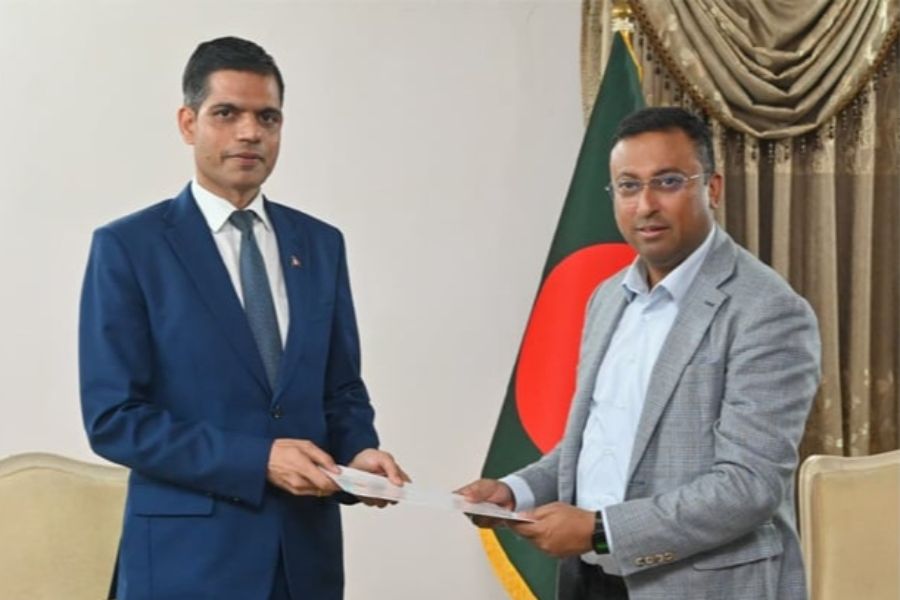
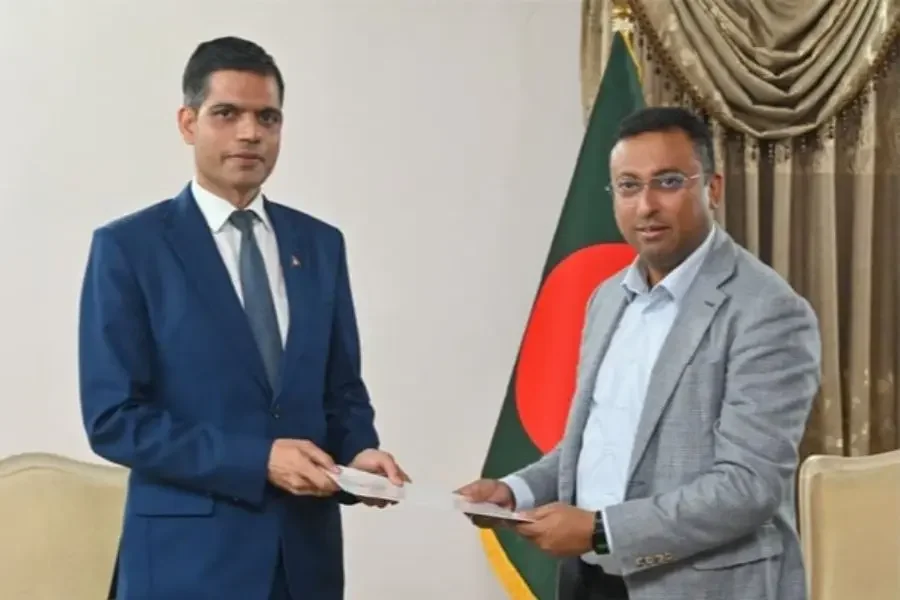
Bangladesh has provided US$1.0 million, equivalent to Tk 12.3 crore, to Nepal to support relief, recovery and humanitarian efforts following devastating floods and mudslides in the country's northern region, the foreign ministry said in Dhaka on Thursday.

State Minister for Foreign Affairs Humaiun Kobir conveyed the message to Nepalese Ambassador in Dhaka Ghanshyam Bhandari, reports BSS.

A foreign ministry spokesman said Kobir also handed him over a letter from Prime Minister Tarique Rahman for his Nepalese counterpart Balendra Shah expressing Bangladesh’s deep condolences for the loss of lives and property caused by the disaster.

Their meeting took place at the state gust house Padma.

The assistance has been contributed to the Nepal Prime Minister's Disaster Relief Fund to support the country's ongoing relief and recovery efforts following the natural disaster.

Earlier, on September 1, Kobir signed a condolence book opened at the Nepalese Embassy in Dhaka, expressing Bangladesh's solidarity with the government and people of Nepal over the loss of lives and destruction caused by the disaster.

The Bangladesh Jatiya Sangsad also adopted a condolence motion on August 27 following the tragedy in Nepal.​
 

Over 500 children in flood-hit Nepal lose everything yet cling to hope
Agence France-Presse . Nuwakot, Nepal 12 September, 2026, 11:47

1789194680591.webp

Children, separated from their parents from the flash floods, study at a temporary learning centre run by Save the Children charity in Nepal’s Nuwakot district on September 11, 2026. | AFP photo.

At 12, Nepali schoolgirl Ritu Maya Tamang has already learned how a close-knit family can be torn apart in a matter of minutes.

Tamang is among more than 500 children separated from their parents by the catastrophic August 26 flooding that hit the China-Nepal border, sweeping away homes, bridges and houses.

Nepal’s disaster agency said Friday that 1,385 bodies had been retrieved, while 5,130 people remained missing. In China, state media says 43 people are dead and 519 missing.

The flood that first hit Nepal’s high-altitude Rasuwa district claimed the life of Tamang’s mother, but her body is yet to be found.

Tamang’s younger sister is now battling pneumonia in hospital, and her father stays by her bedside.

While her life has been upended by the country’s worst-ever flood disaster, one thing remains unchanged — Tamang still wants to become a doctor.

‘I get nightmares about the flood,’ the shy seventh grader said as she finished an essay in her neat handwriting at a temporary learning centre run by Save the Children charity in Nuwakot district. ‘But I have dreams.’

Nearby, children — some of them younger than five — put finishing touches to colourful crayon drawings.

The memory of the day the floods struck is fresh in Tamang’s mind.

Her mother, a housekeeper, was at work at a hydropower project office next to the Trishuli River.

‘When the water came gushing, my mother could not escape it. I survived because I was at school,’ said Tamang, her eyes glistening with tears.

The only keepsake that Tamang has of her mother is a black face mask that she had tucked in her bag.

Save the Children says at least 540 children have been separated from their parents, and are living along with thousands others in relief camps in flood-affected areas, according to a preliminary assessment.

In one of the tented learning centres, teacher Shanti Sapkota said when the children first arrived, many were in a state of shock and panic.

‘They would say that ‘my house has been taken away’, ‘my father has been swept away’ or ‘my mother has been swept away’,’ Sapkota told AFP.

‘But they are slowly moving on from that state of mind.’

Nepal’s government has said it will guarantee education through high school for affected children, with support ranging from residential care to full scholarships.

Along with its stakeholders, the government has committed to establishing a $6.5-million scholarship fund for some 1,000 students affected by the floods.

‘We are giving priority to children who have lost their guardians,’ said education minister Sasmit Pokharel.

‘We will identify what kind of support each child needs. We will stand by them,’ he said on Monday.

At the Nuwakot learning centre, psychologist Ekta Shreshtha said the children were easily triggered by any strange person or noise.

‘It is still early days but from my observation, many of them are having trouble sleeping and have retreated into a shell,’ she told AFP.

‘We try to keep them distracted with toys and other fun activities that help them forget their trauma for some time,’ she said.

‘But their whole life is ahead of them. The pain is going to come back again.’​
 

Bangladesh envoy urges promotion of ‘Made in Bangladesh’ brand abroad


1789963129489.webp


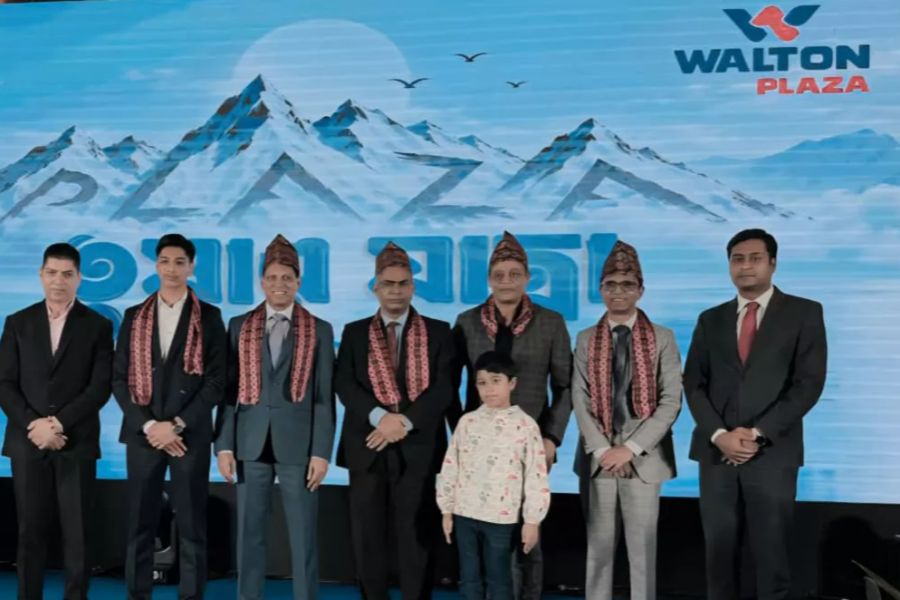
Bangladesh Ambassador to Nepal Shafiqur Rahman has urged promoting the “Made in Bangladesh” brand abroad by marketing competitive and quality products and services.

He made the call while addressing Walton’s Global Distributors Meet as the Chief Guest at a local hotel, The Soaltee, in Kathmandu on Saturday, reports UNB.

Ambassador Rahman congratulated Walton, its distributors, importers, officials, research and innovation teams and management, describing Walton as a leading electrical and electronics appliances manufacturer of Bangladesh.

He particularly appreciated the company’s initiative to recognize and reward high-performing sales professionals of Walton Plaza, saying their dedication and outstanding results deserve recognition.

The Bangladesh envoy praised Thapa Group for being Walton’s partner in Nepal since 2010 and emphasized strengthening Walton’s footprint in Nepal by expanding its distribution, sales and after-sales service network, developing products tailored to Nepali consumers and deepening partnerships with local distributors and retailers.

He expressed confidence that the partnership can further contribute to bilateral trade and people-to-people connections between Bangladesh and Nepal.

Recalling his visit to Walton’s industrial base, Ambassador Rahman said he was impressed by the company’s pursuit of manufacturing excellence, commitment to innovation and delivery of quality products.

Highlighting Walton’s international expansion, the envoy said the company’s focus on innovation, quality management and advanced manufacturing is helping strengthen Bangladesh’s position in the global electronics industry while contributing to diversification of the country’s export basket.

He expressed readiness of the Embassy to extend support to facilitate Walton’s expansion of business and marketing in Nepal and beyond.

The envoy also thanked Walton management for selecting Kathmandu for its Global Meet, saying Nepal is open and very forthcoming toward Bangladeshi visitors.

He added that the relationship between Bangladesh and Nepal is “rock-solid”, emanating from century-old people-to-people contact.

The Global Distributors Meet was organized as part of Walton’s initiative to recognize and reward high-performing sales representatives working at the company.

The selected sales professionals were brought to Nepal as a reward for their outstanding performance, with the tour designed to appreciate sales excellence, strengthen teamwork and professional relationships, and provide a memorable travel experience.

The event brought together around 300 sales representatives from Bangladesh and Nepal and featured cultural performances, an overview of Walton Plaza, a video presentation on the Nepal tour and addresses by senior Walton executives.

S.M. Mahbub Alam, Managing Director of Walton Hi-Tech Industries PLC; Md. Rayhan, Managing Director of Walton Plaza; and Mofizur Rahaman Zakir, Deputy Managing Director of Walton Hi-Tech Industries PLC, spoke on the occasion.​
 

Bangladesh issues travel advisory for tourists visiting Nepal

Diplomatic Correspondent
Dhaka

1790638552226.webp

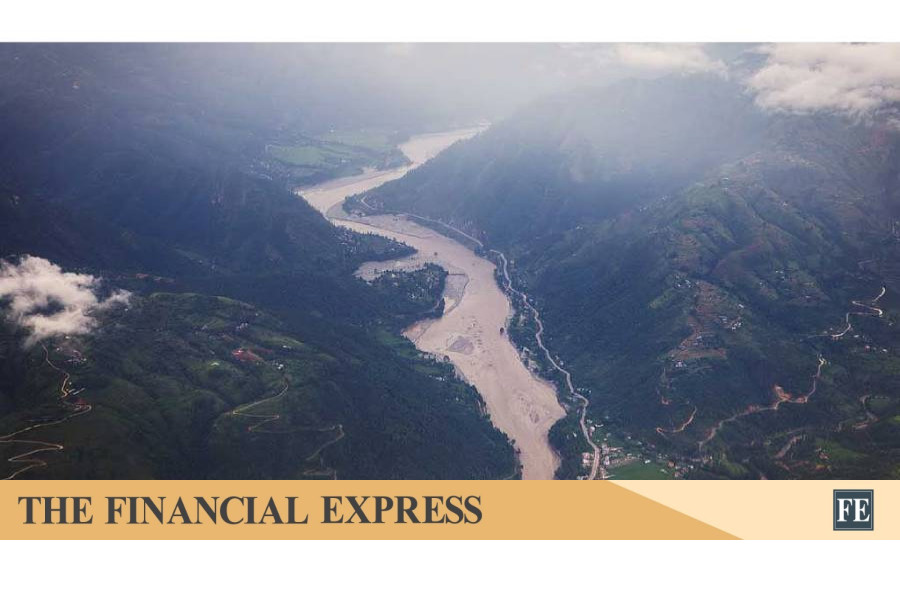
A drone view shows mud covering properties following a flash flood in Trishuli, Nuwakot district, Nepal, on 27 August 2026REUTERS

The Bangladesh Embassy in Kathmandu has urged Bangladeshi tourists and trekkers to exercise caution when travelling to areas of Nepal affected by ongoing heavy rainfall, floods and landslides.

It has also advised travellers to consider postponing trips until weather and overall conditions improve.

The Ministry of Foreign Affairs shared the advisory with the media on Monday evening, citing the Bangladesh embassy.

The advisory said extra caution was necessary, particularly in Pisang, Chame, Manang and surrounding tourist areas. Continuous rainfall, landslides and snowfall have disrupted road connectivity in many places, making rescue operations difficult.

Nepalese authorities have already suspended trekking in several areas, including Tilicho Lake, Thorong La Pass, Ice Lake, Khangla and Bhimthang in Manang. Travellers have also been advised to exercise caution when visiting Pokhara and surrounding areas due to disruptions caused by landslides.

The embassy urged travellers to obtain updated information on road conditions in Gandaki Province before travelling to Mustang, Jomsom and other mountainous areas, as road access could be disrupted at short notice.

Against this backdrop, the Bangladesh Embassy advised Bangladeshi citizens to verify all relevant information before planning trekking, mountaineering or travel to mountainous and landslide-prone areas, including Annapurna, Manang, Mustang and Manaslu. They were also advised to follow instructions issued by the Nepalese government and local authorities.

Bangladeshi citizens already travelling in risk-prone areas have been advised to stay in safe locations. They were also urged to avoid riverbanks and landslide-prone areas, check road and weather conditions before travelling, and maintain regular contact with their travel operators and the embassy.

The advisory is temporary, and Kathmandu and its surrounding areas are not covered by it, the statement said.​
 

Nepal plans to drain four glacial lakes after deadly floods


1790985321337.webp


An aerial view shows destruction following recent flash floods and mudslides along the Trishuli river in Dhading district, Bagmati province, Nepal, Sept 2, 2026. REUTERS/Adnan Abidi

Nepal will kick off a high-stakes effort this fiscal year to drain four glacial lakes perched high in the mountains, as it scrambles to reduce flood risks, officials said, after a recent disaster that killed more than 1,400.

Rescuers are still searching for more than 5,000 people missing in the border region with China after August’s glacier collapse unleashed landslides and a flash flood that tore through valleys.

“Our aim is to lower the risk of the lakes breaching their natural dams and reduce the risk of downstream floods,” said Subash Tuladhar, an expert with a government research centre tasked with overseeing the new project.

Canals will drain water into nearby rivers in a regulated way, he said, adding that workers faced health risks as a result of the lengthy periods of high-altitude work required, in addition to the dangers of sudden flooding.

Design work and detailed studies targeting the central and eastern lakes of Thulagi, Lower Barun, Lumding Tsho and Hongu II, will begin in the fiscal year that runs until mid-July 2027, authorities said.

The lakes, at heights ranging from 4,050m to 5,483m (13,280ft to 18,000ft), rank among Nepal’s most potentially dangerous, the United Nations Development Programme and the International Centre for Integrated Mountain Development (ICIMOD) said in a 2020 report.

Nepal had the skills and experience required for the $50-million project to be funded by the Green Climate Fund, the UNDP and the government, added Tuladhar, of Nepal’s Centre for Hydrology and Water Resources Research.

Draining Project Could Take Six Years

The work of draining “through gated structures” will start after a detailed study, and could take up to six years to complete, said Sanjeeb Baral, the Centre’s executive director.

It will encompass installation of sensors, a flood forecasting and warning system, and efforts to build downstream resilience and prepare communities for the risks.

In similar previous efforts, Nepal lowered by 3m (10ft) the level of the central Himalayan glacial lake of Tsho Rolpa by in 2000 and that of Imja in the vicinity of Mount Everest, the world’s tallest peak, 10 years ago.

Urgency After Recent Floods

Nepal’s disaster served as a warning to the world, Prime Minister Balendra Shah, 36, told the United Nations in an impassioned speech last month that blamed climate change despite his country’s negligible emissions.

Retreating glaciers, unstable mountain slopes and increasingly unpredictable rivers showed Nepal was paying a heavy price, he added.

Nepal, which has reported about 26 Glacial Lake Outburst Flood events in the past four decades, loses more than 300 lives and property worth millions of dollars to extreme climate events annually on average.

The latest floods devastated a dozen hydroelectric plants, roads, bridges, farms and settlements. Cash-strapped Nepal would need nearly $5 billion for early recovery, officials have said.

Climate scientists say as temperatures rise glaciers in the Himalayas retreat, leaving behind unstable glacial lakes held back by little more than loose rock and ice, above valleys home to millions.

Lowering the lakes by 3m (10ft) would significantly reduce the threat, said Samjwal Ratna Bajracharya, a retired ICIMOD expert on glaciers, glacial lakes and outburst floods.

“They are growing fast, are high up in the Himalayas and could cause outbursts any time, due to earthquakes, avalanches, climatic conditions and unplanned human-induced activity,” he told Reuters.​
 

Latest Posts

Back