| Global Defense, OSINT & Geopolitics Wire

[🇧🇩] New Government (BNP) in Bangladesh

[🇧🇩] New Government (BNP) in Bangladesh
95
4K
More threads by Saif

G Bangladesh Defense

A new journey on course of democracy

FE
Published :
Feb 19, 2026 01:04
Updated :
Feb 19, 2026 01:04

1771461472673.webp


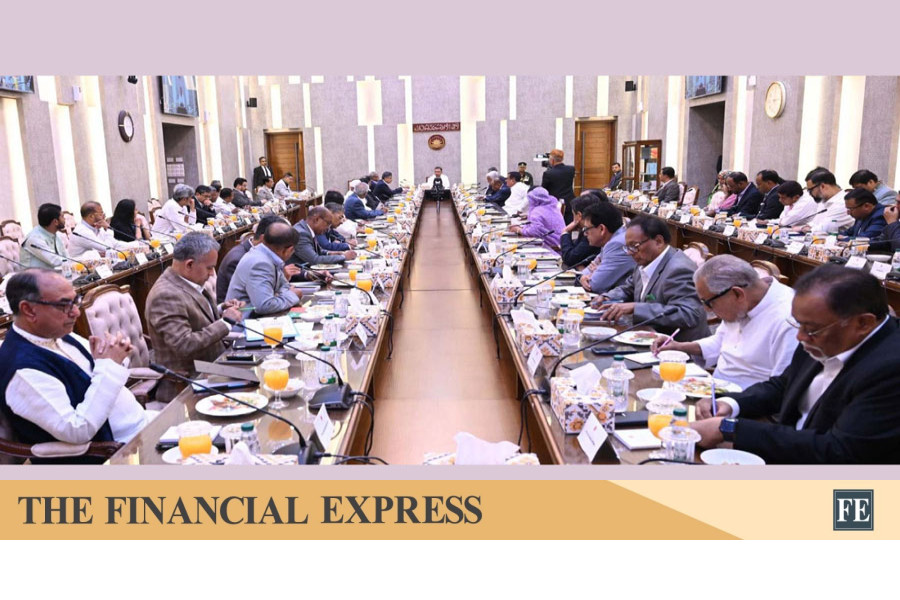
Bangladesh has got a new government elected by the people in a largely clean and credible election. The Financial Express congratulates the new Prime Minister and the members of his Cabinet. That the people are pinning much hope on the Bangladesh Nationalist Party (BNP) is evident from the fact that it has got absolute majority in the February 12 polls. What, however, the electorates want now is a paradigm shift in governance, which has been dismally poor for decades. On a few occasions in the past, the people were on the cusp of momentous transition only to be disappointed later on. But the dream did not die, it is reignited once again with the political parties agreeing on constitutional reforms in order to pave the way for democracy to cement a strong footing. This is exactly why the referendum on the much-needed reforms was held alongside the parliamentary election. The emphasis is on devolution of power from its existing concentration in the hands of the country's prime minister. Here the objective is to balance power instead of allowing the premier to call the shot alone.

The swearing-in ceremony held at the south plaza of the Jatiya Sangsad on Tuesday last was marked by disagreement over the oath-taking by the people's representatives. When it came to the issue of swearing-in as members of the reform council alongside that of members of parliament (MPs), the ruling party refused to take oath. Its stance is clear: there is no provision under the existing constitution for MPs-elect to take such an oath. Before taking such an oath, this provision has to be incorporated into the constitution. But the opposition Jamaat-e-Islami, the National Citizen Party (NCP) reacted strongly because the July National Charter (Constitution Reform) Implementation Order, 2025, according to them, made it clear it was incumbent on the elected candidates to take an oath as reform council members. The swearing-in ceremony was about to be marred with Jamaat and NCP initially declining to take the oath. However, they took both the oaths ultimately but a big question on the fate of the reform council hangs.

The nation, however, will hope that the contradiction would be resolved as early as possible even if it requires prior amendment to the constitutional provision in question. Preferably it would be done in the first parliamentary session. After all, there is a deadline for completion of the reform to the agreed 48 proposals within 180 working days. All the parties that contested the national polls are signatories to the July national charter and agreed to the 48 reform proposals.

Under the new Prime Minister Tarique Rahman, the ruling party stands at the threshold of a national resurgence. As he has often spoken about inclusive and transparent governance, the democratic history in the making can happen courtesy of his action matching his words. This will need respecting the July charter for constitutional reform. The cabinet he has chosen is a mix of seasoned politicians and new entrants. All members of the cabinet have daunting challenges before them but none more so than the finance and planning minister. There is also a very tough job at hand of the home minister. Amir Khasru Mahmud is a veteran politician and Salahuddin Ahmed is a man of cool head. Hopefully, they will be able to deliver what they are expected of. It is a tough time because of the global turmoil triggered by the US president's various unpredictable moves. So, bringing discipline in the area of law and order is a priority. Forging relations with big powers is also important. Infusing order in internal affairs will be a key to counterbalancing contradictory international relations. Last but not the least taming the soaring inflation will also be a major challenge for the new government.​
 

PM chairs inter-ministerial meeting on launching 'Farmer Card'

BSS
Published :
Feb 23, 2026 15:57
Updated :
Feb 23, 2026 15:57

1771849482128.webp


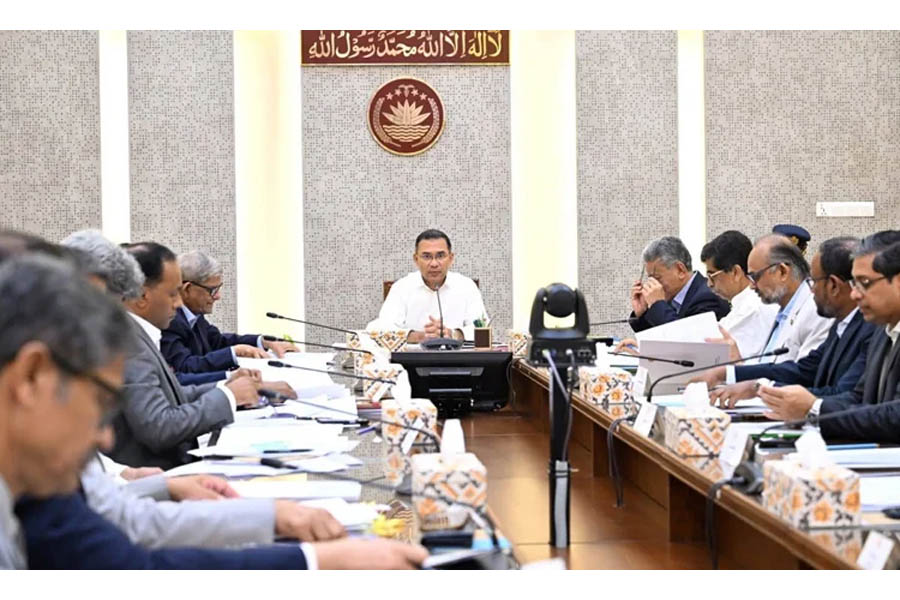
Prime Minister Tarique Rahman, on Monday, chaired an inter-ministerial meeting on launching 'Farmer Card' aimed at ensuring fair prices for crops produced by farmers.

The Prime Minister presided over the meeting at the Cabinet Division in Secretariat, Prime Minister's Press Secretary Saleh Shibly told BSS.​
 
I hope the Padma barrage project gets approval in the next ECNEC meeting.


ECNEC formed with PM Tarique Rahman as Chairperson

Published :
Feb 25, 2026 00:02
Updated :
Feb 25, 2026 00:02

1771978824469.webp


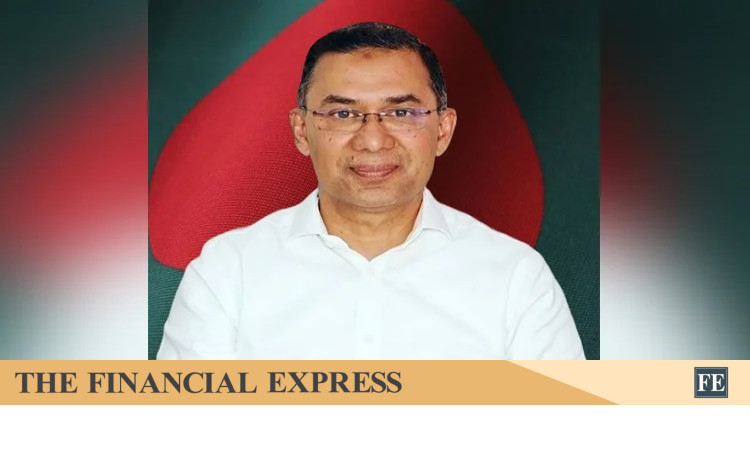
The government has formed the Executive Committee of the National Economic Council (ECNEC) with Prime Minister Tarique Rahman as its chairperson.

The committee was constituted through a gazette notification issued on Tuesday. The notification was signed by Md. Humayun Kabir, Additional Secretary (Committee and Economic Affairs) of the Cabinet Division, BSS reports.

According to the notification, Prime Minister Tarique Rahman will serve as Chairperson of the ECNEC while Mirza Fakhrul Islam Alamgir, Minister for Local Government, Rural Development and Cooperatives, has been appointed as its Alternate Chairperson.

Other members of the committee are Finance and Planning Amir Khasru Mahmud Chowdhury, Home Affairs Minister Salahuddin Ahmed, Foreign Affairs Minister Dr. Khalilur Rahman, Industries, Commerce, and Textiles and Jute Minister Khandaker Abdul Muktadir, Law, Justice and Parliamentary Affairs Minister Md. Asaduzzaman, Health and Family Welfare Minister Sardar Md. Sakhawat Hossain and Road Transport and Bridges, Railways and Shipping Minister Sheikh Rabiul Alam.

Supporting officials will include the Cabinet Secretary, Principal Secretary to the Prime Minister, Secretary to the Prime Minister's Office, Secretary of the Finance Division, Secretary of the Economic Relations Division, Secretary of the Statistics and Informatics Division, Secretary of the Implementation Monitoring and Evaluation Division (IMED), members of the Planning Commission under the Planning Division, and secretaries of the relevant ministries and divisions.

The notification stated that the term "Secretary" in this context will also include Senior Secretaries.

Functions of the Committee:

ECNEC will consider and approve all Development Project Proposals (DPPs), Technical Assistance Project Proposals (TAPPs), and Technical Project Proposals (TPPs).

The committee will also consider and approve recommendations of the Project Evaluation Committee (PEC) for projects involving total investment costs exceeding Tk 50 crore in the public sector. It will review the implementation progress of development projects.

In addition, the committee will examine proposals from private initiatives, joint ventures, and participatory investment companies.

ECNEC will monitor the country's economic situation, review overall economic activities and related policy matters, and consider and approve the annual targets for foreign assistance. It will also review progress in achieving those targets.

The notification said the committee will meet as necessary, and the Planning Division will provide secretarial support.

The order takes immediate effect.

It also stated that the previous notification issued by the Cabinet Division on August 20, 2024, in this regard will be considered as cancelled.​
 

BNP faces a defining test: end corruption, ensure accountability, protect equal rights

John Quinley
Updated: 25 Feb 2026, 09: 53

1772153721198.webp

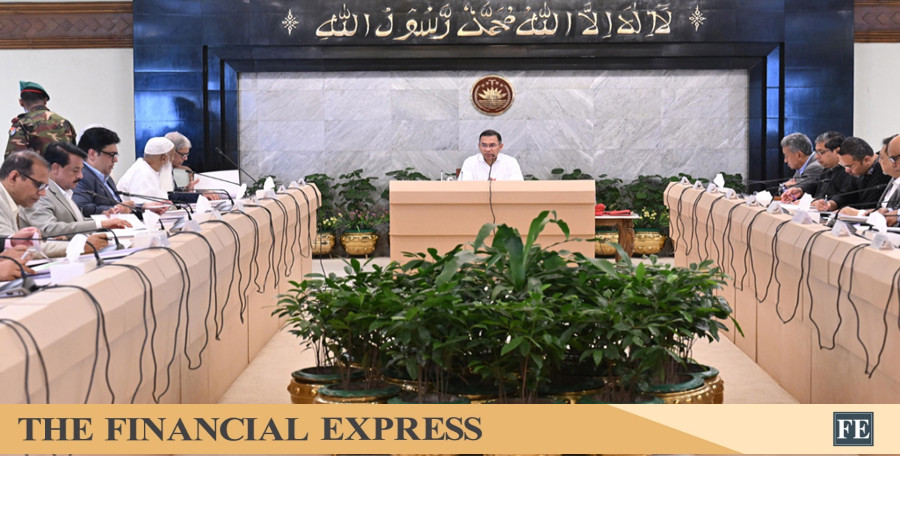
The first meeting of the cabinet was held under the leadership of Prime Minister Tarique Rahman. On Wednesday afternoon at the Secretariat

After 17 years in exile, the leader of the Bangladesh National Party (BNP) Tarique Rahman has returned to power following the country’s first national election since the bloody July Revolution of 2024. Registered voters also cast ballots in a referendum to approve constitutional reforms, with just over 60 per cent voting “yes” for the July National Charter outlining those reforms.

I was in Dhaka as an official election monitor. The atmosphere was peaceful and festive. The polls were credible and well managed. The BNP alliance secured 212 of the 300 seats in parliament, while the alliance led by its main rival, Jamaat-e-Islami, Bangladesh’s largest Islamic party, secured 77 seats, the largest showing ever for Jamaat-e-Islami at the polls.
The BNP government must now place human rights at the centre of its reform agenda and implement the referendum’s commitments.

The elections come a year and a half after nationwide, student-led protests demanding an end to the discriminatory quota system that excluded qualified young people from employment. Sheikh Hasina’s violent response to the protests led to a broader uprising against her repressive rule, and ultimately to her ouster. The vote marks a turning point. But political transition alone will not deliver justice.

Economic equality and an end to corruption were at the heart of the nationwide uprising’s demands. More than $230 billion was allegedly plundered from Bangladesh through corruption during the Awami League’s time in power. As the BNP takes office, it must establish proper checks and balances and root out corruption.

No political party in Bangladesh has been immune from allegations of graft—the very reason the BNP leader Tarique Rahman fled into exile 17 years ago were corruption charges which he claimed were politically motivated.
The day after the elections, at BNP headquarters in Dhaka, a BNP supporter told me he was hopeful about the historic win but acknowledged that some party members were previously “involved in extortion and corruption. … I am hopeful that the new BNP will be anti-corruption.

”Jamaat-e-Islami did submit complaints after the vote, stating: “The election day began smoothly, but the ending was not what we had expected. Fake votes, the circulation of black money, threats, assaults, and attacks marred the atmosphere.”

In the days ahead, the BNP should take all complaints seriously and continue to call for calm.

Party leaders must make clear—publicly and unequivocally—that violence, intimidation, or reprisals against the opposition will not be tolerated. A peaceful post-election environment will be essential to maintaining public confidence and demonstrating a genuine commitment to democratic norms.

With the Awami League effectively banned and its leaders on trial for their role in the violent crackdown on the protesters, Jamaat-e-Islami ran for the first time as one of the mainstream parties. In the past, its opposition to Bangladeshi independence and collaboration with Pakistan during Bangladesh’s war of independence had always placed the party outside the mainstream, and many of its leaders were prosecuted and executed during Sheikh Hasina’s rule.

It worked with the youth-led National Citizen Party and others to form an alliance. Despite the student-led protests during the Monsoon Revolution, the National Citizen Party only won a handful of seats in the election. Political parties that won seats in parliament should now urge unity and respect across political, religious, and ethnic lines.

According to the UN Fact-Finding Mission on Bangladesh, more than 1,400 people were killed in July and August 2024 in protest-related violence. The July National Charter promises “justice for all victims” of enforced disappearances, torture, and killings.

Reforming laws, policies and practices must also be top priorities, including for women and minorities. Securing women’s rights in the new Bangladesh will be especially challenging with the strong representation of Jamaat-e-Islami in the Parliament, since some religious leaders have called the reforms proposed during the transitional period to promote women’s rights “un-Islamic.”

BNP should ensure that women’s rights are fully protected in law and practice and reject regressive efforts to roll back progress toward equality. Only seven women were elected to parliament, six from the BNP and one independent, out of 85 women who contested the election. Jamaat-e-Islami did not field a single woman candidate.

Unfortunately, the recommendation by the Women’s Affairs Reform Commission to increase the number of reserved seats for women to 100 through direct elections was not accepted by all political parties. The July National Charter mirrored the Commission’s proposal, stating that “women’s representation in the National Parliament shall be progressively increased to a total of 100 seats.” It further provides that each political party shall nominate at least five per cent women candidates.

BNP should move forward with the Women’s Affairs Reform Commission’s broader recommendations, including ensuring equal rights for men and women and guaranteeing equal rights for women of all religions in matters of marriage, divorce and inheritance.

According to the UN Fact-Finding Mission on Bangladesh, more than 1,400 people were killed in July and August 2024 in protest-related violence. The July National Charter promises “justice for all victims” of enforced disappearances, torture, and killings. An end to impunity and abuse, through fair and transparent trials, must be at the forefront of the BNP government’s term.

The longstanding crime of enforced disappearance has been documented under both the previous periods of rule of BNP and Awami League. Parliament should pass the Enforced Disappearance Prevention and Redress Ordinance 2025, ensure it fully complies with international human rights standards, including abolishing the death penalty as a sentencing option.

Victims and their families deserve truth, justice, and reparations, not symbolic reform, and Bangladeshi activists and their families should be able to live free from the fear of enforced disappearances.

Barrister Mir Ahmad Bin Quasem Arman, who was himself forcibly disappeared for eight years from August 2016 to August 2024 and later won a seat in Dhaka-14 as a Jamaat-e-Islami candidate, said that enforced disappearance cases at the International Crimes Tribunal (ICT) should proceed without political interference. There must be a “full disclosure” under the BNP examining all senior leadership involved and providing answers for families, he said.

The ICT has taken a significant step by initiating proceedings related to crimes against humanity against army officers for enforced disappearances and torture, alongside senior officials from the Awami League government.

For these cases to strengthen the rule of law, the armed forces must fully cooperate with the Tribunal, recognise its civilian authority, and ensure that no individual –including army officers and other security officials--is shielded from accountability, now or in future proceedings.

Reparations for victims, genuine accountability, and clear guarantees of a definitive end to enforced disappearances as a state practice must follow, under the BNP or any future government. Only by confronting past abuses with integrity and resolve can Bangladesh begin to dismantle the entrenched culture of impunity.

The promise of the July Revolution will only be realised if the BNP government decisively ends corruption and political violence and repression, ensures real accountability for past abuses, and protects the rights of women and minorities in both law and practice.

* John Quinley is a director at Fortify Rights, an international human rights organisation.​
 

Challenges facing the new government

Hasnat Abdul Hye
Published :
Mar 01, 2026 00:18
Updated :
Mar 01, 2026 00:18

1772325737344.webp


Unarguably, the BNP-led government now in charge of the helm of state power is in the birth throes of new governance. Though no stranger in running a government in Bangladesh, BNP finds itself facing a new set of challenges- political, economic and geo-political. Much water has flown under the bridge between now and the last time they were in power. The experiences it had when last in power in 2001 are not very relevant at present and as such cannot be a guideline for decisions to be taken now.

Not only has the external context, politically and economically, changed, internally also the party finds itself in new circumstances. During the past twenty five years when BNP was out of power and marginalised and oppressed by an autocratic regime, it had to fight for its survival which saw its leaders and supporters active inside Bangladesh and abroad, particularly United Kingdom (UK). The chairman of the party being in confinement, the vice chairman of the party in self-exile in London had to lead the party through London-based supporters and the leaders and workers in Bangladesh. While this double entity helped to cohere the party together, the division created pressure points at two places claiming the attention of the leader. This was not a problem when BNP was in opposition. But now being in power, its leader must be under pressure from both centres for priority attention. Making both groups happy will not be a cake walk, not even with the appointments of a good number of advisors from both centres. Already some party stalwarts, kept out of the cabinet, have started grumbling. Keeping unity in the party will be a great challenge for the new chairman. If party cohesion is not ensured political instability may start from within. It will be naive to think that outsiders will not be willing to fish in troubled waters, stoking dissension and unrest. One way of keeping solidarity in the party may be giving ministerial portfolios to senior and junior members of the party by rotation with three years term for seniors and two years for juniors. This will have the additional advantage of allowing junior leaders to acquire ministerial experience which will stand in good stead for them as well for the party.

The BNP government committed to inclusive politics can be said to be in a dilemma as to what to do with Awami League. In the just concluded general election the party was not allowed to participate though it has not been banned. There was some justification for this as public sentiment across a broad swathe of electorate was still negative about the party that entrenched autocracy in the country. In the next election, public mood may be different and willing to see inclusive democracy. BNP government should allow Awami League to take part in the next general election making the leaders who have been punished and against whom criminal cases have been pending, both disqualified.

In domestic politics, the second challenge for the new government and BNP as the party in power will be to work out a modus operandi with Jamat-e-Islami and the National Citizen's Party (NCP). The immediate issue placing them at loggerheads is the implementation of July Charter. BNP is not against the implementation of the unanimously agreed provisions of the charter but differs on the mechanism. They believe that the reforms envisioned in the Charter can be brought about by the Jatyo Sangshad itself and there is no need for a second Chamber of parliament to do the same. Prominent constitutional experts in the country have opined in the same vein. BNP should sit together with Jamat and NCP and try to convince them of this method of implementing the agreed provisions of July Charter. Making unilateral declarations about the July Charter can only antagonise the opposition parties and widen the chasm between them and the BNP-led government. For the sake of political stability, this must not be allowed to happen. The nation has paid a heavy price in the past for allowing adversarial relation to metastasize between party in power and opposition.

On the economic front the great challenge for the government is to bring down inflation from the prevailing 8.6 per cent to the targeted 5 per cent. The Awami League could do not tackle inflation during their long tenure. Neither could the interim government that had a free hand in taking necessary measures to reverse the upward trend of inflation. Now inflation is staring at the BNP government as the most intractable problem. The party will be in power for the next five years and perhaps thereafter. It cannot afford to take a 'business as usual' attitude towards this deleterious malaise of the economy that has made millions helpless in meeting cost of living. First of all, the factors causing inflation has to be analysed. There are two main causes behind rise of inflation: (a) demand pull inflation and (b) cost-push inflation. There is no evidence that there has been a spurt in demand for goods and services, particularly for essential items. So, increase in demand has not been a contributory factor to extant inflation. That leaves cost-push factors as the prime forces causing and sustaining inflation. Among these are increase in prices of inputs, supply chain disruptions in international trade and rent- seeking by intermediaries in domestic supply chain. It is obvious that for the first two there is very little that the BNP government can do. But the BNP government has the power to break-down the network of domestic rent- seekers who add to the cost of goods at multiple points. This has been the most important factor in creating and sustaining cost-push inflation. It is unfortunate that a minister in the present government should be blatant enough to say that if chanda (subscription) is paid through mutual consent it should not be considered as extortion. The minister should have been reprimanded by the prime minister immediately. This sort of casual and indulgent attitude can only exacerbate the problem. If the present government is serious about addressing the problem of inflation it has to come down hard on the rent-seekers and their syndicates.

The present government has introduced family card on a limited basis in ten upazilas that will give Tk 2,500 to poor families. It is a good step but there should not be any hurry about introducing this. The programme has to be dovetailed with existing social safety network, pruning the irregularities that exist in the prevailing system. Secondly, since monetary payment add to inflationary pressure payment in kind may be considered as more desirable. This in turn will require a universal rationing system replacing the ad hoc distribution of food items by TCB and should cover both urban and rural areas.

The second problem in the economic sector that will engage the attention of the present government is restoring health to the ailing banking sector. The decision to restructure overdue loan by payment of one per cent instead of two, as announced recently, appears a continuation of the old policy of appeasing the defaulters. It does not augur well for the future. Neither is the appointment of a governor of Bangladesh Bank with no banking background appears encouraging. There was no need to replace the former governor post haste before adequate scouting for his successor was completed.

The nation, disillusioned with politics and governance in the past, is optimistic that this time around, something better will happen. That optimism must not be proved as pie in the sky.​