New Tweets

[🇧🇩] Ramadan 2026

G Bangladesh Defense
[🇧🇩] Ramadan 2026
2
70
More threads by Saif

Saif

Senior Member
Messages
17,591
Likes
8,463
Nation

Residence

Axis Group

Holy Ramadan likely from Feb 19, says Islamic Foundation
Publishes sehri and iftar timings
20 January 2026, 19:34 PM

1771376682503.webp

Representational photo: Collected

The holy month of Ramadan is likely to begin on February 19, according to the Islamic Foundation.

The foundation today published the schedule of sehri and iftar for Ramadan 2026.

The image below shows the sehri and iftar timings, according to Islamic Foundation.

1771376727355.webp
 
Analyze

Analyze Post

Add your ideas here:
Highlight Cite Respond

Ramadan begins Thursday
Staff Correspondent Dhaka
Published: 18 Feb 2026, 19: 38

1771462319998.webp


The moon has been sighted in the country’s sky today, Wednesday. Accordingly, fasting will begin tomorrow, Thursday.

This decision was announced at a meeting of the National Moon Sighting Committee held today in the conference room of the National Mosque Baitul Mukarram with newly appointed religious affairs minister of the BNP government Kazi Shah Mofazzal Hossain Kaikobad in the chair.

According to the decision of the National Moon Sighting Committee, the counting of the holy month of Ramadan will begin from Thursday, 19 February. With the sighting of the Ramadan moon, devoted Muslims will offer Tarawih prayers tonight; after taking Sehri at night, they will begin fasting from Thursday.

Earlier, today, Wednesday, fasting began in several countries in the Middle East, including Saudi Arabia, depending on the sighting of the holy month of Ramadan. Muslims in many countries around the world will fast in accordance with Saudi Arabia.​
 
Analyze

Analyze Post

Add your ideas here:
Highlight Cite Respond

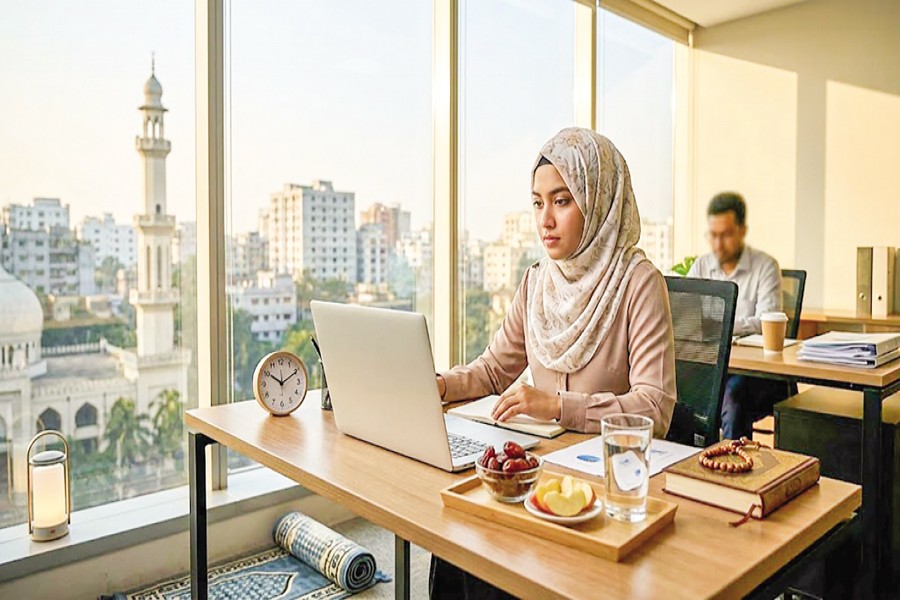
Work, worship, and well-being
How Ramadan can enhance our productivity

Shaikh Sajid Ahmed

Published :
Mar 04, 2026 11:38
Updated :
Mar 04, 2026 11:38

1773189496985.webp


The holy month of Ramadan is the ninth month of the Islamic lunar calendar, observed by Muslims worldwide as a time of fasting, prayer, reflection, and building community relations. It is the best of all months and the month of peace and devotion. People commemorate the month in which the Quran was first revealed to the Prophet Muhammad (PBUH). Since the Islamic calendar is lunar, Ramadan shifts about 10-12 days earlier each year in the Gregorian calendar.

The season of fasting brings a significant transformation to daily routines, particularly for working professionals. With long fasting hours, almost half or more than half of the day, altered sleep patterns, and increased spiritual commitments. Jobholders often struggle to maintain a balance between professional duties and personal well-being, as they are used to in another routine throughout the year. The challenge during this month is not simply about sustaining productivity, but about redefining it in a way that aligns with the spirit of Ramadan and also enhances it rather than reducing it.

In many workplaces, productivity is traditionally measured through long hours and constant output. Ramadan, however, calls for a different perspective. Efficiency, focus, and intention become more important than sheer volume of work.

For fasting employees, completing essential responsibilities consistently while safeguarding physical health and spiritual disciplines should be recognised as meaningful productivity.

The early morning hours, particularly after Seheri and Fajr's prayer, offer a valuable opportunity for reflection and planning. During this quiet window, the mind is free from distractions, making it an ideal time to organise priorities for the day.

Even brief moments of structured planning or reflection during this time can have a lasting impact on overall effectiveness at work. After the morning prayer, do Dhikr for 5 to 10 minutes, then go to sleep or recite the Quran if you have completed your 7-8 hours of sleep.

Morning work hours generally coincide with peak mental clarity. Professionals can benefit by scheduling tasks that require concentration, study, or decision-making earlier in the day. As the pace quickens, energy naturally declines, making it important to maintain a steady pace rather than overcompensate with excessive effort.

That's where Zuhr prayer comes in very handy. After working for 3-4 hours consecutively, a refresher is much needed. So, taking a break during the Zuhr prayer will provide immense relaxation, reset the mind, and give a much-needed boost to finish the pending work. That is how a few minutes of relaxation can eventually boost our energy.

Late afternoon, fatigue becomes increasingly noticeable, especially in the first few days. This period calls for restraint rather than resistance. Lighter, routine tasks are better suited to these hours, while high-pressure discussions and major decisions are best avoided.

Work that needs more attention and requires decision-making should be kept for the morning. Lighter work should be later in the day, so we can finish the day without wrecking our nerves. After the office ends, perform the Asr prayer and go straight home. Take some delicious, healthy food with you if needed.

The evening, beginning with iftar, represents both physical relief and spiritual reflection. Breaking the fast in moderation allows individuals to maintain energy for prayer and family time.

Excessive eating, though tempting after a long day, often leads to discomfort and disrupts nighttime worship and rest. So, fasts should be broken with light, healthy items.

We should ignore oily, greasy, and unhealthy items. It is difficult to ignore such mouthwatering items, but to benefit everyone, we should try to eat less unhealthy food whenever possible.

Nighttime during Ramadan is traditionally devoted to prayer and contemplation. Maintain consistency in Isha and Taraweeh prayers, and make a special effort to observe Qiyam-ul-Lail, especially during the odd nights of the last ten days of Ramadan. After prayer, some light preparation for the next working day may be necessary; overburdening the night with professional tasks undermines the purpose of the month. Adequate sleep remains essential, and working professionals should aim for sufficient rest, even if it must be divided into shorter intervals.

Ultimately, Ramadan is not a month for overexertion or unrealistic expectations. It is a period of readjustments of habits, priorities, and values. For jobholders, Ramadan itself help managing time. The season is less about maximising output and more about achieving balance, and that's what it intends to do.

When work responsibilities are fulfilled with sincerity and restraint, they become part of the broader act of discipline and self-improvement that Ramadan encourages.

For working professionals, managing time during Ramadan requires awareness, adaptability, and moderation. By aligning work with natural energy levels and approaching productivity with intention, the month can become a period of stability at work and growth within the self. Ramadan is not meant to hinder performance; rather, it teaches us to work with patience, discipline, and purpose.

But beyond schedules and deadlines lies a greater objective. Ramadan is a time to avoid sin, to give up harmful habits, and to purify both actions and intentions. It is a reminder that life itself carries no guarantees. We do not know whether we will witness another Ramadan.

This uncertainty should awaken sincerity. If this were the last Ramadan of our lives, would we be satisfied with how we spent it? Let this month be more than routine fasting. Let it be a conscious effort to return better than we were professionally responsible, spiritually renewed, and morally refined. And if it is indeed our final Ramadan, may it be the best Ramadan of our lives.​
 
Analyze

Analyze Post

Add your ideas here:
Highlight Cite Respond

Members Online

Latest Posts

Back
PKDefense - Recommended Toggle