| Global Defense, OSINT & Geopolitics Wire

[🇧🇩] Save the Rivers/Forests/Hills-----Save the Environment

[🇧🇩] Save the Rivers/Forests/Hills-----Save the Environment
660
27K
More threads by Saif

G Bangladesh Defense

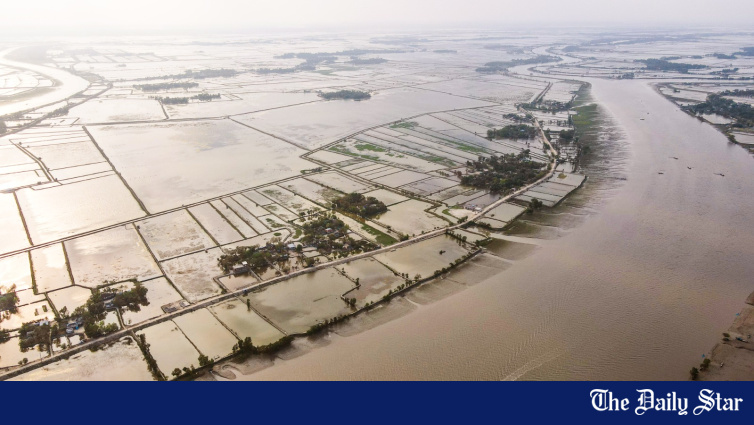
Salinity creeps deeper into southwest


1785195619205.webp
 

Inside the shrinking world of Bengal tigers
Juhi Rubaba Jurana Jahan 28 July, 2026, 23:45

1785282009954.webp


In the Dhaka of the 1960s, when Archer Blood served as the US consul general from his office at Adamjee Court in Motijheel, conversations at his evening gatherings often turned to tigers.

They were not the stuff of distant folklore, but a real and present danger stalking the outskirts of the city.

‘There were a great many tigers, and they were causing trouble. They lost about ten people a month to the tigers,’ his wife, Meg Blood, recalled in The Blood Telegram, a book by Gary J Bass.

Best known for exposing US support for the Pakistani military during the 1971 genocide in Bangladesh, the book also captures a startling glimpse of a time when the Bengal tiger’s range extended far beyond the forest to which it is now largely confined – the Sundarbans.

According to the 2024 National Tiger Census released by the Bangladesh Forest Department, an estimated 125 adult Royal Bengal tigers currently inhabit the Sundarbans, a slight recovery from 114 in 2018. But set against the roughly 440 tigers recorded in 2004, the population remains critically depleted, the result of decades of poaching and habitat loss.

On International Tiger Day, the number offers a stark reminder that the species’ modest recovery still leaves Bangladesh with fewer than one-third of the tigers it had just over two decades ago.

Snares set by deer poachers have emerged as one of the gravest threats to Bengal tigers. One recent rescue illustrates the dangers these threats now pose.

Just weeks ago, a tiger that had been caught in a deer snare was released back into the wild after six months of rehabilitation.

On January 3, 2026, the 11-year-old female Bengal tiger was caught in a snare set by deer poachers near Sharkir Khal in the Chandpai Range of the eastern Sundarbans, suffering deep wounds. A specialised Forest Department response team reached the site the following day and rescued the tigress.

After six months of rehabilitation, the tigress regained her mobility and returned to her natural habitat in the Sundarbans on July 12, near the Andharmanik Ecotourism Centre.

Her story is not an isolated one. Poaching remains a critical danger to wildlife across the mangrove forest, as hidden traps originally set for smaller animals frequently double as lethal secondary hazards for Bengal tigers.

‘These snares pose severe injury risks and potential fatalities for the endangered animal,’ said Dr Nasir Uddin, president of the Bangladesh Biodiversity Conservation Federation.

Between May 2025 and April 2026, the forest department’s operations across the Sundarbans recovered around 114,553 feet of deer-hunting traps, along with other snares.

But the recoveries have been far from uniform across the Sundarbans. Dr Nasir pointed to a stark disparity, noting that while large quantities of snares had been recovered in some parts of the forest, almost none had been seized in the West Sundarbans.

‘So how should we interpret this? Either such crimes are not occurring in that part of the forest, or monitoring and law enforcement there are inadequate,’ he said.

Enforcement, too, has struggled to break the cycle. According to the Forest Department, 377 people were arrested in drives conducted across the Sundarbans over the past year. Yet most are released on bail soon afterwards, and many return to the forest to poach deer.

‘Almost everyone has been granted bail, with only one person still in custody. Those released on bail often return to deer poaching and commit the same offence again,’ said divisional forest officer Md Rezaul Karim Chowdhury.

According to a study published in Conservation Science and Practice, the country has emerged as a key transit and supply hub, funneling illegal tiger parts to 15 different nations.

‘Although pirate activity had subsided for a few years, various groups have recently re-emerged in the area,’ said Monirul H Khan, a wildlife expert and professor in the Department of Zoology at Jahangirnagar University.

Alice C Hughes, a conservation ecologist and professor at the University of Melbourne, frames the problem in terms of demand rather than supply alone. ‘As long as there is demand, supply will continue.’

Beyond poaching, a new threat surfaced as media reported that India is planning to fence its border along the Sundarbans for the first time, a move conservationists warn could have consequences far beyond politics.

‘It’s not a problem for the two countries; the biggest sufferers will be the Sundarbans on both sides,’ said A B M Sarowar Alam, a conservation biologist.

Tigers are territorial animals that move across large ranges, often crossing the porous, water-threaded border between the Bangladesh and Indian sections of the Sundarbans. A physical barrier, experts fear, could fragment an already shrinking habitat and cut off movement corridors the tigers depend on.

Climate change presents perhaps the gravest long-term threat of all. Research by Colby Loucks, vice president and deputy lead for the Wildlife Program at the World Wildlife Fund, warns that without immediate efforts to curb greenhouse gas emissions and bolster the Sundarbans’ resilience, the region’s tigers could soon share the fate of Arctic polar bears that are victims of climate-driven habitat loss.

The process of translocating tigers to the Chittagong Hill Tracts is being considered due to issues of habitat in the Sundarbans.

Although recent evidence like a tiger pugmark suggests a past or present big cat presence in the region, experts say establishing a viable population requires extensive feasibility assessments.

‘A formal translocation project cannot be executed arbitrarily by independent organisations, it demands a structured, government-led initiative,’ said Sarowar Alam.

‘After the Sundarbans, Kasalong could be a habitat for tigers,’ he added.

Executing such a translocation, however, would require a multi-year strategy involving scientific surveys, prey density assessments, and habitat mapping.

For now, most experts agree that the more urgent task is stabilising what remains inside the Sundarbans itself. Dr Nasir emphasised that a decline in the deer population disrupts the food web and pushes tigers toward human settlements in search of prey.

Protecting the primary prey base, he argued, is therefore just as crucial as protecting the tigers themselves.

‘If we can ensure protection for the existing population, the number will naturally increase,’ he said.​
 

Why Bangladesh’s low ecological footprint is not a climate advantage

Kazi Kareena Arif

1785454595118.webp

VISUAL: MAGNIFIC

Every year, Earth Overshoot Day shows us how we are using up the renewable biological resources faster than Earth can regenerate them. The concept, originally developed by a UK think tank called the New Economics Foundation and later popularised by an international research organisation called the Global Footprint Network, explores the idea that human demand for resources such as forests, cropland, fisheries, among others, can often exceed the planet’s ability to regenerate those resources within a given time. And once that threshold is crossed, we are effectively living in a state of ecological deficit. The overshoot is calculated by dividing Earth’s biocapacity by humanity’s ecological footprint, and multiplying the result by 365 days. This year, Earth Overshoot Day falls on July 30, meaning that by that day, we have already used more resources than the Earth can replenish this year, which means that from July 31, we will be living through a deficit. In 2025, the overshoot day fell on July 24 and August 1 in 2024.

Country Overshoot Day gives us a deeper understanding of the use of ecological resources from a country’s perspective. It tells us when Earth Overshoot Day would fall if every individual around the world consumed resources like an average citizen of a particular country. For instance, according to the Global Footprint Network, Qatar’s country overshoot day for 2026 was on February 4, earlier than any other country in the world. This means that if every human on Earth consumed ecological resources like an average Qatar resident, together they would have exhausted all of the resources generated by Earth this year by February 4. It is estimated that such a consumption pattern can only be sustained if we had 10 Earths for our benefit.

Bangladesh sits just at the other end of the spectrum, as the country’s ecological footprint per person is smaller than the global biocapacity per person. For example, if every individual in the world consumed earthly resources like an average Bangladeshi resident, they would exhaust less than half—around 46 percent—of the resources generated by Earth this year. While this sounds great on paper, there is absolutely no reason for Bangladesh to celebrate. Bangladesh’s low footprint does not mean that the country is environmentally secure.

Bangladesh sits on the frontline of consequences produced by a global economy that has treated nature as an endless input and waste sink. The country contributes relatively little to global ecological degradation through consumption but pays heavily for its consequences. As ecological limits tighten, powerful economies and corporations may protect their own access to energy, land, water, food, and carbon space, while asking poorer countries to adjust, comply, and absorb the cost. So, although Bangladesh has not been consuming its way into Earth overshoot, it is nonetheless asked to cope with climate disruptions, reduce its carbon emissions, conserve biodiversity, and still stay competitive in the international market with limited fiscal space. Sustainability can easily be reduced to yet another imposition of an already high-footprint economy on a low-footprint country. However, none of this makes Bangladesh innocent.

Bangladesh has its own share of environmental governance problems as well. The rivers are contaminated due to the discharge of industrial pollutants. The problem of plastic waste management remains unresolved. Severe air pollution is caused by brick kilns, construction sites, and transport. Despite numerous laws, their enforcement remains weak due to political influence, institutional weakness, and the fear of slowing down economic growth. Bangladesh cannot demand ecological justice internationally while allowing ecological damage domestically.

Then again, domestic failure should not be considered in isolation from the economy which generates it. In this unforgiving global market, Bangladesh has been pushed to operate on a growth model in which competitiveness is achieved via low cost and fast delivery. The ready-made garment industry provides the best illustration of this problem. It is the backbone of Bangladesh’s labour market, foreign exchange earnings, and macroeconomic stability. While international clients seek to have their supply chains less environmentally damaging and more responsible, very often they expect these improvements without changing their purchasing practices. Prices remain squeezed, orders remain short-term, and compliance costs are pushed down to suppliers.

This is not how a fair transition should work. If global brands depend on Bangladesh’s labour, energy, water, land, and infrastructure, they must share the cost of making that production cleaner. That means longer-term purchasing commitments, supplier transition funds, concessional finance, guarantees, and pricing models that recognise the real cost of environmental compliance.

Bangladeshi government has work to do too. Pollution monitoring, environmental clearance, industrial zoning, effluent treatment, renewable energy access, public disclosure and credible penalties all need to become more serious. International support matters, but without domestic accountability, it will remain fragmented and project-based.

Bangladesh’s place in the overshoot day calendar shows that the country is low-footprint, but high-burden. For high-consuming economies, sustainability must mean consuming less and using fewer resources. For Bangladesh, it means protecting economic space while refusing to reproduce the very model that created the overshoot. That requires cleaner energy, stronger environmental governance, accountable industries, restored ecosystems, and fairer trade relationships.

Kazi Kareena Arif is lecturer of finance at the Bangladesh Institute of Bank Management (BIBM) and a researcher specialising in climate finance.​
 

Climate change: When the ribbon-cutting ends, resilience begins
As countries continue debating how to close the global climate finance gap, Bangladesh faces a parallel challenge at home. The question is no longer only how to mobilise more finance, but how to ensure that every taka invested delivers resilience for decades rather than years

Digbijoy Dey

1785541720826.webp

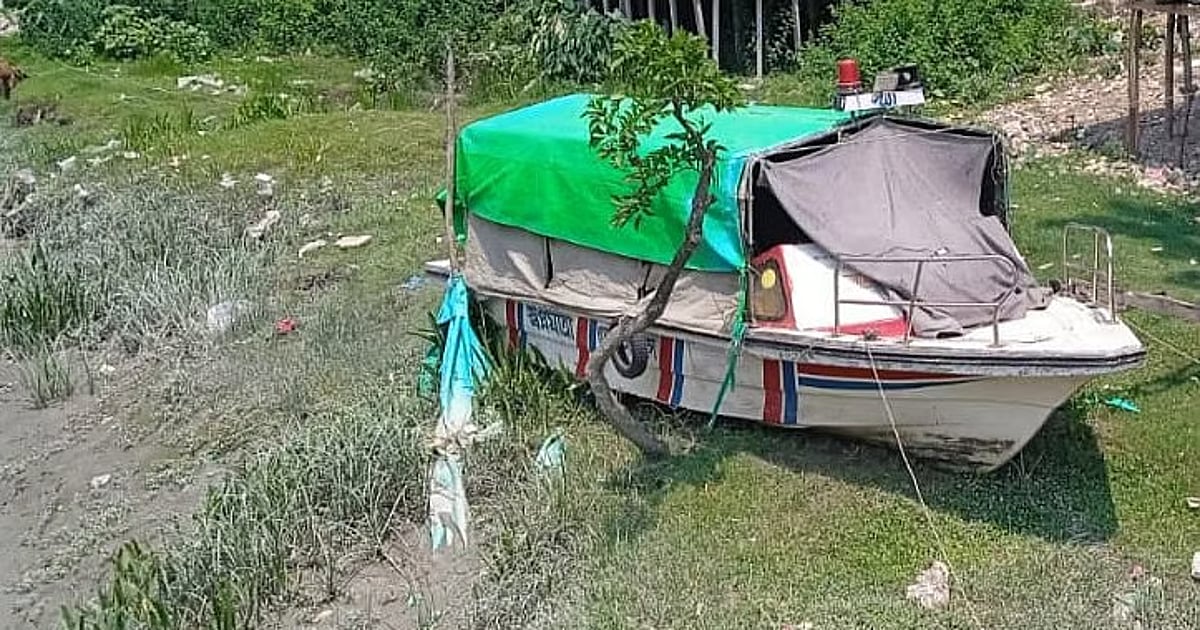
A boat ambulance lies abandoned on the banks of a canal in Lakshmipur's Ramgati upazila Prothom Alo

A few years ago, two water ambulances were provided for Sandwip, an island where crossing the channel to Chattogram can mean the difference between life and death for critically ill patients. It was a promising investment. Yet the boats spent much of their lives idle. Reports pointed to familiar reasons: no dedicated drivers, no operational staff, no budget for fuel or maintenance, and eventually deteriorating condition. The boats existed. The emergency service did not.

That story is about much more than two abandoned boats. It exposes a question that Bangladesh must increasingly confront as climate risks intensify: Do we measure success by the infrastructure we build, or by the services that continue to function long after the inauguration ceremony is over?

Bangladesh has rightly earned international recognition for its progress in climate adaptation. Cyclone shelters, embankments, resilient roads, flood protection works and water infrastructure have all contributed to saving lives and strengthening resilience. These investments deserve recognition.

But climate resilience is rarely determined by what is built. It is determined by what continues to work, year after year.

Too often, success is celebrated when a project is completed or a facility is inaugurated. Yet that is precisely when the harder work begins. Infrastructure only delivers value if the people responsible for operating, maintaining, repairing and improving it have the resources, authority and incentive to keep it functioning. If they do not, even the most sophisticated engineering gradually loses its purpose.

The distinction may seem subtle, but it is fundamental. A hospital building is an asset; healthcare is a service. A school building is an asset; education is a service. A water ambulance is an asset; emergency transport is a service. Climate resilience depends not only on the assets we create but also on the services they continue to provide.

Bangladesh's coastal water sector offers an instructive example. Over the years, hundreds of pond sand filters were installed to provide safe drinking water in areas affected by salinity. The technology addressed a genuine need, and many communities welcomed these investments. Yet a large number gradually fell into disrepair after being handed over to community management without long-term institutional and financial arrangements for operation and maintenance.

Broken pumps, clogged filters and missing spare parts often remained unattended because no organisation or individual had both the responsibility and the means to restore the service.

By contrast, many piped water supply systems established in similar coastal settings continue to function years after construction. The difference is not simply the technology. These systems are more likely to have designated operators, user tariffs that contribute to routine expenses, technical oversight, maintenance arrangements and institutions that remain accountable for service delivery. In other words, they were designed not only to build infrastructure but also to sustain a service.

The lesson extends well beyond water. Whether it is a water ambulance, a health centre, a cyclone shelter or a drinking water system, infrastructure lasts only as long as the service arrangements that keep it functioning.
This is why climate adaptation should be viewed not simply as an engineering challenge, but as a governance challenge.

One reason adaptation investments often struggle to realise their full potential is that incentives are concentrated at the beginning of the service chain. Funding is available to construct facilities and celebrate their completion. Far less attention is paid to the people and institutions responsible for ensuring that those facilities continue serving communities over the next ten or twenty years.

The result is predictable. Equipment fails and remains unrepaired. Skilled operators move elsewhere because there are few incentives to stay. Local enterprises capable of providing maintenance services struggle to survive because demand is uncertain or financing is unavailable. Communities gradually lose confidence in the very systems that were designed to strengthen their resilience.

This is not simply a question of financing, although financing is certainly part of the answer. It is fundamentally about how responsibilities, incentives and accountability are distributed across the entire service chain.

Encouragingly, Bangladesh already offers examples of a different approach. In Kushtia, improvements in water and sanitation services (especially for faecal sludge management) have been built not only through infrastructure, but also through stronger local governance. The municipality has brought together local government, communities and private enterprises with clearly defined responsibilities and shared accountability for service delivery. Facilities are operated rather than merely inaugurated, while local institutions continue to oversee performance and respond to changing needs.

The lesson is not that Kushtia has found a perfect model, but that resilience becomes more achievable when institutions are designed around sustaining services instead of simply delivering infrastructure.

As Bangladesh prepares for a future of rising temperatures, increasingly erratic rainfall, sea level rise and growing water stress, adaptation policies must evolve alongside engineering solutions. Every climate investment should answer a simple question: Who will keep this service functioning five, ten or twenty years after the project closes? If that question has no convincing answer, resilience remains incomplete.

This does not require abandoning infrastructure investments. It requires complementing them with equal attention to governance, sustainable financing, operation and maintenance, local capacity and institutional accountability. In short, every actor in the service chain, from government agencies and utilities to communities, technicians and private enterprises, must have both the means and the incentive to keep services running.

Bangladesh's greatest strength has never been simply its ability to build. It has been its willingness to learn, adapt and improve. Climate resilience is not built when the first brick is laid. It is built every day thereafter, by the people who operate, maintain, repair and finance the services that communities depend upon. If any one of them is forgotten, resilience itself begins to erode.

* Digbijoy Dey is an environment professional currently working for IRC Netherlands.​
 

We must count the cost of growing climate anxiety

1 August 2026, 12:00 PM

Syeda Shagin Akhter

1785631762442.webp

A farmer tends vegetable seedlings on a floating garden as his land in Nazirpur Upazila of Pirojpur remains submerged most of the rainy season. File photo: Reuters

“It’s unbearably hot today,” “The roads are underwater again,” and “The crops didn’t survive”—these lines have become so familiar that they no longer sound alarming. But put together, they tell the story of a country where climate change has infiltrated work, study, travel, and even the imaginations of the future.

Economists typically measure the costs of climate change with monetary value. They tally up the costs of lost crops, washed-out roads, damaged bridges and flooded factories. These numbers are important as they drive investment and development decisions. However, there’s a price that is rarely counted: the cost of climate anxiety.

Productivity doesn’t depend only on machinery and infrastructure, but also on people’s ability to concentrate, solve problems and make decisions. Climate anxiety weakens these foundations. In 2017, the term was popularised by the American Psychological Association, which defined it as a “chronic fear of environmental doom”. It is not considered a mental illness, and most psychologists today view it as a proper response to a legitimate and escalating danger. Greater concern lies in the impact on human behaviour and the economy. Economics has long understood how uncertainty affects human behaviour. During uncertain times, households get more cautious. Businesses wait to invest when they cannot foresee what is next. Most people, in general, do the same: delay decisions that they would make otherwise, and take fewer risks.

Think of a farmer living in Satkhira, watching each season bring more saline water into the soil. Even after a good harvest, he cannot be certain that the next one will survive. Or a student in Dhaka, whose classes and exams are often cancelled due to waterlogged streets. These are not normal stories. When millions of people become more cautious, less productive, and less willing to invest in their futures, the consequences are no longer only psychological but also economic.

A survey of 10,000 individuals aged 16 to 25 in 10 countries, published in The Lancet Planetary Health in 2021, revealed that approximately 59 percent were very concerned about climate change and around 45 percent said their feelings were negatively affecting their daily lives. Another study focused on Bangladesh, covering both rural and urban areas, published in the same journal two years later, uncovered that for each one degree Celsius increase in average temperature in the two months prior, the likelihood of an adult experiencing anxiety disorder in Bangladesh increased by about 21 percent. Meanwhile, the likelihood of co-occurringanxiety and depression among adults was reported to be around 24 percent higher. Research also found that people exposed to flooding were significantly more likely to experience depression, anxiety, and both conditions simultaneously.

Moreover, along with poverty, the experience of sudden economic shocks such as crop losses, illness or disruptions to livelihoods is also associated with poorer mental health. These findings suggest that the country’s most familiar climate hazards leave behind more than damaged homes and roads; they also leave lasting psychological scars.

These are not merely health concerns. These have a cascading effect on economic growth as well. Roads and factories are not the only things that drive an economy. Human capital does. It depends on the knowledge, creativity and judgment of the people. Chronic stress chips away at those abilities. It becomes harder to focus, think creatively and plan, posing economic challenges for the entire country.

In Bangladesh, many people have to work outdoors or in the heat. Farmers, rickshaw pullers, traffic police, construction workers, street vendors, and garment workers continue working regardless of the weather. According to the International Labour Organization (ILO), heat stress could reduce global working hours by 2.2 percent by 2030, representing a productivity loss equivalent to eight crore full-time jobs. Southern Asia is expected to be among the most severely affected regions, losing approximately 5 percent of its working hours.

Repeated school closures due to heat and flood interrupt learning and erode motivation, and if today’s students cannot learn up to their potential, tomorrow’s workforce pays the price. The cost of a rebuilt bridge is easily calculable, but it is difficult to calculate the price of the investment that was never made or the dream that was stifled by an uncertain future.

However, Bangladesh has acted on this and made progress. Decades of investment in cyclone shelters and early-warning systems have saved countless lives. The National Adaptation Plan 2023-2050 provides a long-term roadmap, and other initiatives such as the National Tree Plantation Campaign indicate that greener cities are a public health initiative, not merely an environmental one. However, adaptation should not stop at embankments, drainage systems and physical infrastructure. It should also include investments in community mental health, particularly for populations repeatedly exposed to floods, extreme heat and other climate-related shocks. Protecting people’s psychological resilience is ultimately another form of protecting the country’s economic resilience.

Climate change visibly destroys one side of the ledger. The other is what it quietly erodes within us: lost focus, interrupted schooling and the tacit burden of uncertainty that people bring to work each day, and almost nobody is counting it yet.

Syeda Shagin Akhter is lecturer of economics at Bangladesh Open University.​