New Tweets

[🇧🇩] Save the Rivers/Forests/Hills-----Save the Environment

G Bangladesh Defense
[🇧🇩] Save the Rivers/Forests/Hills-----Save the Environment
531
14K
More threads by Saif


Looming e-waste catastrophe in the age of 4IR
Nayeem Shahriar 22 July, 2025, 22:06

1753405844847.webp

Freepik

THE Fourth Industrial Revolution promises a dazzling future: hyper-connected cities, intelligent automation, ubiquitous sensors and AI-driven efficiency. For Bangladesh, embracing these technologies is not merely aspirational; it is considered essential for economic leapfrogging, enhanced governance and improved quality of life for millions. Yet, as we rush headlong into this digital utopia, a toxic shadow grows exponentially beneath our feet — a catastrophic and critically overlooked tsunami of electronic waste. To ignore this crisis while chasing 4IR dreams is akin to constructing a glittering skyscraper on quicksand. The time for innovative, state-of-the-art solutions is not tomorrow; it is now.

In the age of AI and intelligent devices, smartphones, laptops, and Internet-of-Things gadgets are designed with increasingly shorter life cycles, fuelled by relentless software updates and aggressive marketing. What was once a five-to-seven-year lifespan for a device is rapidly shrinking to two or three years. When your smartphone or laptop begins to malfunction after two years, your first impulse is often to discard it and buy a new one. But do you ever stop to ask: where does your discarded electronic device go? This mounting industrial e-waste is not just vast in quantity, it is complex in composition.

4IR demands ubiquitous connectivity. Beyond personal electronics, this involves billions of embedded sensors, wearables, smart home devices, industrial controllers and vast network infrastructure — all of which will eventually become scrap. Bangladesh’s booming mobile and electronics market, driven by affordable imports and rising incomes, has put more devices into more hands than ever before. This democratisation of technology is undoubtedly a positive step. However, without a coherent disposal strategy, it risks becoming an environmental and public health time bomb. The ongoing transition to 5G, cloud computing and AI will require the replacement of enormous volumes of telecom equipment and data centre infrastructure, thereby compounding the crisis.

While e-waste is a global issue, Bangladesh faces a uniquely dangerous convergence of conditions that could transform this challenge into a full-fledged humanitarian disaster. Current estimates suggest that the country generates over 400,000 metric tonnes of e-waste annually, with projections showing a near doubling by 2030. Dhaka alone contributes an estimated 3,000 tonnes every single day — far exceeding the capacity of any existing management or recycling system. Over 90 per cent of this waste is processed by approximately one million informal workers, often operating in hazardous urban enclaves. Using crude methods such as open-air burning to retrieve metals, acid baths to extract gold and manual dismantling without protection, these workers — many of them children — expose themselves and their communities to a toxic cocktail: lead, mercury, cadmium, brominated flame retardants, arsenic and dioxins. This is not recycling; it is slow, systematic poisoning.

The environmental fallout is severe. These toxins leach into the soil and waterways, including the already polluted Buriganga River, contaminating food chains and groundwater. The long-term ecological impact is colossal and largely unquantified. Informal workers suffer disproportionately, facing respiratory illness, skin disease, neurological disorders, cancers and reproductive complications. Bangladesh, already on the front lines of climate change, is especially vulnerable to the cascading consequences of unmanaged e-waste. Flooding events can disperse toxic materials into vast agricultural zones and aquatic ecosystems, magnifying contamination. Rising temperatures may increase the volatility of hazardous compounds, intensifying the danger.

Although Bangladesh has enacted hazardous waste and e-waste management regulations, enforcement remains grossly inadequate. Weak institutional capacity, unclear agency responsibilities, lack of infrastructure and minimal funding cripple existing efforts. Extended Producer Responsibility — the principle that manufacturers should be financially accountable for managing their products post-use — exists in theory but rarely in practice.

Ironically, discarded electronics represent not only an environmental hazard but also a valuable opportunity. The so-called ‘urban mine’ contains significant quantities of precious and rare materials such as gold, silver, copper and rare earth elements — often in concentrations higher than those found in natural ores. Yet the informal sector recovers only a fraction, with the rest either lost or turned into toxins. This represents not only an environmental failure but also a considerable economic loss.

Bangladesh has the potential to become a regional leader in Urban Mining 4.0 by employing cutting-edge technologies — AI-powered sorting robots, sensor-based separation systems, and advanced hydrometallurgical processes — to recover valuable resources safely and efficiently. In doing so, the country could build a profitable, environmentally sound circular economy centred around sustainable electronics.

Moreover, in a world where data is currency, the careless disposal of devices like phones, hard drives and servers poses an alarming cybersecurity risk. Without secure, formal recycling systems, sensitive data belonging to individuals, companies and government entities could be compromised. Data protection must be treated as a national security imperative and safe disposal must be central to digital governance strategies.

Meanwhile, the proliferation of cheap IoT devices — indispensable to smart cities, precision agriculture and industrial automation — will generate vast amounts of small, intricate and often non-recyclable waste. These challenges must be addressed at the design level. Devices must be built with longevity, repairability and ease of disassembly in mind. Digital tracking systems, possibly based on blockchain, can help monitor the lifecycle of each device, ensuring compliance with EPR and preventing diversion into unsafe informal channels.

What Bangladesh needs is not incremental reform but a comprehensive, future-facing strategy. First, collection must be made simple and attractive. Reverse vending machines, retail take-back schemes and community collection points should be established nationwide. These must feed directly into safe, formal processing centres. Small-scale, semi-automated modular recycling units can be deployed near existing informal hubs, making use of safer methods such as hydrometallurgy or bioleaching. Informal workers must be integrated into these new systems through cooperatives, provided with protective gear, fair wages, training and healthcare.

At the macro level, Bangladesh must invest in large-scale, centralised recycling plants equipped with AI sorting, robotic disassembly and green smelting technologies. Special economic zones can offer incentives for companies that focus on sustainable electronics, component refurbishment and remanufacturing. Academic and engineering institutions must spearhead the development of locally appropriate, affordable recycling technologies — particularly for new, complex components emerging from 4IR innovation.

Public education is crucial. Media campaigns, influencer engagement and community outreach should focus on the health risks of informal recycling and the economic value of proper e-waste management. Repair culture must be revitalised, and consumer perceptions shifted: e-waste must no longer be seen as garbage but recognised as a vital urban resource.

Critically, Extended Producer Responsibility must be made mandatory, enforceable, and financially binding. Manufacturers and importers must face clear collection and recycling targets. Digital platforms can aid in monitoring and enforcing compliance. Simultaneously, tax incentives should be introduced for companies designing products that are durable, upgradable, and easy to recycle.

Bangladesh stands at a crossroads. The promise of 4IR is immense, but so too is the peril of unchecked e-waste. If we continue on our current path, we risk transforming our cities into toxic wastelands and our people into victims of our own technological ambition. The mountains of discarded devices growing in our backyards are not just unsightly; they represent a grave public health emergency and a squandered economic opportunity.

This crisis calls for a bold, nationally coordinated ‘moonshot’ approach. It requires integrating the informal sector as part of the solution, not the problem. It demands that manufacturers shoulder real responsibility and that consumers adopt more sustainable habits. Above all, it requires urgent investment in forward-looking, locally adapted recycling technologies and robust governance.

The choice before us is stark. Will Bangladesh’s 4IR journey be remembered as a leap into a sustainable, prosperous future — or as the age that buried our progress beneath mountains of toxic debris? The tools exist. The knowledge exists. What remains is the political will and public urgency. We must act now to ensure that our digital dawn is not darkened by an ecological dusk. Our future, quite literally, depends on it.

Nayeem Shahriar is a PhD researcher at the University of Dhaka​
 

Chakaria Sundarbans: A mangrove forest killed by aid and greed
Partha Shankar Saha &
SM Hanif Dhaka and Chakaria
Updated: 25 Jul 2025, 18: 38

1753491660223.png


Once 30 sq km of thriving forest, now just one tree stands—felled by shrimp farming, human avarice and ADB-World Bank funding SM Hanif

We are telling the story of a forest that has been reduced to a single mangrove tree. Can a single tree make a forest? Certainly not. But once this was a rich and thriving mangrove forest, home to thousands of species of trees, shrubs and animals. It spanned more than 30 square kilometers. Adjacent to the sea, its lower lands would be inundated during high tide, teeming with various kinds of marine fish. The forest and local communities shared a deep and interdependent bond.

Today, about eight kilometers from Chakaria’s upazila headquarters in Cox’s Bazar, near the New Mosque area of Fasiakhali, two "Sundari" trees can be seen. But in truth, it is one tree—the roots of both trunks are the same. Just 20 feet away lies the Dohazari-Cox’s Bazar railway line. The area around it is sparsely populated.

One recent afternoon, we visited this lone tree. There were no birds chirping in its branches. Only silence, as if the tree stands alone in mourning for a forest long gone. It is a living witness to the destruction of an entire ecosystem.

It was there we met local resident Abdul Latif. For him, Chakaria was synonymous with the Sundarbans. He personally witnessed the gradual disappearance of the forest. Latif now lives in Shogir Shahkata of Dulahazara Union in Chakaria, though his ancestral home is in Badarkhali.

“We used to fish in the Sundarbans as children,” says Abdul Latif. “We would go there to collect golpata (nipa palm). There were Sundari, Gewa, Goran, Keora, Dhundul, and golpata trees. We also saw tigers, deer, monkeys, langurs, wild cats, crocodiles, snakes—so much wildlife. Now it’s all gone. Nothing remains except fish enclosures and salt fields. Only a single Sundari tree stands today. People now come just to see that.”

But it’s not just the disappearance of a forest. With it, local communities lost their source of fuel. Natural fisheries vanished. People whose livelihoods depended on the forest lost their jobs. Wetlands were destroyed. Soil salinity increased. Biodiversity suffered. And the natural buffer that protected the coast from cyclones and tidal surges was wiped out. The financial cost of this destruction is also massive.

Economist Hossain Zillur Rahman told Prothom Alo, “Chakaria shows us how, under the patronage of multinational agencies, so-called state-led development projects can destroy a rich natural treasure. It’s a mix of flawed development philosophy, misguided plans by lending agencies, and the greed of privileged classes in the state. We’re already facing the consequences of this destruction. And its impacts will linger for a long time.”

Location of the Chakaria Sundarbans

The Chakaria Sundarbans was once one of the oldest mangrove forests in the Indian subcontinent. Bangladesh is home to three distinct types of Sundarbans: the world’s largest, located in the Khulna region; the second-largest, the now-vanished Chakaria Sundarbans; and the third, an artificially regenerated mangrove zone in the Barishal and Bhola regions. The Chakaria Sundarbans was once surrounded by water on all sides.

In its prime, the dense Chakaria Sundarbans was bordered on the east by the Arakan Road, on the northeast by human settlements, agricultural land, and salt fields, and to the south lay the Maheshkhali Channel. The forest area on the western bank of the Matamuhuri River was known as Rampur, while the eastern portion was called Charan Dwip.

Chakaria Upazila town lies along the route from Chattogram to Cox’s Bazar. On either side of the main road, rows of shops line the town. Branching off to the right is the Badrakhalī Road. As one travels west along this road, endless salt farms stretch out as far as the eye can see.

Just beyond Chakaria Sadar, in the Bahaddarkata area of West Boro Veola Union, we came across a group of laborers beside the road. Spread across a vast area were salt enclosures. The workers were stacking harvested salt in large mounds along the roadside. Among them was Jahurul Islam, 42, who said he remembers seeing parts of the forest as a child. “Those are just memories now,” he said.

According to a government document titled “Cox's Bazar Working Plan for the Period from 1950 to 1969–70”, the Chakaria Sundarbans was declared a reserved forest in 1903. It was one of the oldest mangrove forests in the Indian subcontinent. Over the decades, it was subjected to increasing human encroachment for agricultural expansion, firewood collection, and fishing.

In the 1950s, the forest covered approximately 21,102 acres. Eventually, 18,508 acres were designated as reserved forest, while the rest was classified as protected forest.

1753492196148.png


The Moheshkhali channel runs along the edge of the Magnamapara area in Badarkhali. Dense Sundarbans once stood nearby, but now is just a memory. Prothom Alo

Professor Mohammad Al-Amin of the Institute of Forestry and Environmental Sciences at the University of Chittagong said, “First the forest was cleared for shrimp enclosures, then shrimp farming collapsed. After that came salt farming. That’s the history of the Chakaria Sundarbans. With relentless salt production on former forest land, the soil has now lost nearly all its fertility. The clearing of the forest began in earnest in the mid-1970s.”

How the Forest Was Destroyed

Human settlement in the Chakaria Sundarbans began long ago. Portions of the forest were cleared to accommodate local communities. Yet, even in the early 1970s, Chakaria still had a thriving and healthy forest.

The settlers mainly depended on producing salt from seawater for their livelihoods. For processing the salt, they relied heavily on firewood from the forest. This practice contributed to forest degradation, but it was not catastrophic.

A research study titled “Demise of Chakaria Sundarbans: Who Is to Blame” by Laskar Muksedur Rahman and Nikhil Chakma details how the destruction unfolded. According to them, the first major blow came in 1977 when the Ministry of Agriculture issued a government order leasing 563 acres of reserved forest in the Rampur block of Chakaria Sundarbans, specifically in the Badarkhali Ghona area, for one year. The lease was granted to “Shrimp and Duckery Farm,” owned by local influential figure Gias Uddin Chowdhury. The stated purpose was shrimp cultivation, duck farming, and agro-fishery. This marked the government’s first lease of reserved forest land in Chakaria for shrimp farming—an action that opened the door to widespread destruction of the forest.

The large-scale devastation began when the Asian Development Bank (ADB) and the World Bank started investing in shrimp farming in the area.
According to the same study, ADB began funding shrimp farming projects in 1982. Under this initiative, over a hundred shrimp farms—each about 11 acres in size—were established, and a 16-kilometer-long embankment was constructed. These were developed under ADB’s so-called “Aquaculture Project.” The Ministry of Agriculture later issued a second directive transferring an additional 2,000 acres of reserved forest land to the Department of Fisheries.

The mass cutting of trees in Chakaria started in full force during the 1980s.

An extraordinary documentary titled “Chakaria Sundarbans: The Forest Without Trees” was produced by Philip Gain, director of the Society for Environment and Human Development (SEHD), a leading environmental and research organization. He was the first to publicly expose the destruction of this forest on a large scale.

In his book “Stolen Forest”, Gain writes that multilateral development banks provided loans to the Government of Bangladesh to support export-oriented initiatives. In 1986, the World Bank and the United Nations Development Programme (UNDP) launched aquaculture projects in the region. Under these initiatives, $26 million was invested in shrimp farming. With World Bank funding, 500 shrimp ponds—each around 10 acres in size—were established in forested areas.

After the launch of these projects, the once-thriving forest gradually vanished. The destruction unfolded before the eyes of Chakaria resident Sadekul Islam, now 75. “The government backed this destruction,” he said. “I saw them cut down Keora, Bain, and Sundari trees in the Sundarbans to make shrimp enclosures.”

At Prothom Alo’s request, satellite imagery of the Chakaria Sundarbans was obtained from the Bangladesh Space Research and Remote Sensing Organization (SPARRSO). The images revealed a direct correlation between forest loss and the rise of shrimp enclosures. The forest remained largely intact until 1979, when it still covered more than 15,000 acres. By 1995, it had shrunk to just 866 acres—almost completely vanished.

Destruction of the Chakaria Sundarbans led to the loss of livelihoods for at least 400,000 people. When the forest was intact, it supported no fewer than 20 species of fish—most of which are now virtually nonexistent.

1753492054028.png

Once dense Chakaria Sundarbans now resembles a salt desert. This is the Lombakhali Para area of Badarkhali Union in Chakaria Jewel Shill

Those who benefited from the deforested land included local elites as well as influential individuals from Dhaka, both in government and private sectors.

Grameen Bank received 30 ten-acre plots from the Forest Department. Their fish farming project continues. In the Rampur Mouza of Chakaria, the Grameen Fisheries and Livestock Foundation remains active near the Icharkhali outpost, operating in what was once dense mangrove land.

In a 1989 report, the Asian Development Bank (ADB) itself acknowledged that 1,976 acres of forest had been cleared. The report stated that due to this clearing, the area experienced a clear decline in shrimp and fish breeding and nursery grounds—particularly noting that approximately 1,976 acres of mangrove forest in the Chakaria Sundarbans were destroyed within the project area.

Philip Gain, who has worked for over three decades on the environmental impact of international financial institutions in Bangladesh’s forest and ecological sectors, points out that it was local influential figures who first initiated the destruction of the Chakaria forest. “By the mid-1970s, large-scale shrimp farming—funded by the World Bank and ADB—wiped out the forest completely,” he said.

“Despite the destruction of such a vast natural resource,” Gain added, “these multinational institutions never stopped their ecologically destructive financing.”

To be continued..................
 
Destruction of a natural shield

Because of its geographical location, Bangladesh's coastal region is highly prone to cyclones. The Sundarbans have long acted as a natural barrier or shield against such disasters. Disaster experts believe that even when massive cyclones like Sidr or Aila struck the Khulna region, the damage was relatively less—thanks to the protective role of the Sundarbans.

Researchers compare the location of the Chakaria Sundarbans to a funnel or a natural conduit, where cyclonic winds would often make landfall. When the forest was intact, it served as a crucial line of defense. But by the time the catastrophic cyclone of April 29, 1991, hit the Cox's Bazar coast, Chakaria had already been reduced to a barren wasteland. That single night, over 100,000 people lost their lives.

Professor Mohammad Ali Ameen of the Institute of Forestry and Environmental Sciences at the University of Chittagong, who has long studied coastal forests, considers the destruction of the Chakaria Sundarbans a major environmental catastrophe. He noted that the forest was home to countless species of flora and fauna, but beyond biodiversity, it played a vital role as a natural buffer against storms. “The immense loss of lives and property in the 1991 cyclone might have been prevented if the forest had still existed,” he said.

Zainal Hossain, a local resident and worker at an NGO, echoed this sentiment: “If a major cyclone hits again, countless lives will be lost. Forests like Chakaria were our life-saving shield—but they are gone for good. By clearing this forest, the entire Cox's Bazar coast has been exposed to death.”

When the forest dies, who pays the price?

After the forest was cleared, shrimp production was relatively high for the first five years. But then, yields began to decline. Based on research, Professor Mohammad Ali Ameen said, “The reason lies in the loss of microorganisms destroyed during deforestation—those never came back. Over time, they degraded further. The soil's quality deteriorated. And we are now paying the price for that.”

Shafi Noor Islam, a researcher at Brandenburg University in Germany, highlighted the long-term consequences in his study titled “An Analysis of the Damages of Chakaria Sundarbans Mangrove Wetlands and Consequences on the Livelihoods in Southeast Coast of Bangladesh.” He wrote that mangrove ecosystems contribute to human welfare in two major ways: firstly, through the structural elements of the ecosystem—such as plants, animals, soil, land, and water—which supply the raw materials for all types of economic production; and secondly, through essential life-support functions and other valuable services, many of which are vital for human survival and wellbeing.

Studies show that the destruction of the Chakaria Sundarbans led to the loss of livelihoods for at least 400,000 people. When the forest was intact, it supported no fewer than 20 species of fish—most of which are now virtually nonexistent. The soil salinity in the Chakaria area currently measures 7.5 dS/m or higher, a level that is harmful for the cultivation of rice and vegetables in the coastal zones once protected by the mangrove forest.

No comprehensive studies have yet quantified the exact economic losses caused by the destruction of Chakaria’s natural resources. However, a recent study by Dr. Md. Sarowar Hossain, Associate Professor of Social and Environmental Sustainability at the University of Glasgow, sheds light on the financial impact. According to his research, mangrove forests contribute most significantly to ecosystem services—such as providing food, fish, timber, and climate regulation—which in turn play a vital role in both economic and social spheres.

Dr. Hossain states, “More than 19,778 acres of mangrove forest have been lost from Chakaria. Due to shrimp farming and other human activities, this loss has resulted in an annual deprivation of at least USD 16 million worth of ecosystem services.”

Climate change and destruction of Chakaria forest

Recent studies show that coastal mangroves like the Sundarbans can store at least 150 megatons of carbon per hectare. Mangrove forests are considered crucial carbon sinks and are among the most effective coastal carbon ecosystems.

Researcher Dr. Sarowar Hossain explains that the destruction of these mangroves not only undermines climate adaptation but also contributes to climate change through the release of stored carbon. The deforestation of the Chakaria Sundarbans has thus played a role in accelerating climate change. Shrimp farming, which requires specific temperature and salinity levels, initially yields well but production declines quickly over time. Consequently, the replacement of mangrove forests with shrimp farming cannot be considered sustainable development—neither in terms of long-term production, trade, nor environmental protection.

The International Centre for Diarrhoeal Disease Research, Bangladesh (icddr,b) has been working in Chakaria for an extended period, focusing on health issues. A recent study published in the journal Frontiers in Public Health, titled “The Risk of Miscarriage Associated with Ambient Temperature: Evidence from Coastal Bangladesh,” investigates the impact of rising temperatures on maternal health. The study found that women exposed to ambient temperatures between 28°C and 32°C had a 25% higher risk of miscarriage. It also observed increased occurrences of diarrhea, local site infections, and throat pain in Chakaria under high temperature conditions.

Dr. Saleh Mohammad Ikram, a physician and researcher at icddr,b, noted: “Our observations indicate that respiratory problems in children, kidney-related mortality, and fungal infections are comparatively higher in Chakaria. There could be a link with elevated temperatures.”

Still, hope remains

Despite the widespread deforestation, local residents believe the destruction of the Chakaria forest did not bring meaningful development to the region. One such voice is that of Md. Hafizur Rahman from Mognama Canal, adjacent to the Maheshkhali Channel. He recalls the time when dense forest stretched all the way to the channel—an area now under Badrakhali Union in Chakaria.

The surroundings of Badrakhali Bazar Para and Mognamapara, once covered with lush mangroves, are now lined with embankments and densely packed housing. Hafizur remarks that there is no visible trace today to suggest a forest ever existed there.

Md. Hafizur Rahman said, “The forest disappeared right before our eyes. The government says they have profited. They say they made money by selling fish. But we don’t see any benefit. Those who farm the fish have left. The people here gained nothing but suffering.”

While talking at a grocery store, Hafizur was surrounded by many people. Seeing the curiosity of some young boys about the forest, Hafizur opened up and shared stories. He recalled hearing the roar of tigers, seeing deer roam, and memories of fishing in the forest. The middle-aged Hafizur, along with several wide-eyed listeners, spoke of a forest that will never come back.

But will it really never return? Some believe it is possible. Once gone, restoring a forest is not impossible—especially mangroves. However, the soil in Chakaria is so polluted that bringing back the forest there is complicated. Many are unwilling to give up the profits from salt farming or the hope of earning from seasonal fish farming. Professor Mohammad Al-Amin from the Forestry and Environmental Sciences Institute at the University of Chittagong believes that if the government takes a firm stance and cancels the leases given for shrimp farming, then by protecting the land from disturbance for a few years, the forest can be restored.

What was once known as the Chakaria Sundarbans falls under the jurisdiction of the Cox’s Bazar North Forest Division. Divisional Forest Officer Md. Maruf Hossain stated that land in Chakaria Sundarbans was leased out under the guise of shrimp farming. Restoring the forest now is a long process. First, the leases granted must be canceled, which is a matter of policy. However, currently, there is no initiative for afforestation in the area.

In 2020, a proposal was submitted to the Cox’s Bazar Deputy Commissioner to evict illegal occupants from Chakaria and other areas. If an order is issued from there, eviction of illegal settlers could become possible.​
 

Unplanned urbanisation: Will lessons be learned?

Atiqul Kabir Tuhin
Published :
Jul 26, 2025 22:25
Updated :
Jul 26, 2025 22:25

1753575331409.webp


Urban planners on Friday called for gradual relocation of all the crowd-gathering structures, including the Milestone School campus, from the flying approach zone (FAZ) of the Hazrat Shahjalal International Airport. Otherwise, as they warned, similar mishaps like the Milestone tragedy might occur again.

According to Bangladesh Institute of Planners (BIP), the Milestone School is located within the inner approach zone of Hazrat Shahjalal International Airport, posing risks to public safety and health. Though the CAAB (Civil Aviation Authority of Bangladesh) regulates building height under Obstacle Limitation Surfaces (OLS), there are no clear land use restrictions for sensitive structures within the flying zone. Neither Dhaka Metropolitan Development Plan (DMDP) nor Detailed Area Plan (DAP) provides specific guidelines for the use of lands in these high-risk areas.

Globally, facilities with large public gatherings--such as schools and hospitals--are discouraged in such zones while such practices are not followed in Bangladesh, according to BIP. In urban planning, the flight trajectory of any aircraft must always be kept safe, which is folllowed in developed countries, where airports are usually located at a considerable distance from city centers, with buffer zones in between. Although Dhaka Airport was originally built away from the city, rapidly expanding city has grown closer to it over time. It was essential to investigate whether all the buildings of the institution had proper approvals from RAJUK and CAAB.

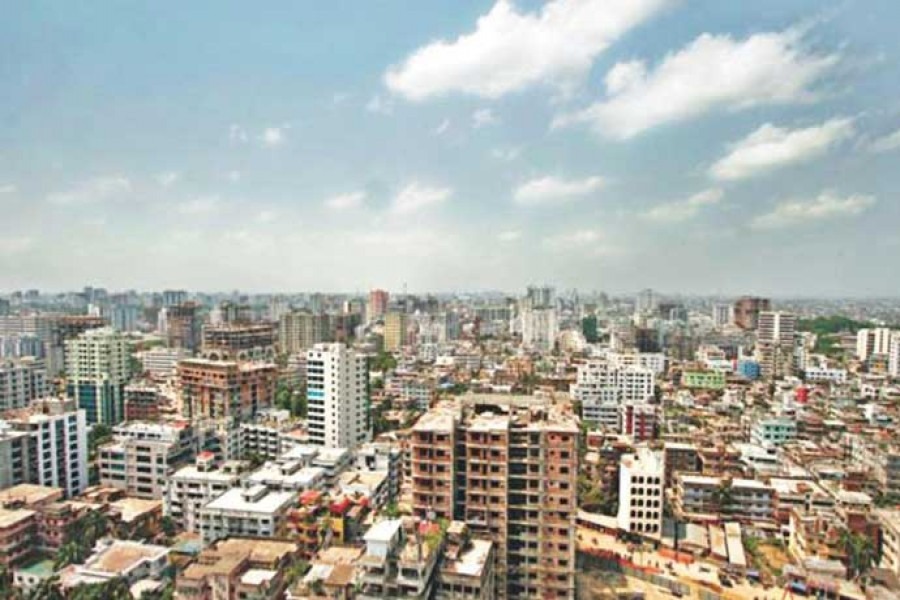
Throughout the year, residents of Dhaka face a myriad of civic nuisances. In the sweltering summer months, Dhaka transforms into a heat island, taking a heavy toll on public health, labour productivity and the economy. Monsoon season brings its own set of woes, with waterlogged and pothole-ridden roads bringing the city to a standstill. Furthermore, the onset of winter brings a surge in air pollution, shrouding the city in a thick haze of smog. It is because of the manifestation of one adversity after another in each season, compounded by the perennial issue of traffic congestion, outbreak of mosquito-borne diseases and overburdened utility services, Dhaka is rapidly becoming a mess and increasingly uninhabitable.

Runaway population growth in the city is putting tremendous pressure on its open spaces and wetlands. Parks, fields, and open spaces have disappeared or are disappearing. We are left with fewer playgrounds. Water bodies disappeared long ago. And now even the rivers are dying due to pollution and encroachment. Apparently, it never dawned on the decision-makers that disappearance of greeneries and wetlands would have a disastrous impact on the environment of the city. Only some experts and environmentalists opposed this suicidal tendency of pursuing 'development' at the cost of environment.

Ideally, a city should have at least 15 per cent green space and 10-12 per cent wetlands. But a study by BIP found that green space in central Dhaka has shrunk to a mere 7.09 per cent, while wetlands cover a meager 2.9 per cent of the city's area. That being so, effective measures must be taken with urgency to ensure properly planned urbanisation. Strict monitoring and vigilance of RAJUK and city corporations is a must to stop unplanned and haphazard urbanisation. Development without proper planning is counterintuitive. No development project should be implemented that harms the environment unless we want to expose ourselves to environmental degradation.

The Milestone incident should serve as a wake-up call. It is time to revisit our development priorities and reframe our policies with a future-oriented vision that puts human safety, environmental integrity, and urban functionality at the core. If lessons are not learned now, the cost of inaction will be far greater.​
 

Climate crisis is a burning future
A sociological reading of the anthropocene


Matiur Rahman
Published :
Jul 29, 2025 00:13
Updated :
Jul 29, 2025 00:13

1753748903225.webp

Scientists estimate that by 2050, one in every seven people in Bangladesh will be displaced due to negative impact of climate change —Agency Photo

The term "anthropocene" is not merely a signifier of a new geological epoch; it fundamentally questions the relationship between modern human society and nature. It denotes an era in which human activities have drastically altered the Earth's geomorphology, climate, and ecosystems.

However, from a sociological perspective, 'humanity' here is not a singular, undifferentiated entity. Rather, the crucial questions are: Which humans? Which class? Whose economic system? These inquiries form the bedrock of Anthropocene sociology, a field that gained prominence in the 2010s, with influential theorists such as Andreas Malm and Jason W. Moore at its forefront. These scholars help us understand that the climate crisis isn't just an environmental problem; it's intricately linked to our social, economic, and power structures.

Andreas Malm, in his seminal work 'Fossil Capital: The Rise of Steam Power and the Roots of Global Warming', powerfully argues that the use of fossil fuels during the Industrial Revolution was neither a natural nor a technological inevitability. Instead, it was fundamentally a political and class-based decision, driven by the desire to control labour, maximise production, and preserve capital. Malm illustrates that fossil fuels were not just a source of energy; they were a potent weapon of social power, enabling the industrialisation and imperialism of wealthy nations.

Jason W. Moore, in his influential book 'Capitalism in the Web of Life', takes Malm's argument a step further, contending that we are now living not in the Anthropocene, but in the "Capitalocene"-the age of capital. According to Moore, capitalism doesn't merely exploit nature; it reorganises it to suit its own needs. Rivers, forests, animals, and even the climate itself become commodities for increasing capital. For example, instead of viewing the Amazon rainforest merely as a habitat for trees and animals, capitalism sees it as a vast tract of land for soybean cultivation or cattle ranching, both of which can maximise profits in the global market. This analysis suggests that climate change is not an external environmental crisis, but an internal crisis of capitalism itself-rooted in its insatiable demands and the imperative of infinite growth.

This profound sociological analysis brings our focus sharply to the realities of Bangladesh. While Bangladesh is often presented on the international stage as a 'victim' of climate change, in truth, it is a devastating frontline of capitalist exploitation. The cyclones, floods, and river erosion occurring in the delta formed by the Padma, Meghna, and Jamuna rivers are not merely acts of nature; rather, each 'natural' disaster in this land is a far-reaching consequence of historical inequalities, global colonialism, and the structural fragilities of the world economy.

Events like Sidr, Aila, Amphan, or recent floods are part of a larger international framework-one created by the industrialised nations of the Global North through their extreme consumption of fossil fuels, leaving the Global South to bear the brunt of the destruction. This disparity is not just environmental; it's a vivid reflection of deep economic and power imbalances, where wealthy nations evade responsibility for their historical carbon emissions and push vulnerable countries to the brink.

The ecological crisis of the Sundarbans, the world's largest mangrove forest, extends beyond the mere rise in sea levels or increased salinity. Deeper reasons underpin this crisis. Environmentally destructive practices of coastal shrimp farms, which disrupt the Sundarbans' natural sediment deposition system and convert freshwater sources into saline ones, are a primary cause. Furthermore, the hegemonic attitude of neighbouring countries in water management, particularly the control over upstream river water flow, negatively impacts the Sundarbans' ecosystem.

In addition, blind development policies, often under the guise of mega-infrastructure projects, such as the construction of coal-fired power plants near the Sundarbans, are further pushing this fragile ecosystem into crisis. Similarly, Dhaka's severe waterlogging isn't solely due to heavy rainfall; at its root are mismanagement, profit-driven real estate development that fills wetlands and canals with unplanned construction, and the unplanned eviction of the city's poor, which completely disrupts their lives and livelihoods.

These events, in Malm's words, constitute "socio-ecological sabotage"-a coordinated destruction of society and nature, where capitalism uses both humans and the environment for its gain, ultimately destroying them. In Bangladesh, this process is observed daily-ordinary people lose their land, agricultural lands erode, and rural populations are forced to seek refuge in urban slums, devastating their lives and livelihoods.

Climate-driven migration is now a harsh reality in Bangladesh, particularly in coastal areas like Khulna, Satkhira, Barguna, and Patuakhali. People there are being forced to leave their homes not only due to natural reasons, but also due to human-made causes.

These migrants often face discrimination, exploitation, and a lack of basic services in their new environments. The very countries responsible for global carbon emissions now use terms like "climate resilience" and "sustainable development" to superficially praise Bangladesh. Yet, they demonstrate no genuine empathy or willingness for structural change. This is merely a rhetoric designed to deflect their true accountability towards affected nations and absolve themselves of their historical carbon emission burden.

In this context, Anthropocene sociology compels us to critique conventional notions of "resilience" and "adaptation." While these concepts may sound positive, in reality, they often impose a moral burden on those affected by disasters. They implicitly demand that vulnerable populations 'cope' with their circumstances, disregarding the underlying socio-political structures, the insatiable greed of capitalist growth, and the accountability of international institutions. For example, when a coastal village is advised to shift from traditional livelihoods due to salinity, it masks the systemic pressure of the capitalist system on their culture, indigenous knowledge, and way of life.

Particularly in Bangladesh, women, who are disproportionately affected by environmental crises, are often presented as marginalised and passive recipients in development projects. Water scarcity, food insecurity, and climate-related health risks disproportionately impact women and children, as their daily lives are more reliant on water and food sources. When men migrate to cities or other areas for work, the burden on women to manage the household and family often increases significantly.

Yet, they are rarely included in policy-making discussions, and their experiences or perspectives are largely ignored. This constitutes another form of gender-based inequality-one that remains hidden behind the supposed universality of the Anthropocene's 'humanity'. No sustainable solution is possible without incorporating women's experiences and knowledge

Anthropocene sociology also challenges our understanding of time. According to conventional development paradigms, time is viewed as a linear progression, where progress occurs incrementally. However, the climate crisis shatters this linearity. It confronts us with two complex temporal concepts: slow violence and deep time. Slow violence refers to a form of violence that unfolds gradually, often invisibly, and with long-term consequences, such as the slow salinisation of soil or ongoing river erosion that affects generations.

Deep time refers to geological time, which is vastly longer than human history, and where the long-term impacts of human-made changes transcend our current lived experiences. In Bangladesh's coastal regions, people feel that time is a slow yet certain pace of destruction, where memories and future uncertainties perpetually intertwine with the present. This slow violence, though invisible, has far-reaching effects, extending across generations and exerting profound pressure on human psychology and social structures.

In this dire context, what should be our course of action in Bangladesh? Firstly, from a sociological perspective, we must stop perceiving disasters as 'natural'. Disasters are not merely acts of nature's wrath; rather, they are the manifestations of socio-political events. This understanding is the first step towards finding solutions. We must recognise that floods and cyclones are not just meteorological phenomena; their intensity and impact reveal the weaknesses of our existing economic and social structures.

Development and sustainable management must not be confined to mere technological solutions; instead, they must be transformed into a framework based on justice, power, and rights. This goes beyond just building embankments or cyclone shelters; it's about ensuring social and economic justice. We must ensure that funds received from climate finance truly reach the affected populations and that they are aware of their rights.

In a country like Bangladesh, where the climate crisis knocks on our doors daily, this sociology is not just an analysis-it is a weapon of resistance. If we genuinely desire change, we must dismantle this narrative of capitalist development-or endure the inevitable burning future. Bangladesh's future rests not solely in the hands of nature but on our collective social and political resistance. This struggle is not just about environmental protection; it is a fight for justice, equality, and the very survival of humanity.

Dr Matiur Rahman is a researcher and development professional.​
 

Time to stop Dhaka from rolling to ecological disaster
29 July, 2025, 00:00

DHAKA appears to be hurtling towards an ecological disaster as its last remaining trees and water bodies are being wiped out in the name of development. A recent Change Initiative study shows that in 44 years, the capital has lost a half its tree cover and 60 per cent of its water bodies. The research shows that green coverage fell from 21.6 per cent in 1980 to 11.6 per cent in 2024 while water bodies declined from 12.3 per cent to just 4.8 per cent. Built-up areas, meanwhile, expanded more than sevenfold, from 20.7 square kilometres to 148.8 square kilometres, replacing fields, ponds and vegetation with concrete. Temperatures are rising accordingly. In 1990, the maximum average was 36.8°C and by 2024, it has reached 39.8°C. Land surface temperature in neighbourhoods such as Shyampur, Hazaribagh and Rampura regularly crosses 32°C. This is viewed as the consequence of decades of flawed policies that have considered the nature as disposable.

The decline is not only stark but far below the global minimum for a healthy urban environment. The World Health Organisation recommends at least 9 square metres of tree cover and 4.5 square metres of water body space per urban resident. Dhaka fails on both counts. In Dhaka’s north, the average tree cover per person is just 4.23 square metres and in the south, it is 2.33. Per capita water body space is only 1.79 square metres in the north and a mere 0.97 square metre in the south. The study shows that areas such as Kafrul, Rampura, Bangshal, Sutrapur and Wari have virtually no trees or water body left. A 2021 study showed a 46.1 per cent decline in vegetation and an 8.8 per cent decline in water bodies in 1993–2020 while built-up zones expanded by 67.4 per cent. Healthy vegetation now makes up 2 per cent of city land, down from 17 per cent in 1989. The effects are visible: heat, flash flooding, poor air quality and a loss of resilience. Zones such as Turag, Uttarkhan and Demra, where some natural cover survives, are cooler and more stable, suggesting that trees and water are no luxury in a city.

The authorities should, therefore, act decisively to stop the ecological decay. Urban policies should shift from concrete-centric development to one anchored in ecological survival. This requires built-up density limits, canal restoration, wetland protection and maintenance of WHO standards for per capita green and blue space. If Dhaka continues down this path, it will not merely be congested and chaotic, it will also be unsustainable and uninhabitable.​
 

World Tiger Day
‘If tiger survives, Sundarbans will survive’

The Sundarbans is now the last refuge for wild tigers in Bangladesh. Their primary prey is the spotted deer.

Md Anwarul Islam
Published: 29 Jul 2025, 08: 15

1753835533932.webp

A Royal Bengal Tiger at the Sundarbans File photo

Today, 29 July, is World Tiger Day. This year, Bangladesh has chosen the theme: “Increase in Tiger Population, Prosperity of the Sundarbans.”

The tiger is Bangladesh’s national animal. Our national cricket team is famously known as the “Tigers,” and the East Bengal Regiment of the Bangladesh Army bears the tiger in its logo. For these reasons, Bangladesh observes this day with significance.

According to national tiger census data, Bangladesh recorded 106 tigers in 2015, 114 in 2018, and 125 in the most recent 2024 survey. Despite facing numerous threats, the tiger population in Bangladesh is increasing — a hopeful sign. For this, we must express our gratitude to the forest department and the local communities of the Sundarbans.

The Sundarbans is now the last refuge for wild tigers in Bangladesh. Their primary prey is the spotted deer.

According to tiger experts, shortages of deer pose a greater threat to tigers than direct poaching, because without enough food, tigers become weak, lose their immunity, and human-tiger conflict increases.

On 17 July, I saw a news report where members of the Gyanpara patrol outpost in the Sharankhola Range of the Eastern Sundarbans arrested two people on a passenger bus carrying 10 kilograms of venison. In a photo, the sack was labeled with the recipient’s name, phone number, and destination in Dhaka.

Despite the sincere efforts of the forest department, deer poaching in the Sundarbans will not stop as long as demand exists elsewhere. Yet, when blame is placed, it almost always falls on the forest department — never on the consumers.

Currently, there are many deer farms in the country. The main argument in favour of farming deer was that it would reduce pressure on wild deer populations in the forests. However, I do not know any scientific reason why deer farms still exist and are increasing in number here.

A friend recently told me that some wealthy people wanted this to happen. But no one would dare to keep live deer brought from the Sundarbans on their farms. I couldn’t tell my friend that around 2012, three tiger cubs from the Sundarbans were smuggled into Dhaka. Friends in the Forest Department’s Crime Control Unit surely know well what is happening to other endangered species. We all need to take responsibility. In India, wildlife farming is banned.

A survey showed that over 90 per cent of people living around the Sundarbans know that hunting deer and consuming deer meat is illegal.

Yet they continue this practice because deer meat is often cheaper than other meats. This is because the sellers do not have to pay to buy the deer, unlike other livestock which must be purchased before selling. In Vietnam, serving wild animal meat to guests used to be a symbol of prestige. As a result, Vietnam lost its last wild tiger around the year 2000.

Many people believe that the deer population in the Sundarbans is increasing significantly and that even if a few are hunted, they will not disappear. For their information, there was a species of pigeon in North America called the Passenger Pigeon, whose population once numbered between 3 to 5 billion. When they flew in flocks, the sky looked darkened by their numbers. However, due to habitat destruction and uncontrolled hunting, this species became extinct within just 100 years.

The tiger is a keystone species for the Sundarbans. If the tiger survives, the Sundarbans’ ecosystem and biodiversity will naturally be preserved, and the Sundarbans itself will survive. The local people consider the Sundarbans like a mother—it protects them from storms and floods, saves lives, and provides food. According to them, if the tiger survives, the Sundarbans will survive, and if the Sundarbans survives, Bangladesh will survive.

With the cooperation of the Forest Department and WildTeam, 450 volunteers from the villages surrounding the Sundarbans are tirelessly working to conserve the tiger. Members of the Village Tiger Response Team, tiger friends, and tiger scouts are our social capital.

The theme of Tiger Day gives me hope. The number of tigers indicates the health of the Sundarbans. If the Sundarbans is healthy, our mental health will also improve. This will also affect our national happiness index. This idea of measuring overall national happiness and wellbeing has come from Bhutan. They also view the increase in tiger numbers as growth in the national happiness index. Bangladesh has now taken a step on this hopeful ‘Silk Road’.​
 

Rizwana calls for stronger action against wildlife traffickers

1753837888172.webp

File photo

Environment Adviser Syeda Rizwana Hasan today called for stronger action against wildlife crimes, particularly tiger trafficking and poaching.

"We must stand firm and use all our strength against tiger traffickers and poachers. The benefits of tiger conservation must be made visible to the public," she said while speaking as the chief guest at a discussion held today at the Forest Department headquarters in Agargaon, Dhaka, marking World Tiger Day 2025.

The environment adviser emphasised that the tiger is not merely a wild animal -- it is a source of national pride and a symbol of our identity.

"Just as we are proud of the Sundarbans, we are equally proud of the Royal Bengal Tiger. We associate the tiger with courage, love, and heroism. Even our national cricketers are affectionately referred to as 'Tigers' -- a testament to the deep emotional connection we have with this majestic animal," she said.

Highlighting recent tiger census data, she noted that the tiger population in the Sundarbans has increased due to some effective conservation initiatives.

"This is promising," she said, "but more robust and long-term efforts are needed to regulate deer hunting, prevent recurring forest fires, and combat poaching."

Rizwana further said that there is a direct link between tiger deaths and illegal trafficking. Additionally, human-tiger conflict is rising, especially in fringe areas of the Sundarbans. To address this, plans are underway to establish social safety zones for local communities.

Addressing the increase in forest crimes, Rizwana urged, "We need lists identifying those involved in trafficking as well as those who could be diverted with alternative livelihoods, so that appropriate actions can be taken."

"To protect our heritage, conserve the environment, and save our tigers, we must remain united and resolute," she added.

Farhina Ahmed, secretary of the Ministry of Environment, Forest and Climate Change, attended the event as the special guest. The discussion was chaired by Mohammad Amir Hossain Chowdhury, chief conservator of Forests.​
 

Members Online

Latest Posts

Back
PKDefense - Recommended Toggle