| Global Defense, OSINT & Geopolitics Wire

[🇧🇩] Save the Rivers/Forests/Hills-----Save the Environment

[🇧🇩] Save the Rivers/Forests/Hills-----Save the Environment
661
28K
More threads by Saif

G Bangladesh Defense

We must restore momentum in environmental governance

18 March 2026, 00:16 AM
Muhammad Muktadirul Islam Khan

1774313120972.webp

FILE VISUAL: ANWAR SOHEL

The environment remains a priority concern in Bangladesh given its status as one of the most vulnerable countries in terms of environmental degradation and climate change impacts. The country’s riverine geography, low-lying coastal regions, high population density, and inadequate capacity to cope with environmental changes have made millions of people vulnerable to floods, storms, cyclones, ecosystem degradation, and pollution-related hazards. Changes in climatic patterns have become increasingly evident in recent decades, affecting lives, livelihoods, and overall wellbeing. Bangladesh currently ranks 13th globally in the Long-Term Climate Risk Index, and over the past two decades, some 185 extreme weather events have resulted in 11,450 deaths and Tk 372 crore in economic losses. Continued degradation of environmental conditions is also threatening its broader social stability. Environmental considerations, therefore, are becoming increasingly critical to national policy debates.

Over the last two decades, Bangladesh has experienced clear momentum in environmental governance. Significant progress has been made in recognising the country’s environmental vulnerability and in shaping a policy environment with stronger institutional arrangements to tackle environmental challenges. The Bangladesh Climate Change Strategy and Action Plan (BCCSAP), acknowledged as one of the earliest comprehensive national-level climate-related policy frameworks among the developing nations, was adopted in 2009, outlining priorities for adaptation, mitigation, and institutional capacity building. In 2010, The Environment Court Act was enacted, providing for specialised courts to address environment-related offences and strengthening the enforcement of environmental laws. The establishment of the Bangladesh Climate Change Trust Fund (BCCTF), in the same year further demonstrated the commitment to finance climate adaptation and resilience initiatives using domestic resources, marking an important step towards sustainable climate finance.

The policy momentum continued in 2011, when environmental protection received constitutional recognition through the inclusion of Article 18A, which mandates the state to protect natural resources, biodiversity, forests, wildlife, and wetlands. In 2018, the Bangladesh Delta Plan 2100 was developed, integrating water management, climate change, and land-use strategies across six specific hotspots to reduce floods, droughts, and salinity risks. All these initiatives laid a strong foundation for environmental governance and created significant policy momentum in addressing the country’s environmental priorities.

However, the momentum that had gradually developed over previous decades could not be sustained during the interim administration, which assumed office in August 2024 and transferred power in February 2026. Development planning and implementation trends during that period reflected a weaker performance in environmental and climate change actions. In both FY2024-25 and FY2025-26, the Ministry of Environment, Forest and Climate Change received only about 0.23 percent and 0.27 percent of the national budget respectively—allocations that remain far below the roughly one percent level that many policy analysts consider necessary to effectively address Bangladesh’s environmental challenges. The implementation of environmental actions by the interim government also showed similar weaknesses. Overall Annual Development Programme (ADP) spending fell to only 68 percent in FY2024-25—the lowest in 49 years—while development spending up to December 2025 in FY2025-26 reached only 17.54 percent, the lowest first-half implementation rate in the past five years. These trends indicate persistent gaps between the country’s environmental policy commitments and their actual delivery.

The period of the interim government also witnessed several incidents related to the protection of natural resources and ecologically sensitive landscapes that drew widespread public criticism. The looting of white stones from Sylhet’s Sada Pathor area and continued illegal sand extraction from rivers across the country caused serious ecological damage, clearly reflecting weaknesses in regulatory enforcement during that period.

With the end of the interim administration and new political leadership now in the driving seat, Bangladesh has another important opportunity to restore momentum in its environmental governance. The new government has made a number of commitments in its election manifesto that signal a positive intention to strengthen environmental governance. These include the plantation of 250 million trees and creation of green employment opportunities by linking ecological restoration with livelihood generation; promoting integrated waste management and recycling initiatives under a circular economy framework; strengthening pollution control and environmental monitoring; exploring the development of a national carbon trading mechanism; and improving river and water resource management, along with the protection of coastal ecosystems. These commitments could play a critical role in restoring Bangladesh’s environmental momentum and reinforcing the country’s long-term sustainability agenda.

While the commitments outlined in the election manifesto reflect positive intent, many of the proposed initiatives appear more as individual actions rather than elements of a comprehensive governance framework. Over the past two decades, Bangladesh has been able to build a strong policy foundation for environmental governance, but translating this policy momentum into effective institutional practice—through stronger regulatory enforcement and adequate financial resources—remains a challenge. Addressing this should be a priority for the new government. Without strengthening the capacity of regulatory institutions, improving coordination across ministries, and ensuring consistent environmental financing, even well-designed initiatives—such as large-scale tree plantations, waste management programmes, or river restoration projects—may struggle to deliver sustainable outcomes.

Bangladesh’s environmental governance has evolved through decades of policy development shaped by the country’s acute vulnerability. Although the interim administration struggled to sustain the policy and institutional momentum built in previous years, the return of elected political leadership now presents an opportunity to restore that momentum. With stronger institutional commitment, effective regulatory enforcement, and strategic investment, Bangladesh can translate its policy foundations into concrete environmental action and move towards a more resilient and sustainable future.

Muhammad Muktadirul Islam Khan is country researcher and head of consultants at Sustainability Action Learning Lab.​
 

The Bangladesh delta plan: Between certainty and reality

21 March 2026, 15:00 PM
Willem van Deursen

My colleagues called me the Banana Man.

Not because I was particularly yellow, or easy to peel, but because of the way I ate bananas. I would strip the skin away completely, touching the fruit with my hands. My Bangladeshi colleagues found this endlessly amusing.

"The banana has its own packaging," they said. "Why strip it all away?"

Friendly laughter. Gentle teasing. But looking back now, I think the joke carried a truth I wasn't ready to hear. Perhaps I was always stripping away what was already there, the natural wrapping, the local knowledge, the lived experience, in order to get to what I thought was the essential thing underneath. Perhaps that was my mistake. And perhaps it took me twenty-five years of travelling to Bangladesh to understand it.

The journey itself is not subtle. Eleven hours in the air, then Dhaka. Chaotic, loud, overwhelming, beautiful in its own relentless way. And then, almost immediately, the bubble closes around you: the hotel, the office, the project meetings, the PowerPoints. The familiar rhythm of international development work, which has a way of making every city feel like every other city, as long as you stay inside it.

For years, that was my Bangladesh. I was a solid engineer. I knew the science, I trusted my models, I had the data and the computing power to back up everything I said. I told myself I understood the delta.

I did not understand the delta.

In September 2018, I was part of the Dutch team working on the Bangladesh Delta Plan 2100, a document that dared to think eighty years ahead in a country where cyclones do not wait and policies change quickly. Long sessions. Heated debates. Whiteboards covered in arrows. I survived those sessions on bananas.

We had a remarkable team: Bangladeshi experts, Dutch colleagues, modellers, planners, economists. Those were good days. And yet, even then, something sat at the edge of my awareness. We could talk, we could model, we could laugh together. But this was more their delta than ours. They carried an intimate knowledge, a lived experience that I could never fully access from behind my models.

When the Government of Bangladesh approved the Delta Plan, I felt proud. The Dutch water sector had contributed substantially. At that moment, confidence felt like exactly what Bangladesh deserved.

As a Dutch water professional, I should have been more careful with my enthusiasm.

The moment I truly understood my limits was not dramatic. It was quieter than that, and in some ways more unsettling.

I was sitting with a group of community members in rural Bangladesh. We had our models, our outputs, our maps. I was proud of what we had built.

I watched their faces as we presented.

1774400502106.webp

Typical stages of project development and implementation. Credits: Author


They were polite—Bangladeshi hospitality is genuine and disarming—but something was wrong. They could not recognise what we were showing them. Not because they lacked intelligence, but because we were describing a system that bore little relationship to the system they actually lived in. We were talking about flood risk and hydraulic gradients. They were talking about where their children go to school when the water rises, whether their land would still be theirs next season, how a family decides when to move, when to stay, and what gets left behind either way.

I was speaking the language of the expert. They were speaking the language of experience. Those are not the same language.

The models were not wrong, exactly. The science was sound. But the models were answering questions that nobody in that room had asked. We had travelled eleven hours to show people a mirror, and the mirror was reflecting something they did not recognise as themselves. It was reflecting us, the experts, not them, the locals.

I returned to Dhaka in 2022 for an international conference on the Delta Plan. The halls were full. Slides polished. Words like integrated, transformative, climate-proof floated through the air. And yet something had shifted. The plan that once felt like a national narrative now read like a sector document. The voices of farmers, youth, and local communities were absent.

During a coffee break, I stood at a window overlooking the city. A colleague joined me. We stood in silence for a moment.

"Do you think it will work?" I asked.

He smiled. "Not the way we planned it."

We laughed. Not bitterly, but with something like relief.

This is, I have come to believe, the central problem with the way the Dutch engage with water management beyond our own borders. We arrive carrying assumptions we have never examined. In the Netherlands, floods are fear. Boundaries are rigid: water here, land there. In Bangladesh, floods bring life. Fresh sediments enrich the land. Traditional communities understand the delta as dynamic, fluid. Adaptation is not about stopping the flow; it is about moving along with it.

1774400542838.webp

Sketching the logic, debating the data, and seeking the mandate. Credits: Author

And there is something even deeper we choose to ignore. In the Netherlands, we have an extraordinary trust in government, built over centuries of shared water management, and of knowing that if your neighbour's dike fails, yours fails too. We assume, when we export our solutions, that this social contract travels with them. It does not. In many of the places we work, the relationship between communities and the state is defined not by trust but by abandonment. People have learned to build their own resilience outside of any masterplan, including ours.
When we ignore this, we are not just making a technical error. We are making a human one.

Here is the detail that humbles me most. In one of our projects, we proposed dynamic polder management, allowing controlled flooding, moving with the water rather than against it. The Bangladeshi experts resisted. Too soft. Not infrastructural enough. They wanted embankments, gates, certainty.

Years later, the Netherlands adopted the same approach. We called it dynamic coastal management. Cutting-edge, innovative, distinctly Dutch. Our Gift to the World.

It was the same concept. The same logic Bangladesh had practised for generations.

Perhaps knowledge does not travel in straight lines. Perhaps it travels in loops.

When I returned to Dhaka after the conference, a colleague greeted me with a grin and a bag of bananas.

"For you," he said. "We remember."

It meant more to me than any conference applause.

I am still an engineer. I still believe in models, data, and technical expertise. But expertise without humility is just another way of not listening. And in a world where the people most affected by floods and rising seas are rarely in the room when decisions are made, not listening is not a neutral act.

The most important distance in this work is not the eleven hours between Rotterdam and Dhaka. It is the distance between your certainty and someone else's reality.

Travel the last 100 metres. Sit down. Strip away a little less. And pay attention to what was already there.

Willem van Deursen is a senior integrated water resources expert and founder of Carthago Consultancy, with over 25 years of experience using modeling at the interface of hydrology, policy, and livelihoods to improve people’s lives.​
 

Sorting out Dhaka's trash crisis

SYED MUHAMMED SHOWAIB
Published :
Mar 28, 2026 00:10
Updated :
Mar 28, 2026 00:10

1774656564176.webp


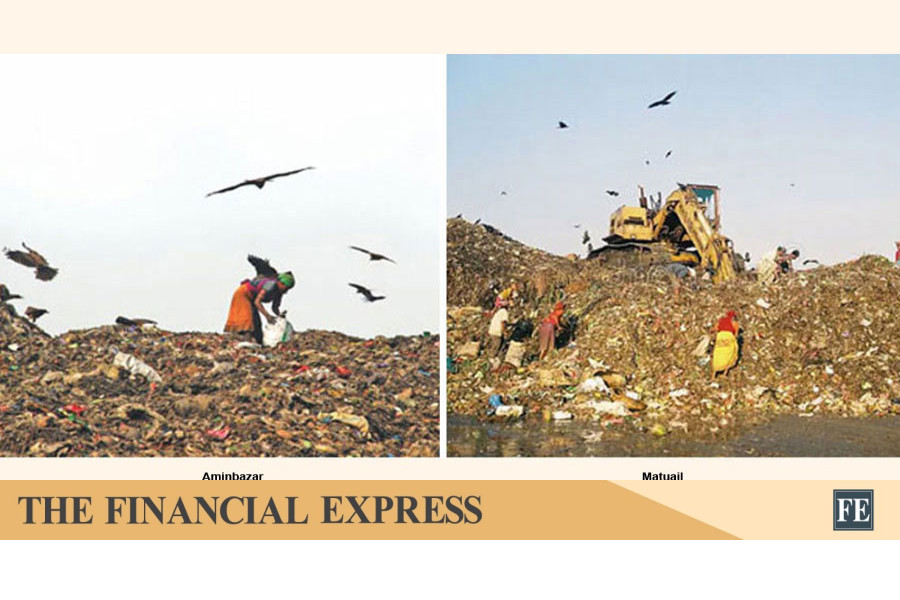
There are cities where garbage is a problem, and then there is Dhaka, where garbage has become a condition of existence. It lines the waterways, chokes the drains after moderate rainfalls and piles high on street corners waiting for collection that never seems to come. Much of it eventually finds its way to two vast dumping grounds on the edges of the capital. One, in Aminbazar, absorbs the waste generated under Dhaka North City Corporation, while the other, Matuail landfill, bears the burden of the South. These are the places where the grim work of waste management reaches its final, forsaken stage. However, if any single site captures just how catastrophic this condition has become, it is Matuail landfill. Originally designated a sanitary landfill, it has since degenerated into a sprawling 181-acre hazard zone, a menace that threatens the very air residents breathe and the water they depend on.

In recent months, methane accumulation beneath the waste at Matuail has caused the landfill to catch fire repeatedly and without warning. Thick plumes of toxic smoke rise from the site and drift across large parts of South Dhaka, seeping into homes, schools and hospitals. The smell of burning plastic and decomposing refuse becomes inescapable for those nearby, and breathing difficulties follow close behind. What makes these episodes particularly alarming is not only their intensity but their reach. The smoke has been known to travel as far as Motijheel, extending its impact well beyond its immediate surroundings.

The scale of waste that arrives at Matuail every day is almost unimaginable in its sheer volume. Between 3,200 and 3,500 tonnes of solid waste are deposited there daily, the combined refuse of over 20 million people living in one of the most densely populated urban agglomerations on earth. Over the past three decades, daily waste generation across the two city corporations has more than doubled to over 7,500 tonnes, but the infrastructure meant to absorb this relentless tide has failed to keep pace. The Matuail landfill was established in 1989 on 50 acres. Its designed capacity was exhausted by 2006. An additional 50 acres were subsequently added and by 2020 even the expanded site had been overwhelmed. Today, the garbage mounds at Matuail rise between 50 and 80 feet in many places, a physical monument to what decades of administrative and political negligence inevitably produce when left unchecked.

Understandably, what transforms a landfill from an eyesore into a public health emergency is its absence of scientific management. In a properly engineered sanitary landfill, waste is compacted and covered with soil at regular intervals, leachate is collected and treated to prevent contamination of groundwater, and gas collection systems capture methane produced by organic decomposition before it can reach dangerous levels. None of these basic standards are being met at Matuail landfill. Waste is dumped without soil covering while budget constraints and staff shortages have become the habitual official excuses.

In 2021, the Canadian greenhouse gas monitoring firm GHGSat (greenhouse gas satellite) estimated methane emissions from the decomposing organic matter at the landfill at around four tonnes per hour, a figure that has almost certainly risen since. This methane accumulates within the waste layers until it ignites. Sometimes this happens through solar heat and spontaneous combustion. Sometimes it happens because workers deliberately set fire to garbage to reduce its volume.

Environmental scientists describe the practice of burning waste at landfills as a crime against public health, and for good reason. The toxic plume rising from burning mixed waste, which in Dhaka's case combines organic material, plastic, polythene, metals and industrial residue all dumped together without any separation, releases dioxins, furans, heavy metals and fine particulate matter that are acutely harmful at any level of sustained exposure. Its consequences are devastating and also quantifiable at a city-wide scale. Dhaka regularly ranks among the most polluted cities in the world, with an average air quality index hovering around 200 and periodic spikes exceeding 600, well within hazardous range. The National Institute of Diseases of the Chest and Hospital, the country's primary respiratory care facility, treated around 195,000 patients last year, with doctors attributing the steady rise directly to worsening air quality.

This is the reality against which the current administration's recent initiatives must be assessed. The administrator of Dhaka South City Corporation has announced a signed agreement with a South Korean private firm to process the daily waste arriving at Matuail and convert it into gas, electricity and fertiliser. At the policy level, the BUET has been brought into discussions on whether the heavy machinery required for waste processing can be developed domestically rather than imported. In a separate move, prime minister Tarique Rahman has paid Eid bonuses to waste management workers from personal funds, a gesture that gave recognition to a long-neglected workforce. These are not trivial steps, and it would be unfair to dismiss them as purely performative. The intent behind them, if followed through with institutional seriousness and sustained political attention, could represent a genuine beginning.

One fundamental, indispensable requirement, however, continues to be ignored, and that is the source segregation of waste at the collection stage. This is the most elementary requirement of any modern waste management system and the one that remains entirely absent from Dhaka's practice. In countries with functional infrastructure, separating organic from inorganic waste at the point of generation is so basic it amounts to a civic habit instilled from childhood. In Dhaka, everything goes into the same bin, the same collection van, the same landfill, producing the methane-rich, fire-prone, leachate-contaminated disaster that Matuail has become. No processing facility, whether Korean-built or domestically engineered with BUET's assistance, can operate at meaningful efficiency on unsegregated mixed waste. The current administration's partnerships and pilot plants will succeed or fail entirely on whether the government is willing to invest in the upstream changes that begin at the household level, with every resident sorting what rots from what does not before it ever reaches a collection van. Without that foundation, the new facilities risks becoming yet another piece of underused infrastructure, another well-intentioned initiative that would never reach their stated purpose.​
 

Beyond Acacia and Eucalyptus: Rethinking forest restoration in Bangladesh

28 March 2026, 00:43 AM

Reza Khan

Bangladesh is part of one of the world’s richest biodiversity regions, yet its natural forests continue to shrink and degrade. In response, plantation programmes using fast-growing exotic species such as Acacia and Eucalyptus are often promoted as quick solutions to restore tree cover and meet timber demand. But an important question remains: can monoculture plantations truly replace the ecological functions of natural forests? The answer to that question will shape the future of Bangladesh’s forests and wildlife.

A legacy shaping forest management

Since the birth of Bangladesh in 1971, the country’s forestry administration has largely been shaped by institutional traditions inherited from earlier periods. The forestry bureaucracy evolved from the colonial forestry system established under the British Empire between 1864 and 1947, continued through the Pakistan period (1947–1971), and eventually became the foundation of the modern Bangladesh Forest Department.

This historical legacy has profoundly influenced how forests have been managed over the past half-century. Colonial forestry systems were primarily designed to secure timber resources for administrative and commercial purposes. As a result, forest management often focused on timber production rather than ecological restoration or biodiversity conservation. Although Bangladesh today recognises the importance of environmental sustainability, many elements of earlier management approaches continue to shape policies and practices.

1774744956093.webp


The pitiable condition of a Eucalyptus plantation inside Chunati Wildlife Sanctuary, where a wetland has been converted into an illegal fish farm. (Taken on June 27, 2025).

Declining natural forests

Despite having legal authority over large areas designated as Reserved Forests and Protected Areas since the late nineteenth century, forest governance in Bangladesh has faced persistent challenges. Over the decades, natural forests have declined both in area and ecological quality. In many cases, forest lands have been converted into commercial plantations or gradually lost to encroachment, settlement expansion, and infrastructure development.

The condition of several protected areas illustrates this challenge. Chunati Wildlife Sanctuary, declared in 1986 to protect forest ecosystems and wildlife habitats, has long been regarded as an important conservation site. Yet observations from researchers and conservationists indicate that parts of the sanctuary have suffered from degradation, encroachment, and changes in land use. These situations highlight the continuing difficulty of enforcing forest protection laws and maintaining ecological integrity in protected areas.

Such examples raise broader questions about the effectiveness of forest governance. Strengthening monitoring, enforcement, and long-term conservation planning remains essential if the country’s remaining natural forests are to be preserved.

The rise of plantation forestry

Against this background, debates over plantation forestry have intensified. The Bangladesh Forest Department has historically promoted fast-growing exotic species such as Acacia auriculiformis and Eucalyptus camaldulensis in degraded forest areas. These species were widely introduced under social forestry and crop-sharing programmes, often supported by international development initiatives.

From a production perspective, such species offer certain advantages. They grow rapidly, provide fuelwood and timber within a relatively short time, and can quickly create visible green cover on degraded landscapes. For a country facing increasing demand for wood and energy resources, these characteristics have made them attractive options for plantation programmes.

However, the ecological implications of large-scale monoculture plantations remain widely debated. While fast-growing exotic species can produce timber efficiently, they do not necessarily restore the ecological functions of natural forests. Natural forests support complex biodiversity, including mammals, birds, reptiles, insects, and micro-organisms, along with intricate soil systems and hydrological processes. Recreating these ecological relationships through single-species plantations is extremely difficult.

Bangladesh is also a signatory to several international environmental agreements that emphasise biodiversity conservation and ecosystem restoration. These commitments further highlight the need to evaluate plantation policies carefully in relation to long-term ecological sustainability.

Lessons from regional experience

Recent discussions within the forestry community reflect differing perspectives on this issue. Some officials argue that Bangladesh should reconsider restrictions on planting species such as Acacia and Eucalyptus, citing examples from neighbouring countries like India, where these species are cultivated widely for timber and pulp production.

However, developments within India itself illustrate a more nuanced approach. In the southern state of Kerala, forestry policy has increasingly recognised ecological concerns associated with monoculture plantations. The state’s forestry programmes now emphasise sustainable plantation management, agroforestry, ecological restoration, and biodiversity conservation.

According to the Kerala Forest Department, efforts are being made to integrate traditional practices with modern techniques in order to enhance productivity while conserving ecosystem services. In several areas, policies have also encouraged the gradual restoration of exotic plantations into more natural forest ecosystems that support biodiversity, water regulation, carbon storage, and wildlife habitats.

These developments demonstrate that plantation forestry and ecological restoration need not be mutually exclusive, but they require careful planning and clear conservation priorities.

Restoring indigenous forest ecosystems

Many conservationists and environmental researchers emphasise that restoring degraded forests ultimately requires rebuilding indigenous ecological communities. Native tree species have evolved within local ecosystems over thousands of years and therefore support complex interactions with wildlife, soil organisms, and surrounding vegetation.

1774745031069.webp

An Acacia monoculture in Sherpur is failing to prevent landslides. (Taken on May 26, 2025). Photos: Dr. Reza Khan

In Bangladesh’s tropical and subtropical forests, indigenous species such as Sal and diverse mixed-evergreen trees provide habitat and food resources for a wide range of wildlife. These forests also play critical roles in stabilising soils, regulating water systems, and maintaining microclimates that support biodiversity.

Planting native species in restoration programmes can therefore help to re-establish ecological processes that monoculture plantations often fail to replicate. While this approach may take longer to produce visible results than fast-growing exotic plantations, it contributes more effectively to long-term ecosystem recovery.

A balanced way forward

A balanced approach may offer the most practical path forward. Fast-growing plantation species could still play a role in designated production forests or community forestry areas, where timber supply and fuelwood production are primary objectives. Such plantations may help reduce pressure on remaining natural forests.

However, in degraded natural forests, wildlife sanctuaries, and biodiversity-rich landscapes, restoration strategies based on indigenous species and ecological principles are likely to produce more sustainable outcomes.

The larger issue, however, goes beyond the choice between exotic and native species. Bangladesh’s forest future ultimately depends on strengthening governance systems, improving monitoring and enforcement, preventing illegal land occupation, and adopting science-based restoration strategies.

Dr Reza Khan is a wildlife biologist and conservationist with over four decades of experience in wildlife research, zoo management, and biodiversity conservation in Bangladesh and the United Arab Emirates.​
 

Agriculture, emissions and ecological strain

1774919253327.webp

New Roots Institute

IN THE fertile plains of Bangladesh, where emerald rice fields define both landscape and livelihood, agriculture has long stood as a pillar of survival. Yet beneath this green abundance lies a growing contradiction. The very practices that sustain food security are increasingly contributing to environmental degradation and climate change. As the country strives to feed over 170 million people, the expansion of farming into fragile ecosystems, inefficient water use, and emissions from rice and livestock are quietly intensifying greenhouse gas accumulation, posing a profound challenge for sustainability.

Agriculture remains central to Bangladesh’s economy, contributing over 12 per cent of gross domestic product and employing more than a third of the workforce. Rice alone occupies about 76 per cent of total cropped land and produced over 39 million tonnes in 2022–23, making the country one of the world’s largest producers. This heavy dependence, however, has driven expansion into ecologically sensitive zones — wetlands, forest edges, and coastal areas — where natural systems once acted as buffers against floods and climate shocks. Their degradation is now eroding biodiversity, weakening ecosystem services, and reducing carbon storage capacity.

The environmental costs of this expansion are particularly evident in Bangladesh’s vulnerable landscapes. Wetlands in haor regions, which historically absorbed floodwaters and supported fisheries, are increasingly converted into cropland, disrupting natural hydrological cycles. Similarly, encroachment into forested and coastal ecosystems undermines resilience to cyclones and storm surges. These ecosystems are not merely passive landscapes; they play an active role in regulating climate and absorbing emissions. Their loss accelerates carbon release while diminishing the environment’s capacity to recover.

Water use in agriculture presents another critical concern. Despite Bangladesh’s extensive river systems, irrigation accounts for nearly 88 per cent of total freshwater withdrawals, reflecting heavy dependence on water-intensive farming practices. In dry-season Boro rice cultivation, groundwater extraction has intensified, leading to falling water tables in several regions. The reliance on diesel-powered pumps further adds to emissions, with irrigation-related activities alone contributing an estimated 2.27 million tonnes of CO₂-equivalent emissions annually. Inefficient water management thus not only strains resources but also deepens the carbon footprint of agriculture.

Rice cultivation itself lies at the heart of Bangladesh’s emissions challenge. Flooded paddy fields create oxygen-deprived conditions that encourage methane-producing microbes, making rice a major source of greenhouse gases. Studies show that agricultural emissions in Bangladesh reached approximately 34.3 million tonnes of CO₂-equivalent in 2021, with rice cultivation, fertiliser use, and livestock among the leading contributors. Methane, in particular, plays a dominant role in the country’s warming impact, accounting for more than half of total emissions, with crop production and livestock each contributing roughly two-fifths.

Livestock farming further compounds the problem. The sector contributes about 16 per cent of agricultural GDP and supports millions of livelihoods, yet it is also a significant source of methane emissions through enteric fermentation and manure management. As demand for animal protein rises with economic growth, emissions from this sector are expected to increase unless mitigated through improved feeding practices, breeding, and waste management systems. This dual role — as both an economic asset and an environmental burden — highlights the complexity of agricultural transformation.

The cumulative effect of these practices is a reinforcing cycle: agriculture contributes to climate change, while climate change, in turn, threatens agricultural productivity. Rising temperatures, erratic rainfall, and frequent extreme events are already disrupting cropping patterns and reducing yields. Without intervention, this cycle risks undermining both food security and environmental stability, placing Bangladesh in an increasingly precarious position.

Encouragingly, pathways toward more sustainable agriculture are emerging. Climate-smart practices such as alternate wetting and drying (AWD) in rice cultivation have demonstrated potential to reduce water use and methane emissions significantly while maintaining yields. Research suggests that improved irrigation techniques and diversified cropping systems can lower emissions without compromising productivity. However, adoption remains uneven, often constrained by limited awareness, financial barriers, and institutional gaps.

Policy responses are gradually evolving to address these interconnected challenges. National climate strategies now recognise agriculture as both a contributor to and a victim of climate change, emphasising sustainable land use, water efficiency, and emission reduction. Investments in research and innovation — particularly through institutions such as the Bangladesh Rice Research Institute — are supporting the development of resilient crop varieties and low-emission farming practices. Yet translating policy into practice at scale remains a formidable task.

At the grassroots level, smallholder farmers face difficult trade-offs. With limited access to technology, credit, and climate information, many prioritise immediate yields over long-term sustainability. This underscores the need for targeted support systems that enable farmers to adopt environmentally sound practices without risking their livelihoods. Equally important is raising public awareness about the environmental costs embedded in food production and consumption patterns.

Bangladesh stands at a critical juncture. Its achievements in agricultural growth and food security are undeniable, but sustaining these gains in a changing climate demands a fundamental shift. Protecting fragile ecosystems, improving water efficiency, and reducing emissions from farming are no longer optional — they are essential to the country’s future.

The challenge is not to reduce agriculture, but to redefine it. By aligning productivity with sustainability, Bangladesh can transform its food systems into engines of resilience rather than sources of ecological strain. The fields that have long fed the nation must now also help safeguard its climate, ensuring that growth does not come at the cost of the environment on which it ultimately depends.

Dr Makhan Lal Dutta is an irrigation engineer and CEO of Harvesting Knowledge Consultancy.​