 Bangladesh Defense

Saif
Senior Member
- Joined
- Jan 24, 2024
- Messages
- 22,150
- Likes
- 9,869
- Nation

- Axis Group


Understanding November 7 beyond competing political narratives
Some days slip into history almost unnoticed, their significance revealed only with the passage of time. Others arrive amid uncertainty and upheaval, carrying questions that generations later continue to ponder. November 7, 1975 was such a day.
National Revolution and Solidarity Day
Understanding November 7 beyond competing political narratives
Mohiuddin Ahmad
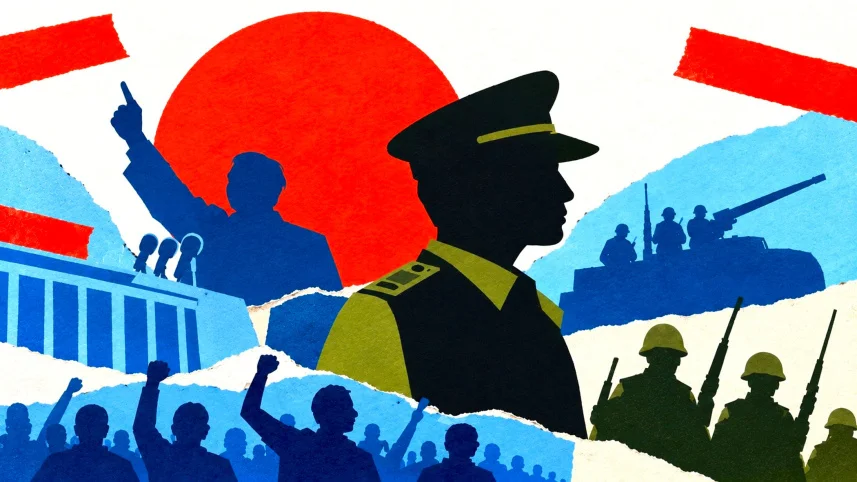
VISUAL: SALMAN SAKIB SHAHRYAR
Some days slip into history almost unnoticed, their significance revealed only with the passage of time. Others arrive amid uncertainty and upheaval, carrying questions that generations later continue to ponder. November 7, 1975 was such a day.
For some, it entered the national memory as a soldiers’ and people’s uprising. For others, it was unmistakably a military coup. Some regard it as an extension of the turbulence unleashed by the events of August 1975; others see it as the beginning of a new political era whose consequences shaped Bangladesh for decades. However, no matter which interpretation one may embrace, one thing remains beyond dispute: by the morning of November 7, Bangladesh had become the stage of a profound national crisis.
Barely four years had passed since independence. The young republic, born in sacrifice and sustained by the dreams of liberation, entered one of the most turbulent chapters of its existence. Political authority was contested, institutions were strained, and competing visions of the nation’s future collided with growing intensity. The events of November 7 were not the work of a single actor, nor the triumph of a solitary ideology. Rather, they emerged from the convergence of powerful currents that had been gathering force for many months.
The Bangladesh that stepped into 1975 was still a fragile nation in the making. Economic distress, the devastating famine of 1974, administrative shortcomings, political polarisation, and mounting public disillusionment combined to cast a long shadow over the country’s future. Against this backdrop, the establishment of one-party rule in the name of BAKSAL marked a defining moment in the nation’s political evolution. Its supporters portrayed it as a bold attempt to foster national unity and accelerate state-building. Its critics, however, saw it as a departure from pluralist democracy and a concentration of political power. The debate remained unresolved when the dramatic events of August 15 abruptly transformed the political landscape. President Sheikh Mujibur Rahman was assassinated. His government collapsed.
If August 15 brought one political order to an end, it did not establish another with certainty. Within the armed forces, opinions were deeply divided over the events and the nation’s future course. Then came the developments of November 3. Led by Brig Khaled Mosharraf and a group of fellow officers, a fresh intervention shifted the balance of power within the military. Maj Gen Ziaur Rahman was placed under restrictions.
Public perceptions at the time were equally diverse. Many believed that political forces associated with the pre-August order might soon regain influence. Accurate or not, such perceptions became part of the political atmosphere of the period, and atmospheres often shape history as powerfully as facts.
While developments within the military commanded national attention, another political current was gathering momentum beyond the barracks. The Jatiya Samajtantrik Dal (JSD), which emerged during the early years of independence, became a significant force among leftist political sections. Its leaders argued that the promises of liberation remained unfulfilled. Political independence, they maintained, must be accompanied by a deeper social transformation.
The JSD advocated far-reaching changes in the relationship between society and the armed forces. Among its most prominent figures was Lt Col (retd) Abu Taher, who led the party’s armed wing and became increasingly active within the cantonments. To his supporters, Taher embodied a radical democratic vision rooted in revolutionary ideals. To his critics, his ideas appeared impractical, even destabilising.
By the evening of November 6, 1975, uncertainty hung heavily over the capital. Rumours moved swiftly through the streets. Military installations simmered with tension. Reliable information became scarce, while speculation travelled faster than truth. There was a growing sense that events were moving towards another decisive turning point, though few could foresee what shape it would take. Then, on the morning of November 7, change arrived.
The events unfolded with remarkable speed. Groups of soldiers mobilised, so did political activists. Commands and counter-commands echoed through the military establishment. Power dynamics that had seemed fixed only hours earlier suddenly became uncertain. It was within this atmosphere of confusion and momentum that Ziaur Rahman was released, an event that quickly assumed national significance.
The days that followed revealed the complexity of the moment. The various actors who had contributed to the events were united neither by purpose nor by vision. Military officers, political activists, ideological movements, and state institutions often imagined very different futures. As the situation evolved, these differences became increasingly apparent. Some prioritised stability, some demanded political transformation, and others aspired to a broader social revolution.
The story of Abu Taher captures many of the contradictions of this turbulent period. Within weeks of the November events, his fortunes changed dramatically. His relationship with the emerging political order grew increasingly strained. Ultimately, he was arrested, tried, and executed. His legacy remains contested, inspiring admiration in some quarters and criticism in others.
The enduring significance of November 7 lies not merely in the fate of any single individual but in its place within the wider currents of history. The events contributed to the emergence of a new political landscape in Bangladesh. In the years that followed, Ziaur Rahman gradually became the country’s central political figure. At the same time, the upheavals of 1975 underscored the decisive role of the armed forces during a period of institutional fragility.
Viewed from the distance of half a century, November 7 appears less as a simple tale of victory or defeat than as a national crossroads. At that crossroads stood competing visions of Bangladesh: the legacy of the Liberation War, the memory of August, the uncertainties of November, the aspirations of political activists, the calculations of military officers, and the hopes and anxieties of ordinary citizens. For a brief yet consequential moment, all these forces converged.
Each participant believed that they were shaping the destiny of the nation in their own way. But history rarely unfolds according to a single design. The significance of November 7 lies precisely in its complexity. It was neither the achievement of one man nor the triumph of one ideology. Rather, it was a moment when powerful historical currents met, collided, and altered the course of Bangladesh’s political journey.
For this reason, the events remain not only influential but also enduringly contested, continuing to invite reflection, debate, and reinterpretation as the nation looks back upon one of the most pivotal days in its modern history.
Mohiuddin Ahmad is a writer and researcher of Bangladesh’s political history.
Understanding November 7 beyond competing political narratives
Mohiuddin Ahmad
VISUAL: SALMAN SAKIB SHAHRYAR
Some days slip into history almost unnoticed, their significance revealed only with the passage of time. Others arrive amid uncertainty and upheaval, carrying questions that generations later continue to ponder. November 7, 1975 was such a day.
For some, it entered the national memory as a soldiers’ and people’s uprising. For others, it was unmistakably a military coup. Some regard it as an extension of the turbulence unleashed by the events of August 1975; others see it as the beginning of a new political era whose consequences shaped Bangladesh for decades. However, no matter which interpretation one may embrace, one thing remains beyond dispute: by the morning of November 7, Bangladesh had become the stage of a profound national crisis.
Barely four years had passed since independence. The young republic, born in sacrifice and sustained by the dreams of liberation, entered one of the most turbulent chapters of its existence. Political authority was contested, institutions were strained, and competing visions of the nation’s future collided with growing intensity. The events of November 7 were not the work of a single actor, nor the triumph of a solitary ideology. Rather, they emerged from the convergence of powerful currents that had been gathering force for many months.
The Bangladesh that stepped into 1975 was still a fragile nation in the making. Economic distress, the devastating famine of 1974, administrative shortcomings, political polarisation, and mounting public disillusionment combined to cast a long shadow over the country’s future. Against this backdrop, the establishment of one-party rule in the name of BAKSAL marked a defining moment in the nation’s political evolution. Its supporters portrayed it as a bold attempt to foster national unity and accelerate state-building. Its critics, however, saw it as a departure from pluralist democracy and a concentration of political power. The debate remained unresolved when the dramatic events of August 15 abruptly transformed the political landscape. President Sheikh Mujibur Rahman was assassinated. His government collapsed.
If August 15 brought one political order to an end, it did not establish another with certainty. Within the armed forces, opinions were deeply divided over the events and the nation’s future course. Then came the developments of November 3. Led by Brig Khaled Mosharraf and a group of fellow officers, a fresh intervention shifted the balance of power within the military. Maj Gen Ziaur Rahman was placed under restrictions.
Public perceptions at the time were equally diverse. Many believed that political forces associated with the pre-August order might soon regain influence. Accurate or not, such perceptions became part of the political atmosphere of the period, and atmospheres often shape history as powerfully as facts.
While developments within the military commanded national attention, another political current was gathering momentum beyond the barracks. The Jatiya Samajtantrik Dal (JSD), which emerged during the early years of independence, became a significant force among leftist political sections. Its leaders argued that the promises of liberation remained unfulfilled. Political independence, they maintained, must be accompanied by a deeper social transformation.
The JSD advocated far-reaching changes in the relationship between society and the armed forces. Among its most prominent figures was Lt Col (retd) Abu Taher, who led the party’s armed wing and became increasingly active within the cantonments. To his supporters, Taher embodied a radical democratic vision rooted in revolutionary ideals. To his critics, his ideas appeared impractical, even destabilising.
By the evening of November 6, 1975, uncertainty hung heavily over the capital. Rumours moved swiftly through the streets. Military installations simmered with tension. Reliable information became scarce, while speculation travelled faster than truth. There was a growing sense that events were moving towards another decisive turning point, though few could foresee what shape it would take. Then, on the morning of November 7, change arrived.
The events unfolded with remarkable speed. Groups of soldiers mobilised, so did political activists. Commands and counter-commands echoed through the military establishment. Power dynamics that had seemed fixed only hours earlier suddenly became uncertain. It was within this atmosphere of confusion and momentum that Ziaur Rahman was released, an event that quickly assumed national significance.
The days that followed revealed the complexity of the moment. The various actors who had contributed to the events were united neither by purpose nor by vision. Military officers, political activists, ideological movements, and state institutions often imagined very different futures. As the situation evolved, these differences became increasingly apparent. Some prioritised stability, some demanded political transformation, and others aspired to a broader social revolution.
The story of Abu Taher captures many of the contradictions of this turbulent period. Within weeks of the November events, his fortunes changed dramatically. His relationship with the emerging political order grew increasingly strained. Ultimately, he was arrested, tried, and executed. His legacy remains contested, inspiring admiration in some quarters and criticism in others.
The enduring significance of November 7 lies not merely in the fate of any single individual but in its place within the wider currents of history. The events contributed to the emergence of a new political landscape in Bangladesh. In the years that followed, Ziaur Rahman gradually became the country’s central political figure. At the same time, the upheavals of 1975 underscored the decisive role of the armed forces during a period of institutional fragility.
Viewed from the distance of half a century, November 7 appears less as a simple tale of victory or defeat than as a national crossroads. At that crossroads stood competing visions of Bangladesh: the legacy of the Liberation War, the memory of August, the uncertainties of November, the aspirations of political activists, the calculations of military officers, and the hopes and anxieties of ordinary citizens. For a brief yet consequential moment, all these forces converged.
Each participant believed that they were shaping the destiny of the nation in their own way. But history rarely unfolds according to a single design. The significance of November 7 lies precisely in its complexity. It was neither the achievement of one man nor the triumph of one ideology. Rather, it was a moment when powerful historical currents met, collided, and altered the course of Bangladesh’s political journey.
For this reason, the events remain not only influential but also enduringly contested, continuing to invite reflection, debate, and reinterpretation as the nation looks back upon one of the most pivotal days in its modern history.
Mohiuddin Ahmad is a writer and researcher of Bangladesh’s political history.
