 Bangladesh Defense

Saif
Senior Member
- Joined
- Jan 24, 2024
- Messages
- 21,928
- Likes
- 9,837
- Nation

- Residence
- Axis Group


Bilateral relations await yet another boost
During the four-day official visit of Bangladesh Prime Minister Tarique Rahman to Japan, starts from today, two friendly Asian nations will be seeking to stand together as they face a range of challenges amid the ongoing global economic downturn arising out of the conflicts in the Middle East and E
PM TARIQUE'S VISIT TO JAPAN
Bilateral relations await yet another boost
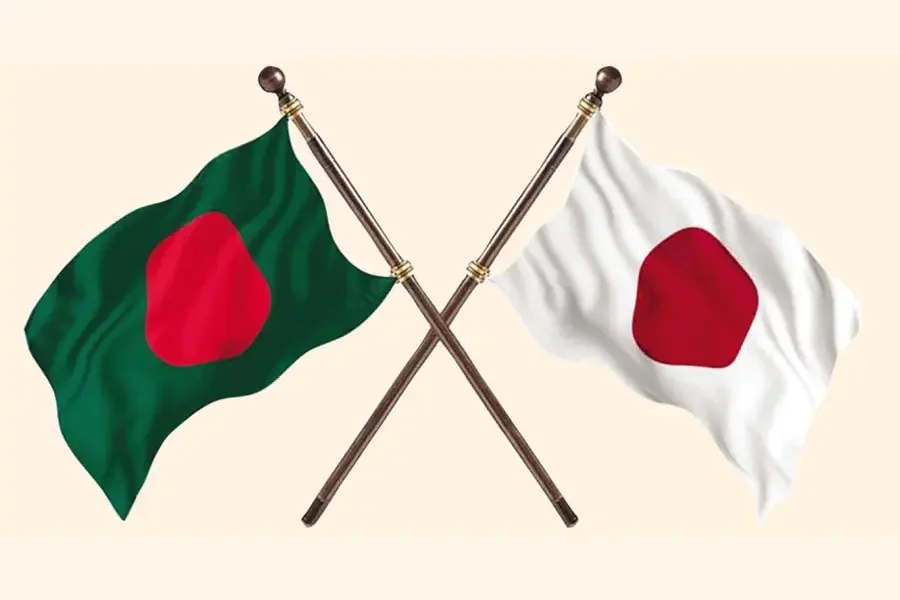
During the four-day official visit of Bangladesh Prime Minister Tarique Rahman to Japan, starts from today, two friendly Asian nations will be seeking to stand together as they face a range of challenges amid the ongoing global economic downturn arising out of the conflicts in the Middle East and Europe. The geopolitical tug-of- war at the regional level is also an issue that has to be dealt with. In that context, matters concerning shared diplomatic and economic interests will assume particular importance during the visit of the Bangladesh Prime Minister.
Despite the wide gap between the two countries' economic circumstances, it is hoped that the desire to strengthen the good relations between their governments and peoples and to expand close cooperation will be reflected in the many initiatives and expressions of interest. Economic cooperation, bilateral trade, and investment interests have taken center stage in the modern phase of the two countries' diplomatic relationship, but its foundations lie much deeper in history.
Among the OECD member states, industrialised Japan was the first to recognise the independent and sovereign Bangladesh. When Japan recognised Bangladesh on February 10, 1972, it was still within the sphere of influence of the United States (US) foreign policy. Japan regained political control of Okinawa Island under a long-term defence treaty with the US in the same year. Also in 1972, Japan and China eased their longstanding tensions and established diplomatic relations.
Both USA and China were opposed to our independence struggle and they sided with Pakistan. Against this backdrop, Japanese government and people supported Bangladesh's struggle for independence, and Japan decided to recognise Bangladesh soon after its victory. In doing so, Japan demonstrated diplomatic foresight of considerable significance and far-reaching consequence. At a time when regional powers are vying for influence over Bangladesh, it is essential to consolidate the country's close bilateral ties with Japan.
Japan sees Bangladesh a bridge between Asia-Pacific and the Central Asian-Europe. It considers Bangladesh's diplomatic efforts to promote Asian unity, its pursuit of economic self-reliance, and its geographic and political position to be especially significant.
Three Bengalis played pioneering roles in establishing good relations between modern Japan and Bangladesh: poet Rabindranath Tagore (1861-1942), Netaji Subhas Chandra Bose (1897-1945), and Justice Radhabinod Pal (1886-1967). Known to the Japanese as "Chandra Basu," Netaji Subhas Chandra Bose remains a figure of particular reverence in Japan. His ashes are still preserved at the Renkoji Temple in Tokyo. Justice Dr Radhabinod Pal is remembered by the Japanese as a bridge of friendship and amity between Bangladesh and Japan. He was born in Salimpur, Kushtia. He served as a judge of the Calcutta High Court (1941-43) and as vice-chancellor of Calcutta University (1943-44). Although appointed by the British government as a member judge of the International Military Tribunal for the Far East (IMTFE), known as the Tokyo Trial, he delivered a dissenting opinion in favour of the Japanese. His 1,235-page typed judgment restored confidence and courage to the defeated Japanese, and fostered a sympathetic and open-minded view of them among Bengalis.
Among the Japanese, Takeshi Hayakawa (1917-1982) made an unforgettable contribution to strengthening Japan-Bangladesh relations. He served continuously for 40 years as an elected member of Japan's national legislature, the Diet, and was given the title "Father of the Diet." As an influential Diet member, Hayakawa played a forceful behind-the-scenes role in extending the support of the Japanese people and government to the people of Bangladesh in their struggle for liberation.
Within a month of Japanese recognition of Bangladesh, the Embassy of Japan began operations in Dhaka. On March 13-14, 1973, a three-member Japanese parliamentary delegation led by Hayakawa made the first visit to Bangladesh. After returning home, Hayakawa submitted a report to Prime Minister Satõ on March 24, proposing that Japan (a) immediately provide Bangladesh with an emergency grant of US$10 million and (b) mediate between Pakistan and Bangladesh over Bangladesh's share of assets. On Prime Minister Satõ's instructions, and in line with Hayakawa's recommendation, Japan sent its first economic survey mission to Bangladesh on March 28, 1972. Since then, Japan has continued to play a strong role in assisting Bangladesh through times of financial crisis.
President Shaheed Ziaur Rahman (1936-1981) also played a far-reaching role in strengthening Japan-Bangladesh relations. Takeshi Hayakawa wrote a memoir about Bangladesh where he wrote in details President Zia's outstanding contribution to the development of Japan-Bangladesh relations.
"The news of President Ziaur Rahman's sudden and untimely death filled me with a grief too profound for words. It felt as though I had lost a beloved member of my own family", Hayakawa wrote in his memoir.
In August 1981, Hayakawa made his final visit to Bangladesh for the opening of the Sonargaon Hotel, established with Japanese assistance as he had hoped.
He died in Tokyo on December 6, 1982, aged 66. In accordance with his last wish, his ashes were placed in a special vessel and preserved at a Buddhist temple in Kamalapur, Bangladesh, on November 9, 1983. A bust of Hayakawa was installed at the Pan Pacific Sonargaon Hotel in Dhaka on November 10, 1985. Inscribed on it are the final two sentences of his memoir, which express the essence of his diplomatic philosophy:
"In the present age ... humanity must become one family in order to survive. My love and passion for Bangladesh are a challenge to this ideal, and an experiment in it."
It is hoped that Tarique Rahman's visit will open a new horizon in Japan-Bangladesh economic cooperation. A major dimension of Bangladesh-Japan relations is the growth of economic cooperation and commercial exchange over the past 55 years. It is worth observing that, in the modern phase of the relationship, economic cooperation and the ups and downs of bilateral trade have been key indicators of its depth and direction.
As noted earlier, soon after Bangladesh gained independence in 1971, the Japanese government stepped forward to help rebuild the country's war-ravaged economy. Japanese businesses have consistently shown interest in trade with Bangladesh and, in turn, in investment there. Japan is one of the major destinations in Asia for Bangladeshi exports. Japanese goods, meanwhile, account for a large share of Bangladesh's imports.
In the 1980s, Japan provided import assistance for Bangladesh's energy and power sectors through commodity aid. It also returned to Bangladesh, as debt-relief grants, repayments made on Japanese project loans that carried very low interest rates.
Bangladesh can look to Japan for more flexible terms on investment support for several major megaprojects. It should also make an invitation to make generous investments in infrastructure, implement the Japan-Bangladesh Economic Partnership Agreement (EPA), signed in Tokyo on February 6, 2026, after a long wait, and extend generous budget support to help meet crises. The EPA is Bangladesh's first comprehensive agreement of its kind with another country, and Japan's only EPA with a least developed country (LDC).
Dr Abdul Mazid is a former Secretary to the Government, a former Chairman of the National Board of Revenue (NBR) and a former Commercial Counsellor at Bangladesh Embassy in Japan (1994-2000)
Bilateral relations await yet another boost
During the four-day official visit of Bangladesh Prime Minister Tarique Rahman to Japan, starts from today, two friendly Asian nations will be seeking to stand together as they face a range of challenges amid the ongoing global economic downturn arising out of the conflicts in the Middle East and Europe. The geopolitical tug-of- war at the regional level is also an issue that has to be dealt with. In that context, matters concerning shared diplomatic and economic interests will assume particular importance during the visit of the Bangladesh Prime Minister.
Despite the wide gap between the two countries' economic circumstances, it is hoped that the desire to strengthen the good relations between their governments and peoples and to expand close cooperation will be reflected in the many initiatives and expressions of interest. Economic cooperation, bilateral trade, and investment interests have taken center stage in the modern phase of the two countries' diplomatic relationship, but its foundations lie much deeper in history.
Among the OECD member states, industrialised Japan was the first to recognise the independent and sovereign Bangladesh. When Japan recognised Bangladesh on February 10, 1972, it was still within the sphere of influence of the United States (US) foreign policy. Japan regained political control of Okinawa Island under a long-term defence treaty with the US in the same year. Also in 1972, Japan and China eased their longstanding tensions and established diplomatic relations.
Both USA and China were opposed to our independence struggle and they sided with Pakistan. Against this backdrop, Japanese government and people supported Bangladesh's struggle for independence, and Japan decided to recognise Bangladesh soon after its victory. In doing so, Japan demonstrated diplomatic foresight of considerable significance and far-reaching consequence. At a time when regional powers are vying for influence over Bangladesh, it is essential to consolidate the country's close bilateral ties with Japan.
Japan sees Bangladesh a bridge between Asia-Pacific and the Central Asian-Europe. It considers Bangladesh's diplomatic efforts to promote Asian unity, its pursuit of economic self-reliance, and its geographic and political position to be especially significant.
Three Bengalis played pioneering roles in establishing good relations between modern Japan and Bangladesh: poet Rabindranath Tagore (1861-1942), Netaji Subhas Chandra Bose (1897-1945), and Justice Radhabinod Pal (1886-1967). Known to the Japanese as "Chandra Basu," Netaji Subhas Chandra Bose remains a figure of particular reverence in Japan. His ashes are still preserved at the Renkoji Temple in Tokyo. Justice Dr Radhabinod Pal is remembered by the Japanese as a bridge of friendship and amity between Bangladesh and Japan. He was born in Salimpur, Kushtia. He served as a judge of the Calcutta High Court (1941-43) and as vice-chancellor of Calcutta University (1943-44). Although appointed by the British government as a member judge of the International Military Tribunal for the Far East (IMTFE), known as the Tokyo Trial, he delivered a dissenting opinion in favour of the Japanese. His 1,235-page typed judgment restored confidence and courage to the defeated Japanese, and fostered a sympathetic and open-minded view of them among Bengalis.
Among the Japanese, Takeshi Hayakawa (1917-1982) made an unforgettable contribution to strengthening Japan-Bangladesh relations. He served continuously for 40 years as an elected member of Japan's national legislature, the Diet, and was given the title "Father of the Diet." As an influential Diet member, Hayakawa played a forceful behind-the-scenes role in extending the support of the Japanese people and government to the people of Bangladesh in their struggle for liberation.
Within a month of Japanese recognition of Bangladesh, the Embassy of Japan began operations in Dhaka. On March 13-14, 1973, a three-member Japanese parliamentary delegation led by Hayakawa made the first visit to Bangladesh. After returning home, Hayakawa submitted a report to Prime Minister Satõ on March 24, proposing that Japan (a) immediately provide Bangladesh with an emergency grant of US$10 million and (b) mediate between Pakistan and Bangladesh over Bangladesh's share of assets. On Prime Minister Satõ's instructions, and in line with Hayakawa's recommendation, Japan sent its first economic survey mission to Bangladesh on March 28, 1972. Since then, Japan has continued to play a strong role in assisting Bangladesh through times of financial crisis.
President Shaheed Ziaur Rahman (1936-1981) also played a far-reaching role in strengthening Japan-Bangladesh relations. Takeshi Hayakawa wrote a memoir about Bangladesh where he wrote in details President Zia's outstanding contribution to the development of Japan-Bangladesh relations.
"The news of President Ziaur Rahman's sudden and untimely death filled me with a grief too profound for words. It felt as though I had lost a beloved member of my own family", Hayakawa wrote in his memoir.
In August 1981, Hayakawa made his final visit to Bangladesh for the opening of the Sonargaon Hotel, established with Japanese assistance as he had hoped.
He died in Tokyo on December 6, 1982, aged 66. In accordance with his last wish, his ashes were placed in a special vessel and preserved at a Buddhist temple in Kamalapur, Bangladesh, on November 9, 1983. A bust of Hayakawa was installed at the Pan Pacific Sonargaon Hotel in Dhaka on November 10, 1985. Inscribed on it are the final two sentences of his memoir, which express the essence of his diplomatic philosophy:
"In the present age ... humanity must become one family in order to survive. My love and passion for Bangladesh are a challenge to this ideal, and an experiment in it."
It is hoped that Tarique Rahman's visit will open a new horizon in Japan-Bangladesh economic cooperation. A major dimension of Bangladesh-Japan relations is the growth of economic cooperation and commercial exchange over the past 55 years. It is worth observing that, in the modern phase of the relationship, economic cooperation and the ups and downs of bilateral trade have been key indicators of its depth and direction.
As noted earlier, soon after Bangladesh gained independence in 1971, the Japanese government stepped forward to help rebuild the country's war-ravaged economy. Japanese businesses have consistently shown interest in trade with Bangladesh and, in turn, in investment there. Japan is one of the major destinations in Asia for Bangladeshi exports. Japanese goods, meanwhile, account for a large share of Bangladesh's imports.
In the 1980s, Japan provided import assistance for Bangladesh's energy and power sectors through commodity aid. It also returned to Bangladesh, as debt-relief grants, repayments made on Japanese project loans that carried very low interest rates.
Bangladesh can look to Japan for more flexible terms on investment support for several major megaprojects. It should also make an invitation to make generous investments in infrastructure, implement the Japan-Bangladesh Economic Partnership Agreement (EPA), signed in Tokyo on February 6, 2026, after a long wait, and extend generous budget support to help meet crises. The EPA is Bangladesh's first comprehensive agreement of its kind with another country, and Japan's only EPA with a least developed country (LDC).
Dr Abdul Mazid is a former Secretary to the Government, a former Chairman of the National Board of Revenue (NBR) and a former Commercial Counsellor at Bangladesh Embassy in Japan (1994-2000)


