| Global Defense, OSINT & Geopolitics Wire

[🇧🇩] Telecommunication Industry in Bangladesh

[🇧🇩] Telecommunication Industry in Bangladesh
97
7K
More threads by Saif

G Bangladesh Defense

Ensuring quality in Bangladesh's telecom industry: a call for vigilance and transparency
MD MUNIR HASAN
Published :
May 26, 2024 21:55
Updated :
May 26, 2024 21:55
1716855706274.webp


Quality of Service (QoS) is a common term in the mobile industry used to describe the services experienced by customers. In the telecom industry, standard QoS parameters are regularly measured to determine the service standard and customer satisfaction. The International Telecommunication Union (ITU) has specified certain parameters and their values through research, establishing the minimum requirements for an acceptable level of service. Additionally, each country's local telecom regulatory authority may suggest further parameters and their threshold values. These regulatory bodies typically prepare QoS guidelines that outline the parameters and threshold values that operators must comply with in their network operations. Sometimes, these QoS requirements are also included in the license obligations of the operators.

The price of a telecom service depends on its Quality of Service (QoS). Lower QoS typically entails lower costs, indicating a correlation between service price and QoS. Consequently, comparing the prices of multiple operators is not feasible without normalizing their services to a specific standard QoS. Therefore, the QoS guideline is crucial, and the regulator must ensure its proper implementation to protect consumer interests.

One may wonder if it is possible for operators to detect unintelligible speech quality or slow internet experiences. The answer is yes, it is possible. Operators can measure service levels using various methods. Telecom equipment includes built-in measurement techniques, and operators conduct extensive road testing (drive tests) and in-building walk testing to assess QoS.

The Bangladesh Telecom Regulatory Commission (BTRC) possesses the necessary equipment and technology to conduct drive tests and walk tests, recording the QoS of mobile network operators. These QoS reports could be published regularly to inform the public about the service levels of the operators.

On the BTRC website, three such reports are found. These tests were conducted in the Rangpur, Khulna, and Barisal regions between October and November 2021.

Md. Munir Hasan is a telecom professional.

To read the rest of the news, please click on the link above.​
 
OnePlus Nord N30 SE: A no-nonsense budget phone made in Bangladesh
The first made-in-Bangladesh OnePlus device impresses in the budget category.

OnePlus Nord N30 SE. Image: Zarif Faiaz
1717081825491.webp

OnePlus Nord N30 SE. Image: Zarif Faiaz

OnePlus has recently made its official entry into the Bangladeshi market, debuting with the launch of the OnePlus Nord N30 SE.

Design and display
One of the most striking aspects of the OnePlus Nord N30 SE is its design. The Nord N30 boasts a sleek and premium look, far from the typical plastic-bodied devices in this range. Available in two colors: Cyan Sparkle and Black Satin, the phone feels solid and well-built, with a thickness of 7.99mm and a weight of around 193g. It fits comfortably in the hand and is suitable for prolonged use.
The 6.72-inch FHD+ display impresses with its 2400 x 1080 resolution and a 91.4% screen-to-body ratio, delivering sharp and immersive visuals. The 90Hz refresh rate ensures smooth scrolling, addressing a common issue in lower-end Android phones. With a peak brightness of 680 nits, the screen remains clear even under bright sunlight, and the 100% DCI-P3 colour gamut enhances colour vibrancy and accuracy.

Performance
Under the hood, the OnePlus Nord N30 SE is powered by the MediaTek Dimensity 6020 5G platform. This, combined with 4GB of RAM and 128GB of internal storage, delivers solid performance for everyday tasks. Running on Oxygen OS 13.1, the interface is intuitive and user-friendly, contributing to a seamless user experience.

1717081884895.webp


Camera

The camera setup, featuring a 50MP AI rear camera, a 2MP depth camera, and an 8MP front camera, is a mixed bag. While the specifications are promising, the actual performance is somewhat underwhelming.

Battery life and charging
Equipped with a 5000mAh battery, the OnePlus Nord N30 SE provides a reasonable amount of usage time. However, during our testing, we noticed that the battery drains faster than expected, particularly during intensive use. This could be a concern for heavy users.
On the bright side, the 33W SUPERVOOC fast charging is highly efficient, bringing the battery to 51% in just 30 minutes and achieving a full charge in approximately 74 minutes.

1717081952138.webp


Additional features
The Nord N30 SE includes reliable biometric security features such as fingerprint unlock and face unlock, both of which work swiftly and accurately.

Verdict
The OnePlus Nord N30 SE offers impressive value for its price. For consumers seeking an affordable yet capable smartphone, the OnePlus Nord N30 SE is a commendable no-nonsense option.

Photos: Zarif Faiaz


Telecommunication law to be reformed in time-befitting and investment-friendly manner: Palak
Published :
Jun 05, 2024 23:36
Updated :
Jun 05, 2024 23:36

1717633266633.png


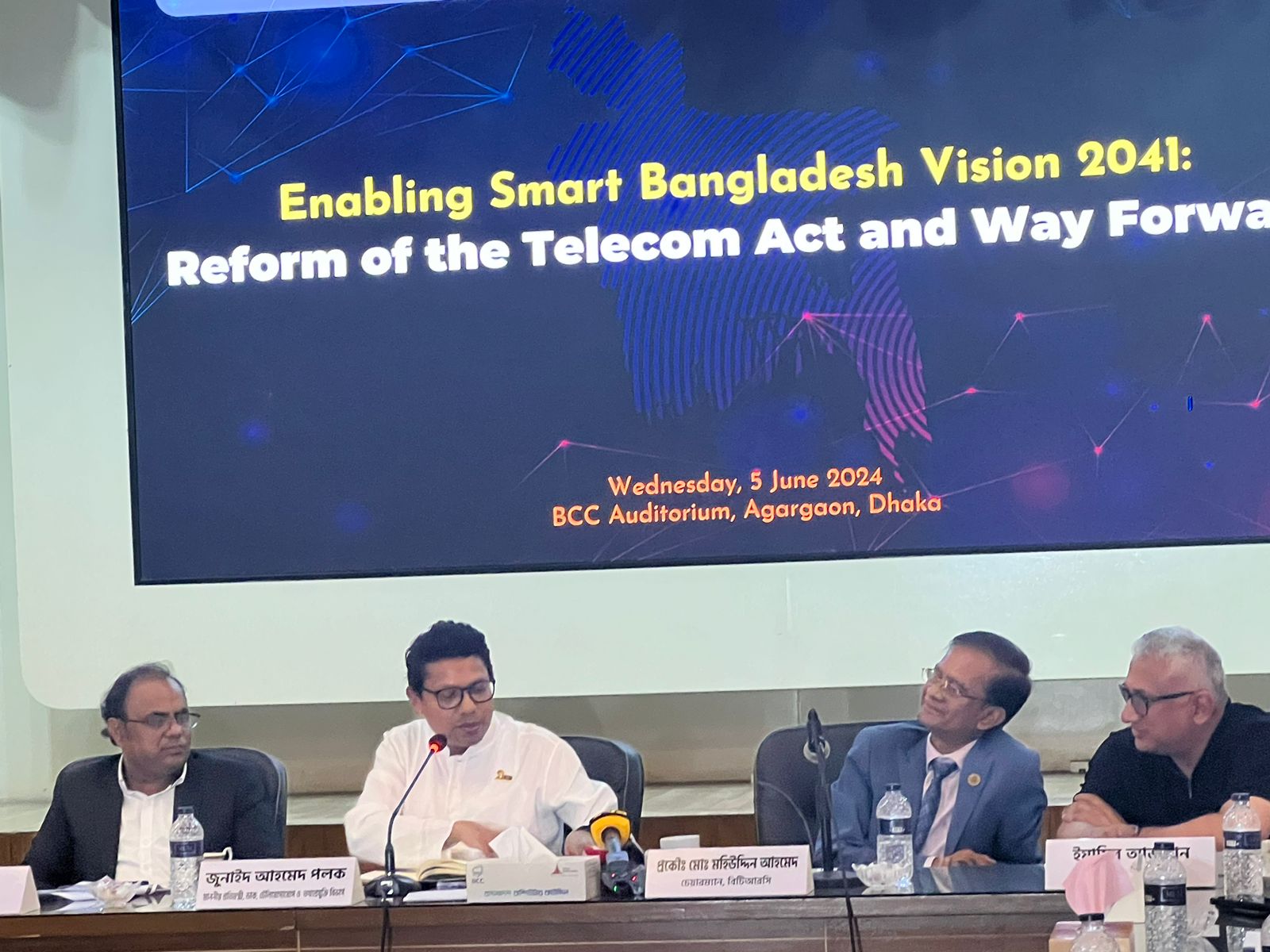
The government is set to introduce a new telecom law that aligns with technological advancements and promotes a business-friendly environment while ensuring public welfare, said State Minister for Posts, Telecommunications, and Information Technology, Zunaid Ahmed Palak.

The draft, prepared by the Ministry of Posts and Telecommunications, will undergo necessary amendments before the final legislation is enacted, he said, reports UNB.

Palak revealed these updates at a seminar organised by the Telecom and Technology Reporters Network Bangladesh (TRNB) in collaboration with the Association of Mobile Telecom Operators of Bangladesh (AMTOB).

The seminar, titled "Reform of the Telecommunications Law, 2001," highlighted key changes needed in the draft law.

He emphasised the importance of the Bangladesh Telecommunication Regulatory Commission (BTRC) operating independently while aligning with the ministry. He assured that business and investment-friendly aspects of the draft law would be preserved and adjusted as necessary.

"We will remove any provisions in the draft that could cause problems for stakeholders or the general public. We can look to the ICT laws of India and Vietnam for guidance in this regard," Palak stated. "Our goal is to create a timely law that fosters a business-friendly environment conducive to building a smart Bangladesh."

He proposed removing Articles 7(3) and 26(ঙ) from the draft law, following criticisms. Article 7(3) grants the ministry the power to remove BTRC commissioners, which could hinder the commission's independent functioning. Article 26(ঙ) requires licenses from BTRC for operating social media and online platforms, complicating online businesses and innovations. Acknowledging these concerns, Palak committed to excluding these articles.

To further refine the draft, Palak formed a seven-member committee tasked with reviewing stakeholders' recommendations and providing a report within seven days. He assured that the committee's suggestions would be seriously considered.

To read the rest of the news, please click on the link above.
​
 

5G technology remains a pie in the sky. Why
1717804152466.webp


Is 5G merely a vanity, just another technology that offers nothing extraordinary? Or has it emerged as a central cog in transforming the digital space by resolving issues related to low speed and latency?

Despite being launched years ago across the world, firm answers to these questions are yet to be produced. But if you look at statistics, it may surprise you.

Over 1.5 billion people – more than one in every four mobile subscribers globally – now use the fifth-generation technology standard for cellular networks, widely known as 5G.

The technology offers several advantages over previous generations, including faster data speeds, lower latency, and greater capacity to connect multiple devices simultaneously.

Its impact spans industries like healthcare, autonomous vehicles, virtual reality and many more.

Such benefits make it attractive for both consumers and businesses and its widespread adoption indicates significant impact, suggesting that 5G is more than a passing trend.

But for Bangladesh, the launch of this technology, which promises faster speeds and broader connectivity capabilities, remains a far cry.

Although the rollout of 5G was part of the ruling party's election manifesto in 2018, the technology has so far been limited to trial runs.

Globally, operators began launching 5G networks around 2019, with initial rollouts in major urban areas. By 2021-2022, 5G adoption peaked as more operators expanded coverage and consumers embraced the technology.

According to the GSMA, by 2025, 5G networks are likely to cover one-third of the world's population, which would have a profound impact on both the mobile industry and its customers.

But in Bangladesh, sluggish moves to prepare 5G guidelines, operators' reluctance and a lack of readiness are hindering the launch of the technology.

To read the rest of the news, please click on the link above.​
 

Mobile phone raw material import concessions extended to 2026
1717804879740.webp

The current notification on concessionary import facilities for mobile phone manufacturing raw materials has been extended to 30 June 2026 from its original validity till 30 June 2024.

At the budget speech of fiscal year (FY) 2024-25, Finance Minister AH Mahmood Ali said, "There are a good number of mobile phone or cellular phone manufacturing/ assembling companies in the country. The components used in mobile phones are constantly changing due to technological advancements. As a result, for the sake of adding new features to phones, companies need to import new types of components. In order to meet this requirement, I propose adding some newly invented components to the existing notification and to amend the description of some existing items".

The minister also proposed to amend the existing notification to solve the complications in the assessment of customs duty.
​