| Global Defense, OSINT & Geopolitics Wire

[🇧🇩] Textile & RMG Industry of Bangladesh

[🇧🇩] Textile & RMG Industry of Bangladesh
582
31K
More threads by Saif

G Bangladesh Defense

BGMEA urges World Bank to scale up funding for sustainable water management in RMG Sector

1791415009531.webp


Bangladesh Garment Manufacturers and Exporters Association (BGMEA) has urged the World Bank to scale up funding and expand the scope of projects aimed at promoting sustainable water management in the nation's readymade garment (RMG) sector.

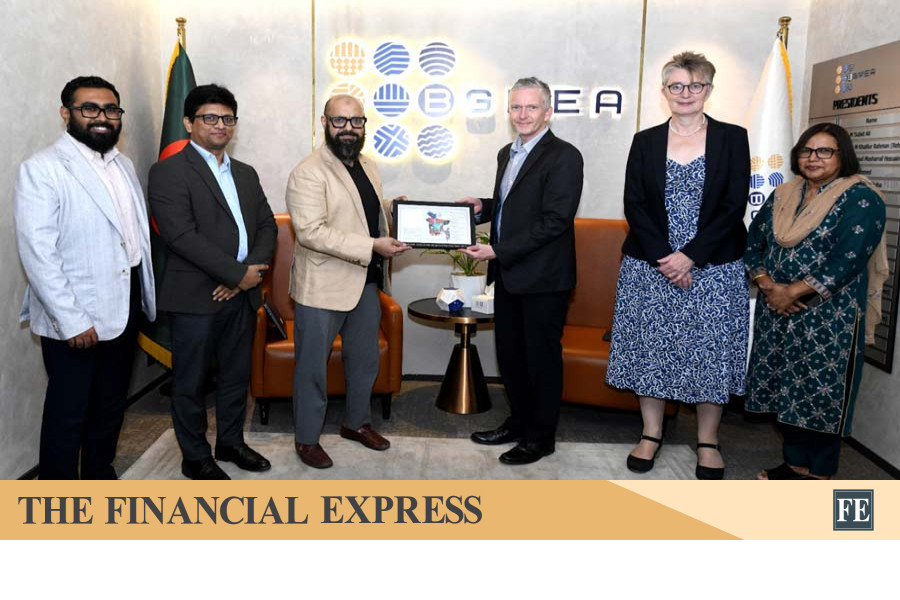
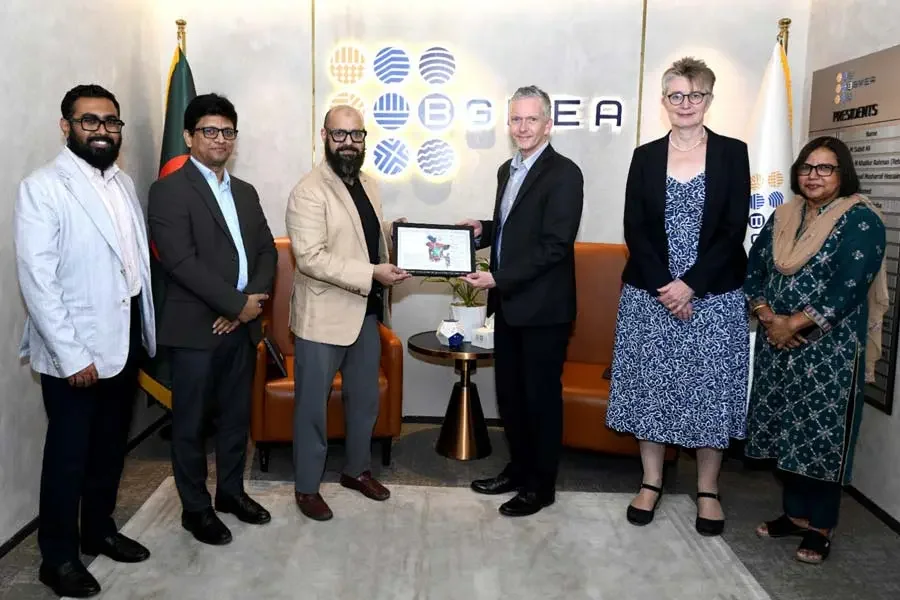
The call was made during a high-level bilateral meeting between a World Bank delegation, led by Mara K. Warwick, Regional Director for Sustainable Development in South Asia, and BGMEA President Mahmud Hasan Khan at the BGMEA Complex in Uttara on Wednesday.

BGMEA Director Md Hasib Uddin and senior World Bank specialists were also present at the discussion.

Highlighting the strategic importance of environmental stewardship, the BGMEA President emphasised that water management is now directly linked to international trade and global competitiveness.

Global buyers, particularly European apparel brands, increasingly demand data-driven proof of water reduction, wastewater treatment, and recycling across production stages.

Adopting modern water-saving technologies is therefore crucial to saving rivers and groundwater in Dhaka while maintaining export markets, he noted.

The meeting reviewed the progress of the World Bank-assisted ‘Dhaka Water Security and Resilience Program’ (D-Water) and its $5.0 million Viability Gap Funding (VGF) pilot scheme.

While BGMEA initially submitted a list of 31 factories, the World Bank selected eight to begin the pilot.

Indicating that the allocation is insufficient given the overwhelming demand from manufacturers, the BGMEA chief strongly requested expanding both the financial commitment and factory coverage.

Outlining key obstacles, BGMEA leaders highlighted that high capital expenditure hinders the financial viability of water stewardship projects, especially during the current global economic slowdown and price pressures.

They urged international development partners to offer grants, zero-interest loans, or long-term concessional financing to support factory owners in adopting green practices.

The association also called for practical solutions to infrastructural constraints, advocating for cluster-based treatment facilities, lorry-based industrial waste transportation for land-constrained units, and expanding the initiative beyond Dhaka to other industrial hubs.

Additionally, they emphasised the necessity of policy predictability and adequate lead time before implementing new environmental regulations.

The World Bank delegation received the proposals positively, assuring continued logistical and technical assistance to accelerate the RMG sector’s green transformation.​
 

Can cotton diplomacy transform our textile prospects?

Iftekhar Ul Karim

1791417203115.webp

Advances in cotton recycling could help recover valuable fibres from textile waste, reducing resource consumption and creating new sources of raw materials. File photo: Star

From Eli Whitney’s cotton gin, which transformed American cotton production and fuelled the expansion of slavery, to a cotton-related claim brought to Abraham Lincoln’s attention on the evening of his assassination, the fibre remained deeply intertwined with America’s economic history. Across the Atlantic, Bengal transformed cotton, derived from the Arabic qutn, into the legendary Dhaka muslin, coveted worldwide, before colonial rule hastened its decline. Today, Bangladesh has re-emerged as a global textile powerhouse and remains among the world’s largest cotton importers. From producing its own celebrated cotton textiles to sourcing fibre from across the world, Bangladesh’s evolving textile economy is opening new avenues for trade, innovation, and economic diplomacy.

The emerging relationship with the US illustrates how cotton is becoming more than a raw material. The cotton clause in the Bangladesh-US trade pact links potential preferential tariff treatment for certain Bangladeshi apparel exports to purchases of American cotton and textile inputs. While this creates opportunities for deeper cooperation, its commercial benefits will depend on sourcing costs, eligibility requirements, and implementation. Cotton diplomacy must therefore translate into measurable advantages for manufacturers rather than simply increasing import commitments.

The launch of CottonPort, Bangladesh’s first digital raw-cotton marketplace, marks a tangible step forward. With an initial offering of 82 tonnes of Virginia cotton, the platform seeks to connect American suppliers directly with Bangladeshi spinning mills, improving pricing transparency and traceability. A planned private warehouse in Chattogram could further accelerate deliveries and reduce procurement uncertainty. Together, these initiatives demonstrate how international cooperation can evolve beyond trade agreements into practical improvements in supply-chain efficiency.

Bangladesh’s engagement with Brazil adds another dimension to this emerging cotton diplomacy. Its pursuit of preferential market access for garments made with Brazilian cotton extends the relationship beyond Washington. Such partnerships could transform raw-material procurement into wider export opportunities while preserving diversified sourcing options.

Cotton traceability is becoming increasingly important as global buyers demand greater sourcing transparency. The US restrictions on products linked to forced labour in Xinjiang underscore the importance of verifying fibre origins. Integrating credible traceability systems across spinning, weaving and garment manufacturing could help exporters meet evolving buyer requirements. Cotton diplomacy must therefore extend beyond preferential tariffs to build the transparency, trust, and market confidence essential for long-term competitiveness.

While Bangladesh is strengthening its international cotton partnerships, disagreements over yarn imports continue to challenge its domestic textile industry. The government’s recent decision to suspend the withdrawal of bonded import facilities for 10-30 count cotton yarn followed competing concerns from spinning mills and garment exporters. Domestic millers argue that unrestricted imports undermine local investment and employment, while apparel manufacturers caution that sourcing restrictions could increase costs and weaken export competitiveness. The disagreement underscores the need to strengthen domestic spinning capacity without compromising manufacturers’ access to competitively priced inputs.

Energy reliability presents another challenge that cotton diplomacy alone cannot resolve. Energy shortages have constrained textile production and cotton demand, and the US Department of Agriculture has revised Bangladesh’s cotton import and consumption forecasts downwards. Even favourable sourcing arrangements cannot deliver their full benefits when factories face operational disruptions. Reliable energy, efficient logistics and predictable policies must therefore accompany international partnerships to translate cotton imports into export earnings.

Bangladesh is also rediscovering its agricultural potential. A long-term roadmap targets domestic production of 1.9 million cotton bales annually by 2050, supported by improved varieties, research, financing and cultivation in suitable regions. Although domestic production cannot entirely replace imports, it could diversify supply, support rural livelihoods, and reconnect Bangladesh’s textile industry with its agricultural heritage. Such expansion must remain commercially viable and environmentally responsible, particularly where cotton cultivation competes with food production or limited water resources.

The future of textiles, however, will not be written in cotton alone. According to the International Cotton Advisory Committee (ICAC), synthetic fibres accounted for 71.7 percent of global fibre demand in 2025, underscoring the importance of product diversification. Bangladeshi brand Illiyeen’s development of CottoCool, a cotton-based fabric designed for the country’s climate, illustrates how material innovation can respond to consumer needs. Such initiatives demonstrate opportunities to move beyond conventional apparel manufacturing towards functional fabrics, specialised textiles and higher-value products that strengthen Bangladesh’s competitive position.

Sustainability offers an opportunity to reshape the industry. Advances in cotton recycling and dye-removal technologies could help recover valuable fibres from textile waste, reducing resource consumption and creating new sources of raw materials. Bangladesh’s indigenous jute industry provides an alternative pathway towards diversified materials, blended textiles and higher-value applications. Combining cotton, jute, recycled fibres and man-made materials could help Bangladesh build a more innovative and resilient textile economy while responding to changing global demand and sustainability expectations.

From Lincoln’s America to Bengal’s muslin looms, cotton has long connected economic fortunes with wider historical transformations. Today, Bangladesh stands at another such intersection, linking American and Brazilian cotton fields with domestic farmers, spinning mills, garment factories, and emerging technologies. The opportunity is to ensure that these connections reinforce one another through competitive sourcing, reliable infrastructure, stronger domestic capabilities, and diversified products. On World Cotton Day, Bangladesh can look beyond cotton imports and build stronger partnerships that support its farmers, strengthen its textile industry, and create greater value at home.

Dr Iftekhar Ul Karim is assistant professor at BRAC Business School, BRAC University.​
 

RMG exports rise 6.10pc to US$10.58b in July-Sept of FY27


1791676212959.webp


Bangladesh's ready-made garment (RMG) exports grew 6.10 per cent year-on-year in the first quarter (July-September) of FY2026-27, reaching US$10,578.56 million against $9,970.42 million in the same period of FY2025-26, according to data released by the Export Promotion Bureau (EPB).

Knitwear exports rose 6.88 per cent to $5,963.76 million, while woven exports grew 5.11 per cent to $4,614.80 million during the first quarter.

United States (US), United Kingdom (UK) and Canada during the first quarter of the current fiscal year (FY27), the US, the largest single-country market, imported $2,220.86 million, up 10.40 per cent from $2,011.70 million. Its share rose from 20.18 per cent to 20.99 per cent. Knitwear shipments grew 11.61 per cent to $881.28 million, and woven shipments 9.61 per cent to $1,339.58 million.

Exports to the UK increased 5.94 per cent to $1,292.13 million. Knitwear rose 10.00 per cent to $897.93 million, while woven fell 2.27 per cent to $394.20 million. The UK's share was almost unchanged at 12.21 percent.Canada took $349.65 million, up 3.85 per cent. Knitwear edged up 1.07 per cent to $181.98 million, while woven grew 7.04 per cent to $167.67 million.

Non-traditional markets:

Exports to non-traditional markets during this July-September period rose 9.40 per cent to $1,811.89 million from $1,656.28 million, lifting their share from 16.61 per cent to 17.13 per cent. Knitwear grew 9.94 per cent to $889.34 million and woven 8.87 per cent to $922.55 million.

Turkey was the standout performer, with shipments more than doubling (up 123.14 per cent) to $146.63 million. Brazil rose 41.58 per cent to $63.09 million while the UAE 18.67 per cent to $74.34 million, and Mexico 14.77 per cent to $81.72 million.

In addition, South Africa grew 9.29 per cent to $37.85 million, South Korea 8.81 per cent to $120.94 million, Malaysia 6.31 per cent to $47.80 million and Saudi Arabia 5.67 per cent to $51.64 million.

Japan, the largest non-traditional market, grew 2.61 per cent to $343.65 million. Australia rose 1.02 per cent to $209.06 million, and China was nearly flat at $71.21 million (up 0.09 per cent). Other countries combined grew 14.45 per cent to $253.24 million.

The European Union:

The EU remained the largest destination bloc, importing $4,904.02 million of Bangladeshi apparel, up 3.33 per cent from $4,746.10 million. Knitwear shipments rose 4.29 per cent to $3,113.23 million, and woven shipments 1.70 per cent to $1,790.79 million.

The EU's share of Bangladesh's total apparel exports, however, slipped slightly from 47.60 per cent to 46.36 per cent.

Among individual EU members, Germany, the largest buyer, was nearly flat at $1,122.98 million (down 0.15 per cent). Spain grew 13.73 per cent to $1,148.46 million, the Netherlands 9.02 per cent to $597.49 million, and Poland 5.77 per cent to $401.93 million. Sweden rose 14.43 per cent to $177.00 million, and Belgium 1.39 per cent to $130.09 million.

Other EU markets with growth included Romania (60.03 per cent to $47.85 million), Hungary (25.46 per cent to $44.95 million), Slovakia (27.56 per cent to $19.86 million) and the Czech Republic (1.28 per cent to $72.35 million). Smaller gains were seen in Latvia (59.29 per cent to $0.53 million) and Malta (50.32 per cent to $0.10 million).

Talking to BSS, former BGMEA Director Mohiuddin Rubel said Bangladesh's apparel export growth in the last month remained encouraging despite the energy crisis and rising production costs, while non-traditional markets and the United States showed stronger growth than the overall export trend.

He said the export performance should be viewed in the context of the challenges faced by the apparel industry, particularly the energy crisis, which has increased pressure on production and business operations.

"Although the export figure may appear relatively low in absolute terms, the growth achieved amid the current energy crisis is definitely positive," Rubel said.

He identified the improved performance in non-traditional markets as a particularly encouraging development, noting that Bangladesh had struggled to achieve satisfactory growth in these markets for a considerable period.

According to him, export growth in non-traditional markets and the United States has exceeded the overall growth rate, indicating that Bangladesh is gradually improving its position beyond its traditional export destinations.

Rubel, also the Founder and CEO of Bangladesh Apparel Voice (BAV), said Bangladesh needs to reduce its excessive dependence on Europe and the United States by exploring opportunities in other markets, including Japan, Australia and India.

"Europe's performance has not been particularly strong. Therefore, we need to diversify our export destinations and explore the significant opportunities available outside the major traditional markets," he said.Bangladesh had maintained its position in the US market and that further export growth remained possible there, he added.Rubel, however, stressed that export growth alone would not be sufficient to ensure the long-term sustainability of the garment industry.

"Growth must be profitable and sustainable. We need to manage the rising costs and focus on higher-quality products and markets where we can achieve better returns," he continued.

Rubel said the recent improvement in monthly export performance offered some encouragement, adding that continued growth in the coming months could help the sector move closer to its overall annual target.

"If we can maintain the positive trend and continue to achieve incremental growth every month, we may be able to move closer to achieving our overall growth target." he said.

Rubel also emphasised that market diversification, product quality, cost management and profitable expansion would remain crucial to strengthening Bangladesh's position in the global apparel market.​
 

RMG exports to major markets grow in July-September

Staff Correspondent . Dhaka


1791680978570.webp

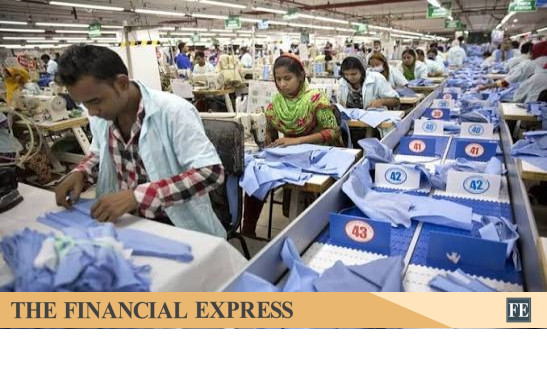
A file photo shows women workers sewing clothes at a readymade garment factory in Dhaka. | Md Saurav

The country’s readymade garment shipments to major export destinations showed mostly positive performance in the July-September period, the first quarter of the financial year 2026-27, with overall earnings rising.

RMG exports grew by 6.10 per cent to $10.58 billion, up from $9.97 billion in the same period of FY26, according to data from the Export Promotion Bureau, compiled by Bangladesh Apparel Voice.

The EPB has said the performance reflects resilience of the country’s export sector and sustained confidence of international buyers.

The state agency also said it remains committed to supporting export diversification, market expansion, product upgrading and trade facilitation to sustain export growth and achieve the country’s long-term export objectives.

Knitwear exports rose by 6.88 per cent to $5.96 billion, outpacing woven garment exports, which grew by 5.11 per cent to $4.61 billion.

The European Union, Bangladesh’s largest apparel destination, recorded exports of $4.90 billion in July-September of FY27, up 3.33 per cent from $4.75 billion in the same period a year earlier.

The EU’s share of Bangladesh’s total RMG exports stood at 46.36 per cent during the period.

Among major EU markets, Germany, France, Italy, Denmark and Austria recorded declines, while Spain, the Netherlands, Belgium, Sweden and Poland posted growth.

Germany, the largest EU market, dipped 0.15 per cent to $1.12 billion in the first three months of FY27, from $1.12 billion in the corresponding period of FY26.

France fell 4.91 per cent to $449 million, Italy declined 5.82 per cent to $316 million, Denmark dropped 15.40 per cent to $201 million and Austria fell 14.03 per cent to $19.49 million.

Among the markets that posted growth, Spain rose 13.73 per cent to $1.15 billion, the Netherlands grew 9.02 per cent to $597 million, Sweden climbed 14.43 per cent to $177 million, Poland increased 5.77 per cent to $402 million and Belgium edged up 1.39 per cent to $130 million.

Exports to the United States, the single largest destination for Bangladeshi RMG, rose 10.40 per cent to $2.22 billion from $2.01 billion, with the market accounting for 20.99 per cent of total RMG exports despite tariff and global geopolitical tensions.

Shipments to Canada grew 3.85 per cent to $350 million in July-September of FY27, from $337 million, with the market accounting for 3.31 per cent of total exports.

RMG exports to the United Kingdom rose 5.94 per cent to $1.29 billion in the first three months of FY27, from $1.22 billion in the same period a year earlier, with the UK’s share of total exports at 12.21 per cent.

In the apparel trade, the US, Canada, the UK and the EU are considered traditional markets, while other destinations are classified as non-traditional markets.

Major non-traditional markets include Japan, Australia, Russia, India, China, South Korea, the United Arab Emirates, Malaysia, Brazil and Mexico.

Exports to non-traditional destinations grew 9.40 per cent to $1.81 billion in July-September of FY27, up from $1.66 billion in the same period of FY26, and accounted for 17.13 per cent of total RMG exports.

Among major non-traditional markets, exports to India and Russia witnessed declines in July-September of FY27, while exports to Japan, Australia, China, South Korea, Brazil, Turkey, Saudi Arabia, the United Arab Emirates, Malaysia and Mexico recorded positive growth, the EPB data showed.

Bangladesh Knitwear Manufacturers and Exporters Association executive president Fazlee Shamim Ehsan said that August was marked by a fuel crisis throughout the month.

Even so, the export growth in September compared with the same month last year is undoubtedly positive, he said.

Despite most factories facing the crisis, it is possible that some managed to achieve exceptionally high exports through their own efficiency, which might have contributed to the growth, he added.

Mohiuddin Rubel, former director of the Bangladesh Garment Manufacturers and Exporters Association, said that positive export growth amid the current global and domestic challenges was encouraging and reflected the sector’s resilience.

Despite geopolitical tensions, the global energy crisis and domestic gas and electricity shortages, the growth was a positive sign, he said.

He said that non-traditional markets had returned to positive growth after experiencing a prolonged negative trend, while exports to the US were also showing signs of recovery.

He stressed the need to make the growth profitable and sustainable by focusing on high-value products, innovation, market diversification and diversification within product categories.

In FY26 as a whole, the RMG sector earned $38.70 billion, a 1.64 per cent decline from $39.35 billion in FY25.​
 

RMG export to non-traditional markets


1791864123676.webp


That Bangladesh's garment export to emerging markets recorded an accelerated growth in the July-September period of the 2026-27 fiscal year is a positive development. Export to the traditional markets like the European Union (EU) has also grown. But against its 3.33 per cent year-on-year growth during this period, the 9.40 per cent growth in export to non-traditional market opens up a new chapter of readymade garment (RMG) export. RMG exports to the United Kingdom and Canada grew by 5.94 per cent and 3.85 per cent against a fall in export to Germany and France by 0.15 and 4.91 per cent respectively. Intriguingly, Bangladesh's export to the United States of America registered a growth by 10.40 per cent during the period under scrutiny and still it lost its second position to China, while Vietnam holds the top position. Quite a few of the European destinations like Spain, Sweden and Netherlands have made amends for the low demands for garments from Bangladesh in Germany and France.

At a time of international trade and energy turmoil, resetting trade relations remains high on the agenda. From that point of view, India has advanced its trading interests by clinching the free trade agreement (FTA) deal with the EU. This and the uncertainties over Bangladesh's graduation from the Least Developed Country (LDC) status may have been responsible for the overall low growth in export to the EU. Bangladesh should have opened negotiations on an FTA with the EU by this time. Access to non-traditional markets can help overcome the loss of revenue in the traditional market but this depends on the size of new destinations. The countries where exports from Bangladesh have increased are smaller and therefore are no substitute for large EU members like France and Germany. So, there is no reason to be complacent over the rise in RMG export to some non-traditional destinations.

Then performance of export to the two most populous countries in the world ---India and China to be precise---is hardly enviable. Both are competitors as well as consumers of Bangladesh garment products. Export of RMG to Chinese market marked a slight growth by 0.09 per cent while to the Indian market it declined by 5.37 per cent. Had Bangladesh found niche markets in these two countries, its revenue income would surpass those of many other export destinations. So far as international trade and commerce are concerned, adversarial geopolitical relationship should not be allowed to influence business as usual. Whether the issue of LDC graduation is postponed or not, Bangladesh must push for advancing its trade facilities with the EU, India and China.

Shrewd trade diplomacy has no alternative to staying in competition with the rivals. But the more important thing is business acumen required for identifying the specialised segments of broader markets defined by customers' special needs, choices and preferences in different countries. In this process, there is a very good chance to find niche markets even in the smaller countries added to the list of the new destinations. Besides, Bangladesh needs to diversify its export basket. Until that happens and the overreliance on export of RMG products continues, the country has to follow what is trendy in terms of style and materials such as man-made fibre and rise equal to the task.​