 Bangladesh Defense

Saif
Senior Member
- Joined
- Jan 24, 2024
- Messages
- 21,818
- Likes
- 9,805
- Nation

- Residence
- Axis Group

Date of Event:
Oct 20, 2026
The Houthis won't back down, but what does it mean for Bangladesh?
Nasir Uddin Ahmed
The Houthis’ escalating attacks have exposed the limits of Saudi Arabia’s military strength and raised troubling questions about security across the Middle East. The repercussions extend far beyond the region. Airports, energy facilities, commercial shipping and other critical infrastructure face growing risks, while airlines and businesses struggle with disruptions, cancellations and rising operating costs. For Bangladesh, the consequences are not merely geopolitical: they are already reflected in higher shipping expenses and growing uncertainty over energy supplies and international trade.
The central question is difficult to ignore: if a regional military power backed by advanced weapons and international partners cannot neutralise the Houthi threat, how realistic are broader promises of lasting security in the Middle East?
The history of regional conflicts demonstrates that resistance by a comparatively weaker force against a militarily superior adversary is hardly new. Yet the Houthi movement in Yemen has demonstrated how asymmetric warfare can challenge conventional military calculations. Despite Saudi Arabia’s substantial defence expenditure, sophisticated aircraft and air-defence systems, the Houthis have remained a formidable adversary. Their continued ability to threaten strategic infrastructure and maritime routes has complicated the calculations of regional powers.
From a local movement to a regional security challenge
The Houthis, formally known as Ansar Allah, emerged from a Zaydi Shia religious and social movement in northern Yemen. Over time, they evolved into a powerful political and military organisation. Their seizure of Sanaa, Yemen’s capital, in 2014 fundamentally altered the country’s balance of power. In 2015, Saudi Arabia led a military intervention in support of Yemen’s internationally recognised government, seeking to reverse the Houthi advance.
Years of airstrikes, ground fighting and economic disruption failed to eliminate the movement. Instead, the conflict became entrenched, creating conditions in which the Houthis could consolidate control over substantial territory and develop capabilities that threaten targets far beyond their original strongholds.
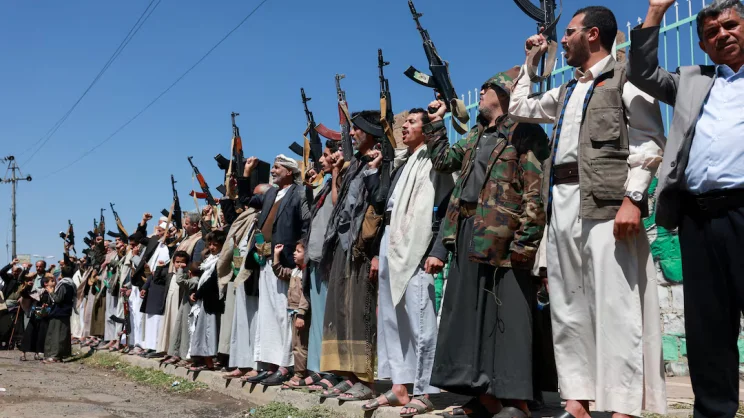
Armed Houthi supporters gather in Sanaa, Yemen, on October 7, 2026. The movement's resilience against superior military forces highlights the limits of conventional military power and the growing security and economic risks posed by the prolonged conflict. Photo: Reuters
Bab el-Mandeb: A local conflict with global consequences
The Bab el-Mandeb Strait is central to this wider picture. Connecting the Red Sea with the Gulf of Aden, it forms part of the maritime corridor linking Asian markets with Europe through the Suez Canal. Threats to shipping can force vessels to take the longer route around the Cape of Good Hope, increasing voyage times, fuel consumption, insurance premiums and freight charges.
The economic effects are well documented. In its analysis of the Red Sea crisis, the United Nations Conference on Trade and Development (UNCTAD) reported that rerouting vessels around Africa added approximately 12 days to an Asia–Europe voyage. The disruption also reduced effective container-shipping capacity and drove up freight rates on major trade routes.
The International Monetary Fund’s analysis of Red Sea shipping disruptions similarly warned that longer delivery times and diversions could strain supply chains and put upward pressure on prices. The consequences are particularly serious for economies that depend heavily on imported fuel, food, fertiliser, chemicals, machinery and industrial inputs.
Disruption to energy shipments can increase delivery costs and market uncertainty. Attacks on airports can cause casualties, flight cancellations, temporary closures, flight diversions and higher insurance costs. Sustained disruption at a major hub such as Riyadh can also affect international passenger connections, tourism and business travel. If retaliatory strikes spread beyond Yemen and Saudi Arabia, the resulting military expenditure and security risks could increase further.
Bangladesh is already paying the price
For Bangladesh, these are not abstract risks. A report published by The Daily Star on 14 September 2026 described how Bangladesh Shipping Corporation’s crude-oil tanker, MT Ninemia, carrying approximately 100,000 tonnes of oil from Saudi Arabia, took a longer route around the Cape of Good Hope to avoid the Bab el-Mandeb Strait.
The voyage took about 50 days, compared with an estimated 13–15 days on the usual route, and incurred an additional cost of Tk 66.63 crore. This single voyage illustrates how insecurity in a distant maritime corridor can translate into substantial costs for Bangladesh.
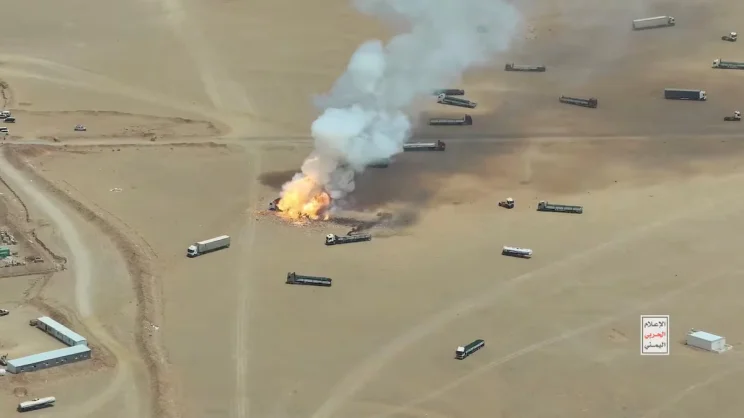
Smoke rises from a burning truck following an attack near the Al-Wadiah border crossing on September 7, 2026, highlighting the persistent threats posed by the Houthis to cross-border logistics and trade routes. Photo: Houthi Media Centre
If similar diversions become routine, the landed cost of imported crude oil could rise significantly. Higher energy costs could, in turn, affect electricity generation, transport, industrial production and consumer prices. Delays in the arrival of fuel cargoes could also complicate inventory management and supply planning.
Bangladesh’s export sector faces related pressures. The country’s garment industry and other exporters depend on reliable shipping schedules to meet delivery deadlines in Europe and elsewhere. Longer voyages can tie up working capital, complicate production planning and increase uncertainty for buyers and suppliers.
In a report published on 2 August 2026, The Daily Star documented rising freight costs amid the Middle East conflict, noting that container shipping rates to Europe had more than doubled. The report also highlighted an important qualification: many garment exporters operate under free-on-board (FOB) contract terms, meaning that the direct burden of ocean freight increases may fall on buyers rather than Bangladeshi exporters. Nevertheless, the wider effects of delays, uncertainty and higher costs throughout supply chains can still affect the sector.
Bangladesh must therefore consider several risks together: energy-import costs, shipping delays, the availability of industrial raw materials, export delivery schedules and the safety of its citizens working in the Middle East. These pressures could compound existing economic difficulties and intensify inflationary pressures.
A cautious response is essential
Bangladesh should strengthen its energy-security planning by diversifying crude-oil sources where technically and commercially feasible, reviewing emergency stocks and developing contingency arrangements for prolonged shipping disruptions. The government should also maintain close contact with shipping companies, energy suppliers and exporters to anticipate delays and reduce avoidable costs.
Diplomacy is equally important. Bangladesh should support efforts to protect civilian lives, safeguard commercial shipping and prevent the conflict from expanding into a wider regional war. The safety of Bangladeshi workers and travellers in affected countries must remain a priority.
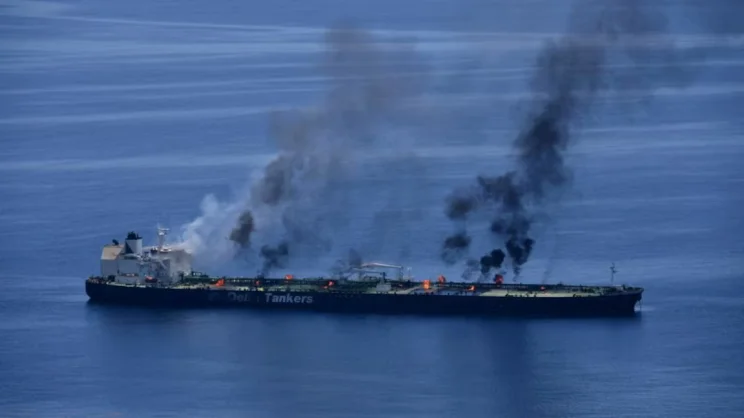
Flames and smoke engulf the Greek-flagged oil tanker Sounion following an attack in the Red Sea in August 2024, illustrating the vulnerability of international shipping routes and the potential consequences for energy costs and global supply chains. Photo: Reuters
Any proposal for Bangladesh to participate in a military coalition or maritime deployment should be assessed carefully against national interests, international law, operational risks and the potential consequences of becoming involved in a wider confrontation. Participation in a security arrangement should not be treated as a substitute for diplomatic engagement or a comprehensive assessment of the costs and risks.
The Houthi story is not simply one of an armed movement refusing to surrender. It is a lesson in the limits of military power, the strategic consequences of asymmetric warfare and the costs of a conflict without a durable political settlement.
The ultimate question is not merely who will defeat whom. It is whether a political settlement can be found that protects Saudi Arabia’s security, respects Yemen’s sovereignty, preserves freedom of international navigation and safeguards civilian lives.
For Bangladesh, the lesson is equally clear. The country may have little influence over the course of this conflict, but it can prepare to limit its economic consequences. The crisis around Bab el-Mandeb must be understood not only as a regional security problem but also as a direct challenge to Bangladesh’s energy security and economic stability. The longer the conflict continues, the greater the risk that the costs of a distant war will be borne by people and businesses far beyond the battlefield.
Dr Nasir Uddin Ahmed is a retired army major, researcher and analyst.
Nasir Uddin Ahmed
The Houthis’ escalating attacks have exposed the limits of Saudi Arabia’s military strength and raised troubling questions about security across the Middle East. The repercussions extend far beyond the region. Airports, energy facilities, commercial shipping and other critical infrastructure face growing risks, while airlines and businesses struggle with disruptions, cancellations and rising operating costs. For Bangladesh, the consequences are not merely geopolitical: they are already reflected in higher shipping expenses and growing uncertainty over energy supplies and international trade.
The central question is difficult to ignore: if a regional military power backed by advanced weapons and international partners cannot neutralise the Houthi threat, how realistic are broader promises of lasting security in the Middle East?
The history of regional conflicts demonstrates that resistance by a comparatively weaker force against a militarily superior adversary is hardly new. Yet the Houthi movement in Yemen has demonstrated how asymmetric warfare can challenge conventional military calculations. Despite Saudi Arabia’s substantial defence expenditure, sophisticated aircraft and air-defence systems, the Houthis have remained a formidable adversary. Their continued ability to threaten strategic infrastructure and maritime routes has complicated the calculations of regional powers.
From a local movement to a regional security challenge
The Houthis, formally known as Ansar Allah, emerged from a Zaydi Shia religious and social movement in northern Yemen. Over time, they evolved into a powerful political and military organisation. Their seizure of Sanaa, Yemen’s capital, in 2014 fundamentally altered the country’s balance of power. In 2015, Saudi Arabia led a military intervention in support of Yemen’s internationally recognised government, seeking to reverse the Houthi advance.
Years of airstrikes, ground fighting and economic disruption failed to eliminate the movement. Instead, the conflict became entrenched, creating conditions in which the Houthis could consolidate control over substantial territory and develop capabilities that threaten targets far beyond their original strongholds.
Armed Houthi supporters gather in Sanaa, Yemen, on October 7, 2026. The movement's resilience against superior military forces highlights the limits of conventional military power and the growing security and economic risks posed by the prolonged conflict. Photo: Reuters
Bab el-Mandeb: A local conflict with global consequences
The Bab el-Mandeb Strait is central to this wider picture. Connecting the Red Sea with the Gulf of Aden, it forms part of the maritime corridor linking Asian markets with Europe through the Suez Canal. Threats to shipping can force vessels to take the longer route around the Cape of Good Hope, increasing voyage times, fuel consumption, insurance premiums and freight charges.
The economic effects are well documented. In its analysis of the Red Sea crisis, the United Nations Conference on Trade and Development (UNCTAD) reported that rerouting vessels around Africa added approximately 12 days to an Asia–Europe voyage. The disruption also reduced effective container-shipping capacity and drove up freight rates on major trade routes.
The International Monetary Fund’s analysis of Red Sea shipping disruptions similarly warned that longer delivery times and diversions could strain supply chains and put upward pressure on prices. The consequences are particularly serious for economies that depend heavily on imported fuel, food, fertiliser, chemicals, machinery and industrial inputs.
Disruption to energy shipments can increase delivery costs and market uncertainty. Attacks on airports can cause casualties, flight cancellations, temporary closures, flight diversions and higher insurance costs. Sustained disruption at a major hub such as Riyadh can also affect international passenger connections, tourism and business travel. If retaliatory strikes spread beyond Yemen and Saudi Arabia, the resulting military expenditure and security risks could increase further.
Bangladesh is already paying the price
For Bangladesh, these are not abstract risks. A report published by The Daily Star on 14 September 2026 described how Bangladesh Shipping Corporation’s crude-oil tanker, MT Ninemia, carrying approximately 100,000 tonnes of oil from Saudi Arabia, took a longer route around the Cape of Good Hope to avoid the Bab el-Mandeb Strait.
The voyage took about 50 days, compared with an estimated 13–15 days on the usual route, and incurred an additional cost of Tk 66.63 crore. This single voyage illustrates how insecurity in a distant maritime corridor can translate into substantial costs for Bangladesh.
Smoke rises from a burning truck following an attack near the Al-Wadiah border crossing on September 7, 2026, highlighting the persistent threats posed by the Houthis to cross-border logistics and trade routes. Photo: Houthi Media Centre
If similar diversions become routine, the landed cost of imported crude oil could rise significantly. Higher energy costs could, in turn, affect electricity generation, transport, industrial production and consumer prices. Delays in the arrival of fuel cargoes could also complicate inventory management and supply planning.
Bangladesh’s export sector faces related pressures. The country’s garment industry and other exporters depend on reliable shipping schedules to meet delivery deadlines in Europe and elsewhere. Longer voyages can tie up working capital, complicate production planning and increase uncertainty for buyers and suppliers.
In a report published on 2 August 2026, The Daily Star documented rising freight costs amid the Middle East conflict, noting that container shipping rates to Europe had more than doubled. The report also highlighted an important qualification: many garment exporters operate under free-on-board (FOB) contract terms, meaning that the direct burden of ocean freight increases may fall on buyers rather than Bangladeshi exporters. Nevertheless, the wider effects of delays, uncertainty and higher costs throughout supply chains can still affect the sector.
Bangladesh must therefore consider several risks together: energy-import costs, shipping delays, the availability of industrial raw materials, export delivery schedules and the safety of its citizens working in the Middle East. These pressures could compound existing economic difficulties and intensify inflationary pressures.
A cautious response is essential
Bangladesh should strengthen its energy-security planning by diversifying crude-oil sources where technically and commercially feasible, reviewing emergency stocks and developing contingency arrangements for prolonged shipping disruptions. The government should also maintain close contact with shipping companies, energy suppliers and exporters to anticipate delays and reduce avoidable costs.
Diplomacy is equally important. Bangladesh should support efforts to protect civilian lives, safeguard commercial shipping and prevent the conflict from expanding into a wider regional war. The safety of Bangladeshi workers and travellers in affected countries must remain a priority.
Flames and smoke engulf the Greek-flagged oil tanker Sounion following an attack in the Red Sea in August 2024, illustrating the vulnerability of international shipping routes and the potential consequences for energy costs and global supply chains. Photo: Reuters
Any proposal for Bangladesh to participate in a military coalition or maritime deployment should be assessed carefully against national interests, international law, operational risks and the potential consequences of becoming involved in a wider confrontation. Participation in a security arrangement should not be treated as a substitute for diplomatic engagement or a comprehensive assessment of the costs and risks.
The Houthi story is not simply one of an armed movement refusing to surrender. It is a lesson in the limits of military power, the strategic consequences of asymmetric warfare and the costs of a conflict without a durable political settlement.
The ultimate question is not merely who will defeat whom. It is whether a political settlement can be found that protects Saudi Arabia’s security, respects Yemen’s sovereignty, preserves freedom of international navigation and safeguards civilian lives.
For Bangladesh, the lesson is equally clear. The country may have little influence over the course of this conflict, but it can prepare to limit its economic consequences. The crisis around Bab el-Mandeb must be understood not only as a regional security problem but also as a direct challenge to Bangladesh’s energy security and economic stability. The longer the conflict continues, the greater the risk that the costs of a distant war will be borne by people and businesses far beyond the battlefield.
Dr Nasir Uddin Ahmed is a retired army major, researcher and analyst.
