Bangladesh Defense

Saif
Senior Member
- Joined
- Jan 24, 2024
- Messages
- 22,414
- Likes
- 9,875
- Nation

- Axis Group


Drinking water management: Crisis, inequality, need for effective action
Safe drinking water shouldn't be treated as a luxury or business commodity. It's a fundamental human right. Ensuring it is the responsibility of the state.
 en.prothomalo.com
Drinking water management: Crisis, inequality, need for effective action
Shahiduzzaman
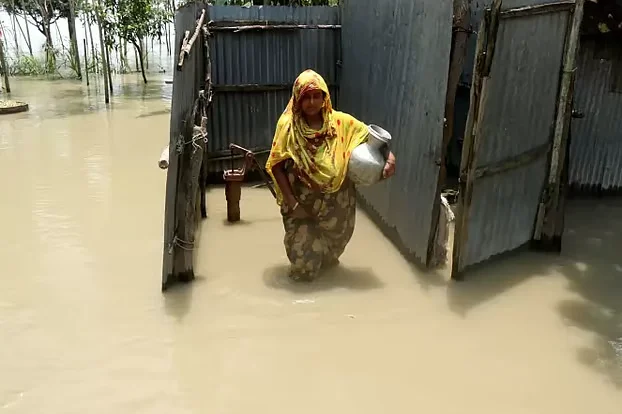
A woman collects water from an inundated tube well amid a crisis of drinking water in Kamalpur, Sariakandi of Bogura. Prothom Alo file photo
The demand for safe drinking water is a long standing issue in Bangladesh and continues to be one of the most urgent public concerns. Safe drinking water is a basic human necessity, yet millions of people are still deprived of it. The government has the responsibility to ensure access to safe and affordable water for all citizens, and this issue must be treated as a national priority because it is directly linked to health, dignity, and human rights.
Despite significant investments and policy initiatives, drinking water management still faces serious challenges. Weak implementation, lack of initiatives, inequality and governance failures, have reduced the effectiveness of many programs. According to reports by the World Bank, improvements in infrastructure have not always ensured safe and reliable water access, especially for vulnerable populations.
Public dissatisfaction has grown over the years, leading to repeated protests in different parts of the country. In coastal districts such as Satkhira and Khulna, communities have organised rallies demanding access to fresh water due to salinity intrusion, as highlighted in field reports supported by UNICEF. In urban areas like Dhaka and Chattogram, residents have protested against contaminated supply water, complaining about foul smell and health risks. These incidents show that safe drinking water is not just a service issue but a matter of survival and public demand.
The government allocates a significant budget each year for water supply and sanitation under the national development program. In the 2025 to 2026 fiscal year, around Tk 9,000 to 11,000 crore has been allocated for water, sanitation, and hygiene related sectors. However, according to assessments by the World Bank and UNICEF, the improvement in water quality and service delivery remains limited despite increased spending.
Corruption and weak governance remain major barriers. Misuse of funds, overpricing of contracts, and poor quality construction are frequently reported issues. According to Transparency International, lack of transparency and accountability in public sector projects significantly affects service delivery and reduces the long term benefits of investments.
Another major issue is poor management and maintenance. Even when treatment plants are installed, many become nonfunctional within a short time due to lack of monitoring and technical capacity. Studies cited by the World Bank indicate that institutional weakness and poor coordination are key reasons behind unsafe drinking water systems in developing countries.
Drinking water has also become a growing private business in Bangladesh.
The bottled and jar water industry is estimated to be worth Tk 3,000 to 5,000 crore annually, with a steady growth rate of around 10 to 15 percent, as discussed in market analyses referenced by the World Bank. While this creates economic opportunities, it raises serious concerns about inequality. The The United Nations recognizes access to safe drinking water as a fundamental human right, essential for life, health, and human dignity. However, the reality across many parts of the world tells a different story.
Safe water is increasingly being treated as a paid commodity rather than a basic right. As water systems become commercialised and privatised, access often depends on the ability to pay rather than the urgency of need.
This growing trend creates a deep inequality within society. Wealthier individuals and communities can afford purified, reliable water through bottled supplies or advanced filtration systems. In contrast, poorer populations are frequently left with limited options, relying on contaminated or unsafe water sources for their daily needs. This not only exposes them to serious health risks but also reinforces cycles of poverty and vulnerability.
When access to clean water becomes dependent on income, it undermines the principle of equality and basic human rights. Ensuring safe, affordable water for all must remain a global priority.
Government supplied water is often unsafe due to leakage, illegal connections, and poor pipeline systems. According to studies published through the World Health Organization, contamination frequently occurs between treatment plants and households, making water unsafe for direct consumption.
Water treatment facilities are also insufficient. Many plants are outdated or poorly maintained, and rural areas often lack any treatment systems. Bangladesh continues to face severe arsenic contamination, affecting around 20 million people, as reported in research supported by UNICEF and other international studies.
The situation is even more critical in coastal regions. Recent estimates suggest that more than 40 million people live in coastal areas, and about 20 to 25 million of them face direct drinking water shortages due to salinity intrusion. Findings from World Bank and Asian Development Bank highlight that climate change has intensified this crisis, making freshwater sources increasingly scarce.
Natural water sources such as rivers, ponds, and canals are heavily polluted due to industrial discharge, agricultural chemicals, and domestic waste. Studies referenced by the World Health Organization indicate that a large proportion of surface water in Bangladesh is unsafe without proper treatment.
Unsafe drinking water has led to a serious public health crisis. According to estimates from the World Health Organisation and UNICEF, between 100,000 and 150,000 people die each year in Bangladesh due to waterborne diseases. Millions more suffer from illnesses such as diarrhoea, cholera, and typhoid. Children are the most affected group, and diarrheal diseases remain among the leading causes of death in the country.
Bangladesh has received strong international support to improve water management. Organizations such as the World Bank, Asian Development Bank, UNICEF, and World Health Organization have invested billions of dollars in water and sanitation programs. However, their evaluations often highlight challenges such as weak implementation, limited local capacity, and sustainability issues.
The government must take stronger responsibility to ensure safe drinking water at low cost for all citizens. This issue must be treated as a priority.
There are important lessons to learn from international experiences in water management. Countries like Singapore and the Netherlands have built highly efficient and sustainable water systems through strong governance, long-term planning, and the use of advanced technology. Singapore, for example, has invested heavily in water recycling and desalination, reducing its dependence on external sources. The Netherlands, known for its expertise in water control, has combined engineering innovation with strict policy frameworks to ensure both safety and sustainability.
In India, several regions have shown progress through community-based water management. Local participation in maintaining water resources, along with government support, has improved access and accountability. According to reports from the World Bank, integrated water resource management—where water supply, sanitation, and environmental protection are addressed together—can significantly improve outcomes.
These examples highlight that effective governance, technological innovation, and community involvement are key to ensuring safe and equitable water access for all.
Despite heavy investment, progress remains slow because many projects focus on construction rather than long term sustainability. This reflects deeper governance and planning issues.
Drinking water management in Bangladesh is not only a technical challenge but also a matter of governance, equality, and human rights. The government must take stronger responsibility to ensure safe drinking water at low cost for all citizens. This issue must be treated as a priority.
Ensuring transparency, reducing corruption, strengthening monitoring systems, regulating private water businesses, and investing in sustainable and climate resilient solutions are essential. Safe drinking water should never be treated as a luxury or a business commodity. It is a fundamental human right, and ensuring it is the responsibility of the state.
* The author is a freelance writer
Shahiduzzaman
A woman collects water from an inundated tube well amid a crisis of drinking water in Kamalpur, Sariakandi of Bogura. Prothom Alo file photo
The demand for safe drinking water is a long standing issue in Bangladesh and continues to be one of the most urgent public concerns. Safe drinking water is a basic human necessity, yet millions of people are still deprived of it. The government has the responsibility to ensure access to safe and affordable water for all citizens, and this issue must be treated as a national priority because it is directly linked to health, dignity, and human rights.
Despite significant investments and policy initiatives, drinking water management still faces serious challenges. Weak implementation, lack of initiatives, inequality and governance failures, have reduced the effectiveness of many programs. According to reports by the World Bank, improvements in infrastructure have not always ensured safe and reliable water access, especially for vulnerable populations.
Public dissatisfaction has grown over the years, leading to repeated protests in different parts of the country. In coastal districts such as Satkhira and Khulna, communities have organised rallies demanding access to fresh water due to salinity intrusion, as highlighted in field reports supported by UNICEF. In urban areas like Dhaka and Chattogram, residents have protested against contaminated supply water, complaining about foul smell and health risks. These incidents show that safe drinking water is not just a service issue but a matter of survival and public demand.
The government allocates a significant budget each year for water supply and sanitation under the national development program. In the 2025 to 2026 fiscal year, around Tk 9,000 to 11,000 crore has been allocated for water, sanitation, and hygiene related sectors. However, according to assessments by the World Bank and UNICEF, the improvement in water quality and service delivery remains limited despite increased spending.
Corruption and weak governance remain major barriers. Misuse of funds, overpricing of contracts, and poor quality construction are frequently reported issues. According to Transparency International, lack of transparency and accountability in public sector projects significantly affects service delivery and reduces the long term benefits of investments.
Another major issue is poor management and maintenance. Even when treatment plants are installed, many become nonfunctional within a short time due to lack of monitoring and technical capacity. Studies cited by the World Bank indicate that institutional weakness and poor coordination are key reasons behind unsafe drinking water systems in developing countries.
Drinking water has also become a growing private business in Bangladesh.
The bottled and jar water industry is estimated to be worth Tk 3,000 to 5,000 crore annually, with a steady growth rate of around 10 to 15 percent, as discussed in market analyses referenced by the World Bank. While this creates economic opportunities, it raises serious concerns about inequality. The The United Nations recognizes access to safe drinking water as a fundamental human right, essential for life, health, and human dignity. However, the reality across many parts of the world tells a different story.
Safe water is increasingly being treated as a paid commodity rather than a basic right. As water systems become commercialised and privatised, access often depends on the ability to pay rather than the urgency of need.
This growing trend creates a deep inequality within society. Wealthier individuals and communities can afford purified, reliable water through bottled supplies or advanced filtration systems. In contrast, poorer populations are frequently left with limited options, relying on contaminated or unsafe water sources for their daily needs. This not only exposes them to serious health risks but also reinforces cycles of poverty and vulnerability.
When access to clean water becomes dependent on income, it undermines the principle of equality and basic human rights. Ensuring safe, affordable water for all must remain a global priority.
Government supplied water is often unsafe due to leakage, illegal connections, and poor pipeline systems. According to studies published through the World Health Organization, contamination frequently occurs between treatment plants and households, making water unsafe for direct consumption.
Water treatment facilities are also insufficient. Many plants are outdated or poorly maintained, and rural areas often lack any treatment systems. Bangladesh continues to face severe arsenic contamination, affecting around 20 million people, as reported in research supported by UNICEF and other international studies.
The situation is even more critical in coastal regions. Recent estimates suggest that more than 40 million people live in coastal areas, and about 20 to 25 million of them face direct drinking water shortages due to salinity intrusion. Findings from World Bank and Asian Development Bank highlight that climate change has intensified this crisis, making freshwater sources increasingly scarce.
Natural water sources such as rivers, ponds, and canals are heavily polluted due to industrial discharge, agricultural chemicals, and domestic waste. Studies referenced by the World Health Organization indicate that a large proportion of surface water in Bangladesh is unsafe without proper treatment.
Unsafe drinking water has led to a serious public health crisis. According to estimates from the World Health Organisation and UNICEF, between 100,000 and 150,000 people die each year in Bangladesh due to waterborne diseases. Millions more suffer from illnesses such as diarrhoea, cholera, and typhoid. Children are the most affected group, and diarrheal diseases remain among the leading causes of death in the country.
Bangladesh has received strong international support to improve water management. Organizations such as the World Bank, Asian Development Bank, UNICEF, and World Health Organization have invested billions of dollars in water and sanitation programs. However, their evaluations often highlight challenges such as weak implementation, limited local capacity, and sustainability issues.
The government must take stronger responsibility to ensure safe drinking water at low cost for all citizens. This issue must be treated as a priority.
There are important lessons to learn from international experiences in water management. Countries like Singapore and the Netherlands have built highly efficient and sustainable water systems through strong governance, long-term planning, and the use of advanced technology. Singapore, for example, has invested heavily in water recycling and desalination, reducing its dependence on external sources. The Netherlands, known for its expertise in water control, has combined engineering innovation with strict policy frameworks to ensure both safety and sustainability.
In India, several regions have shown progress through community-based water management. Local participation in maintaining water resources, along with government support, has improved access and accountability. According to reports from the World Bank, integrated water resource management—where water supply, sanitation, and environmental protection are addressed together—can significantly improve outcomes.
These examples highlight that effective governance, technological innovation, and community involvement are key to ensuring safe and equitable water access for all.
Despite heavy investment, progress remains slow because many projects focus on construction rather than long term sustainability. This reflects deeper governance and planning issues.
Drinking water management in Bangladesh is not only a technical challenge but also a matter of governance, equality, and human rights. The government must take stronger responsibility to ensure safe drinking water at low cost for all citizens. This issue must be treated as a priority.
Ensuring transparency, reducing corruption, strengthening monitoring systems, regulating private water businesses, and investing in sustainable and climate resilient solutions are essential. Safe drinking water should never be treated as a luxury or a business commodity. It is a fundamental human right, and ensuring it is the responsibility of the state.
* The author is a freelance writer