[🇮🇳] West Bengal Election Was Stolen

[🇮🇳] West Bengal Election Was Stolen
10
72
More threads by Saif

G   Indian Defense

West Bengal Assembly dissolved after Mamata Banerjee refuses to resign: NDTV

Published :

May 07, 2026 21:45
Updated :
May 07, 2026 21:45
1778196813528.webp


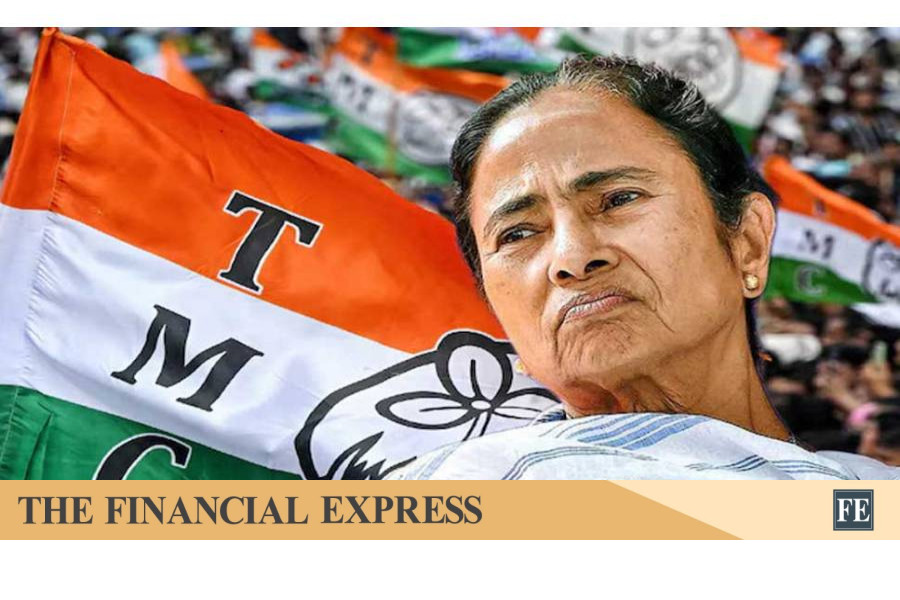
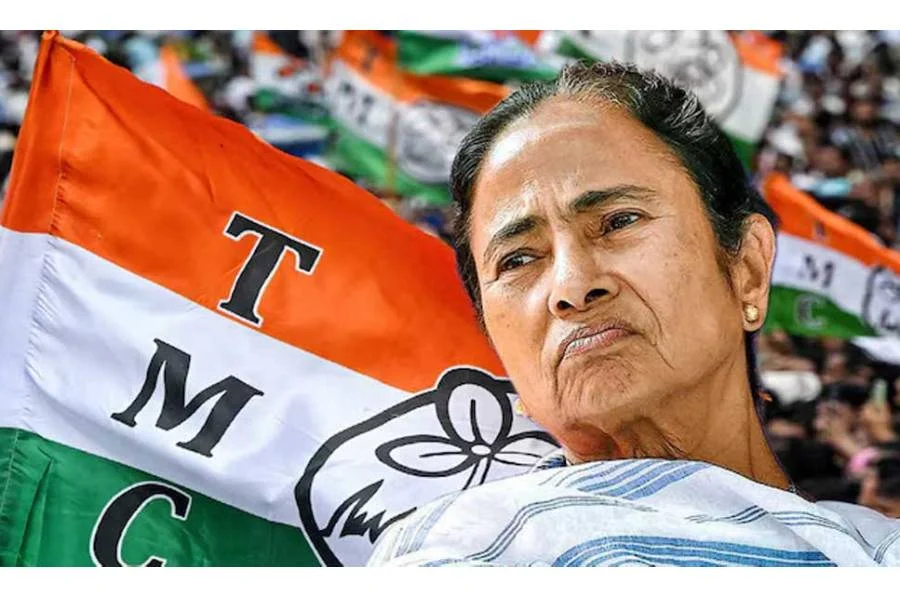
West Bengal Chief Minister Mamata Banerjee’s refusal to resign after her party’s electoral defeat has culminated in the dissolution of the state Legislative Assembly by Governor RN Ravi, NDTV repo

The Assembly’s five-year term was due to expire at midnight on Thursday.

In the evening, Raj Bhavan released a letter issued earlier, formally confirming the dissolution of the House, the Indian news outlet said.

The single-line notification was quoted as saying, “In exercise of the power conferred on me by sub-clause (b) of Clause (2) of Article 174 of the Constitution of India, I hereby dissolve the Legislative Assembly of West Bengal with effect from 07th of May 2026”.

Under Article 172 of the Constitution, an Assembly automatically dissolves after completing its term, while the outgoing Council of Ministers continues in a caretaker role until a new government is sworn in, according to NDTV.

However, the political situation in West Bengal had turned contentious after the election results, with Mamata declaring she would not step down despite her party’s defeat.

Her refusal triggered intense political debate over whether she could continue in office in a caretaker capacity, with several BJP leaders demanding her immediate dismissal.

NDTV reported that her stance, described as unprecedented in India’s electoral history, created widespread confusion over the constitutional validity of her continuation in office.

While legally a chief minister may continue in a caretaker capacity until formal certification of election results, implementation depends on the governor’s discretion.

Once the Election Commission certifies the results, continuation in office is limited strictly to caretaker functions, the report added.

The BJP, which secured a decisive mandate in the state election, is expected to have its new cabinet sworn in on Saturday, which would ordinarily leave a brief caretaker period in place, NDTV said.

On Tuesday evening, Mamata had told reporters: “I have not lost, so I will not go to Raj Bhavan. I will not tender resignation.”

Her remarks deepened the political divide, with opposition parties rallying around her while BJP leaders intensified calls for her removal.

Earlier, the Trinamool Congress announced it would approach the court to challenge the election results that ended its 15-year rule in the state.​
 

Suvendu Adhikari to be first BJP Chief Minister in West Bengal, Amit Shah announces

ANI
Kolkata, West Bengal (India)
Updated: 08 May 2026, 17: 58

1778285018859.webp

Union Home Minister Amit Shah congratulates BJP leader Suvendu Adhikari after he is elected as the leader of the West Bengal BJP Legislative Party and set to be the new CM of the state, in Kolkata on 8 May 2026 ANI Video Grab

Bharatiya Janata Party (BJP) leader Suvendhu Adhikari was on Friday elected the BJP Legislative Party Leader for the party in West Bengal on Friday, paving the way for him to become the first BJP Chief Minister in the history of the State.

Senior BJP leader and union Home Minister Amit Shah announced the name of Adhikari as the party’s leader after chairing a party meeting in Kolkata today.

“I announce the name of Suvendu Adhikari elected as Leader of West Bengal BJP Legislative Party,” Shah, the Central Observer for the election of the legislative party leader in West Bengal said.

1778285054263.webp

BJP leader Suvendhu Adhikari Bhaskar Mukherjee

He is set to take oath tomorrow on the day, which marks the birth anniversary of Rabindranath Tagore.

Bharatiya Janata Party (BJP) leader Nisith Pramanik had backed party leader Adhikari as a key chief minister face in West Bengal, saying that there is “no other alternative” to him as of yet.

Speaking to ANI, Pramanik said the BJP’s win reflects people’s desire for change in West Bengal. He added that tackling “infiltration” and fully fencing the border will be a top priority to protect the state and the country.

He further stated that West Bengal needs a leader like Suvendu Adhikari, calling him the only strong option at present, while noting that the party will take the final decision on the Chief Minister.

1778285079850.webp

Union Home Minister Amit Shah garlands BJP leader Suvendu Adhikari after he is elected as the leader of the West Bengal BJP Legislative Party and set to be the new CM of the state, in Kolkata on 8 May 2026 ANI

“The person who has defeated Mamata Banerjee twice, who has sacrificed his life for his party and the country, Bengal needs such a Chief Minister. There’s certainly no alternative to Suvendu Adhikari in Bengal yet. The party will decide, but this is how it should be. If there is a leader, he should be like this,” he said.

Adhikari also met with newly-elected MLAs of the party and other BJP leaders today.

Adhikari contested from Nandigram and Bhabhanipur, beating outgoing Chief Minister Mamata Banerjee from her stronghold in Bhabanipur by a margin of over 15,000 votes.

BJP has won 207 seats in the 2026 West Bengal Assembly elections, while the Trinamool Congress (TMC) secured 80 seats after ruling the state for 15 years.​
 

How did the BJP gain a stronghold in West Bengal?

Zillur Rahman

1778285930768.webp

BJP's sweep of West Bengal election should be seen not as an isolated phenomenon but as part of the process of political realignment in India. PHOTO: REUTERS

The result of the just-concluded West Bengal legislative assembly election is significant not only because of the change of power but also because it marks the emergence of a new structural phenomenon in eastern India and, in addition, a new variable for Bangladesh-India relations. Winning by gaining 206 seats and nearly 46 percent of votes (an increase of almost eight percentage points from last year) was the result of not only the Bharatiya Janata Party’s (BJP) electoral campaign but also its ability to consolidate its political base in one of the most problematic states for the right-wing party.

Among the reasons behind BJP’s victory are obviously the powerful anti-incumbent sentiments among West Bengal’s citizens. Growing concerns about lack of employment opportunities, the non-expansion of industrial enterprises, cases of corruption associated with the recruitment practices of Trinamool Congress (TMC), and the functioning of local political patronage networks contributed significantly to it. Welfare programmes, mainly aimed at benefiting women, created a social buffer against discontent but failed to cover demands related to economic development and administration.

Moreover, the BJP succeeded in changing some elements of its previous campaign strategy. Having learned from its failures in 2021, the party made efforts to diminish its “outsider” perception by leveraging local leadership, language, and culture, while developing its organisational capabilities in North Bengal and in border areas.

A third element of the BJP’s success can be attributed to changes in social coalitions on which the TMC relied before. The fact that Hindus consolidated their political preferences and there emerged some division among minorities has become a critical point. Certainly, it cannot be said that the BJP achieved its goal largely through social polarisation; however, the transformation of social coalitions became a crucial factor in this victory.

One of the most controversial features of this election is its pre-campaign phase called Special Intensive Revision (SIR). As a result of the process, about nine million names were removed from voter rolls. It decreased the number of registered voters from around 76 million to about 68 million, with about 2.7 million people not reinstated after SIR. Though it may seem quite normal, its criteria raised significant concerns, specifically regarding “logical discrepancy.”

SIR has caused a paradoxical situation. First, despite the deletion of voters’ names, turnout reached nearly 93 percent. Nevertheless, in 48 constituencies, the number of registered voters decreased, representing a disproportionately large proportion of those deleted. In this case, even though the overall voter turnout increased, the competitive equilibrium shifted in certain areas where this factor was especially important.

Having mentioned all of this, it would be incorrect to claim that the BJP gained victory exclusively thanks to SIR. Various factors influenced the process, including anti-incumbent sentiment, the BJP’s strengthening of its organisational power, the reconfiguration of social coalitions, and the messages the party delivered to voters.

However, one of the main themes of the election was precisely the message dominating it. The slogan “detect, delete, deport” reflected a specific attitude towards Bangladesh and its alleged infiltration of West Bengal. These issues were directly associated with the region and its borders and thus constituted an extremely important element of BJP’s strategy.

Border constituencies played a decisive role in determining the election outcome. As calculations show, 44 seats bordering Bangladesh, along with adjacent regions, proved crucial to the BJP’s victory.

From the perspective of Bangladesh, the outcome of the election has significant implications as well. The Petrapole-Benapole corridor is responsible for more than 70 percent of land-based trade between Bangladesh and India. Besides, about 2.8 million people use the border region for transit each year. Therefore, political changes there affect not only the issues of border crossings, visa access, and trade facilitation, but also Bangladesh’s economic interests. Although Dhaka responded pragmatically, focusing on bilateral issues, new opportunities emerged to resolve some of them in Bangladesh’s favour.

For example, the issue of the Teesta water-sharing agreement, long blocked by West Bengal’s state government, may face fewer obstacles now that interests align between the state and the centre. However, further events remain unpredictable. Consequently, the post-election political situation is characterised by two contradictory features: coordination with West Bengal on specific problems and politicisation of Bangladesh-India relations, which might lead to further mutual mistrust.

Against the backdrop of unstable, somewhat fragile relations that have existed since August 2024, such a political strategy can entail adverse consequences beyond diplomatic channels. Cross-border movement and people-to-people contacts may become complicated. Since August 2024, the number of visas and medical travel permits has decreased; in addition, the use of transshipment sites has increased trade costs. The current situation may deteriorate due to a harsher line on border issues.

The West Bengal election should be seen not as an isolated phenomenon but as part of the process of political realignment in India. From the perspective of Bangladesh, its implications will be seen through a gradual change in relations depending on the extent to which electoral rhetoric turns into practical actions.

Zillur Rahman is a political analyst and president at the Centre for Governance Studies (CGS). He hosts ‘Tritiyo Matra’ on Channel i.​
 

Latest Posts

Back
Top Bottom