| Global Defense, OSINT & Geopolitics Wire

[🇧🇩] Ziaur Rahman in the eyes of the masses

[🇧🇩] Ziaur Rahman in the eyes of the masses
14
680
More threads by Saif

G Bangladesh Defense

President terms Zia proclaimer of independence

Zaima receives Khaleda’s award

United News of Bangladesh . Dhaka 09 March, 2026, 00:24

View attachment 24935

President Mohammed Shahabuddin hands over Best Indomitable Woman in Advancing Democracy award to Zaima Rahman, daughter of the prime minister, who received the award on behalf of her grandmother former prime minister Khaleda Zia, at Osmani Memorial Hall in Dhaka on Sunday. | Focus Bangla photo

President Mohammed Shahabuddin on Sunday termed Ziaur Rahman, former president and founder of the Bangladesh Nationalist Party, the proclaimer of the country’s independence.

He made the remarks while addressing a programme marking the International Women’s Day 2026 and the conferring of ‘Adamya Nari’ awards at Osmani Memorial Auditorium in Dhaka.

‘Foundation for women’s political and economic empowerment was laid by proclaimer of independence late president Ziaur Rahman, who established the first women affairs cell in the president’s secretariat in 1976. Later, a separate ministry of women’s affairs was formed in 1978, which was later transformed into the present ministry of women and children affairs during Khaleda Zia’s tenure,’ said the president.

The head of state called for effective and strict measures to prevent violence against women and address emerging challenges such as online defamation and cyberbullying targeting women.

‘Women and girls must not become victims of neglect, abuse or discrimination. We want to build a livable Bangladesh where every woman can grow up in a safe environment, become self-reliant and have opportunities to lead and where every girl has equal chances to dream and realise those dreams,’ he said.

Shahabuddin said the government is taking strict steps to ensure speedy trials and exemplary punishment for violence against women. Strong political will and firm legal action had produced positive results earlier.

The president paid deep tribute to the martyrs who sacrificed their lives in movements and struggles for democracy and people’s rights from the 1971 Liberation War to the 2024 movement to protect the country and its people.

Shahabuddin said acid violence in Bangladesh had once been brought under control through firm political commitment and strict legal measures.

He said in 2002 the government of former prime minister Khaleda Zia enacted laws to control acid use and acid attacks and ensured speedy trials and tough administrative actions, which brought acid terrorism close to zero. ‘The example could serve as a model in efforts to prevent violence against women.’

The president said social harassment, online character assassination and cyberbullying against women have emerged as new challenges and the government is taking special measures to address these crimes.

He stressed that both men and women must work together to build a livable and just Bangladesh by ensuring women’s safety and equal opportunities.

Shahabuddin said women make up more than half of Bangladesh’s population and play a significant role in almost every sector of society and the economy.

Millions of women working in the readymade garment sector are a key driver of the country’s export earnings, while women are also leading successfully in education, healthcare, agriculture, administration, science and technology, media and sports, he added.

The president also said the government of Khaleda Zia introduced compulsory primary education and free education for girls up to class XII.

Stipends for girls were also introduced to boost female education, a programme widely praised internationally and recognised by the World Bank and other organisations as a successful model for the developing world, he added.

Highlighting the government’s ‘family card’ programme aimed at empowering economically disadvantaged women, the president said the initiative will begin on March 10, initially providing monthly financial assistance to women heads of marginal poor families.

He expressed hope that the programme would help strengthen the economic independence of such families.

The president handed over awards to six women for their outstanding contributions.

Zaima Rahman, granddaughter of former PM Khaleda Zia, received the award on behalf her grandmother for her contributions to women’s education and the advancement of democracy.

Physician and social worker Zubaida Rahman, state minister for women and children affairs Farzana Sharmin, resident representative of the UNDP, Bangladesh Stefan Liller, members of the cabinet and parliament, award recipients and their representatives were present.​
Proclaimer of Independence someone other than Mujib?

Chuppu has gone full BNP now.

Shifting thoughts - I don't see Zaima Rahman as successor to Khaleda Zia.

These practices of dynastic politics must stop.

Otherwise we will see a repeat of what happened in Nepal and even to Mujib's family.

Unfortunately brain-dead Bangladeshi politicians don't understand the principles of rule by merit.
President is a ceremonial post in Bangladesh. President has no executive power. Chuppu is saying whatever BNP has instructed him to say.
 

Ziaur Rahman is inevitable character of independence, Liberation War: PM

BSS
Published :
Mar 27, 2026 20:05
Updated :
Mar 27, 2026 20:55

1774655880986.webp


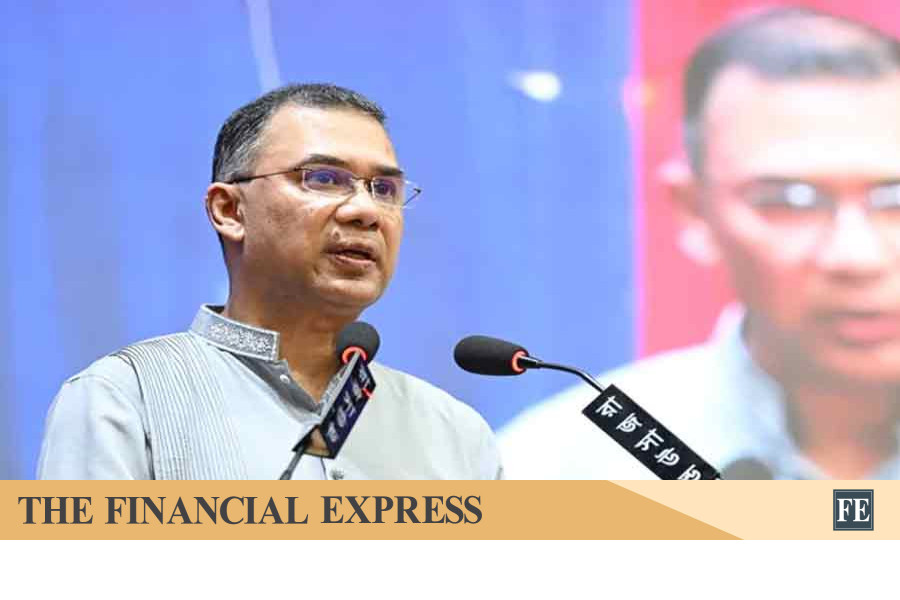
Criticizing the past attempts of diminishing contributions of the proclaimer of the country’s independence, Shaheed President Ziaur Rahman, Prime Minister Tarique Rahman today said the late leader was one of the essential figures of independence and the Liberation War.

“The way through which attempts were made in the past to humiliate Shaheed President Ziaur Rahman and deny his contribution and work has proven that Shaheed President Ziaur Rahman is certainly an inevitable character in the Liberation War of Bangladesh,” he said.

The premier said this drawing the attention of the young generation while he was addressing a discussion at the Institution of Engineers, Bangladesh (IEB) auditorium in Dhaka on Friday afternoon.

Bangladesh Nationalist Party (BNP) organised the discussion on the occasion of the Independence and National Day with its Secretary General and LGRD and Cooperatives Minister Mirza Fakhrul Islam Alamgir in the chair.

Highlighting the role of Ziaur Rahman in proclamation of country’s independence, Tarique Rahman, also BNP chairman, said that Ziaur Rahman did not declare independence suddenly.

Though Ziaur Rahman was not a political activist in his early life but a military officer, the premier said, he (Ziaur Rahman) had long nurtured the vision of an independent Bangladesh, which is supported by his own article- “Birth of a Nation” published in now defunct the Dainik Bangla on March 26, 1972 on the first anniversary of the country’s independence.

“It was then 2:15 am. March 26, 1971. A day etched in the Bangalee's heart in blood letters. The people of Bangladesh will remember this day forever. They will remember and love it. They will never forget this day. Never, never,” Tarique Rahman quoted from the article, saying that the article reflects Ziaur Rahman’s thoughts clearly.

“What happened at 2:15 am on March 26 in 1971. I think this information can definitely be an important document for those who conduct research on the history of independence and the Liberation War,” the premier said, adding, when the article was published all of the freedom fighters or those directly or indirectly involved in the Liberation War were alive.

But, he pointed out, none had challenged the article’s authenticity at the time.

Noting that Weekly Bicitra, a sister concern of the same newspaper, reprinted the same article in 1974, the Prime Minister said but none raised any objection at that time too, because those who were there at that time knew that every sentence, every word of Shaheed Ziaur Rahman mentioned in the article was true.

“But, later, we saw many attempts to humiliate Shaheed Ziaur Rahman. But I said earlier that what is true is true. There is no way to hide the fact that Shaheed Zia is an inevitable character of the Liberation War,” he added.

At the outset of his speech, Tarique Rahman paid rich tributes to all martyrs of the Liberation War of 1971 and expressed gratitude to national leaders, including the declarer of independence, Shaheed President Ziaur Rahman.

He also recalled war-wounded freedom fighters and contributions of the mass people to the Liberation War.

Referring to his earlier remarks about history that dwelling on the past makes one eye blind, but forgetting the past makes both eyes blind, the premier observed that the past should not be forgotten completely, but over-focusing on past events hinders the future path of prosperity.

Describing the Liberation War as the most glorious chapter of Bangladesh’s history, he said Bangladesh achieved victory against one of the strongest armies at that time.

So, it is normal that discussion and research would continue for generation after generation about the glorious history of the independence and the Liberation War, Tarique Rahman said, adding, “But in the name of discussion, criticism, or research, it would certainly not be right for us to do or say anything that could diminish the glorious history of our independence and the Liberation War in any way”.

Highlighting the value of independence and referring to the struggle of Palestinian people for freedom, he said that only those, who fought for freedom, can truly understand its worth.

“At the cost of millions of lives, we achieved our independence in 1971 and at the cost of thousands of lives we protected the country and the independence in 2024,” the BNP chairman said, adding, the aspiration of martyrs in all movements, including in 1971, 1990 and 2024, was building a sovereign, democratic and safe Bangladesh based on equality, dignity and justice.

He said on this great Independence Day, people’s aspirations are limitless, but the resources are limited.

“Even though there are (huge) difference between our aspirations and resources, I, as a citizen of this country and as a political activist, firmly believe that if we move forward unitedly and if we all work together, we will definitely be able to build our desired self-reliant Bangladesh,” the Prime Minister said.

Reflecting the government’s people-friendly programmes, including family cards, farmer cards, canal excavation, tree plantation, and employment creation programmes, he said, “We have taken various initiatives to improve the living standard of the people. Our government is working tirelessly”.

Stressing on coexistence, mutual respect, rejecting negativity and embracing positivity, Tarique Rahman said, “Let our pledge for this Independence Day be that we will live well in this country, not just as a part of society, but as people from all walks of life”.

BNP Standing Committee members Dr Khandaker Mosharraf Hossain, Dr Abdul Moyeen Khan, Prime Minister’s Adviser for Agriculture Nazrul Islam Khan, Finance and Planning Minister Amir Khosru Mahmud Chowdhury and Home Minister Salahuddin Ahmed spoke at the discussion.

Educationist Professor Wakil Ahmed, Economist Professor Mahbub Ullah, University Grants Commission (UGC) Chairman Professor Mamun Ahmed and Dhaka University (DU) Vice-Chancellor Professor Dr ABM Obaidul Islam also spoke at the event.​
 

Why Zia still matters today

Serajul I. Bhuiyan

Published :
May 26, 2026 17:05
Updated :
May 26, 2026 17:05

1779838833827.webp


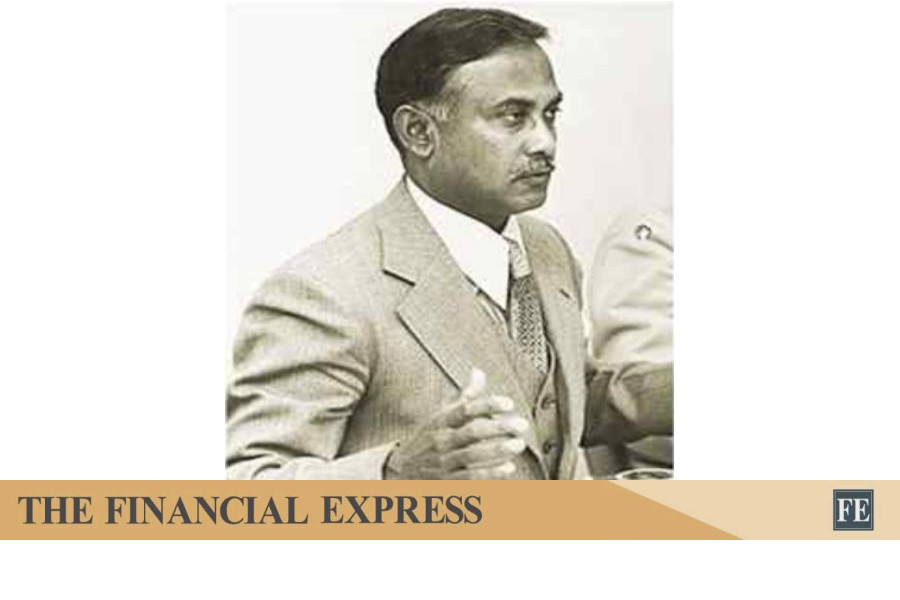
May 30 marks the 45th anniversary of the demise of Shaheed President Ziaur Rahman, a freedom fighter and nation builder who founded the Bangladesh Nationalist Party (BNP). The death of Shaheed Ziaur Rahman at the hands of those attempting to stage a coup in Chittagong not only meant the end of the life of the country’s president; it also meant the premature end of an amazing exercise in statecraft that tried to create a sovereign, pluralistic, and self-reliant country.

Therefore, commemorating Ziaur Rahman means not just celebrating him through ceremonies, but also recognizing that he came into existence at a time when Bangladesh, as an independent nation, needed someone to alter its destiny many times over.

The main contribution of President Ziaur Rahman is that he turned independence and sovereignty from vague constitutional notions into a working and practiced principle of statecraft. Ziaur Rahman’s political and administrative acumen taught us a very important lesson: once gained, independence cannot be taken as granted - it requires careful safeguarding through proper institutions and policy practices.

Unlike many post-colonial leaders and administrations across the globe who tended to use sovereignty and national independence as mere slogans, Shaheed Zia went much further by practicing what he preached. His vision of sovereignty was deeply practical, in the sense that the principle had to be incorporated into all activities and processes associated with governance,, including budgeting, foreign relations, domestic administration, economic development, and so forth.

It is especially worth noting the case of foreign policy in this regard. At a time when Bangladesh faced a high risk of strategic subordination in the region, Ziaur Rahman changed that perception and convinced the country’s leaders and citizens that a small state cannot afford to be obedient to survive and prosper. On the contrary, it must remain vigilant and active, ready to protect its sovereignty at any cost.

The Political Reinterpretation of Nationality: One more highly debated but extremely important legacy of Shaheed Ziaur Rahman is the reinterpretation of national identity. The latter was re-centered on sovereignty, territoriality, and political independence rather than language or religion. According to Ziaur Rahman, a national identity should be clearly defined so that there is no chance for external forces to exploit Bangladesh and shape its mentality through the manipulation of identity discourse.

It was a psychological liberation for the Bangladeshi society from the yoke of the colonial heritage and recognition of the unique character of their nation. Yet, for opponents of this concept, there was always a risk of marginalising some ethnic groups through denying them citizenship. Still, one should acknowledge that Ziaur Rahman’s reformulation of the nationality concept was instrumental in fostering strong notions of sovereignty among the Bangladeshi population.

Broadening of Foreign Relations Network: Ziaur Rahman’s foreign policy was completely different from previous ones and represented a breakthrough in the field. The former Prime Minister was very eager to expand Bangladesh’s diplomatic network outside of South Asia by reaching out to the Muslim world, non-aligned countries, Sub-Saharan Africa, East Asia, and various international institutions.

That was done by Ziaur Rahman for a very practical reason the narrowness of Bangladesh’s diplomatic connections might have led to national subordination, as powerful countries or groups could pressure the government. Thus, through a carefully constructed, broadened foreign policy, President Ziaur Rahman tried to make his country immune to such pressures and threats.

One of the problems that poses a particular danger to Bangladesh’s sovereignty is water security, particularly the issue of transboundary rivers. Being a lower riparian state, Bangladesh is heavily dependent on neighboring countries’ decisions regarding the use of rivers shared by Bangladesh and India.Ziaur Rahman recognized the problem and treated the issue of the transboundary river seriously. By refusing to be subordinated in water management and advocating equitable water sharing, particularly regarding the Farakka Barrage, Zia made clear that transboundary rivers are an inseparable part of water sovereignty. While the results of Zia’s efforts on the water issue are debatable, the approach he pursued will remain relevant given Bangladesh’s geographic vulnerability.

Conceptualisation of Regional Institution: Not only was he concerned with formulating effective foreign policies, but also with the creation of regional institutions, since the idea for the SAARC originated with him. By founding this organisation, the leader sought to resist power imbalances in South Asian politics through multilateralism and diplomacy. Since bilateral diplomatic approaches may work to the advantage of larger powers, SAARC offered a good opportunity for the region’s smaller states to level the playing field. Thus, SAARC stands as a good example of how diplomatic practices can be turned into instruments of strategic and political independence.

Drawing Boundaries: When addressing territorial issues, President Ziaur Rahman demonstrated strong determination and clarity. Namely, he considered any sort of vagueness concerning the demarcation of borders and other boundary problems as a weakness of a state that may become a source of external pressures. The rejection of India’s unilateral claims to South Talpatti Island clearly demonstrates the approach outlined above to borders. In fact, Ziaur Rahman was aware that such territorial disputes involve not only territorial issues but also national sovereignty. Given the realities of current geopolitics, including the development of corridors and negotiations over transit issues, Zia’s principles remain highly relevant today.

Development Policies for Sustainable Sovereignty: The importance of economic independence for sovereignty cannot be overstressed. This was well realized by Ziaur Rahman, who formulated a development program based primarily on economic sectors such as agriculture, rural development, irrigation, and decentralisation.

As far as these industries were concerned, Bangladesh succeeded in gaining its independence, not only politically but also geographically. The emphasis was put on the countryside; thus, they were empowered.

Moreover, in this way, the leader showed that dependency starts at home—it is not enough to be politically independent. Therefore, economic policies are as important for independence as foreign ones.

What Interrupted the Doctrine of Sovereignty?: The above analysis shows that Shaheed Ziaur Rahman played a significant role in advancing Bangladesh’s sovereignty. But there was no time to continue the implementation of his doctrines, the assassination interrupted the process halfway.

Thus, in the years that followed, we have seen many cases in which Zia’s ideas were set aside, and Bangladesh returned to its initial dependency. Narrow alliances and relations, conflicts over trade and water, and attempts at strategic asymmetry all came as a surprise for a new generation of politicians and analysts.

On the contrary, such an event highlighted the importance of Zia in history, as he was the one who set out the guiding principles. Whenever anything happens with regard to sovereignty, people speak of Zia.

What makes Shaheed Ziaur Rahman stand out is the high level of ethical behaviour in politics that characterized him throughout his leadership career. First of all, Zia had a great character, which made him able to lead people with confidence and authority. Besides, his strict approach to personal discipline made him earn high respect from society.

Finally, another feature that set him apart was Ziaur Rahman’s philosophy of inclusive politics. At a time when Bangladesh was divided into many fragments and faced serious challenges, the President managed to unite people and make them feel part of the state.

Adapting the doctrine to modern conditions: Today, the legacy of Shaheed Ziaur Rahman must be remembered and carried forward to achieve strategic autonomy in the world. To this end, several important factors must be considered.

First, economic policies have to be directed not at isolationism but at competitiveness. In other words, it is necessary to ensure Bangladesh’s sovereignty through its competitiveness in the global economy. This can be reached by increasing human capital and introducing innovations in production.

Second, as far as diplomatic relations are concerned, they must include a wide range of actors and involve a diversity of interactions to provide some flexibility. Thus, Bangladesh should continue to diversify its relations with many countries worldwide.

Third, institutional capacity and decentralization have to be increased to make the state less susceptible to external influences. Finally, people must play a major role in preserving Bangladesh’s sovereignty.

The commemoration of Ziaur Rahman would be futile unless his legacy continued. To make this possible, his philosophy of sovereignty must be modernised to suit contemporary Bangladesh.

In the modern, well-connected world, his concept of sovereign independence can best be explained through the theory of strategic autonomy. In the international community, it is imperative for Bangladesh to safeguard its decision-making power while maintaining its sovereignty amid globalisations.

In international relations, it means pursuing a comprehensive foreign policy to sustain independence and avoid interference. Regarding the economy, it means becoming more competitive through innovations, human capital development, and international business transactions. Decentralisation and accountability at the institutional level remain as important today as they were under Ziaur Rahman. An effective institutional setup is the foundation of independence. In its absence, sovereignty will be weak no matter what happens outside.

At the same time, sovereignty is not upheld solely by the state, it is sustained by its people. Ziaur Rahman succeeded in embedding this sense of sovereignty within the national consciousness. Preserving that awareness through education, civic engagement, and informed public discussion is essential. For the next generation of leaders, the lesson is clear: sovereignty is not a finished achievement but an ongoing process. It must be protected, negotiated, and renewed continuously.

Four and a half decades after the tragic assassination of Shaheed Ziaur Rahman, his influence has gone far beyond the pages of history and continues to live on. He is not just remembered—he is rediscovered again and again. Across generations, his vision of nation-building, grounded in sovereignty, dignity, and self-reliance, continues to inspire those who believe that Bangladesh must shape its own destiny.

There was much about Ziaur Rahman that made him less than ideal; no true transformative leader can be ideal. The distinguishing characteristic of him was his purposefulness. He stood his ground in uncertain times, was courageous when the country was weak, and was forward-looking in leading the new nation that was trying to find its footing. He achieved all of this in a short period, restoring democratic space, reviving the economy, and building Bangladesh into an influential nation in the international community.

The lesson to be derived from his legacy is that sovereignty cannot be achieved and then left at that; it is an ongoing struggle that demands alertness, robust institutions, and a common purpose.

Remembering Shaheed Ziaur Rahman, therefore, is not only about honouring the past—it is about accepting responsibility for the future. It is about understanding that independence must be practiced every day, defended in every decision, and preserved by every generation.

As the American statesman Thomas Jefferson once said: “The price of freedom is eternal vigilance.”​
 

BNP to avance nation along path shown by Shaheed President Zia: Mirza Fakhrul

UNB

Published :
May 29, 2026 21:48
Updated :
May 29, 2026 21:48

1780107440543.webp


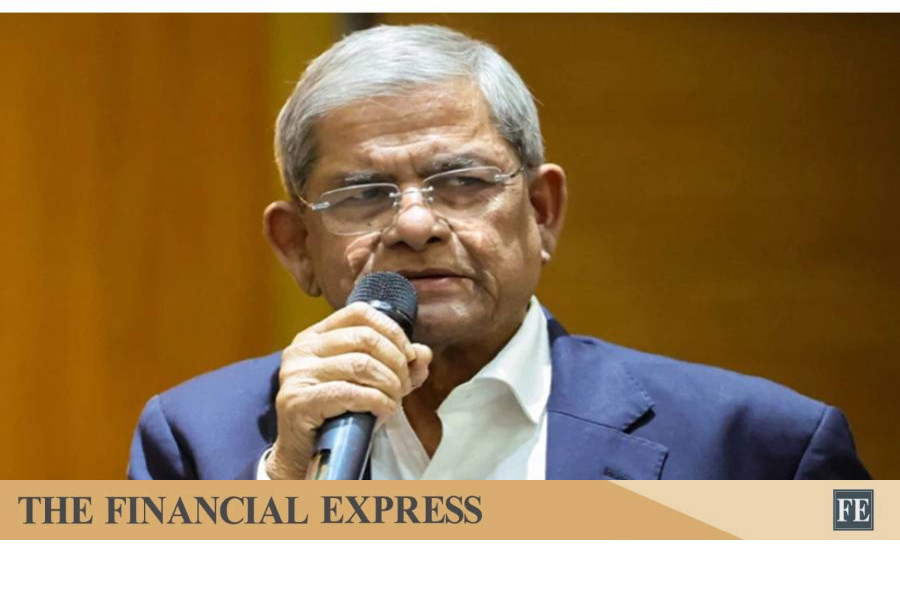
BNP Secretary General Mirza Fakhrul Islam Alamgir has said that the party will move forward following the path shown by its founder Shaheed President Ziaur Rahman.

In a statement issued on Friday on the occasion of Ziaur Rahman’s 45th death anniversary, Fakhrul said BNP remains committed to building a government under the leadership of Prime Minister Tarique Rahman that ensures accountability, transparency, tolerance of differing opinions, and the protection of all citizens’ rights.

He said strengthening democratic institutions is essential to establish a stable and lasting democracy in the country.

Fakhrul added that BNP would move forward by upholding the ideals and path of “Shaheed Zia” in addressing national crises, struggles and development, and stressed the need for a strong national unity to protect national interests, pluralistic democracy and people’s rights.

The BNP has taken various programmes to observe the 45th death anniversary of its founder, Ziaur Rahman, on Saturday (May 30).

Describing Ziaur Rahman as a “gallant freedom fighter and principled statesman,” Fakhrul said his patriotism, honesty and dedication continue to inspire nationalist forces.

He also alleged that Ziaur Rahman’s popularity was never accepted by “domestic and foreign conspirators.”

From the very beginning after assuming power, anti-national groups started plotting against him. These conspirators brutally killed President Ziaur Rahman on 30 May 1981 at the Chattogram Circuit House. Through this tragic assassination, the nation lost a great patriot.

However, no matter how much conspirators may try, a great statesman cannot be erased from history by removing him from the world. Instead, he remains eternally alive in the hearts of the people.

With uncompromising determination, his late wife, former Prime Minister Begum Khaleda Zia, followed the path shown by Shaheed Zia and advanced multi-party democracy and the country’s development, while confronting anti-democratic and anti-national forces.

Referring to political developments, Fakhrul said “fascist rule” had allegedly kept power for 17 years through fear, enforced disappearances, killings and repression.

He also alleged that state resources were laundered abroad and described the previous ruling system as a “looted mafia economy”.

Fakhrul further claimed that a mass uprising involving students, workers and the public on August 5, 2024 led to a political change, and called for completing the “victory” achieved through the blood of students and citizens.​