South Asia Indian Railway, Tracking the news, progress and development.

South Asia Indian Railway, Tracking the news, progress and development.
More threads by Krishna with Flute

G  South Asia
Haven't been on a desi train for years and years now

want to try one of these new ones

there's some charm etc to it all but trains are generally not nice here, even AC 1st.

they take too long too, 20+ hours vs 2 hours something

not worth, unless you doing it just for the sake of it

have much fond memories of the Rajdhani Express but, good times
 
Haven't been on a desi train for years and years now

want to try one of these new ones

there's some charm etc to it all but trains are generally not nice here, even AC 1st.

they take too long too, 20+ hours vs 2 hours something

not worth, unless you doing it just for the sake of it

have much fond memories of the Rajdhani Express but, good times

Bande Bharat Express is reportedly very nice. I posted some Bangladesh woman's VLOG about it.
 
Bande Bharat Express is reportedly very nice. I posted some Bangladesh woman's VLOG about it.
I've seen some, those vistadome coaches with the seat flip thing is amazing. Some of that scenery is insane, no roads for god knows how many 10s or 100s ? of miles... aircraft fly too high, too fast to see

a slow chugging train snaking through the western ghats, hanging out recklessly stoned etc.. good times, bhai !

rustic charm mangta, slow, that chuga chuga rhythm

much romance to it all
 
The Economic Times
Follow
1d

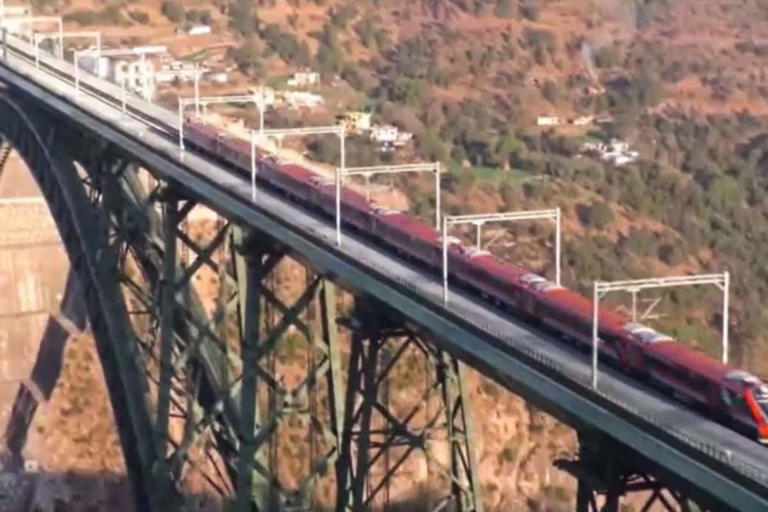
Vande Bharat train begins trial run over world’s highest Chenab Rail Bridge in Kashmir​


Indian Railways has launched the trial run of the Vande Bharat train from Shri Mata Vaishno Devi Railway Station Katra to Srinagar. The train crosses the world’s highest railway bridge, the Chenab Rail Bridge, and India’s first cable-stayed Anji Khad Bridge. It has been specially designed to handle the cold climate of the Kashmir valley. See less


Kashmir Gets First Direct Train From New Delhi | N18V | CNBC TV18​

Experience the beauty of Kashmir like never before aboard the Vande Bharat Express! From 360-degree rotatable seats to advanced heating systems, this train redefines comfort and convenience, all while offering breathtaking views of the valley. Shivani Bazaz takes you inside this much anticipated train.


Vande Bharat To Kashmir, Bridge To Link Rameswaram | Why PM’s February Gifts Matter​

Story by Aman Sharma
• 7m • 4 min read

1737955801556.webp


The first Vande Bharat train crosses Chenab Bridge, the world's highest rail bridge on the Udhampur-Srinagar-Baramulla Rail Link, in Reasi district. (PTI)

The first Vande Bharat train crosses Chenab Bridge, the world's highest rail bridge on the Udhampur-Srinagar-Baramulla Rail Link, in Reasi district. (PTI)© Copyright (C) new18.com. All Rights Reserved.
A train to Kashmir in the North and a new bridge to take a train to Rameswaram in the South — both these feats will be possible soon with Prime Minister Narendra Modi set to inaugurate the landmark projects in February.

These are also the PM’s dream projects and exhibit the country’s flourishing infrastructure story amidst some big challenges. The Udhampur Srinagar Baramulla Rail Link will link the Kashmir Valley —described by the 13th century poet Amir Khusrau as ‘paradise on earth’— with the rest of the country after a wait of decades. The new Pamban Rail Bridge will re-link Rameswaram, home to the late President Dr APJ Abdul Kalam, to the mainland.


The visuals of the trial run of the first Vande Bharat train from Katra to Srinagar last week exhibit how humungous challenges were overcome in the last decade on a 111-km stretch between Katra and Banihal to be inaugurated by Modi next month. No work had happened on this stretch till Modi first reviewed it on June 24, 2015. This was a significant date as the prime minister termed it “an important national project and asked J&K and Railways to speed up the work”.

This is one of the most complex and technologically challenging stretches in the country. Of the 111-km rail line between Katra and Banihal, 97.42 km is through as many as 25 tunnels and there are 6 km of bridges. The Vande Bharat on Saturday during the trial run passed over the Chenab Rail Bridge, the world’s highest railway bridge which sits 359 meters over the Chenab River, and the Anji Khad Bridge, which is India’s first cable-stayed rail bridge.


Why this explains India’s Success Story​

The train line to Kashmir will be an engineering marvel that would rival the most challenging projects in the world — it has a total of 38 tunnels, one of them nearly 13 km long, and 931 bridges. The commitment to the same by the Modi government explains a lot about the prime minister’s vision for Kashmir. Despite a year-round tourism industry, the Kashmir Valley historically had just a single mode of transport connecting it to the rest of India — by road.

A recent study by Oxford University explained how, for years, overwhelming traffic on a National Highway, as well as shutdowns created by erratic snowstorms, served as a constant reminder of the need for an alternative source of connectivity to Kashmir. It was a four-decade-old vision to nestle a railway line within the Himalayas — traversing mountains, gorges, and ridges. February marks the culmination of this long and arduous journey that required innovative tunneling in the most treacherous terrain.


The PM putting the project on the fast-track in 2015 ushered in a paradigm shift at all levels of execution and administration regarding the rail link, said the Oxford Study. The PM’s push prompted publication of weekly hindrance reports, unparalleled support given to project officials, and army convoys that escorted trucks of construction material. Former Chief Secretary of J&K Arun Mehta says the PM’s intervention galvanised the project’s execution and will be a lifeline for Kashmir’s socio-economic development.

As an all-weather means of transport for an area that is snowbound for part of the year, the Kashmir rail link could open up opportunities for enhanced tourism, investments and boosting J&K’s economy.

PM’s Second Gift in February​

The second big project on the PM’s table in February is the new Pamban Rail Bridge to Rameswaram whose foundation stone was laid by Modi in 2019 and the sea bridge is now ready for operations after a safety nod. This new bridge is replacing a bridge made by the British in 1914, which was decommissioned in 2022 as it completed its life term. The new bridge re-connects Rameswaram to the main land now after a gap of two years.


The 2.07-km-long vertical lift rail bridge having two rail lines — which can be lifted up to 17 meters and closed within 10 minutes using machines — it would rival in technology the Tower Bridge of London. Train operations would be disrupted for not very long when the bridge is lifted for ships and vessels to pass through in the Bay of Bengal.

The bridge is set to accommodate heavier rail traffic and faster trains. With its vertical lifting capabilities, this bridge will take India at par with more developed nations and its success sets a precedent for infrastructure projects across India. Rameswaram island is an important centre in South India. It is a temple town, also the hometown of Kalam, and it was in Rameswaram where the Ram Setu was built by Lord Ram’s army to bring back Sita from Lanka.

The new Pamban Bridge in Bay of Bengal will be the Setu to Rameswaram.


NASA-ISRO Mission: How Earth Satellite NISAR will see the Earth?

Story by Prabhat Mishra
2d4 min read


NASA-ISRO Mission: How Earth Satellite NISAR will see the Earth?

NASA-ISRO Mission: How Earth Satellite NISAR will see the Earth?

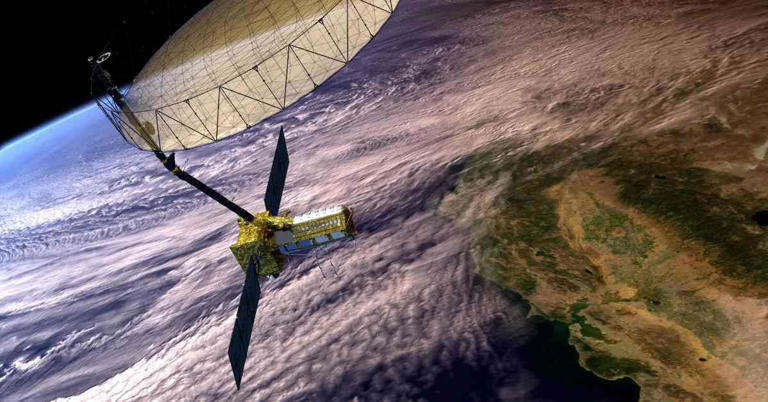
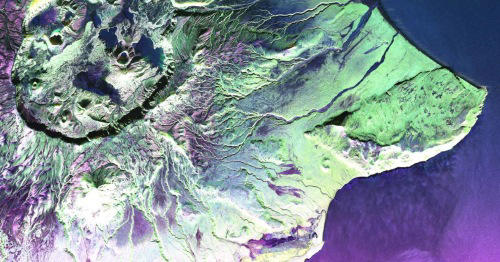
The NISAR satellite, a joint mission between NASA and the Indian Space Research Organisation (ISRO), is set to launch soon, marking a new era in Earth observation. By utilizing advanced Synthetic Aperture Radar (SAR) technology, NISAR will provide high-resolution images of the Earth's surface, tracking subtle changes like ground movements, glacier shifts, and deforestation, all with extreme precision.
30+ Modern-Luxury Amenities


Raymond Limited30+ Modern-Luxury Amenities


Ad

This game-changing mission will allow scientists to monitor nearly all of Earth’s solid surfaces twice every 12 days. It will not only provide real-time data on natural disasters like earthquakes but also help track environmental changes and provide valuable insights into climate change and disaster management.


NASA-ISRO Mission: How Earth Satellite NISAR will see the Earth?

NASA-ISRO Mission: How Earth Satellite NISAR will see the Earth?

Source : NASA/JPL-Caltech

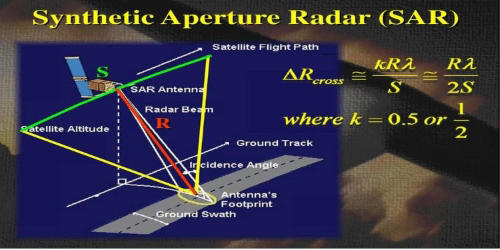
What Makes NISAR’s Synthetic Aperture Radar (SAR) Technology So Powerful?

NISAR’s SAR technology is key to its incredible precision. Traditional radar satellites often face resolution challenges due to antenna size.
However, SAR allows NISAR to deliver detailed images of Earth’s surface without needing oversized antennas.


NASA-ISRO Mission: How Earth Satellite NISAR will see the Earth?

NASA-ISRO Mission: How Earth Satellite NISAR will see the Earth?

Source : edfuturetech

What are the Benefits of SAR?

  • High-Resolution Imaging: Captures ultra-detailed images of Earth’s surface.
  • Day and Night Capability: Operates continuously, unaffected by time or weather.
  • Penetration Through Clouds: Can see through clouds and detect changes even during adverse weather conditions.

How NISAR’s SAR Technology Will Transform Earth Science?

NISAR’s SAR system is designed to collect vast amounts of data that reveal changes in the Earth’s surface. Here’s how it works:

  1. Radar Pulses: NISAR emits microwave pulses toward Earth’s surface.
  2. Signal Echoes: When the pulses hit the surface, they bounce back to the satellite, providing valuable data.
  3. Data Processing: The Doppler shift in the returning signals allows for fine-tuned processing, creating high-resolution images of the surface.

What are the Applications of NISAR which helps in Tracking Earth's Dynamic Systems?

NISAR will track Earth’s surface changes with exceptional detail, providing data on:

  • Natural Disasters: Monitoring earthquakes, tsunamis, and volcanic activities.
  • Glacial Movements: Observing the shifts in glaciers and ice sheets to understand climate change.
  • Deforestation and Ecosystem Changes: Mapping forest growth and loss, as well as tracking flood zones.
Here’s a look at the major applications NISAR will support:
India's Leading Silent Air Curtain Exporter With world-class Manufacturing. Call Now


Mitzvah air curtainsIndia's Leading Silent Air Curtain Exporter With world-class Manufacturing. Call Now


Ad


[td]Application[/td]
[td]What NISAR Will Track[/td]
[td]Scientific Significance[/td]
[td]Earthquakes[/td]
[td]Ground deformation before and after seismic events[/td]
[td]Helps in understanding fault movements and assessing earthquake risks[/td]
[td]Glacier Movements[/td]
[td]Shifts in glaciers and ice sheets[/td]
[td]Vital for studying ice dynamics and their impact on sea levels[/td]
[td]Forest Changes[/td]
[td]Deforestation and forest growth[/td]
[td]Critical for monitoring biodiversity and environmental health[/td]
[td]Floods and Land Shifts[/td]
[td]Mapping changes in land elevation and water movement[/td]
[td]Improves flood management and disaster response strategies[/td]

Why Will NISAR Change Earth Science Forever?

NISAR will offer an unprecedented level of monitoring, providing scientists with tools to study Earth’s dynamic systems in real-time. By imaging vast areas at high resolution, the satellite will:

  • Detect small changes in land surfaces
  • Help monitor and predict natural hazards
  • Offer essential data for disaster preparedness, recovery, and environmental protection

What is the Role of NASA and ISRO in Advancing Earth Science with NISAR?

This NASA-ISRO collaboration is a landmark achievement, merging decades of expertise from both space agencies. It opens up a world of possibilities for international cooperation in addressing climate change, monitoring natural disasters, and supporting sustainability efforts globally.
As we face a changing climate and increasing natural disasters, the data gathered by NISAR will be crucial in shaping our response strategies and understanding the impact of environmental changes.


NASA-ISRO Mission: How Earth Satellite NISAR will see the Earth?

NASA-ISRO Mission: How Earth Satellite NISAR will see the Earth?

Image Credit: linkedin/ Aakash Nagpal

Conclusion: NISAR—The Key to a More Resilient and Sustainable Planet

The NISAR satellite is set to revolutionize our understanding of Earth’s dynamic systems. With its cutting-edge radar technology, it will provide detailed, real-time data on everything from earthquakes to deforestation. By collaborating with ISRO, NASA is helping advance global Earth science and sustainability initiatives, making NISAR an essential tool for monitoring our planet's changing landscape.
 
Last edited:

Latest Posts

Back