[🇵🇰] Pakistan & Mid-East War

[🇵🇰] Pakistan & Mid-East War
15
184
More threads by Saif

G Pakistan Defense

US–Iran 3-way talks kick off in Pakistan

AP
Published :
Apr 11, 2026 19:23
Updated :
Apr 11, 2026 19:23

1775953792896.webp


A Pakistani official is seen during the arrival of the U.S. Vice President JD Vance for talks with Iranian officials in Islamabad, Pakistan, Saturday, April 11, 2026. (AP Photo/Jacquelyn Martin, Pool)

Iran’s IRNA news agency said on Saturday that after progress in indirect discussions, negotiations have begun between the United States and Iran.

The country’s state-run news agency said three-party talks with the US, Iran and Pakistan had begun after a reduction in Israeli strikes on southern Lebanon and other preconditions being met.

Meanwhile, Israel pressed ahead with strikes in Lebanon even as Iran conditioned ceasefire talks on a pause in fighting there.

The Lebanese state-run news agency reported that Israeli strikes on Saturday killed at least three people.

The war has killed at least 3,000 people in Iran, 1,953 in Lebanon, 23 in Israel and more than a dozen in Gulf Arab states. It has largely cut off the Persian Gulf from the global economy, sending energy prices soaring and inflicting lasting damage on infrastructure in half a dozen countries in the region.

In Tehran, residents told The Associated Press they were skeptical yet hopeful about the talks after weeks of airstrikes carved a path of destruction across their country. Some said even if one is reached, the path to recovery will be long.

“Peace alone is not enough for our country, because we’ve been hit very hard, there have been huge costs, and the people have to pay for that,” 62-year-old Amir Razzai Far said in downtown Tehran.

Officials posture over key issues ahead of talks

U.S. and Iranian officials claimed leverage and issued new demands and preconditions as talks approached. President Donald Trump posted repeatedly on social media leading up to Saturday, saying Iranian officials “have no cards” to negotiate with.

“The only reason they are alive today is to negotiate!” he wrote.

He accused Iran of using the Strait of Hormuz, a key artery for global energy supplies, for extortion, and told reporters on Friday it would be opened “with or without them.”

Islamabad was deserted Saturday as security forces sealed roads and authorities urged residents to stay inside, leading the normally bustling Pakistani capital to look like it was under curfew.

Vance said on Friday the US was optimistic about the talks, but warned: “If they’re going to try and play us, then they’re going to find that the negotiating team is not that receptive.”

Iranian Foreign Minister Abbas Araghchi said Tehran was entering negotiations with “deep distrust” stemming from prior strikes on Iran during previous rounds of talks. Araghchi, who is part of Iran's delegation in Pakistan, said on Saturday that his country was prepared to retaliate if it was attacked again.

Iran and the United States outlined competing proposals ahead of the weekend talks reflecting the wide gulf between the two sides on key issues.

Iran published a 10-point proposal. It called for a guaranteed end to the war and no future attacks. It demanded an end to economic sanctions and sought control over the Strait of Hormuz. It also included ending fighting against Iran’s “regional allies," explicitly calling for a halt to Israeli strikes on Hezbollah, the Iran-backed Lebanese militant group.

The United States submitted a 15-point proposal that includes restricting Iran’s nuclear program and reopening the strait.

Israel and Lebanon will have direct negotiations

Negotiations between Israel and Lebanon are expected to begin Tuesday in Washington, Lebanese President Joseph Aoun’s office said Friday.

Israel wants the Lebanese government to assume responsibility for disarming Hezbollah, much like was envisaged in a November 2024 ceasefire. But it is unclear whether Lebanon's army can establish a monopoly on arms or confiscate weapons from the militant group, which has survived efforts to curb its strength for decades.

Israel’s insistence that the ceasefire in Iran does not include a pause in its fighting with Hezbollah has threatened to sink the deal. The militant group joined the war in support of its backer, Iran, in the opening days of the war.

The day the truce was announced, Israel pounded Beirut with airstrikes, killing more than 300 people in the deadliest day in the country since the war began Feb. 28, according to the Lebanese Health Ministry.

Strait of Hormuz remains a sticking point

Iran’s closure of the Strait of Hormuz has proved its biggest strategic advantage in the war. Commercial vessels have avoided the strait, effectively blocking the passage of oil, natural gas and fertilizer.

The spot price of Brent crude, the international standard for oil prices, was above $94 on Saturday, up more than 30 per cent since the war started.

Before the conflict, around a fifth of the world’s traded oil typically passed through the strait on more than 100 ships a day. With the ceasefire in place, only 12 have been recorded traversing the strait.

Iran has floated charging ships passing through the strait as part of a peace deal, though the idea has been widely rejected by countries including the United States and Iran's neighbor Oman.​
 
US and Iran envoys meet Pakistani PM as negotiations get under way

AFP
Islamabad, Pakistan
Published: 11 Apr 2026, 17: 19

1775954293329.webp

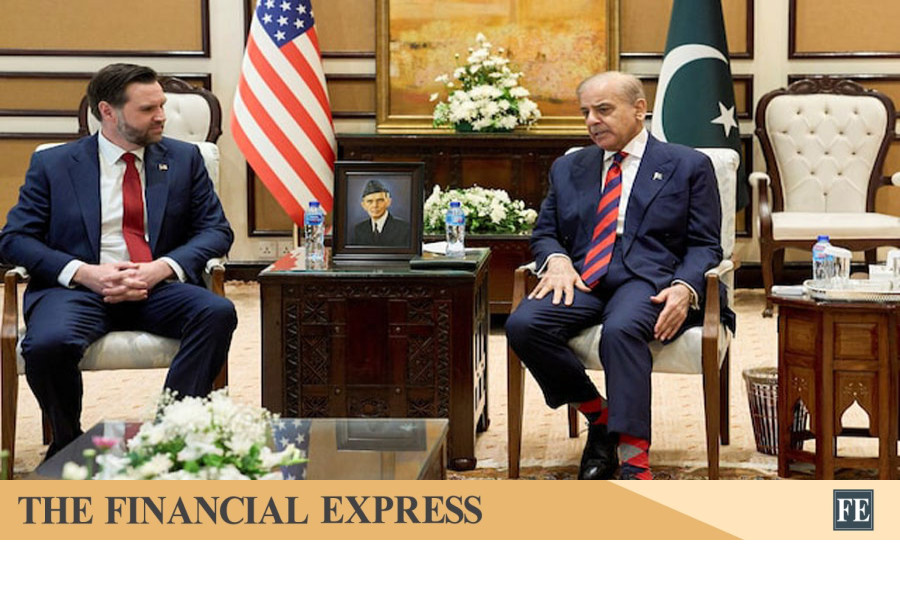
This handout photograph taken and released by Pakistan's Prime Minister Office on April 11, 2026 shows US Vice President JD Vance (L) shaking hands with Pakistan's Prime Minister Shehbaz Sharif during their meeting before US-Iran peace talks in Islamabad.AFP

Senior Iranian and American delegations met Pakistani Prime Minister Shehbaz Sharif in Islamabad on Saturday to begin negotiations towards a deal to end the Middle East war unleashed six weeks earlier by US-Israeli strikes on Tehran.

With the talks under way at Islamabad's Serena Hotel, Iranian media said the negotiating format going forward had yet to be determined, and it was not clear whether the two sides would meet face-to-face or continue to exchange messages via the Pakistanis.

But both sides had arrived at the venue when the Iranian delegation led by parliamentary speaker Mohammad Bagher Ghalibaf met Sharif, followed by US Vice President JD Vance, accompanied by White House envoy Steve Witkoff and President Donald Trump's son-in-law Jared Kushner.

"Commending the commitment of both delegations to engage constructively, the Prime Minister expressed the hope that these talks would serve as a stepping stone toward durable peace in the region," Sharif's office said.

"The Prime Minister reiterated that Pakistan looks forward to continue its facilitation of both sides in making progress towards sustainable peace in the region."

Iran has previously said that any agreement on a permanent end to fighting must include the unfreezing of sanctioned Iranian assets as well as an end to Israel's war against Hezbollah in Lebanon, which Vance has said will not be up for discussion in Islamabad.

The warring parties still appeared to be far apart on key issues -- including sanctions, Lebanon and the opening of the strategic Strait of Hormuz -- and made no attempt to hide their mutual suspicion.

"Our experience in negotiating with the Americans has always been met with failure and broken promises," Ghalibaf said shortly after landing in Pakistan, according to Iran's state broadcaster.

'Make or break'

Iran's Foreign Minister Abbas Araghchi, who is also part of the delegation, told his German counterpart in a call on Saturday that "Iran enters negotiations with complete distrust due to repeated breaches of commitments and betrayals by the United States", the Tasnim news agency reported.

Vance said before leaving the US that if the other side was "willing to negotiate in good faith, we're certainly willing to extend the open hand".
But "if they're going to try to play us, then they're going to find the negotiating team is not that receptive", he added.

The ceasefire is already under strain, notably from Israel's continued strikes in Lebanon, which Iran and Pakistan insist is covered under the current truce.

Prime Minister Sharif, whose country's down-to-the-wire mediation got both sides to the negotiating table this week, said talks would not be easy.

"An even more difficult stage lies ahead," he said, referring to efforts to permanently end fighting that began with US-Israeli strikes on Iran on 28 February, sparking Iranian retaliation against Israel and across the Gulf.
"This is that stage which, in English, is called the equivalent of 'make or break.'"

'No nuclear weapon'

On the US side, Trump has demanded the opening of the Strait of Hormuz as a condition for the two-week ceasefire.

The strait, through which one-fifth of the world's crude passes, has not reopened to normal traffic, however, and Trump vowed on Friday to have it open soon "with or without" Iran's cooperation.

He added that his top priority at the Islamabad talks was to ensure the Islamic republic had "no nuclear weapon. That's 99 percent of it."

Security was tight in the Pakistani capital on Saturday, with a heavy police and paramilitary presence on the streets and road diversions around the "red zone" where government and diplomatic buildings are located.

Pakistan has formulated a team of experts to facilitate the two sides in negotiations on navigation, nuclear and other key matters, a diplomatic source familiar with the matter told AFP.

The negotiations will be closely watched by other key regional players, with Egypt and Turkey having helped with mediation, along with China, all of which Pakistan was still coordinating closely with for the talks, the source said.

In Tehran, a 30-year-old resident told AFP he was sceptical negotiations would be successful, describing most of what Trump says as "pure noise and nonsense."​
 

Iranian media says negotiations with US have begun

AFP
Tehran, Iran
Published: 11 Apr 2026, 19: 24


1775954432328.webp

This handout photograph taken on April 11, 2026 and released by Pakistan's Prime Minister Office shows Pakistan's Army Chief and Field Marshal Syed Asim Munir (R), Foreign Minister Ishaq Dar (2R), Prime Minister Shehbaz Sharif (3R) during their meeting with Iran's parliamentary speaker Mohammad Bagher Ghalibaf (4L) and Foreign Minister Abbas Araghchi (2L) prior to the US-Iran peace talks in Islamabad. AFP

Iranian media said on Saturday that negotiations with the United States to end the Middle East war had begun in Islamabad, though the format of the talks remained unclear.

The Fars and Tasnim news agencies said "it was decided to begin negotiations" following "progress made during preliminary talks and the reduction of attacks by the Zionist regime in southern Beirut in Lebanon", referring to Israel.

Iranian agencies Mehr and Isna also announced the start of negotiations, after Pakistan Prime Minister Shehbaz Sharif's office said the peace talks had "commenced".​
 

Pakistan PM Sharif says 'full effort' still on to resolve US-Iran conflict

bdnews24.com

Published :
Apr 13, 2026 19:59
Updated :
Apr 13, 2026 19:59

1776127413093.webp


Vice President JD Vance meets with Pakistan’s Prime Minister Shehbaz Sharif to talk about Iran, April 11, 2026, in Islamabad. Photo : Jacquelyn Martin/Pool via REUTERS

Full efforts are still ‌being made to resolve the conflict between the ⁠US and Iran, Pakistani Prime Minister Shehbaz Sharif said on Monday, a day ‌after ⁠talks between the two sides, held ⁠in Islamabad, ended without agreement.​
 

Iran Foreign Minister welcomes Pakistani delegation led by army chief Asim Munir

Pakistan Interior Minister Mohsin Naqvi also arrives in Iran for mediation talks

AFP

1776300220165.webp

Photo: Collected

Iranian Foreign Minister Abbas Araghchi welcomed on Wednesday a Pakistani delegation led by army chief Asim Munir, days after failed US-Iran talks in Islamabad to end the Middle East war.

Araghchi's Telegram channel posted several photos of him welcoming the Pakistani official, saying: "Munir arrives in Tehran."

The Pakistan military's media wing also confirmed his arrival in Iran, adding that Interior Minister Mohsin Naqvi was also there "as part of the ongoing mediation efforts".

Iranian state TV had reported earlier that the high-ranking Pakistani delegation would bring a new message from Washington and was due to discuss a second round of talks.

Iran had confirmed on Wednesday that the sides had kept talking via Pakistan after a first round of talks in the Pakistani capital fell flat over the weekend.

"Since Sunday, when the Iranian delegation returned to Tehran, several messages have been exchanged through Pakistan," foreign ministry spokesman Esmaeil Baqaei said in a weekly press briefing.

"Today, we are very likely to receive a Pakistani delegation as a continuation of the discussions in Islamabad," he added.

The US-Iran negotiations in the Pakistani capital at the weekend took place against the backdrop of a fragile two-week ceasefire announced days earlier.

The talks, which lasted around 21 hours, saw the US delegation led by Vice President JD Vance and the Iranian side headed by parliament speaker Mohammad Bagher Ghalibaf.

The main sticking points were not officially disclosed at the time, but US President Donald Trump later castigated Iran for not opening the Strait of Hormuz, which has been all but closed since the outbreak of war on February 28.

Trump also said Iran had refused to concede on the issue of its nuclear programme.

News reports have since said Washington sought a 20-year suspension of Iran's uranium enrichment and that Iran, in turn, proposed suspending its nuclear activity for five years -- an offer US officials rejected.

On Wednesday, Baqaei said some of the US demands during the talks were "unreasonable and unrealistic", without elaborating.

He insisted on Iran's right to peaceful use of nuclear energy, saying it could not be "taken away under pressure or through war".

The level of enrichment, he said, remains "negotiable" and "Iran should be able to continue enrichment in accordance with its needs".

Baqaei criticised a US naval blockade on Iranian ports in place since Monday, saying it "will not succeed".

He said Iran "will not enter into any negotiations just to accept the American conditions".​
 

Bangladesh thanks Pakistan for its role in mediation in the Middle East

Diplomatic Correspondent
Dhaka
Updated: 18 Apr 2026, 18: 43

1776561637861.webp

Bangladesh Foreign Minister Khalilur Rahman and Pakistan's Deputy Prime Minister and Foreign Minister Ishaq Dar held a meeting on the sidelines of the Antalya Diplomacy Forum in Türkiye. X

Bangladesh foreign minister Khalilur Rahman thanked Pakistan for its commendable diplomatic efforts to resolve the ongoing conflict in Gulf region.

Foreign Minister Khalilur Rahman and Pakistan’s Deputy Prime Minister and Foreign Minister Ishaq Dar discussed the issue on the sidelines of the “Antalya Diplomacy Forum” on Friday, a foreign ministry’s press release said today, Saturday.

The two countries discussed the latest developments surrounding the ongoing Gulf conflict, with Dhaka appreciating Islamabad’s diplomatic efforts to reach a negotiated settlement during the bilateral meeting in Türkiye.

The two Ministers also discussed ways to further advance bilateral relations.

Foreign Affairs Adviser to the Prime Minister, Humaiun Kobir, was also present at the meeting.

Regarding the meeting, Ishaq Dar wrote on his X handle: “We discussed strengthening Pakistan–Bangladesh relations. We also exchanged views on the regional situation in the Middle East, particularly Pakistan’s role in facilitating dialogue. I am optimistic about a positive relationship between us in the future.”

Since the United States began military operations in Iran on 28 February, Bangladesh has issued several statements. In those statements on the impact of the war in the Middle East, the names of the conflicting parties were not mentioned. Even after the temporary ceasefire between Iran and the United States, facilitated by Pakistan, Bangladesh’s statement also did not refer to any country by name.​
 

US team heading to Pakistan for talks with Iran: Trump

FE ONLINE DESK

Published :
Apr 20, 2026 01:08
Updated :
Apr 20, 2026 01:36

1776641794869.webp


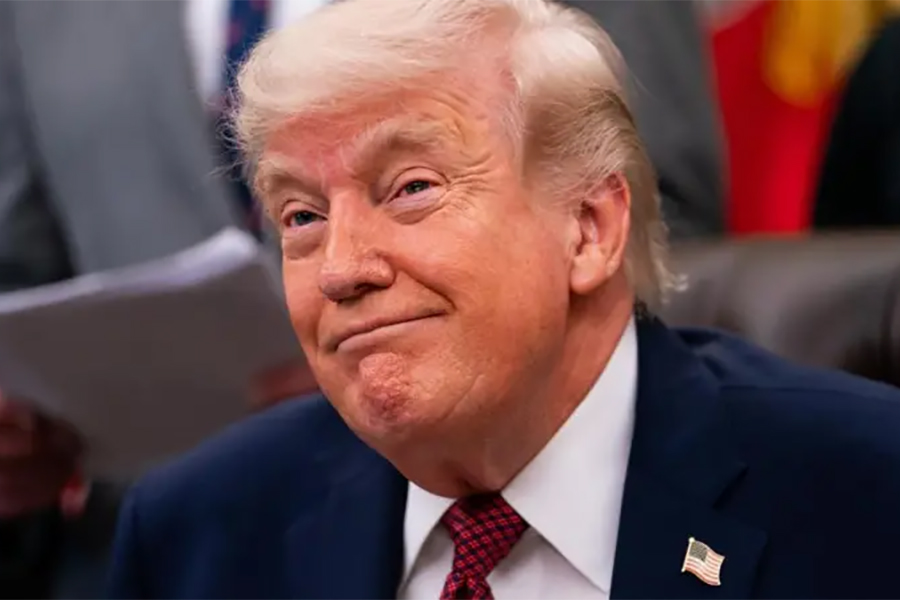
US President Donald Trump has said his representatives are going to Pakistan on Monday for talks on the Iran war.

"My Representatives are going to Islamabad, Pakistan - They will be there tomorrow evening, for Negotiations," BBC quoted Trump as writing on social media on Sunday.

"We’re offering a very fair and reasonable DEAL, and I hope they take it because, if they don’t, the United States is going to knock out every single Power Plant, and every single Bridge, in Iran," he added.

Warning there will be "NO MORE MR NICE GUY" if talks fail, Trump said these bridges and power plants will "come down fast, they’ll come down easy".​
 

Iran may join peace talks after Pakistan works to end US blockade, Iran source says

REUTERS
Published :
Apr 20, 2026 21:18
Updated :
Apr 20, 2026 22:53

1776728734019.webp

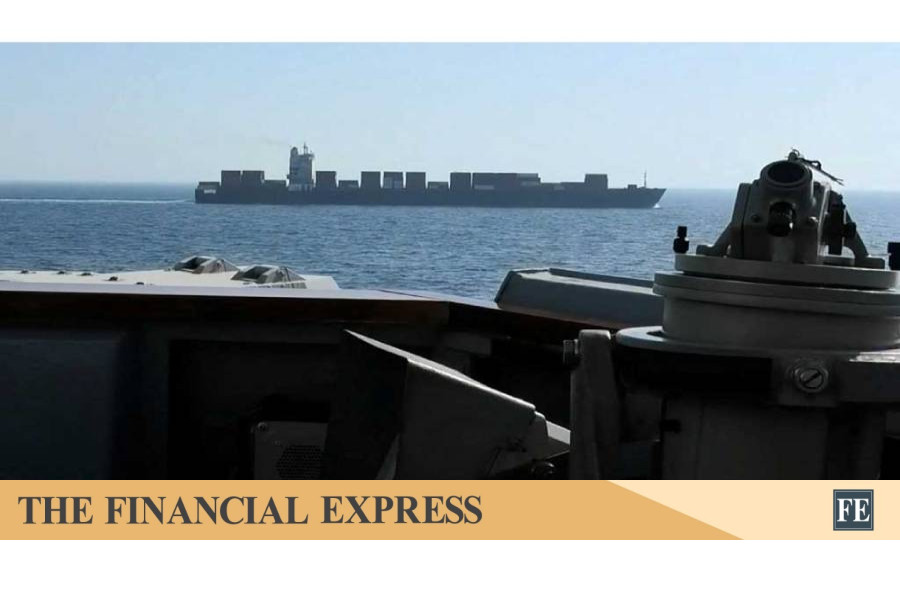
A view of Iranian-flagged cargo ship M/V Touska as the US Navy Arleigh Burke-class Aegis guided missile destroyer USS Spruance conducts its interception in a location given as the north Arabian Sea, in this screen capture from a video released Apr 19, 2026. Photo : CENTCOM/Handout via REUTERS

Iran is considering attending peace talks with the United States in Pakistan, a senior Iranian official told Reuters on Monday, following moves by Islamabad to end a US blockade of Iran’s ports, a major hurdle for Iran to rejoin peace efforts.

However, the official stressed that no decision had been made.

With a two-week ceasefire set to expire, a senior Iranian official said Tehran was “positively reviewing” its participation but no final decision had been made. The comments conveyed a clear change of tone from earlier statements ruling out attendance and pledging to retaliate for US aggression.

The Iranian official said mediator Pakistan was making positive efforts to end the US blockade and ensure Iran’s participation.

The ceasefire had appeared in jeopardy after the US said it had seized an Iranian cargo ship that tried to run its blockade and Tehran vowed to retaliate.

Iranian Foreign Ministry spokesman Esmaeil Baghaei said on Monday that Washington had shown it was “not serious” about pursuing the diplomatic process, and that Tehran would not change its demands.

The US was hoping to start negotiations in Pakistan shortly before the ceasefire expires, with sweeping security preparations under way in Islamabad, but Baghaei said the US was “insisting on some unreasonable and unrealistic positions”.

A senior Iranian source told Reuters that Tehran’s “defensive capabilities”, including its missile programme, were not open to negotiation.

US-Iran Ceasefire Set To Expire on Tuesday Night

A Pakistani security source said Pakistan’s key mediator, Field Marshal Asim Munir, had told US President Donald Trump the blockade was an obstacle to talks, and that Trump had promised to consider the advice.

Trump announced the two-week ceasefire with Iran on Apr 7, and has not specified when precisely it ends.

A Pakistani source involved in the talks said it would expire at 8pm EST on Tuesday, which would be midnight GMT or 3:30am Wednesday in Iran.

Asked over the weekend about the chance of an extension, Trump replied: “I don’t know. Maybe not. Maybe I won’t extend it. But the blockade is going to remain.”

The US has maintained its blockade of Iranian ports, while Iran lifted and then reimposed its own blockade of the Strait of Hormuz, which typically handles roughly one-fifth of the world’s oil and liquefied gas supply.

Oil prices eased from earlier highs to stand around 3-4 percent up on the day as traders remained fearful that the ceasefire would collapse. Traffic through the Strait of Hormuz was at a virtual standstill with just three crossings in the space of 12 hours, according to shipping data.

US Marines Board Iranian Vessel

The US military said it had fired on an Iranian-flagged cargo ship headed towards Iran’s Bandar Abbas port on Sunday after a six-hour standoff, disabling its engines. US Central Command released video showing Marines descending ropes from helicopters onto the vessel.

Iran’s military said the ship had been travelling from China and accused the US of “armed piracy”, according to state media. They said they were ready to confront US forces over the “blatant aggression”, but were constrained by the presence of crew members’ families on board.

China, the main buyer of Iranian crude, expressed concern over the “forced interception”, and Chinese President Xi Jinping called for ships to resume passage through the strait as normal and for the conflict to be resolved through political and diplomatic channels, state news agency Xinhua reported.

Trump warned on Sunday that the US would destroy every bridge and power plant in Iran if it rejected his terms, continuing a recent pattern of such threats.

Iran has said that if the United States were to attack its civilian infrastructure, it would strike power stations and desalination plants in its Gulf Arab neighbours.

Preparing For Talks That Might Not Happen

Trump told the New York Post that Vice President JD Vance would arrive in Islamabad within hours at the head of a US delegation. Vance led the US delegation to the first round of talks a week ago, which also included Trump’s envoy Steve Witkoff and son-in-law Jared Kushner.

Despite Iran’s earlier comments that it would not attend, Pakistan geared up for the talks. Nearly 20,000 security personnel have been deployed across the capital Islamabad, a government official and a security official said.

Iran’s parliament speaker, Mohammad Baqer Qalibaf, who has led Iran’s side in negotiations, said on Saturday the two sides had made progress but were still far apart on nuclear issues and the Strait.

European allies, repeatedly criticised by Trump for not aiding his war effort, worry that Washington’s negotiating team is pushing for a swift, superficial deal that would require months or years of technically complex follow‑on talks.

Thousands of people have been killed by US-Israeli strikes on Iran and in an Israeli invasion of Lebanon conducted in parallel since the war began on Feb 28, where a truce is also currently in place.

Iran responded to the attacks with missiles and drones against Israel and nearby Arab countries that host US bases.​
 

Attachments

  • 1776728670984.webp
    1776728670984.webp
    25.7 KB · Views: 0

Latest Posts

Back