
 Bangladesh Defense
Saif
Senior Member
- Jan 24, 2024
- 20,857
- 9,685
- Nation

- Residence
- Axis Group

Should Bangladesh join RCEP?
Regional Trade Agreements (RTAs) have emerged as multilateral or bilateral arrangement in the global trade landscape and have been shaping economic relationships and influencing global trade dynamics since 1960s. Starting from European Economic Community in 1957, the world experienced RTAs like MER
Should Bangladesh join RCEP?
Md Julfikar Islam
Published :
Apr 22, 2026 23:41
Updated :
Apr 22, 2026 23:41
Regional Trade Agreements (RTAs) have emerged as multilateral or bilateral arrangement in the global trade landscape and have been shaping economic relationships and influencing global trade dynamics since 1960s. Starting from European Economic Community in 1957, the world experienced RTAs like MERCOSUR, NAFTA which is later transformed to USMCA, ASEAN Free Trade Agreement (AFTA), SAFTA and the latest CPTPP and RCEP. Till date, 381 RTAs were notified to the World Trade Organization (WTO) and in force. These Agreements have reduced or eliminated trade barriers such as import quotas and tariffs, export restraints, and enhanced economic integration among member states.
Regional Comprehensive Economic Partnership (RCEP), signed in 2020, as a mega trade alliance, accounts for about 30 per cent of the world's population (2.2 billion people) and 30 per cent of global GDP ($26.2 trillion), making it the largest trade bloc in history followed by CPTPP which covers 6.6 percent of world population and 12.2 per cent of world gross domestic product (GDP).
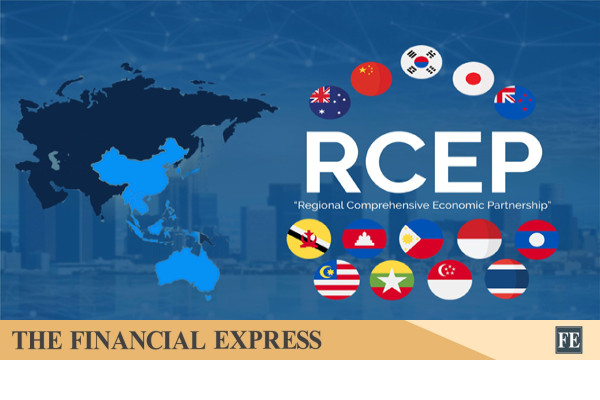
Born from ASEAN's push for deeper integration to simplify overlapping trade deals, the RCEP is a landmark agreement negotiated over eight years among 15 Asia-Pacific nations. 10 ASEAN members (Brunei Darussalam, Cambodia, Indonesia, Lao PDR, Malaysia, Myanmar, the Philippines, Singapore, Thailand and Viet Nam) with five of their FTA partners including China, Japan, South Korea, Australia and New Zealand signed the agreement. Despite India's withdrawal due to domestic concerns, the pact entered into force in 2022, serving as a stabilising force for regional trade and supply chains.
While considering the different stages of development of its members, the pact aims to create a modern, comprehensive economic partnership by progressively eliminating tariffs and non-tariff barriers on goods, services, and investment. It further extends to intellectual property, e-commerce, and inclusive development areas like SMEs and technical cooperation, aiming to create a stable, transparent, and integrated regional economy. RCEP establishes WTO plus trade facilitation measures, including expedited customs clearance timelines, an Authorised Economic Operator system, and binding advance rulings, to create faster, more predictable, and efficient cross-border trade for member states. To join RCEP, an applicant must demonstrate its capacity to comply with all agreement rules and offer commercially meaningful market access to existing members. The accession process requires rigorous consultation and unanimous consensus at every stage before final ratification.
BANGLADESH & RCEAP: RCEP countries account for 7.92 per cent of total exports and 53.90 per cent of total imports of Bangladesh. On the other hand, Bangladesh accounts for 0.08 per cent of total imports and 0.57 per cent of total exports of RCEP Countries. Bangladesh's service exports to RCEP nations nearly doubled from 2014 to 2023, reaching US$ 1.5 billion with China being the dominant market, followed by Singapore, Japan, and South Korea. In 2023, Bangladesh's service exports to RCEP countries were dominated by Other Business Services (36 per cent), Construction (23 per cent), and Transport (13 per cent), with ICT services emerging as a notable growth sector. Bangladesh's service imports from RCEP countries grew steadily from 2014 to 2023, reaching USD 3.6 billion, with China as the dominant source. The imports were primarily driven by Transport (38.3 per cent), Construction (24.1 per cent), and Other Business Services (15.7 per cent). In FY 2023-24, RCEP countries contribute 51 per cent of net foreign direct investment (FDI) inflows of Bangladesh amounting USD741.8 million and 39 per cent of total FDI stock amounting USD 6.9 billion. Textiles and Wearing received highest FDI stock overall - mainly from Korea (1,061.32 million USD), followed by China (172.89 million USD). Power sector is the second-largest sector, dominated by China (975.78 million USD) and significant investment from Singapore (799 million USD).
A study conducted by the author employing CGE Modelling with four types of simulation found that, RCEP accession may enhance GDP of Bangladesh which ranges from just above -.74 per cent to approximately 2.83 per cent. Export gains are significantly higher, reaching around 14.63 per cent to 16.18 per cent. Import increases are also notable, ranging from 14 per cent to about 17 per cent, reflecting deeper integration into global and regional value chains. Full RCEP liberalisation would trigger a surge in manufactured goods imports from member countries, posing more competition to domestic industries like textiles, agro-food products and electronics and machinery equipment, while a limited, asymmetric agreement would carefully manage this import risk. The simulations underscore that successful accession requires strategic sectoral protection and robust labour policies to mitigate job losses and harness benefits for key export sectors like RMG. Under all simulated scenarios, Bangladesh's exports see the most significant gains in the Ready-Made Garment (RMG) sector, with the European Union (EU), United States of America (USA), and RCEP bloc emerging as the primary drivers of this growth. While other sectors show moderate to insignificant increases, the findings highlight the strategic importance of regional integration through RCEP for fuelling Bangladesh's future export expansion. Bangladesh exhibits modest but positive total welfare effects in simulations is around US$.4 billion to US$.6 billion. Key drivers include improvements in allocative efficiency and, to a lesser extent, endowment effects, though Terms of Trade (ToT) effects and IS effects appear less significant or slightly negative. Another study employing SMART simulation suggests that trade creation effects are quite a few times larger than the trade diversion effect caused by the accession to RCEP agreement. The change in total trade is $7.3 billion of which $6.4 billion will be produced by trade creation and $872.07 million will be engendered by trade diversion.
Bangladesh accounts for just 0.1 per cent of RCEP's total services import demand underscoring a massive untapped opportunity. WTO and RCEP data show that ICT, business, and professional services dominate demand. Bangladesh's service exports to RCEP have grown at 7 per cent CAGR over the past decade. Countries such as Japan, Australia, and Vietnam are emerging as new high-growth markets. Strategic Opportunity is that with 10-12 per cent CAGR Bangladesh may export US$3 billion-US$3.3 billion within 2030. The agreement may further boost ICT, transport, construction, financial services, and manufacturing-related services by attracting RCEP investment and facilitating deeper integration into regional supply chains, particularly for its dominant apparel industry. However, Bangladesh needs to take strategic stance while liberalizing service sectors.
Bangladesh stands at a pivotal juncture to capitalise on growing FDI outflows from major RCEP economies such as Japan ($204 billion), China ($163 billion), Singapore ($55 billion), and South Korea ($49 billion), which together represent vast pools of investable capital. Historically, foreign investments in Bangladesh have been concentrated in traditional sectors like power, textiles, telecommunications, and gas & petroleum, while high-potential areas such as food processing, and new technology remain underexplored. Leveraging its competitive labour costs, expanding domestic market, and strategic geographic location connecting South and Southeast Asia, Bangladesh can attract greater FDI by moving beyond low-cost manufacturing. The next phase of opportunity lies in energy diversification, digital infrastructure development, agribusiness, and technology-driven industries-sectors that align with both RCEP countries' strategic priorities and Bangladesh's evolving economic strengths. This shift would enable the country to transition from a resource and labour-based investment model toward a more diversified, innovation-led growth trajectory. In an earlier study, it was also found that due to RCEP accession investment in Bangladesh might be increased by 3.36 per cent.
Bangladesh has a significant opportunity to deepen its regional integration within RCEP by expanding beyond its traditional textiles sector into higher-value areas like transport equipment, electronics, and energy-related inputs, where it already plays a crucial role in regional supply chains. This broad-based integration across diverse industrial and service sectors positions Bangladesh to leverage RCEP for more sophisticated economic upgrading and greater value-added exports.
RISK FACTORS: There are some disadvantages and risks also of acceding to RCEP. Though RCEP integration may significantly boost Bangladesh's key export sectors like Ready-Made Garments (20-22 percent output growth) and leather products, reinforcing its comparative advantage in labour-intensive industries it would also create severe challenges for capital-intensive sectors like electronics, machinery, and chemicals, which face sharp output declines of up to 35 per cent due to import competition, necessitating strategic policy support for diversification and mitigation.
RCEP member countries exhibit a wide range of MFN tariff rates, from Singapore's zero tariffs to South Korea's highly protective 13.4 per cent, highlighting the diverse economic policies and the significant adjustment challenge high-tariff countries like Bangladesh would face in reducing barriers under the agreement. An earlier study suggests that the projected revenue loss is likely to be higher for Bangladesh, US$2.5 billion in contrast to around US$541 million for RCEP. Another study refers that full tariff liberalization to RCEP countries may cause Bangladesh a tariff revenue loss of USD $3.3 billion.
In addition, Bangladesh may face significant challenges in meeting RCEP obligations due to its heavy reliance on import tariffs for revenue, which discourages tariff liberalisation, and its limited capacity to comply with complex Rules of Origin (ROO) due to dependence on imported materials. The country also struggles with inadequate infrastructure for trade facilitation, such as lengthy customs clearance times, out-dated standards, and a lack of testing laboratories and mutual recognition agreements. Furthermore, Bangladesh's regulatory frameworks for services, investment, intellectual property, and e-commerce are underdeveloped and not yet aligned with RCEP's modern, comprehensive requirements. Bangladesh lacks comprehensive data and understanding about the regulatory framework and offensive and defensive interest of each service sector to go for negative list. Foreign Investment Guidelines of Bangladesh has provision of requiring specific ratio of local citizen's representation in Senior Management and Board of Directors. In case of Intellectual Property Rights (IPR), the legal framework of Bangladesh is characterised by a significant gap between strong law and weak enforcement. Piracy remains rampant online and offline, and government software use, while improving, still has high rates of unlicensed software. Bangladesh's prospective accession to RCEP is hindered by deep institutional weaknesses-limited accountability, weak regulatory and revenue capacity, fragile IPR enforcement, and poor inter-agency coordination-which undermine its ability to implement complex, legally binding commitments.
Moreover, acceding to RCEP also poses socioeconomic risks for Bangladesh, including premature de-industrialisation, significant government revenue loss from tariff reductions, and heightened vulnerability for its agriculture and domestic industries. All of these are critically magnified by the nation's impending graduation from the Least Developed Country (LDC) status and loss of vital trade preferences.
However, RCEP Agreement provides significant flexibilities for LDCs to ensure their gradual and sustainable integration into the regional economy. Key provisions include extended timelines for tariff liberalization, allowing LDCs up to 10 years to eliminate tariffs for 30 per cent tariff lines and 15 years to liberalise 80 per cent of tariffs, and 20 years to fully implement rules of origin certification systems. LDCs also benefit from longer periods to comply with trade facilitation measures, IPR enforcement, enhanced safeguard mechanisms that protect against import surges without retaliation, and delayed services liberalisation commitments. The dispute settlement process mandates special consideration for LDCs, requiring panels to exercise restraint and address their unique circumstances. Additionally, the agreement emphasises technical assistance and capacity building to support LDCs in implementation, reflecting a structured effort to balance regional integration with equitable development. It would be very tough for Bangladesh to negotiate the flexibilities after its graduation.
POLICY RECOMMENDATIONS: Policy recommendations can be made in four areas including negotiation strategies, sector specific policy adjustments, strengthening institutions and inclusive stakeholders' participation in decision making. Bangladesh must approach RCEP negotiations strategically by demanding extended transition periods, and exclusions for sensitive sectors to protect vulnerable industries and revenue streams. Concurrently, it should undertake urgent domestic reforms to boost competitiveness, modernize infrastructure, and broaden its tax base to mitigate the impact of tariff reductions. Finally, the country should proactively leverage technical assistance and cooperation provisions to build capacity for compliance while positioning itself to attract FDI and integrate into regional supply chains.
To protect its sensitive agriculture sector, Bangladesh must create a carefully curated Sensitive List for staple foods, drastically upgrade its SPS measures, and shift subsidies toward RCEP-compliant support for research and infrastructure. For its competitive manufacturing base, the country needs rules of origin strategy to integrate into regional value chains, develop backward linkage industries, and diversify exports beyond RMG into sectors like footwear and electronics. The government may review RCEP product-specific rules of origin and, through extensive sectoral consultations, classify industries into compliant and non-compliant groups, with targeted policy support to gradually bring the latter into compliance. The government may standardise policy support across sectors using indicators such as value addition and employment creation, noting that industries with higher value addition tend to be more diversified. Furthermore, Bangladesh must undertake foundational reforms, including shifting to a negative list for investment, harmonising national standards, modernising its intellectual property regime, and enacting and implementing comprehensive digital trade laws to harness the opportunities of RCEP while building domestic resilience.
Sector specific position papers may be prepared including regulatory frameworks, scope of liberalization across four modes of services, SWOT analysis, preparedness and offensive and defensive interests of each of the service sectors. While considering Mutual Recognition Agreement (MRA), areas of improvement should be assessed through consultation with RCEP member countries' quality and qualification standards and sector experts of Bangladesh. Comprehensive assessment of sector specific impact of RCEP IP obligations should be conducted. In addition, capacity of the IP registration and enforcement agencies should be assessed and strengthened accordingly. The government should review and phase out local content, technology transfer, or performance requirements violating RCEP rules, including amending BIDA's 2023 foreign worker and commercial office guidelines.
To successfully accede to RCEP, Bangladesh must prioritise a comprehensive overhaul of its institutional capacities, beginning with a massive modernisation of its intellectual property administration and enforcement agencies to handle complex registrations and border measures. It is equally critical to strengthen the National Board of Revenue (NBR) for rules of origin verification, upgrade the Bangladesh Standards and Testing Institution and quarantine wing for international SPS and TBT compliance, and empower the BIDA to facilitate investment under new rules. Furthermore, establishing robust inter-ministerial coordination is essential to break down institutional silos and ensure a unified national strategy for negotiating, implementing, and leveraging the agreement.
For Bangladesh, inclusive stakeholder engagement for RCEP cannot be a mere box-ticking exercise. It must be a continuous process of consultation, negotiation, and co-creation that continues long after accession, into the implementation phase. By building a structured, transparent, and responsive engagement mechanism, the government can improve negotiating outcomes and get real-time ground-level intelligence to shape better deals. Government can build a coalition of support by creating stakeholders who understand and have a vested interest in the agreement's success. It will also enhance legitimacy through ensuring the process is seen as democratic and accountable. It will also facilitate smooth implementation as the government may identify potential problems early and develop mitigation strategies, making the eventual adjustment less disruptive. Ultimately, an inclusive approach transforms RCEP from a government-to-government treaty into a national strategy for economic transformation, with shared ownership of both its opportunities and its responsibilities.
Md. Julfikar Islam, Research Fellow, Bangladesh Foreign Trade Institute.
Md Julfikar Islam
Published :
Apr 22, 2026 23:41
Updated :
Apr 22, 2026 23:41
Regional Trade Agreements (RTAs) have emerged as multilateral or bilateral arrangement in the global trade landscape and have been shaping economic relationships and influencing global trade dynamics since 1960s. Starting from European Economic Community in 1957, the world experienced RTAs like MERCOSUR, NAFTA which is later transformed to USMCA, ASEAN Free Trade Agreement (AFTA), SAFTA and the latest CPTPP and RCEP. Till date, 381 RTAs were notified to the World Trade Organization (WTO) and in force. These Agreements have reduced or eliminated trade barriers such as import quotas and tariffs, export restraints, and enhanced economic integration among member states.
Regional Comprehensive Economic Partnership (RCEP), signed in 2020, as a mega trade alliance, accounts for about 30 per cent of the world's population (2.2 billion people) and 30 per cent of global GDP ($26.2 trillion), making it the largest trade bloc in history followed by CPTPP which covers 6.6 percent of world population and 12.2 per cent of world gross domestic product (GDP).
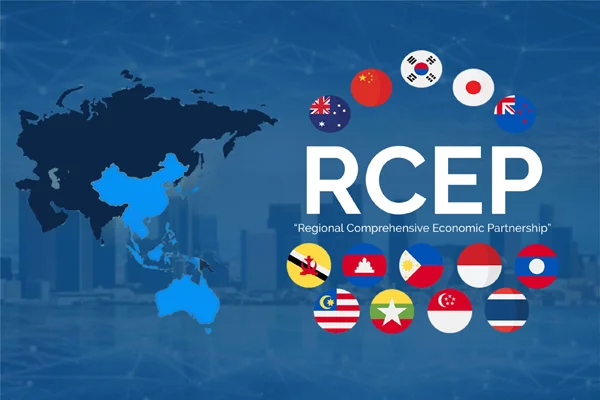
Born from ASEAN's push for deeper integration to simplify overlapping trade deals, the RCEP is a landmark agreement negotiated over eight years among 15 Asia-Pacific nations. 10 ASEAN members (Brunei Darussalam, Cambodia, Indonesia, Lao PDR, Malaysia, Myanmar, the Philippines, Singapore, Thailand and Viet Nam) with five of their FTA partners including China, Japan, South Korea, Australia and New Zealand signed the agreement. Despite India's withdrawal due to domestic concerns, the pact entered into force in 2022, serving as a stabilising force for regional trade and supply chains.
While considering the different stages of development of its members, the pact aims to create a modern, comprehensive economic partnership by progressively eliminating tariffs and non-tariff barriers on goods, services, and investment. It further extends to intellectual property, e-commerce, and inclusive development areas like SMEs and technical cooperation, aiming to create a stable, transparent, and integrated regional economy. RCEP establishes WTO plus trade facilitation measures, including expedited customs clearance timelines, an Authorised Economic Operator system, and binding advance rulings, to create faster, more predictable, and efficient cross-border trade for member states. To join RCEP, an applicant must demonstrate its capacity to comply with all agreement rules and offer commercially meaningful market access to existing members. The accession process requires rigorous consultation and unanimous consensus at every stage before final ratification.
BANGLADESH & RCEAP: RCEP countries account for 7.92 per cent of total exports and 53.90 per cent of total imports of Bangladesh. On the other hand, Bangladesh accounts for 0.08 per cent of total imports and 0.57 per cent of total exports of RCEP Countries. Bangladesh's service exports to RCEP nations nearly doubled from 2014 to 2023, reaching US$ 1.5 billion with China being the dominant market, followed by Singapore, Japan, and South Korea. In 2023, Bangladesh's service exports to RCEP countries were dominated by Other Business Services (36 per cent), Construction (23 per cent), and Transport (13 per cent), with ICT services emerging as a notable growth sector. Bangladesh's service imports from RCEP countries grew steadily from 2014 to 2023, reaching USD 3.6 billion, with China as the dominant source. The imports were primarily driven by Transport (38.3 per cent), Construction (24.1 per cent), and Other Business Services (15.7 per cent). In FY 2023-24, RCEP countries contribute 51 per cent of net foreign direct investment (FDI) inflows of Bangladesh amounting USD741.8 million and 39 per cent of total FDI stock amounting USD 6.9 billion. Textiles and Wearing received highest FDI stock overall - mainly from Korea (1,061.32 million USD), followed by China (172.89 million USD). Power sector is the second-largest sector, dominated by China (975.78 million USD) and significant investment from Singapore (799 million USD).
A study conducted by the author employing CGE Modelling with four types of simulation found that, RCEP accession may enhance GDP of Bangladesh which ranges from just above -.74 per cent to approximately 2.83 per cent. Export gains are significantly higher, reaching around 14.63 per cent to 16.18 per cent. Import increases are also notable, ranging from 14 per cent to about 17 per cent, reflecting deeper integration into global and regional value chains. Full RCEP liberalisation would trigger a surge in manufactured goods imports from member countries, posing more competition to domestic industries like textiles, agro-food products and electronics and machinery equipment, while a limited, asymmetric agreement would carefully manage this import risk. The simulations underscore that successful accession requires strategic sectoral protection and robust labour policies to mitigate job losses and harness benefits for key export sectors like RMG. Under all simulated scenarios, Bangladesh's exports see the most significant gains in the Ready-Made Garment (RMG) sector, with the European Union (EU), United States of America (USA), and RCEP bloc emerging as the primary drivers of this growth. While other sectors show moderate to insignificant increases, the findings highlight the strategic importance of regional integration through RCEP for fuelling Bangladesh's future export expansion. Bangladesh exhibits modest but positive total welfare effects in simulations is around US$.4 billion to US$.6 billion. Key drivers include improvements in allocative efficiency and, to a lesser extent, endowment effects, though Terms of Trade (ToT) effects and IS effects appear less significant or slightly negative. Another study employing SMART simulation suggests that trade creation effects are quite a few times larger than the trade diversion effect caused by the accession to RCEP agreement. The change in total trade is $7.3 billion of which $6.4 billion will be produced by trade creation and $872.07 million will be engendered by trade diversion.
Bangladesh accounts for just 0.1 per cent of RCEP's total services import demand underscoring a massive untapped opportunity. WTO and RCEP data show that ICT, business, and professional services dominate demand. Bangladesh's service exports to RCEP have grown at 7 per cent CAGR over the past decade. Countries such as Japan, Australia, and Vietnam are emerging as new high-growth markets. Strategic Opportunity is that with 10-12 per cent CAGR Bangladesh may export US$3 billion-US$3.3 billion within 2030. The agreement may further boost ICT, transport, construction, financial services, and manufacturing-related services by attracting RCEP investment and facilitating deeper integration into regional supply chains, particularly for its dominant apparel industry. However, Bangladesh needs to take strategic stance while liberalizing service sectors.
Bangladesh stands at a pivotal juncture to capitalise on growing FDI outflows from major RCEP economies such as Japan ($204 billion), China ($163 billion), Singapore ($55 billion), and South Korea ($49 billion), which together represent vast pools of investable capital. Historically, foreign investments in Bangladesh have been concentrated in traditional sectors like power, textiles, telecommunications, and gas & petroleum, while high-potential areas such as food processing, and new technology remain underexplored. Leveraging its competitive labour costs, expanding domestic market, and strategic geographic location connecting South and Southeast Asia, Bangladesh can attract greater FDI by moving beyond low-cost manufacturing. The next phase of opportunity lies in energy diversification, digital infrastructure development, agribusiness, and technology-driven industries-sectors that align with both RCEP countries' strategic priorities and Bangladesh's evolving economic strengths. This shift would enable the country to transition from a resource and labour-based investment model toward a more diversified, innovation-led growth trajectory. In an earlier study, it was also found that due to RCEP accession investment in Bangladesh might be increased by 3.36 per cent.
Bangladesh has a significant opportunity to deepen its regional integration within RCEP by expanding beyond its traditional textiles sector into higher-value areas like transport equipment, electronics, and energy-related inputs, where it already plays a crucial role in regional supply chains. This broad-based integration across diverse industrial and service sectors positions Bangladesh to leverage RCEP for more sophisticated economic upgrading and greater value-added exports.
RISK FACTORS: There are some disadvantages and risks also of acceding to RCEP. Though RCEP integration may significantly boost Bangladesh's key export sectors like Ready-Made Garments (20-22 percent output growth) and leather products, reinforcing its comparative advantage in labour-intensive industries it would also create severe challenges for capital-intensive sectors like electronics, machinery, and chemicals, which face sharp output declines of up to 35 per cent due to import competition, necessitating strategic policy support for diversification and mitigation.
RCEP member countries exhibit a wide range of MFN tariff rates, from Singapore's zero tariffs to South Korea's highly protective 13.4 per cent, highlighting the diverse economic policies and the significant adjustment challenge high-tariff countries like Bangladesh would face in reducing barriers under the agreement. An earlier study suggests that the projected revenue loss is likely to be higher for Bangladesh, US$2.5 billion in contrast to around US$541 million for RCEP. Another study refers that full tariff liberalization to RCEP countries may cause Bangladesh a tariff revenue loss of USD $3.3 billion.
In addition, Bangladesh may face significant challenges in meeting RCEP obligations due to its heavy reliance on import tariffs for revenue, which discourages tariff liberalisation, and its limited capacity to comply with complex Rules of Origin (ROO) due to dependence on imported materials. The country also struggles with inadequate infrastructure for trade facilitation, such as lengthy customs clearance times, out-dated standards, and a lack of testing laboratories and mutual recognition agreements. Furthermore, Bangladesh's regulatory frameworks for services, investment, intellectual property, and e-commerce are underdeveloped and not yet aligned with RCEP's modern, comprehensive requirements. Bangladesh lacks comprehensive data and understanding about the regulatory framework and offensive and defensive interest of each service sector to go for negative list. Foreign Investment Guidelines of Bangladesh has provision of requiring specific ratio of local citizen's representation in Senior Management and Board of Directors. In case of Intellectual Property Rights (IPR), the legal framework of Bangladesh is characterised by a significant gap between strong law and weak enforcement. Piracy remains rampant online and offline, and government software use, while improving, still has high rates of unlicensed software. Bangladesh's prospective accession to RCEP is hindered by deep institutional weaknesses-limited accountability, weak regulatory and revenue capacity, fragile IPR enforcement, and poor inter-agency coordination-which undermine its ability to implement complex, legally binding commitments.
Moreover, acceding to RCEP also poses socioeconomic risks for Bangladesh, including premature de-industrialisation, significant government revenue loss from tariff reductions, and heightened vulnerability for its agriculture and domestic industries. All of these are critically magnified by the nation's impending graduation from the Least Developed Country (LDC) status and loss of vital trade preferences.
However, RCEP Agreement provides significant flexibilities for LDCs to ensure their gradual and sustainable integration into the regional economy. Key provisions include extended timelines for tariff liberalization, allowing LDCs up to 10 years to eliminate tariffs for 30 per cent tariff lines and 15 years to liberalise 80 per cent of tariffs, and 20 years to fully implement rules of origin certification systems. LDCs also benefit from longer periods to comply with trade facilitation measures, IPR enforcement, enhanced safeguard mechanisms that protect against import surges without retaliation, and delayed services liberalisation commitments. The dispute settlement process mandates special consideration for LDCs, requiring panels to exercise restraint and address their unique circumstances. Additionally, the agreement emphasises technical assistance and capacity building to support LDCs in implementation, reflecting a structured effort to balance regional integration with equitable development. It would be very tough for Bangladesh to negotiate the flexibilities after its graduation.
POLICY RECOMMENDATIONS: Policy recommendations can be made in four areas including negotiation strategies, sector specific policy adjustments, strengthening institutions and inclusive stakeholders' participation in decision making. Bangladesh must approach RCEP negotiations strategically by demanding extended transition periods, and exclusions for sensitive sectors to protect vulnerable industries and revenue streams. Concurrently, it should undertake urgent domestic reforms to boost competitiveness, modernize infrastructure, and broaden its tax base to mitigate the impact of tariff reductions. Finally, the country should proactively leverage technical assistance and cooperation provisions to build capacity for compliance while positioning itself to attract FDI and integrate into regional supply chains.
To protect its sensitive agriculture sector, Bangladesh must create a carefully curated Sensitive List for staple foods, drastically upgrade its SPS measures, and shift subsidies toward RCEP-compliant support for research and infrastructure. For its competitive manufacturing base, the country needs rules of origin strategy to integrate into regional value chains, develop backward linkage industries, and diversify exports beyond RMG into sectors like footwear and electronics. The government may review RCEP product-specific rules of origin and, through extensive sectoral consultations, classify industries into compliant and non-compliant groups, with targeted policy support to gradually bring the latter into compliance. The government may standardise policy support across sectors using indicators such as value addition and employment creation, noting that industries with higher value addition tend to be more diversified. Furthermore, Bangladesh must undertake foundational reforms, including shifting to a negative list for investment, harmonising national standards, modernising its intellectual property regime, and enacting and implementing comprehensive digital trade laws to harness the opportunities of RCEP while building domestic resilience.
Sector specific position papers may be prepared including regulatory frameworks, scope of liberalization across four modes of services, SWOT analysis, preparedness and offensive and defensive interests of each of the service sectors. While considering Mutual Recognition Agreement (MRA), areas of improvement should be assessed through consultation with RCEP member countries' quality and qualification standards and sector experts of Bangladesh. Comprehensive assessment of sector specific impact of RCEP IP obligations should be conducted. In addition, capacity of the IP registration and enforcement agencies should be assessed and strengthened accordingly. The government should review and phase out local content, technology transfer, or performance requirements violating RCEP rules, including amending BIDA's 2023 foreign worker and commercial office guidelines.
To successfully accede to RCEP, Bangladesh must prioritise a comprehensive overhaul of its institutional capacities, beginning with a massive modernisation of its intellectual property administration and enforcement agencies to handle complex registrations and border measures. It is equally critical to strengthen the National Board of Revenue (NBR) for rules of origin verification, upgrade the Bangladesh Standards and Testing Institution and quarantine wing for international SPS and TBT compliance, and empower the BIDA to facilitate investment under new rules. Furthermore, establishing robust inter-ministerial coordination is essential to break down institutional silos and ensure a unified national strategy for negotiating, implementing, and leveraging the agreement.
For Bangladesh, inclusive stakeholder engagement for RCEP cannot be a mere box-ticking exercise. It must be a continuous process of consultation, negotiation, and co-creation that continues long after accession, into the implementation phase. By building a structured, transparent, and responsive engagement mechanism, the government can improve negotiating outcomes and get real-time ground-level intelligence to shape better deals. Government can build a coalition of support by creating stakeholders who understand and have a vested interest in the agreement's success. It will also enhance legitimacy through ensuring the process is seen as democratic and accountable. It will also facilitate smooth implementation as the government may identify potential problems early and develop mitigation strategies, making the eventual adjustment less disruptive. Ultimately, an inclusive approach transforms RCEP from a government-to-government treaty into a national strategy for economic transformation, with shared ownership of both its opportunities and its responsibilities.
Md. Julfikar Islam, Research Fellow, Bangladesh Foreign Trade Institute.


