[🇧🇩] Energy Security of Bangladesh

[🇧🇩] Energy Security of Bangladesh
689
24K
More threads by Saif

G Bangladesh Defense

No legal bar to foreign investment in deep-sea oil and gas exploration as chamber court stays HC order

UNB

Published :
Jun 25, 2026 23:05
Updated :
Jun 25, 2026 23:13

1782430623471.webp


The Chamber Court of the Appellate Division on Thursday has ruled that there is currently no legal bar to foreign investment in the exploration of oil, gas and other mineral resources in the deep sea of the Bay of Bengal, staying an earlier High Court order on the matter.

The chamber court fixed June 29 for a hearing before the full bench of the Appellate Division.

The latest order allows the government's offshore bidding round and the participation process of foreign companies to continue for the time being.

Earlier, the High Court had issued a rule and several directives after holding a preliminary hearing on a writ petition challenging the legality of allowing foreign companies to explore oil, gas and mineral resources in the deep sea.

The state subsequently filed an appeal with the Chamber Court against the High Court order.

During the hearing, lawyers for the state argued that the government had invited international tenders for offshore blocks to ensure the country's energy security.

They said deep-sea exploration would be difficult without foreign investment and technological expertise and that the government's ongoing initiatives would be hampered if the High Court order remained in force.

On May 24, the government announced the "Bangladesh Offshore Bidding Round-2026," under which international oil companies (IOCs) were invited to bid for exploration rights in 26 blocks in the Bay of Bengal, including 15 deep-sea and 11 shallow-sea blocks.

To attract foreign investment, the government has also introduced a revised Production Sharing Contract (PSC), tax incentives and other benefits.

According to the Energy and Mineral Resources Division, domestic gas production has been declining steadily, increasing the country's dependence on imported energy.

The government's objective is to strengthen energy security by discovering and developing new gas fields in offshore areas.

With the chamber court's latest order, there is currently no legal obstacle to the participation of foreign companies in Bangladesh's offshore exploration activities. However, the final decision will depend on the outcome of the hearing before the full bench of the Appellate Division on June 29.​
 

Expanding renewable energy in Bangladesh

Muhammad Zamir

Published :
Jun 29, 2026 00:39
Updated :
Jun 29, 2026 00:39

1782692687175.webp

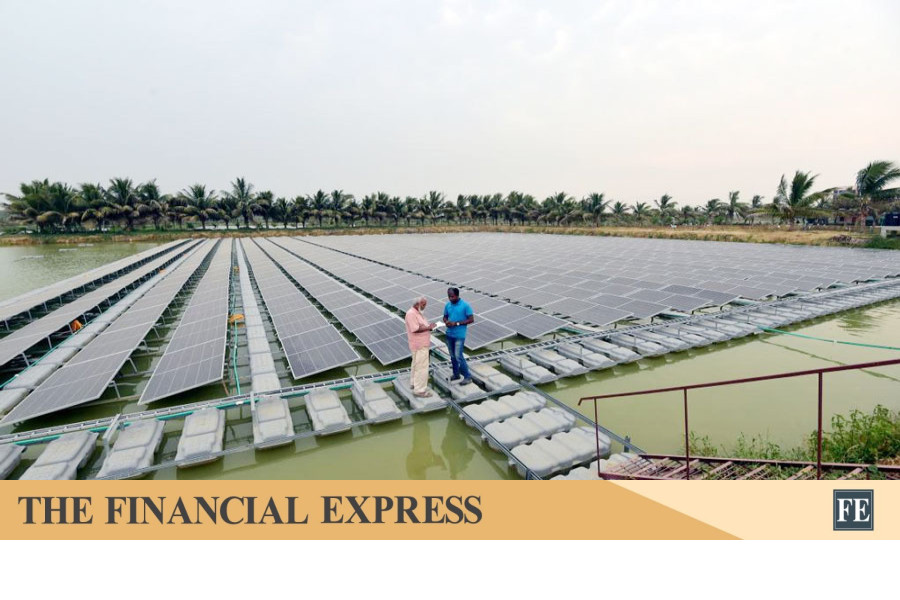
Staffers work at the floating commercial solar power plant in Chapainawabganj district, Bangladesh, June 5, 2023 —Xinhua Photo

We need to remember that decisions about renewable energy and potential energy investments, can and will, influence not only electricity supply, but also industrial competitiveness, public health, climate resilience, and the sustainability of future growth

Currently, Bangladesh's power sector stands at an important crossroad. Expanding electricity generation to support economic growth is viewed as obligatory. Bangladesh has succeeded in building generation capacity, yet the next phase of development will depend on how sustainably, competently, and durably that energy is produced. This needs to be taken forward to generate a win-win scenario. It will then assist in improving the daily lives of citizens while opening major strategic and fiscal opportunities for the government.

It has been pointed out that the government's Renewable Energy Policy 2025 reflects a shift. It sets a target of sourcing 20 per cent of electricity from renewable energy by 2030 and 30 per cent by 2040. These targets represent an important milestone in Bangladesh's energy journey, but they also highlight the scale of the task ahead.

According to the Sustainable and Renewable Energy Development Authority, the country has a total installed renewable energy capacity of approximately 1,781 MW. Solar energy accounts for the overwhelming majority of this capacity at around 1,488 MW, including approximately 1,105 MW of on-grid generation and 383 MW of off-grid installations.

While these achievements demonstrate growing momentum, they also underscore the scale of expansion required to meet the targets outlined in the Renewable Energy Policy 2025.

Even after years of investment, renewable energy still represents only a modest share of Bangladesh's overall installed generation capacity, which exceeds 30,000 MW. Meeting the government's target of sourcing 20 per cent of electricity from renewable energy by 2030 will therefore require a significant acceleration in project development, grid integration, and private-sector investment. This relates not only to an equation pertaining to climate stability but also to an economic dimension.

It needs to be noted that as electricity demand grows alongside industrialisation, urbanisation, and rising living standards, reducing these vulnerabilities has become a strategic priority. At the same time, Bangladesh remains vulnerable to the impacts of climate change. Rising temperatures, erratic rainfall, riverbank erosion, flooding, salinity intrusion, and increasing pressure on agriculture and water resources are already affecting communities and economic activity across the country.

While Bangladesh contributes only a small fraction of global greenhouse gas emissions, it bears a disproportionate share of climate-related consequences. According to the World Bank, climate change could reduce Bangladesh's GDP by up to 9 per cent by 2050 under severe climate scenarios if adaptation measures are not adequately implemented. The significance of renewable energy lies in its ability to address both challenges simultaneously.

Among renewable technologies, solar power has emerged as one of the most practical opportunities available to Bangladesh. More importantly, solar power generates electricity without fuel combustion, produces no air pollutants during operation, and emits no greenhouse gases while generating power. As concerns about air quality, public health, and climate resilience continue to grow, these environmental benefits also carry increasing economic value potential.

Bangladesh is already witnessing what large-scale solar deployment can achieve. Recent utility-scale solar projects, including the Teesta Solar 200 MW facility in Gaibandha, have already supplied hundreds of millions of units of clean electricity to the national grid-thereby demonstrating that large-scale solar generation is both technically and commercially viable in Bangladesh.

However, the Centre for Policy Dialogue (CPD) has referred to a significant challenge ahead. It has been estimated that Bangladesh requires US Dollar 35.2 to US Dollar 42.6 billion to achieve the 30 per cent renewable electricity target by 2040, with most financing needed between 2025 and 2035 if it is to remain on track towards achieving the renewable energy targets. Such environmental investment should in fact be seen as an investment in energy security, economic resilience, industrial competitiveness, and long-term national development.

As global supply chains place greater emphasis on sustainability and environmental performance, expanding renewable energy capacity can strengthen Bangladesh's attractiveness as an investment destination while supporting the long-term competitiveness of its export-oriented industries.

Bangladesh entered its renewable energy era in 2017 with the launch of a 3MW solar power plant in Sarishabari, Jamalpur, currently, as of 2024, 459 Megawatts were being generated from 10 solar power plants in Bangladesh. The largest is the Teesta 200 MW Solar Park in Gaibandha which was launched in 2023.

This underlines that with decisive policy implementation, institutional reform, and investment support, Bangladesh has the potential to emerge as a regional leader in distributed renewable energy development.

Bangladesh is entering a decisive phase in its energy transition. To meet some of the ambitious targets -- including generating 40 per cent of electricity from renewable sources by 2041 -- the government has recently announced sweeping reforms aimed at accelerating solar energy deployment.

These initiatives include a target of 10,000 MW of solar power generation by 2030, mandatory rooftop solar installation on public buildings, tax exemptions for renewable energy producers, and expanded access to solar systems for urban households.

Bangladesh has historically applied feed-in tariffs (FiTs) mainly to selected utility-scale renewable energy projects. However, in recent years, the government has gradually shifted toward competitive reverse auctions for large-scale solar procurement to reduce electricity generation costs and improve market efficiency. Despite these transitions, FiT may still remain relevant for small and medium-sized rooftop solar projects, particularly during the early expansion phase of the renewable energy sector.

Analysts have pointed out that to support such transformation, Bangladesh could increasingly rely on two key policy mechanisms: feed-in tariff (FiT) and net metering (NEM). Both are designed to encourage private-sector participation and decentralized electricity generation, although they differ significantly in structure and economic impact.

FiT is a policy mechanism designed to accelerate investment in renewable energy technologies by guaranteeing renewable energy producers a fixed, long-term payment for every kilowatt-hour (kWh) of electricity supplied to the national grid. By contrast, net metering allows electricity consumers who generate their own solar power to offset their electricity bills by exporting excess electricity to the grid.

Bangladesh currently operates a net-metering framework where consumers can install solar systems up to 100 per cent of their sanctioned load capacity. While NEM promotes self-consumption and reduces electricity costs, it generally does not provide the additional financial incentives associated with FiTs.

Given Bangladesh's urgent renewable energy goals, a hybrid approach combining net metering with targeted feed-in tariffs may offer the most effective pathway toward rapid solar expansion.

The government has also recently announced a series of sweeping tax incentives ahead of accelerating the adoption of renewable energy and electricity vehicles. Under the proposed measures, the government plans to introduce a zero percent tax for the solar power sector until 2035 to encourage environmentally friendly and affordable electricity generation.

The benefits of renewable energy in Bangladesh through expanding the capacity in the electricity sector can be achieved cost-effectively through clean energy options (renewables and energy efficiency), which not only reduce greenhouse gas emissions, but also increase jobs and improve human health by reducing air pollution. According to a report from the Low Emission Development Strategies Global Partnership (LEDS GP) and based on detailed modeling analysis, the benefits of increasing clean energy in Bangladesh's power generation mix relative to 'business-as-usual' could generate the following cumulative results by 2030-- reduce greenhouse gas emissions by up to 20 per cent and generate domestic employment of up to 55,000 full-time equivalent jobs

Though the government has reduced import duty, regulatory duty, supplementary duty, and advance tax on essential solar power components to zero percent until June 30, 2031, the benefits are not being extended equally across the solar industry. The Statutory Regulatory Order (SRO) framework which dictates tax exemptions and mandatory installation policies for solar projects issued by the National Board of Revenue immediately after the Budget, favours only a number of companies.

Solar energy remains Bangladesh's most viable pathway towards sustainable development. With decisive policy implementation, institutional reform, and investment support, the country has the potential to emerge as a regional leader in distributed renewable energy development.

Muhammad Zamir, a former Ambassador is an analyst specialised in foreign affairs, right to information and good governance.​
 

Latest Posts

Back