
[🇧🇩] Murderer of Ziaur Rahman

Afghanistan Albania Algeria Andorra Angola Antigua Austria Azerbaijan Bahamas Bahrain Bangladesh Barbados Canada China Egypt Finland Germany India Iran Israel Japan Lebanon North Macedonia Pakistan Palestine Qatar Russia Syria Turkey Ukraine United Kingdom United States Yemen
[🇧🇩] Murderer of Ziaur Rahman
5
18
More threads by Saif

G Bangladesh Defense

Saif

Senior Member
Joined
Jan 24, 2024
Messages
20,304
Likes
9,554
Nation

Residence

Axis Group

Ziaur Rahman murder case: Former army officer arrested after 45 years

Special Correspondent
Published: 16 Jul 2026, 16: 40
1784244868513.webp


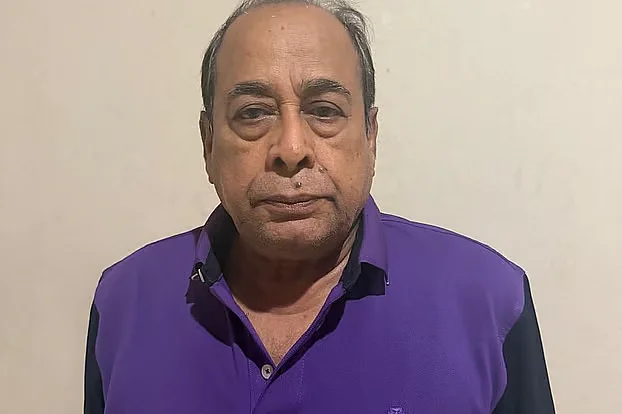
Major (retd) Md Mozaffar Hossain Collected

The Detective Branch (DB) of the Dhaka Metropolitan Police (DMP) has arrested Major (retd) Md Mozaffar Hossain in connection with the assassination of former president Ziaur Rahman.

Mozzafar was arrested from the DOHS area in Dhaka around midnight on Wednesday, according to the DMP's DB.

DMP Additional Commissioner (DB) Md Shafiqul Islam told Prothom Alo that Mozzafar had been on the run for 45 years before his arrest.

According to DMP sources, after the completion of legal formalities, Mozzafar was handed over to the Bangladesh Army for court-martial proceedings.

Ziaur Rahman, the founder of the BNP, was assassinated in the early hours of 30 May 1981 at the Chattogram Circuit House by a group of rogue army officers. He had travelled to Chattogram the previous day to help resolve internal disputes within the party.​
 

ZIA ASSASSINATION: Fugitive Mozzafar arrested after 45yrs
Staff Correspondent 16 July, 2026, 15:51

1784246500099.webp

Mozzafar Hossain | BSS photo

The Detective Branch of the Dhaka Metropolitan Police on Wednesday arrested retired Major Mozzafar Hossain, 77, who police said had been a fugitive in the assassination case of former president and Bangladesh Nationalist Party founder Ziaur Rahman.

Mozzafar was arrested from a house in Banani at around 10:10pm, according to a statement issued by the DMP on Thursday night.

Detectives said that he was arrested from his in-law’s house.

Signed by additional deputy commissioner (Media) of DMP Niaz Mehedi, the statement said that Mozzafar had been in hiding at various locations since the assassination of Ziaur Rahman, the father of prime minister Tarique Rahman.

Acting on intelligence gathered from reliable sources and information technology-based analysis, the DB identified his whereabouts at a house in Banani, the statement said.

After locating him, a DB operational team, under the supervision of DMP additional commissioner (Detective) Mohammad Shafiqul Islam, conducted a raid, leading to his arrest.

The matter was immediately reported to the Armed Forces Division, the DMP press release said.

Later, at around 6:10pm on Thursday, Mozzafar was handed over to a team of the Military Police at Dhaka Cantonment, it added.

The assassination of Ziaur Rahman took place in the early hours of May 30, 1981, according to a book penned by Ziauddin M Chowdhury, who was the deputy commissioner of Chattogram at the time of the assassination.

He was assassinated at the Chattogram Circuit House during a failed military coup, according to the book, titled Two Generals’ Killings: The Failed Military Coup of 1981.

The former president had arrived in Chattogram on May 29 to help resolve internal disputes within the BNP, Ziauddin wrote.

Several officers, including the then general officer commanding of the 24th Infantry Division, Major General Abul Manzoor, were arrested after the assassination. Manzoor was later killed.

Military courts subsequently tried some officers over the murder of Zaiur Rahman.

Law enforcement agencies said that Mozzafar fled after the assassination.​
 

ZIA ASSASSINATION: Fugitive Mozzafar arrested after 45yrs
Staff Correspondent 16 July, 2026, 15:51

View attachment 28265
Mozzafar Hossain | BSS photo

The Detective Branch of the Dhaka Metropolitan Police on Wednesday arrested retired Major Mozzafar Hossain, 77, who police said had been a fugitive in the assassination case of former president and Bangladesh Nationalist Party founder Ziaur Rahman.

Mozzafar was arrested from a house in Banani at around 10:10pm, according to a statement issued by the DMP on Thursday night.

Detectives said that he was arrested from his in-law’s house.

Signed by additional deputy commissioner (Media) of DMP Niaz Mehedi, the statement said that Mozzafar had been in hiding at various locations since the assassination of Ziaur Rahman, the father of prime minister Tarique Rahman.

Acting on intelligence gathered from reliable sources and information technology-based analysis, the DB identified his whereabouts at a house in Banani, the statement said.

After locating him, a DB operational team, under the supervision of DMP additional commissioner (Detective) Mohammad Shafiqul Islam, conducted a raid, leading to his arrest.

The matter was immediately reported to the Armed Forces Division, the DMP press release said.

Later, at around 6:10pm on Thursday, Mozzafar was handed over to a team of the Military Police at Dhaka Cantonment, it added.

The assassination of Ziaur Rahman took place in the early hours of May 30, 1981, according to a book penned by Ziauddin M Chowdhury, who was the deputy commissioner of Chattogram at the time of the assassination.

He was assassinated at the Chattogram Circuit House during a failed military coup, according to the book, titled Two Generals’ Killings: The Failed Military Coup of 1981.

The former president had arrived in Chattogram on May 29 to help resolve internal disputes within the BNP, Ziauddin wrote.

Several officers, including the then general officer commanding of the 24th Infantry Division, Major General Abul Manzoor, were arrested after the assassination. Manzoor was later killed.

Military courts subsequently tried some officers over the murder of Zaiur Rahman.

Law enforcement agencies said that Mozzafar fled after the assassination.​

Amazing that he was able to evade capture for so long.

I'm willing to bet money that he was hiding out in India somewhere.

If Tareque pardons him, that'll be another surprise.
 

Ziaur Rahman assassination: Mozaffar's role and 45 years in hiding

Tipu Sultan
Dhaka

1784331419976.webp

Major (retd) Md Mozaffar Hossain Collected

Forty-five years after the assassination of former President Ziaur Rahman, former army officer Mozaffar Hossain has been arrested on allegations of involvement in the killing. Then a major, Mozaffar is now 77 years old.

According to a 16 July press release issued by the Dhaka Metropolitan Police (DMP), the Detective Branch (DB) arrested him at 10:10 pm on Wednesday from a residence in Banani.

His arrest, 45 years later, has therefore revived several longstanding questions: What exactly happened inside the Circuit House that day? What role did Mozaffar play after the assassination? And where had he been hiding, and with whose assistance, for all these years?

After questioning confirmed his identity, the matter was reported to the Armed Forces Division. At 6:10 pm the following day, Thursday, he was handed over to a team from the Military Police at Dhaka Cantonment.


1784331449159.webp

Ziaur RahmanFile Photo

According to various historical accounts, narratives, and books published on the assassination of Ziaur Rahman, he was among the decorated army officers who entered the Chattogram Circuit House at dawn on 30 May 1981
The DMP described Mozaffar as a retired major and a “fugitive accused” in the assassination of Ziaur Rahman. However, the press release did not specify the charges he now faces or under what military or judicial process action will be taken against him.

Mozaffar’s arrest is significant not merely because a long-absconding former army officer has been apprehended. According to various historical accounts, narratives, and books published on the assassination of Ziaur Rahman, he was among the decorated army officers who entered the Chattogram Circuit House at dawn on 30 May 1981. Mozaffar was reportedly standing close to Zia at the moment he was killed.

According to Mascarenhas, Mozaffar appeared visibly shaken. Moslehuddin reassured Zia, telling him there was nothing to fear. The book states that both Mozaffar and Moslehuddin still believed that Zia would not be killed but merely taken away from the Circuit House.

His arrest, 45 years later, has therefore revived several longstanding questions: What exactly happened inside the Circuit House that day? What role did Mozaffar play after the assassination? And where had he been hiding, and with whose assistance, for all these years?

Mozaffar was beside Zia

In his 1986 book Bangladesh: A Legacy of Blood, journalist Anthony Mascarenhas gives an account of the assassination. In the book’s thirteenth chapter, he writes that the attackers were searching the rooms of the Circuit House for Ziaur Rahman. When Zia emerged from his room after hearing gunfire, the two officers nearest to him were Major Mozaffar and Lieutenant Moslehuddin.

According to Mascarenhas, Mozaffar appeared visibly shaken. Moslehuddin reassured Zia, telling him there was nothing to fear. The book states that both Mozaffar and Moslehuddin still believed that Zia would not be killed but merely taken away from the Circuit House.

Lieutenant Colonel Matiur Rahman then stepped forward and shot Zia with a submachine gun. The book further states that, while returning from the Circuit House to the cantonment, Mozaffar told Moslehuddin that he had not known the President would be killed; he had believed that Zia would only be taken out of the Circuit House.

This account, however, is attributed to Mozaffar in Mascarenhas’s book. It was neither testimony given under oath before a court nor evidence tested through cross-examination.

Active after the assassination

According to Mascarenhas’s account, Mozaffar’s role did not end with his presence at the scene of the assassination. About an hour after the killing, Major Mozaffar, Major Shawkat Ali, and Major Reza returned to the Circuit House with armed soldiers.

The book states that they searched Zia’s bedroom. They looked for “secret documents” and Zia’s personal diary. His personal belongings were packed into an old suitcase. Zia’s body and the bodies of his two slain security officers were then wrapped in cloth and transported away in military vehicles.

Mascarenhas also writes that Mozaffar later attended a meeting in the office of Major General MA Manzur at Chattogram Cantonment, where Manzur announced the formation of a “Revolutionary Council.”

If this account is accurate, Mozaffar’s alleged claim that he had been unaware of any plan to kill Zia does not answer the questions surrounding his conduct after the assassination. According to the account, he remained actively involved with the rebel officers, returned to the Circuit House, and participated in subsequent military activities.

With the main group during the escape

After the rebellion failed, Manzur and the officers involved fled Chattogram Cantonment in the early hours of 1 June. According to Mascarenhas, the lead jeep carried Lieutenant Colonel Matiur Rahman, Lieutenant Colonel Mahbub, Major Mozaffar, and Captain Munir.

During an exchange of fire with troops loyal to the government, Matiur Rahman and Mahbub were killed, while Munir was arrested. Mozaffar managed to escape during the gun battle. At the time the book was published, he was still a fugitive with a reward offered for information leading to his capture.

Following Zia’s assassination, 18 army officers were tried by a military court on charges of rebellion. Thirteen were sentenced to death, while the others received prison terms of varying lengths. However, Major SM Khaled and Major Mozaffar escaped, and rewards were announced for information leading to their arrest.

1784331570113.webp

News reports on the assassination of Ziaur Rahman as published on 31 May 1981. Sangramer Notebook

According to these published accounts, Mozaffar was not among the 18 officers who were arrested and court-martialled. It remains unclear whether any judgment was delivered against him in absentia, whether any old military arrest warrant is still in force, or what fresh charges, if any, may now be brought against him. Neither the government nor the military has provided any information on these questions.

Some information about Mozaffar’s years in hiding appears in the memoir The Silent Witness by a General: First Decade of Independence by Major General (Retd.) Moinul Hussain Choudhury.

Quoting an English translation of the relevant section of Moinul’s memoir, American journalist Lawrence Lifschultz wrote an investigative article published in The Daily Star on 22 February 2014. Lifschultz said Moinul himself had sent him the English translation of that section.

Moinul Hussain Choudhury wrote that while serving as Bangladesh’s ambassador to Thailand between 1989 and 1993, he learned that Major SM Khaled, a fugitive accused in Zia’s assassination, was living in Bangkok. Mozaffar, another fugitive in the same case, was then living in India.

According to Moinul, Mozaffar travelled from India to Bangkok with Khaled to meet him. He held detailed discussions with them to learn how Ziaur Rahman had been killed.

Based on those discussions, Moinul wrote that several officers of the 24th Infantry Division in Chattogram had planned to remove Ziaur Rahman from the Circuit House and take him to the cantonment.

According to those officers, the operation was led by Lieutenant Colonel Matiur Rahman, Lieutenant Colonel Mahbub, and Major Khaled. Major General Manzur had not been informed of the plan beforehand.

Their objective, they claimed, was to pressure Zia into removing several senior military officers, including the then Army Chief HM Ershad, as well as several ministers, including Shah Azizur Rahman.

They told Moinul that resentment had grown among junior officers because of corruption, nepotism, the harassment of freedom fighter officers, and the widespread transfer of such officers to the Chittagong Hill Tracts.

Regarding the events at the Circuit House, Moinul wrote that after Zia emerged from his room, Matiur Rahman shot him at close range. Based on Khaled’s and Mozaffar’s accounts, he wrote that the other officers were stunned by the sudden turn of events and did not open fire.

Moinul’s book also does not identify Mozaffar as one of those who fired at Zia. However, the accounts of Khaled and Mozaffar are not presented separately. It is therefore unclear which information came from Mozaffar and which from Khaled.

Moreover, both men were fugitive accused persons at the time. Their accounts were never tested in court through cross-examination, nor independently verified through witness testimony or documentary evidence.

Some information about Mozaffar’s years in hiding appears in the memoir The Silent Witness by a General: First Decade of Independence by Major General (Retd.) Moinul Hussain Choudhury.

Moinul informed Khaleda Zia

Moinul Hossain Chowdhury wrote that after returning to Dhaka in 1991, he informed the then Prime Minister Khaleda Zia about his discussions with Khaled and Mozaffar.

According to Moinul, Khaled and Mozaffar were then the two surviving key witnesses among the officers present at the scene of Zia’s assassination. Major Khaled died of a heart attack in Bangkok in 1993, and his body was returned to Dhaka.

If Moinul’s account is correct, Mozaffar subsequently remained the only surviving participant in the Bangkok meeting and the only surviving eyewitness among the two fugitive officers who had attended it. His present account can now be examined by the relevant state authorities to determine whether it is consistent with the account attributed to him decades ago.

Much of his life as a fugitive remains unknown

After Mozaffar’s arrest on Wednesday night, a source familiar with the matter told the media that he had gone into hiding in India following Zia’s assassination. At one stage, he allegedly crossed the border using an assumed identity.

However, in its official statement issued on Thursday, the DMP said only that he had remained in hiding at various locations since the assassination. Acting on source information and information technology analysis, investigators located him and arrested him from a residence in Banani.

Questions remain unanswered: How many years did Mozaffar spend in India? Where did he live and under what identity? How did he travel to Bangkok? When did he return to Bangladesh? No authority has provided answers.

It is also unknown how long he had been living in the Banani residence from which he was arrested, whether he had been using his real identity, and who had assisted him in remaining in Bangladesh. Some sources, however, claim that Mozaffar had been living in the country for quite some time.

An unfinshed history

Many believe that questioning Mozaffar could provide important information about several unresolved aspects of Zia’s assassination. He may be able to explain what the officers had been told before the operation at the Circuit House, whether they believed Zia was to be killed or merely taken away, and who was involved in planning the operation.

His account could also be significant in explaining why he returned to the Circuit House after the assassination, what was being searched for in Zia’s room, where Zia’s personal papers and body were taken, and what plans the rebel officers made afterwards.

Information about his long years as a fugitive could likewise prove important. If it becomes known who helped him escape, remain in India, travel to different countries, and eventually return to Bangladesh, it may also explain why he could not be arrested for 45 years.

However, since his arrest, no statement has yet been made public by Mozaffar himself. Nor have any formal charging documents or the findings of earlier military investigations been released.

As a result, both the statements attributed to him in historical accounts and the present allegations made by the police now await formal investigation and judicial scrutiny.​
 

Muzaffar to face trial under military law: home minister
Our Correspondent . Cox’s Bazar 18 July, 2026, 00:02

1784332983263.webp

Retired Major Md Muzaffar Hossain.

Home minister Salahuddin Ahmed on Friday said that retired Major Md Muzaffar Hossain was involved in the assassination of former president Ziaur Rahman and would face trial under military law.

The home minister made the remarks while responding to a question from journalists after a relief distribution programme for flood victims, organised by the Border Guard Bangladesh at Lakshar Char at Chakaria upazila in Cox’s Bazar.

The minister said, ‘He was in hiding. As soon as law enforcement agencies traced his whereabouts, they arrested him.’

‘Major Muzaffar Hossain has been handed over to military custody. He can be tried under the same law under which the assassination case of the martyred president was tried. The Bangladesh Army is now examining the matter,’ Salahuddin added.

The Dhaka Metropolitan Police’s Detective Branch on Wednesday night arrested Muzaffar Hossain, a fugitive in the assassination case of former president Ziaur Rahman, after he had remained on the run for 45 years.

Earlier in the day, Salahuddin assured flood-affected people that the government would continue to stand by them until the situation returned to normal.

He said that government and private relief operations would continue in the affected areas.

The minister made the remarks while distributing relief materials among flood victims at Fashiakhali of Chakaria upazila.

He said that the government was assessing the extent of flood damage across the country.

Based on the assessment, necessary measures would be taken to repair damaged roads, educational institutions, embankments and other infrastructure, and to rehabilitate affected farmers so that they could resume normal life as quickly as possible, he said.

Salahuddin said that the government had taken all necessary preparations to deal with the disaster and would continue providing assistance to ease the suffering of the affected people.

After distributing the relief materials, the home minister visited flood-damaged embankments, roads and houses in the Charakul area of Chakaria.

He spoke with affected residents, heard their grievances and directed the local administration to take prompt and effective measures to address their problems.​
 
Amazing that he was able to evade capture for so long.

I'm willing to bet money that he was hiding out in India somewhere.

If Tareque pardons him, that'll be another surprise.
You are right. He was hiding in India for many years. India is the safe heaven for all anti-Bangladesh elements. Pathetic.
 

Latest Posts

Back