Read more at:
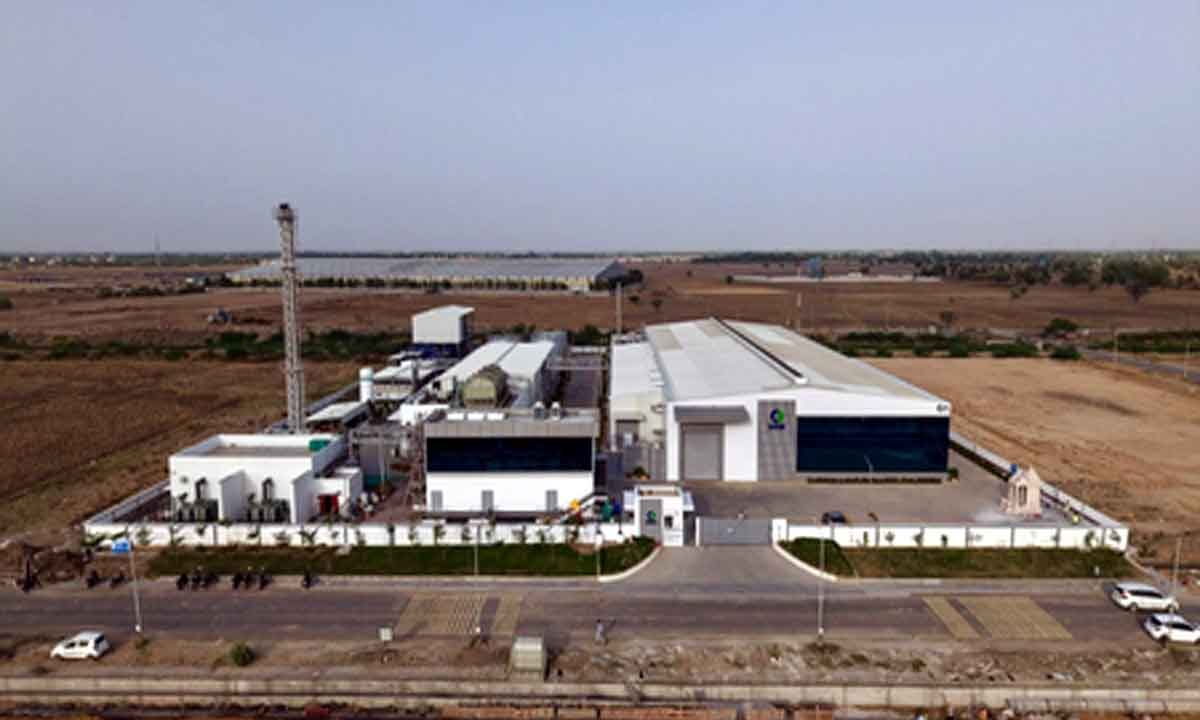
2nm chip production in India to boost national security, space exploration, defence sector
2nm chip production in India to boost national security, space exploration, defe ..
I know when Foxconn Exited, You were celebrating. Today, We have 3 high-tech Semiconductor chip plants operational and next 2 are on the verge of being operational.
We are set to rule semi conductor market. Our 2 wheeler, 4 wheeler production and export are growing at a decent rate. Even our Mobile export reached half of the total export of Bangladesh.
5 semiconductor plants likely to be operational in India by 2026 end
3 of them are already operational.
New Delhi: Five semiconductor plants are expected to be operational across the country by the end of 2026, according to Union Minister Ashwini Vaishnaw.Of the 12 semiconductor projects approved by...

www.thehansindia.com
Why would we celebrate Foxconn's divestments from India? It portends badly for the region as a whole.
Based on current evidence, India's chances of overtaking China in semiconductor production by around 2036 are low.
India is building a semiconductor industry from a very small base and could become an important global manufacturing hub. But China already has an enormous lead across almost every part of the semiconductor value chain.
Where India stands today
India's strategy has several strengths:
- Strong government subsidies (India Semiconductor Mission)
- Large engineering workforce
- Growing electronics manufacturing ecosystem
- Major international partners including Tata, Micron, Renesas, Powerchip and others
- Rapid expansion of chip packaging (OSAT/ATMP) capabilities
By 2026:
- 10–12 semiconductor projects have been approved.
- Several packaging plants are already in production.
- India's first commercial silicon fabs are progressing toward production.
- The government is now expanding into semiconductor materials, equipment and design under ISM 2.0.
This is meaningful progress because India effectively started from almost zero commercial semiconductor manufacturing only a few years ago.
Where China stands
China's lead is measured in decades rather than years.
China currently possesses:
- Hundreds of semiconductor manufacturing facilities
- Complete domestic supply chains
- Large domestic equipment manufacturers
- Chemical and wafer suppliers
- Packaging and testing at massive scale
- Memory manufacturers
- Mature-node logic production
- Advanced foundry capabilities despite export controls
- The world's largest electronics manufacturing ecosystem
China also produces an enormous volume of chips for automotive, industrial, telecom, consumer electronics and AI markets.
Even with U.S. export restrictions, China continues to expand capacity, particularly at mature process nodes.
Production volume vs. advanced technology
This distinction is important.
There are two different questions:
- Who produces more chips?
- Who produces the most advanced chips?
China already produces vastly more semiconductor output than India.
Even if India successfully builds several fabs, China is also continuing to build new fabs during the same period.
Areas where India could become globally competitive
India has realistic opportunities in:
- Chip packaging (OSAT/ATMP)
- Compound semiconductors
- Automotive chips
- Power electronics
- Semiconductor design
- Electronics assembly
- Supply-chain diversification for Western companies
These are substantial markets and do not require immediately competing with Taiwan or China at the most advanced process nodes.
Major challenges India still faces
India still needs to develop:
- Domestic silicon wafer production
- Semiconductor-grade chemicals
- Specialty gases
- Photomasks
- Equipment ecosystem
- Large experienced fabrication workforce
- Reliable utility infrastructure for multiple high-volume fabs
- Local supplier networks
These industries normally take decades to mature.
Could India beat China by 2036?
If "beat" means
total semiconductor production, the answer is
unlikely.
China's existing scale is simply too large, and it continues investing aggressively.
If "beat" means
becoming one of the world's major semiconductor manufacturing countries, that is much more plausible.
Probability assessment
| Scenario by ~2036 | Assessment |
|---|
| India overtakes China in total semiconductor production | Very unlikely |
| India becomes a top 5–6 semiconductor nation | Plausible |
| India becomes a global packaging (OSAT/ATMP) leader | Likely |
| India becomes a major automotive/power semiconductor producer | Reasonably likely |
| India becomes a major design and R&D hub | Highly likely |
Overall conclusion
There is no credible evidence at present that India is on track to surpass China in overall semiconductor production within the next decade. China's lead in manufacturing capacity, supply chains, equipment, materials, and industrial experience remains substantial. A more realistic expectation is that India becomes an important additional global semiconductor hub at a far, far smaller scale rather than replacing China as the largest producer.
So - essentially, this is wasted effort and money on India's part.
But - who is going to stop the current administration in India from wasting Billions?
Whatever gets the votes is fine.


 Indian Defense