 War Archive

Saif
Senior Member
- Joined
- Jan 24, 2024
- Messages
- 22,059
- Likes
- 9,868
- Nation

- Residence
- Axis Group

Russian drone strike kills 14 at Ukraine train station
Agence France-Presse . Kyiv, Ukraine
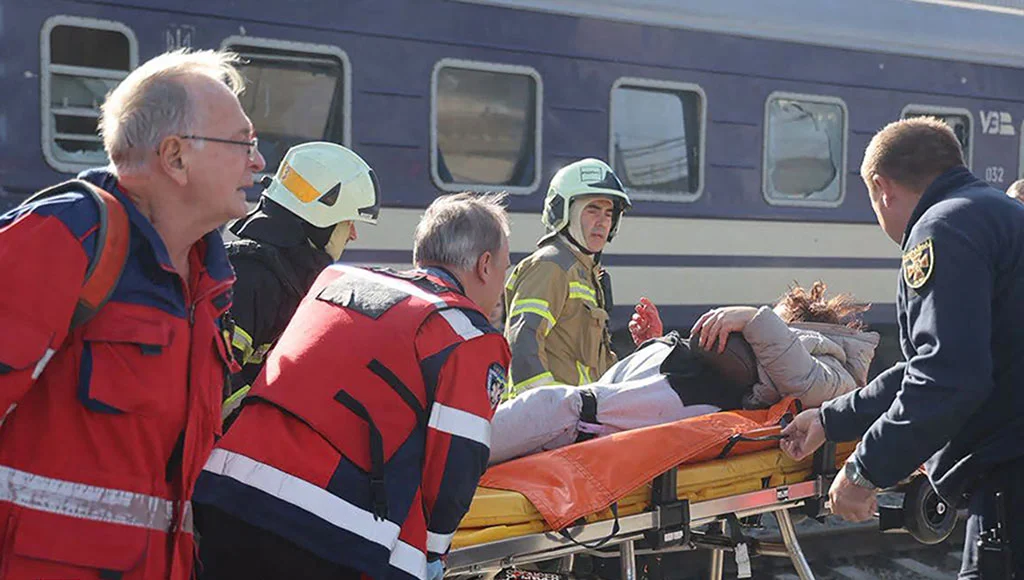
In this handout photograph taken and released by the Ukrainian Emergency Service on October 29, 2026, Ukrainian rescuers carry an injured person on a stretcher following an air attack on the railway station in Dnipro, amid the Russian invasion of Ukraine. | AFP photo.
A Russian drone slammed into a busy platform at a railway station in Ukraine’s Dnipro on Thursday killing at least 14 people in what President Volodymyr Zelensky called a ‘horrific’ attack that demands a response from Kyiv’s allies.
The strike came as Ukraine and Russia strive to uphold a fragile local ceasefire in the ravaged city of Oleshky — under Russian occupation since 2022 and where residents have faced months of food, water and medicine shortages.
The truce was holding into its third day, both countries said, with the Ukrainian human rights ombudsman Dmytro Lubinets announcing that he had ‘set out with the Ukrainian delegation towards Oleshky’ through Belarus and Russia.
But elsewhere, Moscow continued to pummel Ukraine.
The strike at the Dnipro train station hit a platform ‘where a regular commuter train and a regular passenger train were standing’, Zelensky said.
By early Thursday afternoon, Dnipropetrovsk regional governor Oleksandr Ganzha said the death toll from the strike had risen to 14.
Another 14 had been wounded, he said, adding that six of them were in severe condition after suffering ‘multiple shrapnel wounds’, including an 11-year-old boy and a man who had ‘both legs amputated’.
Zelensky slammed the attack as ‘horrific’ and insisted that ‘sanctions against Moscow and its war machine must not be eased for as long as this Russian war continues’.
Images released by Ukrainian emergency services showed bodies on the platform, rescuers helping victims to safety and two burnt-out passenger trains with their windows shattered.
French President Emmanuel Macron reacted with outrage to the attack, stressing the need for ‘far more than a localised ceasefire’ like the one in Oleshky.
‘It is intolerable that Russia continues to reject all proposals to this end, choosing instead to pursue escalation and target civilians,’ he said on X.
Russia has fired drones on trains across Ukraine since the first days of its 2022 invasion — destroying hundreds of locomotives and killing several railway workers.
Ukraine’s air force said it had intercepted three jet-powered drones in a daytime attack, but that a fourth evaded its defences and hit the station.
In the aftermath of the attack, Zelensky refreshed his criticism of a deal struck this month between US President Donald Trump and his Russian counterpart Vladimir Putin to ease some sanctions on Russia allowing Moscow to release diesel onto global markets.
‘How many such terrorist strikes has Russia carried out against our people since sanctions were lifted on some Russian oligarchs and the energy sector, instead of de-escalating,’ he asked.
At least six others were killed across Ukraine in separate Russian attacks, according to local officials.
A strike on the city centre of Chernigiv, north of Kyiv, killed two 15-year-old girls and wounded nearly two dozen others, including four children, the head of the city’s military administration, Dmytro Bryzhynsky, said.
A drone also slammed into a multi-storey residential building in the central city of Kremenchuk, killing three and wounding several — including a six-year-old — the local governor said.
Russia has intensified drone and missile attacks on Ukraine in recent weeks, hitting energy sites around major cities in what Kyiv says is a bid to plunge the country into cold and darkness throughout the winter.
The Kremlin earlier this week vowed not to let up in the overall pace of the war even as the sides prepare to restart stalled talks under US mediation.
Zelensky said on Wednesday it would be a ‘huge success’ if the local ceasefire in Oleshky — brokered by US First Lady Melania Trump — allowed for the evacuation of stranded citizens.
Locals trapped there have resorted to hunting and eating pigeons in recent months, former residents in touch with those in the city said.
Russia and Ukraine are to meet next month with US envoys to discuss ways to end Europe’s worst conflict since World War II, with no firm dates set for the talks yet.
Several previous rounds have failed to move the sides closer to a deal.
Russia demands more territory in eastern Ukraine and sweeping military and political restrictions on Kyiv.
Ukraine and its allies say ceding ground to Moscow would be tantamount to a capitulation and leave Kyiv vulnerable to future Russian attacks.
Agence France-Presse . Kyiv, Ukraine
In this handout photograph taken and released by the Ukrainian Emergency Service on October 29, 2026, Ukrainian rescuers carry an injured person on a stretcher following an air attack on the railway station in Dnipro, amid the Russian invasion of Ukraine. | AFP photo.
A Russian drone slammed into a busy platform at a railway station in Ukraine’s Dnipro on Thursday killing at least 14 people in what President Volodymyr Zelensky called a ‘horrific’ attack that demands a response from Kyiv’s allies.
The strike came as Ukraine and Russia strive to uphold a fragile local ceasefire in the ravaged city of Oleshky — under Russian occupation since 2022 and where residents have faced months of food, water and medicine shortages.
The truce was holding into its third day, both countries said, with the Ukrainian human rights ombudsman Dmytro Lubinets announcing that he had ‘set out with the Ukrainian delegation towards Oleshky’ through Belarus and Russia.
But elsewhere, Moscow continued to pummel Ukraine.
The strike at the Dnipro train station hit a platform ‘where a regular commuter train and a regular passenger train were standing’, Zelensky said.
By early Thursday afternoon, Dnipropetrovsk regional governor Oleksandr Ganzha said the death toll from the strike had risen to 14.
Another 14 had been wounded, he said, adding that six of them were in severe condition after suffering ‘multiple shrapnel wounds’, including an 11-year-old boy and a man who had ‘both legs amputated’.
Zelensky slammed the attack as ‘horrific’ and insisted that ‘sanctions against Moscow and its war machine must not be eased for as long as this Russian war continues’.
Images released by Ukrainian emergency services showed bodies on the platform, rescuers helping victims to safety and two burnt-out passenger trains with their windows shattered.
French President Emmanuel Macron reacted with outrage to the attack, stressing the need for ‘far more than a localised ceasefire’ like the one in Oleshky.
‘It is intolerable that Russia continues to reject all proposals to this end, choosing instead to pursue escalation and target civilians,’ he said on X.
Russia has fired drones on trains across Ukraine since the first days of its 2022 invasion — destroying hundreds of locomotives and killing several railway workers.
Ukraine’s air force said it had intercepted three jet-powered drones in a daytime attack, but that a fourth evaded its defences and hit the station.
In the aftermath of the attack, Zelensky refreshed his criticism of a deal struck this month between US President Donald Trump and his Russian counterpart Vladimir Putin to ease some sanctions on Russia allowing Moscow to release diesel onto global markets.
‘How many such terrorist strikes has Russia carried out against our people since sanctions were lifted on some Russian oligarchs and the energy sector, instead of de-escalating,’ he asked.
At least six others were killed across Ukraine in separate Russian attacks, according to local officials.
A strike on the city centre of Chernigiv, north of Kyiv, killed two 15-year-old girls and wounded nearly two dozen others, including four children, the head of the city’s military administration, Dmytro Bryzhynsky, said.
A drone also slammed into a multi-storey residential building in the central city of Kremenchuk, killing three and wounding several — including a six-year-old — the local governor said.
Russia has intensified drone and missile attacks on Ukraine in recent weeks, hitting energy sites around major cities in what Kyiv says is a bid to plunge the country into cold and darkness throughout the winter.
The Kremlin earlier this week vowed not to let up in the overall pace of the war even as the sides prepare to restart stalled talks under US mediation.
Zelensky said on Wednesday it would be a ‘huge success’ if the local ceasefire in Oleshky — brokered by US First Lady Melania Trump — allowed for the evacuation of stranded citizens.
Locals trapped there have resorted to hunting and eating pigeons in recent months, former residents in touch with those in the city said.
Russia and Ukraine are to meet next month with US envoys to discuss ways to end Europe’s worst conflict since World War II, with no firm dates set for the talks yet.
Several previous rounds have failed to move the sides closer to a deal.
Russia demands more territory in eastern Ukraine and sweeping military and political restrictions on Kyiv.
Ukraine and its allies say ceding ground to Moscow would be tantamount to a capitulation and leave Kyiv vulnerable to future Russian attacks.


