Donate ☕
Wars - 2023 10/08 Monitoring the Israel and Lebanon War | Page 13 | PKDefense

Wars 2023 10/08 Monitoring the Israel and Lebanon War

⤵︎
Reply (Scroll)
Press space to scroll through posts
G War Archive
Wars 2023 10/08 Monitoring the Israel and Lebanon War
190
7K
More threads by Saif

Khzzbullah and Khmess down

Houthi still doing his thing

USrael slowly by slowly coming for Iran
 
Analyze

Analyze Post

Add your ideas here:
Highlight Cite Fact Check Respond

Hezbollah chief thanks Iran for support to face Israel
Agence France-Presse . Beirut, Lebanon 14 August, 2025, 22:13

1755223685669.webp

Naim Qassem | BSS file photo

Hezbollah chief Naim Qassem has thanked a senior Iranian official for his country’s on-going support in confronting Israel, the Lebanese militant group said on Thursday.

For decades, Tehran has been the main backer of the Shia Muslim group, which emerged badly weakened from last year’s war with Israel that saw its arsenal pummelled and senior commanders killed.

Qassem met with Iran’s Supreme National Security Council chief Ali Larijani, who arrived in Beirut on Wednesday, and thanked Iran ‘for the on-going support to Lebanon and its resistance against the Israeli enemy’, the group said in a statement.

He also thanked Iran for its support for Lebanon’s ‘unity, sovereignty and independence’, and emphasised ‘the brotherly relations between the Lebanese and Iranian people’.

Larijani’s visit came after the Lebanese government tasked the army with drawing up a plan to disarm Hezbollah by the end of the year.

Recent statements from Iranian officials in support of Hezbollah keeping its weapons have angered Lebanese officials.

Lebanese president Joseph Aoun told Larijani on Wednesday that ‘we reject any interference in our internal affairs,’ adding that ‘it is forbidden for anyone... to bear arms and to use foreign backing as leverage’.

Prime minister Nawaf Salam was equally firm, saying that ’Lebanon will not accept, in any form, any interference in its internal affairs, and expects from the Iranian side a clear and explicit commitment to respect these principles.’

Larijani said that ‘any decision that the Lebanese government makes in consultation with the resistance is respected by us’.

‘The one who interferes in Lebanese affairs is the one who plans for you, gives you a timetable from thousands of kilometres away. We did not give you any plan,’ he said.

He was alluding to Washington, which put heavy pressure on Beirut to disarm Hezbollah and even presented a detailed proposal, including a timeline, for the process.​
 
Analyze

Analyze Post

Add your ideas here:
Highlight Cite Fact Check Respond
newagebd.net/post/middle-east/283149/hezbollah-mourns-top-commander-killed-in-israeli-strike

Hezbollah mourns top commander killed in Israeli strike
Agence France-Presse . Beirut, Lebanon 24 November, 2025, 22:18

Hezbollah held the funeral Monday for its top military chief and other members of the militant group a day after Israel killed them in a strike on Beirut’s southern suburbs.

Haytham Ali Tabatabai is the most senior Hezbollah commander to be killed by Israel since a November 2024 ceasefire sought to end more than a year of hostilities between the two sides.

His assassination comes as Israel has escalated its attacks on Lebanon, with the United States increasing pressure on the Beirut government to disarm the Iran-backed Hezbollah.

Israel’s military said Sunday it had ‘eliminated the terrorist Haytham Ali Tabatabai, Hezbollah’s chief of general staff’.

The group announced the deaths of Tabatabai and four other members in the attack.

In Beirut’s southern suburbs, a densely populated area where Hezbollah holds sway, hundreds of supporters joined Monday’s funeral procession for Tabatabai and two of his companions.

Hezbollah members in fatigues carried the coffins, draped in the group’s yellow flags, to the sound of religious chants, an AFP correspondent said.

The crowd yelled slogans against Israel and America, while supporters carried portraits of the group’s leaders and Iran’s supreme leader, Ayatollah Ali Khamenei.

Hezbollah said Tabatabai assumed the role of military leader after the most recent war with Israel, which saw the group heavily weakened and senior commanders killed.

Israel has carried out near daily strikes on Lebanon despite the truce, usually saying it is targeting Hezbollah members and infrastructure to prevent the group from rearming.

According to the agreement, Hezbollah was to withdraw north of the Litani River, some 30 kilometres from the border with Israel, and to have its military infrastructure there dismantled.

Under a government-approved plan, Lebanon’s army is to finish disarming Hezbollah in the area by year end, before tackling the rest of the country.

Hezbollah has rejected calls to disarm.

After Tabatabai’s killing, Israeli prime minister Benjamin Netanyahu said he would ‘not allow Hezbollah to rebuild its power’ and urged Lebanon’s government to ‘fulfil its commitment to disarm Hezbollah’.

A source close to the group said there were ‘two opinions within the group — those who wish to respond to the assassination and those who want to refrain from doing so — but the leadership tends to adopt the utmost forms of diplomacy at the present stage’.

Last December, Hezbollah lost a key supply route through Syria with the fall of longtime ruler and ally Bashar al-Assad.

Washington is also demanding that Beirut cut off the group’s funding from Iran, which slammed Sunday’s killing as ‘cowardly’.

Atlantic Council researcher Nicholas Blanford said that ‘Hezbollah’s options are very limited’.

‘Its support base is clamouring for revenge but if Hezbollah responds directly Israel will strike back very hard and no one in Lebanon will thank Hezbollah for that,’ he said.

Sunday’s strike was the biggest blow to Hezbollah since the ceasefire ‘because of (Tabatabai’s) seniority and the fact that it demonstrates the Israelis can still locate and target senior officials despite whatever protective measures Hezbollah is undertaking’ since the war, Blanford added.

Senior Hezbollah official Ali Damush told the funeral that Tabatabai’s killing aimed ‘to frighten and weaken Hezbollah into retreating surrendering, and submitting, but this goal will never be achieved’.

Israel was ‘worried about Hezbollah’s possible response — and should remain worried’, he said, urging Lebanese authorities to ‘confront the aggression by all means and reject the pressures that seek to push Lebanon to comply with American dictates and Israeli conditions’.

Lebanon’s army says it is implementing its plan to disarm Hezbollah, but the United States and Israel have accused Lebanon’s authorities of stalling.

Condemning the attack, prime minister Nawaf Salam said Sunday that ‘the only way to consolidate stability’ was through ‘extending the authority of the state over all its territory with its own forces, and enabling the Lebanese army to carry out its duties’.

A Lebanese military official said last week that US and Israeli demands to fully disarm Hezbollah by December 31 were ‘impossible’ considering personnel and equipment shortages, expressing concern at the risk of confrontations with local communities that support the group.​
 
Analyze

Analyze Post

Add your ideas here:
Highlight Cite Fact Check Respond

Israel launches new strikes in south Lebanon
Agence France-Presse . Jerusalem 27 November, 2025, 22:54

The Israeli military said it had carried out another series of strikes against Hezbollah in southern Lebanon on Thursday, exactly a year into the ceasefire with the militant group.

Lebanon’s state-run National News Agency said Israeli aircraft launched ‘a series of raids on Al-Mahmoudiya and Al-Jarmak in the Jezzine area’.

The Israeli military ‘struck and dismantled Hezbollah terror infrastructure in several areas in southern Lebanon’, it said in a statement.

It also said it had hit ‘several launch sites where Hezbollah weapons were stored’, ‘military posts’ used by the Iran-backed group and a storage facility containing weapons.

Israel’s military ‘will continue to operate to remove any threat to the State of Israel’, it said.

The November 27, 2024 ceasefire sought to end over a year of hostilities between the two sides.

Israel has repeatedly bombed Lebanon despite the truce, usually saying it is targeting Hezbollah members and infrastructure to stop the group from rearming.

According to the ceasefire agreement, Hezbollah was to pull its forces north of the Litani River, some 30 kilometres north of the border with Israel, and have its military infrastructure there dismantled.

Under a government-approved plan, the Lebanese army is to dismantle Hezbollah military infrastructure south of the river by the end of the year, before tackling the rest of the country.

The United States is increasing its pressure on the Lebanese government to disarm Hezbollah.

The Lebanese military has said it is carrying out its plan to disarm the group, but the US and Israel have accused Lebanese authorities of stalling the process.

An Israeli strike on Beirut’s southern suburbs on Sunday killed Haitham Ali Tabatabai — the most senior Hezbollah commander to be killed by Israel since the ceasefire entered into force.

Israeli defence minister Israel Katz on Wednesday warned there would be ‘no calm’ in Lebanon if Israel’s security was not guaranteed.

One year after a ceasefire between Israel and Hezbollah, the Israeli army still maintains five positions in south Lebanon, with fortifications and widened access routes, according to satellite images analysed by AFP.

Israel has kept troops in five positions that it deems strategic, saying it wants to ensure Hezbollah does not carry out any military activities in south Lebanon.

AFP was able to pinpoint these bases through satellite images from Planet Labs PBC.

Located on ridges across the Blue Line -- the de facto border -- these positions allow the Israeli army to control a series of Lebanese border villages, a move it considers key to protecting nearby Israeli communities.

The positions offer a direct view of the towns and villages of Kfar Kila, Aita al-Shaab, Maroun al-Ras, Aitaroun, Blida, Markaba and Hula -- among the most destroyed by Israeli strikes and ground operations.​
 
Analyze

Analyze Post

Add your ideas here:
Highlight Cite Fact Check Respond

Lebanon holds first direct talks with Israel in decades
Agence France-Presse . Beirut, Lebanon 03 December, 2025, 23:03

1764813368737.webp

AFP file photo

Lebanese and Israeli civilian representatives held their first direct talks Wednesday in decades, part of a year-old ceasefire monitoring mechanism in the war with militant group Hezbollah, a source close to the talks said.

The meeting was taking place at the UN peacekeeping force’s headquarters in Lebanon Naqura near the border with Israel, the source said, as part of a mechanism to oversee the ceasefire that took hold in November 2024.

Morgan Ortagus, the US special envoy for Lebanon, also attended Wednesday’s meeting, the source added. The United States has been piling pressure on Lebanon to rapidly disarm Hezbollah.

Ortagus’s participation came a day after her visit to Jerusalem where she met Israeli foreign minister Gideon Saar. Israeli media said she also met prime minister Benjamin Netanyahu.

Until now Israel and Lebanon, which have no formal diplomatic relations, had insisted on keeping military officers in the role.

The United States has pushed for direct talks between the two neighbours in a bid to stabilise the region and further weaken Iran-backed Hezbollah.

Netanyahu’s office announced he was sending a civilian representative to meet officials in Lebanon, in what it called a first attempt to establish a basis for ties between the two countries.

Lebanese president Joseph’s Aoun office also said Wednesday that his delegation would be led by former ambassador Simon Karam and that it had been informed that Israel would include ‘a non-military member in its delegation.’

The appointment of a civilian on the Lebanese side came after Lebanon declared itself ready for negotiations with its southern neighbour.

Netanyahu has repeatedly indicated that Lebanon should join the Abraham Accords, under which a handful of Arab and Muslim countries have normalised ties with Israel.

The Israeli prime minister ‘instructed the acting director of the National Security Council to send a representative on his behalf to a meeting with government and economic officials in Lebanon’, Netanyahu’s office said.

‘This is an initial attempt to establish a basis for a relationship and economic cooperation between Israel and Lebanon,’ it added.

The announcement came days after the first anniversary of the start of a fragile ceasefire between Israel and Hezbollah.

The ceasefire with Hezbollah ended over a year of hostilities that erupted after the militant group launched attacks in support of its Palestinian ally Hamas.

Israel has repeatedly bombed Lebanon despite the truce, saying it is targeting Hezbollah members and infrastructure to stop the group from rebuilding its military capabilities.

Under a government-approved plan, the Lebanese army is set to dismantle Hezbollah’s military infrastructure south of the river by the end of the year, before tackling the rest of the country.

Judging the Lebanese efforts insufficient, Israel has ramped up its strikes in recent weeks.

On the anniversary of the truce, the Israeli military said it had carried out around 1,200 ‘targeted activities’ and ‘eliminated more than 370 terrorists’ from Hezbollah, Hamas and other Palestinian groups during the ceasefire.

After his meeting with US envoy Ortagus in Jerusalem Tuesday, foreign minister Saar said on X that they ‘had a good discussion on the situation in Lebanon’.

‘I said that the one violating Lebanese sovereignty is Hezbollah. Hezbollah’s disarmament is crucial for Lebanon’s future and Israel’s security,’ he added.​
 
Analyze

Analyze Post

Add your ideas here:
Highlight Cite Fact Check Respond

Series of Israeli strikes hit Lebanon
Agence France-Presse . Beirut, Lebanon 12 December, 2025, 23:36

A series of Israeli strikes hit south and east Lebanon on Friday, state media reported, as Israel’s army said it was targeting Hezbollah sites, the latest such raids despite a year-old ceasefire.

Lebanon’s state-run National News Agency reported strikes in around a dozen locations, including up to around 30 kilometres from the Israeli border, citing at times ‘heavy raids’.

Israel has kept up strikes on Lebanon despite a November 2024 ceasefire that was supposed to end more than a year of hostilities with the Iran-backed militant group Hezbollah, and has also kept troops in five areas it deems strategic.

The Israeli military said in a statement that its forces ‘struck a training and qualification compound’ used by Hezbollah’s elite Radwan Force where operatives ‘underwent shooting exercises and additional training on the use of various types of weapons’.

The army also ‘struck additional Hezbollah military infrastructure in several areas in southern Lebanon’, it said.

According to the ceasefire, Hezbollah was required to pull its forces north of the Litani River, some 30 kilometres from the border with Israel, and have its military infrastructure there dismantled.

Under a government-approved plan, Lebanon’s army is to dismantle Hezbollah’s military infrastructure south of the Litani by the end of the year, before tackling the rest of the country.

The sites struck on Friday were generally north of the river.

Earlier this week, Israel launched a series of strikes on southern Lebanon, also saying it hit a Hezbollah training centre and other targets.​
 
Analyze

Analyze Post

Add your ideas here:
Highlight Cite Fact Check Respond

Israel targets Hezbollah members in Lebanon
Agence France-Presse . Jerusalem 14 December, 2025, 22:35

1765763238727.webp

| AFP file photo

The Israeli military said it targeted three members of the Iran-backed Hezbollah group in strikes on southern Lebanon on Sunday.

The Lebanese health ministry said on Sunday that two people had been killed in separate Israeli strikes in the south of the country, which came despite a ceasefire between Israel and Hezbollah.

‘Since this morning Sunday, the IDF military has struck three Hezbollah terrorists in several areas in southern Lebanon,’ the Israeli military said in a statement.

‘The terrorists took part in attempts to reestablish Hezbollah’s terror infrastructure, and their activities constituted a violation of the understandings between Israel and Lebanon,’ it added, referring to the November 2024 ceasefire.

The agreement sought to end over a year of fighting between Israel and Hezbollah, which broke out at the start of the Gaza war in October 2023.

Israel has repeatedly bombed Lebanon despite the truce, usually saying it is targeting Hezbollah members and infrastructure to stop the group from rearming.

The Lebanese health ministry said earlier on Sunday that an ‘Israeli enemy strike’ on a motorcycle in Yater, south Lebanon, killed one individual and wounded another.

It added later in another statement that a second person was killed in a separate strike on southern Lebanon targeting a car in Safad Al-Battikh.

On Saturday, the Israeli army said it had ‘temporarily’ suspended a planned strike on a building in Yanuh, which it described as Hezbollah infrastructure.

The decision came after the Lebanese army ‘requested access again to the specified site and to address the breach of the agreement’, the Israeli military’s Arabic-language spokesman Avichay Adraee said.

According to the ceasefire, Hezbollah was required to pull its forces north of the Litani River, some 30 kilometres from the border with Israel, and have its military infrastructure in the vacated area dismantled.

Under a government-approved plan, Lebanon’s army is to conduct the dismantling south of the Litani by the end of the year, before tackling Hezbollah’s weapons in the rest of the country.

In a televised speech on Saturday, Hezbollah chief Naim Qassem, who has repeatedly rejected attempts to disarm the group, said ‘disarmament will not achieve Israel’s goal’ of ending resistance, ‘even if the whole world unites against Lebanon’.​
 
Analyze

Analyze Post

Add your ideas here:
Highlight Cite Fact Check Respond

Lebanon close to completing disarmament of Hezbollah south of Litani River, says PM

REUTERS
Published :
Dec 20, 2025 22:27
Updated :
Dec 20, 2025 23:34

1766278618517.webp

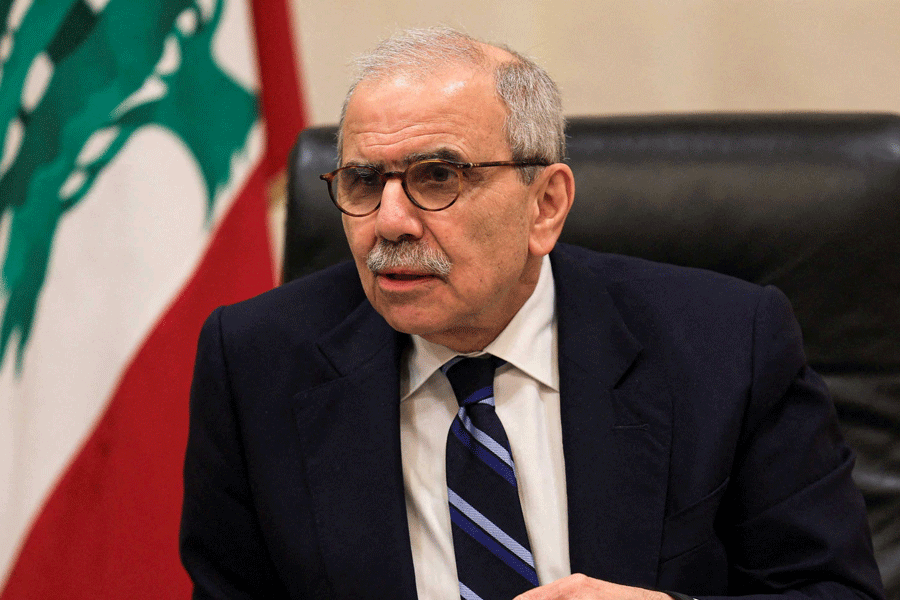
Lebanese Prime Minister Nawaf Salam speaks to journalists at the government headquarters in Beirut, Lebanon, December 3, 2025. Photo : REUTERS/Mohamed Azakir

Lebanon is close to completing the disarmament of Hezbollah south of the Litani River, Prime Minister Nawaf Salam said on Saturday, as the country races to fulfil a key demand of its ceasefire with Israel before a year-end deadline.

The US-backed ceasefire, agreed in November 2024, ended more than a year of fighting between Israel and Hezbollah and required the disarmament of the Iran-aligned militant group, starting in areas south of the river adjacent to Israel.

Lebanese authorities, led by President Joseph Aoun and Salam, tasked the US-backed Lebanese army on Aug 5 with devising a plan to establish a state monopoly on arms by the end of the year.

"Prime Minister Salam affirmed that the first phase of the weapons consolidation plan related to the area south of the Litani River is only days away from completion," a statement from his office said.

"The state is ready to move on to the second phase - namely (confiscating weapons) north of the Litani River - based on the plan prepared by the Lebanese army pursuant to a mandate from the government," Salam added.

The statement came after Salam held talks with Simon Karam, Lebanon's top civilian negotiator on a committee overseeing the Hezbollah-Israel truce.

Since the ceasefire, the sides have regularly accused each other of violations, with Israel questioning the Lebanese army's efforts to disarm Hezbollah. Israeli warplanes have increasingly targeted Hezbollah in southern Lebanon and even in the capital.

Hezbollah, a Shia Muslim group, has tried to resist the pressure - from its mainly Christian and Sunni Muslim opponents in Lebanon as well as from the US and Saudi Arabia - to disarm, saying it would be a mistake while Israel continues its air strikes on the country.

Israel has publicly urged Lebanese authorities to fulfil the conditions of the truce, saying it will act "as necessary" if Lebanon fails to take steps against Hezbollah.​
 
Analyze

Analyze Post

Add your ideas here:
Highlight Cite Fact Check Respond

Israeli military says it killed a member of Iran’s Quds Force in Lebanon

REUTERS
Published :
Dec 25, 2025 22:14
Updated :
Dec 25, 2025 22:15

1766708584512.webp

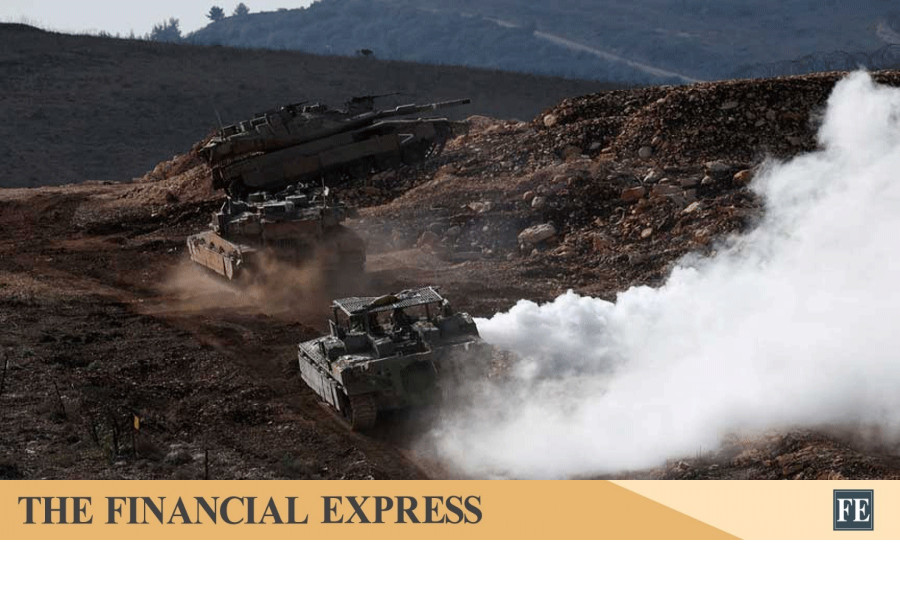
Israeli military vehicles manoeuvre along the Israel-Lebanon border, as seen from northern Israel, November 24, 2025. Photo : REUTERS/Shir Torem

The Israeli military said on Thursday that its forces killed a member of Iran's Quds Force in Lebanon who had been involved in planning attacks from Syria and Lebanon.

The military identified the man as Hussein Mahmoud Marshad al-Jawhari, calling him a key operative in the force's unit 840.

He was assassinated in the area or Ansariyeh, the military added in a statement, without giving any further details of his death.

Al-Jawhari "operated under the Islamic Revolutionary Guard Corps (IRGC) and was involved in terror activities, directed by Iran, against the State of Israel and its security forces," the statement said.

Israel and Iran fought a brief war in June and the Israeli military has been carrying out strikes in Lebanon on a near-daily basis, in what it says is an effort to stop Iranian-backed Lebanese group Hezbollah from rebuilding.

A US-backed ceasefire agreed in November 2024 ended more than a year of fighting between Israel and Hezbollah and required the disarmament of the powerful armed group, beginning in areas south of the river adjacent to Israel.

There was no immediate comment from Iran or Lebanon.​
 
Analyze

Analyze Post

Add your ideas here:
Highlight Cite Fact Check Respond
Israeli strikes undermine efforts to prevent escalation: Lebanon
Agence France-Presse . Beirut, Lebanon 06 January, 2026, 23:30

1767749205533.webp

Security personnel inspect the site of a building that was destroyed by the Israeli strike in the industrial area of Ghazieh town, near the coastal city of Sidon, in southern Lebanon on January 6, 2026. | AFP photo

Lebanese president Joseph Aoun on Tuesday condemned Israel’s latest strikes on his country, saying they undermine efforts to prevent escalation.

Aoun’s criticism came after Israel launched a series of strikes in southern and eastern Lebanon on Monday, saying it hit Hezbollah and Hamas targets.


The attacks began with strikes on four villages where Israel had issued evacuation warnings, though later bombing including a strike in the early hours of Tuesday came without prior notice.

In a statement, Aoun said that ‘Israel’s continued attacks aim to thwart all efforts made locally, regionally and internationally to stop the on-going Israeli escalation, despite the response shown by Lebanon to these efforts at various levels’.

In spite of a year-old ceasefire between Israel and Hezbollah, Israel has carried out frequent strikes on Lebanon, usually saying it is bombing Hezbollah sites and operatives, and occasionally Hamas targets.

On Tuesday, the Israeli military said its operations the day before struck infrastructure ‘belonging to the Hezbollah and Hamas terrorist organisations in several areas in Lebanon’.

According to the military, the targets included ‘several weapon storage facilities and military structures, both above and below ground’.

The strike early on Tuesday targeted Ghazieh, near the southern coastal city of Sidon, destroying a building and damaging its surroundings, causing a fire on site which firefighters deployed to combat, according to an AFP photographer.

The latest strikes come with the committee monitoring the ceasefire, which includes the United States, France, Lebanon, Israel and the United Nations, set to meet on Wednesday.

Lebanon’s cabinet will also convene later this week to discuss the Lebanese military’s progress in disarming Hezbollah, a plan launched under heavy US pressure and amid fears of expanded Israeli strikes.

The Lebanese army was expected to complete the disarmament south of the Litani River — about 30 kilometres from the border with Israel — by the end of 2025, before tackling the rest of the country.

In his statement, Aoun said the government’s plan to ‘extend its authority over the south of the Litani’ was ‘implemented by the Lebanese army with professionalism, commitment and precision’.

Israel has previously questioned the Lebanese military’s effectiveness and has accused Hezbollah of rearming.

Israel’s foreign minister Gideon Saar on Sunday called the disarmament efforts far from sufficient.​
 
Analyze

Analyze Post

Add your ideas here:
Highlight Cite Fact Check Respond
Israel says Lebanon is not doing enough to disarm Hezbollah

REUTERS
Published :
Jan 08, 2026 18:28
Updated :
Jan 08, 2026 18:28

1767919574175.webp

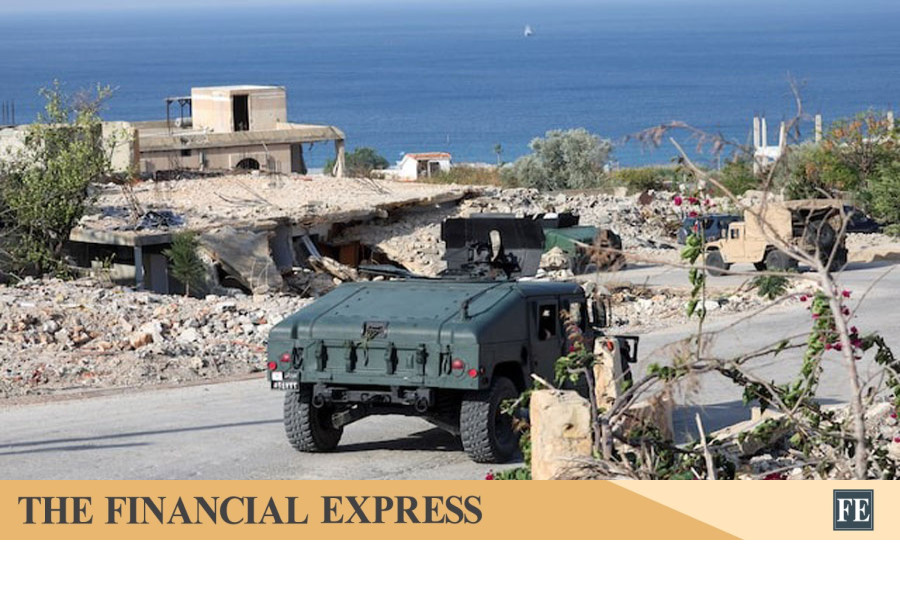
Lebanese army members drive military vehicles during a Lebanese army media tour, to review the army's operations in the southern Litani sector, in Naqoura, near the border with Israel, southern Lebanon, November 28, 2025. Photo : REUTERS/Aziz Taher

Israel said Lebanon's efforts to disarm Hezbollah are far from sufficient after the Lebanese army declared that it had established operational control in the south, raising pressure on Lebanese leaders who fear Israel could escalate strikes.

In line with US demands, the Lebanese government has been seeking to restrict the possession of arms to state control since the Iran-backed Lebanese Shi'ite Muslim group Hezbollah emerged badly weakened from a war with Israel in 2024.

The Lebanese army said on Thursday that the goals of the first phase of its plan had been achieved in an "effective and tangible way", and that it had secured areas under its authority south of the Litani river - excluding positions still occupied by Israeli forces.

ISRAEL SAYS HEZBOLLAH TRYING TO REARM

Following the army's statement, the office of Israeli Prime Minister Benjamin Netanyahu said that Hezbollah must be fully disarmed, citing a US-brokered ceasefire with Lebanon in November, 2024.

While efforts toward this end by Lebanon's government and army were "an encouraging beginning ... they are far from sufficient, as evidenced by Hezbollah's efforts to rearm and rebuild its terror infrastructure with Iranian support".

Hezbollah's disarmament was "imperative for Israel's security and Lebanon's future", it said.

Israel has been conducting near daily strikes in the south and sometimes more widely in Lebanon, accusing Hezbollah of trying to reestablish infrastructure and Beirut of failing to uphold the 2024 ceasefire agreement.

There was no immediate comment from Hezbollah, which says it has respected the ceasefire in the south and that the agreement does not apply to the rest of Lebanon.

The Lebanese army had set a year-end deadline to clear non-state weaponry from the south, before moving on to other areas of the country. In its statement, the army said there was more work to be done to clear unexploded ordnance and tunnels.

LEBANON AIMS TO CONTROL 'DECISIONS OF WAR AND PEACE'

Lebanese President Joseph Aoun said that the army deployment in the south aimed to affirm the principle that "decisions of war and peace" belonged to the state alone, and "to prevent the use of Lebanese territory as a starting point for any hostile acts".

But he added that lasting stability remained contingent upon addressing key issues, chief among them "the continued Israeli occupation of parts of Lebanese territory and the establishment of buffer zones within it".

Hezbollah has fought numerous conflicts with Israel since it was founded by Iran's Revolutionary Guards in 1982. It kept its arms after the end of Lebanon's 1975-1990 civil war, using them against Israeli troops who occupied the south until 2000.

The Lebanese military, which receives US support, has stayed out of conflicts between Hezbollah and Israel.

SEEKING INTERNATIONAL SUPPORT

Aoun and the Lebanese army said that international support must be expedited so that the army could continue making progress in establishing a state monopoly on arms.

UN Special Coordinator for Lebanon Jeanine Hennis-Plasschaert said it was "great to see" the army had "assumed operational control south of the Litani". "This is undeniable progress. Hard work lies ahead," she wrote on X.

A Lebanese security source told Reuters that the army's statement signalled that no group would be able to launch attacks from southern Lebanon.

Hezbollah opened fire in support of its Palestinian ally Hamas at the start of the Gaza war in 2023, and traded fire across the border until Israel went on the offensive in 2024, killing the group's leaders and destroying much of its arsenal.

In a statement, Parliament Speaker Nabih Berri, a Hezbollah ally, affirmed support for the army and "its achievements which would have been nearly complete were it not for Israel's occupation of numerous locations and its daily violations".​
 

Attachments

  • 1767919494136.webp
    1767919494136.webp
    140.6 KB · Views: 1
Analyze

Analyze Post

Add your ideas here:
Highlight Cite Fact Check Respond

Members Online

Latest Posts

Latest Posts

Post