Iran says fully prepared to counter US sanctions
China says it will safeguard own interests
New Age desk 26 August, 2026, 05:05
Iran has said it is confident it can counter widened US sanctions after Washington announced what it described as an ‘economic D-Day’ against the country to try to isolate it from the global economy, BBConline reported on Tuesday.
Iranian economy minister Ali Madanizadeh said Tehran was ‘fully prepared’ for the sanctions, which he said would lead to ‘another defeat’ for the US.
Announcing a raft of new measures, US treasury secretary Scott Bessent said any nation financially partnering with Iran would be isolated, and that banks and businesses dealing with Iran would share its isolation if they refused to cut ties.
The moves follow U-turns and extended deadlines from the White House in its efforts to end the conflict.
Bessent described the measures as ‘the single greatest financial offensive ever’ against Iran, which would ‘tighten the noose and block every potential source of revenue’.
Some economists have questioned whether the latest sanctions will be effective, as this depends on the reaction from Iran’s trading partners.
These include China, the biggest buyer of Iranian oil, which has ignored previous US sanctions and continued to do business with Tehran.
Responding to the US announcement, China said on Tuesday it would safeguard its interests after Washington laid out plans for the ‘economic asphyxiation’ of Beijing’s economic partner Iran.
Almost six months into its war with Iran, the United States issued new penalties on some entities including in China and expanded secondary sanctions threats, urging governments worldwide to join its economic campaign, AFP reported.
China has advocated for a ceasefire, and insisted US sanctions will not resolve the conflict.
‘Cooperation between China and Iran has always been conducted within the framework of international law and should not be interfered with or disrupted,’ foreign ministry spokesman Lin Jian told a regular news briefing on Tuesday.
‘China has already stated many times that it firmly opposes illegal unilateral sanctions... China will take all necessary measures to firmly safeguard its own rights and interests,’ he added.
Beijing is a key customer for Iranian oil, and is directly affected by the blockage of the Strait of Hormuz.
Iran has weathered sanctions for decades, using complex international financial networks to evade restrictions. Before the war, it continued to export millions of barrels of oil, mostly to China.
Asked on Monday if Chinese banks would be targeted by the new penalties, US treasury secretary Scott Bessent said ‘no one is above the reach of US sanctions’.
Last week, another of Iran’s trade partners, the United Arab Emirates, said it was halting all financial transactions with the country.
But hours after the US announcement, Iran said it was confident it would continue to trade with other nations.
Madanizadeh said neither China nor Russia had accepted the US measures, and predicted other countries would resist them.
‘The government is and was ready and has a two-year plan to manage these events,’ he told state television, adding Tehran had been ‘waiting for these plans for a long time’.
‘We also have our own tools and know how to play the game,’ he said.
The war has led to hikes in global oil prices, and in response to the latest threat Iran warned it would shut down all oil exports from the region if the war continued.
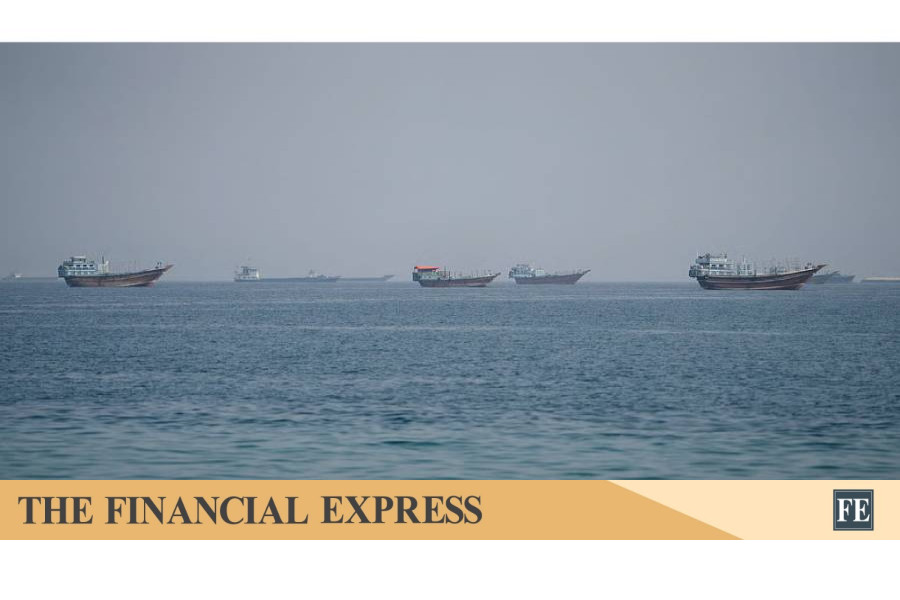
The Iranian regime has also issued a fresh warning to ships not to pass through the Strait of Hormuz without permission, according to Reuters.
One fifth of the world’s oil and gas usually passes through the strait — a narrow waterway south of Iran. But the flow has been effectively blocked by the country since the conflict began at the end of February, leading to higher oil prices globally.
At a press conference earlier on Monday outlining what has been called ‘Operation Economic Outcast’, Bessent said the US was launching an ‘economic onslaught against Iran’s financial connections around the globe’.
‘Iran now faces a very clear choice with only two paths before them: complete global isolation or a path back to normalcy with an opportunity to rejoin the global economy,’ he said.
The treasury secretary claimed America was ‘no longer managing the Iranian threat, we are ending it’.
Bessent said the Treasury had mapped networks, facilitators and financial channels used by Iran to evade sanctions to trade oil.
Pakistan’s powerful army chief Asim Munir met with Iranian president Masoud Pezeshkian in Tehran on Monday, state television reported, as Islamabad tries to mediate a resolution to the Middle East war.
The meeting took place after Trump spoke last week with Munir, a US source familiar with the matter said earlier on Monday.
Pakistan has played a key role in efforts to halt the conflict between Iran and the United States, brokering a memorandum of understanding in June, but peace negotiations currently appear stalled.
Munir also met in Tehran with Iran’s parliamentary speaker and chief negotiator Mohammad Bagher Ghalibaf, as well as Mohsen Rezaei, head of the country’s highest national security body, according to Iranian state television.
Long queues formed at petrol stations in Tehran on Tuesday after the United States announced fresh sanctions, AFP reported.
One-third of the vessels Iran has threatened to confiscate for breaching Strait of Hormuz transit rules have already been attacked during the Middle East war, an AFP data analysis found.
Since the conflict erupted in late February, Tehran has sought to impose its own shipping corridor in a bid to control traffic through the strategic chokepoint, which had been open before the war and governed by international maritime law.
But not all vessels have been passing through this Iranian-approved route in the northern part of the waterway.


 War Archive