โ˜• Support Us โ˜•
[๐Ÿ‡ง๐Ÿ‡ฉ] - Agriculture in Bangladesh | Page 4 | PKDefense

[๐Ÿ‡ง๐Ÿ‡ฉ] Agriculture in Bangladesh

Reply (Scroll)
Press space to scroll through posts
G Bangladesh Defense
[๐Ÿ‡ง๐Ÿ‡ฉ] Agriculture in Bangladesh
223
9K
More threads by Saif


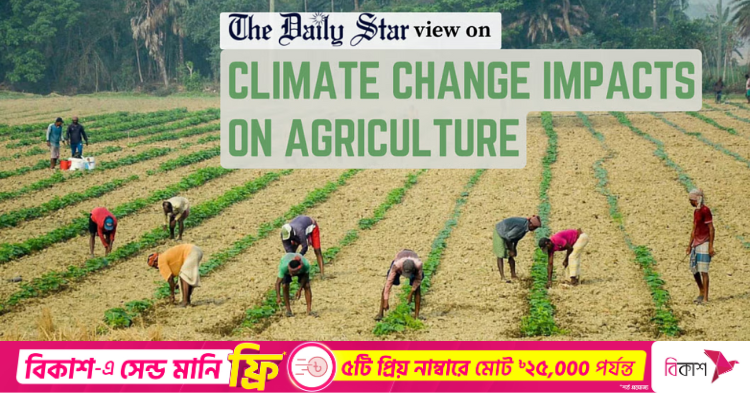
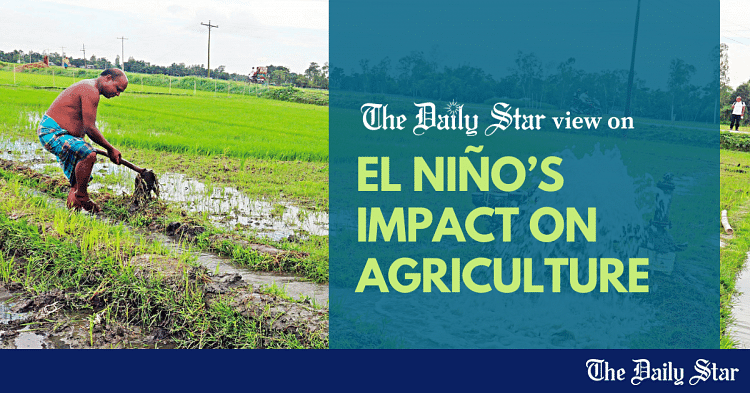
Can our crops survive the erratic weather?​

Take urgent stock of the impact of El Nino on our agriculture

1710713165048.png

Visual: Star

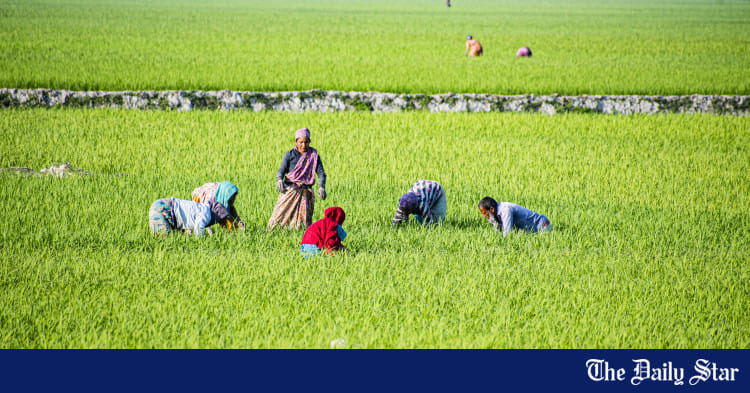
Like the rest of the world, Bangladesh is feeling the heat of extreme weather patterns, with meteorologists predicting lower rainfall and warmer temperatures as a result of El Nino in the region in the coming days. Heatwaves, which frequented the country in May and June, are likely to continue throughout the summer โ€“ and beyond. Meanwhile, rainfall has fallen 67 percent below the normal level, as per the Bangladesh Meteorological Department, raising serious concerns about crop production, food security and the fate of our farmers.

According to a report by this daily, heatwaves have impacted the cultivation of Aus crop and summer vegetables, including green chilli. The shortfall of rain will also affect the retting of jute, a cash crop. Rising temperatures and infrequent rain have resulted in prolonged droughts, reducing availability of water for irrigation and severely hampering crop production. Farmers state that their cost of Aus production has increased by 25 percent, and that croplands are drying out even after irrigation. Moreover, heat stress poses a direct threat to crops, especially heat-sensitive varieties. Production of chillies, for instance, has been gravely affected by the erratic temperatures. According to our correspondent, chilli growers in Bogura and Gaibandha districts would usually get 50-80 maunds of green chilli from one bigha of land, but this year, they are getting roughly seven to eight maunds per bigha. How are farmers supposed to survive if their cash crop fails them?

Given that countries from which we import food items are also reeling from similar erratic weather, we must now seriously confront the very real threat of food insecurity, particularly since we are navigating an already volatile international market held hostage by the Russia-Ukraine war. India, which accounts for 40 percent of world rice export, has already banned export of rice to other countries, including Bangladesh, fearing a production fall following a late start to seasonal monsoon rains. Our government must take urgent stock of the situation and take effective measures to ensure there is no disruption in the supply of essential food items in the coming days. Equally important is to ease farmers' concerns and sufferings at this time of great uncertainty by providing them with technical and financial support.

We also need to conduct reliable research on how El Nino and climate change will impact crop cycles in the future, and come up with heat-resistant varieties that can survive and thrive in erratic weather. As the world tumbles further down the hole of climate change, there can be no alternative to building our own capacities to sustain our crops and ensure food sovereignty for our population.
 

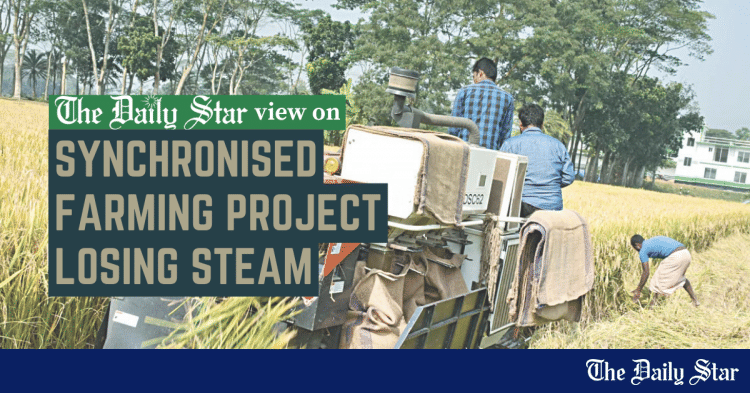
Project to modernise farming must work​

Farmers need to be motivated and given necessary tools on time

1710713316394.png

VISUAL: STAR

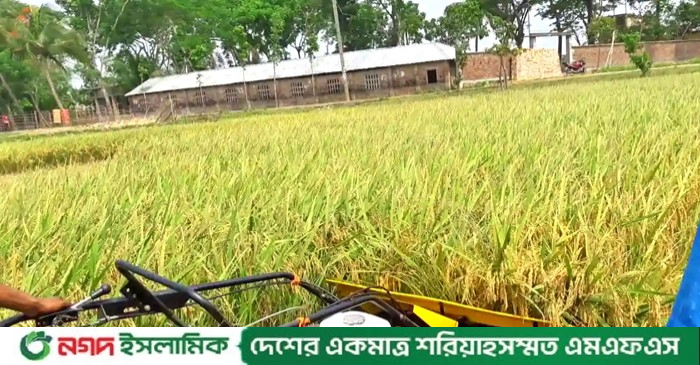
There is no question that the government's project to introduce integrated farming, using modern agricultural tools, is a farsighted initiative. In order to ensure higher yields, mechanisation of farming and cultivating larger plots of land are essential. The traditional farming of fragmented plots is not economically viable because it is not cost-effective to use mechanised farming on separate plots. Thus, some sort of consolidation of land is necessary to make this TK 3,020-crore project work. That is, however, proving difficult to implement. The project has reportedly encountered major bottlenecks in the form of farmers' reluctance to adopt the synchronised farming method.

As a result, a good policy initiative is finding no headway even after two years. One can imagine that the basic groundwork for getting all the farmers on board with this initiative, which was undertaken in 2021, has not been properly done.​

The main idea behind the project is to boost crop production as well as reduce the cost of farming by using transplanters, harvesters and other equipment on 50 to 60 acres of land. But farmers are not eager to do away with the aisles separating their plots, which is a prerequisite for the project to work. While the Department of Agricultural Extension (DAE) has demonstrated how this synchronised farming can be done with good results, by cultivating the hybrid SL-8 variety of Boro on 110 blocks in 61 districts, somehow farmers are still not fully convinced.

The Daily Star's report on this cites farmers in Tangail who alleged that they were ready to form groups among themselves and adopt the mechanised farming method, but they had not received the necessary equipment. The plan is to sell 51,300 machines among farmers at 50-70 percent discounts with subsidies, but as of December 2022, only 16,236 were distributed. This is a major gap and must be addressed immediately.


Having sufficient dialogue with the farmers to motivate them to remove the separating aisles in their plots and adopt this new method is vital. Farmers should be made to understand how efficient and cost-effective mechanised farming can be. This will ultimately lead to greater profits for them. Apart from a vigorous awareness campaign involving all stakeholders, the government must ensure that the farmers receive the various mechanised tools on time and with adequate training on how to use them. To gain their trust in the project, it must ensure that farmers' land rights are in no way jeopardised.
We urge the authorities to reinvigorate the project's implementation with full force. We need reforms like this in our agriculture to ensure our future food security and give our farmers the returns they so deserve for feeding the nation with their arduous efforts. Successful implementation of this project is therefore crucial.
 

FBCCI focuses on supplying high-yielding seeds at an affordable cost to farmers​

UNB

Published :​
Mar 20, 2024 21:07
Updated :​
Mar 20, 2024 21:07

1710975202199.png


The Federation of Bangladesh Chamber of Commerce and Industry (FBCCI) said on Wednesday that there is an urgent need to ensure quality seeds and modern storage facilities to increase agricultural production.

FBCCI president Mahbubul Alam said this while speaking at a discussion meeting of the standing committee on agriculture, agro-processing and agro-based industries at FBCCIโ€™s Motijheel office on Wednesday.

He said that to achieve the desired productivity in agriculture, businessmen of this sector have given special importance to the availability of good quality high-yielding seeds at the farmer level, strengthening the food innovation process and climate-tolerant varieties and research.

Besides, businessmen emphasised agricultural mechanisation, establishment of specialised cold storage facilities, an improved supply system and processing of agricultural products to reduce production costs.

โ€œWe need to focus on research to improve seed quality. Also, more attention should be paid to the use of technology. As technology improves in agriculture, productivity will increase,โ€ said the FBCCI president.

He said that farmers should be assured of getting a fair price of produce while policies should be implemented to protect their interests.

Ahsan Khan Chowdhury, chairman of the committee and chairman of Pran RFL Group, highlighted the importance of ensuring maximum utilisation of agricultural land and increasing productivity keeping in mind of future food security and growing demand.

Apart from traditional crops, he suggested increasing the production of horticulture, fisheries, livestock, and poultry including pulses and oilseeds.​
 

โ€˜Ensuring technology to boost agri productsโ€™​

21 Mar 2024, 12:00 am0
Staff Reporter :

In a bid to achieve an agricultural productivity boost, businessmen and analysts have stressed the availability of improved varieties of seeds at the farmer level.

They also said that strengthening the food innovation process for high-yielding and climate-tolerant varieties, and conducting research have been given special importance in the agricultural sector.

Besides, they also emphasised agricultural mechanisation, the establishment of specialised cold storage, an improved supply system, and the processing of agricultural products to reduce production costs.

The panel discussed these issues in a meeting of the standing committee on agriculture, agro-processing, and agro-based industries at FBCCIโ€™s Motijheel office on Wednesday.

Addressing the chief guest at the meeting, FBCCI President Mahbubul Alam said that the most important thing in the development of agriculture is quality and advanced varieties of seeds.

โ€ We need to focus on research to improve seed quality. Also, more attention should be paid to the use of technology.

As technology improves in agriculture, productivity will increase.โ€ said Mahbubul.

He placed special importance onโ€™building a cool-chain networkโ€™ across the country to prevent wastage of agricultural products at various stages, from production to marketing.

Calling for a change in the mentality of the farmers, the FBCCI president said that the farmers should get a fair price for their produce.

Policies should be implemented to protect their interests.

FBCCI senior vice president Md. Amin Helaly urged everyone to adopt short-, medium-, and long-term plans centred on agriculture to ensure sustainable development.

Ahsan Khan Chowdhury, chairman of the committee and chairman of PRAN-RFL Group, highlighted the importance of ensuring maximum utilisation of agricultural land and increasing productivity, keeping in mind future food security and increasing demand.

He further suggested focusing on increasing the production of crops like horticulture, fisheries, livestock, and poultry, along with pulses and oilseeds, in addition to traditional crops.

FBCCI panel advisor and prominent media personality Shykh Seraj said, โ€œIt is necessary to create a crop calendar in the country to increase agricultural productivity and ensure farmers get fair prices.โ€

He suggested the formation of farmersโ€™ associations to identify and solve farmersโ€™ problems.

Shykh Seraj called for public-private joint initiatives to implement compliance and GAP (good agricultural practices) in the value addition, processing, and export of agricultural products.

The director-in-charge of the committee and director of FBCCI, Mohammad Ishaqul Hossain Sweet, called for specific suggestions and recommendations in written form to the committee members to find solutions to the challenges and solutions of the agriculture sector.​
 

BD targets ambitious 5.81m tonne maize output after record yield​

YASIR WARDAD
Published :​
Mar 25, 2024 00:49
Updated :​
Mar 25, 2024 00:49


1711320257686.png


Rocketing demand for maize from the feed and food-processing industries is driving the continued expansion of the cereal crop's farming across the country, with production reaching an all-time high in the last financial year.

Maize production reached a record 4.55 million tonnes in the last FY, cultivated on over 0.5 million hectares of land across both winter and summer seasons, according to the Bangladesh Bureau of Statistics (BBS).

However, this local production is proving insufficient, with traders also importing large volumes of maize annually to meet demand.

The Department of Agricultural Extension (DAE) is ambitious for the current season, setting a target to harvest a record-breaking 5.81 million tonnes of maize from 0.543 million hectares.

"For the ongoing Rabi [winter] season, our target was to cultivate maize on 0.524 million hectares, but farmers have exceeded expectations by planting on 0.543 million hectares," said Dr Tajul Islam Patwary, Director of the DAE Field Service Wing.

He said the climate is so well-suited to maize that they expect production to even surpass 5.8 million tonnes. Harvesting has already begun (around 4 per cent complete) and will continue until June.

Dr Golam Faruq, director general of the Bangladesh Wheat and Maize Research Institute, pointed to the high prices for maize amid surging demand from the feed industry, currently exceeding Tk 34 per kg.

"Maize production offers farmers a minimum profit margin of 60 per cent, which has incentivised many to switch from crops like potato, vegetables and even rice to maize cultivation in the northern, northwestern, southwestern and central regions of the country over the past five years," said Dr Faruq.

The Feed Industries Association of Bangladesh President Shamsul Arefin Khaled elaborated on maize use, saying that 50-60 per cent of the local agri output is used in poultry feed, with another 12 per cent going to animal feed.

"Beyond the feed industry, the confectionery, hotel and restaurant sectors are also significant consumers of maize," he added.

Maize produced in Bangladesh is favoured by local industries for its superior quality, according to Mr Khaled, encouraging efforts to source as much maize as possible from domestic markets.

Maize silage -- a fermented livestock feed replacing traditional grass -- has grown in popularity.

Mr Khaled said silage can reduce grain feed requirements by up to 30 per cent. Besides, 10-15 per cent of maize is allocated for the fish feed industry.

He said while domestic maize production has increased fivefold in the past fifteen years, demand has grown even faster.

To meet the rising demand of 6.0-6.5 million tonnes, private companies also require imported maize. According to the Plant Quarantine Wing, private importers brought in 2.0 to 2.4 million tonnes of maize over the last five years.

Farm economist Professor Golam Hafiz Kennedy traced the origins of maize cultivation in Bangladesh to the 1990s, following the expansion of the poultry industry.

He highlighted how the production of maize, jute, meat and milk has enormously contributed to improving living standards for local farmers.

Maize cultivation, in particular, has emerged as a pivotal factor in alleviating poverty among farmers in the northern and southwestern regions, said Professor Kennedy.

He provided an example: farmers in Nilphamari can earn Tk 40,000 to Tk 42,000 from selling maize grown on 33 decimals of land, with a maximum investment of Tk 16,000.

Such profits are difficult with other crops.

However, Professor Kennedy cautioned that a drop in demand from the feed industry can sometimes bring hardship to farmers.

Sadid Jamil, managing director of Metal, an agro-machinery company, said the availability of modern equipment for land preparation, harvesting and shelling has further encouraged farmers to cultivate maize.

Farmers now harvest maize using combine harvesters and then extract kernels from the cobs using modern maize shellers, said the Metal MD.

He added that maize shellers have reduced threshing costs by 80 per cent in most regions.​
 

Mango buds bloom in abundance

1711836811767.png


Mango buds on trees are in abundance in Thakurgaon following a favourable weather, showing a bright prospect for a good yield of the juicy summer fruit.

Visiting mango orchards in different areas of the district, this correspondent observed yellowish mango buds are adorning the branches, while the fragrance fills up the air in and around the orchards.

Mango is being cultivated in orchards on 7,950 acres of land in the district this year, including 1,465.9 acres in Sadar upazila, 2,981.8 acres in Pirganj, 1,078.94 acres in Baliadangi, 1,767 acres in Ranishankoil and 662.39 acres in Haripur upazila, according to the Department of Agricultural Extension (DAE).

Buds started appearing in the trees in the middle of winter. Usually, budding begins in mid-January and continues till Mid-March.

Last year, about 42,680 tonnes of mangoes of over 20 varieties were produced in the district, DAE sources said.

The most prominent mango varieties cultivated in Thakurgaon are Surjapuri, Fazli, Amrapali, Misribhog, Haribhanga, Bandigori and Ashwina.

Abdur Rahim, 55, of Bara Palashbari village under Baliadangi upazila, has a 33-acre mango orchard.

"On an average, Tk 30,000 is needed to cultivate mango for per acre of land to get a yield of around 200-250 maunds," he said, adding that last year he earned a profit of Tk 1.7 lakh per acre.

"The trees are bearing more buds than last year," said Rahim.

Mango traders from different parts of the country including Dhaka are already signing up agreements with mango growers in the district and making handsome advance payments, he informed.

Sirajul Islam, deputy director of DAE in Thakuraon said, "With the onset of spring, the temperature is rising favourably in the region, which is necessary for the buds to transform to fruits."​
 

Govt to introduce solar irrigation in agriculture sector: Nasrul Hamid
Published :​
Mar 30, 2024 17:56
Updated :​
Mar 30, 2024 17:56


1711838075874.png


With sincere efforts, the government will introduce solar irrigation by reducing the number of diesel irrigation pumps in the agriculture sector.

"There are about 1.2 million (12 lakh) diesel irrigation pumps in the agriculture sector across the country that will be transformed into solar irrigation," State Minister for Power and Energy and Mineral Resources Nasrul Hamid told BSS on Saturday.

"To combat the effects of climate change, the government's target is to produce 4,000 megawatts (MW) of electricity from renewable energy by 2030," he added.

The state minister said the government has a roadmap to increase power from renewable energy sources up to 12,000 MW in the future, reports BSS.

"A plan has been taken to generate 40 per cent power from clean energy by 2041 and import about 9,000 MW under regional and sub-regional cooperation from neighbouring countries," he said.

But experts said that lack of land and investment are the big challenges for expanding renewable energy and electricity generation in the country.

They mentioned that developed countries have been pressuring developing countries to reduce fossil fuel and increase renewable energy in order to deal with the risks of climate change.

Bangladesh is now enjoying 100 per cent electrification due to the visionary and prudent leadership of Prime Minister Sheikh Hasina. Electricity has reached all houses, from inaccessible hills to isolated char areas, successfully, the experts said.

The state minister said in such a situation, the government has required long-term plan to reduce coal fired power plants and increase renewable energy in the country, adding, "Under the energy transition, solar power is being prioritized in agriculture instead of diesel irrigation pumps."

According to an analysis of the government plan in renewable energy sector, the production target from 51 projects in the short and medium term is 3748 MW. Out of the target, 647 MW will be in the public sector and 3101 MW from solar, wind and waste based power in the private sector solar.

The government's long-term plan emphasises importing renewable energy from neighbouring countries. The prospective generation target is 8299 MW from 74 ongoing projects.

Major portion of the power (6493 MW) will come from the private sector. However, experts mentioned that investment, modernisation of grid lines as a challenge to implement the plan.

Apart from this, construction works are going on for 100 MW Solar Power Plant at Madarganj in Jamalpur, 68 MW Solar Park in Sirajganj, 50 MW Solar Power Plant Construction Project in Sonagazi in Feni, 30 MW (AC) Solar Park at Tetulia, by Beximco Power Company Ltd and Jiangsu Zhongtian Technology Co Ltd, 32 MW (AC) Solar Park at Dharampasha, Sunamganj by Haor Bangla-Korea Green Energy Ltd, 5 MW (AC) Solar Park at Patgram, Lalmonirhat by PV Power Patgram Ltd, 5 MW (AC) Solar Park at Gowainghat, Sylhet by Sun Solar Power Plant Ltd and 200 MW (AC) Solar Park at Sundarganj, Gaibandha by Beximco Power Co Ltd.​
 

Bangladesh allocates Tk 385b for agriculture, aiming for 10pc annual growth by FY26
Published :
Apr 15, 2024 11:54
Updated :
Apr 15, 2024 22:16

1713220689972.png

The government has earmarked Tk 385 billion for agricultural development over the next three years, targeting an average annual growth of 10 per cent in the sector by the fiscal year 2025-26 (FY26).

This investment underscores agriculture's pivotal role in achieving food security and driving equitable economic growth, according to the 'Medium Term Macroeconomic Policy Statement (2023-24 to 2025-26)'.

Despite a diminishing share in GDP, agriculture remains critical for the livelihood of the majority, particularly in rural areas. To boost food production and resilience against adversities, the government's strategy includes developing high-yield and adversity-tolerant crop varieties, expanding mechanisation and irrigation, and improving access to affordable inputs like seeds and fertilisers.

According to a UNB report, the policy document highlights several initiatives aimed at modernising agriculture through technology. These include increasing the use of surface water for irrigation over groundwater to conserve resources, incorporating renewable energy solutions, and employing remote sensing for crop monitoring.

The government also continues to support the sector with subsidies, financial incentives, and technological innovations to foster a sustainable and self-reliant agricultural framework.

Significant contributions also come from the fisheries and livestock sub-sectors, which not only bolster GDP 2.53% and 1.91%, respectively, but also provide essential protein sources and livelihoods for over 12% of the population. Achievements in these areas include self-sufficiency in fish, meat, and egg production, with milk expected to follow.

Moreover, these sectors are vital for foreign exchange earnings through exports.

Looking ahead, the Ministry of Livestock and Fisheries is set to launch development projects to enhance production capacities, adopt advanced management technologies, and improve conservation efforts, particularly for young hilsa fish ('jatka').

Water resource management is another focal area, given its importance to sustainable agriculture. Initiatives are underway to improve surface water availability through the excavation of water bodies and the enhancement of coastal afforestation, aiming to secure equitable water shares from transboundary rivers.

Amid threats of substantial economic losses due to climate change projected at a 6.8% reduction in GDP by 2030, the government has prioritised comprehensive strategies to mitigate these impacts. The Mujib Climate Prosperity Plan is designed to equip vulnerable sectors and communities with the tools to enhance resilience and stability against climate-related disruptions.

Through these multifaceted efforts, Bangladesh is taking decisive steps to not only safeguard but also advance its agricultural heritage in the face of evolving global challenges.​
 

'Agricultural sector shines while industrial, service sectors struggle'
16 Apr 2024, 12:00 am

Staff reporter :

The latest statistics released by the Bangladesh Bureau of Statistics (BBS) reveal a significant downturn in the growth of the industrial and service sectors during the last quarter of October to December.

Conversely, the agricultural sector has witnessed a remarkable increase in its contribution to the Gross Domestic Product (GDP). This data sheds light on the economic dynamics of the country, indicating both challenges and opportunities.

BBS's calculation of GDP growth, considering three primary sectors regionally, indicates a noticeable decline in the growth rates of the industrial and service sectors, resulting in an overall reduction in growth.

The regional GDP growth rate for the second quarter of the current fiscal year plummeted to 3.78%, a substantial decrease compared to the previous fiscal year's second-quarter growth rate of over 7% and the 9.30% growth rate in the fiscal year 2021โ€“22.

This setback in growth is not only evident in comparison to the last two fiscal years but also in contrast to the first quarter of the current fiscal year, where GDP growth was above 6%. However, in the second quarter, it dwindled to nearly 4%.

The industrial sector experienced a significant decline in growth, with GDP growth plummeting to 3.24% in the Octoberโ€“December quarter of the current fiscal year.

This is in stark contrast to the 10% growth witnessed during the same period in the previous fiscal year and the approximately 14% growth recorded in the fiscal year 2021โ€“22, making it the lowest growth quarter in the industrial sector in the last three fiscal years.

Conversely, the agricultural sector has showcased robust growth, recording a growth rate of 4.65% in the second quarter of the current fiscal year.

This marks a notable increase compared to the growth rates of 4.22% and 2.20% in the same period of the previous two fiscal years, respectively, positioning it as the sector with the highest growth in the last three fiscal years.

Despite the agricultural sector's commendable performance, the service sector, akin to the industrial sector, has witnessed a significant decline in growth during the Octoberโ€“December quarter of the current fiscal year.

With a growth rate of 3.06% in this period, the service sector's growth is less than half of what it was during the same period in the previous fiscal year, which was at 6.62%.

Khandaker Golam Moazzem, the research director at the Center for Policy Dialogue (CPD), attributes the decline in industrial growth to crises in the glass and dollar markets, alongside a decrease in demand for high-value goods.

Additionally, high inflation has contributed to the downturn in service sector growth, as increased expenses across various service sectors have deterred consumer spending.

Despite the economic challenges, the agricultural sector has flourished, experiencing increased internal production due to reduced imports and rising domestic prices.

The government's initiatives to support agricultural production have further bolstered this growth.

Moazzem emphasises that, amidst the economic crisis, the government's effective supply of essential resources to the agricultural sector has ensured its resilience.

While the industrial and service sectors grapple with challenges, the agricultural sector's growth bodes well for the economy, offering stability and security in terms of food production.​
 

Farmers to get fair price for rice: Agriculture Minister
UNB
Published :
Apr 19, 2024 20:58
Updated :
Apr 19, 2024 20:58

1713567352454.png


The price of rice will be fixed in such a way that farmers get a fair price, Agriculture Minister Dr. Mohammed Abdus Shahid said on Friday.

Besides, the government is implementing various initiatives to de-risk Haor crops, he said.

The Minister was speaking at a Boro paddy cutting festival organised by the DC office and Agricultural Extension Department in Bahadurpur village of Sunamganj's Sadar Upazila on Friday.

Earlier, the minister distributed combine harvester machines among the farmers.

Bangabandhu's daughter Prime Minister Sheikh Hasina is providing combine harvesters and reapers to farmers with a 70 per cent subsidy so that they can bring their crops within a short time.

Addressing the farmers, the minister said that as there is a risk of crops in Haor areas getting submerged, early and short-lived varieties of paddy should be cultivated.

"The production of new varieties of rice invented by scientists in Bangladesh is very high, so cultivate them," added the minister.

Regarding the price of paddy, the minister said that the meeting will be held after two days to fix the price of paddy. It will ensure that farmers get a fair price. The price of rice will be determined in such a way that the farmers are encouraged to grow paddy, he said.

He said that strict attention should be paid to ensure that only real farmers can sell paddy at a fair price. "Upazila Chairmen should keep a close eye so that no syndicate is formed in the sale of paddy."

Former minister MA Mannan, lawmakers Mohammad Sadiq and Ranjit Chandra Sarkar, Secretary of Ministry of Water Resources Nazmul Ahsan, Additional Secretary of Ministry of Agriculture Malay Chowdhury, Chairman of BADC Abdullah Sajjad, Director General of Directorate of Agriculture Badal Chandra Biswas, Director General of Rice Research Institute Shahjahan Kabir, Director General of Atomic Agriculture Research Institute Mirza Mofazzal Islam, Deputy Commissioner Rashed Iqbal Chowdhury and others spoke.​
 

Members Online

No members online now.

Latest Posts

Latest Posts