โ˜• Support Us โ˜•
[๐Ÿ‡ง๐Ÿ‡ฉ] - Bangladesh History & Heritage | Page 4 | PKDefense

[๐Ÿ‡ง๐Ÿ‡ฉ] Bangladesh History & Heritage

Reply (Scroll)
Press space to scroll through posts
G Bangladesh Defense
[๐Ÿ‡ง๐Ÿ‡ฉ] Bangladesh History & Heritage
35
6K
More threads by Saif


Lakutia Zamindar House in Barishal being restored to its original form

M Jashim Uddin Barishal
Updated: 08 Jun 2025, 18: 51

1749426688399.png

Restoration work has begun to return the historic Lakutia Zamindar House in Babuganj upazila of Barishal to its former glory. Prothom Alo

The Department of Archaeology has begun work to restore the historic Lakutia Zamindar House in Barishal to its original form. By preserving this near ruined, palace-like structure, a vital chapter of history, heritage, and architectural style is being brought back to life.

Officials from the Barishal Divisional Museum said that the restoration work on the zamindar estate, located in Lakutia of Babuganj upazila, began on 4 May. On-site observations revealed that circular brick pillars are being constructed around the two-story building. The old roof has been demolished and will be replaced with a new one using tiles brought from Satkhira.

Arifur Rahman, assistant custodian of the Barishal Divisional Museum, said that in the first phase, work is focused on the foundation, brick masonry, and roof construction, with a budget of Tk 6 million. However, the antique doors, windows, flooring, and ventilation structures are not included in this phase of the project and may be added in later stages.

Lovely Yasmin, regional director of the Department of Archaeology for the Khulna and Barishal regions, said, โ€œWe are trying to restore the building to its original form based on old photographs and historical descriptions.โ€

According to museum authorities, the Lakutia Zamindar House stands 8.20 meters tall, 25.40 meters long, and 9.20 meters wide. The two-story building contains a total of nine rooms. However, environmentalists believe that the aesthetic appeal of the structure is being compromised by the presence of a warehouse and tractor garage belonging to the Bangladesh Agricultural Development Corporation (BADC) on one side of the property. Seeds are also dried in the paved courtyard behind the building, which they say clashes with the historical ambiance of the archaeological site.

Lincoln Bayen, Barishal divisional coordinator of the Bangladesh Environmental Lawyers Association (BELA), said, โ€œThe initiative to preserve this house is highly commendable. But the presence of BADCโ€™s warehouse and structures right next to the zamindar house is seriously undermining its beauty and archaeological significance. These should be relocated elsewhere; otherwise, the site's historical value may be diminished.โ€
Subhash Chandra Das, legal officer for vested properties at the district administration, said the government has already acquired ownership of nearly eight acres of land surrounding the estate, along with a large pond. If properly preserved by the Department of Archaeology, the site could become a major tourist attraction.

Historical background
Historical records indicate that Zamindar Rupchandra Roy was the founder of the Lakutia Zamindar family. During the time of his grandson, Rajchandra Roy, the estate expanded in both influence and territory. He built the main zamindar house on approximately 49.50 acres of land. It was under Rupchandra Royโ€”known for his benevolence toward tenantsโ€”that a road was constructed from Lakutia to Barishal.

Rupchandra's two sons, Rakhalchandra Roy and Parylal Roy, were followers of the Brahmo religion. Parylal Roy was a prominent barrister and social reformer. His two sonsโ€”Indralal Roy, a famous aviator, and Pareshlal Roy, a renowned boxerโ€”are remembered in history for their notable achievements.

1749426738623.png


An old view of the historic Lakutia Zamindar House in Babuganj upazila of Barishal.Photo: From the family album of Alpana Roy

This zamindar family had a familial connection with the great poet Rabindranath Tagore. The poet's elder brother, the renowned painter Dwijendranath Tagore, had two sonsโ€”Arunendranath and Dipendranathโ€”who married Sushila and Charubala, granddaughters of Rajchandra Roy.

It was through the philanthropic efforts of this zamindar family that institutions like Rajchandra College and Pushparani Chowdhury Institution (PRC) were established in Barishal. While the college no longer exists, the school remains active. In later years, zamindar Deben Lal Roy Chowdhury moved to India, where he passed away in Kolkata. His daughter, Mandira Roy Chowdhury, married into the Mukherjee family of Kashipur in Barishal.

On 19 October 2018, Alpana Royโ€”daughter of Pankaj Roy, a descendant of the zamindar family and a solicitor at Australiaโ€™s High Courtโ€”expressed concern over the condition of the zamindar house in a letter to Mohammad Sufiur Rahman, Bangladeshโ€™s High Commissioner to Australia. In her letter, she strongly urged that the building be preserved as a historical landmark. Based on this appeal, the Department of Archaeology instructed the Barishal Museum to prepare a proposal, which led to the launch of the restoration project.

Speaking to Prothom Alo, Alpana Roy, now living in Australia, said: โ€œI heard about the history of the zamindar house from my father, Pankaj Roy Chowdhury. In addition to the familial link with Rabindranath Tagore, the well-known contemporary author Arundhati Roy is also connected to this family by lineage. Considering the historical importance of the house, I appealed to the government a few years ago for its preservation. Iโ€™m truly delighted to see that it is finally being realised.โ€

Surrounding the zamindar house are three brick-lined ponds, locally known as โ€œBabur Pukurโ€. For many years, visitors came to see the building, only to leave disappointed due to its lack of preservation. With restoration now underway, there is renewed hope. People now expect that the building will be fully preserved and adequately protected in the futureโ€”so that history comes alive and continues to be passed on from generation to generation.

*This report, originally published in Prothom Alo Bangla online, has been prepared in English by Rabiul Islam.​
 

Preserve Old Dhakaโ€™s historic structures
Urban Study Group urges govt

1750208434206.png


Urban Study Group (USG), a voluntary organisation campaigning for conserving the heritage of Bangladesh, has expressed concern over the destruction of historic structures in Old Dhaka and urged the government to take necessary steps to preserve those.

At present, the organisation's work is mostly focused in Old Dhaka.

In a press statement issued yesterday, Taimul Islam, chief executive of UGC, said all listed heritage buildings in Old Dhaka must be properly protected and conserved.

"We are deeply alarmed and distressed by the recent wave of destruction targeting multiple historic and architecturally significant buildings in Old Dhaka. These acts of demolition have occurred in both privately owned and government-managed properties, often in blatant defiance of High Court injunctions or while appeals remain pending before the Supreme Court," he said.

Just before Eid-ul-Azha, the century-old Shankhanidhi House (Radhakrishna Temple) on Tipu Sultan Road partially collapsed, including its iconic hanging balcony, due to the illegal construction of a bathroom, he also said.

"Despite being under the custody of at least four major government agencies tasked with its protection, this historic building has suffered from decades of encroachment, illegal modifications, additions, and destruction โ€” stemming from administrative mismanagement, negligence, failure to perform duty, and, in some cases, deliberate inaction by these very institutions," Taimur added.

Meanwhile, another highly significant heritage structure -- Mangalalaya in Farashganj -- came under attack again. This building is among the structures listed by the USG and is protected by court injunctions, said the statement.

Although past attempts to demolish the building over the last two years were stopped with police intervention, the attacks have resumed. While police involvement has again temporarily halted the destruction, the building's intricate ornamentation has already suffered extensive damage, the statement also read.

USG demanded preserving the entire Farashganj area as a heritage zone.

Taimur also said shortly after Eid, it was revealed that the century-old Narinda Sewerage Pumping Station -- an integral part of Dhaka's first modern sewage system -- had been completely demolished two weeks earlier.

This protected structure, also listed by the USG, was razed by Dhaka Wasa in direct violation of a High Court ruling, he said, adding, "This not only raises grave concern but constitutes a clear instance of illegal action by a state agency."

Moreover, on June 10, it came to light that the Nasiruddin Memorial Building was being illegally demolished to pave the way for constructing a multi-storey structure, despite having an appeal pending with the Supreme Court.

The building used to be the residence of journalist Mohammad Nasiruddin, a pioneer of Muslim awakening in the early 20th century, and his illustrious daughter, women's rights advocate Nurjahan Begum.

A general diary was filed the following day with Gandaria Police Station, which temporarily halted the destruction, Taimur said.

Even though seven years have passed since the landmark High Court ruling in 2018 on heritage conservation, there has been no meaningful implementation owing to bureaucratic tangle, mismanagement, negligence, lack of political will, and particularly the controversial role of the Department of Archaeology, he also said.

As a result, these heritage structures have not yet been fully assessed and officially listed, leaving them vulnerable. Alarmingly, the DoA has even declared the residence of Nurjahan Begum as "not important enough for preservation", Taimur added.

USG demanded all the buildings listed by it be protected under the HC's ruling until a final comprehensive list of Dhaka's heritage structures is published.​
 

Conserving heritage, historical sites

Tanim Asjad
Published :
Jul 04, 2025 22:33
Updated :
Jul 04, 2025 22:33

1751672701309.png


In Bangladesh, numerous sites hold significant religious, cultural, and historical importance and have endured for many centuries. Nevertheless, many historical structures that are symbols of the nation's rich heritage no longer exist, and many of the existing sites or structures are also not well-preserved. The failure to acknowledge and celebrate their own culture and heritage has disconnected people, particularly the younger generations, from the country. Moreover, the authorities are facing multiple challenges in restoring and preserving the antiquities due to a lack of adequate budget, the absence of necessary support from relevant quarters, and a lack of awareness among the people.

The Department of Archaeology, a key entity under the Ministry of Culture, is responsible for preserving Bangladesh's antiquities and archaeological sites. Currently, the department oversees 536 protected and listed antiquities and archaeological sites, including two UNESCO World Heritage sites: the Ruins of the Buddhist Vihara at Paharpur and the Historic Mosque City of Bagerhat. These sites, recognised as cultural heritage, were inscribed in the UNESCO list in 1985. The Sundarbans, the third site of Bangladesh on the UNESCO list, is recognised as a natural heritage and inscribed in 1997. The Sundarbans is managed by the Bangladesh Forest Department (BFD) under the Ministry of Environment, Forest and Climate Change.

Despite being a part of the World Heritage, the preservation of the Shat Gambuj Mosque (also known as the Sixty Dome Mosque or Shait Gambuj Masjid) in Bagerhat is now in danger due to both natural and man-made factors. Last week, the Department of Archaeology organised a public meeting in Bagherhat in an effort to raise awareness among the people about the importance of preserving the historic structure, as well as the entire heritage site, which includes other ancient mosques and structures. The UNESCO website describes the heritage as: "Situated in the suburbs of Bagerhat, at the meeting-point of the Ganges and Brahmaputra rivers, this ancient city, formerly known as Khalifatabad, was founded by the Turkish general Ulugh Khan Jahan in the 15th century. The city's infrastructure reveals considerable technical skill and an exceptional number of mosques and early Islamic monuments, many built of brick, can be seen there."

Shait Gambuj Mosque is the most iconic heritage structure of Bagerhat and draws thousands of tourists throughout the year. The construction of the mosque was started approximately in 1442, and it was completed in 1459. Ulugh Khan, popularly known as Khan Jahan Ali, was a Muslim saint and preacher also, and it is widely believed that the masque was constructed under his supervision. The historical mosque has survived for around six centuries, facing numerous natural disasters.

Besides the natural hits like salinity and fungal attacks on the walls and floors of the mosque, the frequent movements of heavy vehicles on the adjoined Barishal-Bagerhat-Khulna regional highway become a threat to the stability of the mosque. Vibration generated from the movement of buses and trucks has already started to erode the durability of the structure. It is noteworthy that when the regional highway was developed, the authorities did not consider the potential risk to the heritage site. The Roads and Highways Department, under the Ministry of Transport and Communication, did not feel any need to maintain contact with the Department of Archaeology.

Again, various structures, such as hotels, restaurants, and footbridges, are constructed around the heritage site, violating the archaeological and heritage preservation acts. In the meeting, officials from the archaeology department alleged that a tendency has also been evident to overlook the core zone and buffer zone of the world heritage site. The influx of tourists and the irresponsible behaviour of some of them also pose a threat to the heritage structure. In some cases, local vendors also create a nuisance near the site. Again, the problems are not unique to the Shait Gambuj Mosque. Most of the archaeological sites and structures across the country face common challenges. In some cases, land grabbers, drug peddlers and local criminals try to make their hideout in these sites. The indifferent attitude of law enforcement agencies exacerbates the situation. So, a collective effort is a must to preserve and protect all these historical sites and structures. It is a collective responsibility of the citizens to acknowledge and celebrate home-grown culture and heritage and ensure their preservation for the future generation.​
 

1765836702691.webp
Chittagong, before Chittagong: An early history

By Rila Mukherjee
Mon Dec 15, 2025 12:00 AM
Last update on: Mon Dec 15, 2025 04:30 PM

In the remote east of a region once called Harikela lies Chittagong, an upper Bay of Bengal port city at the juncture of the medieval Bengal, Arakan and Tripura kingdoms. Once central to Portuguese and French expansion, it later became marginal to British rule. Independence in 1947 and liberation in 1971 then imposed state and district boundaries bearing little relation to Chittagong's once expansive surroundings. The US-led postโ€“Second World War Area Studies programme conducted the final surgery by bifurcating the region between South and mainland Southeast Asia.
In historical writings, Chittagong is both a place name and a sub-region within the larger geographic-cultural unit of Harikela. The place name 'Chittagong' refers to both the port and the city. But since decisions about geographic framework or regionalisation are rarely as explicit as those involving chronological framework, or periodisation, the contours of the Chittagong sub-region remain unclear. It includes the area lying east of the Karnaphuli River. This area neighbours Arakan, with which Chittagong has had a long association.
1765837396497.webp

Image 2: The Cantino Planisphere, completed by an unknown Portuguese cartographer in 1502, is one of the most significant cartographic documents of the early modern world. It depicts European geographical knowledge following the great voyages of exploration to the Americas, Africa, and India at the turn of the sixteenth century.

I. Unstable land
Dating from the seventh century and conflated with Yavadvipa by travellers, Chittagong was an autonomous border town and port town on a dynamic but unregulated water frontier. Located at the apex of the Bay of Bengal and straddling the fault line between South and Southeast Asia, it was subject to forces of earth, wind, and water. Its site is distinctive, with a complex landโ€“riverโ€“sea ecosystem marked by unstable sea islands (char) at a short distance from the mainland, separated by shallow waters and mangroves. To its south, where Arakan and Bengal overlap, the Arakan Yoma barrier forces riverine or coastal voyaging along a coast interrupted by channels owing their waters to tidal actions. To its north-west, waterbodies (haor in the local dialect, from the Sanskrit sagar [sagaranupa], or sea) supplement the Meghnaโ€“Brahmaputra waterway as the 'Eastern Sea'. In this water frontier, many looked to the sea and to maritime trade, smuggling, raiding, or even piracy for survival.
My late mother, who came from the adjacent Noakhali district, spoke nostalgically of the floating markets and waterborne passageways she saw as a child. Instead of bullock carts, people travelled by boat, for this was a marine land.
The waterbodies underwent continuous evolution. As they expanded, lands were submerged; as they receded, new lands sprang up. Although what happened earlier is unknown, we have some records from the sixteenth century onwards. The Ottoman navigational treatise Muhit (1554) speaks of extensive level alterations and alludes to navigational dangers among islands that have since disappeared. Maheshkhali Island, separated from Chittagong by the Maheshkhali Channel, originated from a severe cyclone and tidal bore (1559). The merchant Cesare Federici (August 1569), the traveller Ralph Fitch (March 1588), and the adventurer Glanius (October 1661) all mentioned severe cyclones in the region.
Seismic disturbances also rocked this coast. An earthquake in 1678 affected Arakan; the one of April 2, 1762 saw the submergence of 60 square miles near Chittagong. A tsunami elevated Arakan's coast by some three to six metres, raising Foul Island by nine feet and Cheduba Island's north-west coast by 22 feet above sea level.


Seismic disturbances also rocked this coast. An earthquake in 1678 affected Arakan; the one of April 2, 1762 saw the submergence of 60 square miles near Chittagong. A tsunami elevated Arakan's coast by some three to six metres, raising Foul Island by nine feet and Cheduba Island's north-west coast by 22 feet above sea level.

II. Marginocentric space
Straddling Indic, Buddhist, and Islamic realmsโ€”neither wholly South Asian nor entirely Southeast Asian in natureโ€”the political borders of both city and sub-region were always weak compared with the strength of their economic and cultural relations. Yet because border social dynamics can affect the formation and territorialisation of states, marginocentric cities like Chittagong have sometimes exerted profound influence on continental histories.
'Marginocentrism' is a term coined by Marcel Cornis-Pope in 2006 to explain the evolution of cities in East-Central Europe. These cities, by driving historical change, can challenge mainstream paradigms. But unlike Fernand Braudel's primate cities, they lead a solitary existence. While Braudel's cities assume a role in the market economy by virtue of their relationship with the surrounding rural area, a patchwork of urbanโ€“rural interactions forms the basis of the marginocentric city's market-economy exchanges.
III. Early market economy
When the decline of the Later Chandra dynasty in Arakan in c. 957 presented an opportunity for Chittagong to declare autonomy from Arakan, it could connect rural industrial production with trading networks in the upper Bay's regional economies as an entrepรดt, becoming a coordination and communication centre for long-distance bulk trade supplying non-agricultural populations.
As a port, it simultaneously assumed importance in a growing commercial economy as a relay point within regional trading networks, including bulk shipping and the trade in staples such as rice, salt, and cottons, as well as the aloes and eunuch trades. David Ludden has noted that Chittagong port historically operated as a hinge between two commodity circuits: the Indian Ocean circuit and the upstream/downstream, river-borne Brahmaputraโ€“Himalayaโ€“Tibetโ€“Yunnan circuit. This second circuit also linked it to Persia via Magadha, through a region to its north-west called Pundravardhana. A third circuit carried cowries across the seas from the Maldives, through Bengal's rivers and across the tropical mountains of Yunnan and Burma, connecting Chittagong's agrarian frontier with India, China, the Arabian Sea, the Bay of Bengal, and larger oceanic networks.
A degree of control over provisioning is evident in Chittagong's progressively large trade portfolio, which reveals its expanding reach: gold, silver, rubies, cowries, iron, steel, tin, timber, pepper, spices, salt, sugarcane, cottons, muslin, linen, silk, indigo, rice, corn, a wide range of fresh and dried foods, preserves, butter and other dairy products, cattle, horses, elephants, rhinoceroses, turtles, leopards, tigers, red lacquer, wax, and manufactures such as boats, chinaware, crockery, cookware, and cane and rattan furniture (as good as those of China, according to the seventeenth-century traveller Franรงois Pyrard). Was this provisioning undertaken by outsiders or by a local mercantile class? Exports and re-exports suggest trade with the Maldives, Persia, Africa, and China, the last particularly in exotic animals and rare animal products. Chittagong's rice and slave exports were crucial to Dutch Batavia.
IV. Chittagong Port: Hazy history, few sources
Chittagong's early history is unclear. Despite its strategic location when compared to Samataแนญa, Harikela emerges late in the historical record. It was seen as an extension of King Sanjaya's Hinduised Java, since seas did not constitute natural frontiers as they do now, and the notion of borders was then fluid. Rachel Midura points out that events and perceptions generated a spatial 'othering' through the influence of factors other than geographic proximity; journeys by sea or through mountain passes could appear as a single route in a traveller's narrative, and instead of emphasising sovereign states, as cartography does, itineraries linked distant places through commercial and cultural pathways.
The names Jambudvipa and Yavadvipa were used interchangeably for Java and Chittagong. In c. 413, returning to Guangzhou from Bengal, the Chinese Buddhist cleric Fa Xian stopped at an unspecified port in Yavadvipa which practised a blend of Brahmanism and animism. He noted that 'heretic Brahmans flourish there, and the Buddha-dharma hardly deserves mentioning'. Was this perhaps Chittagong?
1765837515917.webp

Image 3: Detail from the Cantino Planisphere (1502) showing the eastern Indian Ocean world, with Catigรฃo (Chittagong) and Carigรฃo marked along the Bay of Bengal.
Records indicate that Samataแนญa had links with the Buddhist polity of Srivijaya and perhaps with China as well. Sources reference pilgrim circulation and the collection of Indic religious texts there; it was a rich region marked by a gold coinage and a flourishing commerce. Yet, as historian Suchandra Ghosh reminds us, while Chittagong supposedly adopted Buddhism late compared to Samataแนญa, when Xuanzang mentioned, c. 635, Samataแนญa's relations with Southeast Asian polities, these must have occurred through Harikela, as Samataแนญa had only the fluvial port of Devaparvata. Even so, early notices, including Xuanzang's, ignore ports in the region. It was only c. 675 that Yijing saw this easternmost region emerging as a political frontier (the early Harikela coins appeared c. 665). His contemporary Wu Hing disembarked at an unnamed port here; possibly this was Chittagong, which had appeared as both place and port by then.

V. Chittagong city: Late emergence
Early Chittagong's nature is therefore enigmatic. Slow to appear as a port, it was even slower to rise as an urban centre. Some third-century Kushana gold coins are found at Chandraketugarh in western Bengal, but none at all at Chittagong, which clearly did not play a major role at that time. Early Arakan yields a greater number of sources for studying late medieval Harikela, but it provides no numismatic evidence to suggest that Chittagong port was operational in the early sixth century, or that it was in the hands of Arakan's Buddhist Chandra kings.
Late sixth-century Gupta-style gold coins are found in Comilla, southern Tripura, and Noakhali district, but not at Chittagong. Subsequently, despite the influence of the port-town-based Vesali-Chandras (c. 788โ€“957) in the Chittagongโ€“Tripura area, the fact that Vesali-Chandra coin distribution is limited to the Danra-waddy river basin (the central Arakan littoral) suggests that Vesali's effective political control was not widespread.
Chittagong would later become central in shaping the course of the region's history, but in the absence of adequate records, how do we assess the relevance of local occurrencesโ€”such as state formation, Hinduโ€“Buddhist clashes, and conflicts between Muslim, Hindu, and Buddhist merchants for control over Chittagongโ€”for the unfolding of regional processes, including the growth of the Arakan and Bengal polities, or the mismatch of Muslim and Buddhist forces in the upper Bay? Or, possibly, was there an even wider conflict between Buddhists, Muslims, and Christians for control of sixteenth-century Indian Ocean trade? At this time, Arakan, with its Mrauk U centre and trade outlet at Chittagong, occupied a median position between the medieval agrarian states of the interior and the coastal trading polities. This is also the period when sources on Chittagong become more plentiful. There is thus an asymmetry in our perception of time and space in this borderland spanning South and Southeast Asia.
VI. A borderland without elites
Although network centrality made it a significant place, Chittagong's frontier location under multiple hegemonies produced a historiographic erasure. Its historical development was determined simultaneously by politics in Bengal and Arakan, and by the social, economic, and political interactions between them.
It has been said that a region's representation and public image are products of status and power, yet Chittagong's urban hierarchy or its elite-dominated order lacks definition. David Ludden noted that early Chittagong was not marked by an ethnically distinct population that could evolve into an elite class. This makes Chittagong's recorded history strangely timeless, as elites produce historical records and typically live in central territorial sites with networks of coercion and patronage.

(Continued in the next post...)
 

Attachments

  • 1765837561429.webp
    1765837561429.webp
    175.8 KB · Views: 0
Last edited:
(Continued from previous post...)

Chittagong's elite reach over resources was sporadic, suggesting limited integration into neighbouring power networks. If the state, regional elites, and the local population are knit into a coherent power structure with relatively low tension, the borderland is likely to be peaceful and flourishing. This was not always the case for Chittagong. Rudimentary elite classes emerged after the Chandra decline in 665, and again around 957, and yet again following Gaur's decline after 1538, but further progress was thwarted each time. Despite these setbacks, Chittagong's elites were sufficiently integrated into networks of state power to issue their own coinage to conduct trade during periods of their existence, and to work generally in alliance with political authorities to control the region.
1765837682354.webp

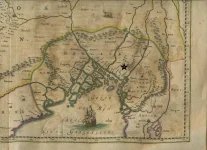
Image 1: Detail from a seventeenth-century European map of Bengal (c. 1640), attributed to Joan Blaeu, showing the Ganges delta and the Bay of Bengal. The star marks Chittagong, depicted as a key coastal node linking Bengalโ€™s riverine networks with the wider Indian Ocean world, reflecting European perceptions of the regionโ€™s strategic maritime importance.

VII. A visible heterogeneity
We cannot fully envisage Chittagong's social world, but its names in various languages and diverse dialects reveal its heterogeneity. In the local dialect it is Cat'ga or Catiga. The Anglicised 'Chittagong' derives from the eighteenth century. The Sanskrit Chattagrama (literally 'four villages') is similar to the Buddhist Chaityagram (chaitya meaning pagoda). It is also the ninth-century Arab Samandar, famous for the aloeswood coveted in Persia and China. Other names include the seventeenth-century Mughal 'Islamabad'; the sixteenth-century 'Porto Grando'; the fifteenth-century Bengalaโ€“Banghella; the fourteenth-century Sadkawanโ€“Sutirkawan of Ibn Battuta; and the Bengali Roshang (also used for Arakan's capital Mrauk U and Bengal's mint town Fathabad).

In Puranic and Tantric texts, it appears as Harikela and Cattala. In tenth-century Tibetan and Arab texts it is Jwalandhara and Karnabul (Karnaphuli). Other variants include Tsi-Tsi-Gong, Che-ti-chiang, Shetgang, Xatigam, Chatgaon, and Chartican. Of particular note are the Arakanese Caittegarmโ€”meaning 'chief' or 'superior fort'โ€”and Cit-taut-gaurm, meaning 'do not make war'.

Badr Pir is Chittagong's patron saint and guardian of rivers. His influence is visible in place names such as Badartila (Hathazari thana), Badarkhali (Chakoria thana), Badarkua (Cox's Bazar), and the ninthโ€“tenth-century Badr Maqam shrinesโ€”situated on boulders and crags at river mouths to mark a maritime circuitโ€”worshipped by Hindus, Muslims, Chinese sailors, and local fishermen at Akyab, Cheduba, Thandwe (Arakan), and Mergui (lower Burma).


Chittagong port historically operated as a hinge between two commodity circuits: the Indian Ocean circuit and the upstream/downstream, river-borne Brahmaputraโ€“Himalayaโ€“Tibetโ€“Yunnan circuit. This second circuit also linked it to Persia via Magadha, through a region to its north-west called Pundravardhana. A third circuit carried cowries across the seas from the Maldives, through Bengal's rivers and across the tropical mountains of Yunnan and Burma, connecting Chittagong's agrarian frontier with India, China, the Arabian Sea, the Bay of Bengal, and larger oceanic networks.
VIII. Question
How, then, did this marginal land transform into the Cantino Planisphere's major portal in 1502? The Portuguese diarist Tomรฉ Pires (1515) observed a westward commercial networking from Chittagong, with Persian, Rumi, Turk, and Arab merchants present there, as well as traders from Chaul, Dabhol, and Goa, while the Portuguese epic poet Camรตes (1572) emphasised eastern networks:
'The City CATHIGAN would not be wav'd,
The fairest of BENGALA: who can tell
The plenty of this Province? but its post
(Thou seest) is Eastern turning the South-Coast.'


Rila Mukherjee is a historian and the author of India in the Indian Ocean World: From the Earliest Times to 1800 (Springer Nature, 2022) and Europe in the World from 1350 to 1650 (Springer Nature, 2025).
 

Members Online

Latest Posts

Latest Posts