[🇧🇩] Banking System in Bangladesh

[🇧🇩] Banking System in Bangladesh
315
11K
More threads by Saif

G Bangladesh Defense

Banking sector shows resilience as NOP and liquidity bounce back: BB report

BSS
Published :
Apr 02, 2026 20:27
Updated :
Apr 02, 2026 20:27

1775175237824.webp


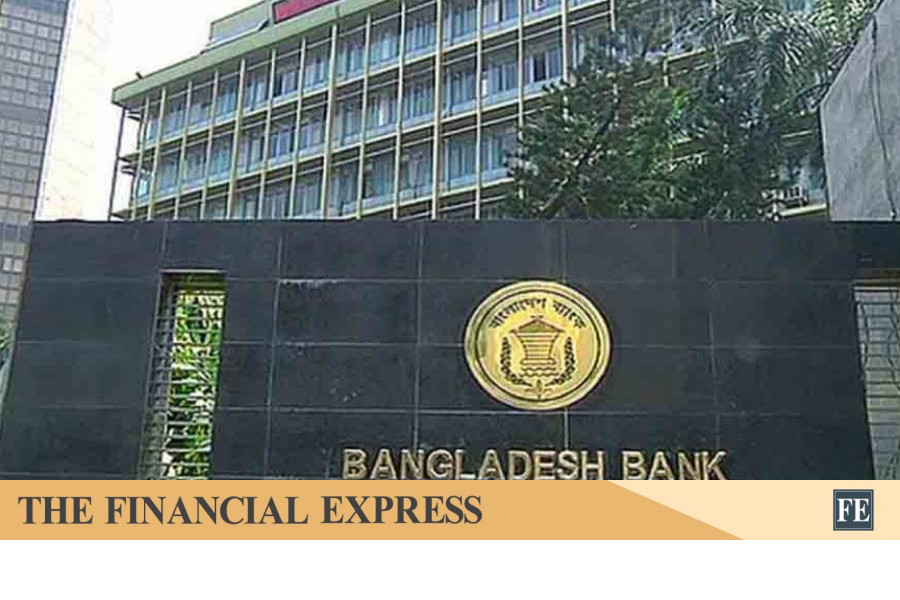
The Bangladesh Bank (BB) has reported a significant recovery in the Net Open Position (NOP) and a stabilization of market liquidity (Net FX Holding) within the country’s banking sector.

According to the central bank’s latest data, the banking sector has demonstrated a robust turnaround, with the NOP reaching $1,080.70 million and market liquidity stabilizing at $3.39 billion as of April 2, 2026.

This recovery indicates a strong continuity of foreign currency exposure management across the financial landscape.

The central bank’s report highlights a consistent and positive growth trajectory for the Net Open Position, reflecting a strengthened standing in foreign exchange management by commercial banks over the past three years.

The NOP was recorded at $107.03 million in June 2023. By June 2024, this figure grew substantially to $272.70 million. The sector reached its peak NOP of $1,116.70 million in June 2025.

A temporary dip followed in February 2026, with the position falling to $602.71 million. As of April 2, 2026, the NOP has successfully recovered to its current level of $1,080.70 million.

This trajectory underscores the sector’s ability to manage foreign currency exposure effectively, maintaining a healthy and stable balance in open positions despite periodic market fluctuations.

Market liquidity, measured by Net FX Holding, has exhibited a commendable pattern of resilience and stabilization. The sector began with a liquidity position of $3.40 billion in June 2023, which rose to $3.89 billion by June 2024. While the position moderated slightly to $3.50 billion in June 2025 and faced a notable contraction to $2.30 billion in February 2026, it has since achieved a strong recovery.

As of April 2, 2026, Net FX Holding has stabilized at USD 3.39 billion. This rebound from the February lows indicates a strong recovery and a steady environment for foreign exchange transactions, signaling that the banking sector has successfully navigated recent liquidity pressures.​
 

Central banks, banking stability, and national growth

M Fazlur Rahman

Published :
Apr 04, 2026 00:01
Updated :
Apr 04, 2026 00:01

1775262682432.webp


For Bangladesh, an economy with nearly 200 million people but limited land and natural resources, the central bank's role is particularly critical. Economic growth, employment, social stability, and protection of national savings depend heavily on the strength and credibility of the banking and financial system.

Bangladesh currently faces a challenging banking sector. Addressing these challenges requires strong institutional reform, effective supervision, restoring depositor confidence, and coordinated fiscal and monetary policy to ensure sustainable growth while keeping inflation within tolerable limits for low-income households.

ROLE OF CENTRAL BANKS IN DIFFERENT ECONOMIES: Across countries, central banks perform several fundamental responsibilities. These include maintaining monetary stability, supervising banks, managing liquidity in the money market, operating payment systems, and safeguarding financial stability during crises.

In developed economies such as the United States (US), the United Kingdom (UK), Japan, and the Eurozone, central banks operate within highly mature financial systems supported by deep capital markets. Their primary focus is typically on inflation targeting, interest rate management, financial market stability, macroeconomic forecasting, and monitoring systemic risks.

In developing economies like India, Malaysia, Thailand, Vietnam, and Indonesia, central banks play a broader developmental role. With underdeveloped capital markets, banks are the primary source of financing. Consequently, central banks must manage inflation, supervise banks, maintain exchange rate stability, and support financial sector development.

In economies with weak banking governance, the central bank must focus even more on protecting the financial system. In such environments, priorities include controlling excessive non-performing loans, enforcing capital adequacy, preventing insider lending, and restoring depositor confidence.

CURRENT CHALLENGES IN BANGLADESH'S BANKING SECTOR: Bangladesh's banking sector is currently facing several structural challenges.

A significant portion of loans has become non-performing, and many borrowers' businesses have stopped operating or cannot be traced. Weak corporate governance in some banks has caused poor credit decisions and inadequate risk management. Lending decisions have sometimes been influenced by external pressures instead of sound financial analysis.

Concerns have emerged about deposit safety in some institutions due to loan diversion and inflated project financing. Several banks face shortages in capital adequacy, CRR and SLR compliance, and operational liquidity.

These challenges have created a confidence deficit in parts of the banking system that must be addressed urgently to protect depositors and restore economic momentum.

Recognising the need for stronger oversight, Bangladesh Bank has recently reorganised its supervisory framework.

Several previous inspection-based departments have been dissolved and replaced with a new supervisory structure to improve monitoring and regulatory effectiveness. The new structure includes twelve Bank Supervision Departments (BSD-1 to BSD-12) responsible for direct bank supervision. In addition, several specialised supervisory units have been created, including departments responsible for technology risks and digital banking supervision, supervisory data analytics, supervisory policy coordination, anti-money laundering and terrorist financing prevention, and payment systems supervision.

This reform aims to establish a modern, data-driven supervisory system that enables Bangladesh Bank to detect risks earlier and enforce regulatory discipline more effectively.

ECONOMIC REALITY AND POLICY BALANCE: Bangladesh faces a complex economic reality. Nearly 20 million people need employment, food security, and social protection. Many struggle daily to secure a basic livelihood, while the middle class faces growing pressure from rising living costs.

For this reason, continued development spending and economic expansion are necessary. Investment in infrastructure, industry, and export promotion is essential for job creation and long-term growth.

Inflation must remain within a tolerable range, especially for low-income households. Inflation control should be seen not only as a macroeconomic goal but also as a social protection measure.

The policy challenge is not whether development spending should happen, but whether it is supported by a strong, disciplined, and trustworthy banking system.

TEN PRIORITY BANKING REFORMS FOR BANGLADESH: To restore stability and confidence in the banking sector, several reforms should receive priority attention: (1) Strengthen loan recovery mechanisms for large defaulted loans; (2) Enforce strict accountability for bank boards and management; (3) Improve credit risk assessment and loan monitoring systems; (4) Recapitalise financially distressed banks where necessary; (5) Restructure or consolidate structurally weak banks; (6) Strengthen the regulatory independence of the central bank; (7) Introduce stronger corporate governance standards in banks; (8) Improve transparency in financial reporting and supervision; (9). Strengthen anti-money laundering and financial integrity frameworks; and (10) Protect depositor funds through stronger regulatory safeguards.

FIVE IMMEDIATE ACTIONS FOR BANGLADESH BANK: In the short term, Bangladesh Bank may consider the following actions: (1) Conducting a comprehensive asset quality review of the banking sector; (2) Enforcing strict capital adequacy compliance across all banks; (3) Strengthening real-time supervision using data analytics; (4) Accelerating recovery processes for large non-performing loans; and (5) Providing policy support to revive viable businesses and productive sectors.

LEADERSHIP OF THE CENTRAL BANK: Economists typically bring strength to monetary policy and macroeconomic analysis, while professional accountants contribute expertise in financial discipline, balance sheet analysis, governance oversight, and fraud detection.

In Bangladesh's current situation, a leadership team combining macroeconomic expertise with strong financial oversight capability may be most effective. Equally important are the personal qualities of leadership: independence, integrity, courage to enforce regulations, and commitment to protecting depositor confidence.

CONCLUSION: Restoring confidence in the banking system must be a national priority. With effective supervision, credible leadership, responsible banking governance, and coordinated fiscal-monetary policy, Bangladesh can strengthen its financial system and support sustainable economic growth while maintaining price stability and protecting national savings.

M Fazlur Rahman is a banking and capital market analyst.​
 

Liquidity boost for Islamic banks as BB plans interbank market

UNB
Published :
Apr 04, 2026 18:20
Updated :
Apr 04, 2026 18:20

1775348272636.webp


Bangladesh Bank (BB) has initiated steps to launch an Islamic Interbank Money Market by June this year, aiming to improve liquidity management for Shariah-based banks.

At present, Islamic banks face difficulties during liquidity shortages as they are unable to participate in the conventional call money market used by traditional banks. The absence of a Shariah-compliant short-term funding mechanism often puts these institutions under financial strain.

The new marketplace is expected to provide an alternative financing avenue, making it easier for Islamic banks to trade short-term funds among themselves.

In designing the framework for this new market, the central bank has reportedly reviewed and analysed the successful models of Islamic interbank money markets in Indonesia, Malaysia, and Bahrain.

A senior BB official said there has been a lack of an effective interbank system for fund transfers specifically tailored for Islamic banks.

"Once the new market is operational, banks with surplus liquidity will be able to support those facing deficits. This will play a positive role in stabilising the liquidity situation within the Shariah-based banking sector," he said.

While the move has been welcomed, some industry experts emphasise that this is only a partial fix.

A former managing director of a private sector Islamic bank observed that while an interbank system is helpful for managing short-term liquidity gaps, it is not a solution for long-term structural issues.

He stressed that the central bank must maintain strict monitoring over the fund management of these banks to ensure lasting stability.

The introduction of this dedicated money market is seen as a crucial step in modernising Bangladesh’s Islamic banking sector, which currently holds a substantial share of the country's total banking assets.​
 

Unlocking offshore banking potential for hi-tech industries

Md Saidul Islam

Published :
Apr 07, 2026 00:48
Updated :
Apr 07, 2026 01:46

1775522136376.webp


Bangladesh has taken an important step toward strengthening its international financial architecture by introducing the Offshore Banking Act, 2024. The objective of this legislation is to facilitate cross-border financial transactions, support foreign investment, and create a globally competitive financial environment for enterprises operating in specialised economic zones such as Hi-Tech Parks.

However, despite the policy intent, some operational opacities remain. One issue is the interaction between Domestic Banking Units (DBUs) and Offshore Banking Units (OBUs), especially when companies in specialised zones generate revenues in local currency but must conduct foreign currency transactions.

Hi-Tech Park–based industrialisation and efforts to attract foreign investment in Bangladesh are not new. However, integrating OBU-centric commercial structures has added a new dimension. Multinational companies in the smartphone and electronics sector—such as OPPO, VIVO, OnePlus, and Realme—which are fully foreign-owned, now face a practical operational challenge.

The core issue is simple but significant. These companies import goods in foreign currency, while much of their sales revenue is in Bangladeshi Taka (BDT). As a result, they must settle import liabilities (LC payments) in foreign currency, while their income is mostly in local currency, creating a clear currency mismatch.

Many of these companies use OBUs to open import LCs because they suit international trade and foreign currency transactions. However, once an LC is opened, its settlement requires foreign currency, which is not always available in the OBU since sales proceeds are deposited in DBUs in BDT. Companies also prefer OBUs due to their simplified operational procedures worldwide.

So, how can an effective operational linkage be established between these two platforms?

A practical and efficient model may be structured as follows. First, the company’s local sales proceeds are deposited in the DBU in BDT. Then, under foreign exchange regulations, the DBU converts these funds into foreign currency. The foreign currency is then transferred to the OBU, where it is credited to the company’s foreign currency (FC) account and held until LC settlement is due.

To ensure the effectiveness of OBU-based commercial activities, a well-defined funding mechanism between DBU and OBU is essential. Without such a mechanism, even if LCs are opened, timely settlement may become difficult, potentially disrupting supply chains and undermining business confidence.

Moreover, since these companies are fully foreign-owned, repatriation of profits in foreign currency is also critical. In this regard, the OBU can serve as an effective platform—provided that the conversion and transfer of funds from DBU to OBU are clearly defined and permitted within the regulatory framework.

While existing Bangladesh Bank guidelines have laid the foundation for OBU operations, operational gaps remain in DBU–OBU coordination. Clearer guidance is needed on BDT-to-foreign currency conversion, inter-unit fund transfers, and LC settlement mechanisms.

International experience suggests that building a successful Offshore Financial Centre (OFC) requires more than policy liberalisation—it demands operational integration. Financial hubs such as Singapore, Dubai, and India’s GIFT City have well-defined frameworks for coordinated fund movement between onshore and offshore units, ensuring a seamless financial environment for investors.

Bangladesh needs to adopt a similar approach. If Hi-Tech Parks and Special Economic Zones are to emerge as genuine global investment hubs, DBU–OBU coordination must be policy-clear, technologically efficient, and supported by robust risk management.

The Hi-Tech Park ecosystem in Bangladesh is expanding rapidly under the leadership of the Bangladesh Hi-Tech Park Authority. According to official data, more than 175 companies have been allocated space across various hi-tech parks, while over 148 startups are operating in incubation facilities. These parks have already created more than 22,000 direct jobs and contributed to the development of a growing pool of skilled ICT professionals.

Investment momentum is also encouraging. The Hi-Tech City, kaliakoir alone has attracted over $800 million in investments from around 50 local and foreign firms, with dozens of companies already in operation. Once fully operational, employment in the park is expected to reach approximately 50,000, highlighting the sector’s strong economic potential.

Government projections further indicate that cumulative investment in hi-tech parks could exceed Tk 24 billion by 2026, underscoring the sector’s growing importance in Bangladesh’s industrial transformation.

Many of these enterprises are fully foreign-owned and eligible to maintain accounts with OBUs. However, a significant portion of their revenue comes from domestic sales, so earnings are largely in BDT.

At the same time, these firms regularly import machinery, technology equipment, software solutions, and raw materials from foreign suppliers. To facilitate these transactions efficiently, companies often prefer to open LCs through OBUs.

From a financial perspective, the transaction structure is straightforward. A company receives sales proceeds in BDT through a DBU, purchases foreign currency with those funds, and transfers the converted amount to its OBU account. The OBU then uses these funds to open LCs and settle payments with overseas suppliers.

This is fundamentally a legitimate foreign exchange transaction. The purchase of foreign currency from authorised dealer banks for genuine import payments is already permitted under Bangladesh’s foreign exchange regulations. Additionally, these companies qualify as offshore clients due to their presence in specialised economic zones.

However, many commercial banks hesitate to process such transactions through OBUs due to the lack of explicit operational guidance from the central bank. This uncertainty discourages banks from facilitating legitimate transactions, even when the underlying business activities are fully compliant.

The hesitation stems more from compliance concerns than from legal restrictions. Bankers often prefer to avoid potential regulatory interpretation risks during inspection or audit by the Bangladesh Bank.

This situation highlights the need for clear policy direction. A simple circular or operational clarification from Bangladesh Bank could confirm that foreign currency purchased by DBUs against legitimate local currency earnings may be transferred to OBU accounts to settle permissible external transactions, including LC payments.

Such clarification would not introduce new financial risks. Rather, it would enhance transparency, improve operational efficiency, and ensure better regulatory compliance.

More importantly, improved clarity would significantly strengthen Bangladesh’s attractiveness to foreign investors. Hi-Tech Parks are intended to serve as innovation-driven industrial clusters that combine technology manufacturing, research, and digital services. Efficient, predictable banking operations in these zones would make Bangladesh a more competitive destination for technology-based investments.

As Bangladesh moves toward a knowledge-based economy and prepares for its post-LDC transition, strengthening the financial ecosystem supporting high-tech industries is essential. Clear policy support for practical offshore banking operations can play a pivotal role in accelerating foreign direct investment and expanding the country’s technology sector.

Bangladesh has already laid the foundation for a modern offshore banking regime. With targeted regulatory clarifications and operational alignment between DBUs and OBUs, the system can become significantly more effective in supporting high-tech industries.

A coordinated and practical approach will ensure that OBUs evolve not merely as parallel banking structures, but as integral components of a dynamic, investor-friendly financial ecosystem—positioning Bangladesh as an emerging hub for technology-driven investment in South Asia.

Md. Saidul Islam CDCS, Vice President & Head of OBU Business, One Bank PLC.​
 

Latest Posts

Back