New Tweets

[🇧🇩] BIMSTEC for Regional Prosperity

G Bangladesh Defense
[🇧🇩] BIMSTEC for Regional Prosperity
31
2K
More threads by Saif

Saif

Senior Member
Messages
17,685
Likes
8,490
Nation

Residence

Axis Group

BIMSTEC and regional prosperity
MIR MOSTAFIZUR RAHAMAN
Published :
May 15, 2024 22:10
Updated :
May 15, 2024 22:10

1715817893377.webp


The emergence of the Bay of Bengal Initiative for Multi-Sectoral Technical and Economic Cooperation (BIMSTEC) was seen as a major development in promoting regional cooperation in South Asia.

As the South Asian Association of Regional Cooperation (SAARC) has failed to meet the aspirations of its members in building a true and effective alliance, many considered the BIMSTEC as an alternative platform for regional cooperation in South Asia.

The SAARC, which was launched in the early 80s, has eight member countries including Afghanistan, Bangladesh, Bhutan, India, Maldives, Nepal, Pakistan and Sri Lanka. But from its very inception, a section of its members treated it with suspicion and mistrust.

Mainly the sheer rivalry and mistrust between the two nuclear-powered members -India and Pakistan, the SAARC has failed to become an effective tool for regional cooperation even after three decades of its existence.

BIMSTEC has gained popularity among South Asian countries as a platform for regional cooperation and is seen as a bridge between South Asian and South East Asian countries.

Initially, BIMSTEC was called BIST-EC, i.e., Bangladesh, India, Sri Lanka and Thailand Economic Cooperation. After the inclusion of Myanmar, the organisation was renamed Bangladesh, India, Myanmar, Sri Lanka and Thailand Economic Cooperation (BIMST-EC). Later with the joining of Nepal and Bhutan in the grouping, it was named BIMSTEC, which is Bangladesh, India, Sri Lanka and Thailand Economic Cooperation.

With five countries from South Asia and two from ASEAN, the platform has emerged as a natural one for building effective regional cooperation in the South Asian region.

Setting up of the BIMSTEC secretariat in Dhaka, Energy Centre in Bengaluru in India, and formation of the BIMSTEC Business Council, a forum for business organisations to promote regional trade are seen as encouraging developments in the right directions.

Apart from these, several committees have been formed to oversee developments in various sectors, like the BIMSTEC Transport Connectivity Working Group.

However, recently questions have been raised whether it would have the same fate as the SAARC because of several factors.

Irregular holding of the BIMSTEC summit, the highest decision-making body of the organisation, has been a major concern since its inception. The BIMSTEC summit has taken place only thrice until now.

The secretariat also lacks proper resources which impedes its performance.

The delay in the adoption of the Free Trade Agreement (FTA), a framework that was agreed upon in 2004, is also seen as a major weakness of the platform.

The first BIMSTEC summit was in Bangkok, Thailand in 2004. The second and third summits were held in New Delhi, India in 2008 and Nay Pi Taw, Myanmar in 2014.

BIMSTEC covers a significant area of the world with large population that needs rapid growth.

BIMSTEC is home to 1.8 billion people, which is 22 per cent of global population, and is larger than the population of ASEAN (approx. 679.69 million) and EU (448.4 million) countries together.

Also, the combined GDP of BIMSTEC member States amounts to USD 4.5 trillion in 2022, which is 4.5 per cent of global GDP.

Through ensuring free trade, better connectivity, joint infrastructure development, cooperation in different sectors, BIMTEC can be a an effective platform in promoting growth which is essential for this region where a large chunk of the people are still fighting poverty and inequality.

Given the friendly relationship among member states, the BIMSTEC can be a true and effective multilateral mechanism for providing the Bay of Bengal nations an opportunity to work together to create a common space for peace and development.

So, a strong political will of the leaders of the member states is crucial to making BIMSTEC an effective and result-oriented platform of regional cooperation which can pave the way for peace and prosperity for millions of people.​
 
Analyze

Analyze Post

Add your ideas here:
Highlight Cite Respond
  • Like (+1)
Reactions: Bilal9

BIMSTEC: Transforming into a successful regional organisation
Prothom Alo English Desk
Published: 06 Jun 2024, 13: 42
1717660072256.webp


In a historic development, the BIMSTEC Charter entered into force on 20 May 2024. It was signed on 30 March 2022 by the leaders of BIMSTEC member States in Colombo, Sri Lanka. The Charter articulates the long-term vision and commitment of the BIMSTEC member States to cooperate through the BIMSTEC framework to realise a peaceful, prosperous and secure Bay of Bengal region. The Charter establishes the legal and institutional framework for cooperation in the region; confers legal personality on the Organisation; enables admission of new members and observers; and empowers conclusion of agreements with other countries and organisations.

It enables the BIMSTEC to engage with the UN and other International Organisations as well as Regional Organisations to pursue development partnerships to enhance cooperation in Bay of Bengal region to deal with the shared developmental and security-related challenges.

On 6 June 2024, BIMSTEC completes 27 years of its journey that started in Bangkok in 1997, as "Bangladesh, India, Sri Lanka, Thailand Economic Cooperation" (BIST-EC) when these four countries came together to sign the Bangkok Declaration, committing to utilise the synergies in their capabilities and resources for their development. When Myanmar joined the group in 1997, BIST-EC became BIMSTEC (Bangladesh, India, Myanmar, Sri Lanka, Thailand – Economic Cooperation). Later, when Bhutan and Nepal joined in 2004, the BIMSTEC was renamed "Bay of Bengal Initiative for Multi-Sectoral Technical and Economic Cooperation".

Regional cooperation under BIMSTEC has made steady progress and has been gaining momentum. It has been anchored by the BIMSTEC Secretariat, which was established in Dhaka, Bangladesh, in September 2014 and is headed by its Secretary General. In 2018, it was decided that the vision and goals of regional cooperation under the BIMSTEC should be constitutionalised in a Charter; eventually it was signed in March 2022 and entered into force on 20 May this year.

The BIMSTEC region is home to over 1.8 billion people, approximately 22% of the global population. The combined external trade of the BIMSTEC member States in 2022 amounted to USD 1.95 trillion while their combined GDP was estimated at USD 4.5 trillion

To read the rest of the news, please click on the link above.
 
Analyze

Analyze Post

Add your ideas here:
Highlight Cite Respond
  • Like (+1)
Reactions: Bilal9
প্রধানমন্ত্রীকে পেয়েই 'বিমসটেক নিয়ে' ভাবার পরামর্শ দিলো ভারত!

 
Analyze

Analyze Post

Add your ideas here:
Highlight Cite Respond

BIMSTEC: Modi discusses further strengthening regional cooperation in diverse areas
UNB
Published :
Jul 12, 2024 20:03
Updated :
Jul 12, 2024 20:03
1720830812202.webp


Foreign Ministers from the BIMSTEC Member States jointly met Indian Prime Minister Narendra Modi in New Delhi on Friday.

He had "fruitful discussions" with the group of Ministers on further strengthening the regional cooperation in diverse areas including connectivity, energy, trade, health, agriculture, science, security and people to people exchanges.

Modi stressed the role of BIMSTEC as an engine for economic and social growth.

He reaffirmed India's commitment to a peaceful, prosperous, resilient and safe BIMSTEC region and highlighted its significance to India's Neighbourhood First and Look East Policies as well as in its SAGAR vision for Security and Growth for All in the Region.

Modi expressed India's full support to Thailand for the upcoming BIMSTEC Summit to be held in September.

Foreign Minister Hasan Mahmud attended the meeting.​
 
Analyze

Analyze Post

Add your ideas here:
Highlight Cite Respond
  • Like (+1)
Reactions: Krishna with Flute

Bimstec yet to make substantial progress in trade: experts
1720917466301.webp


The Bimstec sees trade as one of its priority areas, but the grouping of seven countries, including Bangladesh, is yet to make any substantial progress in boosting trade among its member states in South Asia and Southeast Asia.

The bloc, which began its journey in 1997, has not yet made any substantial progress in the reduction of tariff and non-tariff measures (NTMs), streamlining of regulatory frameworks and harmonisation of standards, according to the declaration of the third Bay of Bengal Economic Dialogue 2024 concluded on July 12 in Bangkok.

The dialogue took place ahead of the sixth Bimstec Summit, which is scheduled to take place in Thailand in September this year.

The South Asian Network on Economic Modeling (Sanem) in collaboration with the Chulalongkorn University, the Institute of Trade and Development (ITD) and The Asia Foundation (TAF) organised the dialogue.

Over 100 senior experts, scholars, diplomats and practitioners attended the two-day event.

The declaration, citing Bimstec's bid to accelerate the finalisation of Bimstec Free Trade Area (FTA), urges the leaders to expedite the finalisation of the FTA and implement strategic initiatives to drive sustainable development and regional stability.

"Trade and transit facilitations must be given top priority along with energy and digital connectivity," said the declaration, adding, "The conference recommended that the Bimstec FTA should be concluded in a-year time."

It said productivity enhancement, knowledge exchange and mutual recognition of standards and certification, paperless trade and currency cooperation could make the Bimstec FTA more effective, said the declaration.

The conference has recommended setting up a digital dashboard on trade barriers with coverage on NTMs, it added.

The intra-regional trade within Bimstec—the Bay of Bengal Initiative for Multi-Sectoral Technical and Economic Cooperation—remains low around 7 percent to total trade, according to a recent article of Sanem Executive Director Selim Raihan.

He said the share of Bimstec intra-regional trade remains higher than the Saarc region.

But it lags significantly behind Asean approximately by 25 percent, he added.

Raihan, a professor of economics at Dhaka University, said a deficit in political commitment from the leaders of member countries is a crucial factor limiting Bimstec's advancement.

The Bangkok declaration following the dialogue said the geographical contiguity, abundant natural and human resources, rich historical linkages and shared cultural heritage are some of the unique advantages that Bimstec enjoys.

"Bimstec shares high trade potential and economic complementarities. Not only an energy hotspot, Bimstec's strategic location is its greatest asset," it said.

The declaration said Bimstec, with its unique geographic location, can play a role in bridging South Asia and Southeast Asia through trade and connectivity.

"Second, Bimstec member states are surrounding the Bay of Bengal, which is not only a space to support regional trade and transport connectivity but it also connects international maritime trade routes between the Indian Ocean and the Pacific Ocean."

"Maritime and digital connectivity is the key in trade and security."

The declaration said the Bimstec member states are a powerhouse in some of the global products such as garments (Bangladesh), digital services (India), maritime services (Sri Lanka), consumer durables (Thailand), tourism (Nepal and Bhutan), among others.

"Therefore, greater intra- and inter-regional cooperation may pave the way for higher trade and growth."​
 
Analyze

Analyze Post

Add your ideas here:
Highlight Cite Respond
  • Like (+1)
Reactions: Krishna with Flute

BIMSTEC urged to establish a 'free trade area'
FE REPORT
Published :
Jul 13, 2024 09:07
Updated :
Jul 13, 2024 09:07

1721868684145.webp


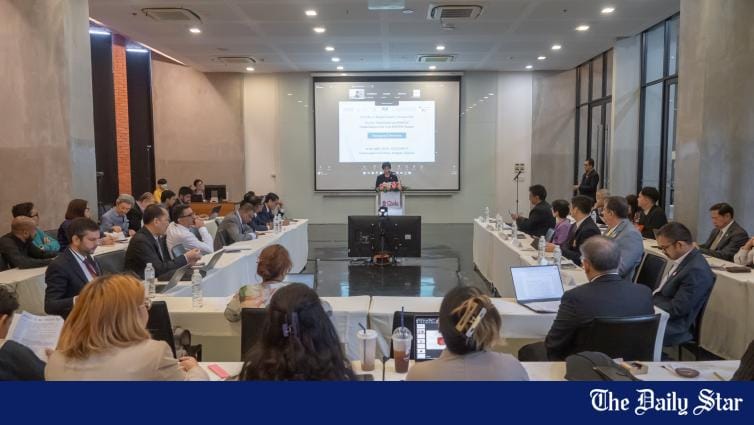
Participants pose for photograph after the concluding session of the two-day long 3rd Bay of Bengal Economic Dialogue 2024 on Friday, organised by the South Asian Network on Economic Modeling (SANEM at Chulalongkorn University in Bangkok.

Discussants at the 3rd Bay of Bengal Economic Dialogue 2024 have called upon the BIMSTEC leaders to establish a 'BIMSTEC free trade area' to expedite trade and investments among the member nations.

They also called for the creation of a 'BIMSTEC Technology Bank', implementation of integrated scholarship programmes, and promotion of people-to-people exchanges to build a stronger regional identity.

The South Asian Network on Economic Modeling (SANEM) orgainsed the two-day long 3rd Bay of Bengal Economic Dialogue 2024 in Bangkok, which concluded on Friday, in collaboration with Chulalongkorn University, the Institute of Trade and Development (ITD) and The Asia Foundation (TAF).

Held at Chulalongkorn University, Bangkok, the event was attended by over 100 senior scholars, experts and stakeholders from across the Bay of Bengal region, including Bangladesh, India, Bhutan, Myanmar, Nepal, Sri Lanka, and Thailand, to discuss pressing regional issues under the theme 'The New World Order and BIMSTEC: Curtain Raiser to the Sixth BIMSTEC Summit,' says a press release.

Since its inception in 1997, the BIMSTEC (Bay of Bengal Initiative for Multi-Sectoral Technical and Economic Cooperation) has played a crucial role in fostering economic and technical cooperation among its member states.

The summit was organised on a variety of themes, including the new world order and global challenges, trade, investment, and connectivity, governance, people-to-people relations, breaking barriers for future cooperation, trade and gender, and preparations for the upcoming BIMSTEC Summit.

After completion of the two-day summit, SANEM Executive Director Professor Selim Raihan read out the Bangkok Declaration.

The declaration was ceremoniously handed over to Mr Tshewang Dorji T, director of Environment and Climate Change at the BIMSTEC Secretariat in Dhaka, Bangladesh.

The Bangkok Declaration underscores the critical need for enhanced regional integration and cooperation among the BIMSTEC member states.

It highlights significant economic potential of the Bay of Bengal region and the importance of addressing global challenges such as climate change, trade barriers and geopolitical tension through collective efforts.

The declaration calls for stronger governance, transparency and civil society engagement to ensure economic and social stability.

It also emphasises the necessity of advancing transport, investment, trade, logistics, energy and digital connectivity to foster regional growth.​
 
Analyze

Analyze Post

Add your ideas here:
Highlight Cite Respond
  • Like (+1)
Reactions: Krishna with Flute

Yunus may attend UNGA and Bimstec summit

1724195231723.webp


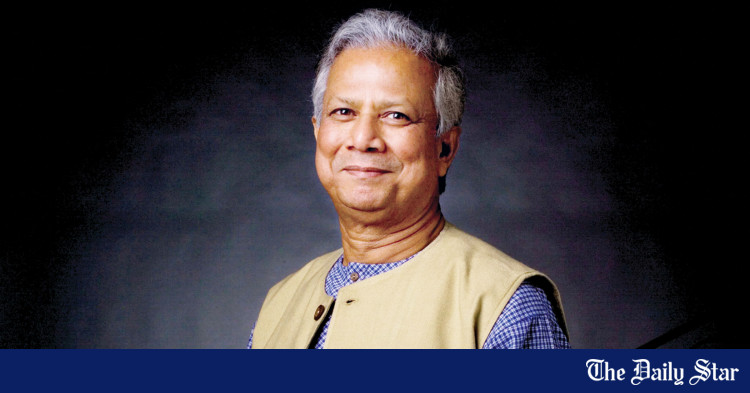
Interim Government's Chief Adviser Prof Muhammad Yunus is likely to attend the Bimstec summit and the UN General Assembly, both scheduled to be held in September.

The Bimstec summit will be held in Bangkok, Thailand, from September 2 to 4.

"The chief adviser is most likely to attend the [Bimstec] summit," said a foreign ministry official yesterday.

Apart from addressing the summit, Prof Yunus will also hold bilateral meetings with the heads of the governments of some of the member countries, including Indian Prime Minister Narendra Modi, sources said.

This will be the first foreign visit for Prof Yunus as head of the interim government. He assumed this role on August 8, three days after the fall of the Awami League regime.

An official of the Chief Adviser's Office said the chief adviser is also likely to attend the UN General Assembly in New York. UNGA is scheduled to be held between on September 10 and 24.

"The date for the visit of the chief adviser to the UN General Assembly is yet to be fixed," the official told the Daily Star yesterday.

Bangladesh will be the next chair of the Bimstec -- the Bay of Bengal Initiative for Multi-Sectoral Technical and Economic Cooperation -- comprised of Bangladesh, Bhutan, India, Myanmar, Nepal, Sri Lanka, and Thailand.

The official and ministerial meetings of the group will take place from September 1-3 before the summit.

As the South Asian Association for Regional Cooperation (Saarc) remains largely inactive, India has put Bimstec at the centre of its neighbourhood diplomacy.

An official of Bimstec Secretariat in Dhaka said they are working to sign at least four agreements including maritime transport cooperation during the summit.

The maritime transport agreement would include every aspect of maritime connectivity among the Bimstec member countries. The details of the agreement will be shared once the member states sign the document, he said.

Bimstec adapted its charter on May 20 this year, 27 years after the founding of the regional body.​
 
Analyze

Analyze Post

Add your ideas here:
Highlight Cite Respond

Thailand postpones BIMSTEC summit

1724455249598.webp


Thailand has postponed its hosting of next month's BIMSTEC summit of the leaders of seven mostly South Asian countries until after a new administration is formed, its foreign ministry said on Friday.

Thailand currently has a caretaker government following a court's dismissal of Srettha Thavisin as premier last week and his successor, Paetongtarn Shinawatra, has yet to name her cabinet.

The summit had been due to take place in Bangkok from September 3-4.

The Bay of Bengal Initiative for Multi-Sectoral Technical and Economic Cooperation (BIMSTEC) includes Thailand, India, Myanmar, Bangladesh, Nepal, Sri Lanka and Bhutan and its leaders meet every two years for a summit.

Bangladesh's Interim Government Chief Adviser Professor Muhammad Yunus was scheduled to attend the BIMSTEC Summit to be held in Bangkok.​
 
Analyze

Analyze Post

Add your ideas here:
Highlight Cite Respond
  • Like (+1)
Reactions: Bilal9

Latest Posts

Back
PKDefense - Recommended Toggle