New Tweets

[🇧🇩] Blue and Ocean Economy of Bangladesh

G Bangladesh Defense
[🇧🇩] Blue and Ocean Economy of Bangladesh
11
941
More threads by Saif


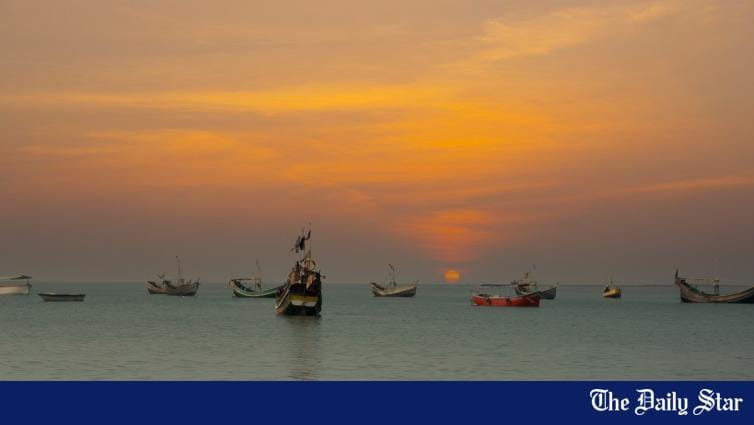
Innovation, cutting-edge research can unlock the Bay of Bengal’s potential

1740613156264.webp

File Photo: Mohiuddin Ahmed Sagor

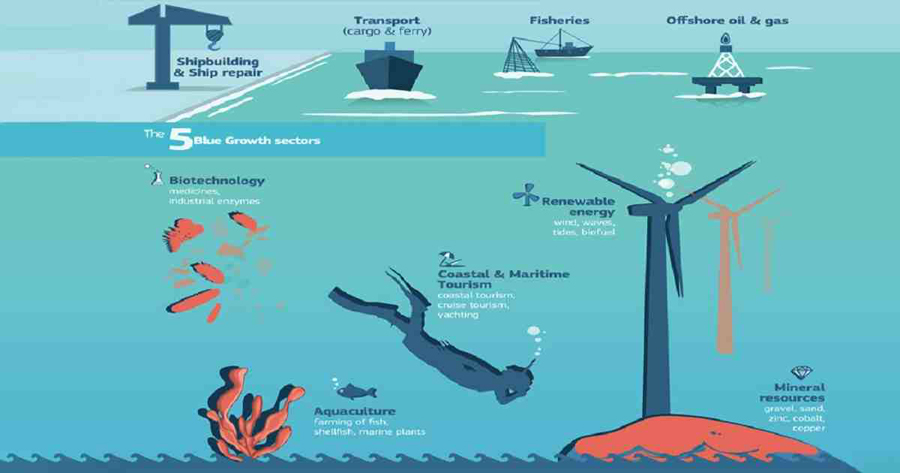
The vibrant, ever-expanding ocean economy of Bangladesh is a tapestry of diverse economic sectors. From the bounty of living resources to the untapped potential of mineral and energy reserves, from the bustling networks of maritime trade and transport to the allure of coastal tourism and recreation, leveraging its strategic location to build a regional and global hub of logistics, the three-dimensionality of the Bay of Bengal serves as the common thread that binds these industries together into an intricate, interdependent system.

Ocean ecosystems provide the fundamental natural resources that underpin the ocean-based economy. The distinction between ocean economy and blue economy lies in the fact that the latter encompasses policies designed to foster the sustainable advancement of the economy centred around oceanic resources and activities. Its goal is to achieve economic growth without depleting the overall natural capital and to ensure that the conservation of shared marine resources contributes to economic growth and poverty alleviation. These policies are typically formulated to bolster the three crucial aspects of sustainable development in the context of ocean utilisation: the sociopolitical, environmental, and economic domains.

The Bay of Bengal, the world's largest bay, holds significant strategic and economic value, serving as a key hub for trade, fisheries, and coastal communities. Despite its potential, the region's resources remain underutilised. To fully exploit the blue economy, there is a need for focused scientific research and capacity-building. Countries bordering the bay—including India, Bangladesh, Myanmar, and Thailand—stand to benefit from a collaborative academic and research initiative.

Developing a robust, science-based academic and research programme is key to unlocking the secrets of the Bay of Bengal. By investing in comprehensive physical, biological and chemical oceanographic studies, marine biology, and coastal ecosystem assessments, we can gain a far deeper understanding of the bay's unique environment, resources, and vulnerabilities. This knowledge can then inform evidence-based policymaking and resource management strategies, ensuring sustainable development of the blue economy.

Bangladesh is strategically positioned on the northern coast of the Bay of Bengal, giving it tremendous potential to develop a thriving blue economy. However, realising this blue economy vision faces several key challenges. One of the key challenges is navigating the intricate maritime boundaries and jurisdictions within the bay. Bangladesh's Exclusive Economic Zone (EEZ) shares maritime borders with India and Myanmar, and it is crucial to recognise that this zone is not a self-contained entity, but rather dynamically linked to the entire Bay of Bengal. Consequently, a collaborative and robust academic and research initiative among all the surrounding nations is a vital approach to develop a synergistic and nature-based solution for blue economy.

The Bay of Bengal's ecosystem is facing threats from algal blooms and the formation of Oxygen Minimum Zones (OMZ), also known as "Dead Zones," which can have devastating consequences for marine life. Excessive nutrient input from neighbouring rivers—mainly due to agricultural runoff, industrial waste, and poor wastewater treatment—fuels algal growth. Monitoring and collaborative research among the surrounding countries are essential to study the patterns and impacts of algal bloom, as well as the formation and extent of the OMZ. This research can develop effective conservation strategies and policies to protect the bay's marine resources and ensure their sustainability.

Marine spatial planning (MSP) is a holistic, ecosystem-based scientific approach to managing the various economic uses and activities that take place within the marine environment. It involves the analysis of current and future spatial and temporal distribution of human activities in order to ensure the sustainable use of marine resources while minimising conflicts among different sectors. In the context of the Bay of Bengal, effective MSP will be vital for optimising the region's blue economy. The Bay of Bengal is home to a diverse array of marine resources and economic activities, including fishing, aquaculture, shipping, offshore energy production, coastal tourism, land reclamation, freshwater harvesting, naval and aviation infrastructure, and many more. Without proper planning and coordination, these different sectors can easily come into conflict, leading to environmental degradation, economic losses, and social upheaval. MSP provides the framework to map out these various uses, identify synergies and trade-offs, and develop integrated management strategies.

The Institute of Water and Flood Management (IWFM) at Bangladesh University of Engineering and Technology (BUET) has developed a comprehensive model, the BDM, marking a significant technological breakthrough. The advanced modelling provided valuable insights for blue economy project viability in the Bay of Bengal. Key research found that the Payra deep-sea port channel has much higher sedimentation than usual, rapidly filling within a year as dredging depth increases. This suggests that the location is unviable due to prohibitive maintenance costs. The BDM model also explored freshwater harvesting, coastal community development, and tourism to support a thriving coastal economy. Detailed, science-based studies are crucial during planning for all coastal and Bay of Bengal projects to ensure sustainability.

As the regional powers vie for influence and access to the resources of the area, mastery of relevant science and technology can become a key strategic asset for Bangladesh. By demonstrating its technological prowess in these areas, Bangladesh can position itself as a hub of maritime innovation, attracting investment and partnerships that bolster its economic and geopolitical standing.

In addition, studying the bay's influence on monsoons, currents, and coasts can provide crucial insights to develop effective climate adaptation strategies for vulnerable populations. Given the region's susceptibility to climate change, sea-level rise, and cyclones, cutting-edge climate research has become urgent. Satellite imaging, predictive analytics, and AI-driven early warning systems could aid disaster preparedness. Innovative coastal infrastructure like floating cities and bioengineered mangroves could also reduce climate risks.

Equally important is the need to develop a new generation of scientists and researchers within the country. This will require a concerted effort to strengthen science, technology, engineering, and mathematics (STEM) education at the primary and secondary levels, as well as the establishment of specialised graduate programmes and research fellowships.

Furthermore, strategic partnerships and exchange programmes with leading global research institutions can help transfer knowledge, technology, and best practices. This cross-pollination of ideas and expertise can accelerate the development of innovative solutions to the complex challenges facing the Bay of Bengal.

The time has come to harness the power of science to unlock the secrets of the Bay of Bengal and leverage our technological prowess to project influence on regional scientific and geopolitical challenges.

Dr Quamrul Ahsan is former professor at the Institute of Water and Flood Management (IWFM) of Bangladesh University of Engineering and Technology (BUET).
Dr AKM Saiful Islam is professor at IWFM, BUET.
Dr Anisul Haque is professor at IWFM, BUET.
Md Mahfuzur Rahman is former director general of Bangladesh Water Development Board (BWDB).
Dr Shamal Chandra Das is chief engineer of planning at BWDB.​
 
Analyze

Analyze Post

Add your ideas here:
Highlight Cite Respond

Push to harness blue economy
Trial operation of ocean satellite ground station to begin in Dec

Jasim Uddin Haroon
Published :
Apr 24, 2025 00:05
Updated :
Apr 24, 2025 00:05

1745452708599.webp


Bangladesh is set to inaugurate its first-ever ocean satellite ground station in Chattogram by the end of this year, marking a significant milestone in the country's push to harness the blue economy.

The facility - located at the University of Chittagong's Institute of Marine Sciences - is expected to begin trial operations as early as December, according to officials involved in the project.

Chief Adviser Dr Muhammad Yunus is expected to visit the site on May 14 during a convocation ceremony at the university.

Until now, Bangladesh has relied on foreign sources for oceanographic data, often at the cost of precious foreign currency. The establishment of this ground station is poised to end that dependence.

"This is a unique and pioneering project in Bangladesh. We hope to begin test operations by the end of the year," said Dr Mohammad Muslem Uddin, the project's coordinator, in an interview with The Financial Express in Dhaka on Tuesday.

He said full-scale operations could commence by March 2026, should the trial proceed as planned.

The project, jointly undertaken by the University of Chittagong and China's Second Institute of Oceanography, is estimated to cost Tk 700 million.

A memorandum of understanding was signed in 2019, but implementation was delayed due to the Covid-19 pandemic.

Once operational, the station will receive data from seven Chinese satellites and another eight operated by the National Aeronautics and Space Administration (NASA) and other US agencies.

According to project officials, the station will produce a range of oceanographic products, including chlorophyll concentration, suspended sediment levels, Secchi disk depth, visible spectroscopy data, optical depth, downwelling irradiance, and the Normalised Difference Vegetation Index (NDVI).

While some of these terms are technical, the practical output will include real-time data on potential fishing zones, oxygen minimum zones, changes in sea colour due to pollution, sea surface temperatures, tidal movements, and signs of cyclonic activity.

This data will be crucial for maritime navigation, fisheries management, disaster preparedness, and ocean research.

Key stakeholders, such as Chittagong Port Authority (CPA), Bangladesh Space Research and Remote Sensing Organisation (SPARRSO), fishermen, and disaster management non-governmental organisations (NGOs), are expected to benefit directly from the project.

"We strongly believe the satellite station will play a pivotal role in advancing the blue economy agenda," said Dr Muslem.

To ensure the project's long-term financial sustainability, the University of Chittagong plans to introduce a subscription-based model for stakeholders like shipping companies, fishery operators, coastal management authorities, and emergency response organisations.

A mobile application planned by university students is expected to deliver real-time alerts for fishing zones and early warnings for cyclones and tidal surges.

"The goal is to make this data accessible and actionable for users by subscription and researchers," said Dr Muslem in a dormitory in Dhaka, owned by the University of Chittagong.

By enabling the country to receive and process ocean satellite data locally, the station will improve early warning systems and disaster response times, particularly during cyclones and coastal floods.

Civil construction at the Institute of Marine Sciences is now at the final stage, with most of the technical equipment already installed.

Officials are confident that the ground station will be ready for full-scale test runs by December, ushering in a new era of ocean-based satellite research in Bangladesh.

"This is not just a scientific facility," Dr Muslem emphasised. "It is a strategic asset for national development."​
 
Analyze

Analyze Post

Add your ideas here:
Highlight Cite Respond
Satkhira softshell crab farming for export

 
Analyze

Analyze Post

Add your ideas here:
Highlight Cite Respond
  • Like (+1)
Reactions: Saif

Stimulating investment in blue economy

Published :
Nov 15, 2025 00:22
Updated :

1763169728510.webp


The size of the investment that the formal lending institutions, that is, banks, have already made or are willing to make in a particular sector of the economy is indicative of the particular sector's importance in the economy. From that perspective, the blue economy does not seem to play a substantial role in Bangladesh's economy. According to a report carried by the Monday's, November 12, issue of this paper, the flow of bank credit to exploit the vast marine as well as maritime potential of the country has been both inadequate and inconsistent over the past years. Going by the central bank data, the total outstanding loan in the blue economy projects under green financing till June 2025 stood at Tk 8.48 billion. But looking back on December 24's figure of outstanding loans at Tk13.50 billion, there is reason to be flabbergasted at the behaviour of lean credit flow in the blue economy sector. Whatever are the particular factors at play behind the fall in credit flow during the first six months of the current calendar year, it clearly reflects the reality of the sector despite the rosy picture experts often portray about it at various discussion forums.

Given the fact that Bangladesh has a 710-kilometre coastline and extensive 'exclusive economic zone (EEZ)' that extends to 200 nautical miles equivalent to 118,813 square kilometres of maritime territory in the Bay of Bengal, it defies reason why both public and private investments have not poured into Bangladesh's blue economy on a massive scale as yet. Consider the marine resources including fisheries and aquaculture, shipping and maritime trade, tourism, offshore renewable energy and so on that could draw investments to create infrastructures, employments, improve livelihoods and boost trade. Especially, fishery resource of the sea needs to be exploited sustainably by way of preserving the marine ecosystem, which requires use of technology and scientific management of the fisheries and other aquatic resources. Moreover, just catching fish should not be the be-all and end-all of the fishery culture, for it is time, this sector is able to add value to its products for marketing at home and abroad. In addition to fishing, it should also involve farming of crustaceans, mollusks and aquatic plants.

Apart from aquatic life, other resources including the winds, tidal waves and abundant sunshine in the coastal areas can be harvested to provide power to coastal communities as well as the national grid. Since 90 per cent of the country's maritime trade is done through the Chittagong seaport, there is ample scope also for expanding the shipping trade through optimum utlilsation of Matarbari deep sea port once it is fully operational for commercial use. Also, the potential of ship building industry that has already built hundreds of small and medium-sized vessels for domestic as well as international markets should be exploited. But required investments to stimulate the different subsectors of the blue economy are missing? No project proposal involving blue economy has been submitted under the Bangladesh Bank's refinance scheme so far.

There is also talk of 'blue bonds', to draw private investment in the blue economy, as it is still in the conceptual stage. Experts are of the view that limited understanding of the financial industry about the blue economy is to a certain degree to blame for this poor investment picture. Banks have few tools to assess investment risks in its various sub-sectors as noted in the foregoing. In that case, the government is required to come up with a dedicated policy framework with provisions for fiscal incentives and capacity development for the sector. Meanwhile, the central bank in collaboration with relevant industries should develop a roadmap to encourage financing for blue economy.​
 
Analyze

Analyze Post

Add your ideas here:
Highlight Cite Respond

Members Online

Latest Posts

Back
PKDefense - Recommended Toggle