New Tweets

[🇷🇺] Russia vs West

G   Russian Defense
[🇷🇺] Russia vs West
30
1K
More threads by Saif

Do you see nukes being unsheathed?

Theres been a lot of that sort of talk directed at Germany recently ...
It'll be the genie out of the bottle moment. We'll all die.......

Just now saw news that imam Putins repurposed the mighty Oreshnik ICBM with conventional warheads and will target the supply depots on Polish/ Uki border.

Again western air defenses will fail.......I just know it.
 
Analyze

Analyze Post

Add your ideas here:
Highlight Cite Respond
It'll be the genie out of the bottle moment. We'll all die.......

Just now saw news that imam Putins repurposed the mighty Oreshnik ICBM with conventional warheads and will target the supply depots on Polish/ Uki border.

Again western air defenses will fail.......I just know it.

I've seen videos of these same missiles (2 of them) being threatened on Berlin.

Sounds like a badass missile. I love their names bc.
 
Analyze

Analyze Post

Add your ideas here:
Highlight Cite Respond
I've seen videos of these same missiles (2 of them) being threatened on Berlin.

Sounds like a badass missile. I love their names bc.
It was like lightening strikes at hypersonic speeds when those MIRVs struck.

US key phatt gaee thee....... :ROFLMAO:

It was a magic moment showing the ultimate Russian tech.

Koi nahi rok sakta Oreshnik ko.......nobody.
 
Analyze

Analyze Post

Add your ideas here:
Highlight Cite Respond
  • Putin (+4)
Reactions: Vsdoc and Sharma Ji

EU's new Russia sanctions aim for more effective oil price cap

REUTERS
Published :
Jul 18, 2025 17:31
Updated :
Jul 18, 2025 17:31

1752884418750.webp

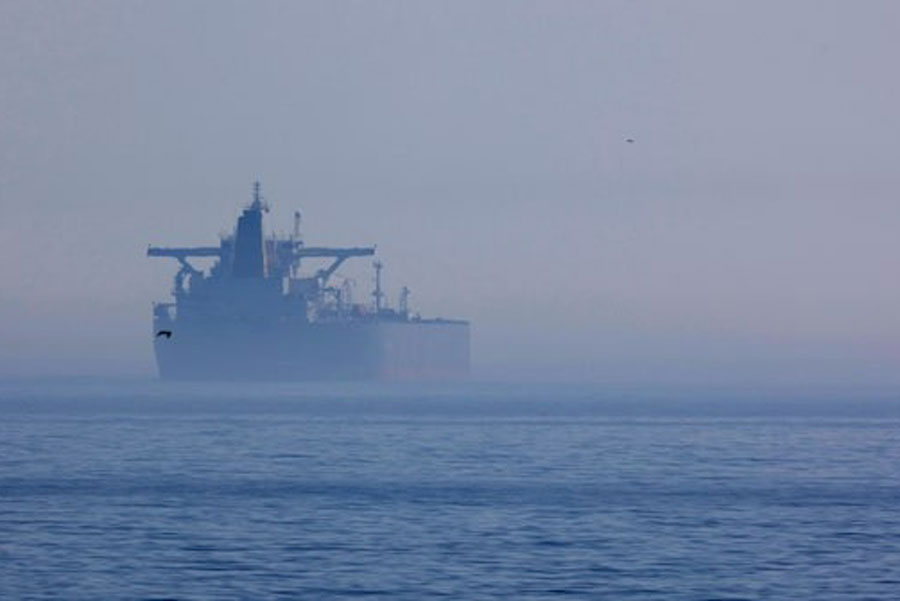
A view shows Panama-flagged vessel "Eventin" off the shore of Sassnitz, Germany, April 16, 2025. Photo : REUTERS/Tobias Schlie

The European Union on Friday agreed an 18th package of sanctions against Russia over its war in Ukraine, including measures aimed at dealing further blows to the Russian oil and energy industry.

The EU will set a moving price cap on Russian crude at 15 per cent below its average market price, EU diplomats said, aiming to improve on a largely ineffective $60 cap that the Group of Seven major economies have tried to impose since December 2022.

"The EU just approved one of its strongest sanctions packages against Russia to date," EU foreign policy chief Kaja Kallas said on X.

"We will keep raising the costs, so stopping the aggression becomes the only path forward for Moscow."

G7 PRICE CAP INEFFECTIVE SO FAR

Yet Russia has so far managed to sell most of its oil - the lifeblood of its state finances - above the previous price cap as the current mechanism makes it unclear who must police its implementation. Traders doubt the new EU sanctions will significantly disrupt Russian oil exports.

Kremlin spokesman Dmitry Peskov shrugged off the EU move, which would, at current prices, aim to cap the price of Russian crude at roughly $47.60 per barrel. Benchmark Brent futures rose marginally on Friday to about $70.

"We have repeatedly said that we consider such unilateral restrictions illegal, we oppose them," Peskov told reporters.

"But at the same time, of course, we have already acquired a certain immunity from sanctions, we have adapted to life under sanctions."

The package also bans transactions related to Russia's Nord Stream gas pipelines under the Baltic Sea, and with Russia's financial sector.

Kallas said 105 ships in Russia's "shadow fleet", the term used by Western officials for ships that Moscow uses to circumvent oil sanctions, had been blacklisted, along with Chinese banks that "enable sanctions evasion", which she did not name.

Ukrainian President Volodymyr Zelenskiy called the decision "essential and timely" as Russia intensifies its air war on Ukrainian cities and villages.

Foreign Minister Andrii Sybiha added: "Depriving Russia of its oil revenues is critical for putting an end to its aggression."

US DECLINES TO BACK EUROPE ON PRICE CAP

The European Union and Britain have been pushing to lower the G7 cap for the last two months after a fall in oil futures made the level of $60 a barrel largely irrelevant.

But the United States has resisted, leaving the EU to move forward on its own, but with only limited power to enforce the measure, analysts and oil traders say.

As the dollar dominates global oil transactions, and US financial institutions play the central role in clearing payments, the EU cannot block trades by denying access to dollar clearing.

Agreement on the new EU package was held up for weeks as Slovakian Prime Minister Robert Fico demanded concessions on a separate plan to phase out EU dependence on Russian oil and gas.

Fico announced on Thursday night that he was ending his opposition.

Countries such as Greece, Cyprus and Malta had expressed concerns about the effect of the oil price cap on their shipping industries. But Malta, the last of the trio to hold out, also came on board on Thursday.​
 
Analyze

Analyze Post

Add your ideas here:
Highlight Cite Respond

Russia urges caution in nuclear ‘rhetoric’
Agence France-Presse . Moscow 04 August, 2025, 23:45

1754359979755.webp

A woman carrying a child walks at a memorial for fallen soldiers in Kyiv on Sunday, amid the Russian invasion of Ukraine. | AFP photo

Russia urged caution on Monday after US president Donald Trump said he would deploy two nuclear submarines following an online row with former Russian president Dmitry Medvedev.

Trump said he had ordered the deployment in response to what he alleged were highly provocative comments by Medvedev, saying the submarines would be positioned in ‘appropriate regions’.

Trump did not say whether he meant nuclear-powered or nuclear-armed submarines.

He also did not elaborate on the locations, which are kept secret by the US military.

‘Russia is very attentive to the topic of nuclear non-proliferation. And we believe that everyone should be very, very cautious with nuclear rhetoric,’ Kremlin spokesman Dmitry Peskov told reporters, including from AFP, on Monday.

The row between Medvedev and Trump erupted against the backdrop of the US leader’s ultimatum for Russia to end its military offensive in Ukraine or face fresh economic sanctions, including on its remaining trading partners.

Medvedev — one of Russia’s most prominent anti-Western hawks — accused Trump of ‘playing the ultimatum game’ and said that Trump ‘should remember’ that Russia was a formidable force.

‘Each new ultimatum is a threat and a step towards war. Not between Russia and Ukraine, but with his own country,’ he said.

Medvedev is currently deputy chairman of Russia’s Security Council.

He served one term as president between 2008-2012, effectively acting as a placeholder for Putin, who was able to circumvent constitutional term limits and remain in de facto power.​
 
Analyze

Analyze Post

Add your ideas here:
Highlight Cite Respond
  • Like (+1)
Reactions: Bilal9

Moscow sentences Russian diplomat to 12 years for passing secrets to US intelligence

REUTERS
Published :
Dec 26, 2025 22:41
Updated :
Dec 26, 2025 22:41

1766796133431.webp


A Moscow court sentenced a former Russian diplomat to 12 years in a maximum-security penal colony for selling secrets to US intelligence while on a posting to the United States, the Federal Security Service (FSB) said on Friday.

The FSB, the main successor to the Soviet-era KGB, said that Arseniy Konovalov, born in 1987, had been found guilty of treason.

"It was established that AS Konovalov, an employee of the Russian Foreign Ministry, during a long-term foreign assignment in the United States, proactively transferred secret information to American intelligence for money," the FSB said in a statement.

Konovalov was detained by the FSB, which leads Russian counter-intelligence, in March 2024. The TASS news agency published video of a shocked-looking Konovalov being detained while travelling in a van and told he was suspected of treason.

The FSB did not say what information Konovalov had passed to US intelligence, or which US agency he was accused of working with. There was no immediate comment from US spy agencies.

Russia's Kommersant newspaper said Konovalov had served as second secretary of the Russian Consulate General in Houston. He worked in the United States from 2014 to 2017, Kommersant said.​
 
Analyze

Analyze Post

Add your ideas here:
Highlight Cite Respond

How Russia survived and adapted to the ‘Economic Blitzkrieg’

Mohammad Abdur Razzak
Published: 07 Mar 2026, 13: 20

1773018107580.webp

Russian rouble and US dollar banknotes are seen in this illustration photo taken on 10 March, 2023 Reuters

Russia completed fourth year of its “Special Operation” in Ukraine on 22 February 2026. The end of the operation is not in sight. When Western nations unleashed an unprecedented wave of sanctions against Russia following its invasion of Ukraine in February 2022, many predicted a swift economic collapse.

Russian President Vladimir Putin himself called it an "economic blitzkrieg", a term typically used to describe lightning warfare during the second World War, but applied here to the financial assault from the West. By the end of the fourth year of the war, Russia's economy not only survived but, in some respects, thrived.

The International Monetary Fund projected over per cent growth for Russia in 2024 outpacing both the United States and Europe (Sharyn Alfonsi et al, 2024). How did a country targeted by thousands of individual and collective sanctions managed to defy western expectations?

The seeds of Russia's economic resilience were sown years before the invasion. Russia annexed Crimea in 2014. First round of Western sanctions followed. The context of Crimea, the precedent of Russia's 2002 military intervention in Georgia over its NATO aspirations, and given the alliance's persistent expansion eastward, Moscow anticipated that Ukraine would eventually become the unacceptable breach of its red lines. Therefore, Moscow began systematically ‘sanctions-proofing’ its economy.

Russian companies and banks shed external debt, reducing their reliance on Western financing. Gross external debt shrank from 41per cent of GDP in 2016 to 27 per cent by 2021. Simultaneously, Russia accumulated a war chest of foreign exchange reserves, more than $600 billion in gold, dollars, and other currencies, mostly earned through oil and gas exports. This strategy, dubbed ‘Economic Fortress Russia’, also included developing an alternative to SWIFT, the global financial messaging system. When the sanctions came in salvos in 2022, Russia was not caught off-guard.

Perhaps the most critical factor in Russia's survival was its ability to redirect energy exports. When Europe, traditionally Russia's largest energy customer began reducing imports, Moscow found new buyers in China and India. Indian imports of Russian crude oil increased by more than 2,000% following the invasion (Samanth Subrmanian, 2025). Most of this oil flows to ports like Sikka in Gujrat, where it is refined into gasoline and diesel products that sometimes find their way to surprising destinations like Europe and USA. “After it becomes refined, it's untraceable," noted Samir Madani, an oil tanker tracking expert (Samanth Subrmanian, 2025). Despite the G7 imposed $60-per-barrel price cap on Russian crude, Moscow has found ways to circumvent the restriction. A "shadow fleet" of aging tankers with opaque ownership now moves approximately one million barrels of oil daily, evading Western sanctions.

When Western brands like Starbucks, Zara, Coca-Cola fled Russia; Stars Coffee, Maag, Dobry Cola for example filled the vacuum. This rapid adaptation reflected both entrepreneurial agility and a deeper trend. "Evading sanctions has become a business sector of its own in Russia," said Richard Connolly, a Russia economy specialist at the Royal United Services Institute. The number of small and medium-sized businesses registered in Russia has reached an all-time high (Samanth Subrmanian, 2025).

Experts agree that sanctions have meaningfully weakened Russia's economy and warfighting capacity. The question is whether the western community can continue the pressure long enough for those weaknesses to become critical.

Banned Western goods still flow into Russia through third parties like Georgia, Kazakhstan, Turkey and China. While prices are higher due to roundabout import routes, wealthy Russians remain willing to pay the premium. Russia-China bilateral trade hit a record $234 billion in 2024, demonstrating how quickly trade relationships can realign when traditional channels close (Samanth Subrmanian, 2025).

When Russian banks were cut off from SWIFT, many predicted financial paralysis. Instead, Moscow turned to alternatives. The growth of China's CIPS (Cross-Border Interbank Payment System), India's rupee-denominated settlement systems, and homegrown Russian fintech alternatives created new pathways for transactions. Domestically, Russian payment processors and state-backed digital banks filled the void left by Visa and Mastercard.

Consumers adapted seamlessly, continuing to tap cards or mobile wallets with new logos. "The Russia example highlights both the resilience of financial networks and the limits of sanctions in a digitized economy," observed a recent analysis.

Russia's military-industrial complex has become an economic driver. Metallurgical industries, particularly in the Urals, now operate 24 hours a day to supply the war effort. Government spending—estimated at around 4% of GDP in additional expenditure—has kept the economy ticking. But this war economy comes with costs. Inflation hovers around 9 per cent, with interest rates near 19 per cent. Labour shortages plague many sectors, as hundreds of thousands of able bodied men have been mobilised or fled the country. This brain drain may constrain Russia's long-term growth prospects.

Despite its resilience, Russia's economy shows cracks. By late 2025, oil and gas revenues had dwindled to their lowest levels since the COVID-19 pandemic (euro news, 2025). New sanctions targeting Russia's largest oil companies, Rosneft and Lukoil, have made buyers wary of being cut off from the US banking system. Russian crude now trades at a steep discount, about $25 per barrel below international benchmarks, cutting into state revenues. Economic growth has stalled, with GDP increasing only 0.1 per cent in the third quarter of 2025. The Kremlin has responded by raising taxes, increasing VAT from 20 per cent to 22 per cent and borrowing from compliant domestic banks.

A national wealth fund still provides a cushion, but these measures risk slowing growth further and worsening inflation (euro news, 2026). Iran’s closure of the Strait of Hormuz could open up a new opportunity for Russian oil.

Western officials now acknowledge that sanctions require stamina rather than shock and awe (Sharyn Alfonsi et al, 2024). "I don't think anybody should mistake Russia's rebound with resilience," cautioned Daleep Singh, the architect of the sanctions, "On the surface, Russia's economy may appear to be a fortress, but underneath the foundations are fragile”. Experts agree that sanctions have meaningfully weakened Russia's economy and warfighting capacity. The question is whether the western community can continue the pressure long enough for those weaknesses to become critical. "The length of the war shows that the pressure applied so far has not been sufficient," concluded Benjamin Hilgenstock of the Kyiv School of Economics (Financial Intelligence Unit of Latvia, 2025).

For now, Russia has survived the economic blitzkrieg. But the siege continues.

* Mohammad Abdur Razzak a retired Commodore of Bangladesh Navy, is a security analyst.​
 
Analyze

Analyze Post

Add your ideas here:
Highlight Cite Respond

Posts you haven't read yet..

Members Online

No members online now.

Latest Posts

Back
PKDefense - Recommended Toggle