
[🇧🇩] China is a Time Tested Friend and a Strategic Partner of Bangladesh

[🇧🇩] China is a Time Tested Friend and a Strategic Partner of Bangladesh
290
13K
More threads by Saif

G Bangladesh Defense

PM’S CHINA VISIT: Teesta project, Padma barrage high on agenda
Staff Correspondent 20 June, 2026, 23:35
1782001663535.webp

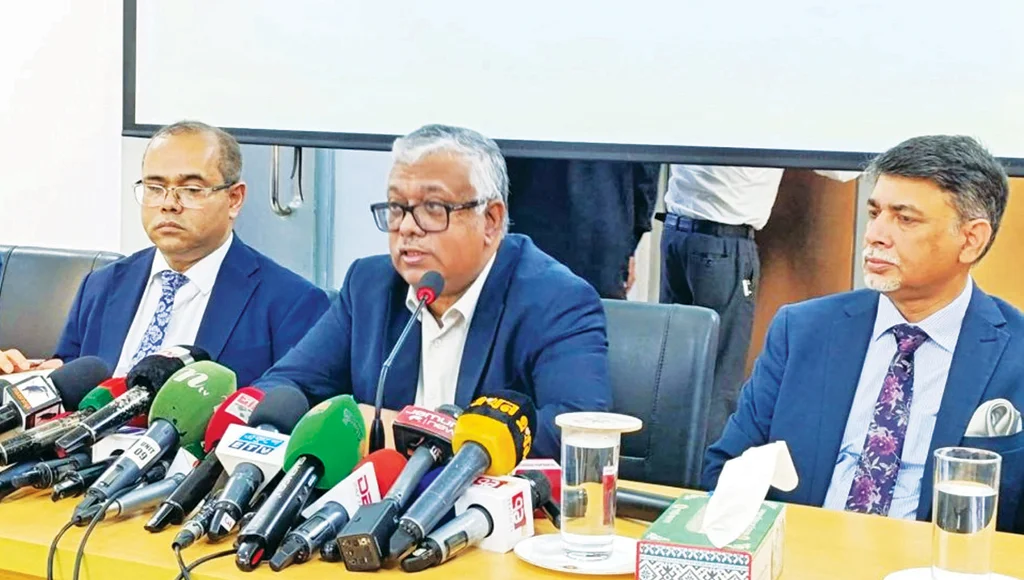
Foreign affairs secretary Asad Alam Siam addresses a press conference on prime minister Tarique Rahman’s visit to Malaysia and China at the ministry in Dhaka on Saturday. | Focus Bangla photo

Dhaka is once again going to discuss Beijing’s possible cooperation in the implementation of the proposed Teesta River Comprehensive Management and Restoration Project beside the construction of a barrage on the River Padma during prime minister Tarique Rahman’s four-day official visit to China this week.

  • Meet with Xi on June 26
  • Dhaka, Beijing to sign 17 instruments
  • Comprehensive water management to be discussed
  • Dhaka to request KL to reopen labour market for Bangladeshis
  • MoUs on cultural affairs, exchange of note on counter-terrorism likely

Both India and China have already shown interest in the much-talked-about project over the Teesta, the trans-boundary river originating in Sikkim of India and flowing across Bangladesh’s north.

China is also willing to extend technical and financial supports for the Padma barrage construction and has completed feasibility studies on the development projects over the two rivers flowing from India, according to officials.

‘Comprehensive water management — the Teesta project in particular—would be discussed in detail during the prime minister’s visit to China from June 23 to June 26,’ foreign secretary Asad Alam Siam told a press conference at his foreign ministry office on Saturday on prime minister Tarique Rahman’s back-to-back visit to Malaysia and China.

He said that the prime minister’s visit to China would deepen the comprehensive strategic partnership between the two countries.

Asked about Bangladesh’s expectation about Chinese financial assistances for various development projects, the secretary said that the top leaders discuss possibilities of cooperation between them during such a visit.

Among other issues, Dhaka and Beijing would discuss defence cooperation, he added.

Leading a 27-member delegation, Tarique, also chairman of the Bangladesh Nationalist Party, leaves Dhaka for Kuala Lumpur today for his two-day maiden tour abroad after becoming the country’s prime minister on February 17 following his party’s victory in the February 12 parliamentary polls.

Responding to a question, the foreign secretary said that Dhaka and Beijing would also discuss possible cooperation in the construction of a barrage on the River Padma at Pangsha in Rajbari planned by the Bangladesh government.

About the PM’s trip to Malaysia, the secretary said that Bangladesh would seek to reopen the Southeast Asian country’s labour market for its workers, which has remained suspended since June 2024.

Asad Alam said that the Bangladesh prime minister would request his Malaysian counterpart Anwar Ibrahim to recruit more Bangladeshis for Malaysia, a major destination for Bangladeshi migrant workers, at the top-level meeting in Putrajaya.

Furthermore, Bangladesh would seek the cooperation of Malaysia and other Southeast Asian nations in resolving the Rohingya crisis, he added.

At least three instruments, including a memorandum of understanding on cultural affairs and an exchange of note on counter-terrorism, are likely to be signed with Malaysia during the visit, said foreign ministry officials

As for the China visit, the Bangladesh prime minister, leading a 28-member delegation to Beijing, is scheduled to meet Chinese president Xi Jinping at the Great Hall of People before concluding his China visit on June 26.

Tarique would hold a bilateral meeting with Chinese premier Li Qiang in Beijing on June 25, said Asad Alam, adding that at least 13 memorandums of understanding, two agreements, an action plan and a protocol were expected to be signed with China during the visit.

The documents cover green energy, electric vehicle manufacturing, development assistances in education, agriculture and trade and investment, development of Chinese Economic and Industrial Zone, and media cooperation among other areas, officials said.

Another MoU on the establishment of a 1000-bed general hospital in Bangladesh with Chinese assistances is also likely to be signed in Beijing.

During the visit of Bangladesh’s interim government chief adviser Professor Muhammad Yunus to China in March 2025, Bangladesh in a major development welcomed Chinese companies to participate in the Teesta management project as the top leaders of the two friendly countries held a bilateral meeting in Beijing.

The two countries that time agreed to strengthen cooperation in the areas of hydrological forecasting, flood prevention, and water resources development besides economic and technical cooperation.

The prime minister’s forthcoming visit would also follow up the issues agreed upon during the talks between Professor Yunus and Chinese president Xi Jinping, according to officials.

China earlier expressed its readiness to provide assistance in the implementation of the Teesta project, which has been hanging in the balance as India has showed its willingness to support the same.

During the Sheikh Hasina regime, India in May 2024 expressed its willingness to support the mega development project on the Teesta inside Bangladesh although it has long been foot-dragging on the Teesta water-sharing treaty with Dhaka, adversely affecting the lives and livelihoods of the people in the country’s northern region.

During the visit to China, Tarique Rahman will attend the World Economic Forum’s 17th annual meeting of the New Champions also known as Summer Davos Forum in the Chinese city of Dalian.​
 

Setting sail again on the rising tide of the east
China-Bangladesh relations at a new starting point
Yao Wen

Published :
Jun 22, 2026 00:21
Updated :
Jun 22, 2026 00:32

1782086528763.webp


At the invitation of H. E. Li Qiang, Premier of the State Council of the People’s Republic of China, Prime Minister of the People’s Republic of Bangladesh H.E. Tarique Rahman is about to embark on an official visit to China and attend The World Economic Forum’s 17th Annual Meeting of the New Champions (2026 Summer Davos Forum). At this important moment when China and Bangladesh are ushering in the next golden 50 years of diplomatic relations, Hon’ble Prime Minister’s first visit to China holds historic significance in building on past achievements and charting the way forward. This visit will surely inject strong impetus into the development of China-Bangladesh relations in the coming period and promote the upgrading of the China-Bangladesh Comprehensive Strategic Cooperative Partnership in both quality and substance. Under the strategic guidance of the leaders of both countries, China-Bangladesh relations will forge ahead with more solid political mutual trust, more in-depth practical cooperation, and more robust international collaboration.

I. More Solid Political Mutual Trust: China and Bangladesh Have Always Upheld Mutual Respect, Equality and Win-Win Cooperation

China maintains that all countries, regardless of size, strength or wealth, are equal members of the international community and have equal rights to participate in international affairs. China firmly follows the principle of amity, sincerity, mutual benefit and inclusiveness on neighborhood diplomacy, and remains committed to non-interference in other countries’ internal affairs and to providing support without any political strings attached. This vision has been fully reflected in China-Bangladesh relations.

On October 4, 1975, China and Bangladesh officially established diplomatic relations, ushering in a new era of friendly exchanges. In January 1977, H.E. Ziaur Rahman paid his first visit to China in his capacity as Chief Martial Law Administrator and Chief of Army Staff of Bangladesh. China clearly expressed its support for Bangladesh in safeguarding national independence, laying a solid foundation for the development of bilateral relations. H.E. Begum Khaleda Zia visited China nine times, including five visits as Prime Minister. Frequent high-level exchanges between the two sides have provided strong political guidance for the steady development of bilateral relations.

Over the past half century, regardless of changes in the international landscape, China and Bangladesh have always respected each other, treated each other as equals, and shown mutual understanding and support on issues concerning each other’s core interests and major concerns. The two countries have become a vivid example of friendly cooperation and mutual benefit between developing countries. Prime Minister Tarique Rahman’s visit to China at the beginning of his tenure fully demonstrates the high importance Bangladesh attaches to developing relations with China, and reflects the profound foundation of political mutual trust between the two countries.

At present, both China and Bangladesh are at critical stages of their respective national development, and both face difficulties and challenges on the way forward. The year 2026 marks the beginning of China’s 15th Five-Year Plan period. China is advancing Chinese modernisation on all fronts and forging ahead toward the strategic goal of building itself into a great modern socialist country in all respects. Since its establishment, the new Bangladeshi government has taken a series of measures to maintain unity and stability, improve the economy and people’s livelihoods, promote investment and employment, and move toward the goal of building a trillion-dollar economy by 2034. These efforts demonstrate its resolve to rise to challenges and press ahead with determination.

It is precisely because of such shared circumstances and shared aspirations that China and Bangladesh need more than ever to learn from each other and move forward together. During this visit, the leaders of the two countries will have in-depth exchanges on governance experience and share insights on major issues such as development, economic transformation and reform, further strengthen party-to-party exchanges, and promote more frequent high-level interactions and deeper strategic communication. It can be expected that, as exchanges on governance experience continue to deepen, political mutual trust between China and Bangladesh will become even stronger, and bilateral relations will continue to make steady and sustained progress.

II. More In-depth Practical Cooperation: China-Bangladesh Economic, Trade and People-to-People Ties are Growing Ever Closer

Economic and trade cooperation has always been the ballast and propeller of China-Bangladesh relations. From 2010 to 2025, China remained Bangladesh’s largest trading partner for 16 consecutive years. China has also granted zero-tariff treatment to 100 per cent of taxable items for Bangladeshi products exported to China and extended this treatment to 2028. In the field of investment, China has become Bangladesh’s second-largest source of investment. Nearly 700 Chinese enterprises are registered with Bangladesh’s investment authorities, covering a wide range of sectors including energy, transportation, textiles and garments, and information and communications, creating hundreds of thousands of jobs for local communities. China has become an indispensable and important development partner in Bangladesh’s pursuit of development, economic transformation and modernization.

Prime Minister Tarique Rahman’s visit will inject stronger momentum into China-Bangladesh economic and trade cooperation. The two sides will have in-depth discussions on expanding bilateral trade and optimising the trade structure, and promote the entry of more high-quality Bangladeshi products into the Chinese market. They will further deepen investment cooperation, accelerate project implementation, and attract more Chinese enterprises to invest and do business in Bangladesh. They will also expand practical cooperation in emerging areas such as scientific and technological innovation, information and communications, green development and artificial intelligence. It is reasonable to believe that China-Bangladesh economic and trade cooperation will move toward higher quality and greater depth.

China-Bangladesh friendship has long taken root in the hearts of the two peoples. China has always acted with a sense of responsibility as a major country and carried out a series of livelihood projects in Bangladesh that benefit thousands of households. China-contracted power projects in Bangladesh, including coal-fired, solar and wind power projects, have reached a total installed capacity of over one gigawatt, providing a continuous source of power for Bangladesh’s livelihood development and people’s daily lives. China has donated advanced medical equipment to Bangladesh, including physiotherapy and rehabilitation equipment, ventilators and mobile surgical vehicles, contributing China’s strength to protecting the health of the Bangladeshi people. In the face of floods, China promptly extended a helping hand and provided Bangladesh with emergency relief supplies such as rubber boats, life jackets and generators. These concrete actions have brought the warmth of China-Bangladesh friendship to countless places in need. It can be expected that this visit will take livelihood cooperation between the two countries to a new level and bring the hearts of the two peoples even closer.

At the same time, personnel exchanges between the two countries are becoming increasingly frequent, and cultural exchanges and mutual learning are deepening. Standing at a new starting point, this visit will open broader space for people-to-people exchanges between the two countries. The two sides will promote cooperation in education, health and skills training, and help Bangladesh cultivate more professional talent suited to the needs of modernization. They will deepen exchanges in media, film and television, and other areas, so that the two peoples can enhance mutual understanding and deepen friendship through more diverse interactions. It can be expected that the hearts of the two peoples will draw ever closer, and the future of China-Bangladesh friendship will be even brighter.

III. More Robust International Coordination: China and Bangladesh Will Work Together to Unite the Global South in Solidarity

As the world’s largest developing country, China has always been a natural member of the Global South and has always shared the same breath and destiny with fellow developing countries. President Xi Jinping has on many occasions emphasized the importance of strengthening solidarity and cooperation among Global South countries and safeguarding their common interests. He has called for pooling the strength of Global South countries in the spirit of equality, openness, transparency and inclusiveness, and promoting the reform of the global governance system in a more just and equitable direction.

At present, the world is undergoing accelerated changes unseen in a century. Unilateralism, hegemonism and bullying practices are growing more rampant, and the cause of global peace and development faces severe challenges. The more difficult the situation becomes, the more countries that uphold justice should stand together to jointly safeguard the legitimate rights and interests of developing countries and maintain world peace and stability.

Bangladesh is the second-largest economy in South Asia and has an important voice on global issues such as climate change, sustainable development and poverty reduction. Recently, Bangladesh has won the presidency of the 81st session of the United Nations General Assembly. China has always deemed Bangladesh as an important partner in the Global South, and stands ready to work closely with Bangladesh in multilateral institutions such as the United Nations and the World Trade Organization to promote reform of the global governance system and jointly safeguard the collective interests of developing countries.

During Prime Minister Tarique Rahman’s visit to China, the leaders of the two countries will have in-depth exchanges of views on international and regional issues of mutual interest, further coordinate positions and build consensus. China firmly believes that a stable, prosperous and confident Bangladesh will play a more active and constructive role in Global South affairs.

Looking ahead, as China-Bangladesh relations stand at a new starting point that builds on past achievements and opens up new prospects, we are full of confidence and expectations. On the political front, high-level exchanges and party-to-party exchanges between the two countries will become more frequent and in-depth, and political mutual trust will continue to reach new heights. On the economic front, practical cooperation in areas such as the green economy, investment and business development will continue to expand, bringing more tangible benefits to the two peoples. On the front of people-to-people exchanges, cooperation in education, culture, tourism, youth and other fields will become more vibrant and diverse, allowing the flower of China-Bangladesh friendship to bloom ever more brilliantly in the hearts of the two peoples. On the journey of addressing global challenges, China and Bangladesh will always support each other and move forward hand in hand, making new and greater contributions to the stability and development of both countries, to the prosperity and progress of Asia, and to building a community with a shared future for humanity.

With the tide at full swell and the wind in our sails, Prime Minister Tarique Rahman’s visit to China will surely draw a more magnificent blueprint for the development of China-Bangladesh relations. Let us look forward to the full success of the visit and to the long-standing friendship between China and Bangladesh shining with even greater brilliance in the new era.

Yao Wen is Ambassador Extraordinary and Plenipotentiary of the People’s Republic of China to the People’s Republic of Bangladesh.​
 

A decade on, half of China’s $20b pledge enters aid pipeline

Rejaul Karim Byron and Jagaran Chakma

1782088104254.webp

Photo: Rajib Raihan

When Xi Jinping landed in Dhaka in October 2016, it was the first visit by a Chinese president in three decades, and Beijing marked it with pledges worth around $20 billion in loans and assistance over the following four years.

1782088130988.webp


At the time, it was the largest commitment any single country had made to Bangladesh, and it came as China looked to deepen its presence in South Asia while India did the same. Nearly ten years later, about half of that money has entered Bangladesh’s foreign aid pipeline.

Under the initial agreement signed during Xi’s visit, China was expected to finance 27 projects. But as of June last year, Bangladesh and China had signed loan agreements for 13 projects worth $8.89 billion.

Of that amount, about $5.53 billion has been disbursed, according to finance ministry data. Dhaka has already begun repaying loans for 10 of those projects, with repayments reaching $483 million by June 2025.

While economists say signing a memorandum of understanding does not guarantee project implementation, finance ministry officials blamed the fund slowdown on the Covid pandemic, lengthy approval procedures in both countries and Beijing’s increasingly cautious approach to lending amid a foreign exchange crisis in Bangladesh.

Of the total $8.89 billion in signed loans, China provided financing in both US dollars and Chinese yuan (RMB). According to official data, RMB 15.16 billion, equivalent to $2.24 billion, was denominated in yuan, while the remaining $6.65 billion was provided in US dollars.

Against this backdrop, Dhaka is expected to seek Beijing’s financing for three major projects during Prime Minister Tarique Rahman’s upcoming visit to China.

1782088166225.webp


APPROVAL DELAYS SLOW PROJECT ROLLOUT

Of the 13 projects with Chinese funding, nine were approved before the Covid-19 pandemic in 2020. Since then, progress on new project approvals has slowed considerably.

A finance ministry official said China became more cautious about extending new loans after the pandemic, pointing to a severe foreign exchange crunch in Bangladesh and rising economic pressures.

Another official involved in negotiations with Beijing, speaking on condition of anonymity, said bureaucratic hurdles on both sides, especially in China, have significantly slowed approval and disbursement.

In Bangladesh, projects require clearance from multiple committees before approval, a process that can take considerable time.

“And the process is even longer in China,” said a finance ministry official while talking to The Daily Star on condition of anonymity.

According to the official, if Chinese authorities disagree with or seek clarification on any part of the project documents, the files are often returned to Bangladesh for revision, forcing the process to start again.

Officials also pointed to capacity constraints at China’s Exim Bank, where only a limited number of officials handle overseas lending, contributing to slower fund releases.

Lobbying by competing Chinese companies seeking contracts for development projects has also caused delays, the officials said.

SEVEN PROJECTS COMPLETED, SIX UNDER WAY

Of the 13 projects, seven have been completed while six are ongoing.

Completed projects include the Padma Bridge Rail Link project, the Karnaphuli River Tunnel project, Phase III of the Info-Sarkar project, the Modernisation of Telecommunication Network for Digital Connectivity project, the Establishment of Tier-IV National Data Centre project, the Procurement of Six New Vessels project, and the Dasherkandi Sewerage Treatment Plant project.

Six other projects remain under implementation.

These include the Power Grid Network Strengthening Project under PGCB, the Expansion and Strengthening of Power System Network under the DPDC Area Project, another Power Grid Network Strengthening Project under PGCB, the Dhaka-Ashulia Elevated Expressway, and the Rajshahi WASA Surface Water Treatment Plant project.

The Single Point Mooring with Double Pipeline project in Maheshkhali has been completed but has yet to be commissioned due to contractor-related complications.

Most recently, Bangladesh and China signed a framework agreement for the Procurement of Four New Vessels project. Under the agreement, China will provide concessional financing at an interest rate of 2 percent, with a repayment period of 20 years, including a five-year grace period.

PM’S MAIDEN BEIJING VISIT TO SEEK CHINESE FUNDING

Bangladesh is expected to seek Chinese financing for three major projects during Prime Minister Tarique Rahman’s upcoming visit to China.

According to an official document prepared ahead of the visit, Dhaka will request funding for the expansion and modernisation of Mongla Port, the development of a Chinese Economic and Industrial Zone under the Bangladesh Economic Zones Authority (Beza), and the Bangladesh-China Friendship 1,000-bed General Hospital project.

The hospital is proposed to be implemented through Chinese grant assistance.

The document notes that both the Mongla Port expansion project and the Chinese Economic and Industrial Zone were included in a memorandum of understanding signed between the two countries in 2016.

Meanwhile, the Dhaka-Ashulia Elevated Expressway project is likely to receive a two-year extension as the current Development Project Proposal (DPP) is set to expire on June 30.

The project’s physical progress reached 63.5 percent as of last month.

Project Director Shafiqul Islam told The Daily Star that a proposal has already been sent to the Planning Commission seeking an extension until June 2028.

He said the proposal had received policy-level approval from the planning adviser and was now awaiting consideration by the Executive Committee of the National Economic Council (Ecnec).

EXPERTS CALL FOR SHIFT TOWARDS INVESTMENT

Mustafizur Rahman, distinguished fellow at Centre for Policy Dialogue (CPD), said the slow progress of Chinese-backed projects in Bangladesh is due to shifting priorities, implementation delays and government project reviews.

Referring to projects announced during Chinese President Xi Jinping’s 2016 visit, he said nearly half have been implemented, while others were revised, dropped or stalled over time.

“Signing an MoU does not mean every project will eventually be implemented,” he said, noting that some coal-fired power projects were later cancelled and several stalled initiatives are now being reconsidered.

Rahman cited the Chinese Economic and Industrial Zone in Anwara as an example of a project that lost momentum amid disputes over land acquisition and investment commitments but is now being revived.

He stressed the need to scrutinise the terms of new Chinese loans, including interest rates and repayment conditions.

According to him, Bangladesh should focus on attracting Chinese investment by leveraging China’s duty-free market access for Bangladeshi products, which Beijing has agreed to extend for two years after the country’s graduation from the least developed country (LDC) category.​
 

Latest Posts

Back