 American Defense
Saif
Senior Member
- Messages
- 21,756
- Likes
- 9,802
- Nation

- Residence
- Axis Group

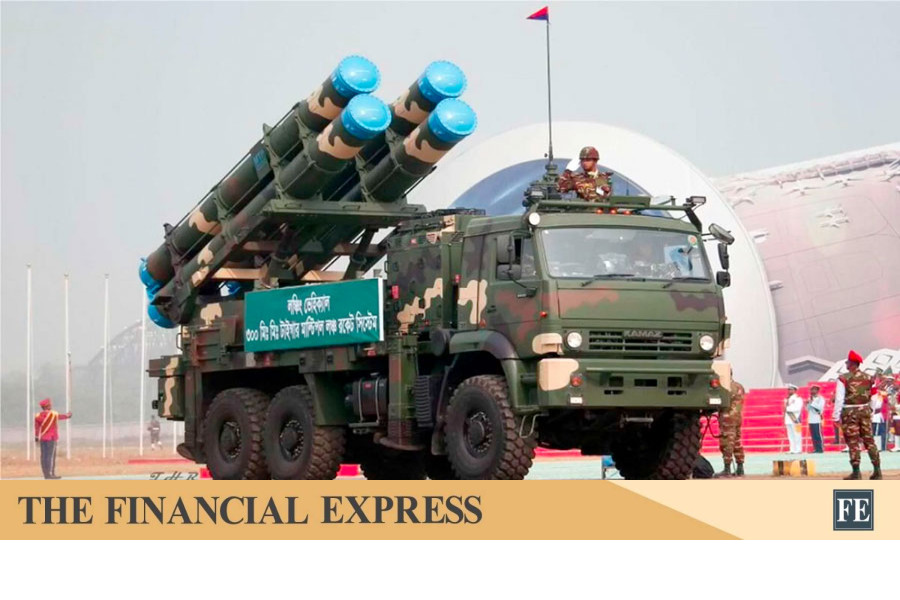
What Bangladesh can learn from Iran war
There is often a reluctance to discuss military matters in public. In mainstream discourse, far more attention is devoted to diplomacy, development and cooperation and there is nothing wrong with that preference as far as it goes. But when wars are raging on multiple fronts across the world includi
Alarming rise of NTMs
Asjadul Kibria
Published :
Jun 06, 2026 23:43
Updated :
Jun 06, 2026 23:43
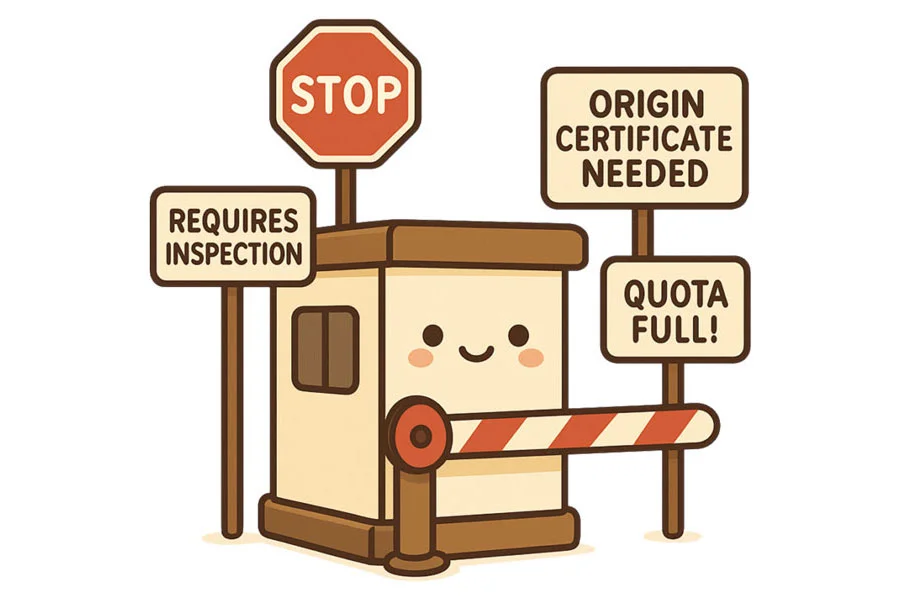
Following US President Donald Trump's tariff blitz last year, countries worldwide have been shaken by the rise in tariff barriers. Trump's move provoked many countries to impose higher tariffs on imports, increasing trade costs for their partners. Besides the surge in tariffs, the rise in non-tariff barriers (NTBs) has become a serious problem for developing nations. Though non-tariff measures (NTMs) are not new in global trade, and countries have continuously struggled to address them, recently, a new wave of NTMs has evolved into NTBs.
UN Trade and Development (UNCTAD), in its latest global trade update, highlighted the issue. Released last month, the report showed tariffs increased sharply in 2025, rising by 10 per cent for developed countries, 16 per cent for developing countries, and 18 per cent for least developed countries (LDCs). Even so, tariffs are not the main cost for most countries because NTMs impose higher export costs than tariffs for 88 per cent of nations. "They include technical regulations, health and safety requirements, and administrative procedures," said the UNCTAD report. "They often involve compliance, information and procedural costs." NTMs such as regulations, mandatory standards, or product requirements now drive most trade costs, shaping who trades, what is traded, and to which markets. "For developing countries, this creates a double burden. They face higher tariffs while also trying to meet increasingly complex rules," it added.
NTMs are broadly defined as policy measures other than tariffs that affect international trade in goods. Most NTMs are technical measures aimed at protecting public health and the environment and are essential public policy instruments. Nevertheless, they may have substantial trade effects by generating information, compliance, and procedural costs. Some NTMs are NTBs, such as import licensing requirements, quotas, import prohibitions, and export bans. These tools generally limit or restrict the export or import of various products.
The international classification of NTMs includes: Sanitary and Phytosanitary (SPS) measures; Technical Barriers to Trade (TBT); Pre-shipment Inspection and other formalities; Contingent trade-protective measures; Non-automatic licensing, quotas, prohibitions, and quantity control; Price-control measures; and Export-related Measures. The first three NTMs are technical measures, and all the rest are non-technical measures. There are other NTMs like finance measures; measures affecting competition, trade-related investment measures; distribution restrictions; restrictions on post-sales services; subsidies and other forms of support; government procurement restrictions; intellectual property (IP) and rules of origin.
The scope of NTMs is very wide, with overlaps among various measures. Different countries use different measures in different ways for different purposes. NTMs are mostly linked to domestic public policies, and no single focal point administers them. Except for a few quantitative measures (e.g., quotas), most NTMs are qualitative.
There are three relevant World Trade Organization (WTO) agreements : General Agreement on Tariffs and Trade 1994 (GATT), Agreement on Technical Barriers to Trade (TBT Agreement), and Agreement on the Application of Sanitary and Phytosanitary Measures (SPS Agreement). GATT provisions seek to ensure that WTO members abide by trade liberalisation commitments and do not re-impose protective or restrictive measures through domestic policies or NTMs that discriminate against imports. The TBT agreement aims to standardise technical regulations and their application. The SPS agreement asks WTO members to base measures for the protection of human, animal, or plant life or health on international standards. Both the TBT and SPS agreements restrain members from setting and applying standards that are more trade-restrictive than necessary to achieve a legitimate objective.
Due to the diversity and complexity of NTMs, it is difficult for developing countries like Bangladesh to understand the measures and take adequate steps to address them. Resource constraints and a lack of skilled manpower make NTMs more challenging for these countries. While developed and some advanced developing nations deploy significant resources to deal with NTMs effectively, others struggle to develop the necessary human resources, technical knowledge, and logistics. That is why NTMs become more burdensome for these countries.
Over the decades, Bangladesh's exports have faced various NTMs in different potential markets. Despite market access thanks to lower tariffs, NTMs often act as NTBs, blocking the potential penetration of Bangladesh-made goods. The country's exports to India have faced various NTBs over the decades despite tariff-free access to most products. Nevertheless, Bangladesh has succeeded to some extent in dealing with Indian NTMs by improving product standards and adjusting other requirements for the Indian market. Exports to India increased modestly over the decades, though still below potential. After the fall of the autocratic Hasina regime, bilateral relations with India were strained during the Yunus-led interim regime. New Delhi, unwilling to accept the changed reality in Bangladesh, imposed several NTBs, making exports more expensive. The Hasina regime was subservient to India, persistently compromising Bangladesh's greater interests. The fall of the regime through the July revolution in 2024, at the cost of at least 1,400 lives, fuelled anti-Indian sentiment in the country.
India's use of NTBs also revealed its hostility toward Bangladesh, showing how trade tools are used to enhance geopolitical pressure. For example, India restricted land ports for exporting goods from Bangladesh and imposed conditions on the use of sea ports, thereby increasing export costs. Though Dhaka requested a discussion on NTBs, New Delhi has given no positive response, indicating its unwillingness to remove the barriers soon.
Like India, other countries also use NTMs and NTBs, mainly for geopolitical reasons. That's why the UNCTAD report mentioned: "Governments are increasingly using NTMs to advance objectives linked to economic nationalism and economic security, as both developed and developing economies seek not only to protect domestic industries but also to shape and secure control over key global value chains, underscoring a broader trend toward the strategic use of interdependence."
The report also noted that recent US trade deals focus heavily on easing regulatory and administrative requirements for US exporters. Most of these include sector-specific provisions on the recognition of US standards and conformity assessment for vehicles, pharmaceuticals and agricultural food products in bilateral trade. For instance, as noted in the UNCTAD report, under the Bangladesh-US Agreement on Reciprocal Trade, Bangladesh recognises the US vehicle standards (TBT) and the US Food and Drug Administration certificates for the automotive, medical devices, and pharmaceutical sectors. The agreement compels Bangladesh not to impose a number of NTBs on US goods.
The UNCTAD report further noted that in some countries, negotiations covered the removal of local content requirements, as well as the elimination or simplification of import licenses. "With Indonesia and Malaysia, agreements also covered strategically important critical minerals, with countries agreeing to refrain from imposing any type of export restrictions," it added.
To address the challenge of rising NTBs, the UN agency urged greater transparency to reduce the costs associated with NTMs. "Improving transparency can reduce trade costs associated with non-tariff barriers by about 19 per cent. When countries fail to notify measures, the costs are comparable to imposing a 28 per cent tariff," it pointed out. "Small companies with limited resources, these hidden costs can be enough to completely exclude them from entering or participating in the global market."
For Bangladesh, dealing with NTMs in the coming days will be more challenging, as NTMs worldwide are rising amid increased focus on national security and geopolitical concerns. Extensive effort is needed to strengthen the capacity in this regard.
Asjadul Kibria
Published :
Jun 06, 2026 23:43
Updated :
Jun 06, 2026 23:43
Following US President Donald Trump's tariff blitz last year, countries worldwide have been shaken by the rise in tariff barriers. Trump's move provoked many countries to impose higher tariffs on imports, increasing trade costs for their partners. Besides the surge in tariffs, the rise in non-tariff barriers (NTBs) has become a serious problem for developing nations. Though non-tariff measures (NTMs) are not new in global trade, and countries have continuously struggled to address them, recently, a new wave of NTMs has evolved into NTBs.
UN Trade and Development (UNCTAD), in its latest global trade update, highlighted the issue. Released last month, the report showed tariffs increased sharply in 2025, rising by 10 per cent for developed countries, 16 per cent for developing countries, and 18 per cent for least developed countries (LDCs). Even so, tariffs are not the main cost for most countries because NTMs impose higher export costs than tariffs for 88 per cent of nations. "They include technical regulations, health and safety requirements, and administrative procedures," said the UNCTAD report. "They often involve compliance, information and procedural costs." NTMs such as regulations, mandatory standards, or product requirements now drive most trade costs, shaping who trades, what is traded, and to which markets. "For developing countries, this creates a double burden. They face higher tariffs while also trying to meet increasingly complex rules," it added.
NTMs are broadly defined as policy measures other than tariffs that affect international trade in goods. Most NTMs are technical measures aimed at protecting public health and the environment and are essential public policy instruments. Nevertheless, they may have substantial trade effects by generating information, compliance, and procedural costs. Some NTMs are NTBs, such as import licensing requirements, quotas, import prohibitions, and export bans. These tools generally limit or restrict the export or import of various products.
The international classification of NTMs includes: Sanitary and Phytosanitary (SPS) measures; Technical Barriers to Trade (TBT); Pre-shipment Inspection and other formalities; Contingent trade-protective measures; Non-automatic licensing, quotas, prohibitions, and quantity control; Price-control measures; and Export-related Measures. The first three NTMs are technical measures, and all the rest are non-technical measures. There are other NTMs like finance measures; measures affecting competition, trade-related investment measures; distribution restrictions; restrictions on post-sales services; subsidies and other forms of support; government procurement restrictions; intellectual property (IP) and rules of origin.
The scope of NTMs is very wide, with overlaps among various measures. Different countries use different measures in different ways for different purposes. NTMs are mostly linked to domestic public policies, and no single focal point administers them. Except for a few quantitative measures (e.g., quotas), most NTMs are qualitative.
There are three relevant World Trade Organization (WTO) agreements : General Agreement on Tariffs and Trade 1994 (GATT), Agreement on Technical Barriers to Trade (TBT Agreement), and Agreement on the Application of Sanitary and Phytosanitary Measures (SPS Agreement). GATT provisions seek to ensure that WTO members abide by trade liberalisation commitments and do not re-impose protective or restrictive measures through domestic policies or NTMs that discriminate against imports. The TBT agreement aims to standardise technical regulations and their application. The SPS agreement asks WTO members to base measures for the protection of human, animal, or plant life or health on international standards. Both the TBT and SPS agreements restrain members from setting and applying standards that are more trade-restrictive than necessary to achieve a legitimate objective.
Due to the diversity and complexity of NTMs, it is difficult for developing countries like Bangladesh to understand the measures and take adequate steps to address them. Resource constraints and a lack of skilled manpower make NTMs more challenging for these countries. While developed and some advanced developing nations deploy significant resources to deal with NTMs effectively, others struggle to develop the necessary human resources, technical knowledge, and logistics. That is why NTMs become more burdensome for these countries.
Over the decades, Bangladesh's exports have faced various NTMs in different potential markets. Despite market access thanks to lower tariffs, NTMs often act as NTBs, blocking the potential penetration of Bangladesh-made goods. The country's exports to India have faced various NTBs over the decades despite tariff-free access to most products. Nevertheless, Bangladesh has succeeded to some extent in dealing with Indian NTMs by improving product standards and adjusting other requirements for the Indian market. Exports to India increased modestly over the decades, though still below potential. After the fall of the autocratic Hasina regime, bilateral relations with India were strained during the Yunus-led interim regime. New Delhi, unwilling to accept the changed reality in Bangladesh, imposed several NTBs, making exports more expensive. The Hasina regime was subservient to India, persistently compromising Bangladesh's greater interests. The fall of the regime through the July revolution in 2024, at the cost of at least 1,400 lives, fuelled anti-Indian sentiment in the country.
India's use of NTBs also revealed its hostility toward Bangladesh, showing how trade tools are used to enhance geopolitical pressure. For example, India restricted land ports for exporting goods from Bangladesh and imposed conditions on the use of sea ports, thereby increasing export costs. Though Dhaka requested a discussion on NTBs, New Delhi has given no positive response, indicating its unwillingness to remove the barriers soon.
Like India, other countries also use NTMs and NTBs, mainly for geopolitical reasons. That's why the UNCTAD report mentioned: "Governments are increasingly using NTMs to advance objectives linked to economic nationalism and economic security, as both developed and developing economies seek not only to protect domestic industries but also to shape and secure control over key global value chains, underscoring a broader trend toward the strategic use of interdependence."
The report also noted that recent US trade deals focus heavily on easing regulatory and administrative requirements for US exporters. Most of these include sector-specific provisions on the recognition of US standards and conformity assessment for vehicles, pharmaceuticals and agricultural food products in bilateral trade. For instance, as noted in the UNCTAD report, under the Bangladesh-US Agreement on Reciprocal Trade, Bangladesh recognises the US vehicle standards (TBT) and the US Food and Drug Administration certificates for the automotive, medical devices, and pharmaceutical sectors. The agreement compels Bangladesh not to impose a number of NTBs on US goods.
The UNCTAD report further noted that in some countries, negotiations covered the removal of local content requirements, as well as the elimination or simplification of import licenses. "With Indonesia and Malaysia, agreements also covered strategically important critical minerals, with countries agreeing to refrain from imposing any type of export restrictions," it added.
To address the challenge of rising NTBs, the UN agency urged greater transparency to reduce the costs associated with NTMs. "Improving transparency can reduce trade costs associated with non-tariff barriers by about 19 per cent. When countries fail to notify measures, the costs are comparable to imposing a 28 per cent tariff," it pointed out. "Small companies with limited resources, these hidden costs can be enough to completely exclude them from entering or participating in the global market."
For Bangladesh, dealing with NTMs in the coming days will be more challenging, as NTMs worldwide are rising amid increased focus on national security and geopolitical concerns. Extensive effort is needed to strengthen the capacity in this regard.