 Bangladesh Defense

Saif
Senior Member
- Joined
- Jan 24, 2024
- Messages
- 22,294
- Likes
- 9,869
- Nation

- Axis Group

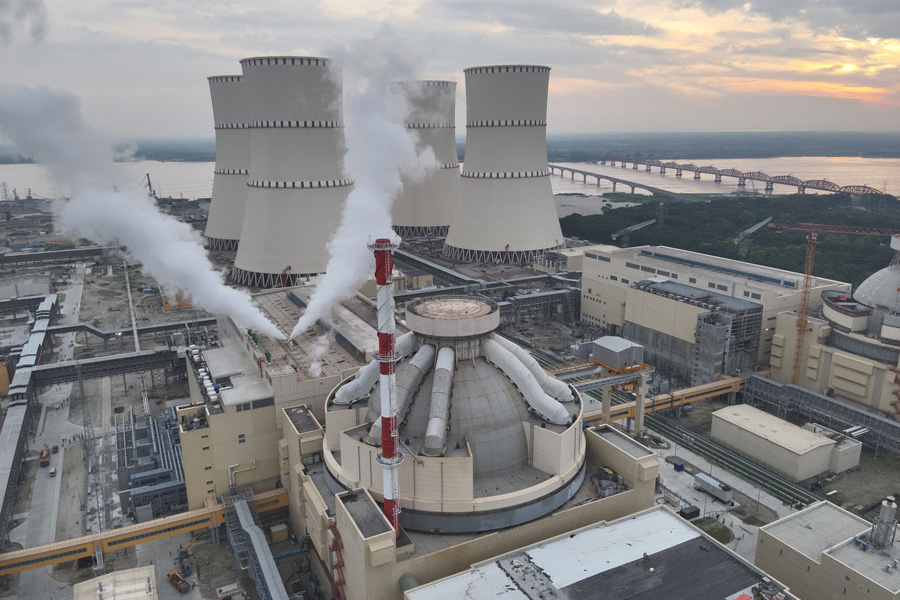
Ensuring Rooppur NPP's operation safe
Power Unit 1 of the Rooppur Nuclear Power Plant (NPP) is nearing its national grid connection. The commissioning team is executing Stage C activities, gradually increasing the reactor’s thermal power. Following approximately one hundred successful tests to spin the turbines and generate elect
Ensuring Rooppur NPP's operation safe
Power Unit 1 of the Rooppur Nuclear Power Plant (NPP) is nearing its national grid connection. The commissioning team is executing Stage C activities, gradually increasing the reactor’s thermal power. Following approximately one hundred successful tests to spin the turbines and generate electricity, the unit will be safely synchronized with the grid. Ensuring operational readiness of the plant is vital for the plant’s long-term, safe, and economically viable commercial operation.
The readiness of an NPP to produce commercial-scale electricity extends far beyond its visible facilities and operational teams; it is merely the exposed tip of a massive national infrastructure, much like a classical iceberg. Just as the submerged portion sustains the visible peak, the bulk of these invisible, foundational infrastructural elements lies beneath the surface.
At the plant site, this invisible infrastructure comprises a robust network of radiation safety, nuclear security, logistics and organizational governance. Nationally, it encompasses comprehensive nuclear strategies, a nationwide radiation monitoring network and a multi-layered emergency preparedness system—all backed by secure telecommunications and a national nuclear security defense framework. Ultimately, the plant’s long-term sustainability depends on a vital institutional ecosystem: a dedicated Nuclear Energy Programme Implementing Organisation (NEPIO), a strictly independent regulatory authority, and a competent operating organization, all sustained by expert Technical Support Organization (TSO).
Operational Readiness for the First NPP: According to IAEA and WANO guidelines, the ‘operational readiness’ of a country’s first nuclear power plant (NPP) requires integrating its systems, personnel, processes, programmes, procedures, and infrastructure. This readiness involves the physical plant, a qualified operational team, and aligned supporting infrastructure, both on- and off-site, reflecting the maturity of the country’s entire nuclear sector. Active supervision and coordination by the NEPIO are essential to achieve this milestone, demonstrating the nation’s commitment to the peaceful use of atomic energy to both the national and international communities.
NEPIO & its function: The NEPIO is a national body established by a newcomer country to coordinate and oversee the development of a nuclear power programme. As an IAEA-defined concept, a NEPIO is typically set up at the very beginning of a country’s nuclear journey—well before a specific NPP project is launched. Depending on national strategy, it functions as a central coordinating mechanism across government ministries, national entities, and external partners. The NEPIO is responsible for establishing national policies, strategies, and long-term commitments, while monitoring progress to ensure the country’s overall readiness and national infrastructure development.
The structure of a NEPIO varies from country to country to fit the nation’s political system, legal framework, and available resources. According to the IAEA, no single organizational model fits every country. The IAEA outlines three core structural models for a NEPIO: a high-level national committee chaired by the head of government or state (such as the Prime Minister or President); a stand-alone, dedicated agency or specialized autonomous body exclusively mandated to manage the infrastructure phases; or a dedicated line ministry with the necessary core competencies. Each model provides a mechanism to coordinate national infrastructure development during the initial phases of nuclear power.
Rooppur NPP & NEPIO Framework: The successful, independent commercial operation of the Rooppur NPP depends on the coordinated readiness of the physical plant, its operational workforce, and supporting national infrastructure. Strict alignment must be maintained among the Ministry of Science and Technology (MOST, serving as the NEPIO), the Bangladesh Atomic Energy Regulatory Authority (BAERA, as the regulator), the Bangladesh Atomic Energy Commission (BAEC, as the owner and TSO), and the Nuclear Power Plant Company Bangladesh Limited (NPCBL, as the operator). Together, these organizations must satisfy IAEA milestones across legal frameworks, regulatory oversight, operator competence, and grid integration.
An NPP project is a temporary endeavour designed to build a nuclear facility and develop its operational workforce. Upon completion of the Rooppur construction project, NPCBL will assume full responsibility for the plant’s commercial operations, leading to the dissolution of the temporary project management structure under BAEC. As the project transitions from construction to commercial operation, the temporary structure of the NEPIO will evolve, potentially merging into a permanent government entity or a specialised division within a line ministry mandated with ongoing national coordination for nuclear power. This permanent successor entity must operate independently of both the regulatory body (BAERA) and the utility (NPCBL). Concurrently, it must retain and cultivate high-level technical capabilities for nuclear governance, power development, and management, supported by a TSO.
Operational Readiness Challenges: An evaluation against IAEA guidelines reveals several critical gaps in the national nuclear governance framework. First, BAERA’s organisational structure, regulatory infrastructure, management system, and technical competencies have not yet fully matured to independently oversee operational safety. Second, the organisational structure and management systems of NPCBL remain underdeveloped at both corporate and plant levels. Third, BAEC lacks the advanced research infrastructure and capabilities required to function as an independent TSO for plant operations. Therefore, urgent intervention by MOST and the government is crucial to address these deficiencies across NPCBL’s corporate, on-site, and operational levels. This intervention must focus on enhancing BAERA’s regulatory framework, management systems, core competencies, and the near-site infrastructure of the Rooppur NPP to effectively meet the plant’s operational demands. Additionally, under the NEPIO framework, substantial capacity building is required across the national nuclear governance infrastructure, specifically in safety, security, safeguards, emergency preparedness, and nuclear liability to align with IAEA standards.
The commissioning and trial operation of the Rooppur NPP power units involve overlapping activities among JSC Atomstroyexport (the General Contractor), BAEC (the Customer/Project Developer), and NPCBL (the Operator), making project management during these stages highly complex. To mitigate severe safety, quality, and scheduling risks, two critical sectors must be managed effectively prior to Provisional Take-Over and through to Final Acceptance: Technical Support (staffing, training, local capacity-building, and operational advisory services) and Material & Maintenance Support (timely supply of components, spare parts, and ongoing maintenance). Furthermore, inefficient coordination across the three management levels: on-site execution, Customer-Contractor, and the competent government authority poses a significant threat. To address these challenges, the Bangladeshi side must act proactively as a ‘knowledgeable customer’ at every level of coordination, strictly guided by the General Contract and the Intergovernmental Agreement.
Emergency Preparedness and Response (EPR) is vital to protect personnel, emergency workers, and the public during an NPP emergency. An effective EPR framework requires seamless integration across legal, regulatory, and operational levels. To comply with IAEA Safety Standards, specific regulations must be developed under the BAERA Act 2012, clearly defining protection strategies, on-site and off-site emergency plans, zoning boundaries, operator emergency classifications, and the roles of local and national authorities. This framework must be supported by a fully functional off-site and national EPR infrastructure. Consequently, Bangladesh urgently needs to establish the National Nuclear and Radiological Emergency Management Center (NNREMC) under MOST as the apex coordination body. The NNREMC will advise the government, support district and off-site authorities, and operate a nationwide radiation monitoring network, which is yet to be established.
To bridge gaps in nationwide radiation surveillance, national policy mandates that MOST establish a National Automated Radiation Monitoring Network within designated emergency zones and planning distances. Furthermore, the ministry will establish a National Laboratory to analyse food, fodder, and environmental samples during both routine operations and emergencies. Serving as the central integrating hub, this National Laboratory will coordinate the District Laboratory Monitoring and Control Networks across all districts within the emergency zones.
Nuclear security is an integral component of a nation’s overall security architecture. The ultimate responsibility for the nuclear security of an NPP and its associated nuclear materials rests entirely with the State; this fundamental responsibility cannot be delegated or transferred to external entities or international organisations. While the State may delegate specific operational security duties to authorized operators, it must retain absolute oversight. Accordingly, Bangladesh must establish a robust, multi-layered national nuclear security framework. This system should integrate a comprehensive response mechanism operating at both the national (off-site) and plant operational (on-site) levels. The plant-level security must encompass an advanced Physical Protection System (PPS), dedicated on-site security guards, an immediate response force, strict nuclear safeguards, internal threat mitigation mechanisms, and comprehensive cybersecurity—fully aligned with IAEA guidelines as well as domestic regulatory requirements.
Radioactive waste management is a highly sensitive and critical component of Nuclear Power Plant (NPP) operations. It is mandatory to formulate regulations and guidelines for the classification, handling, treatment, and storage of low-level (LLW), intermediate-level (ILW), and high-level waste (HLW). Furthermore, establishing a fully operational on-site interim radioactive waste management and storage infrastructure, backed by trained personnel to safely manage the lifelong waste generated by Units 1 and 2, is obligatory for the Rooppur NPP.
Establishing a clear legal framework and securing financial protection for civil liability are binding obligations for NPP operations. BAERA and MOST must explicitly define the regulatory guidelines, while the government must identify specific funding sources to secure these liabilities across all phases, including trial operation, the commercial warranty period and subsequent long-term operation.
As the first unit prepares to supply power to the national grid, finalization of the Power Purchase Agreement is critical. This complex, long-term agreement must clearly define parameters such as operational lifespan, plant factor, discount rate, fuel costs, availability/capacity charges, waste management fees and nuclear liability.
END NOTE: The physical readiness of the nuclear power units—coupled with the timely development of on-site and off-site infrastructure and key organizations—is crucial. This preparedness is essential not only to transform this massive technological asset into a profitable enterprise but also to unlock spin-off benefits that will transition the nation into an advanced, technology-driven, and ecologically friendly state. The successful operation of the Rooppur NPP will be a historic milestone, sparking a positive cycle of trust, innovation, and growth. Embracing the plant as a source of national pride—rather than a risk or burden—empowers scientists, engineers, and policymakers to expand peaceful nuclear applications across energy, medicine, agriculture, and heavy manufacturing. Ultimately, this momentum will inspire the next generation to pursue STEM careers, creating a skilled local workforce capable of driving national transformation.
Dr Mohammad Shawkat Akbar is Chairman (Retired), Bangladesh Atomic Energy Commission

