[🇧🇩] Constitution Reform Council

[🇧🇩] Constitution Reform Council
4
86
More threads by Saif

G Bangladesh Defense

Saif

Senior Member
Joined
Jan 24, 2024
Messages
18,330
Likes
8,622
Nation

Residence

Axis Group

Date of Event: Mar 16, 2026

Fresh tensions over Constitution Reform Council

Staff Correspondent
Dhaka
Published: 15 Mar 2026, 12: 12

1773621050895.webp

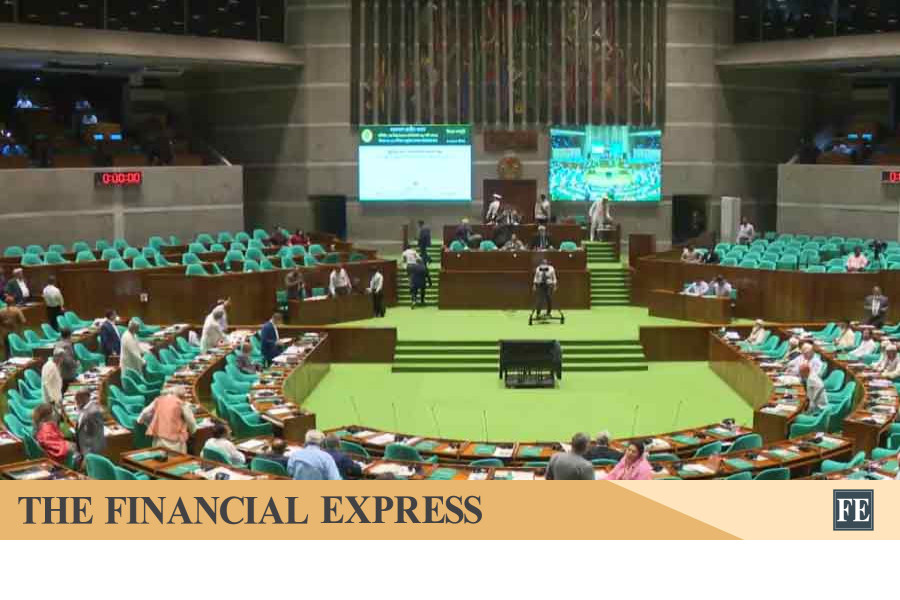
Parliament session File photo

Political tensions are rising over the implementation of the constitutional proposals contained in the July National Charter. The 11-party electoral alliance led by Bangladesh Jamaat-e-Islami has demanded that a session of the Constitution Reform Council be convened by today, Sunday. Otherwise, it warned, it will launch street protests.

Meanwhile, the ruling party Bangladesh Nationalist Party (BNP) has said the matter of the Constitution Reform Council could be discussed in parliament.

According to the July National Charter implementation order, today is the final day for calling the council’s session. Those elected in the parliamentary election are supposed to take two oaths on the same day—one as members of parliament and another as members of the Constitution Reform Council.

The swearing-in ceremony for the newly elected MPs was held on 17 February. The parliament secretariat had prepared for both oaths that day. Members of opposition parties, including Bangladesh Jamaat-e-Islami and the National Citizen Party (NCP), took both oaths. However, MPs elected from the Bangladesh Nationalist Party did not take the oath as members of the Constitution Reform Council.

BNP leaders said the Constitution contains no provision regarding the oath of members of such a council. If such a provision is added in the future, then the question of taking the oath will arise. Since then, the formation of the council has been a topic of political debate. Earlier discussions at the National Consensus Commission had also revealed differences between BNP and the Jamaat–NCP bloc over several key proposals.

The first session of the 13th Jatiya Sangsad began last Thursday. On the opening day, opposition MPs from Bangladesh Jamaat-e-Islami and the National Citizen Party staged protests in parliament over the speech delivered by President Mohammed Shahabuddin and walked out of the chamber.

According to an opposition source, tensions may escalate again during Sunday’s second sitting of the session, particularly over the formation of the Constitution Reform Council. Opposition parties are considering raising the issue during an unscheduled discussion.

Constitution Reform Council

After the “Yes” vote won in the referendum, the July National Charter (Constitutional Reform) Implementation Order stipulates that a Constitution Reform Council should be formed with representatives elected in the 13th parliamentary election.

The referendum endorsed the order and the charter’s 48 constitutional reform proposals. The council is supposed to implement those constitutional provisions.

The implementation order states that the council’s first session should be convened within 30 calendar days of the election results being officially declared—following the same procedure used for convening the first session of parliament. The council would then have 180 working days from its first sitting to complete the constitutional reforms in line with the July National Charter and the referendum results.

The parliamentary election was held on 12 February. The Bangladesh Election Commission published the official gazette of the results after midnight on 13 February (early 14 February).

According to the July order, today—Sunday—is the deadline for convening the council’s first session. The order states that the president should call the session, but that has not yet happened.

Meanwhile, a writ petition has been filed in the High Court Division of the Supreme Court of Bangladesh over the issue. The court issued rules regarding several matters, including the legality of the July National Charter implementation order, letters asking newly elected MPs to take oath as council members, the administration of such an oath through the chief election commissioner, and provisions of the Referendum Ordinance.

A High Court bench issued separate rules on 3 March after hearing two writ petitions and asked the respondents to reply within four weeks.
Observers say that overall the reform initiative—particularly the fundamental constitutional changes pursued by the outgoing interim government through the July National Charter—has now stalled.

Opposition position

At an emergency meeting of the liaison committee of the 11-party opposition alliance yesterday, the issue of the Constitution Reform Council was discussed.

After the meeting, Hamidur Rahman Azad, assistant secretary-general of Bangladesh Jamaat-e-Islami and coordinator of the 11-party electoral alliance, told journalists that the government will complete 30 days in office on 15 March.

“If the government does not convene or arrange to convene the session of the Constitution Reform Council according to the July Charter within this time, it will not be forgiven by the nation,” he said, adding that the responsibility would lie with the government, including the leader of the house.

He warned that if quick steps are not taken to implement the July Charter, the alliance will be forced to launch street protests with public support. The top leaders of the alliance will soon meet to announce protest programmes.

Azad also said that since two votes were held on the same day, two sessions—of parliament and of the reform council—should also be convened. “But only the session of the national parliament has been called,” he said.

He added that although BNP MPs took the oath as MPs in line with the party decision, they did not take the oath as members of the reform council. According to him, this shows the BNP has taken a “U-turn” after forming the government and moved to a completely opposite position, which he described as a betrayal of the nation and an insult to those who voted “Yes” in the referendum.

Government party’s objections

Of the 84 reform proposals in the July National Charter, 48 relate to the Constitution. Consensus was reached on 30 of them. However, the Bangladesh Nationalist Party has expressed disagreement on several key proposals, including reducing the prime minister’s sweeping powers, increasing the powers of the president in certain cases, forming an upper house based on proportional votes from the lower house, requiring upper house approval for constitutional amendments, and incorporating provisions in the Constitution for appointments to bodies such as the ombudsman, the Bangladesh Public Service Commission, and the Anti-Corruption Commission.

For instance, BNP wants the upper house to be formed according to the number of seats a party wins in parliament. In other words, parties would receive seats in the upper house proportional to their parliamentary seats. BNP also believes that constitutional amendments should not require approval from the upper house. These proposals were included in the party’s election manifesto.

In contrast, the referendum presented the proposals exactly as stated in the July Charter, without mentioning BNP’s dissenting views.

During the oath-taking ceremony on 17 February, BNP standing committee member and MP Salahuddin Ahmed said they had been elected as MPs according to the Constitution, not as members of the Constitutional Reform Council. He said that once constitutional reforms are enacted according to the referendum verdict—once the oath format for council members is included in the Constitution’s Third Schedule and it is determined who will administer the oath—then MPs could take the oath as members of the council.

BNP’s position is that it remains committed to implementing the July National Charter in the form in which it was signed, including the differing views of political parties.

However, since BNP MPs—who hold more than a two-thirds majority in parliament—have not taken the oath as council members, the council has not been fully constituted.

After a meeting of the parliamentary advisory committee at the parliament building yesterday, BNP standing committee member and Home Minister Salahuddin Ahmed told journalists that discussions on the Constitution Reform Council could take place “on the floor of the house.”​
 

Constitution reform council: Why the dispute and what the law says

Is the BNP dragging its feet over July charter reforms?

Tanim Ahmed

1773709980342.webp

FILE VISUAL: ANWAR SOHEL

The tension had been brewing since the day new MPs took their oaths almost a month ago.

BNP lawmakers had refused to take oath as members of the constitution reform council, as mandated by the July National Charter Implementation (Constitution Amendment) Order of 2025, saying such a council did not exist in the constitution, and further that they had been elected as members of parliament.

However, the opposition alliance, Jamaat-e-Islami and its allies, took two oaths.

Since then, there has been a back-and-forth of taunts and threats. The home minister’s jibe that he did not quite understand what it (the implementation order) was, "masculine, feminine or perhaps neuter", was widely quoted as being dismissive of the July charter. The opposition, keen to implement the July charter, threatened street agitation if the ruling government refused.

Debate

That tension simmered to the surface at the parliament on Sunday, which marked one month since the election results were formally announced. That one month was also the timeline to convene the constitution reform council, as stipulated by the order.

The order states that the council be convened within a month of the formal election results "in a manner similar to that of the parliament". The leader of the opposition, Jamaat leader Shafiqur Rahman, pointed it out and raised his concern about the fate of the reform council.

The home minister, Salahuddin Ahmed, who led BNP’s negotiations at the consensus commission and is presumably the ruling party’s focal point in this matter, responded. He said that while the president had convened a session of the parliament under Article 72 of the constitution, it does not mention anything about a reform council. Hence, the president could not convene it.

“I am not denying anything. The people’s verdict must be respected, but it has to be done constitutionally -- it has to be done legally. There is no place for emotion here. A state does not run on emotion. A state runs on the constitution, on law, on rules,” he said.

Salahuddin went on to point out that the current session would discuss the president’s speech and was already burdened with scrutinising 133 ordinances passed during the interim government tenure and deciding on them within 30 days. There would not be enough time. Furthermore, the next session would be the budget session.

However, he suggested that this matter could very well be debated and discussed at the business advisory committee and then a bill might be placed to amend the constitution in a way that would allow convening the reform council.

What does the implementation order say?

The order stipulates that MPs will play a dual role -- as members of parliament and as members of the constitution reform council. It says that the council be convened in the same manner as the parliament within a month of the formal election result announcement.

The order states the four questions of the referendum and also lays down guidelines for the council. It states that the first session will elect a leader of the council by a simple majority. The council will decide on its rules of procedure. The order sets the council’s quorum at 60 members in attendance. However, constitutional amendments must pass with a simple majority of the entire council. Meaning that while the council may discuss and deliberate on issues with just 60 members present, constitutional amendments will require 151 votes in favour. There is also a 180-day limit within which the council must conclude reforms, presumably undertake constitutional amendments, in light of the July charter.

However, there are no contingencies. In other words, there is no such provision that stipulates any course of action, in case the provisions are not adhered to.

The home minister pointed out that while the president could indeed issue ordinances (when the parliament is not in session) under article 92 of the constitution, these ordinances may not alter the constitution itself. He said it (meaning the implementation order) was neither an ordinance nor a law, but something in between, raising legal concerns over what he described as an imposed order.

MP Najibur Rahman, responding to the home minister’s comment, said Article 152 of the constitution did stipulate that acts, orders, and ordinances were laws. He said there were about 150 orders from 1971 and 1972 (including the Representation of the People’s Order) that are considered laws.

What does the constitution say?

The relevant section of article 93 states that when the parliament is dissolved or not in session, if the president is “satisfied that circumstances exist which render immediate action necessary, he may make and promulgate such ordinances as the circumstances appear to him to require” but they must not be such that “could not lawfully be made under this Constitution by Act of Parliament”, or “for altering or repealing any provision of this Constitution”.

The home minister had referred to this article suggesting that the order was not legally tenable, presumably since the constitution, as it stands, does not provide for a reform council.

MP Najibur Rahman correctly pointed out that orders are indeed laws. Article 152 defines law as “any act, ordinance, order, rule, regulation, by-law, notification or other legal instrument, and any custom or usage, having the force of law in Bangladesh”.

However, what the MP from Pabna did not mention was that customarily an “order” is passed when the constitution does not exist, as was the situation in 1971 and 1972, or has been suspended, as it was under Ziaur Rahman or during 2007-2008.

Neither was the case in 2025, when the order was passed.

Had it been an ordinance, it would be among those that the current parliament is scrutinising for enactment into laws. BNP appears to be keen on leveraging this legal loophole, citing that the instrument is an ‘order’ and not an ‘ordinance’.

Why an order and not an ordinance?

The National Citizen Party, which is the natural heir of the July uprising, insisted on a legal provision that would make the reforms binding on the next government. In fact, they refused to sign the July charter, pending such a provision.

In order to placate July leaders, who held considerable sway over the Yunus administration, the interim government decided to pass the presidential order in an attempt to bring about a semblance of legal compulsion. It was a stopgap solution, which had the potential of future tension even when it was passed.

What happens to reforms now?

Being the ruling party and that too with a supermajority, BNP has not said no to reforms. In fact, it has already offered the position of one deputy speaker to the opposition, which was one of the reform proposals. Understandably it is more symbolic than substantive in terms of reforms. The opposition is yet to accept that offer.

However, the ruling party has complained strongly about the implementation order and the referendum questions. BNP had given a note of dissent, for instance, on the question of an upper house based on proportional representation which would vote on constitutional amendments.

While BNP has stated several times that it is fully willing to implement reforms, the party has yet to explain how it envisions them. The legal course of action, as the BNP has already suggested, would be to discuss and debate the issues at the Business Advisory Committee, which schedules and organises the parliament's agenda and allocates time for debates. The current committee, headed by the speaker, includes the prime minister, leader of the opposition and other leading members of both the treasury and the opposition benches.​
 

Uproar in parliament over reform council notice as legality dispute delays debate

bdnews24.com
Published :
Mar 29, 2026 23:10
Updated :
Mar 29, 2026 23:10

1774830211855.webp


Parliament has descended into heated exchanges over an Opposition notice seeking a session of the Constitutional Reform Council to implement proposals under the July National Charter.

The dispute intensified when Home Minister Salahuddin Ahmed questioned the notice’s legality on Sunday, sparking protests and uproar from Opposition members.

After the Eid recess, the session resumed with a question-answer hour before Opposition Leader Shafiqur Rahman raised the issue under a point of order, demanding discussion on the delay in convening the council.

Deputy Speaker Kayser Kamal later ruled that a two-hour debate would be held on Tuesday.

The July Charter outlines 48 constitutional reform proposals.

Following a Feb 12 referendum approving them, lawmakers were to serve simultaneously as members of the reform council, with its first session due within 30 days of election results.

While Opposition members, including the Jamaat-e-Islami and the National Citizen Party, took dual oaths, BNP MPs did not, preventing the council’s formation within the deadline.

Shafiqur argued the delay had created a “deadlock” that ignored public expectations.

Chief Whip Nurul Islam insisted scheduled business be completed first, while Opposition figures pressed for immediate debate.

Salahuddin said the government supported discussion but urged adherence to procedural rules.

“The notice itself is not valid,” he said, citing provisions that require legislative action for constitutional changes.

He instead proposed forming a “Constitution Reform Committee” including all parties.

As he spoke, Opposition MPs rose in protest, forcing him to seek “protection” from the chair amid mounting disorder.

Law Minister Asaduzzaman termed the proposal “timely and reasonable”, but sought preparation time, noting MPs needed relevant documents before debate.

Despite continued interruptions -- even leading to the minister’s microphone being cut -- the deputy speaker upheld his ruling for a Tuesday discussion.​
 

Constitutional Reform Council: Discussion on opposition notice on Tuesday

FE ONLINE REPORT
Published :
Mar 29, 2026 20:54
Updated :
Mar 29, 2026 20:54

1774830787297.webp


The discussion on a notice on the Constitutional Reform Council, submitted by the opposition leader in the parliament, Jamaat-e-Islami chief Dr Shafiqur Rahman, will be held in the House on Tuesday.

Deputy Speaker Kaiser Kamal gave the ruling on Sunday after receiving the notice from Opposition leader Dr Shafiqur Rahman.

Earlier, the timing of the discussion on this notice triggered exchanges of words between the treasury and the opposition.

During the afternoon sitting, immediately after the question-answer session, Opposition Leader Shafiqul Rahman raised the notice on a point of order and demanded that it be discussed. However, members of the ruling party argued that, according to the day’s agenda, discussions on starred questions and notices under Rule 71—relating to matters of urgent public importance—must be completed first, after which other notices could be taken up.

To implement 48 constitutional reform proposals under the July National Charter, the interim government had issued the July National Charter (Constitution Reform) Implementation Order and held a referendum. Following a “yes” vote in the referendum, the current parliament is mandated to function not only in its regular capacity but also as a Constitution Reform Council.

According to the implementation order, elected representatives are required to take two oaths on the same day—one as members of parliament and another as members of the Constitution Reform Council. The swearing-in ceremony for newly elected MPs took place on 17 February, and the parliament secretariat had arranged for both oaths on that day. Members of opposition parties, including Jamaat-e-Islami and the National Citizen Party (NCP), took both oaths. However, those elected from the BNP did not take the oath as members of the Constitution Reform Council, resulting in the council not being formed within the stipulated timeframe.

Under the implementation order, the deadline for convening the first session of the council was 15 March. On that day, Opposition Leader Shafiqul Rahman had raised the issue in parliament, after which Speaker Hafiz Uddin Ahmed advised the opposition to submit a formal notice in accordance with the rules.

Following the Eid recess, parliament resumed its session on Sunday, and the opposition submitted the notice seeking discussion on the formation of the Constitution Reform Council.

Raising the notice in the House, Shafiqul Rahman said that on 15 March he had brought up the matter as one of urgent public importance through a point of order, and the Speaker had advised submitting a formal notice. “We have done so. I am now placing this notice before the House and requesting that it be accepted for discussion, particularly regarding the oath of the Constitution Reform Council under the July National Charter implementation order,” he said.

Shortly after, Chief Whip Nurul Islam took the floor, stating that according to the day’s agenda, other matters could only be discussed after completing the question-answer session and Rule 71 proceedings.

In response, the opposition leader said that the discussion should take place immediately after the question-answer session, and that he had stood up accordingly.

Home Minister Salauddin Ahmed then sought to speak, prompting objections from opposition members. However, the Speaker allowed him to proceed. The minister said that the opposition leader had raised a proposal and that the government supported allowing discussion in accordance with the rules. He added that, by convention, adjournment motions are discussed after the question-answer session and Rule 71 proceedings, and that the government would also respond through a point of order. He urged the Speaker to proceed in line with the rules.

At this stage, Opposition Chief Whip Nahid Islam said that the conduct of the House suggested that many were forgetting how this parliament had been formed. “Alongside the parliamentary election, there was also a referendum. But observing the proceedings now, it seems as if that never happened. This is the most important public issue and should be discussed and resolved in this House before moving on to regular business,” he said, urging that the notice be taken up first.

Chief Whip Nurul Islam responded that the Speaker could allow it if he wished, but emphasised that the question-answer session and Rule 71 notices are important matters and rights of members. Two hours have been allocated for these proceedings, after which other issues can be discussed. “We have no objection from our side,” he added.​
 

What causes crisis over constitutional reform

On the issue of reforms, BNP undoubtedly bears a moral responsibility. This topic frequently arises in the speeches and statements of the opposition party. However, it appears that there is a conceptual difference between the government and the opposition coalition regarding the core issue of reforms. Imran Azad has written about the reasons for the constitutional reform crisis.

Imran Azad
Updated: 12 Apr 2026, 18: 11

1776040631642.webp


During the term of the previous interim government, the issue that sparked the most discussion about reform was constitutional reform. Initiatives such as forming a constitutional reform commission, establishing a national consensus commission for dialogue among political parties, the formal signing of the July National Charter based on extensive discussions and consensus (with some dissenting opinions from various political parties), the issuance of the July National Charter (Constitution Reform) Implementation Order, and the drafting of a referendum ordinance were undertaken.

On 12 February, national parliamentary elections and a referendum were held. Afterward, elected parliament members of the opposition parties, Jamaat and NCP, took two oaths on 17 February—one as members of the 13th National Parliament and another as described in the referendum ordinance for the Constitutional Reform Council. BNP, having elected members with a two-thirds majority, refrained from taking the oath of the Constitutional Reform Council.

Despite at least two rounds of parliamentary discussions on two separate adjournment proposals regarding the formation of the Constitutional Reform Council and the implementation of the July Charter, the government and the opposition could not reach any consensus. BNP's stance is to implement the July National Charter signed with notes of dissent through conventional methods of constitutional amendment. On the other hand, the opposition coalition, consisting of Jamaat-NCP, demands the full implementation of all the main proposals of the July Charter without notes of dissent. They believe there is a need to establish a Constitutional Reform Council for this.

One of the reasons for such opposing stances between the government and the opposition parties is that the notes of dissent provided by political parties, especially the BNP, on the consensus issues of the July Charter were not included in the July National Charter Implementation Order. For example, the issue of forming an upper house in parliament can be mentioned. The July Charter proposed that 100 members of the upper house would be elected through a proportional representation (PR) method based on votes of the lower house.

The BNP had a different opinion on this matter, suggesting that the upper house should be formed based on the proportional representation method of lower house seats. However, in the July Charter Implementation Order, this dissent of the BNP was disregarded, and the question of the referendum was determined.

There are several other examples like this where we find that not only the BNP but also differing opinions of some other political parties were not adequately addressed in the July National Charter Implementation Order.

From the perspective of constitutional law, this order, in reality, lacks any basis. Highlighting this, Home Minister Salahuddin Ahmed stated in Parliament on 5 April, ''The July National Charter Implementation Order is a “colorable legislation” (disguised law). After the first Parliament began on 7 April 1973, the authority to issue presidential orders ceased. It was imposed on them as a document of national deception by force. They were compelled to vote in a referendum through subterfuge.’ (Prothom Alo, 5 April 2026)

Many might remember that during the interim government, there was temporary complexity regarding how to implement the July Charter. At that time, by issuing a presidential order concerning the referendum, a message was given to the public that both BNP and Jamaat were satisfied. Because, as per the BNP’s demand, it was stated in the order that the parliamentary elections and the referendum would be held on the same day. On the other hand, the order gave preference to Jamaat's demand for the PR method in forming the upper house.

Legislating in this way, beyond the July National Charter agreed upon and signed with notes of dissent, was an example of the interim government's short-sighted decision. We must not forget that the legal and political status of the July National Charter agreed upon and signed with notes of dissent is much greater than any presidential order issued without any constitutional basis. Therefore, the demand for forming a constitutional reform council through this constitutionally unsound order is also weak in the eyes of the law.

Jamaat-NCP wants constitutional reform, wants the implementation of the referendum's outcome. BNP has not stated that it doesn’t want these; the BNP has spoken about the constitutional process. It won't be logical to grant legitimacy to constitutional reform or anything else now without regard for rules and regulations just because many things were done previously against the norm.

It is often said that a dictatorial system was established in the country by using a legal framework—it is correct, but not entirely, partially. A system can become dictatorial not only due to the legal framework but also due to various other reasons such as social, cultural, and political factors. An attempt is made to legitimise autocracy and make it firm through a legal framework. If reforms deviate from the basic concepts of law, the likelihood of them being sustainable is low.

In Parliament on 5 April, NCP Member of Parliament Akhtar Hossain stated, there are some proposals in the July Charter that would change the constitution's fundamental structure. If included through amendments, they won't be sustainable. For this reason, they advocated for a Constituent Assembly in the Consensus Commission. BNP suggested amending through the Parliament. (Prothom Alo, 5 April 2026)

Those familiar with the evolution of constitutional law know that the higher court has the power to declare original provisions of a constitution, formulated by a Constituent Assembly, unconstitutional if it wishes to use its interpretative authority. The Supreme Court’s ruling on the 16th amendment to the constitution is noteworthy here. The power of the parliament to remove judges of the higher court, initially included through the Constituent Assembly in the 1972 constitution and later added through the 16th amendment in 2014, was declared unconstitutional by the Supreme Court in 2016 and 2017.

So far, all kinds of legal arguments have been presented from BNP's side in Parliament to prove that the government has no legal or constitutional obligation to form the constitutional reform council. Even though serious legal questions about the constitutional basis of the July Charter Implementation Order have been raised by BNP Members of Parliament, the opposition members seem unable to provide any appropriate response or reasoning in legal terms.

Referring to the referendum under the presidency of Ziaur Rahman in 1977, Jamaat-affiliated lawyer Shishir Monir recently asked at a discussion meeting, ''Was there a referendum in the constitution then?'' (Jugantor, 2 April 2026). He said, ''The referendum came into the constitution in 1978. That too through Martial Law Proclamation. Now they instruct us by distorting, post-morteming, tearing, and cutting the constitution by imposing Martial Law. What's constitutional and what's not? These don't suit coming from them. Why would they say these?’ (Jugantor, 2 April 2026)

This lawyer must be well aware that the Martial Law Proclamation was issued while the constitution remained suspended, and later through military decrees, all activities conducted, including the 1977 referendum, were legitimised through the Fifth Amendment of the constitution. Though later the Fifth Amendment faced constitutional legality questions in higher courts.

It is noteworthy that in 2025, when issuing the order concerning the referendum, the constitution was not in a suspended state; instead, the order was issued while the constitution was in effect, and the interim government's decision is largely responsible for creating the current crisis regarding constitutional reform.

While justifying the order concerning the referendum, one of the commission members, lawyer Sharif Bhuiyan, wrote a column in Prothom Alo on 18 December 2025. In that piece titled ‘The Legal Basis of the Referendum and Other Relevant Aspects,’ he mentioned, ‘To understand the constitutional basis of the referendum, one must understand the constitutional basis of the government led by Professor Yunus. Because, the constitutional foundation of both is similar. It's not true to say that the [Yunus] government was based on a written constitution. Nevertheless, [this] government was constitutional and legitimate. After the Prime Minister fled the country, implementing the written constitution became impossible. Because, the constitution was not designed considering such a situation. Hence, the current government’s constitutionality and legitimacy must be sought in principles outside the written constitution [like the “Doctrine of Necessity”].’

Regarding Sharif Bhuiyan’s rationale, it must be said that it is true the government wasn't formed entirely by the constitution; however, not following the constitution without suspending it or following it only partially for convenience cannot be considered a democratic behaviour. It is noteworthy that Sharif Bhuiyan did not mention Article 106 of the constitution anywhere in his entire piece.

Was the formation of the government after August 5, invoking the Supreme Court’s decision under Article 106, a significant event? If so, why is there an attempt to avoid discussing it? This naturally raises questions about the process of obtaining the reference to Article 106 from the Supreme Court.

On the question of reforms, the BNP undoubtedly has a moral responsibility. This topic often arises in the speeches and statements of the opposition party. However, it seems that there is a conceptual difference between the government and the opposition coalition regarding the very issue of reforms. Where for BNP, constitutional reform means amending certain provisions of the prevailing constitution with the force of majority, for Jamaat-NCP, reform means discarding the 1972 constitution and drafting a new one. Some clarification is needed on these issues.

Firstly, there is no longer anything known as the ''72 constitution. The ''72 constitution itself has undergone numerous amendments and currently exists in a completely altered form. Secondly, this crisis has arisen because the Constitutional Reform Commission and subsequently the National Consensus Commission did not address the conceptual issues concerning the reform.

At a meeting of the Constitutional Reform Commission on 26 October 2024, the scope and purpose of the reform were determined. It was stated in the adopted proposal that the reform would include ''a comprehensive amendment, deletion, revision, reorganisation, and rewriting of the constitution reflecting public aspirations, including a review of the current constitution.’

By keeping the scope of reform broad, the commission might have thought that it would be possible to complete constitutional reform based on consensus under a single umbrella embracing all political ideologies. But in reality, this wasn’t feasible; rather, in some instances, the Consensus Commission tried to impose its decisions. Consequently, a crisis over constitutional reform is now evident.

#Imran Azad is a researcher on law, courts, and constitutional matters.​
 

Latest Posts

Back