New Tweets

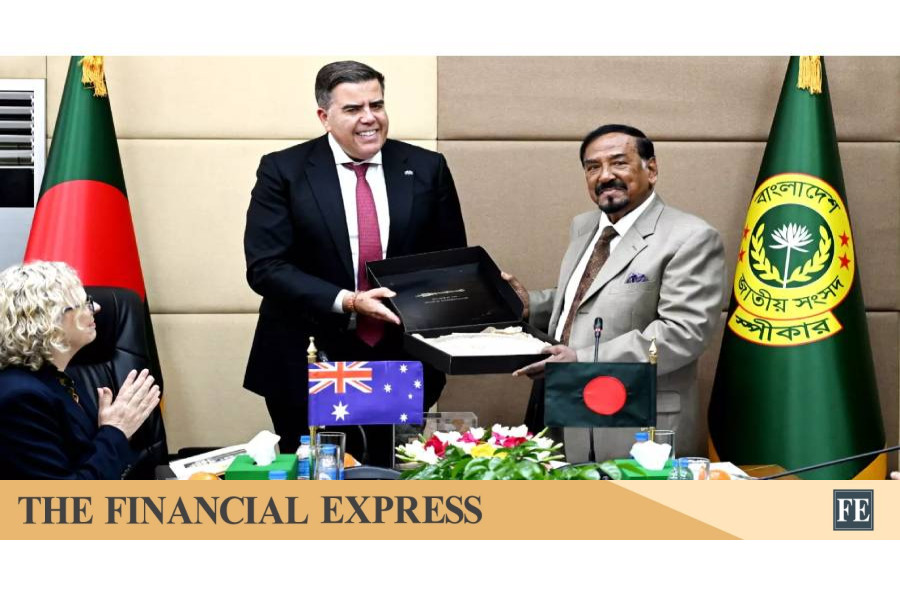
[๐Ÿ‡ง๐Ÿ‡ฉ] Economic, Political and Strategic Relations Between Bangladesh and Australia

G Bangladesh Defense
[๐Ÿ‡ง๐Ÿ‡ฉ] Economic, Political and Strategic Relations Between Bangladesh and Australia
12
1K
More threads by Saif


Strengthen renewable energy ties with Australia
Speakers tell CPD discussion

Increasing collaboration with Australia in the renewable energy sector will enhance Bangladesh's clean energy capacity, promoting sustainable growth and climate resilience, according to speakers.

However, financing remains a significant challenge in Bangladesh's transition to green energy, posing a major barrier to achieving sustainability goals, they said.

The gap between demand and availability in long-term climate financing will reach $230 billion by 2050, for which securing adequate funding is crucial for implementing essential adaptation and mitigation projects, they added.

"We need deeper collaboration with Australia in renewable energy investments, technology transfer, and capacity-building programmes," said Khondaker Golam Moazzem, research director of the Centre for Policy Dialogue (CPD).

Presenting a keynote on "Bangladesh-Australia: Climate Policy and Green Energy Transition" at a discussion organised by the CPD on the topic at The Westin Dhaka yesterday, Moazzem underscored the necessity of a renewable energy transition.

He also said a green energy transition was no longer optional, but a requirement for ensuring energy security and sustainable development.

Moazzem highlighted the Indo-Pacific region's increasing alignment of economic growth with sustainability, emphasising the necessity of collaborative action to combat climate change.

According to him, Bangladesh has made notable progress in climate policies, implementing key frameworks such as the Climate Change Strategy and Action Plan (2022), National Adaptation Plan (2023-2050), and the Integrated Energy and Power System Master Plan (2023).

These initiatives aim to enhance the country's resilience against climate change while promoting clean energy alternatives, he said.

Meanwhile, Australia's Climate Change Act (2022) and its commitment to reducing emissions demonstrate a firm policy direction towards achieving net-zero targets, he said.

Moazzem pointed out that Bangladesh's energy sector was still highly dependent on fossil fuels and emphasised that a shift to solar, wind, and hydropower could help meet growing energy demands sustainably.

However, Australia's increased climate investments and development aid could play a pivotal role in addressing this shortfall, he said.

He urged both governments to facilitate joint financing mechanisms, enabling Bangladesh to scale up its renewable energy infrastructure.

Syeda Rizwana Hasan, adviser to the Ministry of Environment, Forest, and Climate Change, acknowledged that despite the government's ambitious targets, implementation was challenging due to financial constraints and a short timeframe.

However, she said the government could strengthen the Sustainable and Renewable Energy Development Authority (SREDA) to implement its plan to increase green energy.

According to her, power plants are directly responsible for 28 percent of the air pollution in Bangladesh.

She encouraged the owners of heavy industries to invest in generating renewable energy.

Additionally, the adviser urged the Australian government to provide grants or concessional loans to the climate change fund.

Kristin Tilley, the Australian ambassador for climate change, said the Australian government was emphasising the generation of at least 35 percent green energy in total power production.

She stated that they were recommending that the Australian government increase funding for developing countries to ensure green energy access for at least 26 least-developed countries under the development fund.

"This fund is used for education and training programmes," she said, adding, "Carbon emissions should be reduced by adopting technology in manufacturing units or heavy industries."

Martin Holtmann, Country Manager of IFC Bangladesh, said they have invested $1 billion in the private sector, emphasising carbon emission mitigation at their own risk.

He also mentioned that the Bangladesh government was sincere in addressing climate change-focused projects, which was commendable.

Moreover, the number of LEED-certified green factories is growing in Bangladesh, paving the way to achieving zero carbon emissions within 25 years, Holtmann added.

Moderating the discussion, Fahmida Khatun, executive director of the CPD, emphasised the urgent need for joint action to combat climate change and ensure sustainability.​
 
Analyze

Analyze Post

Add your ideas here:
Highlight Cite Respond


Australian visas to be processed in Dhaka, instead of New Delhi
UNB
Dhaka
Updated: 20 Mar 2025, 17: 47

1742516694139.webp

Flags of Bangladesh and Australia UNB

Australia has conveyed to Bangladesh that they would now process visas for Bangladeshi citizens from its high commission in Dhaka.

Australian home minister Tony Burke called Bangladesh home adviser Lt Gen (retd) Jahangir Alam Chowdhury over phone on Thursday to inform him about the decision.

The home adviser conveyed it to the council of advisers on Thursday that the decision would be effective immediately.

Chief adviser Prof Muhammad Yunus made the request to Australian home minister Burke when he visited Bangladesh in October last year, said CAโ€™s deputy press secretary Abul Kalam Azad Majumder.

Previously, Australia would process the visas of Bangladeshi nationals in New Delhi.​
 
Analyze

Analyze Post

Add your ideas here:
Highlight Cite Respond

Australian envoy calls on Mirza Fakhrul

BSS
Published :
Jul 03, 2025 21:56
Updated :
Jul 03, 2025 21:56

Australian High Commissioner in Bangladesh Susan Ryle on Thursday called on BNP Secretary General Mirza Fakhrul Islam Alamgir at the party chairpersonโ€™s Gulshan political office.

BNP Standing Committee members Dr. Abdul Moyeen Khan and Amir Khasru Mahmud Chowdhury and Organizing Secretary Shama Obaid were present during the meeting.

Following the meeting, BNP Standing Committee member Amir Khasru Mahmud Chowdhury told journalists that there is no reason to worry about the upcoming national parliament elections.

Voters and political parties want the country to remain in a stable state and elections should be held in a disciplined manner, he said.

Regarding reforms, Khasru said BNP is the initiator of reforms. In its 2030 vision the party floated 31 points for reform. Now, moving towards elections quickly is important for the country, he said.

About the meeting with the Australian envoy, the BNP leader said it is natural that there will be discussions on election.

โ€œIt has come to light that the people of Bangladesh have not been able to exercise their right to vote in the last three-four elections. Everyone is eagerly waiting to vote. Especially the new generations, who are around 30, could not exercise their voting rights at all. People all over the country are eagerly waiting for vote,โ€ he said.

Khasru hoped that the next election will see a good voter turnout. People will go to the polling stations with great enthusiasm.

He said discussion about the preparations for the elections was held with the Australian envoy. In this regard, Australia assured of providing assistance to the Election Commission.

Australia want a fair election in Bangladesh. Their cooperation in this regard will continue, Khasru said.​
 
Analyze

Analyze Post

Add your ideas here:
Highlight Cite Respond

Dhaka, Canberra pledge for robust partnership
Diplomatic Correspondent Dhaka
Updated: 10 Dec 2025, 22: 18

1765416288467.webp


The 6th round of Senior Officialsโ€™ Talks (SOT) between Bangladesh and Australia held in Dhaka on Wednesday, said a press release.

Ambassador Md Nazrul Islam, Secretary (Bilateralโ€“East and West), Ministry of Foreign Affairs and Sarah Storey, First Assistant Secretary, South and Central Asia Division, Department of Foreign Affairs and Trade (DFAT), Government of Australia led the respective delegations.

With the commitment to strengthen the evergrowing bilateral relations between the two friendly countries, the 6th SOT held in a warm and cordial atmosphere.


The discussion featured constructive, forward-looking exchanges covering wide spectrum of bilateral relations including sectoral cooperation, trade and investment, development partnership, migration and mobility, maritime cooperation, multilateral engagement, climate change, and people-to-people linkages.

Both sides also exchanged views on regional and global matters of mutual interest, including the Indo-Pacific, IORA engagements, and the Rohingya situation.

The two delegations identified new avenues for cooperation in areas such as renewable energy, skills partnership and technology sharing, blue economy, artificial intelligence, cyber security and antiโ€“money laundering initiatives.

1765416311769.webp

Courtesy

First Assistant Secretary Storey reiterated Australiaโ€™s continued support to the Interim Government and its reform initiatives.

On the upcoming General Election, she conveyed that Australia looks forward to a free and fair election and democratic transition in Bangladesh including extending full support to the Bangladeshi expatriates for the postal voting.

Storey highlighted Australian Governmentโ€™s priority areas in its relations with Bangladesh namely expansion of people to people linkages, growth of trade and investment, implementation of development partnership, support Bangladesh in managing Rohingyas, defence and security cooperation, Indo Pacific cooperation.

The Australian side conveyed their intention to prioritize Bangladesh as secondary manufacturing location for its cotton and wool industries.

Secretary Md Nazrul Islam proposed resumption of Work and Holiday visas for Bangladeshis in Australia, employment of Bangladeshi specified skilled workers in Australian mining sector, establishment of University of Canberraโ€™s campus in Dhaka and collaboration between Australian TAFE and Bangladeshi TVET.

Nazrul Islam underscored the importance of increased high-level visits to advance the growing partnership between Bangladesh and Australia.

The talks concluded with the signing of โ€˜MoU on Employment of the Dependents of Diplomatic and Consular Personnel between Bangladesh and Australiaโ€™.

The visiting Australian delegation arrived in Dhaka on 9 December and will attend the Joint Working Group on Trade and Investment Meeting under the Trade and Investment Framework Agreement (TIFA) tomorrow at the Ministry of commerce.

The 7th SOT is expected to be held in Canberra next year.​
 
Analyze

Analyze Post

Add your ideas here:
Highlight Cite Respond

Strengthening economic cooperation with Australia

Mir Mostafizur Rahaman
Published :
Jan 27, 2026 01:01
Updated :
Jan 27, 2026 01:01

1769474496865.webp


Bangladesh and Australia like to describe each other as "old friends", and the phrase is not just diplomatic rhetoric. Australia was among the first countries to recognise Bangladesh after its independence in 1971. More than half a century later, that early political goodwill has matured into a relationship shaped by Commonwealth ties, people-to-people connections, shared democratic traditions and a steadily deepening economic partnership. Yet for all the warmth and symbolism, the hard truth remains: the full potential of bilateral trade and investment between Dhaka and Canberra is still largely untapped.

Trade between the two countries has grown impressively. Total two-way trade now stands at around $5bn, expanding at an average rate of more than 16 per cent annually over the past five years. Bangladesh has become Australia's 22nd largest export market, with Australian exports reaching $3.3bn in 2024. Bangladesh, for its part, enjoys duty-free and quota-free access to the Australian market -- a privilege that will continue even after it graduates from least developed country (LDC) status scheduled for November 2026. These are not trivial achievements. But they also raise an uncomfortable question: why, given such favourable conditions, does the relationship still feel underpowered?

Part of the answer lies in understanding how both sides are now trying to reframe the relationship. A significant step in that direction is the ongoing research titled Bangladesh Trade and Investment Study: Market Opportunities and Trade Barriers, jointly conducted by the Bangladesh Foreign Trade Institute (BFTI) and the Institute of International Trade (IIT) at the University of Adelaide. Funded by Australia's Department of Foreign Affairs and Trade (DFAT), the study reflects a more analytical, less rhetorical approach to bilateral engagement.

Its objectives are ambitious but necessary: to identify market opportunities for Australian exporters and investors, diagnose trade and investment barriers, and propose practical recommendations to boost economic flows in both directions. The scope of the study is equally telling. It spans agriculture; fisheries and livestock; energy and minerals; air connectivity; and vocational education -- sectors where Australia's comparative advantages are globally recognised. At the same time, it examines Bangladesh's own export-oriented and emerging sectors, including ready-made garments, information technology, light engineering, leather goods and footwear.

This breadth is important because it challenges a long-standing mismatch in expectations. Australian investors, by and large, have not aligned their interests with Bangladesh's officially declared thrust sectors. This misalignment partly explains the relatively low level of Australian foreign direct investment (FDI) in Bangladesh, despite strong trade growth. Another often-cited factor is investor preference for predictability. Australian firms tend to favour markets where Canberra has clear bilateral investment protection arrangements -- legal frameworks that reduce risk and enhance confidence.

Here, Bangladesh faces a strategic choice. Five years ago, the two countries signed a Trade and Investment Framework Arrangement (TIFA), establishing a joint working group to explore ways to deepen economic engagement. TIFA has provided an institutional platform, but it stops short of offering the legal certainty many investors seek. Trade officials in Dhaka increasingly argue that a bilateral investment treaty is the missing piece. Such treaties are widely used to protect foreign investors' rights, ensure fair treatment and provide safeguards against arbitrary policy shifts. For investors, they function as a form of legal insurance; for host countries, they signal seriousness about reform and openness.

The timing could hardly be more critical. Bangladesh's accession to larger trade blocs such as ASEAN or the Regional Comprehensive Economic Partnership (RCEP) may take years. In the interim, a bilateral investment treaty with Australia could serve as a bridge -- anchoring confidence at a moment when Bangladesh is transitioning out of LDC status and seeking to reposition itself as an upper-middle-income economy over the next decade.

Australia, for its part, has signalled growing interest. The appointment of a resident Austrade Trade and Investment Commissioner in Bangladesh in February 2025 was a quiet but meaningful milestone. It reflects recognition that Bangladesh is no longer merely a development partner or a low-cost sourcing destination, but a fast-growing market of more than 170 million people with expanding consumer demand, digital ambition and infrastructure needs.

The complementarities are striking. Australian exports of cotton and natural fibres feed directly into Bangladesh's globally dominant ready-made garment industry. Australian expertise in education -- particularly vocational and technical training -- aligns closely with Bangladesh's demographic reality: a young population urgently needing skills for a changing labour market. In energy and minerals, Australian companies are well placed to support Bangladesh's infrastructure expansion and energy transition, including renewable energy development.

Beyond commerce, the relationship is underpinned by a dense web of cooperation. Australia runs one of its most substantial development assistance programmes in Bangladesh, with a strong focus on education, economic resilience, gender equality and governance. Since 2017, Australia has committed more than $1.25bn to humanitarian responses linked to the Rohingya crisis, easing Bangladesh's burden in hosting over 1.1 million displaced people. This humanitarian engagement is not peripheral to trade; it shapes trust, political goodwill and long-term stability -- all prerequisites for sustainable investment.

People-to-people links are another quiet strength. More than 73,000 Bangladesh-born people now live in Australia, forming a bridge between the two societies. Student mobility has surged: over 18,000 Bangladeshi students enrolled in Australian institutions in 2024, a 50 per cent year-on-year increase, and numbers climbed further in 2025. Sporting exchanges, cultural cooperation agreements and governance fellowships add texture to what might otherwise be a purely transactional relationship.

Strategically, both countries share an interest in a peaceful and rules-based Indian Ocean region. They work together in forums such as the Indian Ocean Rim Association, the Bali Process, the Commonwealth, the World Trade Organization and the United Nations. Bangladesh's role as the largest contributor to UN peacekeeping operations underscores its growing global profile -- one that Australia has consistently acknowledged.

Yet none of this should breed complacency. Bangladesh still faces challenges in doing business: regulatory complexity, infrastructure gaps and policy unpredictability among them. Economic reforms -- from banking sector restructuring to labour law amendments -- are underway, but their credibility will ultimately be tested by implementation. For Australian investors accustomed to stable, transparent systems, progress in these areas will matter more than promotional roadshows or lofty declarations.

The opportunity, however, is real. Bangladesh is no longer a peripheral economy; it is a pivotal one in the Indo-Pacific. Australia is no longer just a distant partner; it is a source of technology, skills and capital that Bangladesh needs for its next growth phase. Moving from potential to performance will require more than goodwill. It will demand concrete legal frameworks, targeted investment strategies and a willingness on both sides to see each other not through the lens of habit, but of possibility.

Old friends, after all, can still discover new reasons to work together.​
 
Analyze

Analyze Post

Add your ideas here:
Highlight Cite Respond

Members Online

Latest Posts

Back
PKDefense - Recommended Toggle