Appreciating Bangladesh’s rapid economic growth and investment-friendly environment, South Korean Ambassador Kim Ji-joon on Wednesday expressed his country’s interest in investing in Bangladesh’s electronics manufacturing and technology sectors...
www.newagebd.net
S Korea keen to invest in electronics sectors
United News of Bangladesh . Dhaka 18 June, 2026, 00:15
South Korean ambassador to Bangladesh Ji-joon Kim pays a courtesy call on prime minister's adviser on foreign affairs Humaiun Kobir at the Prime Minister's Office on Wednesday. | BSS photo
Appreciating Bangladesh’s rapid economic growth and investment-friendly environment, South Korean Ambassador Kim Ji-joon on Wednesday expressed his country’s interest in investing in Bangladesh’s electronics manufacturing and technology sectors.
He also highlighted South Korea’s interest in expanding cooperation and investment in renewable energy, information technology, manufacturing, and other promising sectors.
The Ambassador discussed the issues during a meeting with the Prime Minister’s foreign affairs adviser Humaiun Kobir at the Prime Minister’s Office in Tejgaon.
During the meeting, the two sides discussed ways to further strengthen the longstanding friendly relations and enhance bilateral cooperation between Bangladesh and South Korea.
The Ministry of Foreign Affairs said both sides emphasised the importance of deepening collaboration in trade, investment, technology, industrialization, infrastructure development, human resource development, and skills enhancement.
Humaiun Kobir praised the growing economic and development partnership between Bangladesh and South Korea and underscored the need to boost trade and investment, facilitate technology transfer, and further strengthen industrial cooperation.
He welcomed increased South Korean investment in Bangladesh and assured the government’s full support in facilitating such initiatives.
Both sides reaffirmed their commitment to maintaining close cooperation on issues of mutual interest and expressed optimism about elevating Bangladesh-South Korea relations to new heights.
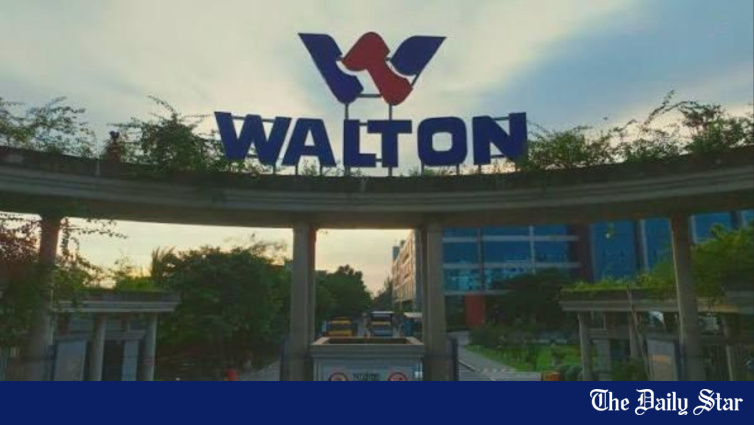
Walton Hi-Tech Industries PLC, one of Bangladesh’s leading electrical and electronics manufacturers, has signed a global distributorship agreement with Libya-based ASR Al Techniyah to expand its presence in North Africa.
www.thedailystar.net
Walton signs deal to expand footprint in Libya
Star Business Report
Walton Hi-Tech Industries PLC, one of Bangladesh’s leading electrical and electronics manufacturers, has signed a global distributorship agreement with Libya-based ASR Al Techniyah to expand its presence in North Africa.
Under the three-year agreement, ASR Al Techniyah, a private company registered in Tripoli, will serve as Walton’s authorised distributor, overseeing the sales, marketing and distribution of Walton products across Libya.
According to a company disclosure filed with the Dhaka Stock Exchange (DSE), the partnership aims to introduce Walton’s range of home appliances and electronics to Libyan consumers under mutually agreed terms.
The agreement marks another step in Walton’s strategy to strengthen its international presence by taking “Made in Bangladesh” technology to new markets.
Under the deal, ASR Al Techniyah will market and sell Walton-branded products, including refrigerators, televisions, air conditioners and washing machines.
Abdur Rouf, head of global business division at Walton, said the company’s innovative technology, modern designs, product quality, durability, energy efficiency, eco-friendly features and competitive pricing have helped it stay ahead of rivals in overseas markets.
He said the brand has gained consumers’ trust in many countries, with its presence now spanning 55 markets, including Libya.
Rouf added that Walton has already exported two shipments of refrigerators, air conditioners, televisions and washing machines to Libya this year. The company expects the expansion to support its entry into other North African markets.
Walton’s share price rose 0.16 percent on the DSE today.
In fiscal year 2024-25, the company posted revenue of Tk 7,082 crore, down from Tk 7,512 crore a year earlier. Profit after tax also fell to Tk 1,036 crore from Tk 1,356 crore.
Walton Hi-Tech Industries is set to expand its market presence in Kenya through a partnership with Nairobi-based North Light Holdings.
www.thedailystar.net
Walton to expand in Kenya
Star Business Report
Walton Hi-Tech Industries is set to expand its market presence in Kenya through a partnership with Nairobi-based North Light Holdings.
The two companies have signed a memorandum of understanding to that end, according to a disclosure published on the Dhaka Stock Exchange (DSE) website yesterday.
Under the deal, the two companies will collaborate to sell, market and promote Walton products in the African country and provide customer care services.
North Light Holdings is a private company with its registered office in Nairobi, the disclosure said.
Walton shares were unchanged at Tk 331.10 as of 1:30pm yesterday on the DSE floor.
The listed manufacturer of electrical and electronic products reported a net profit of Tk 1,124 crore for FY2025-26, up 8.5 percent year-on-year, according to its financial statements. The increase was mainly driven by a sharp fall in bank interest expenses.
According to DSE data, sponsors and directors held 71.09 percent of Walton’s shares as of September 30, 2026, while institutional investors, foreign investors and the public held the remainder.
MES praises Walton’s technological manufacturing strength
The delegation was led by Major General Hasan Uz Zaman, engineer-in-chief of the Military Engineer Services
A high-level delegation of the Military Engineer Services (MES) visited the headquarters of Walton Hi-Tech Industries PLC at Chandra, Gazipur, and expressed admiration for the company’s vast manufacturing scale, advanced technologies, research and development activities, product diversity and international-standard production capabilities.
The delegation was led by Major General Hasan Uz Zaman, engineer-in-chief of the Military Engineer Services.
Other members of the delegation included Brigadier General Abul Hasnat Mohammad Sayem, director, Works, along with senior officials of MES.
During the recent visit, the MES delegation was welcomed by SM Mahbubul Alam, managing director of Walton Hi-Tech Industries PLC, along with other senior officials of the company.
Members of the delegation visited Walton’s display centre, various production plants, and research and innovation activities.
They observed the manufacturing processes and technological excellence of a wide range of electrical, electronic and hi-tech products, including lifts, air conditioners, refrigerators, solar panels, batteries, cables and compressors.
Major General Hasan Uz Zaman said: “We are truly impressed by Walton’s vast manufacturing scale, product diversity and technological capabilities. In particular, the company’s research and development activities are highly commendable. We would like to see Walton further expand these capabilities and continue advancing in technological innovation.”
Emphasizing the importance of prioritizing locally manufactured products, he said: “Like the government, we also place importance on giving preference to products made in Bangladesh. If the required products are available locally, we would first consider locally manufactured products. In this regard, Walton is one of the companies that naturally comes to our consideration. Its contribution to industrialization, employment generation, local manufacturing, technological development and the national economy truly deserves appreciation.”
Brigadier General Abul Hasnat Mohammad Sayem, director, Works of the Military Engineer Services, said: “Walton’s extensive manufacturing capability is truly remarkable. It is a matter of great pride that such large-scale manufacturing facilities and industrial capabilities have been developed in Bangladesh, and products manufactured here are being exported to different countries around the world.”
SM Mahbubul Alam, managing director of Walton Hi-Tech Industries PLC, said: “Walton places great importance on building long-term cooperation with key national institutions based on technology and manufacturing capabilities. The visit of the Military Engineer Services delegation is highly significant for us. Their valuable observations and recommendations will inspire us to further advance local technology-product manufacturing, research and development.”
Tanvir Anjum, business coordinator to the managing director of Walton Hi-Tech Industries PLC and senior executive director of the company, oversees Walton’s business activities, communication and coordination with MES.
He hosted the program and expressed sincere gratitude to the MES delegation for their visit.
Among others present during the visit were Mohammad Yusuf Ali, additional managing director of Walton; Md Tanvir Rahman, chief business officer of Walton AC; Ahmad Tanvir, head of corporate sales; Protic Kumar Modak, senior executive director; Md Mahmudur Rahman, CBO of Walton Lift; and Tanvir Ahmad, head of admin, along with other officials.
Demand for lithium-ion batteries is rising in Bangladesh as the use of electric vehicles and renewable energy continues to grow. Seeking to tap into this expanding market, two of the country’s major industrial groups, Walton and PRAN-RFL, have invested in the sector. Walton will begin...
en.prothomalo.com
2 major Bangladeshi conglomerates to begin lithium-ion battery production
Shovongkor Karmakar
PRAN- RFL and Walton logo
Demand for lithium-ion batteries is rising in Bangladesh as the use of electric vehicles and renewable energy continues to grow. Seeking to tap into this expanding market, two of the country’s major industrial groups, Walton and PRAN-RFL, have invested in the sector.
Walton will begin producing lithium-ion battery cells next month, while PRAN-RFL Group plans to import lithium-ion cells and manufacture battery packs at its own factory in November.
Walton Hi-Tech Industries, a subsidiary of Walton Group, has established a lithium-ion battery cell manufacturing plant in Chandra, Gazipur.
The factory will have an annual production capacity of 10 million (1 crore) battery cells. These cells will be used in products such as motorcycles, toys, rechargeable lights, rechargeable fans and digital scales. The company has invested Tk 1.13 billion (113 crore) in the project so far.
PRAN-RFL Group has established a lithium-ion battery pack manufacturing plant at its industrial park in Habiganj.
The facility will have an annual production capacity of 60,000 battery packs. The company has already invested Tk 250 million (25 crore) in the project.
Bangladesh’s annual market for all types of batteries is currently worth around Tk 150 billion.
Lithium-ion batteries account for Tk 20 billion to Tk 25 billion of this market. This means lead-acid batteries still dominate the sector. However, companies investing in the industry expect lithium-ion batteries to gradually replace lead-acid batteries.
Discussions with industry insiders reveal that demand for batteries is growing rapidly for battery-powered rickshaws, electric bikes and electricity storage in homes, commercial establishments and industrial facilities.
Bangladesh currently has an estimated 150,000 battery-powered rickshaws. The annual market for batteries used in this sector is worth between Tk 16 billion and Tk 18 billion.
Meanwhile, 12,000 to 16,000 electric two-wheelers, or electric bikes, are sold annually. The batteries used in these vehicles represent an annual market worth Tk 6.75 billion to Tk 9 billion.
In addition, batteries used for electricity storage account for an annual market worth Tk 9 billion. Companies entering the sector are targeting these three markets with their investments.
Industry insiders say lithium-ion batteries are lighter and more durable than conventional lead-acid batteries. They also charge in approximately one-third of the time required by lead-acid batteries, making them more energy-efficient. However, lithium-ion batteries cost nearly twice as much as conventional lead-acid batteries.
Walton to manufacture battery cells
Walton officials said the company would soon begin producing large prismatic lithium and sodium battery cells for battery-powered auto-rickshaws and solar energy storage systems. The initiative will require an additional investment of Tk 4 billion to Tk 5 billion.
Mahfuzur Rahman, chief business officer (CBO) of the lithium-ion battery project at Walton Hi-Tech Industries, told Prothom Alo that the company had completed the commissioning of the equipment installed to manufacture lithium-ion battery cells.
Trial production will begin this month or next month. The company also plans to launch lithium and sodium battery pack production lines within the next three to four months.
Mahfuzur Rahman added, “Using these production lines, we will begin manufacturing large batteries for easy-bikes, telecommunications equipment, IPS and UPS systems, solar energy storage, cars, electric bikes, forklifts and other applications.”
PRAN-RFL to manufacture battery packs
PRAN-RFL Group, one of Bangladesh’s leading industrial conglomerates, will begin manufacturing lithium-ion battery packs at its industrial park in Habiganj next month using imported cells.
Initially, the company will import lithium cells, along with certain specialised electronic components and other materials, from abroad.
As a result, local value addition in lithium-ion battery pack production will initially stand at around 20 per cent.
However, several senior officials of the group said it planned to increase local value addition to 70–80 per cent by expanding its own manufacturing facilities in the future.
PRAN-RFL Group said it would initially manufacture various types of lithium-ion batteries for easy-bikes, mishuks and electric bikes. The group will market these batteries under its own Blaze brand.
Asked about future plans, Kazi Rashedul Islam, deputy general manager of the RFL Batteries and Cables project, said, “We also plan to manufacture batteries for solar energy storage systems, IPS and UPS systems, backup power systems in the telecommunications sector, and energy storage at industrial facilities.”
He said the company planned to invest an additional Tk 1 billion (100 crore) next year to expand its lithium-ion battery manufacturing plant.
The lithium-ion battery plant of PRAN-RFL Group will initially create employment for 300 people. The company expects to generate jobs for another 500 people next year.
Although the group will initially manufacture lithium-ion batteries for the domestic market, it plans to export lithium iron phosphate (LFP) batteries in the future.
RN Paul, managing director (MD) of RFL Group, said, “Demand for lithium-ion batteries in Bangladesh has so far been met mainly through imports. In particular, finished batteries and the necessary components are imported from China. Once local production begins, imports of finished batteries will decline. This will save a substantial amount of foreign currency.”

 Bangladesh Defense