Bangladesh Defense
Saif
Senior Member
- Jan 24, 2024
- 21,680
- 9,794
- Nation

- Residence
- Axis Group


Bangladeshis can renew iqama with another employer: Saudi minister
Saudi Arabia has allowed Bangladeshi migrant workers to renew their iqama (residency permits) under another employer if their original kafeel (employer) fails to renew it, a Saudi minister said on Tuesday.
 en.prothomalo.com
Bangladeshis can renew iqama with another employer: Saudi minister
Staff Correspondent
Dhaka
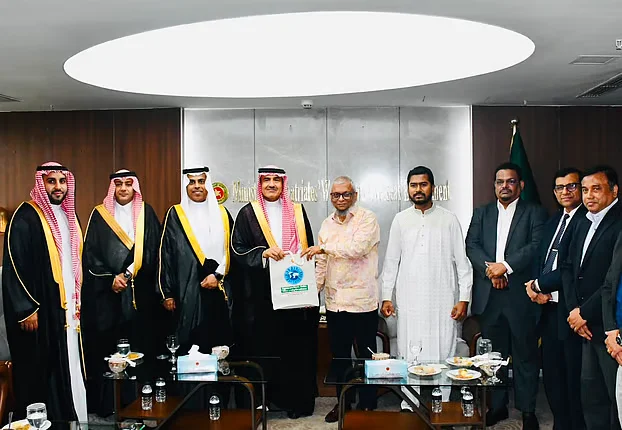
Expatriates' Welfare and Overseas Employment Minister Ariful Haque Chowdhury holds a bilateral meeting with Saudi officials in Dhaka on Tuesday to discuss expanding the labour market, including allowing Bangladeshi workers to renew their iqama under another employer if their original kafeel fails to do so. Courtesy: The expat ministry
Saudi Arabia has allowed Bangladeshi migrant workers to renew their iqama (residency permits) under another employer if their original kafeel (employer) fails to renew it, a Saudi minister said on Tuesday.
Saudi Deputy Minister of Labour Market Policies, Ministry of Human Resources and Social Development Muhannad bin Ahmed Al-Essa said that from now on, if the original kafeel of a Bangladeshi worker in Saudi Arabia fails to renew the worker's iqama for any reason, the worker will be able to renew the iqama under another kafeel as quickly as possible, and there will be no legal obstacle to doing so.
He also assured that if detailed information about Bangladeshi workers imprisoned in Saudi jails is sent through diplomatic channels, the Saudi government will give due consideration to granting them clemency.
Saudi Deputy Labour Minister Muhannad bin Ahmed Al-Issa made the remarks during a courtesy call with Expatriates' Welfare and Overseas Employment Minister Ariful Haque Chowdhury at the latter's office in Dhaka on Tuesday, which was also attended by Saudi Deputy Minister of Foreign Affairs for Consular Affairs Mohammed AM Alshammari, says a press release of the Ministry of Expatriates' Welfare and Overseas Employment.
The press release said, at the meeting, Dhaka requested the renewal of two of the three agreements signed between Bangladesh and Saudi Arabia on the recruitment of workers—the Domestic Workers Agreement and the SVP Agreement. It was also stated that the recently signed workers' recruitment agreement has been approved by Bangladesh and has been sent to the Saudi government for approval.
Bangladesh requested that a meeting of the Joint Technical Commission be held to discuss various issues related to worker recruitment, training and welfare between the two countries. It also proposed the establishment of a Saudi-Bangladesh Joint Technical Training Centre in Bangladesh as a joint initiative to enhance workers' skills, provide Arabic language training, impart knowledge on Saudi laws, culture and customs, and offer pre-departure orientation.
Bangladesh also proposed developing a framework for the mutual recognition of technical, vocational and professional qualifications to facilitate the recruitment of skilled, highly skilled and professional workers in key sectors such as healthcare, construction, information technology and hospitality.
At the same time, it requested that the timely issuance and renewal of work permits (work visas) and iqama (residency permits) for Bangladeshi workers be ensured. Bangladesh also sought the Saudi government's cooperation in addressing delays by some employers in issuing or renewing work permits, citing the increased work permit fees.
Thanking the Saudi delegation, Expatriates' Welfare and Overseas Employment Minister Ariful Haque Chowdhury said Bangladesh and Saudi Arabia enjoy long-standing friendly relations.
He said Bangladeshi workers are contributing to Saudi Arabia's overall development while also playing an important role in Bangladesh's economy through the remittances they send home.
The minister also noted that students of Qawmi madrasas are highly proficient in Arabic and urged the Saudi side to create employment opportunities for them in Saudi Arabia by providing them with appropriate training.
During the meeting, State Minister for Expatriates' Welfare and Overseas Employment Md Nurul Haque called on Saudi Arabia to recruit more skilled workers from Bangladesh to meet the increased demand for labour ahead of the 2034 FIFA World Cup to be hosted by the Kingdom.
He also urged the Saudi authorities to ensure the rights and protection of female domestic workers from Bangladesh.
At the meeting, Secretary of the Ministry of Expatriates' Welfare and Overseas Employment Md Mokhter Ahmed called for Bangladeshi workers imprisoned in Saudi jails to be granted clemency ahead of the upcoming holy month of Ramadan and Eid.
In reply to Bangladesh's proposals, Saudi Minister Muhannad bin Ahmed Al-Issa expressed strong interest in recruiting skilled and professional workers from Bangladesh in key sectors, including healthcare, construction, information technology and hospitality. He said the Wage Protection System (WPS) and insurance coverage have already been introduced to protect workers' rights.
Muhannad bin Ahmed Al-Issa also assured that if detailed information about Bangladeshi workers imprisoned in Saudi jails is sent through diplomatic channels, the Saudi government will give serious consideration to granting them clemency.
Also present at the important bilateral meeting were Saudi Ambassador to Bangladesh Abdullah Jafar H Bin Abiah, Special Assistant to Prime Minster Shakirul Islam Khan, and senior officials of the Ministry of Foreign Affairs and the Ministry of Expatriates' Welfare and Overseas Employment.
Staff Correspondent
Dhaka
Expatriates' Welfare and Overseas Employment Minister Ariful Haque Chowdhury holds a bilateral meeting with Saudi officials in Dhaka on Tuesday to discuss expanding the labour market, including allowing Bangladeshi workers to renew their iqama under another employer if their original kafeel fails to do so. Courtesy: The expat ministry
Saudi Arabia has allowed Bangladeshi migrant workers to renew their iqama (residency permits) under another employer if their original kafeel (employer) fails to renew it, a Saudi minister said on Tuesday.
Saudi Deputy Minister of Labour Market Policies, Ministry of Human Resources and Social Development Muhannad bin Ahmed Al-Essa said that from now on, if the original kafeel of a Bangladeshi worker in Saudi Arabia fails to renew the worker's iqama for any reason, the worker will be able to renew the iqama under another kafeel as quickly as possible, and there will be no legal obstacle to doing so.
He also assured that if detailed information about Bangladeshi workers imprisoned in Saudi jails is sent through diplomatic channels, the Saudi government will give due consideration to granting them clemency.
Saudi Deputy Labour Minister Muhannad bin Ahmed Al-Issa made the remarks during a courtesy call with Expatriates' Welfare and Overseas Employment Minister Ariful Haque Chowdhury at the latter's office in Dhaka on Tuesday, which was also attended by Saudi Deputy Minister of Foreign Affairs for Consular Affairs Mohammed AM Alshammari, says a press release of the Ministry of Expatriates' Welfare and Overseas Employment.
The press release said, at the meeting, Dhaka requested the renewal of two of the three agreements signed between Bangladesh and Saudi Arabia on the recruitment of workers—the Domestic Workers Agreement and the SVP Agreement. It was also stated that the recently signed workers' recruitment agreement has been approved by Bangladesh and has been sent to the Saudi government for approval.
Bangladesh requested that a meeting of the Joint Technical Commission be held to discuss various issues related to worker recruitment, training and welfare between the two countries. It also proposed the establishment of a Saudi-Bangladesh Joint Technical Training Centre in Bangladesh as a joint initiative to enhance workers' skills, provide Arabic language training, impart knowledge on Saudi laws, culture and customs, and offer pre-departure orientation.
Bangladesh also proposed developing a framework for the mutual recognition of technical, vocational and professional qualifications to facilitate the recruitment of skilled, highly skilled and professional workers in key sectors such as healthcare, construction, information technology and hospitality.
At the same time, it requested that the timely issuance and renewal of work permits (work visas) and iqama (residency permits) for Bangladeshi workers be ensured. Bangladesh also sought the Saudi government's cooperation in addressing delays by some employers in issuing or renewing work permits, citing the increased work permit fees.
Thanking the Saudi delegation, Expatriates' Welfare and Overseas Employment Minister Ariful Haque Chowdhury said Bangladesh and Saudi Arabia enjoy long-standing friendly relations.
He said Bangladeshi workers are contributing to Saudi Arabia's overall development while also playing an important role in Bangladesh's economy through the remittances they send home.
The minister also noted that students of Qawmi madrasas are highly proficient in Arabic and urged the Saudi side to create employment opportunities for them in Saudi Arabia by providing them with appropriate training.
During the meeting, State Minister for Expatriates' Welfare and Overseas Employment Md Nurul Haque called on Saudi Arabia to recruit more skilled workers from Bangladesh to meet the increased demand for labour ahead of the 2034 FIFA World Cup to be hosted by the Kingdom.
He also urged the Saudi authorities to ensure the rights and protection of female domestic workers from Bangladesh.
At the meeting, Secretary of the Ministry of Expatriates' Welfare and Overseas Employment Md Mokhter Ahmed called for Bangladeshi workers imprisoned in Saudi jails to be granted clemency ahead of the upcoming holy month of Ramadan and Eid.
In reply to Bangladesh's proposals, Saudi Minister Muhannad bin Ahmed Al-Issa expressed strong interest in recruiting skilled and professional workers from Bangladesh in key sectors, including healthcare, construction, information technology and hospitality. He said the Wage Protection System (WPS) and insurance coverage have already been introduced to protect workers' rights.
Muhannad bin Ahmed Al-Issa also assured that if detailed information about Bangladeshi workers imprisoned in Saudi jails is sent through diplomatic channels, the Saudi government will give serious consideration to granting them clemency.
Also present at the important bilateral meeting were Saudi Ambassador to Bangladesh Abdullah Jafar H Bin Abiah, Special Assistant to Prime Minster Shakirul Islam Khan, and senior officials of the Ministry of Foreign Affairs and the Ministry of Expatriates' Welfare and Overseas Employment.