[🇧🇩] Energy Security of Bangladesh

[🇧🇩] Energy Security of Bangladesh
650
22K
More threads by Saif

G Bangladesh Defense

Govt approves draft offshore PSC to boost oil, gas exploration

bdnews24.com

Published :
May 07, 2026 17:25
Updated :
May 07, 2026 18:18
1778196591406.webp


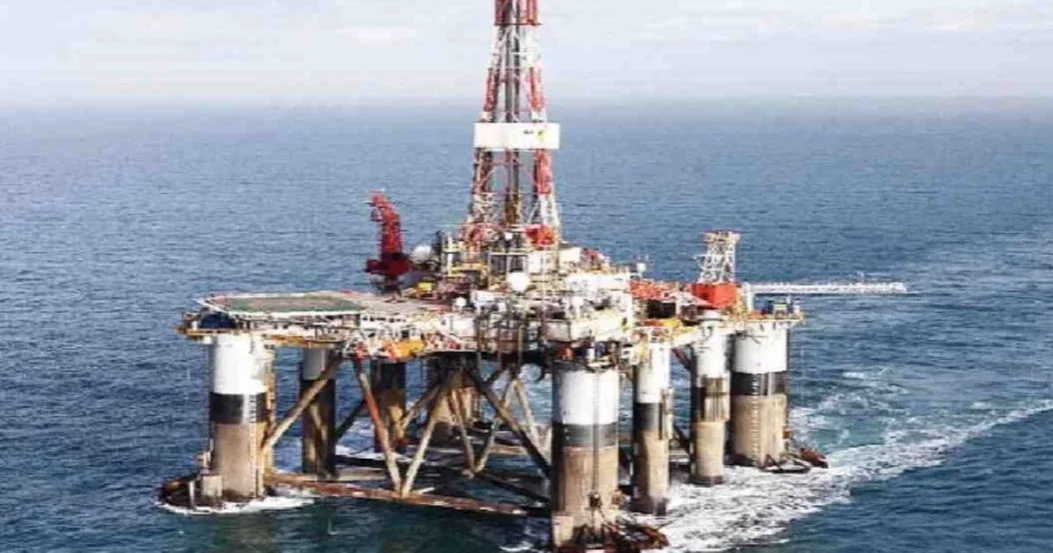
The Cabinet Committee on Economic Affairs on Thursday approved the draft of ‘Bangladesh Offshore Model Production Sharing Contract (PSC) 2026’ aimed at accelerating offshore oil and gas exploration in the country.

The approval came at a meeting of the committee held at the Secretariat with Finance Minister Amir Khosru Mahmud Chowdhury in the chair.

The proposal was placed by the Energy and Mineral Resources Division, said officials.

The draft PSC 2026 is expected to serve as the updated framework for engaging international oil and gas companies in offshore exploration activities in Bangladesh’s maritime areas in the Bay of Bengal.

Officials said the revised model contract is intended to make the country’s offshore energy sector more attractive to foreign investors amid growing demand for energy security and domestic resource exploration.

At the same meeting, the committee also approved in principle of another proposal related to ensuring uninterrupted power supply across the country.

The proposal, submitted by the Power Division, sought inclusion of government-owned power plants, joint venture power projects and imported electricity from India and Nepal, including power from Adani Power Jharkhand, under the subsidy framework.

Officials said the move is aimed at maintaining stable electricity supply by facilitating subsidy support for imported and locally generated power amid rising generation and import costs.

However, the committee approved the proposal partially after discussion.​
 

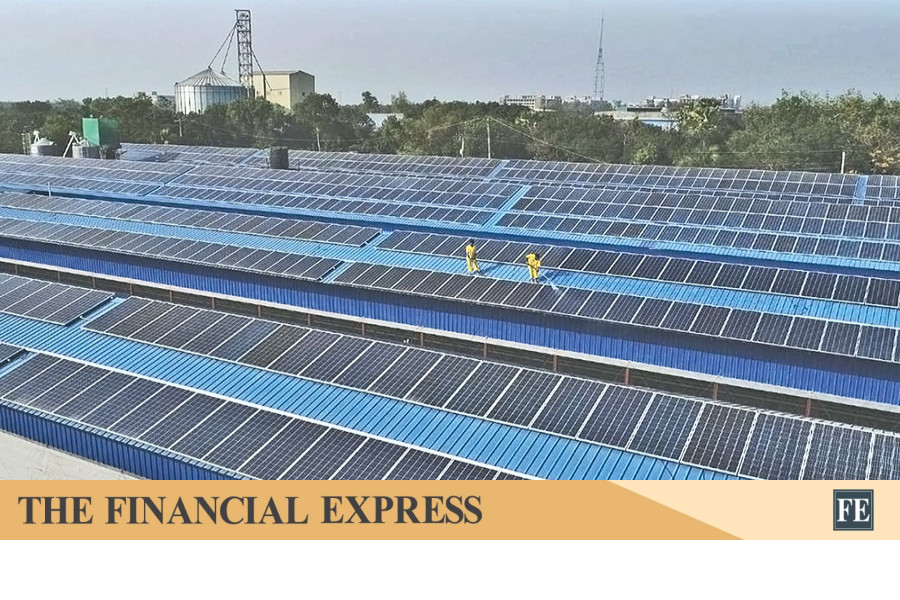
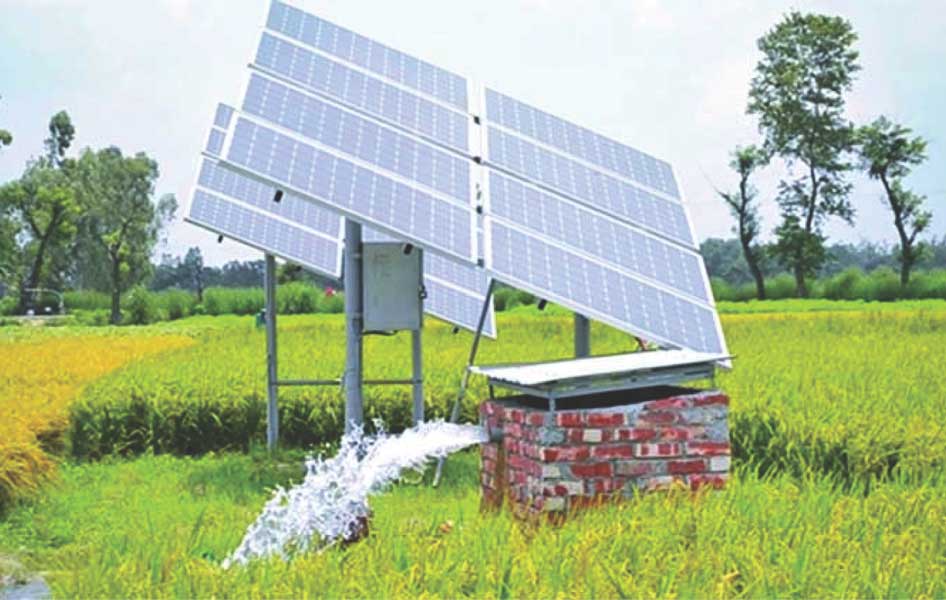
Policy push underway to generate more solar power

FE REPORT

Published :
May 08, 2026 11:02
Updated :
May 08, 2026 11:02

1778283978699.webp


The government has prioritised renewable energy like solar and wind power since assuming office, Power, Energy and Mineral Resources Minister Iqbal Hasan Mahmood said Thursday.

The ministry has been acting accordingly in line with instructions from Prime Minister Tarique Rahman, he said.

Speaking at the inaugural ceremony of the Power, Energy and Infrastructure Expo at the Bangladesh-China Friendship Conference Centre in Dhaka, the minister said the country remains significantly behind its regional neighbours in renewable energy development, while pledging sweeping policy support to accelerate the growth of solar power.

India and Pakistan have already expanded their use of solar and wind energy to reduce dependence on fossil fuels, whereas Bangladesh has lagged behind for many years, he lamented.

1778284009931.webp


Bangladesh, however, is now ready to move forward with solar energy, said the minister, adding that the biggest challenge is policy support.

Mr Mahmood revealed that a committee has been formed under the Prime Minister's directive to accelerate renewable energy development. The committee has already held meetings and prepared the foundation of a new policy framework.

"If the government can provide the right policy support, a revolution in this sector will be possible," he added.

Drawing comparisons with Bangladesh's garment industry boom in the 1980s, the minister said policy measures such as bonded warehouse facilities and back-to-back letters of credit introduced under former President Ziaur Rahman had transformed the country's apparel sector. Similar incentives for solar power, he argued, could rapidly expand the renewable energy industry.

He said the government is working on a simplified framework for importing key solar equipment, including inverters, frames and photovoltaic panels, making it easier for entrepreneurs to install solar systems.

Particular emphasis is also being placed on battery storage technology, he said, noting that electricity generation during daylight hours alone would not be sufficient to meet evening peak demand.

The government is also considering measures to reduce the tax burden on renewable energy investors in an effort to make solar projects more commercially viable.

The minister said a new renewable energy policy is expected to be finalised this month and approved by the cabinet by June before being issued as an official government order.

Bangladesh is targeting the generation of 10,000 megawatts of renewable electricity over the next five years, he added.

The minister also outlined plans to expand rooftop solar generation across Dhaka and other cities. Under the proposal, private investors would be able to install solar panels on commercial and residential rooftops and supply electricity directly to building owners. Bills would then be adjusted through a net metering system at the end of each month, while building owners would also receive a share of the revenue.

He said the initiative could create a profitable market for investors while easing pressure on the capital's electricity supply.

Around 140 companies and organisations from 12 countries are participating in the exhibition, said Rashedul Haque, Managing Director of the organising company Exponet Exhibition.

Among those attending the event were Muzaffar Ahmed, Chairman of the Sustainable and Renewable Energy Development Authority; Md Shafiul Alam Uzzal, President of the Bangladesh Elevator, Escalator and Lift Importers Association; Mostafa Al Mahmud, President of the Bangladesh Sustainable and Renewable Energy Association; M Azizur Rahman, Chairman of the Forum for Energy Reporters Bangladesh (FERB); and Mostafa Kamal, Editor of Khaborer Kagoj.

Organisers said the exhibition would continue until Saturday. The three-day expo is showcasing products, technologies and services related to power, energy, construction and infrastructure development. The FERB is serving as the event's media partner.

Alongside this event, Dhaka Industrial Packaging Expo is being held at the same venue, jointly organised by the Bangladesh Flexible Packaging Industries Association.

Six special sessions are also being held, initiated by the Dubai International Chamber, Export Development Bureau, and Business Promotion Council.

This exhibition is a platform for business networking, knowledge exchange, investment collaboration, and technology-driven development.

Participating organisations are presenting their products, technologies, services, and innovative solutions, while also engaging directly with potential buyers, investors, engineers, project implementers, and policymakers.

The exhibition is sponsored by RR Cable, Bright Powertech, and Run Power Engineering.​
 

Renewable delays push Bangladesh into energy trap: experts

Star Business Report

1778371729928.webp

Image: Courtesy

Bangladesh has fallen into an "energy trap" where heavy dependence on fuel imports, costing nearly $12 billion annually, has left the country vulnerable to global shocks, business leaders and energy experts warned today.

Renewable energy could have offered a way out, but more than a decade of delays in shifting from fossil fuels to renewables have left the country far behind its own targets, they said at a roundtable discussion on the future of energy in the country.

The Bangladesh Chamber of Industries (BCI) organised the event at its conference room at Tejgaon, Dhaka.

“Bangladesh is no longer facing just an energy crisis; it is now caught in an energy trap that threatens the country’s medium-term economic potential,” Hossain Zillur Rahman, executive chairman of Power and Participation Research Centre (PPRC), said at the event.

Discussion on the issue must move beyond isolated expert opinions and integrate the experiences of the private sector, which is bearing the brunt of the uncertainty, he said.

Rahman said unpredictability, not cost alone, had become the biggest burden on businesses.

"Even a high but predictable cost can be managed. But uncertainty makes planning impossible," he said, calling for a coordinated transition strategy.

Noting that Bangladesh’s import-dependent energy structure poses a risk to national sovereignty, he called for a diversified solution comprising renewables, coal, regional cooperation, and stronger refining capacity.

He said transitioning into renewable energy could be a “game-changing” national agenda and urged policymakers to focus on practical, politically viable solutions.

Over 52 percent of Bangladesh's primary energy now comes from imports, up sharply from four years ago, said Shafiqul Alam, lead analyst at the Institute of Energy Economics and Financial Analysis (IEEFA).

The growing dependence on imported fossil fuels has become one of the country’s biggest economic vulnerabilities, as it exposes the economy to global shocks and forces the government to spend nearly $12 billion annually on fuel imports.

With global fuel prices rising, the country may need to spend an additional $2.2 billion to maintain current supply levels, said Anwar-ul-Alam Chowdhury Parvez, president of BCI.

The country also faces a daily electricity shortfall of 1,500 to 2,000 megawatts, he added.

The costs are being felt most acutely by smaller businesses. Many rural factories go without electricity for 10 to 12 hours a day. "Small entrepreneurs who invested in these factories are struggling to survive," Parvez said.

David Hasanat, president of the Bangladesh Independent Power Producers' Association (BIPPA), said the risks had been visible for over a decade.

"The country knew about the looming risks more than a decade ago but failed to act decisively on renewable energy and efficiency measures," he said.

Slow policy support, financing barriers, land shortages, and weak implementation had since compounded the problem, leaving industries exposed to rising costs, power instability, and mounting carbon-related trade barriers, he added.

The renewable transition, the most direct route out of the trap, remains stalled. Mostafa Al Mahmud, president of the Bangladesh Sustainable and Renewable Energy Association, rejected the argument that a lack of land was to blame for this.

"Our energy transition is being delayed by false narratives, not by a lack of land," he said.

He called on the government to offer five-year tax exemptions on solar equipment and batteries, ensure access to green finance, and guarantee land and grid support.

Siddique Zobair, adviser to GreenTech Foundation Bangladesh, said Bangladesh remained far behind the renewable energy targets it set in 2008.

Delays in land allocation, weak financing, and the absence of sovereign guarantees continue to deter private investment, he said.​
 

Latest Posts

Back
Top Bottom