Donate ☕
201 Military Defense Forums
[🇧🇩] - Everything about Hasina's misrule/Laundered Money etc. | Page 6 | PKDefense
Home Login Forums Wars Watch Videos
Serious discussion on defense, geopolitics, and global security.

[🇧🇩] Everything about Hasina's misrule/Laundered Money etc.

Reply (Scroll)
Press space to scroll through posts
G Bangladesh Defense
[🇧🇩] Everything about Hasina's misrule/Laundered Money etc.
261
8K
More threads by Saif

Sheikh Hasina was a classic autocrat: M Sakhawat Hossain
Published :
Aug 05, 2024 22:03
Updated :
Aug 05, 2024 22:03


1722901534183.png

Sheikh Hasina was a classic autocrat who dismissed the people, and this disdain has led to her current predicament, according to Brigadier General (Retd) M. Sakhawat Hossain, an election analyst and former military officer. In a special interview with UNB news agency over the phone, he expressed these views.
He stated that today's events were inevitable and were bound to happen. "We have seen similar situations in Tunisia, Libya, and Syria. Popular uprisings are unstoppable. The student quota reform movement could have been resolved easily, but due to Prime Minister Sheikh Hasina's stubbornness, so many people lost their lives."

Hossain criticised the media's portrayal of the casualties, claiming that the true number is closer to 400, with a significant portion being students and young people. He questioned the whereabouts of the remaining bodies, mass graves, and the extent of innocent lives lost. "She has gone, but who will answer for this?" he asked.

He accused the ruling government of carrying out the "most heinous massacre" and of misleading the public by blaming criminals while those responsible were, in fact, their own countrymen. "Such things should not happen in a free country," he remarked.

Hossain also noted that for the past 15 years, people have been unable to vote properly, with widespread election fraud. He stated that Sheikh Hasina should have understood her and her party's unpopularity, and questioned who would be held accountable for the bloodshed. He criticized the severe lack of good governance, which he believes Sheikh Hasina failed to provide.

Furthermore, he alleged that Sheikh Hasina has created criminal gangs within the country and turned the police and Rapid Action Battalion (RAB) into her personal enforcers.

Reflecting on the plight of the family members of the so-called Father of the Nation, he questioned why they had to face such a tragic fate, attributing it to Hasina's arrogance and pride. He drew a parallel with the 2009 BDR mutiny, where 57 army officers were killed, and questioned who would answer for that incident as well.

He criticised Sheikh Hasina's control over TV media and her suppression of free speech, citing it as a reason he avoided talk shows. He claimed he had urged the Prime Minister in various meetings to ensure good governance, but was labelled as an 'agent of the opposition' for his criticisms.

"Today, Sheikh Hasina has fled the country, and now the army has had to take responsibility for the nation's situation," he concluded.​
 
Last edited:
Analyze

Analyze Post

Add your ideas here:
Highlight Cite Fact Check Respond
  • Like (+1)
Reactions: Bilal9

Bangladesh Bank dissolves S Alam-controlled board of SIBL
Staff Correspondent 25 August, 2024, 20:10

1724630287726.webp

| Collected photo

Bangladesh Bank on Sunday dissolved the board of directors of Social Islami Bank Limited and appointed independent directors in an effort to free the bank from the controversial control of the S Alam Group.

In a letter to the bank’s managing director, the central bank outlined its decision on the day to place the bank under a new board of directors.

Previously, the SIBL board was chaired by Belal Ahmed, son of Chattogram-based S Alam Group chairman Saiful Alam.

The newly formed five-member board includes one shareholder director and four independent directors.

Major (retd) Md Rezaul Haque, a founding shareholder of the bank, has been appointed as a director.

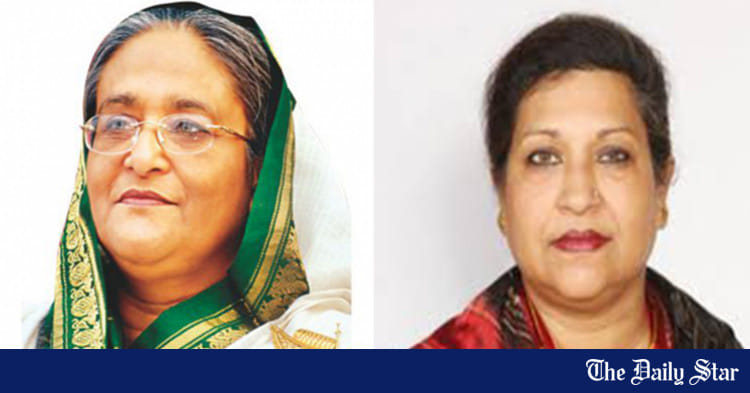
The four independent directors are former Bangladesh Bank executive director Maksuda Begum, Dhaka University finance professor M Sadiqul Islam, former Rupali Bank deputy managing director Md Morshed Alam Khandkar, and chartered accountant Md Anwar Hossain.

A new chairman will be selected from among these directors.

This marks the second instance of a bank being officially freed from the S Alam Group’s control.

On August 20, Bangladesh Bank similarly dissolved the board of directors of Islami Bank Bangladesh, controlled by the S Alam Group, and appointed independent directors.

The S Alam Group, with support from the former Awami League-led government, took control of SIBL in 2017, ousting several founding shareholders and directors in the process.

Since then, enormous sums of money were allegedly siphoned from the bank through various anonymous companies.

S Alam Group has been accused of engaging in widespread irregularities within SIBL, particularly in recruitment and loan disbursement.

Bank officials claim that the group withdrew around Tk 15,000 crore in loans, mostly under anonymous names.

These loan irregularities have pushed the bank into a severe liquidity crisis, leaving its current account with Bangladesh Bank in the red and forcing it to rely on central bank bailouts.

Additionally, SIBL concealed Tk 7,936 crore in defaulted loans, with allegations of collusion by senior central bank officials.

The inspection team discovered a shortfall of Tk 8,127 crore in provision at the end of December 2023.

But, the central bank reported that SIBL’s total provisioning requirement was Tk 1,370 crore, of which the bank had met Tk 1,306 crore, leaving a shortfall of only Tk 64 crore.

Therefore, most of the irregularities by the S Alam Group occurred under the watch of Bangladesh Bank, with some of its senior officials’ involvement in the misconduct.

Following recent political shift, some SIBL shareholders staged a protest on August 11, calling for the bank to be freed from S Alam Group’s control.

At a press conference, they accused Saiful Alam and his associates of siphoning off significant sums, endangering not just SIBL but the entire financial sector. Depositors have reportedly faced difficulties in withdrawing their funds, they said.

The protest and press conference were attended by several shareholders, including former chairman Rezaul Haque.​
 
Analyze

Analyze Post

Add your ideas here:
Highlight Cite Fact Check Respond

S Alam barred from fund transfer, cashout, LC opening

1724713261826.webp


The Bangladesh Bank yesterday instructed six S Alam-owned banks to stop any money going out of the accounts in the name of the Chattogram-based business giant, its associates' companies and related persons.

However, all types of deposits can be accepted in their accounts, according to the letter from BB's banking inspection department-7.

Islami Bank, First Security Islami Bank (FSIBL), Social Islami Bank (SIBL), Union Bank, Global Islami Bank (GIB) and Bangladesh Commerce Bank (BCB) have already passed on the BB instruction to their branches and sub-branches.

The instruction was given as the central bank has started to reconstruct the board of directors of the banks linked to the business group, said BB spokesman Md Mezbaul Haque,

Once the banks' boards are reconstituted, the instruction to bar any withdrawals from the accounts would be relaxed, he added.

The BB has verbally instructed the other banks to suspend fund transfer and withdrawal requests of S Alam Group, its associates' companies and related persons, The Daily Star has learnt from the managing directors of three leading banks.

Banks have been asked to not renew any investment facilities or stop any new investment. They have been instructed to suspend any new disbursement or withdrawal.

The lenders will not be able to disburse and withdraw any new investment from the investment accounts that are previously approved in their name, the BB letter said.

The banks have also been asked not to open letters of credit (LC) in favour of the companies of the business group and its associates' companies.

However, banks can open LC in favour of the companies at a 100 percent margin.

Banks have also been asked to disallow bill discounts or purchases in their name; not to make any application to the central bank for any refinance scheme; ban credit card transactions; and decline requests for fund transfers outside of Bangladesh in their name.

Founded in 1985 by Mohammad Saiful Alam, a relative of former Awami League politician Akhtaruzzanan Chowdhury Babu and former Land Minister Saifuzzaman Chowdhury, S Alam Group has grown into one of the largest conglomerates in Bangladesh.

For instance, S Alam is one of the four edible oil importers and processors along with TK Group, City Group and Meghna Group. Together, they control 80 percent of the total edible oil market in Bangladesh, according to import data from the National Bureau of Revenue.

Its subsidiary S Alam Refined Sugar Industries was the third-largest importer of sugar in 2023, accounting for a fifth of the country's demand.

S Alam Group and its associate companies took out Tk 95,331 crore between 2017 and June this year from six banks, with 79 percent of the sum coming from Islami Bank, data showed.

Documents pieced together by The Daily Star show that most of the loans were taken by bypassing banking rules and regulations, in a testament to how the Chattogram-based conglomerate exerted its influence on the country's banking sector.

In a separate letter, the Bangladesh Financial Intelligence Unit (BFIU) on Sunday sought detailed information on the overall banking activities of Alam, his 12 family members and their companies.

The 12 family members include his wife Farzana Parveen, his two older sons Ahsanul Alam and Ashraful Alam, and his brothers Osman Ghani, Abdus Samad, Rashedul Alam, Shahidul Alam, Mohammed Abdullah Hasan and Morshedul Alam, who passed away in May 2020 from Covid-19.

The account details of Ghani's wife Farzana Begum and Samad's wife Shahana Ferdous were sought too.​
 
Analyze

Analyze Post

Add your ideas here:
Highlight Cite Fact Check Respond

Bank accounts of 4 firms linked with S Alam’s personal secretary frozen
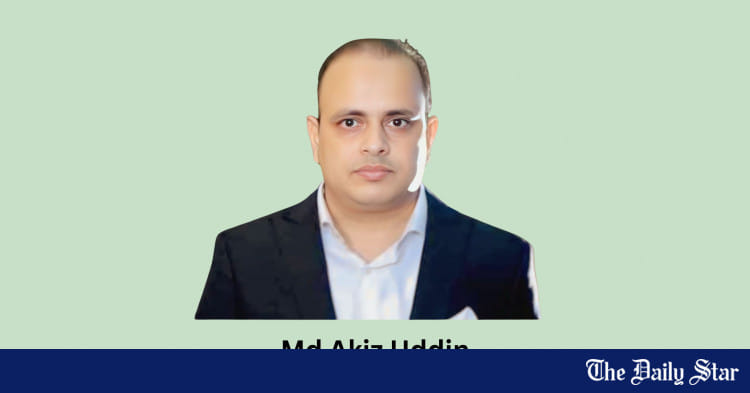
The BFIU found Tk 99.7 crore at the accounts of four companies of Md Akiz Uddin, also a former deputy managing director of Islami Bank Bangladesh

1724713701430.webp


The Bangladesh Financial Intelligence Unit (BFIU) has asked banks to freeze the accounts of four companies linked with Md Akiz Uddin, a former deputy managing director of Islami Bank Bangladesh and personal secretary of S Alam Group chairman.

The BFIU found Tk 99.7 crore in the accounts of the four companies: Rahman Rahman & Son's, Moshtaq Traders, Nazrul Enterprise and Alam Trading Builders.

The anti-money laundering agency also instructed banks to suspend the transactions at those accounts and sought an update on the accounts in the next five working days.

Akiz Uddin has not come to work at Islami Bank since Sheikh Hasina resigned from the post of prime minister and fled the country on August 5.

Recently, Islami Bank sacked its eight high officials, including Akiz Uddin, who influenced Islami Bank in various activities, including loan sanctions, industry insiders said.​
 
Analyze

Analyze Post

Add your ideas here:
Highlight Cite Fact Check Respond

How a family grabbed multiple banks
S Alam and his family bypassed rules cleverly in capturing seven banks and two non-banks

1724800167355.webp


The Bangladesh Bank is supposed to protect customers' interests, but it did not do so when it permitted Mohammed Saiful Alam and his family to seize multiple banks and funnel enormous sums as loans.

Alam, the chairman of S Alam Group, and his family members used the central bank's special permission to unprecedentedly possess large shares of seven banks and two financial institutions despite prohibition by the Bank Company Act.

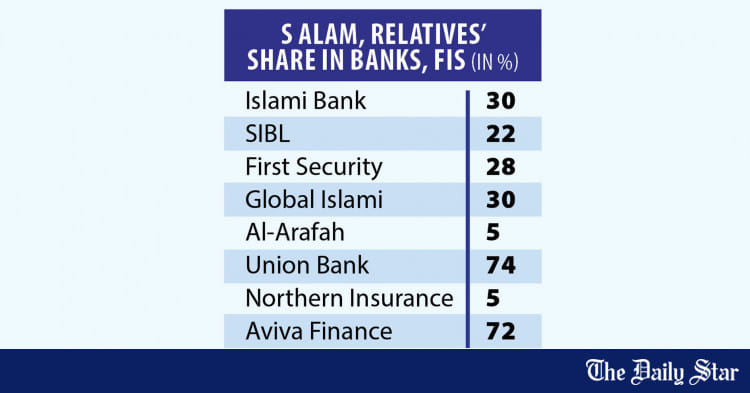
For example, they have a 30 percent stake in Islami Bank while the law caps such shareholding by a family in a bank at 10 percent. That allowed Alam's relatives to take a total of Tk 25,000 crore loans from the bank with far less investment in it, official data shows. The actual amount is believed to be more than three times the official figure.

The Alams are the only family in Bangladesh with all members and some of their relatives sitting on the boards of several banks simultaneously. They deftly captured the banks' shares as the central bank relaxed the rules for them.

Analysts and experts have condemned such a practice as "totally unacceptable and absurd", as it has put the banks, and the entire financial sector at risk.

The experts have been calling for efforts to reduce family control over the banks for a long time. However, their suggestion fell on deaf ears with the central bank bypassing rules to let Alam and his family strengthen their control over the banks.

All the members of the family were directors of different banks until last week when the central bank dismantled the board of the Islami Bank to ensure good governance after the new interim government launched its efforts to fix the troubled sector as part of a broader reforms plan.

Alam is the chairman of First Security Islami Bank's board while his wife Farzana Parveen is a director. Their son Ahsanul Alam, daughter Maimuna Khanam, and son-in-law Belal Ahmed control the boards of Islami Bank, Global Islami Bank and Social Islami Bank respectively. Alam's brothers, sisters, and other relatives also sit on the boards of several banks.

The law bars a person with a significant shareholding in a bank from buying a substantial stake in another bank. The same rule applies to their family members and companies.

Alam, however, grabbed Islami Bank and Social Islami Bank in 2017 despite having significant shares of First Security Bank, and Union Bank.

A top official of the Bangladesh Bank confirmed that Alam's family received the central bank's approval to buy the stakes despite the banking regulator's obligation to block the process.

The law states that not more than three members of a family are allowed to hold the directorship of a bank. A family and their firms cannot acquire more than 10 percent of shares jointly.

However, besides the 30 percent stake in Islami Bank, Alam's family members and their firms together own about 22 percent of Social Islami Bank shares, 28 percent of First Security Islami Bank, and 30 percent of Global Islami Bank, according to the shareholding reports of the banks.

They also have 5 percent shares in each of Al-Arafah Islami Bank and Northern Insurance, and more than 70 percent in Aviva Finance and Union Bank each.

Shareholding data of Bangladesh Commerce Bank could not be obtained but the website of S Alam Group claims it owns the bank.

Toufic Ahmad Choudhury, director general of Bangladesh Academy for Securities Markets (BASM), described the control of Alam's family over the banks as "totally unacceptable".

Although legal restrictions were put in place to stop the family control in banks, S Alam had been allowed to wield its control over the banks for its own benefit, Choudhury said, referring to the loans taken by the Alam family and their relatives.

"The banking business is quite different. Depositors are the real owners of the banks," said Choudhury, also a former director general of the Bangladesh Institute of Bank Management (BIBM).

An analysis of Islami Bank's financial reports shows that the Shariah-based bank provided about Tk 25,000 crore loans to Alam's relatives. Social Islami Bank showed nearly Tk 5,000 crore loans to them in its financial reports.

The other banks followed in the footsteps of these two banks. Officials of these banks, who requested anonymity, said the loans given to Alam's relatives were bigger than what official data shows.

The total amount could be above Tk 75,000 crore from Islami Bank alone, one of the officials said.

A top official of a bank said many directors abused their power to save themselves from becoming loan defaulters by rescheduling loans year after year. So the criteria for directors should be changed in such a way that will not allow them to have their loans rescheduled when they face a default.

Data also showed how the S Alam family's presence on the board affected the banks, all of which except Al-Arafah Islami Bank remain in the yellow zone – meaning their financial health is between "good" and "fragile".

Fahmida Khatun, executive director of the Centre for Policy Dialogue, said this is "the best example of how a single family controls the banking sector".

As the regulatory body, the Bangladesh Bank is responsible for allowing this to happen while the government gave S Alam a free rein over the banks by amending the laws, she said.

Despite repeated requests from analysts, parliament allowed the increasing presence of families on a bank's board. It doubled the number of members of a family allowed on a bank's board to four before reducing it to three amid huge pressure from analysts. On top of that, a director was allowed to remain on the board for 12 years.

"This is absurd," said Fahmida.

When many family members remain on a bank's board, they can influence the board for the benefit of people or organisations linked to them. In some cases, directors with a much lower stake also obtain such benefits.

For instance, Alam's relatives received loans above Tk 25,000 crore from Islami Bank officially while their contribution to its paid-up capital was around Tk 300 crore, according to the financial report of the bank.

It shows how high their gain is compared to their investment in the bank, Fahmida said.

The economist recommended amending the law further to allow only one member of a family on a bank's board and limiting a bank director's tenure to six years.

A top official of a leading private bank, who preferred not to be named, questioned the Bangladesh Bank's role in allowing the S Alam family to control so many banks. "What did the central bank do when the family was grabbing the banks? It was their responsibility to stop the family," he said.

The Daily Star tried to contact Saiful Alam via text message, but he did not reply. BB spokesman Mezbaul Haque did not receive phone calls for comment.​
 
Analyze

Analyze Post

Add your ideas here:
Highlight Cite Fact Check Respond

Possible graft in model mosque project to be probed: adviser

1724888612281.webp


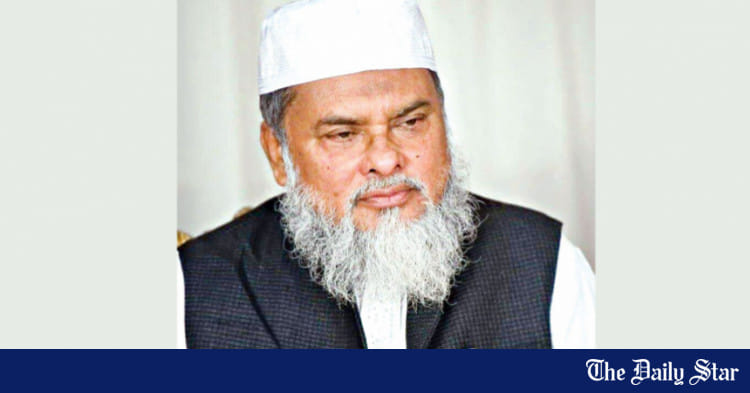
Religious adviser AFM Khalid Hossain today said the interim government will form an investigation committee to probe alleged corruption in the construction of model mosques.

Speaking at a seminar at the Islamic Foundation in Dhaka's Agargaon area, the adviser also revealed plans for a high-powered committee to investigate the deterioration of the Islamic Foundation, stating that those responsible for its decline will be held accountable.

"The Islamic Foundation will be restructured and transformed into a vibrant institution," he said.

The adviser emphasized that changes would be made within the organization, including reassigning long-serving officers from the head office to the field and promoting qualified field officers to central roles.

Khalid also criticised the Islamic Foundation for deviating from its original mission and vision in recent years, attributing this shift to political interference.

"The Islamic Foundation must be kept above politics," he said.

The religious adviser further said that intelligence agencies would assist in investigating any illicit wealth accumulation by Islamic Foundation officials and employees over the past 15 years.

"If any irregularities or corruption are found, legal action will be taken," he added.​
 
Analyze

Analyze Post

Add your ideas here:
Highlight Cite Fact Check Respond

Members Online

⤵︎

Latest Posts

Latest Posts