Donate ☕
201 Military Defense Forums
[🇧🇩] - Everything about Hasina's misrule/Laundered Money etc. | Page 26 | PKDefense
Home Login Forums Wars Watch Videos
Serious discussion on defense, geopolitics, and global security.

[🇧🇩] Everything about Hasina's misrule/Laundered Money etc.

Reply (Scroll)
Press space to scroll through posts
G Bangladesh Defense
[🇧🇩] Everything about Hasina's misrule/Laundered Money etc.
261
8K
More threads by Saif

Sheikh Hasina was a classic autocrat: M Sakhawat Hossain
Published :
Aug 05, 2024 22:03
Updated :
Aug 05, 2024 22:03


1722901534183.png

Sheikh Hasina was a classic autocrat who dismissed the people, and this disdain has led to her current predicament, according to Brigadier General (Retd) M. Sakhawat Hossain, an election analyst and former military officer. In a special interview with UNB news agency over the phone, he expressed these views.
He stated that today's events were inevitable and were bound to happen. "We have seen similar situations in Tunisia, Libya, and Syria. Popular uprisings are unstoppable. The student quota reform movement could have been resolved easily, but due to Prime Minister Sheikh Hasina's stubbornness, so many people lost their lives."

Hossain criticised the media's portrayal of the casualties, claiming that the true number is closer to 400, with a significant portion being students and young people. He questioned the whereabouts of the remaining bodies, mass graves, and the extent of innocent lives lost. "She has gone, but who will answer for this?" he asked.

He accused the ruling government of carrying out the "most heinous massacre" and of misleading the public by blaming criminals while those responsible were, in fact, their own countrymen. "Such things should not happen in a free country," he remarked.

Hossain also noted that for the past 15 years, people have been unable to vote properly, with widespread election fraud. He stated that Sheikh Hasina should have understood her and her party's unpopularity, and questioned who would be held accountable for the bloodshed. He criticized the severe lack of good governance, which he believes Sheikh Hasina failed to provide.

Furthermore, he alleged that Sheikh Hasina has created criminal gangs within the country and turned the police and Rapid Action Battalion (RAB) into her personal enforcers.

Reflecting on the plight of the family members of the so-called Father of the Nation, he questioned why they had to face such a tragic fate, attributing it to Hasina's arrogance and pride. He drew a parallel with the 2009 BDR mutiny, where 57 army officers were killed, and questioned who would answer for that incident as well.

He criticised Sheikh Hasina's control over TV media and her suppression of free speech, citing it as a reason he avoided talk shows. He claimed he had urged the Prime Minister in various meetings to ensure good governance, but was labelled as an 'agent of the opposition' for his criticisms.

"Today, Sheikh Hasina has fled the country, and now the army has had to take responsibility for the nation's situation," he concluded.​
 
Last edited:
Analyze

Analyze Post

Add your ideas here:
Highlight Cite Fact Check Respond
  • Like (+1)
Reactions: Bilal9

Presence of oligarchic market power still a major challenge: Hossain Zillur Rahman
The sixth edition of the Banking Almanac launched today

1734826945726.webp


Despite taking many visible steps, numerous oligarchic powers still dominate the market, posing a significant challenge for the economy, said Hossain Zillur Rahman, an economist.

To tackle the current inflationary pressure, steps should be taken to address this oligarchic market power, which has widened their reach to a different level in the last 15 years, he said.

He made the comments at the launch of the sixth edition of the Banking Almanac, a book published by ShikkhaBichitra as a research project with the assistance of Bangladesh Bank and other banks and financial institutions.

Rahman, the acting chairman of the board of editors of the Banking Almanac, chaired the launching ceremony at the Cirdap auditorium in Dhaka today.

The interim government is working to create an information hub for the financial and social sectors, enabling investors to access all relevant information from a single platform with just one click, said Salehuddin Ahmed, finance adviser and the chief guest of the event.

Regular and timely publication of the Banking Almanac is important, as it will help investors, bankers and depositors to get actual information, he said.

The lack of accurate data availability has hindered the formulation of social and financial policies in Bangladesh in the past, said the adviser.

Therefore, the government is prioritising the creation of a centralised source for reliable information, which is also a fundamental right of the citizens, he added.​
 
Analyze

Analyze Post

Add your ideas here:
Highlight Cite Fact Check Respond

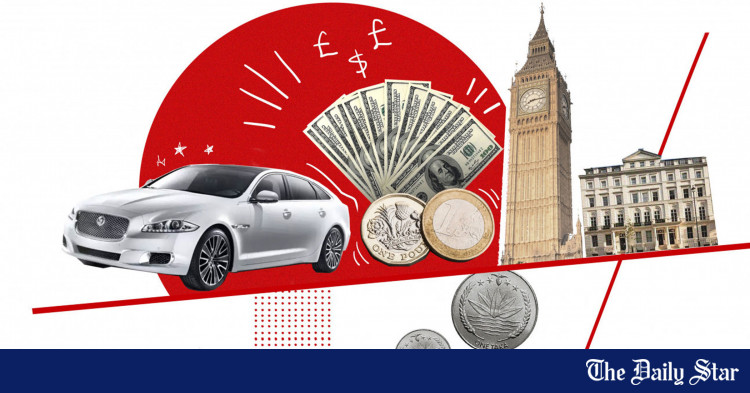
The path to recovering our stolen assets

1734827247490.webp

File Visual: Rehnuma Proshoon

Corruption, embezzlement, and money laundering have been endemic in Bangladesh but reached new heights during the last 15 years of the now-toppled regime led by the Awami League. The recently published "White Paper on the State of the Bangladesh Economy" reported that $234 billion was syphoned off from Bangladesh between 2009 and 2023. The interim government has promised to work tirelessly to identify the perpetrators of this massive mayhem—to loot and plunder the country and its poor people—and bring back some of the ill-gotten resources.

Tax havens around the globe, particularly in the Middle East, Malaysia, the UK, Canada, the US, Hong Kong, Malaysia, and Singapore, provided a golden opportunity for businesses, bureaucrats, and politicians to use a well-crafted system of patronage and crony capitalism to take advantage of the country's incompetent leaders and financial regulators to launder an average of $16 billion a year.

The White Paper documented the mechanism used for money laundering (ML)—these tricks have been well-known for a long time. The then foreign minister of Bangladesh stated during an interview with The Daily Star in 2020 that the AL government had information that politicians, businessmen, and government officials, including some "serving officials," had pilfered and whitewashed money by buying properties in Canada. It is no secret that Bangladesh Bank and the Bangladesh Financial Intelligence Unit (BFIU) were fully aware of the scale of ML and the role played by the key protagonists!

The previous government was, on many occasions, alerted by the World Bank, multilateral financial institutions, UN agencies, and national watchdogs about the scope of illicit financial flows (IIF). In 2011, during negotiations with the World Bank to secure financing for the Padma Bridge, the bank provided "credible evidence of corruption" to the government. These were brushed aside and dismissed as "trumped-up" allegations by the former prime minister.

In my brief discussion on this matter with members of the current administration, it is clear that money laundering and its prevention are among its highest priorities. Last week, the BB governor publicly reiterated his intention to bring back stolen assets from other countries. He chairs a nine-member taskforce with representatives from important state agencies, which has been assigned to track down stolen assets abroad and support investigations aimed at their recovery. The taskforce seeks to expedite legal proceedings for asset recovery, identify and address barriers to recovery, manage frozen or recovered assets abroad, and strengthen communication with relevant domestic and international bodies to gather essential information while enhancing internal coordination and capabilities.

While asset recovery is a tough and time-consuming process, it needs to be done, and for many reasons. The money looted from the coffers is now being used to undermine the present government. If we reverse the resource outflow and turn back the tide, that would rejuvenate our economic development. For example, the ML activities of the owners of the S Alam Group have resulted in the bankruptcy of the various businesses they own. If their overseas resources are liquidated and the proceeds repatriated and invested in their domestic enterprises, the local economy will receive a shot in the arm.

Also, we need to send a message to the culprits. In the language of criminal justice system, the purpose would be "deterrence, retribution, and restoration."​
 
Analyze

Analyze Post

Add your ideas here:
Highlight Cite Fact Check Respond

Nowfel gained from illegal tobacco trade
Finds NBR probe

1734910716678.png


Former education minister Mohibul Hassan Chowdhoury Nowfel received at least Tk 3 crore from a tobacco company, known for years for illegal cigarette production and marketing including some counterfeit foreign brands.

He also co-owns a piece of land on which the cigarette company, Bijoy International Tobacco, used to operate, documents show.

The Daily Star has copies of the Tk 3 crore cheque and the land-ownership document.

The findings come six months after an investigation by The Daily Star established initial links between Nowfel and illegal tobacco production. The story titled "A councillor and his illicit tobacco trade" on June 1 this year did not mention Nowfel's name, because he sold his share of that company in 2020.

Only five months after we ran the story, he received a check worth Tk 3 crore in favour of his family-run Premier University based in Chattogram, Nowfel's hometown.

Before we published the story on June 1 this year, Nowfel at a meeting with The Daily Star insisted that he sold his share in the illegal tobacco company and that he did not receive any financial benefits from the company.

But NBR's Central Intelligence Cell (CIC) has now found that there are 20 companies that make counterfeit cigarettes in Bangladesh and Nowfel along with Abdus Sabur Liton, a former councillor of Chattogram City Corporation, used to control the market.

The report says Nowfel invested in Liton's tobacco business, and parts of the returns were deposited to the accounts of Premier University.

Nowfel is the chairman of the university's trustee board. His mother Hasina Mohiuddin and younger brother Borhanul Hasan Chowdhury are members of the board.

The former minister could not be reached for comments. He is thought to have fled the country.

Liton owns licenced tobacco businesses, but the cigarettes his firms produce are knock-off versions of widely sold brands, including some foreign brands such as Esse and Oris, investigations by both The Daily Star and NBR found.

Mohammad Fakhrul Alam, head of the NBR investigation, submitted a 111-page report on his findings late last month.

1734910835376.webp


Of the 20 firms making counterfeit cigarettes, Bijoy International Tobacco and Tara International Tobacco are by far the biggest, says the report submitted to NBR Chairman Abdur Rahman Khan.

The firms -- both owned by Tara Group -- import raw materials by lying on documents and produce counterfeit cigarettes in their factories in Kishoreganj and Chakaria Upazila of Chattogram, says the report.

This newspaper previously found that counterfeit cigarettes made by these companies were sold in different parts of the country.

Liton and his brother Abdul Mannan Khokon are owners of Tara Group.

Although the company's sales were reported in audit reports at Tk 48.48 crore from July 2020 to June 2024, the CIC found evidence suggesting that the amount is 802.17 crore. This was done to evade taxes.

The investigators analysed nine bank accounts of the group.

Mohammad Fakhrul Alam, convener of the probe committee, said, "A few individuals control the market. They make fraudulent documents about shell companies to conceal their activities.

"We looked at bank transactions of all these [20] companies and discovered that the Tara Group was linked to at least 10 of them. The former education minister, a councillor, and his brother are involved in illegal cigarette distribution."

He added that Bijoy International Tobacco's factory in Chakaria was built on land owned by the three of them.

"We have found evidence of illegal cigarette production and marketing. We saw suspicious transactions at Tara Group's bank accounts. The former education minister used Premier University's bank accounts to receive his cuts.

"We recommend filing criminal and departmental cases against several individuals and organisations."

Premier University's account with United Commercial Bank's Chattogram Medical College Branch received Tk 3 crore from an account of Tara Group with the same bank's Jubilee Road Branch on October 1 last year.

The CIC on October 23 this year wrote to the university's registrar seeking information about this transaction.

Four days later, Registrar Iftekhar Monir replied, "University Trustee Board Chairman Mohibul Hassan Chowdhoury withdrew Tk 3 crore in cash for development work of the university. However, he deposited the same amount of money from an account of Tara Group to the university's account as the work was not completed."

Monir also mentioned that Tara Group and the Premier University are not related.

When contacted, Monir said, "We have no additional comments other than what we have written [to the NBR]."

Liton and Nowfel had gone into hiding after the Awami League government fell amid a mass uprising on August 5.

Several officials of Tara Group, requesting anonymity, said Liton was in Dubai and Nowfel in India.

Liton told The Daily Star on WhatsApp in November this year that Nowfel owned 40 percent shares of Bijoy Tobacco in early 2018.

"He sold his shares to me and my brother around 2020. Since then, there has been no further transaction with him. All of this is a conspiracy against me."

When asked about the ownership of the land and transactions in the Premier University's bank account, he said, "If you have documents, why are you asking me?"​
 
Analyze

Analyze Post

Add your ideas here:
Highlight Cite Fact Check Respond

$300m laundering: Hasina, Sajeeb under ACC scanner
Solamain Salman 22 December, 2024, 23:57

1734913714567.webp

Sheikh Hasina and Sajeeb Wazed Joy

The Anti-Corruption Commission on Sunday decided to conduct an inquiry into the allegation against former prime minister Sheikh Hasina and her son Sajeeb Wazed Joy of laundering $300 million to the United States and the United Kingdom.

The commission made the decision at its meeting at the commission headquarters in Dhaka with its newly-appointed chairman Mohammad Abdul Momen in the chair, ACC director general Md Aktar Hossain told New Age.

According to the allegation, the name of Sajeeb Wazed Joy first came up as a money laundering suspect in the United States versus Rizvi Ahmed case in 2014.

Later, a probe conducted by a powerful US intelligence agency uncovered serious financial scams involving Sajeeb Wazed, it said.

It also noted that in particular, information emerged that money was being laundered from various bank accounts in Hong Kong and the Cayman Islands in his name to various bank accounts in Washington and New York in the United States and London in the United Kingdom through a local money exchange entity.

The US intelligence agency also confirmed the matter through their London representative and found evidence of serious financial irregularities and money laundering committed by Sajeeb Wazed, said the allegation.

It also mentioned that Linda Samuels, Senior Trial Attorney of the Department of Justice, contacted Special Agent La Prevot and found that $300 million was deposited from Bangladesh to various bank accounts in the United States.

The commission came up with the new inquiry against deposed prime minister Sheikh Hasina and her son Sajeeb Wazed just four days after the commission on December 17 started an inquiry into Tk 80,000 crore corruption allegations against Hasina, Sajeeb Wazed, her younger sister Sheikh Rehana and Rehana’s daughter and British minister Tulip Siddiq.

The alleged corruption involving Tk 80,000 crore occurred in nine projects, including the Rooppur Nuclear Power Plant and the Special Ashrayan Project during the Awami League government between 2009 and 2023, according to the allegation.

Amid a student-led mass uprising on August 5, prime minister Sheikh Hasina fled to India while her son Sajeeb Wazed, also her information and communication technology adviser, is staying abroad.

According to the White Paper on the State of the Bangladesh Economy published recently, Bangladesh lost $16 billion annually on average between 2009 and 2023 because of the illicit fund flow under the authoritarian AL regime.

The illicit financial outflows are more than double the combined value of net foreign aid and foreign direct investment, the white paper said.

After the fall of the autocratic rule of Sheikh Hasina, the Professor Muhammad Yunus-led interim government came to power on August 8 and announced that it would take steps to bring back the laundered money.

As a part of the initiative, the commission has been actively collaborating with international agencies, including the US Federal Bureau of Investigation, the World Bank, and the United Nations Office on Drugs and Crime, to tackle money laundering.

On September 9, a delegation from the US Federal Bureau of Investigation held a meeting at the commission headquarters with the director general of the ACC’s money laundering and legal unit and other officials concerned.

Besides, on October 1, a three-member EU delegation, led by Michal Krejza, head of cooperation at the EU delegation to Bangladesh, met then ACC chairman Mohammad Moinuddin Abdullah and discussed the repatriation of laundered funds and technical assistance to strengthen the commission’s operational capabilities, said ACC officials.​
 
Analyze

Analyze Post

Add your ideas here:
Highlight Cite Fact Check Respond

Hasina used higher courts to consolidate power: Asif Nazrul

1734997230662.webp

Asif Nazrul

Law Adviser Prof Asif Nazrul today said Sheikh Hasina's fascist regime used the higher court's immense power to consolidate its power.

"It (higher courts) holds unlimited authority, with significant scope to provide remedies even in cases involving fundamental rights. However, we observed with shock and sorrow that this immense power was used during Sheikh Hasina's fascist regime to consolidate power, perpetrate oppression, and violate the rights of ordinary citizens," he said.

"If someone shows allegiances to 'Joy Bangla' or 'Zindabad' and becomes a judge, there is little hope for the High Court. If the higher courts are the most corrupt, the most loyal to political parties, and the most partisan, then what will you achieve by granting independence to the lower courts? First, we need to fix the higher courts," he added.

He made the remarks as part of the series of dialogue titled "Democratic Reconstitution: On Judiciary", organised by the Centre for Governance Studies at the CIRDAP auditorium.

Referring to Khadijatul Kubra's case under the Digital Security Act (DSA), the adviser said, "We have witnessed astonishing incidents where, despite the High Court granting bail, the Appellate Division has indefinitely delayed her bail application, leaving her imprisoned without cause."

"Bangladesh's judicial system had become an instrument of oppression, persecution, and human rights violations. If free and fair elections are held in the country, the judiciary will never transform into such a ruthless and oppressive institution," he opined.

He further said that if elections were held every five years and genuinely reflected the people's will, the oppressive ruling parties in Bangladesh would not be able to act as they do now. When elections do not exist, arbitrary oppression becomes the norm," he said.

He added that at the root of all reforms, the election system must be prioritised.

He mentioned that the government would enact a law regarding the appointment of High Court judges this month. They also have plans to establish a judiciary secretariat within three months and a permanent prosecution service within six months.

"If we are given at least a year, we will complete these tasks," he asserted.

"I believe the stronger our consensus is, the harder -- almost impossible -- it will be for the next political government to repeal these reforms," he added.​
 
Analyze

Analyze Post

Add your ideas here:
Highlight Cite Fact Check Respond

Members Online

⤵︎

Latest Posts

Latest Posts