Home Watch Videos Wars Movies Login

[🇧🇩] Everything about our constitution

[🇧🇩] Everything about our constitution
56
3K
More threads by Saif

G Bangladesh Defense

A ‘new constitution’ and my discontents

1744336913271.webp

FILE VISUAL: ANWAR SOHEL

Since the fall of the Awami League government, we have been debating prospects of transitioning into a new republic with a new constitution. With the inception of the Jatiyo Nagorik Party (JNP), the debates and discussions are now taking a definite shape. We now have several concrete arguments with time—and alongside, the discontents too.

One argument is that the 1972 constitution-making episode was elitist and dominated by one party. It is quite a fair criticism that resonates with many feminist, Marxist scholars about virtually any constitution of the world. However, it is not clear whether any constitution-making episode can stand blameless on this count.

Studies on constitutionalism have always been saturated with discussions on how dominant political parties' ideologies influence constitution building—be it a one-party, authoritarian, or a liberal-democratic state. In appraising the one-party dominance over the 1972 constitution-making episode, we must consider the historical contingencies too, characterised by the Liberation War, its antecedents and political aftermath, the need for post-war reconstruction and solidification of a constitutional identity. Some say that the constituent assembly members were elected under the Legal Framework Order (LFO) 1970 of the erstwhile Pakistan, and hence, the constitution they drafted needs to be replaced with a new one. However, it must be noted that following the constitutional subversion facilitated by Ayub Khan, the LFO came as a remarkable political win, posing one concrete opportunity for democratic transition. Therefore, the significance of the moment within which the LFO came into being cannot be overstated.

Pertinently, the Proclamation of Independence (which we all agree to be our first constitution) as adopted on April 10, 1971 (with retrospective effect from the March 26, 1971), the representatives elected in the 1970 elections constituted themselves into a "Constituent Assembly" for drafting a constitution for an independent Bangladesh. Following the war, the Provisional Constitution of Bangladesh Order of 1972 further defined the same elected representatives as the "Constituent Assembly" who, in fact, later drafted and adopted the existing constitution of Bangladesh. While the JNP vows to protect the ideals of shammo, manobik morjada, and shamajik shubichar (that were categorically enshrined in the Proclamation of Independence), the process of adopting a new constitution as laid down in the same document cannot be ignored. If we adopt historiographical lenses, then the immense political significance of 1970 elections and its aftermath can also not be downplayed as that would undermine both the wartime and post-war politico-constitutional consensus. Against this backdrop, the dominance of the Awami League among the elected representatives in the 1970 elections must be seen as rather a historical fact, which cannot be accounted for through myopic presentist lenses.

In any case, constitution-making is invariably an "elitist" chore, as scholars rightly call it "equitable elite bargaining." Whoever makes the constitution at a given point of time are always, invariably, the political elites, impersonating "we, the people" at times through "elections", through "eliciting opinions from the people" or at other times, through "referenda". Now that the JNP is asking for a new constitution, and as the idea of a new constitution seemingly stems from their political vision for a "second republic", won't claims about their dominance, at least in terms of steering the process, be legitimate too?

To simplify matters, some propose having a parliament act as a constituent assembly (put in place through simultaneous elections). Such an arrangement will be all the more "exclusive" and "elitist," potentially rendering the parliament cum constituent assembly authoritarian as virtually subservient-to-none. Similar experience in Venezuela under Nicolás Maduro provides a cautionary tale in this regard. Alternatively, such an arrangement can usher in major political instability and long-term disunity too, particularly amid a rapidly shifting political landscape like ours.

Interestingly, I may say, based on questionable lack of women's representation and lack of an explicit feminist methodological approach to drafting constitutions, that virtually all constitutions are unfairly dominated by men (e.g., one "sex") and their exclusionary ideologies. This argument will not be tenable because of the systemic inequalities that exist and because women as a group do not have the political capital as such. Indeed, for those who are left out of the process, a constitution-making episode will always look "exclusionary," "elitist," and dominated by "others," and because constitutions are only imperfect ideological settlements that only a sustainable culture of democracy can carry forward.

Another key argument is that the existing constitution is "fascistic." Authoritarianism or fascism is an indefensible political vision, a conscious governance choice, and an inanimate constitution cannot be blamed for that unless it explicitly provides for one-party rule or authoritarianism. In many authoritarian or paternalist countries, apparently good reading constitutions are kept simply as tools of window dressing. The democratic subversion in the post-independence Bangladesh was facilitated by a series of constitutional amendments, which irreparably whittled down constitutional checks and balances (e.g. fourth constitutional amendment), subverted the constitutional mandate of democratic rule (e.g. fifth and seventh constitutional amendments), and monopolised a static constitutional narrative and thereby contributed to democratic backsliding (e.g., fifteenth constitutional amendment). But these were but amendments—not the constitution itself. The Awami League government, time and again, co-opted constitution-based rhetorics while remaining authoritarian, but that is a classic example of abusing the constitution, not of "using" one. Instances of abusing the constitution were prominent during other military and non-military regimes too. Indeed, blaming the constitution for explaining the political follies and calling for its replacement without addressing its political understructure is quite enervated and does not align with the vigour and acumen that our youth shows otherwise.

While arguing for a new republic, the JNP often refers to France, which I do not think offers a useful, appropriable example for our context. A cardinal yet uncomplicated rule of adopting constitutional experiences is that we cannot transplant an idea without accounting for the overarching politico-cultural contexts. Indeed, transplanting an 1852 idea into a 2025 postcolonial independent country sounds perversely counterintuitive as there are literally no parallels that we can draw to begin a sensical comparison (other than the fact that France opted for a second republic).

Pertinently, contemporary instances only show how new constitution-making episodes can potentially bring in disunity, violence, and instabilities. We do have the inspiring instance of South Africa, which chose to undo its constitutional order rooted in apartheid, racialised political and governance structure, and explicit electoral discrimination against the non-Whites. What do we seek to undo? Persistent culture of rights violations, authoritarian governance, and democratic deficit? But the existing constitution permits/endorses none of these. Certainly, state powers could be better organised and less concentrated in the existing constitution, but that does not make the entire constitution expendable and does not necessitate making an entirely new one. Finally, any new constitution will not be entirely "new" as such unless we opt for something other than a liberal democratic constitutional order. In fact, some scholars suggest that the very idea of replacing an old constitution with a new one is a "myth" and is only possible in theory. In practice, there will always be constitutional/legal continuity. A so-called new constitution will perhaps only arrange things in a different order, expand on or restrict certain rights, and may dilute some commitments. What troubles me is the idea of going over the entire process all over again, of deepening and entrenching divisions, producing new binaries, reinforcing the existing ones, and so on. And the people who lie in the fringes and the margins will not be able to withstand that.

Psymhe Wadud teaches law at the University of Dhaka and is in charge of Law & Our Rights at The Daily Star.​
 
Analyze

Analyze Post

Add your ideas here:
Highlight Cite Respond

Advisor Asif Nazrul says it may take 2-3 years to draft a new constitution
bdnews24.com
Published :
May 11, 2025 20:21
Updated :
May 11, 2025 21:49

1747007664989.webp

Law Advisor Asif Nazrul

Law Advisor Asif Nazrul has said it may take “two to three years” to draft a new constitution, cautioning against the assumption that the July Charter could be adopted swiftly or without significant debate.

Speaking at an event in Dhaka on Sunday, he also indicated that the current parliament will need to continue amending the 1972 Constitution in the interim.

Addressing concerns about what would happen if the new constitution is not completed on time, he said: “If they can’t do it within 90 days, will the existing constitution continue? This is where I object. In our neighbouring countries, we’ve seen it take eight or nine years for a constituent assembly to finalise a new constitution through parliamentary amendments.”

Asif estimated that it could take two to three years to finalise the new constitution. He added that the current parliament will have to make amendments to the 1972 Constitution until a new one is adopted.

He made these remarks on Sunday at an event hosted at the International Mother Language Institute in Dhaka. The discussion was organised by the Citizens' Coalition on the group’s seven-point proposal for constitutional reform.

During his speech, Asif pointed to precedents in Bangladesh’s political history, and said that while drafting a constitution, a parliament cannot devote all of its time to the task. It can only afford to spend two days a week on the constitution, making it an unrealistic expectation for an assembly to draft a new constitution within 90 days.

He also weighed in on the Charter of the July Uprising, saying it is receiving “too much emphasis.”

“We seem to be assuming that everyone will agree on every aspect of the July Charter. That won’t be so easy. Perhaps only the most fundamental parts of it can be retained. This needs careful consideration, though the idea itself is a very good one,” he said.​
 
Analyze

Analyze Post

Add your ideas here:
Highlight Cite Respond

MPs may enjoy freedom in parliament except on no confidence motions, finance bills
Staff Correspondent Dhaka
Published: 18 Jun 2025, 21: 38

1750292454130.webp

MPs may enjoy freedom in parliament except on no confidence motions, finance bills PID

Political parties have reached a consensus on amending Article 70 of the constitution, appointing opposition party members as heads of several parliamentary standing committees, and reforming the process of appointing the chief justice.

This consensus was reached during discussions between political parties and the National Consensus Commission on Tuesday. However, further talks will be held on what the new process for appointing the chief justice should be.

The meeting reached decisions, and these are: members of parliament (MPs) will enjoy full freedom to vote against their own party in parliament on any issue except finance bills and no confidence motions.

The positions of committee chairpersons of four key standing committees— Public Accounts Committee (PAC), Committee on Estimates, Committee on Public Undertakings, and Standing Committee of Privileges — will be distributed to opposition parties in proportion to the number of seats they hold in parliament.

The meeting began at the Foreign Service Academy’s Doyel Hall in Dhaka around 11:45 am and ended at 5:30 pm with a one-hour lunch break. After the meeting, commission vice-chairman Professor Ali Riaz briefed the journalists on the day's decisions. Talks would continue with the political parties on Wednesday.

Representatives from 29 political parties and alliances, including BNP, National Citizen Party (NCP), Islami Andolon, Nagorik Oikya, Gono Odhikar Parishad, and Ganosamhati Andolan, participated in Tuesday’s talks. Jamaat-e-Islami, however, did not take part.

On the other hand, the NCP raised questions on how the process of reaching consensus. Senior joint convener Ariful Islam Adib also alleged that discussions are being centered around one individual from a particular party.

He also questioned the method by which parties were invited. Gono Odhikar Parishad president Nurul Haque echoed similar concerns. The discussion was broadcast live on BTV News.

Chief Adviser Professor Muhammad Yunus inaugurated second phase of discussion on 2 June to address key reforms that lacked agreement in the first phase of talks. Topic-based talks resumed on 3 June, focusing on Article 70, committee chair appointments, and reserved women's seats—but no consensus was reached. That adjourned discussion resumed yesterday, Tuesday. The agenda included these three issues plus the formation of a bicameral legislature and reforming the chief justice appointment process.

No consensus was reached yesterday on the proposal to increase the number of reserved women's seats to 100 and elect them through direct votes. Due to differing views among the parties, this topic will be revisited next week. Although there was some general agreement on formation of a bicameral parliament, several parties disagreed in principle. No consensus has yet been reached regarding how upper house elections would work or what powers it would hold.

Article 70 of Constitution

The Article 70 of Constitution does not allow sitting MPs to vote against their own party. If a person elected as an MP from a political party resigns from the party or votes against it in parliament, their seats is declared vacant.

The Constitutional Reform Commission had proposed changing this clause. According to their proposal, lawmakers would be free to vote against their party on any matter except the finance bill. After lengthy discussion, it was decided that MPs would have the freedom to vote against their own party except on finance bills and no confidence motions.

During the discussion, BNP standing committee member Salahuddin Ahmed proposed adding two more exceptions: constitutional amendment bills and bills related to national security.

He said everyone could agree on finance bills and no confidence motions, but other than this, if a party has any commitment, they will remain independent on that.

NCP joint convener Javed Rasin disagreed with adding more exceptions, arguing that in the past, national security had been used as a pretext to enact draconian laws, as well as constitution was amended to serve personal or party interests.

At one point in the talks, commission vicec chairman Ali Riaz said consensus was reached on two issues—finance bills and no confidence motions. If any party disagrees when the draft of the National Charter will be prepared, their dissent can be noted in the appendix.

Later in the press conference, Ali Riaz said, “We have agreed to amend the existing Article 70 so that MPs will be bound to vote in favour of their party only on finance bills and no confidence motions. For all other matters, they will enjoy freedom to vote as they choose.”

Reserved seats for women and appointment of chief justice


At present, the constitution reserves 50 seats for women in parliament, and that are allocated to the parties proportionally based on their 300 directly elected seats. A proposal was made to increase this to 100 seats and elect them through direct voting. However, no decision was reached even after discussions on 3 June and again on Tuesday.

Ali Riaz told journalists that they had long discussions on women’s representation in parliament. There was a consensus on permanently reserving 100 seats for women, but discussions will continue on the method and process. There are various proposals, and the commission hopes to reach a consensus next week.

According to the constitution, the president appoints the chief justice, but constitution does not specify who should be chosen. Some changes were proposed recommending that the president appoints the senior-most judge from the Appellate Division as chief justice.

Several parties argued for keeping alternatives, or choosing the chief justice among the top two or three senior-most judges in the Appellate Division.

Ali Riaz said there is a general consensus on amending Articles 95(1) and 48(3) of Constitution related to the chief justice’s appointment. Except for two parties, most have agreed. Further discussions will be held next week. However, an agreement has been reached on the reform of existing system of appointing the chief justice.

Bicameral parliament

The existing national parliament is unicameral. The Constitution and Electoral Reform Commissions have proposed the bicameral legislature. The lower house would be elected as it is now, while the upper house would have 100 seats, and that would be distributed based on the percentage of total votes a party receives across the country in the lower house election.

NCP agreed with the proposed voting system for the upper house and but they want candidate lists to be published in advance. BNP also supported the idea of a bicameral legislature but disagreed with the proposed election system. They want upper house seats to be allocated based on the number of seats a party wins in the lower house.

However, some parties opposed the idea, arguing that a bicameral system would be too heavy. If implemented, 200 MPs—including 100 indirectly elected women MPs—would not be directly elected, which contradicts the spirit of the constitution.

At the end of yesterday’s discussions, Ali Riaz told the journalists that several parties expressed objections to the idea of a bicameral legislature, but the majority supported forming a 100-member upper house. Talks on its formation, including the election process and powers, are still underway.

“The discussion is progressing. We hope to finalise the National Charter by July, and reach consensus on many important issues,” Ali Riaz said.

Consensus Commission members Badiul Alam Majumdar, Justice Md Emdadul Haque, Safar Raj Hossain, Iftekharuzzaman, and Md Ayub Miah were present at the discussion, while Monir Haidar, special assistant to the chief adviser on consensus, moderated the event.​
 
Analyze

Analyze Post

Add your ideas here:
Highlight Cite Respond

Why it is essential to formulate a constitutional framework
Badiul Alam Majumdar
Published: 09 Jul 2025, 08: 34

1752109982513.webp


In the meeting between political parties and the National Consensus Commission, discussions are underway regarding the appointment of honest, competent, reputable and non-partisan individuals to statutory bodies established by the Constitution and law, based on political consensus and transparency. To this end, the commission has proposed the formation of a constitutional body named the National Constitutional Council (NCC).

The proposed members of the NCC would be: 1. The President; 2. The Prime Minister; 3. The Leader of the Opposition; 4. The Speaker of the Lower House; 5. The Speaker of the Upper House; 6. The Chief Justice; 7. The Deputy Speaker of the Lower House; 8. The Deputy Speaker of the Upper House; 9. One member from outside the ruling and opposition parties of both houses of parliament, to be elected by a vote of members from both houses.

At the outset, the Consensus Commission proposed that appointments to key bodies -- including the Election Commission, Human Rights Commission, Anti-Corruption Commission, Public Service Commission, Comptroller and Auditor General, Information Commission, and the proposed Local Government Commission along with the chiefs of the three armed forces and the Attorney General, be made through the National Constitutional Council (NCC).

However, following initial discussions with political parties, it was decided to rename the proposed body as the “Appointment Committee for Constitutional and Statutory Institutions,” replacing the NCC title. It was also decided that the appointments of the chiefs of the armed forces and the Attorney General would be excluded from the committee’s purview.

While most parties supported the revised proposal, a few objected. They argued that forming such a constitutional structure for appointments to constitutional and statutory bodies would undermine the authority of the executive branch. Instead, they proposed that separate search committees be formed under the law to make appointments to each institution. This reasoning, however, is not only flawed. It has already had disastrous consequences, which we have all experienced firsthand.

Past experience has also clearly shown that despite widespread public desire to make the Election Commission truly independent and strong, and despite the President’s repeated initiatives for all-party dialogues, these efforts have failed.
Take the Election Commission, for instance. The commission is constitutionally an independent body, not part of the executive branch. Part IV of the current Constitution of Bangladesh deals with the executive, covering the President, Prime Minister and Cabinet, local government, the armed forces division, and the Attorney General.

In contrast, Part VII deals with elections, and Article 118 falls under this part, detailing the appointment of the Election Commission. That the Election Commission is not part of the executive branch is further clarified by Article 126, which states that “it shall be the duty of all executive authorities to assist the Election Commission in the discharge of its functions.” Thus, any new provision for appointments to the Election Commission would in no way infringe upon the powers of the executive because the Commission does not fall under it in the first place.

Despite this, the executive branch has historically appointed chief election commissioners, many of whom have been deeply controversial. For example, Justice MA Aziz, a former judge of the Appellate Division of the Supreme Court, was appointed Chief Election Commissioner on 25 May 2005 but had to resign due to controversies surrounding the voter list.

Later, the higher courts declared his appointment unconstitutional.

In light of such controversies, and under pressure to establish an independent and robust Election Commission, then-President held dialogues with registered political parties in December 2011 and January 2022. These dialogues involved 23 political parties, including the BNP, Awami League, Jatiya Party, and the Communist Party.

Following the dialogue, a four-member “search committee” was formed on 24 January 2012 by presidential order, consisting of Justice Syed Mahmud Hossain of the Appellate Division, Justice Md. Nuruzzaman of the High Court, Comptroller and Auditor General Ahmed Ataul Hakim, and Public Service Commission Chairman ATM Ahmedul Haque Chowdhury.

Unfortunately, the search committee itself included controversial and biased members, defeating its very purpose..

Many readers may recall that former Justice Nuruzzaman had previously been elected general secretary and later president of the Dhaka Bar Association from the ruling Awami League panel. He was appointed Deputy Attorney General in January 2009 and a High Court judge in June that same year. There is even debate over whether he had the required ten years of practice at the High Court prior to his appointment as judge. Based on the recommendations of this search committee, the controversial “Rakib Commission” was appointed in 2012, which paved the way for the one-sided 2014 election and the “election” of 153 members of parliament without contest.

Perhaps the most blatant example of partisan appointments via a search committee is the Nurul Huda Commission. Again, aiming to establish an independent and powerful Election Commission, former President Abdul Hamid conducted dialogues with 31 registered political parties. The process began on 17 December 2016 with discussions with the main opposition party, the BNP.

As a result of the dialogue, another search committee was formed through official notification, headed by former Chief Justice Syed Mahmud Hossain. Based on this committee’s recommendation, a rigged Election Commission was appointed under Nurul Huda, who had once participated in BNP-era protest platforms and was forced into compulsory retirement as a joint secretary during BNP’s rule. This commission went on to deliver the infamous “midnight election” of 2018. Incredibly, 100 per cent voter turnout was reported in 213 polling centers; the BNP received zero votes in 1,177 centers, and even the Awami League got zero votes in two centers.

Similarly, in 2022, a controversial law titled Chief Election Commissioner and Other Election Commissioners Appointment Act, 2022 was enacted. Under this law, a search committee was formed, headed by Justice Obaidul Hassan, and based on its recommendations, the highly controversial Awal Commission was appointed. Under this commission’s leadership, a one-sided and so-called “I vs. Dummies” election was held on 7 January 2024. Once again, the search committee included openly biased individuals such as former Election Commissioner Sohul Hossain, who had sought an Awami League nomination in the 2018 elections.

It is abundantly clear that the Election Commission, as a constitutionally independent institution, is not part of the executive branch. Therefore, appointments made through a constitutional body like the NCC would in no way undermine executive authority. On the contrary, if appointments to such institutions are made based on political consensus, it could open the door to a new possibility of inter-party harmony. As a result, a new political culture may develop in our country, one that seeks resolution through dialogue at the table rather than agitation on the streets.

Past experience has also clearly shown that despite widespread public desire to make the Election Commission truly independent and strong, and despite the President’s repeated initiatives for all-party dialogues, these efforts have failed. Even forming search committees through legislation did not stop the executive branch’s disgraceful behavior.

This is precisely why the Consensus Commission has proposed that appointments to key bodies like the Election Commission be made through a constitutional structure such as the Appointment Committee for Constitutional and Statutory Institutions. We believe such a mechanism would serve as a safeguard for the independence and impartiality of these institutions because appointments would be made with the consensus of senior representatives from all branches of the state and through political agreement, and because such a constitutional framework cannot be overturned or amended by a mere parliamentary majority as is the case with ordinary laws.

* Dr. Badiul Alam Majumdar, Secretary, Citizens for Good Governance (Shujan)​
 
Analyze

Analyze Post

Add your ideas here:
Highlight Cite Respond

Challenging the Fifteenth Amendment through legal doctrine

1752195324209.webp


The book, titled Revolutionary Constitutionalism and Why it was Essential to Declare the Fifteenth Amendment Unconstitutional, by Dr Sharif Bhuiyan, a senior advocate of the Supreme Court of Bangladesh, is inspired by the July Revolution. It highlights some of the most pressing constitutional questions of the time—namely, the constitutionality, legitimacy, and tenure of the current interim government led by Professor Muhammad Yunus. Drawing on the author's oral and written arguments in Badiul Alam Majumder v Bangladesh, the Fifteenth Amendment case (Writ Petition No 9935 of 2024), the book presents, in its fourth chapter, a compelling case for declaring the Fifteenth Amendment of the Bangladesh Constitution illegal.

Since its formation in August 2024, the constitutionality, legitimacy, and tenure of the present government have been subject to persistent scrutiny. Various political parties and civil society actors have demanded that the government step down in favour of an elected one as soon as possible. The first three chapters of the book counter this claim, arguing that the government is both constitutional and legitimate and should remain in office for a reasonable period to implement necessary reforms, including constitutional reform. Bhuiyan supports this stance through a detailed analysis of constitutional provisions, established doctrines, and the theory of revolutionary constitutionalism, set against the backdrop of the political crisis that followed the ouster of former Prime Minister Sheikh Hasina on August 5, 2024.

The book outlines how the government's formation through revolution, its replacement of an authoritarian regime, its "performance" in managing the disorder that followed the Hasina administration's collapse, and the popular demand for change all lend legitimacy to its rule. On the question of constitutionality, Bhuiyan argues that the "constitutional vacuum and crisis" caused by Hasina's flight created a robust legal foundation for recognising the new government as constitutional beyond question. He invokes the "doctrine of necessity"—a principle established in Bangladeshi jurisprudence despite its absence from the text of the constitution—along with Article 7 of the constitution, which affirms that "all powers in the Republic belong to the people." These, he contends, offer a legal rationale for recognising the Yunus-led government as constitutional. Chapter 3 further demonstrates how this doctrine and Article 7 could have been used to address potential vacancies, such as those that would have occurred had the president and speaker resigned after the revolution.

As with questions of constitutionality and legitimacy, the tenure of the current government has sparked ongoing debate, which the book addresses in Chapter 2. By applying constitutional principles and the idea of constitutionalism, Bhuiyan argues that a three-year term would be a reasonable timeframe to allow the government to implement its revolutionary mandate. He also clarifies that the constitutional provision concerning the tenure of the non-party caretaker government (NPCG) is inapplicable to the current government, as the two differ fundamentally in terms of their political context, formation, purpose, operations, and other critical aspects.

Beyond its analysis of the government's constitutional status and tenure, the book offers discussion on constitutional developments following the July uprising. Emphasising the interpretive principles used by the Supreme Court of Bangladesh—notably in the Eighth Amendment case—as well as broader social, political, and historical factors, Bhuiyan argues that the Fifteenth Amendment should be declared unconstitutional. He highlights how the Thirteenth Amendment introduced the NPCG to safeguard democracy and how the Fifteenth Amendment's abolition of this provision has led to "evil consequences," thereby justifying a judicial reversal.

The book also engages with the basic structure doctrine and its origins in Bangladeshi judicial decisions. It examines both substantive and procedural conditions necessary for a valid constitutional amendment. Building on this, Bhuiyan contends that the Fifteenth Amendment amounted to a wholesale rewriting of the constitution, thereby dismantling its core features—including democracy, the rule of law, and fundamental rights. He presents the argument he made in the Fifteenth Amendment case: that the amendment not only undermined these constitutional pillars but also fundamentally altered the democratic and republican character of the state. He concludes that the Supreme Court must declare the amendment unconstitutional to restore democracy, uphold the rule of law, protect people's rights, and prevent further encroachments on the constitution.

While the book serves as a valuable guide to understanding the legal status of the current government, it would have benefited from the inclusion of a few additional topics. For example, it does not delve into the ongoing debate between the concepts of an interim government and a revolutionary government—a tension that frequently emerges in the current administration. However, towards the end of Chapter 4, the book does provide a clear explanation of how the present government differs from the NPCG. Despite this shortcoming, the book stands out as a pioneering intellectual work on the critical constitutional questions surrounding the formation, nature, and function of the current government, as well as on the legality of past constitutional amendments. It offers essential insights for students, academics, and researchers working in the fields of constitutional law, democracy, and legal reform in Bangladesh.

Asma Bint Shafiq is professor at the Department of Law in the University of Chittagong.​
 
Analyze

Analyze Post

Add your ideas here:
Highlight Cite Respond

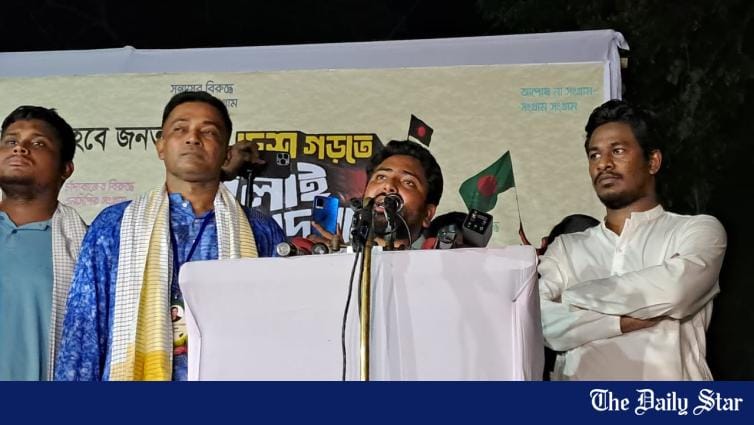
New constitution will ensure constitutional recognition for all ethnic groups: Nahid

1752975401013.webp

Photo: Star

Nahid Islam, convener of the National Citizen Party, today said all ethnic communities would be recognised in the new constitution, aiming to build an inclusive and equitable Bangladesh.

"The new constitution of the future will ensure constitutional recognition for all ethnic groups in the country. Proper leadership and rightful representation for the people of Bandarban and the hill districts will be ensured in both the upper and lower house," he said at a rally in Bandarban last night.

The rally was organised as part of the NCP's month-long "July March to Rebuild the Nation" programme at the Bandarban Mukti Mancha.

Nahid said, "Reforming the state system, reconstructing the country, strengthening the bonds of harmony in the Chittagong Hill Tracts, implementing the historical July Charter, and creating an equitable Bangladesh are our primary goals. The active participation of the people in the hill areas is essential to achieve this."

He further said, "The July mass uprising was not just a movement for changing the government -- it was a reflection of the people's aspirations for a new system of governance. Through this uprising, we want to build a Bangladesh where the rules, laws, and constitution of the state genuinely work in favour of the people."

Nahid said, "The constitution of 1972 created a division between freedom fighters, hill people, and Bangalis after the Liberation War in 1971. A new constitution is needed to eliminate that division and ensure the rights of the people."

He said, "Bangladesh is a country of many ethnic groups. Various ethnic communities have been living here for ages. The NCP respects the cultural and religious rights of all communities. Therefore, it is essential to enact a new constitution to protect the integrity of everyone's culture."

The rally was chaired by Shahidur Rahman Sohel, chief coordinator of NCP's Bandarban chapter.

Other speakers included Hasnat Abdullah, chief coordinator (South); Nasir Uddin Patwary, central coordinator; Akhtar Hossain, member secretary of the central committee; Tasnim Jara, Anik Roy, and Khan Talat Mahmud.​
 
Analyze

Analyze Post

Add your ideas here:
Highlight Cite Respond
’72 constitution divided nation through Bengali nationalism, says NCP
Staff Correspondent 21 July, 2025, 00:05

1753061272083.webp

The National Citizen Party holds a street rally at Banroopa in Rangamati district headquarters on Sunday. | Focus Bangla photo

The National Citizen Party on Sunday said that divisions were created among people in Bangladesh in the name of Bengali nationalism and secularism.

NCP convener Nahid Islam made the remarks at a rally in Rangamati as part of the party’s ongoing programme marking the first anniversary of the July uprising.

Nahid termed the 1972 constitution a Mujib-made constitution and stated that the constitution failed to include all communities living in the country.

‘A conflict between Bengali-speaking people and non-Bengali communities has been created in the country in the name of Bengali nationalism. A division has been created between the followers of Islam and those of other religions here in the name of secularism. We want to create a constitution to ensure dignity for all communities, going beyond all the divisions,’ said Nahid.

Addressing the rally in the district town’s Banorupa CNG Stand area, Nahid said that a third party wanted to maintain the divisions and conflicts in the Chittagong Hill Tracts for their own interest.

On the 20th day of the party’s countrywide march, Nahid stressed the need for the unity of people of different communities to solve any issue by themselves so that no third party could take advantage of the divisions.

The NCP began its national-level march on July 1 from Rangpur by offering prayers for uprising martyr Abu Sayed as part of its July 1- August 5 countrywide programme to mark the first anniversary of the uprising.

A group of student and youth leaders who led the uprising formed the NCP on February 28.

Addressing the Rangamati rally, the NCP chief organiser for north, Sarjis Alam offered an apology for his controversial remarks regarding Bandarban.

He offered the apology amid protests by different quarters over his remarks.

‘A few days ago, I also unintentionally said something about Bandarban. Later, I felt that I should not have said that. I would like to express my regret to you about this,’ said Sarjis after a group of students in Bandarban announced the party as ‘unwanted’ till he expresses regret.

NCP leaders, activists and supporters brought out a procession from the District Shilpakala Academy area of the town and the procession met in the rally.

NCP leaders and activists, including the party chief organiser for south, Hasnat Abdullah, chief coordinator Nasiruddin Patwary, senior joint convener Samanta Shermeen and senior joint member secretary Tasnim Jara, among others, participated in the programmes.

They also held a rally and a march in Chattogram city in the evening, reported New Age Staff Correspondent in Chattogram.New age services

Nahid said, ‘Our chief coordinator Nasiruddin Patwary exposed some truths in Cox’s Bazar. And now, we are being attacked for it. In Banshkhali, our NCP organiser was assaulted. He is suffering from a head injury.’

Referring to Chattogram’s crumbling urban infrastructure, he said, ‘This historic city has been pushed into disarray through years of negligence and plundering in the grip of mafias.’

Nahid further said, ‘We consider Chattogram the most crucial region for Bangladesh’s national security and sovereignty. It must be developed into a new economic zone. To strengthen our maritime and naval capabilities, we must first strengthen Chattogram. NCP is committed to doing that.’

The NCP is scheduled to hold marches in all districts till July 30, demanding trial of the Awami League and its leaders for the massacres during the mass uprising, reforms in various sectors, and a new constitution aiming at building a discrimination-free Bangladesh.​
 
Analyze

Analyze Post

Add your ideas here:
Highlight Cite Respond

High Court to rule on the validity of Article 116 of the Constitution on Sept 2

bdnews24.com
Published :
Aug 13, 2025 21:25
Updated :
Aug 13, 2025 21:25

1755132985543.webp


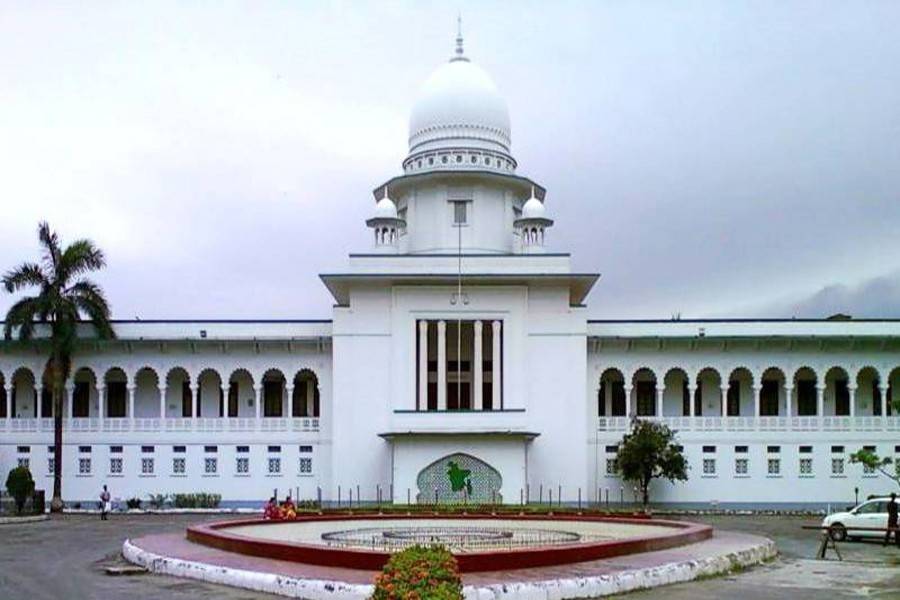
The High Court has concluded the final hearing on a petition challenging the validity of Article 116 of the Constitution, which governs the control and discipline of the judiciary, and will deliver its verdict on Sept 2.

The bench, comprising Justice Ahmed Sohel and Justice Debasish Roy Chowdhury, scheduled the ruling for that date on Wednesday.

The writ petition, filed by 10 lawyers on behalf of advocate Mohammad Shishir Monir on Aug 25, 2024, seeks reinstatement of the original Article 116, under which judicial officers and magistrates were under the control and discipline of the Supreme Court.

The petitioners argue that the current amended article places authority over appointments, transfers, promotions, leave, and disciplinary matters of subordinate courts under the executive branch, specifically the president, via the law ministry.

Attorney General Md Asaduzzaman represented the state, while lawyer Ahsanul Karim appeared as intervener.

The case had originally been heard by a bench led by Justice Farah Mahbub but was reassigned after her Mar 24 appointment to the Appellate Division.

The High Court had issued a rule during preliminary hearings in April 2024, questioning why the amended Article 116 should not be declared unconstitutional.

Under the amended provision, the president is responsible for controlling and disciplining magistrates, including transfers, promotions, leave approvals, and other administrative matters, a function previously under the Supreme Court in the 1972 Constitution.​
 
Analyze

Analyze Post

Add your ideas here:
Highlight Cite Respond

Members Online

Latest Posts

Back
 
G
O
 
H
O
M
E