You are using an out of date browser. It may not display this or other websites correctly.
You should upgrade or use an alternative browser.
You should upgrade or use an alternative browser.
[🇧🇩] Everything about our constitution
- Thread starter Saif
- Start date
 Bangladesh Defense
More options
Manage feed entries
Saif
Senior Member
- Joined
- Jan 24, 2024
- Messages
- 21,960
- Likes
- 9,840
- Nation

- Residence
- Axis Group

Restoration of caretaker system to be proposed
The restoration of the caretaker government and the introduction of a bicameral system in parliament will be among the recommendations to be proposed by the Constitution Reform Commission.
Restoration of caretaker system to be proposed
Constitution reform commission likely to submit report Jan 7

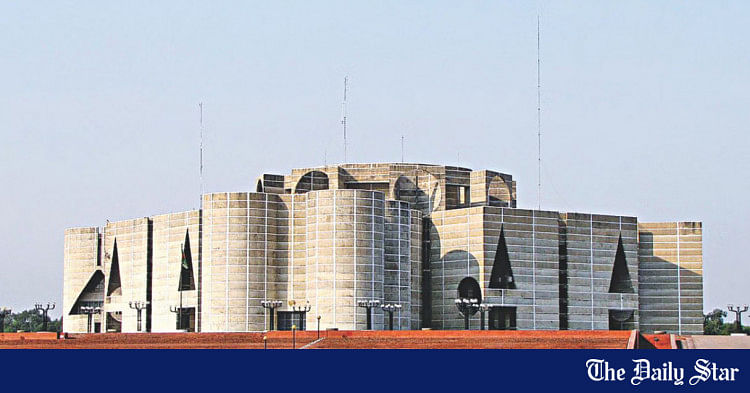
It is important to follow due process in consultation with the constitution in each step towards achieving reforms. FILE PHOTO: STAR
The restoration of the caretaker government and the introduction of a bicameral system in parliament will be among the recommendations to be proposed by the Constitution Reform Commission.
The commission, led by political scientist Ali Riaz, is likely to recommend the inclusion of equality, human dignity, and social justice in the preamble to the constitution.
Its proposal, which is currently being prepared along with the rationale, is scheduled to submit its recommendations by January 7.
"I would say the biggest consensus we received is on the caretaker government. If I were to say 100 percent, it would not be an exaggeration," Riaz told The Daily Star.
Additionally, the commission will propose a two-term limit for the office and curbing the prime minister's absolute power.
It will also recommend establishing a balance of power between the prime minister and the president.
The commission plans to strengthen the parliamentary standing committees to enhance their ability to monitor and hold the government and the prime minister accountable.
It will also recommend repealing Article 70 of the constitution.
Asked whether the commission is amending or rewriting the constitution, Riaz clarified that it is not drafting a new constitution but rather compiling recommendations so that the constitution would guarantee that no one can snatch the voting rights of the masses and no potential autocrat can grab power.
So far, the commission has received proposals from 28 political entities, including 25 political parties and three alliances.
It has also held discussions with 43 organisations, including civil society groups, some of which have provided written submissions.
Moreover, the commission consulted seven constitutional experts and sought opinions from 27 prominent citizens.
It also took opinions from 10 youths who contributed songs, poems and graffiti during the July uprising. They were not associated with the Student Against Discrimination movement or the Jatiya Nagorik Committee.
The commission has undertaken two broader initiatives.
Riaz said, "First, we collected public opinions through our website, receiving 50,573 responses. While these inputs were helpful, they had limitations due to the lack of demographic information about the respondents, such as age, gender, location or profession, which weakened their scientific credibility."
To address this, the commission collaborated with the Bangladesh Bureau of Statistics to conduct a household survey using a methodologically sound and scientifically rigorous process.
"This survey collected 45,925 opinions, which we are now analysing. This approach ensured a more representative and inclusive understanding of public sentiment," Riaz added.
Thus far, the commission has conducted 46 meetings: 23 for consultations and 23 among its members.
"Through these efforts, we have extensively and inclusively gathered opinions and analysed 121 countries' constitutions -- we are working toward making well-informed recommendations," Riaz also said.
Constitution reform commission likely to submit report Jan 7
It is important to follow due process in consultation with the constitution in each step towards achieving reforms. FILE PHOTO: STAR
The restoration of the caretaker government and the introduction of a bicameral system in parliament will be among the recommendations to be proposed by the Constitution Reform Commission.
The commission, led by political scientist Ali Riaz, is likely to recommend the inclusion of equality, human dignity, and social justice in the preamble to the constitution.
Its proposal, which is currently being prepared along with the rationale, is scheduled to submit its recommendations by January 7.
"I would say the biggest consensus we received is on the caretaker government. If I were to say 100 percent, it would not be an exaggeration," Riaz told The Daily Star.
Additionally, the commission will propose a two-term limit for the office and curbing the prime minister's absolute power.
It will also recommend establishing a balance of power between the prime minister and the president.
The commission plans to strengthen the parliamentary standing committees to enhance their ability to monitor and hold the government and the prime minister accountable.
It will also recommend repealing Article 70 of the constitution.
Asked whether the commission is amending or rewriting the constitution, Riaz clarified that it is not drafting a new constitution but rather compiling recommendations so that the constitution would guarantee that no one can snatch the voting rights of the masses and no potential autocrat can grab power.
So far, the commission has received proposals from 28 political entities, including 25 political parties and three alliances.
It has also held discussions with 43 organisations, including civil society groups, some of which have provided written submissions.
Moreover, the commission consulted seven constitutional experts and sought opinions from 27 prominent citizens.
It also took opinions from 10 youths who contributed songs, poems and graffiti during the July uprising. They were not associated with the Student Against Discrimination movement or the Jatiya Nagorik Committee.
The commission has undertaken two broader initiatives.
Riaz said, "First, we collected public opinions through our website, receiving 50,573 responses. While these inputs were helpful, they had limitations due to the lack of demographic information about the respondents, such as age, gender, location or profession, which weakened their scientific credibility."
To address this, the commission collaborated with the Bangladesh Bureau of Statistics to conduct a household survey using a methodologically sound and scientifically rigorous process.
"This survey collected 45,925 opinions, which we are now analysing. This approach ensured a more representative and inclusive understanding of public sentiment," Riaz added.
Thus far, the commission has conducted 46 meetings: 23 for consultations and 23 among its members.
"Through these efforts, we have extensively and inclusively gathered opinions and analysed 121 countries' constitutions -- we are working toward making well-informed recommendations," Riaz also said.
Saif
Senior Member
- Joined
- Jan 24, 2024
- Messages
- 21,960
- Likes
- 9,840
- Nation
- Residence
- Axis Group
‘We’re not drafting constitution’
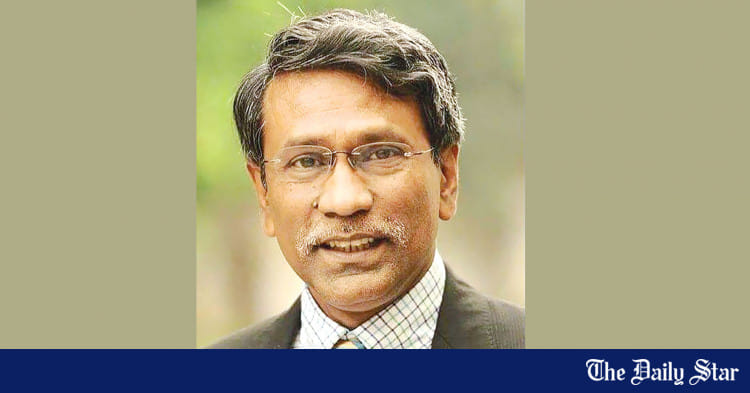
Ali Riaz, a distinguished Bangladeshi-American political scientist and acclaimed author heading the constitution reform commission, sat down with Star to inform on the commission’s progress and some of the key consensuses obtained.
‘We’re not drafting constitution’
Says Ali Riaz

Ali Riaz, a distinguished Bangladeshi-American political scientist and acclaimed author heading the constitution reform commission, sat down with Star to inform on the commission's progress and some of the key consensuses obtained.
DS: What is the progress of the commission?
AR: We have been entrusted with two main tasks: one is to review the existing constitution and the other is to propose recommendations. The foundation of the recommendations is to make the constitution more democratic, ensure the participation of the people and reform it in a way that prevents the possibility of autocratic rule in the future.
In my opinion, it has essentially been rewritten twice: once through the Fourth Amendment and again through the Fifteenth Amendment. I emphasise the notion of "rewriting" the constitution because, with the Fourth Amendment, the character of the state, the rights of its citizens and the structure of power were fundamentally altered.
The same fundamental changes were made through the Fifteenth Amendment. The core character of the constitution was altered and the rights of the people were not adequately protected. Essentially, this means the constitution was rewritten.
In reviewing Bangladesh's constitution, we also studied the constitutions of 121 countries to compare and analyse the unique provisions of our constitution and identify similarities or differences with other countries.
For example, Bangladesh's constitution includes provisions like displaying Bangabandhu's portrait in government offices and incorporating the Declaration of Independence. Our researchers analysed these aspects thoroughly.
This analysis involved two approaches. First, we examined how the constitution evolved into its current form. Second, we are focused on what the commission will propose.
I believe the commission's recommendations will not be the final word as the constitution is a political document that reflects the people's aspirations and provides guidelines for the state.
To develop these recommendations, we engaged with the largest stakeholders: the people. This also involves discussions with political parties, civil society groups, professional bodies and eminent individuals.
DS: What are the key points of consensus among stakeholders, or what proposals is the commission planning to recommend?
AR: I won't say what we will propose but I can share the areas where I have observed significant consensus. The most prominent consensus I have seen is that people want a participatory government system that ensures voting rights. They want these rights to be constitutionally protected so no one can undermine or take them away.
There is also a strong desire to prevent excessive concentration of power in the hands of a single individual.
As for solutions, there are various opinions. Some emphasise the importance of balancing power, while others point out that the prime minister has become overly powerful due to the constitution.
To address this, it has been suggested to empower and strengthen parliamentary standing committees to prevent the misuse of power.
Additionally, some stakeholders believe the prime minister should not hold multiple positions to avoid accumulating excessive authority.
DS: Many people have discussed the idea of a bicameral parliamentary system. Is the commission planning to propose it?
AR: A significant number of stakeholders have proposed a bicameral parliamentary system. Their reasoning is rooted in a desire to decentralise power, believing that such a system could help prevent the misuse of authority.
The proposals for a bicameral system and limiting the prime minister's tenure to a maximum of two terms reflect the people's aspirations to curb the concentration of power, establish constitutional safeguards against autocracy and create institutions that protect their rights.
Ultimately, we will make recommendations based on the political and cultural context, the aspirations of the Bangladeshi people and the political behaviour of the country.
DS: Have you received proposals for amending or rewriting the constitution? What is the commission planning to recommend: amend or rewrite?
AR: I would suggest not framing it that way. First of all, we are not drafting the constitution. Our role is to present what our stakeholders and analyses have indicated needs change.
How these changes will be implemented is a political process and is to be carried out by the political parties that govern the country.
They will draft the constitution, consulting stakeholders in their ways. We are not specifically proposing amendments or a complete rewriting of the constitution.
What we are saying is that, for a democratic Bangladesh, certain principles and provisions need to be incorporated into the constitution.
Whether this is done through political consensus or an electoral process is up to the political parties.
DS: The president's role has largely been symbolic. Did the stakeholders propose increasing the president's powers? Will the commission recommend balancing the powers of the president and the prime minister?
AR: This issue was raised significantly. It came up in discussions about reducing the absolute power of the prime minister.
One suggested approach is to grant more powers to the president. However, there are both positive and negative aspects to this.
As a political science teacher, I see two potential approaches. One is vertical power distribution: granting some power to the president (at the top) and empowering the people (at the bottom) by ensuring their voting rights.
The focus should be on distributing power in a way that ensures the prime minister is accountable not only to the people but also to the system itself.
To achieve this, we need robust institutions. Strengthening parliamentary standing committees is essential, as they can monitor not just the prime minister but the entire government.
Additionally, we need constitutional institutions such as a stronger National Human Rights Commission to protect human rights and a more effective Anti-Corruption Commission to combat corruption.
We are considering the broader picture. Distributing power alone will not solve everything; institutional reforms are critical for balancing power.
DS: Some have proposed the idea of a second republic, inspired by the spirit of the July Uprising, similar to how the constitution reflects the spirit of the Liberation War. Is the commission planning to recommend including this in the constitution?
AR: Some stakeholders have proposed the inclusion of a second republic. However, as a commission, it is not our responsibility to decide on this matter. This is a political decision.
DS: Will the commission propose changes to the preamble of the constitution?
AR: The most important aspect of the preamble is its foundation. We believe the foundation lies in the Declaration of Independence during the Liberation War, which emphasised equality, human dignity and social justice. These ideals are the foundation of our state.
This foundation was not created in a single day or suddenly on April 10, 1971. It emerged from the long struggles of the Bangladeshi people: the anti-British movement, the struggle against Pakistan and the movements of peasants and labourers. These aspirations must be included in the preamble.
Unfortunately, these ideals were not fully reflected in the constitution of 1972, even though they were part of the pledges made during our independence.
The state is essentially [based on] a social agreement. We created this agreement to build a state that ensures equality, human dignity and social justice.
It won't happen overnight, but these foundational principles are what we aim to propose for inclusion in the preamble of the Constitution.
DS: Will the commission recommend the caretaker government system?
AR: We did not encounter any dissenting views regarding the caretaker government. Most stakeholders expressed their support for reinstating the caretaker government system.
DS: Is the commission hopeful that its proposals will be reflected in the constitution?
AR: We are hopeful because this stage has been reached through an unprecedented mass uprising. History will not chart our path, but can we ignore the bloodshed, the sacrifices of lives and the pain of those who are still suffering?
These sacrifices must have meant something and they give us hope.
DS: Compiling these extensive proposals, analysing them and preparing recommendations is a long and rigorous process. Do you think you will be able to complete it within the stipulated timeframe of January 7?
AR: We are hopeful for two reasons. First, we have received significant support from the people, institutions, political parties and researchers. This support gives us confidence that we will be able to submit our draft proposals within the stipulated timeframe.
Says Ali Riaz
Ali Riaz, a distinguished Bangladeshi-American political scientist and acclaimed author heading the constitution reform commission, sat down with Star to inform on the commission's progress and some of the key consensuses obtained.
DS: What is the progress of the commission?
AR: We have been entrusted with two main tasks: one is to review the existing constitution and the other is to propose recommendations. The foundation of the recommendations is to make the constitution more democratic, ensure the participation of the people and reform it in a way that prevents the possibility of autocratic rule in the future.
In my opinion, it has essentially been rewritten twice: once through the Fourth Amendment and again through the Fifteenth Amendment. I emphasise the notion of "rewriting" the constitution because, with the Fourth Amendment, the character of the state, the rights of its citizens and the structure of power were fundamentally altered.
The same fundamental changes were made through the Fifteenth Amendment. The core character of the constitution was altered and the rights of the people were not adequately protected. Essentially, this means the constitution was rewritten.
In reviewing Bangladesh's constitution, we also studied the constitutions of 121 countries to compare and analyse the unique provisions of our constitution and identify similarities or differences with other countries.
For example, Bangladesh's constitution includes provisions like displaying Bangabandhu's portrait in government offices and incorporating the Declaration of Independence. Our researchers analysed these aspects thoroughly.
This analysis involved two approaches. First, we examined how the constitution evolved into its current form. Second, we are focused on what the commission will propose.
I believe the commission's recommendations will not be the final word as the constitution is a political document that reflects the people's aspirations and provides guidelines for the state.
To develop these recommendations, we engaged with the largest stakeholders: the people. This also involves discussions with political parties, civil society groups, professional bodies and eminent individuals.
DS: What are the key points of consensus among stakeholders, or what proposals is the commission planning to recommend?
AR: I won't say what we will propose but I can share the areas where I have observed significant consensus. The most prominent consensus I have seen is that people want a participatory government system that ensures voting rights. They want these rights to be constitutionally protected so no one can undermine or take them away.
There is also a strong desire to prevent excessive concentration of power in the hands of a single individual.
As for solutions, there are various opinions. Some emphasise the importance of balancing power, while others point out that the prime minister has become overly powerful due to the constitution.
To address this, it has been suggested to empower and strengthen parliamentary standing committees to prevent the misuse of power.
Additionally, some stakeholders believe the prime minister should not hold multiple positions to avoid accumulating excessive authority.
DS: Many people have discussed the idea of a bicameral parliamentary system. Is the commission planning to propose it?
AR: A significant number of stakeholders have proposed a bicameral parliamentary system. Their reasoning is rooted in a desire to decentralise power, believing that such a system could help prevent the misuse of authority.
The proposals for a bicameral system and limiting the prime minister's tenure to a maximum of two terms reflect the people's aspirations to curb the concentration of power, establish constitutional safeguards against autocracy and create institutions that protect their rights.
Ultimately, we will make recommendations based on the political and cultural context, the aspirations of the Bangladeshi people and the political behaviour of the country.
DS: Have you received proposals for amending or rewriting the constitution? What is the commission planning to recommend: amend or rewrite?
AR: I would suggest not framing it that way. First of all, we are not drafting the constitution. Our role is to present what our stakeholders and analyses have indicated needs change.
How these changes will be implemented is a political process and is to be carried out by the political parties that govern the country.
They will draft the constitution, consulting stakeholders in their ways. We are not specifically proposing amendments or a complete rewriting of the constitution.
What we are saying is that, for a democratic Bangladesh, certain principles and provisions need to be incorporated into the constitution.
Whether this is done through political consensus or an electoral process is up to the political parties.
DS: The president's role has largely been symbolic. Did the stakeholders propose increasing the president's powers? Will the commission recommend balancing the powers of the president and the prime minister?
AR: This issue was raised significantly. It came up in discussions about reducing the absolute power of the prime minister.
One suggested approach is to grant more powers to the president. However, there are both positive and negative aspects to this.
As a political science teacher, I see two potential approaches. One is vertical power distribution: granting some power to the president (at the top) and empowering the people (at the bottom) by ensuring their voting rights.
The focus should be on distributing power in a way that ensures the prime minister is accountable not only to the people but also to the system itself.
To achieve this, we need robust institutions. Strengthening parliamentary standing committees is essential, as they can monitor not just the prime minister but the entire government.
Additionally, we need constitutional institutions such as a stronger National Human Rights Commission to protect human rights and a more effective Anti-Corruption Commission to combat corruption.
We are considering the broader picture. Distributing power alone will not solve everything; institutional reforms are critical for balancing power.
DS: Some have proposed the idea of a second republic, inspired by the spirit of the July Uprising, similar to how the constitution reflects the spirit of the Liberation War. Is the commission planning to recommend including this in the constitution?
AR: Some stakeholders have proposed the inclusion of a second republic. However, as a commission, it is not our responsibility to decide on this matter. This is a political decision.
DS: Will the commission propose changes to the preamble of the constitution?
AR: The most important aspect of the preamble is its foundation. We believe the foundation lies in the Declaration of Independence during the Liberation War, which emphasised equality, human dignity and social justice. These ideals are the foundation of our state.
This foundation was not created in a single day or suddenly on April 10, 1971. It emerged from the long struggles of the Bangladeshi people: the anti-British movement, the struggle against Pakistan and the movements of peasants and labourers. These aspirations must be included in the preamble.
Unfortunately, these ideals were not fully reflected in the constitution of 1972, even though they were part of the pledges made during our independence.
The state is essentially [based on] a social agreement. We created this agreement to build a state that ensures equality, human dignity and social justice.
It won't happen overnight, but these foundational principles are what we aim to propose for inclusion in the preamble of the Constitution.
DS: Will the commission recommend the caretaker government system?
AR: We did not encounter any dissenting views regarding the caretaker government. Most stakeholders expressed their support for reinstating the caretaker government system.
DS: Is the commission hopeful that its proposals will be reflected in the constitution?
AR: We are hopeful because this stage has been reached through an unprecedented mass uprising. History will not chart our path, but can we ignore the bloodshed, the sacrifices of lives and the pain of those who are still suffering?
These sacrifices must have meant something and they give us hope.
DS: Compiling these extensive proposals, analysing them and preparing recommendations is a long and rigorous process. Do you think you will be able to complete it within the stipulated timeframe of January 7?
AR: We are hopeful for two reasons. First, we have received significant support from the people, institutions, political parties and researchers. This support gives us confidence that we will be able to submit our draft proposals within the stipulated timeframe.
Saif
Senior Member
- Joined
- Jan 24, 2024
- Messages
- 21,960
- Likes
- 9,840
- Nation
- Residence
- Axis Group
1972 ‘Mujibist’ constitution will be buried
The “Mujibist” constitution of 1972 will become invalid through the proclamation of the July Revolution by the Anti-discrimination Students Movement on December 31, leaders of the platform said yesterday.
1972 ‘Mujibist’ constitution will be buried

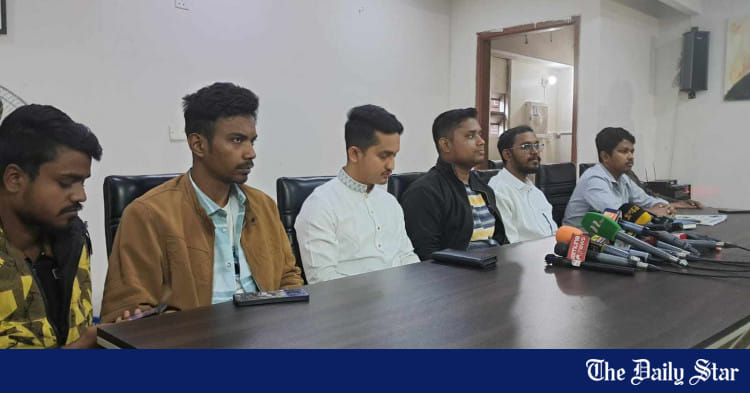
Photo: Collected
The "Mujibist" constitution of 1972 will become invalid through the proclamation of the July Revolution by the Anti-discrimination Students Movement on December 31, leaders of the platform said yesterday.
"From the very place where the one-point movement was declared, the grave of the Mujibist 1972 constitution will be dug -- we want the Mujibist constitution to be buried," Hasnat Abdullah, convener of the platform, told a press briefing at its central office in the capital's Banglamotor.
The platform is all set to unveil the proclamation of the July Revolution on December 31 at 3:00pm at the Central Shaheed Minar.
"The proclamation will clarify how the Mujibist constitution has destroyed the aspirations of the people and precisely how we intend to replace it." Hasnat Abdullah— Convener of Anti-discrimination Students Movement.
Hasnat further said that the proclamation should have been made on August 5 after the fall of the Awami League government.
"Better late than never. The delay has allowed pro-fascist forces to continue conspiring from abroad and questioning the legitimacy of the revolution through the media, intellectual circles and various other platforms."
These efforts undermine the sacrifice of more than 2,000 martyrs and more than 20,000 injured, he said.
"We hope that the proclamation will make the Nazi-like Awami League irrelevant in Bangladesh."
The proclamation will outline the dreams, aspirations, intentions, goals and manifesto for the future of Bangladesh, he mentioned.
"It belongs to no specific party or class. Over the course of history, our dreams have been betrayed at various levels. Through this proclamation, we aim to ensure that such deprivation does not recur."
The foundational principles of the 1972 constitution facilitated Indian aggression, Hasnat said.
"The proclamation will clarify how the Mujibist constitution has destroyed the aspirations of the people and precisely how we intend to replace it," he added.
A draft of the proclamation has already been prepared by taking opinions from individuals from various political ideologies, religions and age groups who participated directly in the revolution, said Sarjis Alam, former coordinator of the student platform and currently the chief organiser of the Jatiya Nagorik Committee.
"We believe that the way the revolution united all anti-fascist forces, this proclamation will contain the hopes and aspirations of everyone -- we have crossed only the first phase of the revolution," he added.
Abdul Hannan Masud, the chief organiser of the student platform, said it is the government's responsibility to incorporate the proclamation into the constitution and establish the Second Republic.
Hasnat, however, said the concept of a Second Republic is a legal matter. "We are not delving into those issues right now," he said.
Meanwhile, Chief Adviser's Press Secretary Shafiqul Alam said the government is not connected with the initiative by the student platform to declare the July mass uprising a revolution.
"This is a private initiative -- we are treating it as a private matter. It is not related to the government, and there is no involvement of the government," he said at a press briefing outside the state guesthouse Jamuna.
Meanwhile, Deputy Press Secretary Mohammad Abul Kalam Azad Majumder said, "Until the declaration is made, it will not be clear to us. Until then, we won't be able to clarify it to you."
Photo: Collected
The "Mujibist" constitution of 1972 will become invalid through the proclamation of the July Revolution by the Anti-discrimination Students Movement on December 31, leaders of the platform said yesterday.
"From the very place where the one-point movement was declared, the grave of the Mujibist 1972 constitution will be dug -- we want the Mujibist constitution to be buried," Hasnat Abdullah, convener of the platform, told a press briefing at its central office in the capital's Banglamotor.
The platform is all set to unveil the proclamation of the July Revolution on December 31 at 3:00pm at the Central Shaheed Minar.
"The proclamation will clarify how the Mujibist constitution has destroyed the aspirations of the people and precisely how we intend to replace it." Hasnat Abdullah— Convener of Anti-discrimination Students Movement.
Hasnat further said that the proclamation should have been made on August 5 after the fall of the Awami League government.
"Better late than never. The delay has allowed pro-fascist forces to continue conspiring from abroad and questioning the legitimacy of the revolution through the media, intellectual circles and various other platforms."
These efforts undermine the sacrifice of more than 2,000 martyrs and more than 20,000 injured, he said.
"We hope that the proclamation will make the Nazi-like Awami League irrelevant in Bangladesh."
The proclamation will outline the dreams, aspirations, intentions, goals and manifesto for the future of Bangladesh, he mentioned.
"It belongs to no specific party or class. Over the course of history, our dreams have been betrayed at various levels. Through this proclamation, we aim to ensure that such deprivation does not recur."
The foundational principles of the 1972 constitution facilitated Indian aggression, Hasnat said.
"The proclamation will clarify how the Mujibist constitution has destroyed the aspirations of the people and precisely how we intend to replace it," he added.
A draft of the proclamation has already been prepared by taking opinions from individuals from various political ideologies, religions and age groups who participated directly in the revolution, said Sarjis Alam, former coordinator of the student platform and currently the chief organiser of the Jatiya Nagorik Committee.
"We believe that the way the revolution united all anti-fascist forces, this proclamation will contain the hopes and aspirations of everyone -- we have crossed only the first phase of the revolution," he added.
Abdul Hannan Masud, the chief organiser of the student platform, said it is the government's responsibility to incorporate the proclamation into the constitution and establish the Second Republic.
Hasnat, however, said the concept of a Second Republic is a legal matter. "We are not delving into those issues right now," he said.
Meanwhile, Chief Adviser's Press Secretary Shafiqul Alam said the government is not connected with the initiative by the student platform to declare the July mass uprising a revolution.
"This is a private initiative -- we are treating it as a private matter. It is not related to the government, and there is no involvement of the government," he said at a press briefing outside the state guesthouse Jamuna.
Meanwhile, Deputy Press Secretary Mohammad Abul Kalam Azad Majumder said, "Until the declaration is made, it will not be clear to us. Until then, we won't be able to clarify it to you."
Saif
Senior Member
- Joined
- Jan 24, 2024
- Messages
- 21,960
- Likes
- 9,840
- Nation
- Residence
- Axis Group

Changes needed to ensure voting rights, freedom of speech, justice: Ali Riaz
The Constitution Reform Commission is planning to place recommendations for changes in line with the people’s aspirations for democracy in every sphere of the state, freedom of speech, voting rights and independent judiciary.
 www.newagebd.net
Changes needed to ensure voting rights, freedom of speech, justice: Ali Riaz
Sadiqur Rahman 31 December, 2024, 01:31

Ali Riaz
The Constitution Reform Commission is planning to place recommendations for changes in line with the people’s aspirations for democracy in every sphere of the state, freedom of speech, voting rights and independent judiciary.
‘The Constitution of Bangladesh needs to be structured in a way that protects the people’s democratic rights, ensures the accountability of those in power and empowers governance, particularly the local government system, to effectively represent the people,’ the reform commission chief, Ali Riaz, said in an interview with New Age recently.
He said that they would made recommendations upholding the spirits of the student-led mass uprising against discrimination that ousted the authoritarian regime of Sheikh Hasina, who fled to India on August 5.
About the necessity of the formation of the reform commission, Riaz, a distinguished professor at the politics and government department of the Illinois State University in the United States, said that the reform of the constitution had become imperative even before the July uprising.
‘Over the past 52 years, the Bangladesh Constitution has not only strayed from the fundamental principles of the War of Independence, but has also evolved into an instrument for concentrating power in a few, constituting the erosion of people’s rights and failing to represent their aspirations,’ observed Riaz. The reform commission, formed on October 7, is going to submit its draft recommendations to the chief adviser on January 7.
Riaz believes that the 1971 liberation war was the culmination of a long struggle by the people of this land for having a state that would ensure equality, human dignity and social justice.
The July uprising reflected the people’s will for a democratic state that protects its citizens and delivers equality, human dignity and social justice.
This necessitated the formation of the reform commission to recommend the incorporation of these ideals into the constitution.
Riaz, however, said that the reform commission was not drafting a new constitution.
He said, ‘The reform commission’s terms of reference are clear: to review the existing constitution and recommend changes to transform the state into a truly democratic entity.’
Mentioning the major flaws in the existing constitution, Riaz observed that Bangladesh constitution, drafted and approved in 1972, has been amended 17 times and some for only individual benefits or political expediency.
These changes often lacked vision and prioritised the political parties’ quest for power, he said.
He said that the constituent assembly that drafted and approved the constitution in 1971 consisted mostly of one political party and there was no public referendum to reflect the will of the people who fought in 1971.
Saying that Bangladesh turned into a one-party state in 1975, he observed that mechanisms for accountability, particularly for the prime minister, were absent in the constitution that led to authoritarian tendencies.
‘Certain amendments, such as the 15th amendment, further complicated matters by making a third of the constitution unamendable, exceeding the authority of parliament,’ Riaz said.
He added that the contradiction between the provisions for an independent judiciary and subordinate courts under the executive authority was another significant flaw in the existing constitution.
‘The constitution needs to align with the principles of equality, human dignity and social justice for which the people fought in 1971. The proclamation of independence in 1971, the first de facto constitution of Bangladesh, emphasised these principles, but those were omitted in the subsequent draft,’ he said.
Replying to a question whether the political parties would accept the reform commission’s recommendations, he answered, ‘That will be a political process between the interim government and the political parties. What I can tell you is that the recommendations we are going to propose reflect the views of the political parties, civil society, constitutional experts and most importantly the common people.’
According to him, the reform commission is going to present recommendations that would reflect input from political parties, civil society, constitutional experts and nearly 1,00,000 people who participated in the process through online comments and surveys.
‘Although accommodating all views is impossible, the overarching consensus on key issues forms the basis of the recommendations,’ he said.
Riaz believes that the July uprising reiterated the demand for a country where voices are heard, representatives are chosen freely and governance is free from engineered elections.
He said that reforming the electoral system, particularly the composition of the election commission and laws governing elections, was vital.
While the commission has not been tasked with drafting the electoral process, its recommendations would aim to give some observations on political reforms and facilitate dialogue and build consensus among key stakeholders, including the people and political parties, Riaz said.
He said that the reform commission’s focus was on ensuring democratic institutions that are robust and accountable.
The recommendations would also aim to create safeguards against autocracy through institutional reforms and accountability mechanisms.
‘However, sustaining democracy requires political will and continuous effort from both the people and political parties, as democracy is an everyday struggle,’ Riaz added.
Sadiqur Rahman 31 December, 2024, 01:31
Ali Riaz
The Constitution Reform Commission is planning to place recommendations for changes in line with the people’s aspirations for democracy in every sphere of the state, freedom of speech, voting rights and independent judiciary.
‘The Constitution of Bangladesh needs to be structured in a way that protects the people’s democratic rights, ensures the accountability of those in power and empowers governance, particularly the local government system, to effectively represent the people,’ the reform commission chief, Ali Riaz, said in an interview with New Age recently.
He said that they would made recommendations upholding the spirits of the student-led mass uprising against discrimination that ousted the authoritarian regime of Sheikh Hasina, who fled to India on August 5.
About the necessity of the formation of the reform commission, Riaz, a distinguished professor at the politics and government department of the Illinois State University in the United States, said that the reform of the constitution had become imperative even before the July uprising.
‘Over the past 52 years, the Bangladesh Constitution has not only strayed from the fundamental principles of the War of Independence, but has also evolved into an instrument for concentrating power in a few, constituting the erosion of people’s rights and failing to represent their aspirations,’ observed Riaz. The reform commission, formed on October 7, is going to submit its draft recommendations to the chief adviser on January 7.
Riaz believes that the 1971 liberation war was the culmination of a long struggle by the people of this land for having a state that would ensure equality, human dignity and social justice.
The July uprising reflected the people’s will for a democratic state that protects its citizens and delivers equality, human dignity and social justice.
This necessitated the formation of the reform commission to recommend the incorporation of these ideals into the constitution.
Riaz, however, said that the reform commission was not drafting a new constitution.
He said, ‘The reform commission’s terms of reference are clear: to review the existing constitution and recommend changes to transform the state into a truly democratic entity.’
Mentioning the major flaws in the existing constitution, Riaz observed that Bangladesh constitution, drafted and approved in 1972, has been amended 17 times and some for only individual benefits or political expediency.
These changes often lacked vision and prioritised the political parties’ quest for power, he said.
He said that the constituent assembly that drafted and approved the constitution in 1971 consisted mostly of one political party and there was no public referendum to reflect the will of the people who fought in 1971.
Saying that Bangladesh turned into a one-party state in 1975, he observed that mechanisms for accountability, particularly for the prime minister, were absent in the constitution that led to authoritarian tendencies.
‘Certain amendments, such as the 15th amendment, further complicated matters by making a third of the constitution unamendable, exceeding the authority of parliament,’ Riaz said.
He added that the contradiction between the provisions for an independent judiciary and subordinate courts under the executive authority was another significant flaw in the existing constitution.
‘The constitution needs to align with the principles of equality, human dignity and social justice for which the people fought in 1971. The proclamation of independence in 1971, the first de facto constitution of Bangladesh, emphasised these principles, but those were omitted in the subsequent draft,’ he said.
Replying to a question whether the political parties would accept the reform commission’s recommendations, he answered, ‘That will be a political process between the interim government and the political parties. What I can tell you is that the recommendations we are going to propose reflect the views of the political parties, civil society, constitutional experts and most importantly the common people.’
According to him, the reform commission is going to present recommendations that would reflect input from political parties, civil society, constitutional experts and nearly 1,00,000 people who participated in the process through online comments and surveys.
‘Although accommodating all views is impossible, the overarching consensus on key issues forms the basis of the recommendations,’ he said.
Riaz believes that the July uprising reiterated the demand for a country where voices are heard, representatives are chosen freely and governance is free from engineered elections.
He said that reforming the electoral system, particularly the composition of the election commission and laws governing elections, was vital.
While the commission has not been tasked with drafting the electoral process, its recommendations would aim to give some observations on political reforms and facilitate dialogue and build consensus among key stakeholders, including the people and political parties, Riaz said.
He said that the reform commission’s focus was on ensuring democratic institutions that are robust and accountable.
The recommendations would also aim to create safeguards against autocracy through institutional reforms and accountability mechanisms.
‘However, sustaining democracy requires political will and continuous effort from both the people and political parties, as democracy is an everyday struggle,’ Riaz added.
Saif
Senior Member
- Joined
- Jan 24, 2024
- Messages
- 21,960
- Likes
- 9,840
- Nation
- Residence
- Axis Group

The Key Reform to Shield Bangladesh from the Grip of Power Abuse
The Constitution of Bangladesh has become a joke. The Interim Government can try to fix it through the Constitutional Commission but unless we address the key issue, all these changes and reforms (including all the legal and the administrative ones) will be for naught. For example, consider the Co
The Key Reform to Shield Bangladesh from the Grip of Power Abuse
Kazi Rahman
Published :
Jan 01, 2025 02:32
Updated :
Jan 01, 2025 02:32

The Constitution of Bangladesh has become a joke. The Interim Government can try to fix it through the Constitutional Commission but unless we address the key issue, all these changes and reforms (including all the legal and the administrative ones) will be for naught.
For example, consider the Constitutional provisions for the Caretaker Government. It was one of the most innovative and forward-thinking provisions of the Constitution, but it was dismantled by the Executive at the first opportunity. Some key benefits ensured by the Caretaker Government were that elections were relatively free and fair, and there was a peaceful transition of power. It also meant that the leadership changed hands, which was not seen very favourably by our leaders. I am positive that if anyone else were in the shoes of our leaders, she would have ditched those provisions in the blink of an eye because it challenged her authority and forced her to be vulnerable by forsaking her power.
The July Revolution that forced Hasina to abdicate her position and flee the country was completely unexpected. Had the army not stood by the side of the people, Bangladesh could have so easily turned into the Syria of the subcontinent. That would have been an unmitigated disaster for everyone in Bangladesh, except for the Awami League and its supporters. For better or worse, the Government fell, and we have a new Interim Government.
There are lots of things on the Interim Government’s plate. They have done commendable work stabilising the economy and improving law and order. They have also instituted some laudable reforms. My only concern is that all their hard work will be for naught if they are unable to create structures and systems which would prevent these reforms from being whittled away by the wave of the proverbial wand by the next Government in power. So, what can the Interim Government do to ensure that the blood of our young ones is not spilt in vain?
First, there is no rush. If history has taught us anything there is no need to rush into an election. Bangladesh has been independent for over 50 years. There is no existential threat to Bangladesh, so why the rush? The corruption and degeneracy of the previous Government were like a fungus, we only see the rotting fruits – the caps and the gills. The mycelial network of partisanship and cronyism permeates through every level of state and non-state institutions. These networks need to be identified and neutralised, which could take some time. If these are left untreated, it is only a matter of time before they grow back and reestablish the infestation.
Secondly, we need to think about creating a legal framework for the country that would make it enormously difficult for any Government to co-opt all organs of state and treat the country like their “baaper property”. This is crucial because, without such protections, any reform that is introduced by the Interim Government will not survive the next election. As soon as a new Government comes to power, they will dismantle all the reforms and pass laws that would confer unchecked power to them. History will repeat itself.
So how can we prevent the next Government, or any Government in the future, from becoming a leviathan that could eviscerate our country? The fundamental issue at the heart of this debate is the question of power. Power is critical for a government to do their job. But too much power in the hands of few people is dangerous for all, as “power tends to corrupt”. For example, look at what happened in 1973. The Awami League had absolute power in Bangladesh, yet it would not satisfy their power lust. They wanted more.
To protect the people from the rise of fascists in the future – one thing that this Government must ensure is Separation of Power.
Right now, power is too concentrated in the hands of the Prime Minister. In fact, if you look at the debates of the Constituent Assembly – the concentration of power was a major cause of friction. In fact, Dr Kamal Hossain argued that the “context” of 1972 was different from 1956 (Ayub Government) and that Bangabandhu would never abuse the power that was granted to the position of the Prime Minister. If Dr Hossain only had a crystal ball.
Time and time again, history has proven that power tends to corrupt – even the best of us. Our history over the last 50 years is a testament to the depravity that can arise when too much power rests in the hands of few people. If we can ensure that power is distributed across a range of people and institutions, it will be much harder for any Government in the future to entertain any hidden fascist fantasies.
There are several options that are available to us, each with its pros and cons. We need to assess the implications of the path we take because that can shape the course that Bangladesh takes over the next 100 years.
Option 1: Bicameral Parliament
We can break the Parliament into an upper house and a lower house. We can opt for the US system – whereby we have both the houses elected. The elections are staggered, and you need to ensure that some staggered process to maintain continuity. We could also opt for the UK model, or the Indian model. Each option has its advantages and disadvantages.
This might not be practical for Bangladesh because we don’t really have a landed gentry or federal structure of states. If we opt for this, then federalism might be a course that we have to consider, which would involve revamping the entire governmental framework. To be honest, the cost and complexity associated with introducing a bicameral system may be prohibitive for Bangladesh. Furthermore, if the Executive continues as members of the Parliament – this would not really solve the power issue because the Parliament would remain an extension of the Executive. We need to extricate the Executive from the Parliament, to enable Parliament to be free from the direct influence of the Executive.
Option 2: Separate all three organs of Power
This option would involve separating the Parliament, the Executive and the Judiciary – as much as possible. The function of the Parliament is to debate laws and make laws. Members of Parliament should be entitled to discuss and debate the pros and cons of laws, and then they can decide to vote on bills to make them into laws. Our laws are hopelessly out of date. We still have valid laws from the nineteenth century that were used by the British to extract resources from us. It is high time that we update these laws and try to come up with better laws that are more suitable for a growing economy in the twenty-first century. To ensure that the Parliament does not go overboard, we need to ensure that they need the consent of the Executive to enact laws.
The Executive must be extricated from the Parliament. Bangladesh is a LDC with a lot of challenges, the Executive needs a lot of resources and time to develop creative solutions for these challenges. They do not have to worry about attending the Parliament and debating the nuances of law. They can focus on implementing the laws. They can go to their ministries and work with the administration to develop Bangladesh within the legal framework created by the Parliament. They can produce by-laws and orders but those would be limited in scope and people could challenge their validity if anyone suspects that the Executive was acting ultra vires. The Ministers are men/women of action. They are concerned with the development of Bangladesh and helping their constituency when possible. They should not have to be tied up in a climate-controlled room discussing the implications of new laws and regulations or rubber-stamping laws along party lines.
The Judiciary needs only focus on interpreting the laws. They should not have to worry about upsetting any party or waiting for the Ministry of Law to write legal opinions for them. Their selection procedure – particularly, for the Supreme Court – can probably be handled by the Parliament and the Executive, jointly. There are a few things that need to be incorporated in managing the judiciary – such as independence from interference by the executive in relation to the selection, promotion, transfer and resignation of judges. The process needs to be clarified, codified and transparent. Judges should seek to be impartial arbiters of disputes. They need not coddle the Executive or the administration. Their job is to ensure that the rights of the governed and the Government are protected and that everyone gets a fair hearing. Otherwise, they will be seen as the tamed tiger of the Government, unleashed on people to serve the will of the leviathan.
Finally, to strengthen independence and reduce opportunities for abuse by all branches of the Government, we should also introduce some extra obligations on everyone in the Government. These could include: a legally binding code of ethics; an obligation to publicly disclose tax submissions and their asset holding; implementing concrete guidance for anyone in power to recuse from any positions or issues if there is a conflict of interest; etc. We also need to figure out how these provisions can be implemented and the implications of non-adherence. If members of the branches of the Government can ignore these provisions with impunity, it will only encourage them to abuse their positions and undermine the rights of the People.
The objective here is to distribute the power for governing Bangladesh and make sure that improprieties are more difficult to hide for people in positions of power. By distributing power among all branches of the Government, it would be extremely difficult for one branch to steam-roll its decisions over the others. Obligations to disclose one’s financial holdings would make them very cautious about amassing wealth, especially under their names or the names of connected persons, because it would raise awkward questions about the source of the newfound wealth. There are only so many rich family members around from whom you can inherit wealth. Separation of power could have two consequences: deadlock or cooperation. Neither of these is bad per se.
If there is a deadlock, the Executive could still function through orders and by-laws. However, people in power would be unlikely to overtly abuse their positions because they would always be mindful that they might not be in power after the next election cycle.
Since laws would not be enacted without the agreement of the Parliament and the Executive, they might choose to work together and come up with better laws. Since the leader of the Executive would need the support of the leader of the Parliament, the collaboration could keep each other in check.
To ensure that a single party does not co-opt both branches of the Government, it may be useful to have two sets of elections. One for the President – and the Executive. The other is for the Parliament. One can be the President for a four-year term and a Member of Parliament for a four-year term. However, by staggering the election you can ensure no single party can control both the branches for more than 2 years. If any party decides to abuse their position, the people can kick them out from the Legislature or the Executive (depending on the election cycle) significantly curtailing the power of the ruling party.
There is a possibility that they can collude and lead to the creation of a new fascist regime – but that would be much harder than under the current framework. Plus, it would be for two years max. If we can manage to create an independent judiciary, they could hold the fort until the next election cycle. Further details need to be worked out, but if we do not address these issues properly then we will have to pour out on the streets again against a new fascist regime in 20 years.
There are many reforms that we need to consider. But if we want to make any of them last, we must reform the issue of how power is distributed among the different branches of the Government. As I have said, there are pros and cons to this approach, but one undeniable advantage of this is that it will make it nigh impossible for future leaders to lean into their fascist tendencies. These reforms are just the beginning.
For Bangladesh to grow and prosper in the future we may have to consider curtailing the Government’s influence over institutions such as the Bangladesh Bank and make them independent. But that is a discussion for another day. Right now, we need to have a commission to figure out how we can break the monopoly on power.
The author is Business and Entrepreneurship Expert. He is currently working with CaST Network Ltd.
Kazi Rahman
Published :
Jan 01, 2025 02:32
Updated :
Jan 01, 2025 02:32
The Constitution of Bangladesh has become a joke. The Interim Government can try to fix it through the Constitutional Commission but unless we address the key issue, all these changes and reforms (including all the legal and the administrative ones) will be for naught.
For example, consider the Constitutional provisions for the Caretaker Government. It was one of the most innovative and forward-thinking provisions of the Constitution, but it was dismantled by the Executive at the first opportunity. Some key benefits ensured by the Caretaker Government were that elections were relatively free and fair, and there was a peaceful transition of power. It also meant that the leadership changed hands, which was not seen very favourably by our leaders. I am positive that if anyone else were in the shoes of our leaders, she would have ditched those provisions in the blink of an eye because it challenged her authority and forced her to be vulnerable by forsaking her power.
The July Revolution that forced Hasina to abdicate her position and flee the country was completely unexpected. Had the army not stood by the side of the people, Bangladesh could have so easily turned into the Syria of the subcontinent. That would have been an unmitigated disaster for everyone in Bangladesh, except for the Awami League and its supporters. For better or worse, the Government fell, and we have a new Interim Government.
There are lots of things on the Interim Government’s plate. They have done commendable work stabilising the economy and improving law and order. They have also instituted some laudable reforms. My only concern is that all their hard work will be for naught if they are unable to create structures and systems which would prevent these reforms from being whittled away by the wave of the proverbial wand by the next Government in power. So, what can the Interim Government do to ensure that the blood of our young ones is not spilt in vain?
First, there is no rush. If history has taught us anything there is no need to rush into an election. Bangladesh has been independent for over 50 years. There is no existential threat to Bangladesh, so why the rush? The corruption and degeneracy of the previous Government were like a fungus, we only see the rotting fruits – the caps and the gills. The mycelial network of partisanship and cronyism permeates through every level of state and non-state institutions. These networks need to be identified and neutralised, which could take some time. If these are left untreated, it is only a matter of time before they grow back and reestablish the infestation.
Secondly, we need to think about creating a legal framework for the country that would make it enormously difficult for any Government to co-opt all organs of state and treat the country like their “baaper property”. This is crucial because, without such protections, any reform that is introduced by the Interim Government will not survive the next election. As soon as a new Government comes to power, they will dismantle all the reforms and pass laws that would confer unchecked power to them. History will repeat itself.
So how can we prevent the next Government, or any Government in the future, from becoming a leviathan that could eviscerate our country? The fundamental issue at the heart of this debate is the question of power. Power is critical for a government to do their job. But too much power in the hands of few people is dangerous for all, as “power tends to corrupt”. For example, look at what happened in 1973. The Awami League had absolute power in Bangladesh, yet it would not satisfy their power lust. They wanted more.
To protect the people from the rise of fascists in the future – one thing that this Government must ensure is Separation of Power.
Right now, power is too concentrated in the hands of the Prime Minister. In fact, if you look at the debates of the Constituent Assembly – the concentration of power was a major cause of friction. In fact, Dr Kamal Hossain argued that the “context” of 1972 was different from 1956 (Ayub Government) and that Bangabandhu would never abuse the power that was granted to the position of the Prime Minister. If Dr Hossain only had a crystal ball.
Time and time again, history has proven that power tends to corrupt – even the best of us. Our history over the last 50 years is a testament to the depravity that can arise when too much power rests in the hands of few people. If we can ensure that power is distributed across a range of people and institutions, it will be much harder for any Government in the future to entertain any hidden fascist fantasies.
There are several options that are available to us, each with its pros and cons. We need to assess the implications of the path we take because that can shape the course that Bangladesh takes over the next 100 years.
Option 1: Bicameral Parliament
We can break the Parliament into an upper house and a lower house. We can opt for the US system – whereby we have both the houses elected. The elections are staggered, and you need to ensure that some staggered process to maintain continuity. We could also opt for the UK model, or the Indian model. Each option has its advantages and disadvantages.
This might not be practical for Bangladesh because we don’t really have a landed gentry or federal structure of states. If we opt for this, then federalism might be a course that we have to consider, which would involve revamping the entire governmental framework. To be honest, the cost and complexity associated with introducing a bicameral system may be prohibitive for Bangladesh. Furthermore, if the Executive continues as members of the Parliament – this would not really solve the power issue because the Parliament would remain an extension of the Executive. We need to extricate the Executive from the Parliament, to enable Parliament to be free from the direct influence of the Executive.
Option 2: Separate all three organs of Power
This option would involve separating the Parliament, the Executive and the Judiciary – as much as possible. The function of the Parliament is to debate laws and make laws. Members of Parliament should be entitled to discuss and debate the pros and cons of laws, and then they can decide to vote on bills to make them into laws. Our laws are hopelessly out of date. We still have valid laws from the nineteenth century that were used by the British to extract resources from us. It is high time that we update these laws and try to come up with better laws that are more suitable for a growing economy in the twenty-first century. To ensure that the Parliament does not go overboard, we need to ensure that they need the consent of the Executive to enact laws.
The Executive must be extricated from the Parliament. Bangladesh is a LDC with a lot of challenges, the Executive needs a lot of resources and time to develop creative solutions for these challenges. They do not have to worry about attending the Parliament and debating the nuances of law. They can focus on implementing the laws. They can go to their ministries and work with the administration to develop Bangladesh within the legal framework created by the Parliament. They can produce by-laws and orders but those would be limited in scope and people could challenge their validity if anyone suspects that the Executive was acting ultra vires. The Ministers are men/women of action. They are concerned with the development of Bangladesh and helping their constituency when possible. They should not have to be tied up in a climate-controlled room discussing the implications of new laws and regulations or rubber-stamping laws along party lines.
The Judiciary needs only focus on interpreting the laws. They should not have to worry about upsetting any party or waiting for the Ministry of Law to write legal opinions for them. Their selection procedure – particularly, for the Supreme Court – can probably be handled by the Parliament and the Executive, jointly. There are a few things that need to be incorporated in managing the judiciary – such as independence from interference by the executive in relation to the selection, promotion, transfer and resignation of judges. The process needs to be clarified, codified and transparent. Judges should seek to be impartial arbiters of disputes. They need not coddle the Executive or the administration. Their job is to ensure that the rights of the governed and the Government are protected and that everyone gets a fair hearing. Otherwise, they will be seen as the tamed tiger of the Government, unleashed on people to serve the will of the leviathan.
Finally, to strengthen independence and reduce opportunities for abuse by all branches of the Government, we should also introduce some extra obligations on everyone in the Government. These could include: a legally binding code of ethics; an obligation to publicly disclose tax submissions and their asset holding; implementing concrete guidance for anyone in power to recuse from any positions or issues if there is a conflict of interest; etc. We also need to figure out how these provisions can be implemented and the implications of non-adherence. If members of the branches of the Government can ignore these provisions with impunity, it will only encourage them to abuse their positions and undermine the rights of the People.
The objective here is to distribute the power for governing Bangladesh and make sure that improprieties are more difficult to hide for people in positions of power. By distributing power among all branches of the Government, it would be extremely difficult for one branch to steam-roll its decisions over the others. Obligations to disclose one’s financial holdings would make them very cautious about amassing wealth, especially under their names or the names of connected persons, because it would raise awkward questions about the source of the newfound wealth. There are only so many rich family members around from whom you can inherit wealth. Separation of power could have two consequences: deadlock or cooperation. Neither of these is bad per se.
If there is a deadlock, the Executive could still function through orders and by-laws. However, people in power would be unlikely to overtly abuse their positions because they would always be mindful that they might not be in power after the next election cycle.
Since laws would not be enacted without the agreement of the Parliament and the Executive, they might choose to work together and come up with better laws. Since the leader of the Executive would need the support of the leader of the Parliament, the collaboration could keep each other in check.
To ensure that a single party does not co-opt both branches of the Government, it may be useful to have two sets of elections. One for the President – and the Executive. The other is for the Parliament. One can be the President for a four-year term and a Member of Parliament for a four-year term. However, by staggering the election you can ensure no single party can control both the branches for more than 2 years. If any party decides to abuse their position, the people can kick them out from the Legislature or the Executive (depending on the election cycle) significantly curtailing the power of the ruling party.
There is a possibility that they can collude and lead to the creation of a new fascist regime – but that would be much harder than under the current framework. Plus, it would be for two years max. If we can manage to create an independent judiciary, they could hold the fort until the next election cycle. Further details need to be worked out, but if we do not address these issues properly then we will have to pour out on the streets again against a new fascist regime in 20 years.
There are many reforms that we need to consider. But if we want to make any of them last, we must reform the issue of how power is distributed among the different branches of the Government. As I have said, there are pros and cons to this approach, but one undeniable advantage of this is that it will make it nigh impossible for future leaders to lean into their fascist tendencies. These reforms are just the beginning.
For Bangladesh to grow and prosper in the future we may have to consider curtailing the Government’s influence over institutions such as the Bangladesh Bank and make them independent. But that is a discussion for another day. Right now, we need to have a commission to figure out how we can break the monopoly on power.
The author is Business and Entrepreneurship Expert. He is currently working with CaST Network Ltd.
Saif
Senior Member
- Joined
- Jan 24, 2024
- Messages
- 21,960
- Likes
- 9,840
- Nation
- Residence
- Axis Group

Bangladesh’s eunomia problem
In the ancient Greek society, eunomia outlined how things should be in an ideal society.
Bangladesh’s eunomia problem

While fundamentals can be debated across historical eras, they should be neither dismissed nor desacralised in the name of renewal or with the intention of political erasure. VISUAL: SALMAN SAKIB SHAHRYAR
Let us ask an elusive question against the current political situation in Bangladesh: what creates a good nation? An ambitious constitution? Honest and accountable leaders? Effective policies? People themselves? We begin by discussing the idea of the constitution. You may not have noticed that you don't have to sign the constitution to pledge your allegiance to it or abide by it. The state assumes that you as a citizen are going to accept the constitution as a social contract and respect and follow it. In this assumption, the state imagines a nation with common beliefs and aspirations, and a shared interest in history, language, and culture. The constitution places a lot of trust in people to see, understand, and approve how it seeks to create a good nation with a common purpose. By championing a national mission, the constitution supposes that it can provide some consistency to people's public lives.
Yet, the idea of the constitution is tricky. It is a deeply idealistic instrument of the state in the sense that it is broadly based on people's collective trust and willingness to accept it as the nation's guiding principles. When that trust is not there, the constitution is fragile, becoming merely a book that catches dust on the shelf of a dimly lit office. Furthermore, as legal scholars have argued, the constitution presents a larger moral quandary. Even if it is ratified by the national assembly, it may not be just. It may only reflect the aims and machinations of an exclusive power-wielding group. When the US constitution was ratified in 1788, enslaved people in the country were considered three-fifths of a person and women didn't have the right to vote. The point is that a ratified constitution may not guarantee a fair society. To add to the complexity, there are nations—such as the UK, Canada, Saudi Arabia, and Israel—that do not have a single or full written constitution, rather various laws, conventions, principles, and judicial decisions.
Despite the inherent limitations in the ways the constitution is conceived, the image, purpose, and identity of a nation that it seeks to articulate are essential for the nation to function as a unit. But the problem is this: for people to collectively believe in the constitution as a social contract, there must be broad agreement on some "fundamentals" that take shape organically from within society over a period. In an ideal world, the constitution has already embodied these fundamentals to flesh out the details. Only when the public accepts the fundamentals wholeheartedly does the constitution begin to make sense. But what may the fundamentals be? They may include: i) that all people—irrespective of their race, gender, ethnicity, and religion—are equal before the law; ii) peaceful coexistence even while in disagreement; iii) free and fair election as the basis of democratic governance; iv) a tyranny-proof system of checks and balances in power; v) respect for the natural environment; vi) independent institutions; and vii) some historical happenings that galvanised the nation in the first place.
In the absence of public trust in the fundamentals, the constitution does not and cannot make good sense. On January 6, 2021, the US constitution became dangerously brittle until then Vice-President Mike Pence certified the 2020 US presidential election results. The constitution is not—has never been—enough to create a good nation. Let me make two crucial points here. First, what is most important in creating a good nation is a reasonable and civil historical process, powered by inclusive institutions, that produces reasonable people with the prudence to value some fundamentals as the cement of their national formation. Second, fundamentals are not God-given, and what is needed is a dynamic and quality public debate about their significance in building a good nation. In other words, a reasonable nation must know how to debate what is in their best collective interest.
A good nation is, of course, a utopian aspiration or even a myth—perhaps a necessary myth with which to articulate an acceptable national purpose. One way or the other, a nation's polity, stability, and sense of justice often depend on how maturely it deploys its ideas of fundamentals in the project of nation-building.
The Greeks first understood this political riddle. At the precipice of a civil war, circa 600 BCE, raging between a landed aristocracy and the peasants who owed it vast debts, Athenian legislator Solon came up with the idea of eunomia, an ideal political order that served the interests of all feuding parties. In addition to creating the social framework for a sound distributive justice, eunomia outlined, most importantly, how things should be in an ideal society. In other words, Solon created some fundamentals that brought people together, enabling them not only to transcend their narrow selfish interests, but also to believe in the virtues of citizenship and democracy.
With this long preamble, allow me to turn to current Bangladesh. The country's political class, unfortunately, has not been able to resolve its eunomia challenge. It did not convincingly determine what its historical fundamentals are or could be that would remain above fractious political bickering in the years to come.
The political project of what is known in Bangla as oikyomot has remained forever elusive. If oikyomot points to figuring out the nation's fundamentals, then it is, of course, not about the end product in the form of untouchable "truths," but rather about a continuous process of civil discourse with which to reason why some foundational ideas are necessary as a continuous political thread. Consider this example: by the time he was in his second term of presidency, George Washington endured vicious press attacks, questioning his integrity and his administration's "monarchical" style. But nobody ever set Mount Vernon, Washington's personal property, on fire. Today, people can write a scathing book on Washington's treatment of enslaved people in his estate, but nobody burns down the Washington Monument rising from the centre of the US capital. There is no historical dilemma in considering George Washington's pivotal role in the Constitutional Convention in 1787, a historical fundamental in the idea of the United States of America. Bangabandhu Sheikh Mujibur Rahman's March 7 speech is one such fundamental in the idea of Bangladesh. The achievement of 1971 is a foundational concept for this country. The whole point of the planned killing of the country's intellectuals by anti-liberation forces on December 14, 1971 was to defeat that concept. Ironically, the last regime's over-Mujibification of the country's political landscape spawned the wrong kind of debates on 1971.
While fundamentals can be debated across historical eras, they should be neither dismissed nor desacralised in the name of renewal or with the intention of political erasure. The problem in Bangladesh has been that political parties created their own "party fundamentals" that collapsed or were erased with their departure from the government. They weaponised history in their favour. While one party colonised 1971 as its exclusive turf, others showed a peculiar discomfort towards it (even when indulging in its sartorial celebration) or secretly denied its legitimacy. Thus, Bangladesh's political history has been a history of biased histories that created permanent political fault lines, weakening the promise of developing the nation's human capital. One cannot expect a mature nation when a misguided culture thrives, one in which people become accustomed to seeing the world from the lens of their narrow self-interests, ignoring the transcendental values of fundamentals in nation-building.
An insurmountable roadblock in Bangladesh has long diminished the possibility of establishing fundamentals as national unifiers. Since independence, the country has carried on with a peculiar birth defect, that is, the secret guilt-ridden binary of 1971 and religion. Despite the euphoria of liberation, in post-independence Bangladesh, many people, beyond the Islamist parties, secretly considered the secession from Pakistan a betrayal of Islam. Even though false—the Liberation War was fought against economic and political marginalisation—this binary continued to influence politics in Bangladesh with different artifices and under different circumstances. In many ways, August 15, 1975, the debate of Bangalee vs Bangladeshi, and partisan debates on secularism, among other examples, are different manifestations of this false binary, which seems to have become entrenched in the national psyche. It has become a culture even though its expression in recent times has become shrouded in mystical and indeterminate pronouncements.
Binaries that entrap us in a black-and-white belief system harm our social and cognitive evolution. What I propose is that some foundational concepts are necessary to anchor a good nation and its ability to live a richly hybrid life. More importantly, to be able to believe in unifying fundamentals, a nation needs maturity, courage, and a willingness to debate its purpose with civility. For that, we need to robustly invest in public education, civic programmes, and social campaigns.
Dr Adnan Zillur Morshed is an academic and a public thinker.
While fundamentals can be debated across historical eras, they should be neither dismissed nor desacralised in the name of renewal or with the intention of political erasure. VISUAL: SALMAN SAKIB SHAHRYAR
Let us ask an elusive question against the current political situation in Bangladesh: what creates a good nation? An ambitious constitution? Honest and accountable leaders? Effective policies? People themselves? We begin by discussing the idea of the constitution. You may not have noticed that you don't have to sign the constitution to pledge your allegiance to it or abide by it. The state assumes that you as a citizen are going to accept the constitution as a social contract and respect and follow it. In this assumption, the state imagines a nation with common beliefs and aspirations, and a shared interest in history, language, and culture. The constitution places a lot of trust in people to see, understand, and approve how it seeks to create a good nation with a common purpose. By championing a national mission, the constitution supposes that it can provide some consistency to people's public lives.
Yet, the idea of the constitution is tricky. It is a deeply idealistic instrument of the state in the sense that it is broadly based on people's collective trust and willingness to accept it as the nation's guiding principles. When that trust is not there, the constitution is fragile, becoming merely a book that catches dust on the shelf of a dimly lit office. Furthermore, as legal scholars have argued, the constitution presents a larger moral quandary. Even if it is ratified by the national assembly, it may not be just. It may only reflect the aims and machinations of an exclusive power-wielding group. When the US constitution was ratified in 1788, enslaved people in the country were considered three-fifths of a person and women didn't have the right to vote. The point is that a ratified constitution may not guarantee a fair society. To add to the complexity, there are nations—such as the UK, Canada, Saudi Arabia, and Israel—that do not have a single or full written constitution, rather various laws, conventions, principles, and judicial decisions.
Despite the inherent limitations in the ways the constitution is conceived, the image, purpose, and identity of a nation that it seeks to articulate are essential for the nation to function as a unit. But the problem is this: for people to collectively believe in the constitution as a social contract, there must be broad agreement on some "fundamentals" that take shape organically from within society over a period. In an ideal world, the constitution has already embodied these fundamentals to flesh out the details. Only when the public accepts the fundamentals wholeheartedly does the constitution begin to make sense. But what may the fundamentals be? They may include: i) that all people—irrespective of their race, gender, ethnicity, and religion—are equal before the law; ii) peaceful coexistence even while in disagreement; iii) free and fair election as the basis of democratic governance; iv) a tyranny-proof system of checks and balances in power; v) respect for the natural environment; vi) independent institutions; and vii) some historical happenings that galvanised the nation in the first place.
In the absence of public trust in the fundamentals, the constitution does not and cannot make good sense. On January 6, 2021, the US constitution became dangerously brittle until then Vice-President Mike Pence certified the 2020 US presidential election results. The constitution is not—has never been—enough to create a good nation. Let me make two crucial points here. First, what is most important in creating a good nation is a reasonable and civil historical process, powered by inclusive institutions, that produces reasonable people with the prudence to value some fundamentals as the cement of their national formation. Second, fundamentals are not God-given, and what is needed is a dynamic and quality public debate about their significance in building a good nation. In other words, a reasonable nation must know how to debate what is in their best collective interest.
A good nation is, of course, a utopian aspiration or even a myth—perhaps a necessary myth with which to articulate an acceptable national purpose. One way or the other, a nation's polity, stability, and sense of justice often depend on how maturely it deploys its ideas of fundamentals in the project of nation-building.
The Greeks first understood this political riddle. At the precipice of a civil war, circa 600 BCE, raging between a landed aristocracy and the peasants who owed it vast debts, Athenian legislator Solon came up with the idea of eunomia, an ideal political order that served the interests of all feuding parties. In addition to creating the social framework for a sound distributive justice, eunomia outlined, most importantly, how things should be in an ideal society. In other words, Solon created some fundamentals that brought people together, enabling them not only to transcend their narrow selfish interests, but also to believe in the virtues of citizenship and democracy.
With this long preamble, allow me to turn to current Bangladesh. The country's political class, unfortunately, has not been able to resolve its eunomia challenge. It did not convincingly determine what its historical fundamentals are or could be that would remain above fractious political bickering in the years to come.
The political project of what is known in Bangla as oikyomot has remained forever elusive. If oikyomot points to figuring out the nation's fundamentals, then it is, of course, not about the end product in the form of untouchable "truths," but rather about a continuous process of civil discourse with which to reason why some foundational ideas are necessary as a continuous political thread. Consider this example: by the time he was in his second term of presidency, George Washington endured vicious press attacks, questioning his integrity and his administration's "monarchical" style. But nobody ever set Mount Vernon, Washington's personal property, on fire. Today, people can write a scathing book on Washington's treatment of enslaved people in his estate, but nobody burns down the Washington Monument rising from the centre of the US capital. There is no historical dilemma in considering George Washington's pivotal role in the Constitutional Convention in 1787, a historical fundamental in the idea of the United States of America. Bangabandhu Sheikh Mujibur Rahman's March 7 speech is one such fundamental in the idea of Bangladesh. The achievement of 1971 is a foundational concept for this country. The whole point of the planned killing of the country's intellectuals by anti-liberation forces on December 14, 1971 was to defeat that concept. Ironically, the last regime's over-Mujibification of the country's political landscape spawned the wrong kind of debates on 1971.
While fundamentals can be debated across historical eras, they should be neither dismissed nor desacralised in the name of renewal or with the intention of political erasure. The problem in Bangladesh has been that political parties created their own "party fundamentals" that collapsed or were erased with their departure from the government. They weaponised history in their favour. While one party colonised 1971 as its exclusive turf, others showed a peculiar discomfort towards it (even when indulging in its sartorial celebration) or secretly denied its legitimacy. Thus, Bangladesh's political history has been a history of biased histories that created permanent political fault lines, weakening the promise of developing the nation's human capital. One cannot expect a mature nation when a misguided culture thrives, one in which people become accustomed to seeing the world from the lens of their narrow self-interests, ignoring the transcendental values of fundamentals in nation-building.
An insurmountable roadblock in Bangladesh has long diminished the possibility of establishing fundamentals as national unifiers. Since independence, the country has carried on with a peculiar birth defect, that is, the secret guilt-ridden binary of 1971 and religion. Despite the euphoria of liberation, in post-independence Bangladesh, many people, beyond the Islamist parties, secretly considered the secession from Pakistan a betrayal of Islam. Even though false—the Liberation War was fought against economic and political marginalisation—this binary continued to influence politics in Bangladesh with different artifices and under different circumstances. In many ways, August 15, 1975, the debate of Bangalee vs Bangladeshi, and partisan debates on secularism, among other examples, are different manifestations of this false binary, which seems to have become entrenched in the national psyche. It has become a culture even though its expression in recent times has become shrouded in mystical and indeterminate pronouncements.
Binaries that entrap us in a black-and-white belief system harm our social and cognitive evolution. What I propose is that some foundational concepts are necessary to anchor a good nation and its ability to live a richly hybrid life. More importantly, to be able to believe in unifying fundamentals, a nation needs maturity, courage, and a willingness to debate its purpose with civility. For that, we need to robustly invest in public education, civic programmes, and social campaigns.
Dr Adnan Zillur Morshed is an academic and a public thinker.
Saif
Senior Member
- Joined
- Jan 24, 2024
- Messages
- 21,960
- Likes
- 9,840
- Nation
- Residence
- Axis Group

Constitution reform: Sweeping changes in constitution
Expanding the fundamental rights to include food, clothing, shelter, education, internet, and vote, the Constitution Reform Commission proposes replacing nationalism, socialism, and secularism with equality, human dignity, social justice and pluralism as fundamental principles of state policy.
Constitution reform: Sweeping changes in constitution

Expanding the fundamental rights to include food, clothing, shelter, education, internet, and vote, the Constitution Reform Commission proposes replacing nationalism, socialism, and secularism with equality, human dignity, social justice and pluralism as fundamental principles of state policy.
The only core principle retained from the 1972 constitution is democracy.
The commission also recommends an interim government to conduct elections, a bicameral parliament, two-term limits for the president and prime minister, lowering age limit of MPs to 21 from 25 and a national constitutional council to oversee appointments of constitutional bodies like the Election Commission as well as the chief adviser of the interim government.
The commission said in its recommendations that the five core principles reflect the ideals of the Liberation War of 1971 as well as the aspirations that emerged from the mass uprising of 2024. The commission recommended deletion of articles 8, 9, 10, and 12, which expanded on the key principles.
Led by Prof Ali Riaz, the commission also proposed to strike out articles 7A and 7B that barred constitutional amendments, which now have to be carried with two-thirds majority in both houses followed by a referendum.
The commission recommends calling the nation "Bangladeshis" instead of the previous "Bengalees" and further proposes recognition of mother tongues of all Bangladeshis as common or traditional languages. Bangla will remain the state language as before.
The commission advocates expanding the scope of fundamental rights and ensuring their constitutional protection through a comprehensive charter merging the second and third sections of the constitution to form a new charter on "fundamental rights and liberty". Thus, the right to food, education, healthcare or the right to vote will become enforceable in a court of law.
The commission recommends a bicameral legislature with a 400-seat lower house, or the National Assembly, and a 105-seat upper house or the Senate. The tenure of both houses are set at four years. Of the 400 assembly members elected directly, 100 will be reserved for women.
Political parties will be required to nominate at least 10 percent candidates in the lower house from among the youth. The minimum age to run in the elections will be reduced to 21 years from the existing 25.
There will be two deputy speakers with one coming from the opposition.
The recommendations stipulate that a member of parliament can only hold the post of prime minister or the leader of the house or the party chief at the same time.
Modifying, the much discussed article 70, the commission recommends that parliamentarians be allowed to vote against party line except finance bills.
To strengthen parliamentary watchdogs, the commission proposes that the standing committees be always led by members of the opposition.
The Senate will consist of 105 members, of whom 100 will be determined by the proportion of votes in the national election.
Political parties will nominate up to 100 Senate candidates of whom at least 5 will have to include representatives of marginalised communities.
The remaining 5 seats will be filled by presidential nominees who are not members of either house or affiliated with any political party.
A political party must secure at least 1 percent of the total votes in the national election to be eligible for representation in the Senate.
The Senate speaker will be elected by a simple majority from among its members.
There will be one deputy speaker elected from the opposition.
The commission recommends a National Constitutional Council (NCC) to ensure transparency and accountability in state functions and establish balance among the branches and institutions of the state.
This council will include representatives from all the three branches of the state. Council members will be the president, the prime minister, the leader of the opposition, the speakers of both houses, the chief justice, one deputy speaker of the National Assembly from the opposition, and the Senate deputy speaker, and one member elected by members of both houses, who do not belong to either the ruling party or the main opposition.
This council will remain in office even after dissolution of the parliament until the chief adviser of the interim government (charged to conduct national election) takes the oath. During the absence of the legislature, the NCC will consist of the following members: the president, the chief adviser, the chief justice, and two members of the advisory council nominated by the chief adviser.
The commission recommends the appointment of an interim government to conduct elections and remain in office until the next elected government takes oath.
The interim government's head, the chief adviser, will have to be appointed either 15 days before the expiry of the assembly or within 15 days of dissolution of the assembly.
The reform proposals lay down elaborate provisions for the appointment of a chief adviser for the interim government.
There are seven options for the appointment that the constitutional council will prioritise sequentially as laid out. The first option, requiring seven of the commission's nine votes, is to appoint any individual who is not in the commission. If that is not possible, the commission may resort to the second option, requiring six votes out of nine, to appoint any former chief justice or any former judge of the Appellate Division of the Supreme Court. If that is not possible then, the commission may, with unanimous agreement, appoint the president as the chief adviser. Failing that, the commission may then appoint the last retired chief justice as the head of interim government.
However, if the former top judge who retired last, declines, then the commission will have to approach the one who retired immediately before and work backwards. If none of the former chief justices are available or if all of them decline the appointment, then the commission will consider the last retired Appellate Division judge and failing that work backwards till they find one willing to shoulder the responsibility.
The chief adviser will carry out functions through an advisory council not exceeding 15 members.
The president will be elected by a majority vote of the electoral college, comprising each member of both houses, 64 district coordination councils and every city corporation coordination council.
The president's term will also be limited to four years with a two-term limit.
The commission also proposes the same term limit for the prime minister whether they are consecutive or not.
The commission has recommended decentralising the judiciary in an attempt to make justice more accessible. Proposals include a unitary structure of the Supreme Court while establishing permanent High Court benches in all divisional centres.
The commission emphasised the importance of a strong local government system and recommended a Local Government Commission. It also suggested coordination councils in the districts and metropolitan centres.
The commission recommends dedicating sections of the constitution elaborating on five constitutional commissions, namely the Human Rights Commission, Election Commission, Public Service Commission, Local Government Commission, and Anti-Corruption Commission.
The commission further recommends that the structure, appointment, tenure, and removal processes for all these commissions be identical. The tenure of each commission is set at four years.
The constitution commission recommends deletion of the constitutional provision that stipulates inclusion of Bangabandhu Sheikh Mujibur Rahman's speech of March 7, 1971, his declaration of independence and the proclamation of independence, which are included in the 5th, 6th and 7th schedules respectively.
The recommendations empower the president to declare a state of emergency only upon the decision of the NCC. The commission believes that during a state of emergency, no citizens' rights should be revoked or suspended, and the right to access the courts should not be suspended either.
Expanding the fundamental rights to include food, clothing, shelter, education, internet, and vote, the Constitution Reform Commission proposes replacing nationalism, socialism, and secularism with equality, human dignity, social justice and pluralism as fundamental principles of state policy.
The only core principle retained from the 1972 constitution is democracy.
The commission also recommends an interim government to conduct elections, a bicameral parliament, two-term limits for the president and prime minister, lowering age limit of MPs to 21 from 25 and a national constitutional council to oversee appointments of constitutional bodies like the Election Commission as well as the chief adviser of the interim government.
The commission said in its recommendations that the five core principles reflect the ideals of the Liberation War of 1971 as well as the aspirations that emerged from the mass uprising of 2024. The commission recommended deletion of articles 8, 9, 10, and 12, which expanded on the key principles.
Led by Prof Ali Riaz, the commission also proposed to strike out articles 7A and 7B that barred constitutional amendments, which now have to be carried with two-thirds majority in both houses followed by a referendum.
The commission recommends calling the nation "Bangladeshis" instead of the previous "Bengalees" and further proposes recognition of mother tongues of all Bangladeshis as common or traditional languages. Bangla will remain the state language as before.
The commission advocates expanding the scope of fundamental rights and ensuring their constitutional protection through a comprehensive charter merging the second and third sections of the constitution to form a new charter on "fundamental rights and liberty". Thus, the right to food, education, healthcare or the right to vote will become enforceable in a court of law.
The commission recommends a bicameral legislature with a 400-seat lower house, or the National Assembly, and a 105-seat upper house or the Senate. The tenure of both houses are set at four years. Of the 400 assembly members elected directly, 100 will be reserved for women.
Political parties will be required to nominate at least 10 percent candidates in the lower house from among the youth. The minimum age to run in the elections will be reduced to 21 years from the existing 25.
There will be two deputy speakers with one coming from the opposition.
The recommendations stipulate that a member of parliament can only hold the post of prime minister or the leader of the house or the party chief at the same time.
Modifying, the much discussed article 70, the commission recommends that parliamentarians be allowed to vote against party line except finance bills.
To strengthen parliamentary watchdogs, the commission proposes that the standing committees be always led by members of the opposition.
The Senate will consist of 105 members, of whom 100 will be determined by the proportion of votes in the national election.
Political parties will nominate up to 100 Senate candidates of whom at least 5 will have to include representatives of marginalised communities.
The remaining 5 seats will be filled by presidential nominees who are not members of either house or affiliated with any political party.
A political party must secure at least 1 percent of the total votes in the national election to be eligible for representation in the Senate.
The Senate speaker will be elected by a simple majority from among its members.
There will be one deputy speaker elected from the opposition.
The commission recommends a National Constitutional Council (NCC) to ensure transparency and accountability in state functions and establish balance among the branches and institutions of the state.
This council will include representatives from all the three branches of the state. Council members will be the president, the prime minister, the leader of the opposition, the speakers of both houses, the chief justice, one deputy speaker of the National Assembly from the opposition, and the Senate deputy speaker, and one member elected by members of both houses, who do not belong to either the ruling party or the main opposition.
This council will remain in office even after dissolution of the parliament until the chief adviser of the interim government (charged to conduct national election) takes the oath. During the absence of the legislature, the NCC will consist of the following members: the president, the chief adviser, the chief justice, and two members of the advisory council nominated by the chief adviser.
The commission recommends the appointment of an interim government to conduct elections and remain in office until the next elected government takes oath.
The interim government's head, the chief adviser, will have to be appointed either 15 days before the expiry of the assembly or within 15 days of dissolution of the assembly.
The reform proposals lay down elaborate provisions for the appointment of a chief adviser for the interim government.
There are seven options for the appointment that the constitutional council will prioritise sequentially as laid out. The first option, requiring seven of the commission's nine votes, is to appoint any individual who is not in the commission. If that is not possible, the commission may resort to the second option, requiring six votes out of nine, to appoint any former chief justice or any former judge of the Appellate Division of the Supreme Court. If that is not possible then, the commission may, with unanimous agreement, appoint the president as the chief adviser. Failing that, the commission may then appoint the last retired chief justice as the head of interim government.
However, if the former top judge who retired last, declines, then the commission will have to approach the one who retired immediately before and work backwards. If none of the former chief justices are available or if all of them decline the appointment, then the commission will consider the last retired Appellate Division judge and failing that work backwards till they find one willing to shoulder the responsibility.
The chief adviser will carry out functions through an advisory council not exceeding 15 members.
The president will be elected by a majority vote of the electoral college, comprising each member of both houses, 64 district coordination councils and every city corporation coordination council.
The president's term will also be limited to four years with a two-term limit.
The commission also proposes the same term limit for the prime minister whether they are consecutive or not.
The commission has recommended decentralising the judiciary in an attempt to make justice more accessible. Proposals include a unitary structure of the Supreme Court while establishing permanent High Court benches in all divisional centres.
The commission emphasised the importance of a strong local government system and recommended a Local Government Commission. It also suggested coordination councils in the districts and metropolitan centres.
The commission recommends dedicating sections of the constitution elaborating on five constitutional commissions, namely the Human Rights Commission, Election Commission, Public Service Commission, Local Government Commission, and Anti-Corruption Commission.
The commission further recommends that the structure, appointment, tenure, and removal processes for all these commissions be identical. The tenure of each commission is set at four years.
The constitution commission recommends deletion of the constitutional provision that stipulates inclusion of Bangabandhu Sheikh Mujibur Rahman's speech of March 7, 1971, his declaration of independence and the proclamation of independence, which are included in the 5th, 6th and 7th schedules respectively.
The recommendations empower the president to declare a state of emergency only upon the decision of the NCC. The commission believes that during a state of emergency, no citizens' rights should be revoked or suspended, and the right to access the courts should not be suspended either.
