Bangladesh Defense

Saif
Senior Member
- Joined
- Jan 24, 2024
- Messages
- 22,387
- Likes
- 9,875
- Nation

- Axis Group


Bangladesh hopeful of signing FTA with Malaysia by 2027
A 39-member business delegation led by Dhaka Chamber of Commerce & Industry (DCCI) President Taskeen Ahmed participated in a business discussion titled “Bangladesh Business Forum: Connecting Businesses, Forging Partnerships and Expanding Opportunities”, organised by the Klang Chinese Chamber of...
 en.prothomalo.com
Bangladesh hopeful of signing FTA with Malaysia by 2027
UNB
Dhaka
UNB
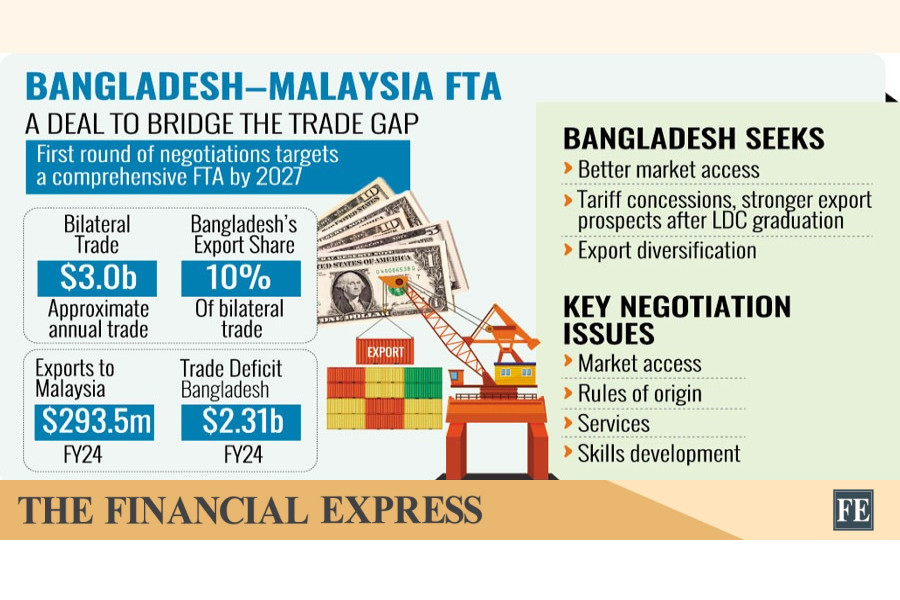
Bangladesh High Commissioner to Malaysia Manjurul Karim Khan Chowdhury on Wednesday expressed hope that a Free Trade Agreement (FTA) between Bangladesh and Malaysia would be signed by December 2027.
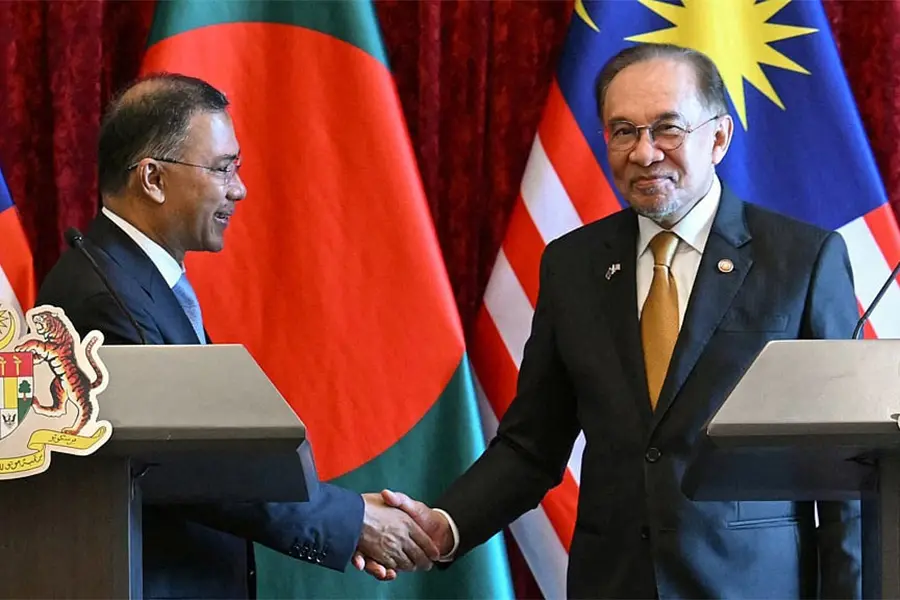
Referring to discussions held between the Prime Ministers of Bangladesh and Malaysia during the recent visit of the Bangladesh Prime Minister to Malaysia, he also expressed optimism that such an agreement would play a positive role in further expanding bilateral trade, business and investment.
A 39-member business delegation led by Dhaka Chamber of Commerce & Industry (DCCI) President Taskeen Ahmed participated in a business discussion titled “Bangladesh Business Forum: Connecting Businesses, Forging Partnerships and Expanding Opportunities”, organised by the Klang Chinese Chamber of Commerce & Industry (KCCI) at the KCCCI auditorium in Kuala Lumpur, Malaysia.
Chairman of SME Corp. Malaysia Teng Chang Khim attended the event as the special guest.
In his welcome remarks, President of the Klang Chinese Chamber of Commerce & Industry Jeffery Tan said that one of Malaysia’s largest seaports is located in Klang.
He added that, given the availability of modern logistics facilities essential for business and trade, Bangladeshi entrepreneurs may consider investment opportunities in Malaysia, particularly in Klang.
Jeffery Tan noted that Malaysia is currently shifting its focus from labour-intensive industries towards technology-driven industries.
He said Malaysian entrepreneurs could consider investing in Bangladesh’s ICT sector if the necessary facilities and a conducive investment environment are ensured.
Dhaka Chamber President Taskeen Ahmed, expressing gratitude to the Klang Chamber for inviting the DCCI business delegation, said Bangladesh and Malaysia have long-standing friendly economic relations.
However, the private sectors of both countries need to work together to further expand bilateral trade.
He noted that Bangladesh is the world’s second-largest exporter of ready-made garments, while the country’s services and other manufacturing-oriented sectors also offer significant potential for foreign investors.
Promising Investment Opportunities
The Dhaka Chamber President said that Bangladesh offers promising investment opportunities for Malaysian entrepreneurs in sectors including energy infrastructure, digital financial services, telecommunications, semiconductors, halal food products, healthcare, tourism and human resource skills development.
Taskeen Ahmed also called for Malaysia’s cooperation in increasing the export of Bangladeshi products to other countries in the ASEAN region. He further said that Bangladeshis spend approximately USD 4-6 billion annually abroad for medical treatment.
Considering this, he noted that Malaysian healthcare-sector entrepreneurs could make an important contribution to Bangladesh’s healthcare sector by establishing world-class hospitals and healthcare facilities in the country.
He also sought Malaysia’s cooperation in developing a world-class tourism industry in Bangladesh and promoting the overall growth of the halal industry.
High Commissioner Chowdhury said Bangladesh is not only a major source of manpower but also a promising investment destination.
He noted that Bangladesh offers abundant investment opportunities across various potential sectors, which Malaysian entrepreneurs can explore.
The envoy said that one of the major impediments to expanding trade and business between Bangladesh and Malaysia is the absence of a bilateral trade agreement between the two countries.
He also invited Malaysian entrepreneurs to invest in Bangladesh’s promising sectors, including aviation, medical services, ICT and agro-processing.
The envoy said that Bangladesh has a large market for Malaysian halal products and sought Malaysia’s cooperation in establishing an effective halal ecosystem in Bangladesh by leveraging Malaysia’s long-standing expertise and experience in this sector.
He noted that Malaysian entrepreneurs could play an important role in developing skilled human resources in Bangladesh’s semiconductor sector through training and capacity-building initiatives.
Chairman of SME Corporation Malaysia Tan Ching Khim said that Malaysia currently has 1.3 million SMEs.
He urged both the Dhaka Chamber and the Klang Chamber to work together to enhance interaction between small and medium-sized entrepreneurs of Bangladesh and Malaysia, strengthen business cooperation and expand business opportunities.
He said that Bangladeshi workers constitute the largest group among foreign workers employed in Malaysia and have been making an important contribution to the Malaysian economy, particularly to the development of Malaysia’s infrastructure sector, through their skilled participation in various economic activities.
He also noted that the people of Malaysia have a positive attitude towards expatriates from Bangladesh. He expressed hope that this positive relationship would contribute further to the expansion of trade, business and investment between the two countries.
At the event, DCCI Senior Vice President Razeev H Chowdhury gave a presentation on Bangladesh’s trade and investment opportunities.
He emphasised the need to expedite initiatives for signing an FTA at the earliest, enhance the halal economic partnership between Bangladesh and Malaysia, and provide technical assistance to Bangladeshi SME entrepreneurs to expand their exports, alongside establishing linkages with global entrepreneurs.
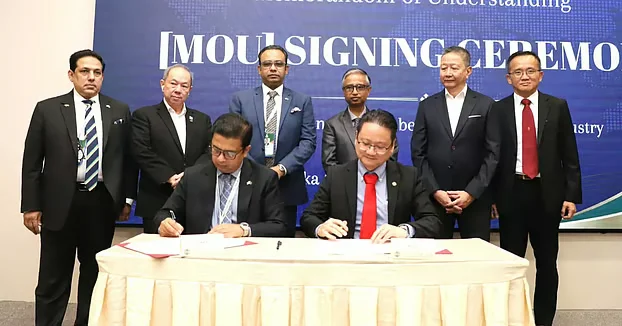
To further expand cooperation in bilateral trade and investment, a Memorandum of Understanding (MoU) was signed between the DCCI and KCCI. DCCI President Taskeen Ahmed and Klang Chamber President Jeffery Tan signed the MoU on behalf of their respective organisations.
A total of 40 B2B matchmaking sessions were held between members of the DCCI business delegation and representatives of the Klang Chamber during the event.
Talks with Malaysian Tourism Minister
Later, delegation leader and DCCI President Taskeen Ahmed paid a courtesy call on Minister for Tourism, Arts and Culture of Malaysia Tiong King Sing.
DCCI Senior Vice President Razeev H Chowdhury, Vice President Md. Salem Sulaiman and Minister & Deputy High Commissioner of Bangladesh to Malaysia Mosammat Shahanara Monica were also present at the meeting.
During the meeting, the Minister said that the number of tourists travelling to Malaysia from Bangladesh has been increasing every year, which is highly encouraging.
He said that Malaysia is placing significant emphasis on promoting Muslim tourism and expressed the hope that, as Bangladesh is home to one of the world’s largest Muslim populations, the number of Bangladeshi tourists visiting Malaysia would continue to grow in the future.
He said that Malaysia is interested in providing necessary training to develop skilled human resources and strengthen management capacity for establishing an effective Muslim tourism ecosystem in Bangladesh.
He also informed that the Malaysian government is considering the establishment of advanced hospitals and medical centres in Bangladesh to provide world-class healthcare services.
He proposed signing a Memorandum of Understanding (MoU) between the Islamic Tourism Centre (ITC) Malaysia and the DCCI to promote the development of the tourism industries of both countries and strengthen mutual cooperation.
UNB
Dhaka
UNB
Bangladesh High Commissioner to Malaysia Manjurul Karim Khan Chowdhury on Wednesday expressed hope that a Free Trade Agreement (FTA) between Bangladesh and Malaysia would be signed by December 2027.
Referring to discussions held between the Prime Ministers of Bangladesh and Malaysia during the recent visit of the Bangladesh Prime Minister to Malaysia, he also expressed optimism that such an agreement would play a positive role in further expanding bilateral trade, business and investment.
A 39-member business delegation led by Dhaka Chamber of Commerce & Industry (DCCI) President Taskeen Ahmed participated in a business discussion titled “Bangladesh Business Forum: Connecting Businesses, Forging Partnerships and Expanding Opportunities”, organised by the Klang Chinese Chamber of Commerce & Industry (KCCI) at the KCCCI auditorium in Kuala Lumpur, Malaysia.
Chairman of SME Corp. Malaysia Teng Chang Khim attended the event as the special guest.
In his welcome remarks, President of the Klang Chinese Chamber of Commerce & Industry Jeffery Tan said that one of Malaysia’s largest seaports is located in Klang.
He added that, given the availability of modern logistics facilities essential for business and trade, Bangladeshi entrepreneurs may consider investment opportunities in Malaysia, particularly in Klang.
Jeffery Tan noted that Malaysia is currently shifting its focus from labour-intensive industries towards technology-driven industries.
He said Malaysian entrepreneurs could consider investing in Bangladesh’s ICT sector if the necessary facilities and a conducive investment environment are ensured.
Dhaka Chamber President Taskeen Ahmed, expressing gratitude to the Klang Chamber for inviting the DCCI business delegation, said Bangladesh and Malaysia have long-standing friendly economic relations.
However, the private sectors of both countries need to work together to further expand bilateral trade.
He noted that Bangladesh is the world’s second-largest exporter of ready-made garments, while the country’s services and other manufacturing-oriented sectors also offer significant potential for foreign investors.
Promising Investment Opportunities
The Dhaka Chamber President said that Bangladesh offers promising investment opportunities for Malaysian entrepreneurs in sectors including energy infrastructure, digital financial services, telecommunications, semiconductors, halal food products, healthcare, tourism and human resource skills development.
Taskeen Ahmed also called for Malaysia’s cooperation in increasing the export of Bangladeshi products to other countries in the ASEAN region. He further said that Bangladeshis spend approximately USD 4-6 billion annually abroad for medical treatment.
Considering this, he noted that Malaysian healthcare-sector entrepreneurs could make an important contribution to Bangladesh’s healthcare sector by establishing world-class hospitals and healthcare facilities in the country.
He also sought Malaysia’s cooperation in developing a world-class tourism industry in Bangladesh and promoting the overall growth of the halal industry.
High Commissioner Chowdhury said Bangladesh is not only a major source of manpower but also a promising investment destination.
He noted that Bangladesh offers abundant investment opportunities across various potential sectors, which Malaysian entrepreneurs can explore.
The envoy said that one of the major impediments to expanding trade and business between Bangladesh and Malaysia is the absence of a bilateral trade agreement between the two countries.
He also invited Malaysian entrepreneurs to invest in Bangladesh’s promising sectors, including aviation, medical services, ICT and agro-processing.
The envoy said that Bangladesh has a large market for Malaysian halal products and sought Malaysia’s cooperation in establishing an effective halal ecosystem in Bangladesh by leveraging Malaysia’s long-standing expertise and experience in this sector.
He noted that Malaysian entrepreneurs could play an important role in developing skilled human resources in Bangladesh’s semiconductor sector through training and capacity-building initiatives.
Chairman of SME Corporation Malaysia Tan Ching Khim said that Malaysia currently has 1.3 million SMEs.
He urged both the Dhaka Chamber and the Klang Chamber to work together to enhance interaction between small and medium-sized entrepreneurs of Bangladesh and Malaysia, strengthen business cooperation and expand business opportunities.
He said that Bangladeshi workers constitute the largest group among foreign workers employed in Malaysia and have been making an important contribution to the Malaysian economy, particularly to the development of Malaysia’s infrastructure sector, through their skilled participation in various economic activities.
He also noted that the people of Malaysia have a positive attitude towards expatriates from Bangladesh. He expressed hope that this positive relationship would contribute further to the expansion of trade, business and investment between the two countries.
At the event, DCCI Senior Vice President Razeev H Chowdhury gave a presentation on Bangladesh’s trade and investment opportunities.
He emphasised the need to expedite initiatives for signing an FTA at the earliest, enhance the halal economic partnership between Bangladesh and Malaysia, and provide technical assistance to Bangladeshi SME entrepreneurs to expand their exports, alongside establishing linkages with global entrepreneurs.
To further expand cooperation in bilateral trade and investment, a Memorandum of Understanding (MoU) was signed between the DCCI and KCCI. DCCI President Taskeen Ahmed and Klang Chamber President Jeffery Tan signed the MoU on behalf of their respective organisations.
A total of 40 B2B matchmaking sessions were held between members of the DCCI business delegation and representatives of the Klang Chamber during the event.
Talks with Malaysian Tourism Minister
Later, delegation leader and DCCI President Taskeen Ahmed paid a courtesy call on Minister for Tourism, Arts and Culture of Malaysia Tiong King Sing.
DCCI Senior Vice President Razeev H Chowdhury, Vice President Md. Salem Sulaiman and Minister & Deputy High Commissioner of Bangladesh to Malaysia Mosammat Shahanara Monica were also present at the meeting.
During the meeting, the Minister said that the number of tourists travelling to Malaysia from Bangladesh has been increasing every year, which is highly encouraging.
He said that Malaysia is placing significant emphasis on promoting Muslim tourism and expressed the hope that, as Bangladesh is home to one of the world’s largest Muslim populations, the number of Bangladeshi tourists visiting Malaysia would continue to grow in the future.
He said that Malaysia is interested in providing necessary training to develop skilled human resources and strengthen management capacity for establishing an effective Muslim tourism ecosystem in Bangladesh.
He also informed that the Malaysian government is considering the establishment of advanced hospitals and medical centres in Bangladesh to provide world-class healthcare services.
He proposed signing a Memorandum of Understanding (MoU) between the Islamic Tourism Centre (ITC) Malaysia and the DCCI to promote the development of the tourism industries of both countries and strengthen mutual cooperation.