| Global Defense, OSINT & Geopolitics Wire

[🇧🇩] Evolving partnership between Bangladesh and Malaysia

[🇧🇩] Evolving partnership between Bangladesh and Malaysia
76
3K
More threads by Saif

G Bangladesh Defense

Trade Union–Civil Society Action Alliance
Malaysia labour market: Rights activists call for ensuring transparency

Prothom Alo English Desk
Dhaka
Published: 15 Jul 2026, 19: 07
1784170361222.webp


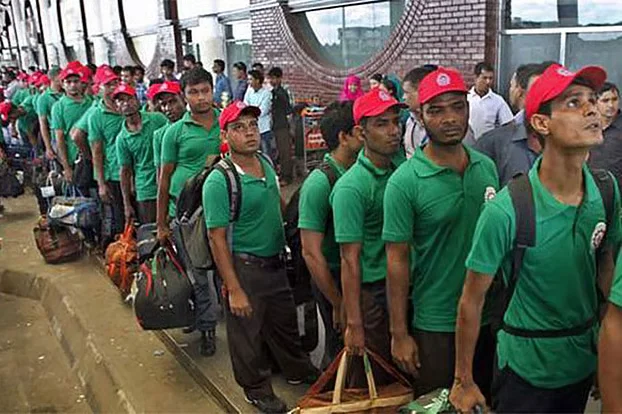
The Trade Union–Civil Society Action Alliance (TUCSAA) in a statement on Tuesday expresses deep concern over recent developments surrounding Bangladesh's efforts to reopen the Malaysian labour market, says a press release.

While restoring employment opportunities for Bangladeshi workers is an urgent national priority, recent media reports raise important questions about whether the governance failures that led to the previous market closure have truly been addressed.

Malaysia remains one of the most important overseas employment destinations for Bangladeshi workers.

Yet the previous recruitment system was plagued by allegations of syndication, limited market access, excessive migration costs, and unequal opportunities for recruiting agencies.

The suspension of recruitment left thousands of aspiring migrants in uncertainty and exposed serious weaknesses in Bangladesh's migration governance.

Many Bangladeshi workers also faced unpaid wages, passport confiscation, contract substitution, poor accommodation, and limited access to justice.

These experiences highlight the urgent need for a recruitment system that protects workers not only before departure but throughout the migration cycle.

The recent diplomatic engagement between Bangladesh and Malaysia presents an important opportunity to rebuild this labour migration partnership.

However, reopening the market should not simply mean resuming worker deployment. It must mark a shift towards a recruitment system that is transparent, accountable, and trusted by workers.

TUCSAA urges the Government of Bangladesh to move beyond broad Memoranda of Understanding (MoUs) and pursue clear, enforceable bilateral labour agreements with defined commitments on recruitment procedures, workers' rights, wages, occupational safety, grievance redress, dispute resolution, and joint monitoring.

Such agreements are essential to protecting migrant workers throughout the migration cycle.

Reopening the Malaysian labour market must also be accompanied by broader reforms.

Stronger oversight, transparent recruitment, better coordination among government institutions, modernised skills development, and meaningful participation of trade unions, civil society organisations, and migrant representatives are essential to building a fair and sustainable migration system.

The decisions taken today will shape more than Bangladesh's relationship with Malaysia.

They will influence the country's credibility as a labour-sending nation, affect future negotiations with other destination countries, and determine whether migrant workers continue to bear high migration costs and exploitation or benefit from a system that protects their rights and dignity.

Bangladesh now has an opportunity to show that it has learned from past experience.

TUCSAA calls on the Government to ensure that the reopening of the Malaysian labour market is guided by transparency, accountability, stakeholder participation, and the best interests of migrant workers.

The success of this process should not be measured only by the number of workers deployed, but by the fairness, protection, and dignity they receive.​
 

PM seeks Malaysian cooperation to tackle gas crisis
Staff Correspondent 28 July, 2026, 20:44

1785281889635.webp

From left: Tarique Rahman, Anwar Ibrahim. | BSS Photo

Prime minister Tarique Rahman on Tuesday sought cooperation from Malaysian prime minister Anwar Ibrahim over the phone to address Bangladesh’s ongoing gas crisis, as the government moves to resolve supply disruptions caused by a major technical fault at a floating LNG terminal. SouthAsians & Diaspora

State Minister for Power, Energy and Mineral Resources Anindya Islam Amit disclosed this at a briefing at the Secretariat on Tuesday, expressing regret on behalf of the government over the public suffering caused by the crisis.

The state minister said the Malaysian prime minister assured all possible support at the earliest opportunity to help Bangladesh overcome the energy crisis.

Amit said, ‘We sought their cooperation, and the prime minister and his side will let us know if there is scope for an immediate solution. If they can, that will be good, and if not, they will inform us in what form they can cooperate.’

The state minister said the Energy and Mineral Resources Division held detailed talks on Tuesday with senior officials of Excelerate Energy, the company operating the terminal, to expedite a solution.

He said supply of 280-300 million cubic feet of gas per day was expected to resume early next week, with the FSRU expected to become fully functional by the end of the following week.

On long-term solutions, Amit said the government had begun exploring alternative sources, noting that detailed discussions on energy cooperation were also held Tuesday with a Japanese delegation led by an adviser to Japan’s prime minister.

The state minister said the Energy Division and Petrobangla were working continuously to ease public hardship, and that the government is closely monitoring the gas supply situation.​
 

Bangladesh and Malaysia must break the recruitment syndicate’s grip

Shariful Hasan


1788220444216.webp

Over the past five decades, the Malaysian labour market has opened many times, allegations of high costs and irregularities surfaced, migrants suffered, and recruitment has been suspended repeatedly, with little change in the recruitment process. PHOTO COURTESY: SHARIFUL HASAN

“Is the syndicate more powerful than the state?”

With that question to both Malaysia and Bangladesh, I ended my article, “Labour recruitment to Malaysia: Time to break the never-ending cycle,” published in The Daily Star on July 25, 2022.

At the time, Bangladesh was preparing to reopen the Malaysian labour market after more than three years of suspension. My warning was simple: reopening should not reproduce a syndicate-driven model in which migrant workers bear the costs and the risks.

The consequences soon became clear.

Around 4,50,000 migrant workers from Bangladesh went to Malaysia between 2022 and 2024. But under the controversial recruitment system, the average migration cost reportedly reached Tk 5.44 lakh or more, against an officially fixed cost of Tk 78,990. Besides, when Malaysia set May 31 as the deadline for Bangladeshi workers to enter the country in 2024, at least 16,970 workers who had obtained clearance from the Bureau of Manpower Employment and Training (BMET), as well as valid visas and tickets, could not reach the Southeast Asian state because of mismanagement by government authorities and local recruiting agents.

My article “Labour recruitment to Malaysia: Syndicate wins, migrants suffer, country loses,” published in The Daily Star on June 8, 2024, mentioned how the 2022 warning had become reality.

Two years later and after three changes in government, the same Foreign Workers Centralised Management System (FWCMS)-based limited-recruitment architecture—and the related concerns about the syndicate—have returned. On August 21, 2026, Malaysia’s FWCMS published a list of 25 Bangladeshi recruiting agencies, raising concerns about a limited-agency recruitment model.

Amid the criticism, on August 28, FWCMS expanded the arrangement to 338 Bangladeshi agencies. Of these, 25 were directly selected agencies, 250 were associate agencies under them and another 62 would work under the state-owned Bangladesh Overseas Employment and Services Limited (BOESL).

However, several fundamental questions remain unanswered. For instance, based on what criteria were the agencies selected? Who controls access to employers, job orders and the digital recruitment chain? Is it still the same FWCMS system? And if recruitment is suspended once again, who will be held accountable?

Reopening, exploitation, suspension: The old cycle

Bangladesh-Malaysia labour migration has followed a familiar pattern over the past five decades: the market opens, allegations of excessive costs and irregularities arise, migrants suffer, recruitment is suspended and attempts are made at reform.

According to BMET, 23 Bangladeshis first went to Malaysia in 1978, while regular migration began in 1992. The market was almost frozen between 1997 and 2005. After Malaysia introduced the calling visa system in 2006, around 4,00,000 Bangladeshis went there in 2007 and 2008. Although the official migration cost was Tk 84,000, workers reportedly paid Tk 2 to Tk 3 lakh or more. Many struggled to find jobs, while a significant number of workers became undocumented.

Then in 2009, Malaysia again stopped recruiting Bangladeshi workers. Three years later, in November 2012, Bangladesh and Malaysia signed a government-to-government (G2G) agreement, bypassing private recruiting agencies. But the system did not generate sufficient recruitment.

Meanwhile, the maritime trafficking crisis between 2012 and 2015 exposed a devastating side of irregular migration, with thousands of people attempting dangerous journeys by boat and trafficking camps and mass graves discovered along the Thailand-Malaysia border.

A decade of syndication and control

Private recruiting agencies returned under the G2G Plus arrangement in 2016. But instead of opening the market to all eligible agencies, Malaysia selected a syndicate of just 10 agencies, leading to allegations of monopoly, excessive costs and irregularities in the recruitment network and its associated digital system. FWCMS remained at the centre of the recruitment process.

In September 2018, after Mahathir Mohamad returned to power, Malaysia suspended the system, describing the recruitment process as a form of human trafficking and a money-making scheme. Yet in 2022, the same recruitment model resurfaced despite protests from civil society and recruiting agencies. And this time, 25 Bangladeshi recruiting agencies were initially selected, and later expanded. But once again, FWCMS sits at the centre of the recruitment process.

FWCMS is developed and operated by Bestinet, a Malaysian private company associated with Aminul Islam Bin Abdul Nor. A Malaysian citizen of Bangladeshi origin, Aminul has been identified in media reports as a central figure in Malaysia’s migrant recruitment system for the past decade, alongside influential actors within powerful circles in both countries.

According to media reports, under the syndicate system in 2023 and 2024, the registration fee per worker was set at 100 Malaysian ringgit, equivalent to around Tk 2,700 at the time. Instead, workers were charged Tk 1,07,000, of which Tk 1,00,000 allegedly had to be sent to Bestinet in Malaysia.

Recruiting agencies allege that around Tk 5,000 crore was siphoned out of the country through a “syndicate fee” of Tk 1,00,000 per worker. Another Tk 3,750 crore was allegedly siphoned off in the name of the “visa trade”. Altogether, the amount allegedly siphoned out of the country could be at least Tk 8,750 crore. The actual scale of corruption and irregularities, however, may have been even higher.

Between July 2024 and 2026, several cases were filed, several people were arrested, and investigations are still ongoing. Yet the fundamental recruitment architecture has not changed. Instead, concerns about the same model have resurfaced around FWCMS and the proposed list of recruiting agencies.

This raises a fundamental question: how can a private recruitment architecture become so influential in a system involving two sovereign governments? Are the actors behind it more powerful than the governments of Bangladesh and Malaysia? And if they are not, why has the system repeatedly been allowed to operate despite such serious allegations and irregularities?

The concern is regional

Nepal has raised serious concerns about the limited-agency model. After FWCMS published a list of 25 recruiting agencies, Nepal’s Ministry of Youth, Labour and Employment expressed concern and held an emergency meeting with Malaysia’s ambassador to Nepal to seek clarification. Nepal Association of Foreign Employment Agencies also strongly objected, arguing that restricting recruitment to just 25 agencies would create a de facto monopoly, undermine healthy competition and ultimately open the door to the economic exploitation of migrant workers.

The concern has since become regional. On August 27, representatives of foreign recruitment agencies from Bangladesh, Nepal, Myanmar and Pakistan issued a joint statement calling for equal access, transparency and fair competition. They warned that no digital platform should become a vehicle for syndication, monopoly or exclusive control over migrant recruitment.

Disclose the entire mechanism

For a recruiting agency, a government office or a digital system, a migrant worker may be a number, but for a family, that worker is often its only hope. Migrants often sell land, borrow from relatives, mortgage property or take high-interest loans to finance the journey for a foreign job. If the job materialises, the family gradually recovers its investment. However, if the worker pays Tk 5 to 6 lakh and cannot travel, the debt does not disappear. Migrants and their families have to bear the burden of that sunk cost.

That is why the goal should not simply be how to reopen the market. It should be: how can it be reopened safely, transparently and affordably with the migrant worker at the centre?

Before recruitment begins this time, both governments should disclose the entire mechanism—a step that has been missing in previous recruitment cycles. Workers, recruiting agencies and the public deserve to know exactly how the process will work, who will control each stage, what each party in the process will be paid and what safeguards are in place. If a worker pays but cannot travel, who will refund the money? If the promised job does not exist, who will be held responsible? If a digital platform controls access to recruitment, who will oversee it and ensure that it cannot be used to create a monopoly?

These questions must be answered before recruitment begins. If there are limitations in the current Memorandum of Understanding, both governments should work to amend those as the agreement expires later this year. But transparency cannot wait. It must come before the first worker pays a single taka, accompanied by a clear commitment that anyone who violates the rules—however powerful—will face consequences.

The state must answer

Bangladesh-Malaysia labour migration has repeatedly been plagued by problems. For almost a decade, different versions of limited-agency recruitment have been accompanied by allegations of irregularities, controversy and migrant suffering. Yet those allegedly responsible for previous irregularities have not been held accountable, while the same network appears to have resurfaced in the next recruitment process under a different name. This cycle must be stopped. Both governments have a responsibility to ensure that migrant workers are protected from exploitation and that recruitment is transparent, fair and accountable.

Otherwise, the question “Is the syndicate more powerful than the state?” will remain unanswered.

This time, Bangladesh and Malaysia must prove that the state is more powerful than the syndicate.

Shariful Hasan is a labour migration expert and former journalist.​
 

Ensuring safe, transparent recruitment of Malaysia-bound workers


1788305424393.webp


The news that Malaysia is going to recruit some 200,000 Bangladeshi workers over the next six months is most welcome. As could be learnt, the state minister for local government, rural development and cooperatives recently told the press that the recruitment would begin in phases from the end of September and be completed within six months. It is further gratifying to know that another 10,000 workers are expected to get the opportunity to go to Malaysia free of migration cost. Given that Malaysia already hosts around 0.80 million documented Bangladeshi workers, reopening its labour market on such a scale would give a fresh boost to Bangladesh's manpower export and remittance earning. Clearly, Prime Minister Tarique Rahman's visit to Malaysia last June has led to a better understanding between Dhaka and Kuala Lumpur on labour recruitment. The two governments also agreed to review the existing arrangement and work towards a more credible and transparent recruitment framework.

There is obviously reason to be optimistic about the latest development. However, one cannot also be oblivious of the fact that the Bangladesh-Malaysia labour corridor had often been dogged by syndicates, excessive recruitment costs, corruption, fake job orders and other forms of workers' exploitation. During the recruitment process between 2022 and 2024, Bangladeshi jobseekers would have to pay many times more than the officially fixed migration cost. Worse still, some workers, after reaching Malaysia with valid papers, would find that the promised jobs did not exist. There were also reports of withholding of passports, non-payment of wages to workers and their abuse and ill-treatment. At one stage, the Malaysian government set May 31, 2024 as a hard deadline for entry of foreign workers and subsequently froze fresh recruitment from Bangladesh. Thousands of workers with clearances, visas or travel preparations were unable to reach Malaysia before the deadline, leaving many families in severe financial distress.

It is precisely for this reason that this latest announcement on the job opportunity of Bangladeshi workers in Malaysia should lead to recruitment with utmost transparency. Increasing the number of agencies or introducing a digital platform will not by itself guarantee fair recruitment if the system remains open to manipulation. The lesson of the past is that unscrupulous recruiters at home, fake Malaysian employers and corrupt officials can together turn overseas employment into a trap for unsuspecting jobseekers. So, before a worker is allowed to pay money, undergo medical tests or purchase an air ticket, the authenticity of the employer, actual job vacancy, wage, workplace and accommodation should be independently verified. The recruitment cost should also be clearly fixed, publicly announced and made digitally traceable so middlemen cannot charge whatever amount they please. Most importantly, responsibilities of recruiting agencies, employers and government authorities of both countries should be clearly defined and an effective grievance mechanism should be in place for cheated workers.

Bangladesh cannot afford to measure success simply by the number of workers sent abroad or the amount of remittance they send home. What matters equally is whether those workers migrate safely at reasonable cost, get jobs and wages promised and are treated with dignity in the host country. In fact, the overseas workers who support the economy with their hard-earned foreign currency should not be left at the mercy of recruiting syndicates and fraudulent employers. The government should therefore maintain close supervision over recruitment from selection at home to placement at the workplace in Malaysia, while the Bangladesh mission there should receive complaints and intervene promptly in cases of abuse, wage denial or joblessness. In fine, the government must make sure that this fresh opening of Malaysia's labour market is free from the past practice of cheating, suffering and exploitation of Bangladeshi workers.​
 

Manpower export to Malaysia

Syndicates, intermediaries and governance challenges

1790221546998.webp

Photo taken on March 11, 2022 shows the scenery of Kuala Lumpur, Malaysia —Xinhua Photo

The manpower export corridor from Bangladesh to Malaysia provides an interesting case of how restricted market access, multiple layers of intermediaries, weak transparency, and rent-seeking can combine to produce a recruitment syndicate. The problem is not simply high migration costs; it affects competition, worker protection, recruitment efficiency, and Bangladesh's foreign exchange and labour market interests.

To understand factors that led to the emergence of the syndicate, we have to look back a few years. Bangladesh and Malaysia signed a new labour recruitment MoU in December 2021 after a four year suspension of recruitment. The arrangement was intended to control recruitment costs and prevent irregularities. However, Malaysia initially sought to limit participation by Bangladeshi recruitment agencies. Although Bangladesh has more than 1,500 licensed agencies, but recruitment was ultimately channelled through a much smaller group-initially 25 and later on increased to 101 agencies. This created the basic conditions for syndicatisation: the government-to-government (G2G) agreement led to a limited number of approved recruitment agencies having control over job orders/visa processing leading to scarcity of access for other licensed agencies. This created the scope for payments to syndicate members for access resulting in higher recruitment charges to workers leading to worker indebtedness and vulnerability. The earlier 2016-2018 Bangladesh-Malaysia system was cancelled following exploitation involving a syndicate of Bangladeshi and Malaysian agents. Nevertheless, It had been reported that, following the 2021 MoU, workers were paying around US$5,000-6,000 despite a much lower official fee ceiling.

There had been several main complications that were created by the syndicate. First, there had been escalation of migration costs. This is perhaps the most visible consequence. The officially prescribed cost under the 2021 arrangement was around Tk 79,000, but in practice the workers had to pay about US$5,000 on average. Other sources reported an average cost of Tk 5.44 lakh. Thus, the difference between the official cost and actual cost became enormous. This had several consequences: workers had to borrow heavily to finance migration; families were forced to mortgage or sell assets; migrants became dependent on employers because of debt; workers were less able to leave abusive employment; economic return from migration to the household fell substantially. Research on the issue specifically linked excessive recruitment fees with debt burdens and heightened vulnerability to exploitation and forced labour.

Second, it led to the creation of artificial scarcity. A syndicate does not necessarily require all recruitment agencies to collude formally. Control over access to job orders can itself create a syndicate-like structure. When only a limited group of agencies can process Malaysian recruitment, access to the market becomes scarce. Agencies outside the group could purchase access through syndicate members by paying additional 'syndicate fees'; work through intermediaries and surrender part of their recruitment margin. There have been reports that non-member agencies had to pay syndicate-linked charges in order to process workers.

Third, there emerged multiple layers of intermediaries. For example, the recruitment chain involved: Malaysian employers to Malaysian recruitment intermediaries; to Bangladeshi recruiting agencies to sub-agents to local brokers to prospective migrants. And, each layer adds a fee. This creates the classic principal-agent problem. The prospective worker cannot determine: who actually controls the job; what the employer is paying; what the legal recruitment fee is; which portion goes to each intermediary; and whether the promised job actually exists. Consequently, information asymmetry becomes an important source of rent extraction.

Fourth, there are visa and job-order bottlenecks. Control over visas and job orders gives intermediaries substantial bargaining power. Where recruitment agencies cannot independently obtain orders or process workers, the holder of access can charge a premium. This converts a competitive recruitment market into a rent-seeking market. The issue became sufficiently serious so that Malaysia suspended recruitment of Bangladeshi workers in June 2024 amid concerns including excessive recruitment costs and workers arriving without jobs.

Fifth, the issue of workers arriving in Malaysia without employment. One of the most damaging consequences has been the separation between payment for migration and actual employment. A worker may have paid a large amount based on the expectation of a specific job but subsequently finds no immediate employment, a different employer, a different occupation, lower wages than promised, and prolonged periods without income.

Sixth, the process creates the scope for informal financial transactions and possible money laundering. Large differences between official and actual recruitment costs create strong incentives for transactions outside formal banking channels. There have been allegations of the use of hundi and other informal channels in connection with syndicate payments. However, these allegations should be distinguished from legally established findings in individual cases. The broader economic consequence is nevertheless clear: informal payments reduce transparency and make it difficult for regulators to determine the actual distribution of recruitment revenue.

In this context, the important question is: Why does a syndicate form? In reality, several institutional conditions facilitate syndicate formation. The most important structural factor is exclusive or limited access to recruitment orders. If 1,500 agencies compete for recruitment business, competition tends to constrain margins. If access is restricted to 25 or 101 agencies, the economic value of obtaining syndicate membership rises substantially. There are also cross-border intermediations. Recruitment involves actors in two jurisdictions - Bangladesh and Malaysia. This makes monitoring more difficult because Bangladesh regulates Bangladeshi agencies, while Malaysia regulates employers and Malaysian intermediaries. Thus while payments may cross borders, workers do not know which authority to approach. The resulting regulatory gap can be exploited by intermediaries. There is also information asymmetry. Workers usually have much less information than recruiters about Malaysian wage rates, employer identity, recruitment costs, visa requirements, job availability, and contractual conditions. This allows brokers to extract economic rents.

Further, political and administrative linkages are important. Investigations and media reports have alleged links between parts of the recruitment network and politically connected individuals. These are allegations and investigative findings, not a basis for treating every agency or individual as involved. Bloomberg's 2026 investigation, for example, reported allegations concerning how agencies were selected and how recruitment fees were collected. There also exists weak enforcement of fee ceilings. A formal fee ceiling is ineffective if there is no effective mechanism to monitor the actual amount paid by workers. The gap between the prescribed cost of about BDT79,000 and reported actual payments of around BDT5-6 lakh illustrates this enforcement problem.

Economic consequences of the above syndicate for Bangladesh extend far beyond the individual migrant workers. High migration costs reduce the net economic benefit of overseas employment for migrant households as gross migrant earnings produce substantially less net household benefit resulting from higher recruitment debt, interest payments, and other migration-related costs. If recruitment costs rise several times above the official level, the payback period becomes much longer. For Bangladesh's labour-export industry, syndicatisation reduces competition among recruitment agencies, rewards access rather than efficiency, discourages new entrants, increases transaction costs, damages the reputation of Bangladeshi recruitment agencies, and makes Malaysian employers more dependent on intermediaries. High upfront costs also delay the point at which a migrant begins generating net remittances for the household. Some workers may spend a substantial portion of their initial earnings servicing migration debt. For Bangladesh-Malaysia relations, repeated recruitment scandals may lead to suspension of recruitment, stricter Malaysian scrutiny, reduced confidence in Bangladeshi recruitment institutions, and pressure to change the recruitment model. The history has already demonstrated this vulnerability: Malaysia suspended Bangladeshi recruitment in earlier periods and again in June 2024.

In this context, the fundamental governance problem arises from the fact that a public migration opportunity has been converted into a scarce private access right. Once access to Malaysian jobs became concentrated among a limited number of agencies, that access acquired economic rent. Agencies with privileged access could potentially charge other agencies-and ultimately job seeking workers-for access to the Malaysian labour market. As such, the problem is not simply 'corrupt recruitment agents'. It is fundamentally a problem of market design and governance.

A sustainable system needs to address: (i) open and transparent agency participation; (ii) competitive allocation of job orders; (iii) direct employer verification; (iv) digital tracking of every worker's recruitment cost; (v) worker payment through traceable financial channels; (vi) employer-paid recruitment costs wherever feasible; (vii) joint Bangladesh-Malaysia monitoring; (viii) strong sanctions for agencies charging unauthorised fees; (ix) direct worker grievance mechanisms; and (x) independent auditing of visa and job-order allocation. There is evidence that alternatives are possible. Bangladesh's BOESL reported sending workers to Malaysia under a special recruitment project, with 885 workers travelling at zero migration cost during 2023-24.

For Bangladesh, the key lesson from the Malaysia experience is that increasing the number of licensed recruitment agencies alone will not eliminate syndicatisation. What matters is whether every agency has transparent, non-discriminatory access to genuine job orders and whether the government can observe the actual price paid by each migrant. A more durable model would therefore move from an agent-centred recruitment system towards an employer-driven, digitally transparent and worker protection-oriented system, with recruitment costs borne primarily by employers and with independent monitoring of the Bangladesh-Malaysia recruitment corridor. In analytical terms, the Malaysia case can be characterised as a combination of market concentration, information asymmetry, regulatory arbitrage, rent seeking, and cross-border intermediation. These five factors help explain both the formation of the recruitment syndicate and the unusually high migration costs borne by Bangladeshi workers.

Dr Mustafa K Mujeri is Executive Director, Institute for Inclusive Finance and Development (InM).​