New Tweets

[🇧🇩] Family and Farmer's Card

G Bangladesh Defense
[🇧🇩] Family and Farmer's Card
5
51
More threads by Saif

Saif

Senior Member
Messages
17,442
Likes
8,380
Nation

Residence

Axis Group

Will the real poor get the benefits of the family card?

23 February 2026, 00:43 AM
Nawshad Ahmed

1771894552738.webp

'The social safety net programmes in Bangladesh, with provisions for cash, food and assets, are expected to reduce and ultimately alleviate poverty and food insecurity.' VISUAL: SALMAN SAKIB SHAHRYAR

The social safety net or social protection programme enables the government to advance the well-being and security of citizens by protecting them from vulnerability and deprivation so they can pursue a better life. The purpose of the family card, proposed by the new government, seems to be the same. Prime Minister Tarique Rahman, during an inter-ministerial meeting held on February 19, instructed the launch of the programme. On the same day, a 15-member cabinet committee led by Finance Minister Amir Khosru Mahmud Chowdhury was formed. The high-powered committee includes ministers, advisers and secretaries who will finalise the beneficiary selection process and eligibility criteria, and propose a rollout mechanism of the initiative. The committee will identify marginalised and low-income families in one upazila per division for the pilot phase to test the programme starting this Ramadan before rolling it out across the country.

The family card programme reportedly has an ambitious target of reaching five crore families eventually and would offer more than double the benefits currently provided under the existing social safety net schemes. At the planning stage, several factors need to be considered. If the weaknesses of the existing social safety net programmes are not taken into consideration during design, implementation and monitoring, the family card may end up like the older programmes.

The social safety net programmes in Bangladesh, with provisions for cash, food and assets, are expected to reduce and ultimately alleviate poverty and food insecurity. As per Article 15 (d) of Bangladesh’s constitution, it shall be a fundamental responsibility of the state to attain a constant increase of productive forces and a steady improvement in the material and cultural standard of lifeof the people through planned economic growth, with a view to securing its citizens’ right to social protection, that is to say, to public assistance in cases of underserved want arising from unemployment, illness or disablement, or suffered by widows or orphans or in old age, in other such cases.

Bangladesh has a fairly long history of social safety net programmes (SSNPs), the first undertaken immediately after independence in 1971. Since then, the number of total schemes implemented is over 120. The country spent about 16 percent of the national budget on SSNPs in recent years, which is 2.5-3 percent of the GDP, covering about 35 percent of citizens. However, a vital question is whether the benefits of the SSNPs reach the targeted beneficiaries—poor households and the vulnerable population?

According to Bangladesh’s 8th Five-Year Plan, there are high exclusion and inclusion errors in the existing SSNPs. However, there is no recent data to estimate the errors, which is necessary to assess beneficiary selection or targeting efficiently. The current process of beneficiary selection often relies on individual knowledge rather than the collection and evaluation of standardised data. Details about people’s income and how much land they own are not checked for accuracy. Due to poor monitoring, it is not possible to have accurate information on the weaknesses of the SSNPs in Bangladesh. However, it is apparent to those who know the programmes that they have very high exclusion and inclusion errors.

Besides, there is no robust, standardised, and operational grievance system for the safety net programmes. Also, regular monitoring and “cleaning” of the beneficiary registry is not done to remove people who are no longer eligible for various reasons, such as death, to make way for eligible, genuine new applicants to the programmes.

Bangladesh adopted the National Social Security Strategy (NSSS) in 2015. The strategy is scheduled to end in 2026. It is a commitment to address the triple problems of poverty, vulnerability, and marginalisation, and it provides a roadmap for establishing a lifecycle-based social protection system covering people’s needs over their entire lifetime. It adopted a lifecycle approach developed by William Beveridge, which involves long-term planning of programmes directed at different stages of life, such as childhood, school age, youth, working age and old age. Over the years, these systems have evolved globally through trial and error and incremental innovations. Taking into consideration risk factors such as natural disasters, climate change and food price shocks, policymakers aimed to create social safety nets, usually in the form of cash, food and other kinds of support, to improve the socioeconomic conditions of people living in poverty.

1771894599968.webp


The adoption of NSSS coincides with the beginning of the new era of Sustainable Development Goals (SDGs), which set out a global commitment to reduce poverty following the Millennium Development Goals (MDGs). Since the duration of the current strategy is due to end this year, a new strategy needs to be formulated and adopted, which requires a lot of attention by the government and all relevant stakeholders.

Any large-scale SSNPs are ideally required to follow a life-cycle approach covering all the stages of life. There are many factors which can cause or exacerbate poverty and can occur at any point in a person’s life. The NSSS brought together all SSNPs under five broad themes to align with the lifecycle approach. The needs are different at different stages of life, and families require different support depending on the age of the family members, and vulnerability conditions such as disability, sickness, poverty level, etc. Therefore, no single social SSNP can replace all the existing programmes. A single programme—family card—will not be able to cover all, as programmes are age-specific, implemented by different ministries and departments, and do not necessarily use cash as the only support tool. For example, the objectives of the mother and child benefit programme are to ensure nutrition and good health of women and newborns up to 1,000 days through a combination of cash payment, training of pregnant women and lactating mothers of poor families on parenting, and taking good care of their babies, and ensuring vaccination.

Ultimately, the success of the government’s ambitious family card programme will depend entirely on its execution. If it inherits the systemic flaws of past social safety net schemes—such as unverified data, poor targeting, and weak monitoring—it risks becoming just another inefficient programme. Moreover, as the current NSSS concludes this year, it is crucial to recognise that a single card cannot address all human vulnerabilities. The upcoming strategy must seamlessly integrate the family card with the proven lifecycle approach, ensuring that specific needs like child nutrition, maternal health, and elderly care are not sidelined. A transparent, data-driven, and comprehensive social protection system is the only way forward to sustainably uplift the nation’s poor and marginalised.

Dr Nawshad Ahmed, a retired UN official, is an economist and urban planner. He is currently working as the team leader in a primary school infrastructure need assessment project for the Department of Primary Education, Dhaka.​
 
Analyze

Analyze Post

Add your ideas here:
Highlight Cite Respond

'Family Card' completely free, no scope for demanding money: Zahid

Published :
Feb 24, 2026 22:57
Updated :
Feb 24, 2026 22:57

1771978711843.webp


Social Welfare and Women and Children Affairs Minister Dr AZM Zahid today (Tuesday) said the government's 'Family Card' programme will be implemented entirely free of cost, with no scope for anyone to demand money in exchange for the card.

"If anyone attempts to commit fraud in this regard, legal action will be taken with the assistance of the concerned law enforcement agencies," he said at an emergency press conference held at his residence in Dhanmondi tonight, BSS reports.

Dr Zahid said the programme will be officially inaugurated on March 10, following a decision taken at a Cabinet Committee meeting chaired by the Prime Minister. "Insha'Allah, Prime Minister Tarique Rahman will inaugurate the programme on that day," he added.

Initially, the programme will be launched in 14 upazilas across the country. To ensure smooth implementation, coordination committees have been formed at the union, ward and city corporation levels in each upazila. A first-class officer is assigned to each committee, while officials and employees from various ministries and departments are carrying out their respective responsibilities, the minister said.

He noted that the BNP has long been working for the welfare of the people, particularly focusing on women's empowerment and financial self-reliance. The 'Family Card' initiative aims to strengthen families economically and help build a capable future generation. However, he alleged that a certain quarter is trying to create controversy around the programme.

The minister said there have been reports from some areas that money is being demanded from innocent people in exchange for providing the Family Card. In some cases, such demands are reportedly being made even in places where the programme has not yet begun.

He clarified that the Family Card will be provided completely free of charge and will be handed over to the female head of each designated family, regardless of religion, caste, tribe or political affiliation.

"No lobbying, competition or recommendation is required to receive this card," he said, adding that no one will be excluded or receive extra benefits. The programme will be implemented in phases -- initially in one ward, then gradually expanded to multiple wards and upazilas and eventually nationwide. The government aims to deliver the Family Card to all families across the country within the next four years.

Dr Zahid also announced plans to develop an integrated information collection system under the programme. Data will first be gathered directly from the field and later incorporated into a software-based automated system to ensure transparency and prevent inclusion or exclusion errors. "Maximum efforts are being made to reduce possible errors to zero," he said.

He further informed that financial assistance under the Family Card will be sent directly from Bangladesh Bank to the designated mother's mobile number. Beneficiaries will be able to withdraw the money through bKash or other legal channels. "No intermediary will be involved. Government officials and employees will regularly monitor whether beneficiaries are receiving the money properly," he added.

Urging the public to remain vigilant, the minister said any demand for money in the name of the Family Card should be considered fraud. He called on citizens to inform law enforcement agencies, relevant government officials or the media if they encounter such incidents and to collectively resist any attempt to tarnish the initiative.​
 
Analyze

Analyze Post

Add your ideas here:
Highlight Cite Respond

Let the Family Card deliver

FE
Published :
Feb 24, 2026 23:18
Updated :
Feb 24, 2026 23:18

1771979691466.webp


The proposed Family Card programme has become one of the most talked about policy initiatives of the present government, and for good reason. As reported, prime minister Tarique Rahman is going to formally launch the Family Card on March 10. With this first major move, the newly formed BNP government has acted with notable speed to get its flagship programme off the ground. To that end, it has convened a high-level committee to finalise a pilot scheme in 13 wards under 13 upazilas ahead of Eid. Amid inflationary pressures that have pushed basic necessities beyond the reach of millions, such a targeted support system for low-income families is urgently needed. The idea itself is a real departure from the usual small stipends disbursed for years, offering up to Tk 2,500 per month which is a significant sum of money for a poor household struggling to buy oil, lentils or medicine. This was a central election promise and the government seems keen to deliver on it. But anyone observing social safety nets in this country over the decades knows that a sound policy on paper means nothing if the implementation gets stuck halfway through. The real test is the execution and that is where the government must pour all its energy and attention.

The truth is that Bangladesh has an overcrowded field of social safety net programmes with more than a hundred of them operating at once. Despite this breadth, the benefits somehow keep missing the people who need them most. Studies and planning documents have repeatedly noted that inclusion and exclusion errors are rampant, meaning the non-poor often grab the benefits while many deserving households are left out. The process of selecting needy households has traditionally relied on local knowledge rather than hard data, and when that happens, political loyalty and family connections inevitably creep into the list. The Family Card cannot afford to walk down that same beaten path. Meant to eventually cover 50 million families, the margin for error is zero and the government must build something radically different from the flawed systems of the past.

The good news is that the relevant committee seems to be aware of these dangers and is talking about using National ID data and a centralised household database to pick beneficiaries. That is an essential first step, but it is important to remember that important financial information is often missing from those databases. So, ground level verification will still be necessary. This is the danger zone where good intentions meet local reality, and it is exactly where previous programmes have collapsed into mismanagement. The three-stage monitoring process promised by the social welfare minister has to be more than a slogan. It should involve independent third-party evaluations and a fully operational, accessible grievance system that allows excluded eligible households to appeal their status. Without that kind of rigorous oversight, the programme risks being captured by the same influential quarters who know how to manipulate the system.

The pilot scheme in 13 upazilas is therefore a valuable opportunity to identify every crack before the national rollout. Distribution needs to happen before Eid as planned, not for the sake of optics but to provide immediate relief at least to the families which are struggling to afford basic necessities during this holy month. The nation is watching this experiment with a mix of hope and scepticism having seen over the years too many grand schemes fade into irrelevance. If the government treats the pilot scheme as a genuine learning process and uses its findings to improve the system before scaling it up, the Family Card could well become a strong pillar of social protection and a foundation for families to have a firm footing.​
 
Analyze

Analyze Post

Add your ideas here:
Highlight Cite Respond

5 lakh farmer cards in 180 days

Experts raise concern over distribution flaws, overlaps


Sadiqur Rahman 26 February, 2026, 00:11

The government would pilot the distribution of five lakh krishak smart cards among farmers in 15 upazilas in the next 180 days under a 2023–2028 development programme.

Officials of the Department of Agricultural Extension, the implementing agency, said that the initiative would be expanded nationwide if the pilot project succeeded.

The card programme aims to register 2.27 crore farmers across the country by 2028.

A meeting, chaired by prime minister Tarique Rahman, at the secretariat in the capital Dhaka on Monday directed authorities to roll out the digital card system to integrate farmers into a comprehensive, technology-driven support framework.

Abul Kalam Azad, coordinator of the programme on agriculture and rural transformation for nutrition, entrepreneurship and resilience in Bangladesh (PARTNER) under which the pilot project would be implemented, said on Tuesday that the Food and Agriculture Organisation of the United Nations was collecting farmers’ data to prepare the beneficiary list.

He told New Age that the DAE would finalise both the beneficiaries and the selected upazilas once the FAO submits the data and a feasibility study is done.Daily newspaper subscription

‘The work has started and there is a clear instruction to complete the pilot project within 180 days of the government taking charge,’ Kalam said.

The Bangladesh Nationalist Party-led government has taken office on February 17 following a landslide victory by the BNP in the February 12 national elections.

Initially, five lakh farmers, including landless and marginalised peasants, small and medium farmers, lessees and landowning cultivators, would be registered, Kalam added.

Cardholders will be able to access financial and logistical incentives, agricultural advisories, weather information and other services.

If the pilot project proves successful, nationwide registration would follow, Kalam said.

The PARTNER project, launched in 2023 and set to run until 2028, aims to promote agricultural diversification, food safety, entrepreneurship and climate resilience.

According to a World Bank document published in December 2022, the programme has a total budget of $1.343 billion.

The International Development Association and the International Fund for Agriculture Development would provide 37.23 per cent and 3.20 per cent of the programme cost, respectively, while the Bangladesh government would cover the rest of the cost, according to the document.

Professor Mohammad Jahangir Alam of the agribusiness and marketing department at Bangladesh Agricultural University, Mymensingh, welcomed the latest initiative but warned of potential distribution flaws.

‘In the cases of several such facilities, we observed leakages in the distribution system. Actual farmers must receive the cards,’ he said.

He also stressed the need for fair distribution to prevent overlaps with other social safety net programmes, including agricultural rehabilitation schemes that compensate farmers affected by floods, droughts, cyclones and other disasters.

Jahangir further urged authorities to take lessons from past failures.

According to a New Age report published on February 2, 2022, the DAE had planned a pilot project to create a digital database of 1.62 crore farmers and distribute smart cards to 1.09 crore farmers.

That experimental project, with an estimated cost of Tk 107.92 crore between July 2021 and June 2024, targeted farmers in nine districts, Gopalganj, Sunamganj, Tangail, Barishal, Jashore, Dinajpur, Rajshahi, Bandarban and Mymensingh.

Earlier, in 2013, the government issued manual agricultural input assistance cards to 1.82 crore farmers.

Beneficiaries were allowed to open bank accounts with Tk 10 to receive diesel subsidies, but the initiative failed to deliver meaningful benefits.

Senior DAE officials said that the previous card systems proved costly to operate and maintain, raising concerns about long-term sustainability.​
 
Analyze

Analyze Post

Add your ideas here:
Highlight Cite Respond

Family Card: from political promise to national social contract

Golam Rasul
Published :
Feb 23, 2026 23:41
Updated :
Feb 23, 2026 23:41

1772153030851.webp

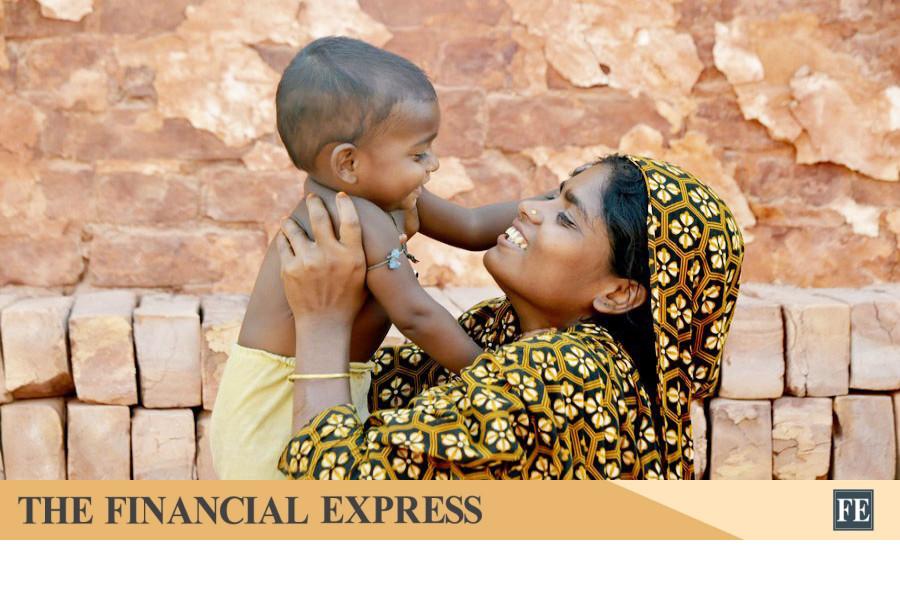
A female worker has a light moment with a child near a brickfield in Manikganj, Bangladesh. More than 1.6 million children suffer from malnutrition today in the country —Xinhua Photo

In Bangladesh today, countless mothers skip meals so their children can eat-a quiet sacrifice that reflects a deeper crisis of poverty, inflation, and insecurity. Nearly 28 per cent of the population now live below the poverty line, with about 9 per cent in extreme poverty. Food inflation has hovered above 10 per cent, eroding household purchasing power, while 16 million people face acute food insecurity and more than 1.6 million children suffer from malnutrition. This is not only a moral concern, it is a policy failure. Against this backdrop, the Family Card is not merely another welfare scheme-it is a structural reform with the potential to unify fragmented safety nets into a sustainable pillar of social justice.

Bangladesh's development narrative is under strain. While the country has achieved notable progress in rice production and gross domestic product (GDP) growth in the past decades, poverty indicators are once again worsening. Poverty today is not only about deprivation but about insecurity. A family may eat today and go hungry tomorrow; a worker may earn this month and lose everything the next. Inflation, climate shocks, and precarious employment have made economic stability fragile, even for those just above the poverty line.

In this context, the proposed Family Card is not just welfare-it is a test of whether Bangladesh can build a resilient social contract in the face of poverty, inflation, and climate shocks. The central policy challenge is not only to reduce poverty, but to prevent households from falling into it, and to enable them to climb out of it sustainably. The real challenge is not simply to distribute cash, but to design a system that converts short-term relief into long-term poverty reduction.

WHY FAMILY CARD MATTERS: Bangladesh's social protection system has expanded, but not necessarily strengthened. Dozens of programmes-old age allowances, VGD, VGF, and others-operate in parallel, often with overlapping beneficiaries, uneven coverage, and administrative inefficiencies. The result is not the absence of support, but its unpredictability.

The Family Card offers an opportunity to move from fragmentation to coherence. By consolidating programmes into a unified platform, it can improve targeting, reduce leakage, and ensure more consistent support. More importantly, it can shift social protection from discretionary distribution to rule based entitlement-where access to minimum economic security is not a favour, but a guarantee. Discretionary systems treat social assistance as patronage, distributed unevenly and often influenced by local power structures. Entitlement based systems, by contrast, establish predictable and enforceable guarantees. They signal that minimum economic security is a basic function of the state, not a gift.

This shift-from discretionary distribution to rules-based entitlement-redefines the relationship between citizen and state, transforming social assistance from patronage into a guarantee of minimum economic security.

OPERATIONAL PILLARS -- TARGETING, IDENTOIFICATION, DELIVERY, M0NITORING: The success of the Family Card will depend less on scale than on the strength of its implementation. Bangladesh's past experience shows that social protection programmes often falter not for lack of resources, but due to weak targeting, political capture, and administrative fragmentation. Avoiding these pitfalls requires a system built on four interdependent pillars.

Targeting is the foundation. Without accurate targeting, resources leak to the non-poor while vulnerable households are excluded. Targeting must be multidimensional-capturing income, assets, employment, geography, and food insecurity-and dynamic, with regular updates and community validation to reflect shifting vulnerability.

Identification underpins targeting. Fragmentation across programmes has led to duplication and inefficiency. A unified social registry, linked to national identification systems, can improve accuracy and coordination. But digital integration must remain inclusive, supported by offline verification, assisted enrolment, and accessible grievance mechanisms to prevent exclusion.

Delivery determines credibility. Even well-targeted programmes fail if benefits do not reach recipients reliably. Transfers must be predictable, transparent, and timely. Digital payments can reduce leakage and improve efficiency, while directing transfers to women strengthens household welfare. At the same time, multiple delivery channels-mobile, banking, and local payment points-are essential to ensure access and system resilience.

Monitoring ensures accountability. Real-time tracking, independent audits, and transparent reporting are critical to limit leakage and political interference. Effective grievance redress mechanisms allow beneficiaries to challenge errors, strengthening trust and system integrity.

These pillars are mutually reinforcing. Weak targeting undermines delivery; poor identification fuels duplication; and without monitoring, even well-designed systems lose credibility. Together, they form the operational backbone of the Family Card, transforming it from a fragmented welfare scheme into a coherent and accountable system.

Operational excellence, however, is not sufficient. Effective administration must be matched by a clear strategic vision if the programme is to deliver lasting poverty reduction.

TRANSFORMATIVE FRAMEWORK: Operational design alone is not enough. To be transformative, the Family Card must embody a broader framework that moves households from survival to resilience and mobility.

Protection provides the foundation by ensuring households meet basic needs. Predictable cash transfers stabilise consumption, reduce deprivation, and prevent harmful coping strategies such as selling assets, withdrawing children from school, or cutting food intake. Without this, families remain trapped in cycles of insecurity.

Promotion moves beyond survival to livelihoods. Cash transfers can unlock risk taking capacity, enabling households to invest in small enterprises, agriculture, or skills. When linked to credit, training, and market access, transfers become catalysts for productivity and income generation rather than mere consumption support.

Prevention safeguards households against repeated shocks-climate events, illness, job loss, or economic crises-that drive families back into poverty. Scalable programmes, integration with disaster risk management, and access to insurance are essential in a climate vulnerable country like Bangladesh, where resilience must be built into the system.

Transformation addresses the deeper structural drivers of poverty. By confronting gender inequality, regional disparities, and barriers to education, health, and labour market participation, transformative social protection seeks not only to support the poor but to reshape the conditions that produce poverty.

Together, these four pillars form a coherent framework. Protection stabilises households, promotion builds livelihoods, prevention secures resilience, and transformation tackles inequality. Their interaction shifts cash transfers from short-term relief to long-term strategy-moving families from vulnerability to resilience, and ultimately toward sustainable mobility. Aligned with the Sustainable Development Goals (SDGs), this integrated approach reflects global experience: cash transfers are most effective when embedded within broader systems of human capital, livelihoods, and resilience building policies.

GLOBAL LESSONS: Over the past three decades, cash transfer programmes have become a central instrument of social policy across the developing world. From Latin America to East Asia, governments have increasingly used direct income support to reduce poverty and vulnerability.

In Latin America, programmes such as Brazil's Bolsa Família and Mexico's Prospera showed that modest, predictable transfers can improve school attendance, health outcomes, and short-term poverty indicators. Yet their impact on sustained income mobility has been more limited, as they focused primarily on human capital rather than productive transformation.

China offers a contrasting experience. Its rapid poverty reduction was not driven by cash transfers alone, but by a state-led, multi-dimensional strategy combining targeted support with rural industrialisation, infrastructure, labour mobility, and local economic development. Income support was embedded within a broader system designed to generate livelihoods, not merely sustain consumption.

Across South Asia, social protection has played a critical role in reducing extreme deprivation. India's large-scale cash and food programmes have expanded coverage, while Pakistan's Benazir Income Support Programme demonstrates how directing transfers to women can strengthen household welfare and agency. However, fragmentation, weak targeting, and limited links to labour markets have constrained their transformative impact.

The overarching lesson is that cash transfers can reduce poverty, but only integrated strategies-linking income support with jobs, assets, and human capital-enable households to exit poverty permanently.

STRATEGY AND SAFEGUARDS: Designing the Family Card requires foresight and well-designed strategies. Bangladesh's past welfare programmes have faltered not for lack of resources, but due to weak design, political capture, and administrative inefficiency. The lesson is clear: without robust safeguards, even well-funded programmes can become inefficient or politicised. Ultimately, success will depend less on budget size than on institutional design.

Fiscal sustainability is the starting point. A programme of this scale could cost thousands of crores annually, and rapid expansion risks straining budgets and fuelling inflation. Phased rollout and capped allocations are therefore not just technical choices, but signals of credibility-ensuring that ambition is matched by fiscal discipline.

Political integrity is equally critical. Social protection in Bangladesh has often been distorted by partisan allocation and elite capture. Embedding the programme in legislation, strengthening independent audits, and ensuring transparent oversight can shift it from discretionary distribution to rules-based entitlement-transforming a political pledge into a durable social contract.

Administrative capacity is the backbone of delivery. Without trained officials, reliable data, and robust digital systems, leakage, duplication, and ghost beneficiaries will persist. Investment in implementation-particularly in digital platforms and local capacity-is essential to ensure that policy design translates into effective service delivery.

Social inclusion must be built-in from the outset. Households without identification, digital access, or literacy risk exclusion, while intra-household dynamics may limit the impact of transfers. Prioritising women as recipients, maintaining offline access, and strengthening grievance redress mechanisms are critical to ensuring equity.

At the same time, transfers must be linked to pathways out of poverty. Connecting beneficiaries to skills, employment, and local economic opportunities will be essential if the programme is to support graduation rather than long-term dependence.

Finally, climate resilience must be integral to the scheme. In a country highly exposed to floods, cyclones, and economic shocks, social protection cannot remain static. Adaptive transfers that scale during crises, integration with disaster response systems, and fiscal buffers are necessary to ensure continuity when support is needed most.

The Family Card is not simply a welfare initiative; it is a structural reform that must be implemented with precision and foresight. The government must adopt a phased implementation strategy: immediate priority should be given to the extreme poor through unconditional transfers that secure basic needs, while conditional support for education, health, and resilience can be introduced as administrative capacity strengthens.

Financing must be embedded in the national budget and anchored in domestic resources, ensuring sustainability beyond donor cycles. Digital delivery systems linked to NID can reduce leakage and improve targeting, but must be complemented by offline options to guarantee inclusion. Transparent beneficiary registries, grievance mechanisms, and independent audits will be essential to build public trust and shield the programme from political capture.

Equally important is legal entrenchment. Without legislation, even well funded programmes risk politicisation; with it, the Family Card can endure beyond electoral cycles as a durable institution. Finally, integration with nutrition, climate resilience, and the SDGs will align the initiative with national priorities and global commitments.

The choice is therefore between managing poverty and ending it. The Family Card offers a pathway to do the latter-by linking protection with productivity, resilience, and opportunity. If implemented with discipline, transparency, and long-term vision, it can become more than a welfare programme: it can redefine the social contract between state and citizen. In that sense, the success of the Family Card will not be measured by how much it distributes, but by whether it enables households to stand on their own-secure, resilient, and no longer dependent on it.

Dr. Golam Rasul, Professor, Department of Economics, International University of Business Agriculture and Technology (IUBAT), Dhaka.​
 
Analyze

Analyze Post

Add your ideas here:
Highlight Cite Respond

The Family Card
Build a system, not just a scheme


ASAD ISLAM
Published :
Mar 03, 2026 00:03
Updated :
Mar 03, 2026 00:03

1772498292932.webp


The objective of the Family Card is to provide social protection to poor people in Bangladesh —FE File Photo

With the pilot phase of the Family Card scheduled to begin on March 10 in selected upazilas, Bangladesh stands at an important institutional turning point. The program is moving from promise to implementation. At this stage, the real question is not simply how to distribute a new benefit, but whether the Family Card will strengthen the foundations of the social protection system itself.

Debate has focused on coverage and cost. Those questions matter. Yet the deeper issue is structural. Will the Family Card become another scheme added to an already complex landscape, or will it help build a more coherent and sustainable system? And can its long term commitments be aligned with Bangladesh's fiscal capacity?

Bangladesh's social protection system evolved gradually, program by program, in response to specific needs. Today there are allowances for elderly citizens, widows and deserted women, and persons with disabilities. There are food based programs such as Vulnerable Group Development. There are employment initiatives and other targeted transfers administered across ministries. Each operates under its own eligibility rules, beneficiary lists, and delivery processes.

This layered structure reflects genuine efforts to address vulnerability. Yet fragmentation creates administrative strain. Separate registries complicate coordination. Eligibility criteria differ. Monitoring standards vary. Some households receive multiple benefits, while others in similar circumstances receive none.

The introduction of the Family Card therefore presents a structural choice. Will it become one more program within an already crowded landscape? Or will it serve as the mechanism through which the system is gradually unified?

FROM PROGRAM TO PLATFORM: This distinction is institutional.

If the Family Card operates alongside existing schemes without integration, layering increases. In the short term this may appear manageable. Over time, however, layering raises fiscal pressure and weakens accountability. Each additional program creates its own reporting chain and administrative routine.

If instead the Family Card is designed as a platform through which entitlements flow, it could gradually rationalise the system. This does not require eliminating existing programs immediately. It requires transitioning them, steadily and deliberately, into a more coherent structure.

Three shifts are essential.

First, beneficiary information must be harmonised. Bangladesh has made progress through national identification and digital systems. Yet many programs still maintain separate lists. A unified social registry requires compatibility across legacy systems, reconciliation of inconsistent records, agreement on common eligibility rules, and regular updating. This is not only technical work. It demands sustained coordination across ministries and disciplined data governance.

Second, payment mechanisms must be streamlined. Direct transfers to bank accounts or mobile wallets reduce leakage and increase transparency. If the Family Card becomes the primary payment channel for social protection, efficiency can improve. That outcome depends on reliable connectivity, adequate rural agent networks, and systems capable of handling large transaction volumes.

Third, there must be a realistic transition plan. Existing programs cannot be discontinued overnight. Beneficiaries depend on them, and administrative structures are deeply embedded. A practical approach would enrol new beneficiaries exclusively through the Family Card platform while gradually migrating current recipients. During this period, some parallel operation is unavoidable. Consolidation often raises administrative costs before efficiencies emerge.

Consolidation is feasible, but only through sequencing. Attempting full integration alongside rapid universal expansion would stretch administrative capacity and increase implementation risk.

It is also important to acknowledge that consolidation takes time. Integrating programs managed across ministries into a single registry requires technical alignment, continuous updating, privacy safeguards, and institutional coordination. Even with widespread digital identification and mobile financial services, aligning legacy databases and introducing dynamic eligibility tracking is a multiyear process. Recognising this reality strengthens the case for phased reform rather than immediate comprehensive restructuring.

EQUITY WITHIN CONSOLIDATION: Equity must remain central.

Many existing allowances are categorical for valid reasons. An elderly widow faces risks different from a working age adult. A person with severe disability often faces higher costs and limited earning capacity. These programs recognise that vulnerability is not uniform.

If consolidation produces a flat household transfer without differentiated supplements, individuals with greater needs could lose effective protection. Administrative simplification should not weaken vertical equity. A coherent system can retain targeted additions for elderly individuals living alone, persons with disabilities, or households facing extreme hardship. The aim should be coherence without dilution.

FISCAL ALIGNMENT AND REVENUE CAPACITY: Institutional coherence must be matched by fiscal realism.

A universal Family Card providing Tk 2,500 per month to all households would represent a substantial and permanent expansion of public spending, approaching 2 per cent of gross domestic product (GDP) annually. Even if some existing programs are rationalised, additional revenue would be required to sustain such a commitment.

Bangladesh's tax to GDP ratio remains modest compared with countries operating large universal transfer systems. Expanding permanent entitlements without strengthening revenue capacity increases fiscal exposure. Borrowing can finance expansion in the short term, but persistent deficits reduce flexibility and raise future obligations.

Domestic borrowing may influence interest rates and private credit conditions. External borrowing introduces exchange rate risk. Debt sustainability depends on growth, interest costs, and fiscal balances over time, not merely on current ratios.

This does not imply that social protection is unaffordable. It means scale must align with revenue.

Linking expansion of the Family Card to measurable improvements in revenue mobilisation would strengthen credibility. As tax collection broadens and compliance improves, coverage can expand. Aligning program growth with fiscal capacity reduces the risk of adjustment under pressure.

A SEQUENCED REFORM STRATEGY: Given these realities, a phased approach appears most consistent with Bangladesh's present capacity.

The pilot phase offers an opportunity to test payment delivery, registry accuracy, and grievance systems. The next stage should focus on integration in selected areas, harmonising beneficiary lists and resolving inconsistencies.

Gradual rollout can then follow, guided by a clear principle: new social protection beneficiaries should enter through the Family Card platform rather than parallel schemes. Over time, this single entry point would reduce duplication and allow legacy programs to be folded into a unified structure without abrupt disruption.

Such sequencing limits early fiscal exposure, allows administrative learning before expansion, and provides time to strengthen grievance redress systems. A transparent and time bound appeals process is essential. Administrative reform without accountability risks eroding trust.

INFLATION AND MARKET RESPONSE: Large scale transfers increase purchasing power. Much of the additional demand will flow toward essential goods, particularly food. In an environment where supply chains face climate pressures and import volatility, demand expansion should be accompanied by policies that maintain stable and competitive markets.

The Family Card should operate within a broader economic framework that supports agricultural productivity and market stability. Preserving the real value of transfers requires attention to both demand and supply conditions.

ARCHITECTURE DETERMINES DURABILITY: The Family Card has the potential to become more than a transfer program. If designed with care, it could form the backbone of a more integrated and responsive social protection system.

But that outcome depends on discipline. Expansion without integration deepens fragmentation. Consolidation without preparation risks setbacks. Ambition without revenue alignment creates fiscal strain.

The durability of the Family Card will be measured not by the scale of its launch, but by its performance over time. Can it remain fiscally sustainable? Can it maintain administrative credibility? Can it treat households fairly across regions?

Social protection reform shapes the state's relationship with citizens for decades. If the Family Card evolves into an integrated platform, supported by a unified registry, phased expansion, targeted supplements for those with greater needs, and alignment with revenue growth, it can strengthen Bangladesh's resilience and institutional maturity. The architecture chosen now will determine whether the Family Card becomes a durable pillar of development or another well intentioned addition to an already complex system.

Dr Asad Islam is Professor of Economics, Monash Business School, Monash University, Australia.​
 
Analyze

Analyze Post

Add your ideas here:
Highlight Cite Respond

Members Online

Latest Posts

Back
PKDefense - Recommended Toggle