New Tweets

[๐Ÿ‡ง๐Ÿ‡ฉ] Footwear, Rubber and leather Industry in Bangladesh

G Bangladesh Defense
[๐Ÿ‡ง๐Ÿ‡ฉ] Footwear, Rubber and leather Industry in Bangladesh
65
5K
More threads by Bilal9

US trade representatives have already sent a long list of products on which they need Bangladesh to give duty free access.

Well we are not in a position to negotiate from any position of strength.

Running to the WTO will not help.

So concede we must.
 
Analyze

Analyze Post

Add your ideas here:
Highlight Cite Respond
  • Sad (0)
Reactions: Saif

Leather, leather-goods exports see 10pc growth
Staff Correspondent 22 July, 2025, 23:31

1753233753696.webp

Two workers arrange hides at a tannery in the capital recently. The export earnings from the leather and leather goods increase by 10.19 per cent in FY25. | Sony Ramani

The export earnings from the leather and leather goods increased by 10.19 per cent to $1.14 billion in the recently concluded financial year 2024-25, according to the Export Promotion Bureau.

The leather sector, one of the major industries after the readymade garment sector, earned $1.03 billion in FY24.

However, despite the domestic supply of raw materials, the leather export earning has been hovering around $1 billion for the last several years.

In FY23, the sector earned $1.17 billion, compared with $1.24 billion in FY22 and $1.03 billion in FY21, as stated in the EPB data.

In FY25, the country earned $48.28 billion from exporting goods, 8.58 per cent higher than the $44.46 billion in FY24, while the earnings from the leather sector accounted for approximately 2.36 per cent of the total export earnings.

Speaking to New Age, Md Nasir Khan, vice-president of the Leather goods and Footwear Manufacturers and Exporters Association of Bangladesh, said that due to a lack of governmental policy support, the leather sector had been unable to break out of the $1 billion cycle for decades.

โ€˜We donโ€™t have any unified policy and incentive facilities for all export-oriented sectors. Despite having domestic supply of raw materials and high-quality products, leather sector is lagging years after years,โ€™ he added.

Sometimes it seemed that policymakers didnโ€™t want the sector to export more, as it didnโ€™t receive sufficient policy support, he added, saying that even the central effluent treatment plant was under-capacity and non-functional, which reflected their reluctance.

โ€˜To diversify products, government must remove the discrimination between RMG sector and all other export-oriented sectors. The government must introduce unified policy, bond facilities and other incentives,โ€™ he added.

He also stated that the leather sector has the capacity to earn $10 billion, as it can add value of up to 90 per cent, thanks to its raw materials. However, the government destroyed this opportunity by transferring the industry to Savar without proper establishment and the required CETP.

He also said that the same principle applies to market diversification โ€” if the government wants, it can also diversify Bangladeshโ€™s market.

For almost three decades, Apex Footwear Limited has been in the shoe exporting business, with a footprint in the US, UK, Europe, and Japan.

Omar Faruk, company secretary of Apex Footwear Limited, told New Age that like the overall leather goods sector, they also face some global and internal challenges, including dollar issues and other domestic challenges.

He also said that the recently declared 35 per cent tariff on Bangladeshi exports of goods would further impact the sector.

The businesses also stated that, despite having significant export potential, the leather sector has faced stagnation primarily due to persistent compliance issues.

Global buyers are refraining from importing leather goods from Bangladesh, as the countryโ€™s leather industry continues to fall short of meeting compliance requirements, including obtaining a Leather Working Group certificate.

Talking to New Age, M Masrur Reaz, chairman of the Policy Exchange Bangladesh, said that the country didnโ€™t utilise its capacity and potential.

โ€˜The authority didnโ€™t strengthen the seamless connections among different value chains like rawhide collecting, processing, finishing and backward linkage,โ€™ he added.

He also stated that a significant number of companies in the sector lacked standard certificates, such as LWG, which deterred foreign buyers from importing.

โ€˜Despite the potential of reaching $10 billion export annually, we donโ€™t have integrated planning, especially on infrastructure, finance, skill, and attracting foreign investment,โ€™ he added.

The businesses and experts also suggested some key factors, including investing in the environment, product diversification, developing skilled workforces, and sufficient governmental support.

They also urged manufacturers to ensure supply chain traceability, invest in branding and marketing, and continue to adopt advanced manufacturing technologies.​
 
Analyze

Analyze Post

Add your ideas here:
Highlight Cite Respond

Young entrepreneurs bootstrapping the leather sector

1753666623890.webp

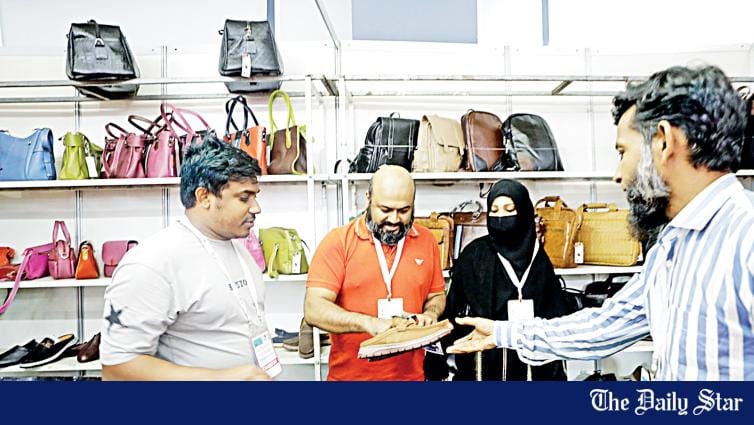
Emerging leather entrepreneurs showcase their products at the 9th Bangladesh Leather & Footwear Expo organised by the Bangladesh Tanners Association at the International Convention City Bashundhara recently. The event offered an opportunity for young entrepreneurs to connect with buyers and build export pathways. Photo: Star

From setting up micro-factories in Hazaribagh to attending international expositions, a new generation of leather entrepreneurs is trying to bring fresh momentum to one of Bangladesh's most promising sectors for exports.

With technical expertise, business insight, and a strong sense of commitment, they are transforming the leather goods industryโ€”from one once burdened by environmental and compliance challenges to a sector of new opportunities.

The vibe was evident at the 9th Bangladesh Leather & Footwear Expo, organised by the Bangladesh Tanners Association (BTA) at the International Convention City Bashundhara from last Thursday to Saturday.

Several emerging entrepreneurs stood out with inspiring stories of determination and innovation.

Among them was Forida Yesmin Bithi, chief executive officer (CEO) of Deer Leather Goods and Footwear Ltd.

A leather engineering graduate, Bithi transitioned from a technical background into entrepreneurship in 2020 with just Tk 3 lakh, two machines, and one assistant.

Today, she leads a team of nine and manufactures belts, wallets, office bags, handbags, shoes, and sandals. Her products, once catering mainly to local clients, are now reaching Malaysia and Italy via export intermediaries.

She proudly informed that her company is now capable of producing leather goods worth around Tk 12 lakh per month.

"This business has potential, and I believe it will continue to grow," she said.

This year marked her third appearance at the expo. "This platform is vital for visibilityโ€”it helps small entrepreneurs like us connect to bigger markets," she added.

Another inspiring figure is Md Tasnim Alam Shahin, founder and CEO of 3 Tech.

Nearly two decades in the industry, Shahin originally aspired to study leather technology, but family responsibilities pushed him toward business.

With Tk 5 lakh in support from his family, he founded 3 Tech in 2007.

His breakthrough came with an order for jackets from Novartis, followed by partnerships with brands like Bata.

The company now employs 35 workers. Prior to the pandemic, it annually exported goods worth over Tk 2 crore.

"The pandemic slowed us down," Shahin acknowledged. "But with the right policies and quality focus, Bangladesh's leather sector can thrive globally again," he said.

Meanwhile, Tahmina Akter Shammi, managing director of ARLENS Leather, brought with her the experience of an entirely different field.

Previously a World Bank project staffer focusing on export readiness in non-readymade garment (RMG) sectors, she shifted to leather after seeing its global promise.

She launched ARLENS Leather in early 2024 with minimal investment and now operates a small-scale production unit in Hazaribagh.

Her productsโ€”backpacks, wallets, and accessoriesโ€”are sold wholesale and retail, generating modest exports via buying houses. Monthly production is worth around Tk 4 lakh.

"I reinvest all profits. For me, it's about creative freedom and building something of my own," Shammi said.

Golam Mursalin, managing partner of Collagen Bangladesh, is part of the growing community of leather technologists entering the sector.

On attaining BSc and MSc degrees in leather engineering, Mursalin started his career at Reliance, a Chinese company, and later joined a Chinese buying house.

In 2017, he began his own business processing hides for export. "My capital was my knowledge and labour," he recalled.

Collagen Bangladesh now operates with four partnersโ€”each a leather technologistโ€”and supplies finished leather to top local exporters while directly exporting to Poland.

In 2023, they expanded into production arrangements specialising in small batches of finished leather goods to align with international buyer demands. "Value addition is the future," Mursalin said.

But challenges remainโ€”rawhide perishability, price competitiveness, and high production costs due to the need to import the chemicals used in the process.

"Imported inputs and lack of bonded warehouse facilities make it difficult to compete with countries like Pakistan," he explained.

"Still, more leather engineering graduates are entering this field, and with the right policy supportโ€”such as export-linked chemical subsidiesโ€”we can do much better," said Mursalin.

All in all, over 130 local and foreign companies participated in the fair, including exporters of leather goods, footwear, machinery, and raw materials.

The vigour of the exporters gives hope, especially because the sector's earnings from sales abroad have slightly dropped to $345 million in the fiscal year 2024โ€“25 from $353 million in the preceding year.

Md Mizanur Rahman, general secretary of the BTA, expressed optimism over the young entrepreneurs in this sector.

"These young entrepreneurs are innovative and well-educated. They understand quality, global trends, and what the market demands. We support their growthโ€”because they represent the next generation of leadership in our sector," he said.

He said as Bangladesh eyes a bigger stake in global leather exports, the rise of technically trained, self-driven entrepreneurs could be the missing link between potential and performance.

From micro-factories in Hazaribagh to export shipments bound for Europe and Southeast Asia, the transformation is already underway, he added.​
 
Analyze

Analyze Post

Add your ideas here:
Highlight Cite Respond

Pran-RFLโ€™s Varendra Rajshahi Textile creates 2,000 jobs in just 6 months, aims for 12,000


The group revived a state-owned factory that had been closed for 22 years​


Infograph: TBS

Infograph: TBS


  • -2,000 jobs created, 90% filled by local women
  • -Factory exports shoes, bags to Europe and America
  • -Tk350 crore investment planned, targeting 12,000 total jobs
  • -Revived old textile mill closed for 22 years
  • -Expansion includes garments, call center, and training facility
  • -Vision: decentralized, sustainable industry creating rural employment

In just six months since launching operations, Varendra Rajshahi Textile Ltd, a new industrial venture by Pran-RFL Group, has created employment for 2,000 people, 90% of whom are women.

Located on 26 acres in Rajshahi's Naodapara area, the factory is currently producing around six lakh pairs of shoes and bags per month, with most of the products being exported to Europe, America, and other global markets.

Monthly sales from the factory are already reaching Tk20โ€“25 crore, and the company has recently unveiled plans for major expansion.

According to company officials, the factory currently manufactures various types of shoes, luggage, and storage bags, with plans to expand into ready-made garments. The group, one of Bangladesh's largest conglomerates, also intends to establish a world-class call centre and a training facility within the premises.

Speaking to The Business Standard, Kamruzzaman Kamal, director (marketing) of Pran-RFL Group, said, "We have plans to invest Tk350 crore in this factory over the next two years. This will open up employment opportunities for around 12,000 people in the region."

The site, formerly home to the long-defunct Rajshahi Textile Mill, had remained idle for 22 years before Pran-RFL took over the land from Bangladesh Textile Mills Corporation (BTMC) under a public-private partnership.

Pran-RFL revived the site in December last year and began operations after renovating the factory's only remaining shed.


"We had to scrap most of the old machinery, which had become unusable over time," Kamruzzaman said. "Since the facility was originally set up for textile production, we had to install entirely new equipment suitable for manufacturing shoes and bags."


Kamruzzaman added that products from the factory range from affordable Tk100 sandals to premium shoes priced at Tk5,000. "Raw materials are sourced both locally and internationally, and the manufacturing is done in phases to meet the needs of both domestic and global customers."

Looking ahead, the company plans to start garment production and set up a modern telemarketing centre at the site, which will offer additional employment, especially for women.


Kamruzzaman said in addition to Barendra Rajshahi Textile Ltd, their products are also being manufactured in several other factories in Rajshahi, including some within the Bscic industrial area.

"Our goal is to create employment opportunities for the people of this region, and Pran-RFL Group is working towards that objective," he said. He added that everyone working in the factory is from Rajshahi, with 90% of them being women.

The factory currently employs 2,000 local workers, including many from marginalised backgrounds.

Shankari Rani, a resident of Godagari and a production worker at the factory, said her job has been a vital source of support for her family. "My husband is a blacksmith, but his earnings were not enough. Working here allows me to contribute to household expenses and support our two daughters," she said. "Our shifts run from 8am to 8pm, with a one-hour lunch break."

Naheda Akhter Nitu, a training executive at the factory, joined four and a half months ago. "I used to work in Dhaka, but my family wanted me to stay in Rajshahi. When this factory opened, I didn't hesitate to join."

To mark the milestone of 2,000 jobs created, PRAN-RFL Group held a celebration on Saturday titled "Celebrating 2,000 Jobs; Targeting 12,000" at the factory premises. Brig Gen (retd) Dr M Sakhawat Hossain, adviser to the Ministry of Labour and Employment, attended the event as chief guest.

Also present were Labour Secretary AHM Shafiquzzaman, Pran-RFL Chairman and CEO Ahsan Khan Chowdhury, Rajshahi Superintendent of Police Farzana Islam, and BTMC Manager Nurul Alam, among other officials.

"This initiative by Pran-RFL is a remarkable step forward," said Sakhawat Hossain. "Reviving a state-owned factory that had been closed for 22 years and generating 2,000 jobs in such a short time is truly praiseworthy. This is not just an industrial revival โ€“ it marks the beginning of a socio-economic transformation."

"While many people from rural areas are forced to migrate to cities due to a lack of local job opportunities, Pran-RFL is showing how regional industrialisation can create sustainable employment," he added.

Ahsan Khan Chowdhury, chairman and CEO of Pran-RFL Group, said, "Our vision is big. We believe the days of having to move to Dhaka for work are coming to an end.

"Instead, in the future, we aim to go to remote areas, set up industries, and offer people jobs right where they live. We are investing in labour-intensive industries in Rajshahi and are successfully creating a large number of employment opportunities."

He further noted that the facility will be developed into a fully sustainable green industrial park, with all products aimed at export markets.

"We are working on creating more employment opportunities for women through ventures like telemarketing centres," he said.
 
Analyze

Analyze Post

Add your ideas here:
Highlight Cite Respond

Pran-RFLโ€™s Varendra Rajshahi Textile creates 2,000 jobs in just 6 months, aims for 12,000


The group revived a state-owned factory that had been closed for 22 years​


Infograph: TBS

Infograph: TBS


  • -2,000 jobs created, 90% filled by local women
  • -Factory exports shoes, bags to Europe and America
  • -Tk350 crore investment planned, targeting 12,000 total jobs
  • -Revived old textile mill closed for 22 years
  • -Expansion includes garments, call center, and training facility
  • -Vision: decentralized, sustainable industry creating rural employment

In just six months since launching operations, Varendra Rajshahi Textile Ltd, a new industrial venture by Pran-RFL Group, has created employment for 2,000 people, 90% of whom are women.

Located on 26 acres in Rajshahi's Naodapara area, the factory is currently producing around six lakh pairs of shoes and bags per month, with most of the products being exported to Europe, America, and other global markets.

Monthly sales from the factory are already reaching Tk20โ€“25 crore, and the company has recently unveiled plans for major expansion.

According to company officials, the factory currently manufactures various types of shoes, luggage, and storage bags, with plans to expand into ready-made garments. The group, one of Bangladesh's largest conglomerates, also intends to establish a world-class call centre and a training facility within the premises.

Speaking to The Business Standard, Kamruzzaman Kamal, director (marketing) of Pran-RFL Group, said, "We have plans to invest Tk350 crore in this factory over the next two years. This will open up employment opportunities for around 12,000 people in the region."

The site, formerly home to the long-defunct Rajshahi Textile Mill, had remained idle for 22 years before Pran-RFL took over the land from Bangladesh Textile Mills Corporation (BTMC) under a public-private partnership.

Pran-RFL revived the site in December last year and began operations after renovating the factory's only remaining shed.


"We had to scrap most of the old machinery, which had become unusable over time," Kamruzzaman said. "Since the facility was originally set up for textile production, we had to install entirely new equipment suitable for manufacturing shoes and bags."


Kamruzzaman added that products from the factory range from affordable Tk100 sandals to premium shoes priced at Tk5,000. "Raw materials are sourced both locally and internationally, and the manufacturing is done in phases to meet the needs of both domestic and global customers."

Looking ahead, the company plans to start garment production and set up a modern telemarketing centre at the site, which will offer additional employment, especially for women.


Kamruzzaman said in addition to Barendra Rajshahi Textile Ltd, their products are also being manufactured in several other factories in Rajshahi, including some within the Bscic industrial area.

"Our goal is to create employment opportunities for the people of this region, and Pran-RFL Group is working towards that objective," he said. He added that everyone working in the factory is from Rajshahi, with 90% of them being women.

The factory currently employs 2,000 local workers, including many from marginalised backgrounds.

Shankari Rani, a resident of Godagari and a production worker at the factory, said her job has been a vital source of support for her family. "My husband is a blacksmith, but his earnings were not enough. Working here allows me to contribute to household expenses and support our two daughters," she said. "Our shifts run from 8am to 8pm, with a one-hour lunch break."

Naheda Akhter Nitu, a training executive at the factory, joined four and a half months ago. "I used to work in Dhaka, but my family wanted me to stay in Rajshahi. When this factory opened, I didn't hesitate to join."

To mark the milestone of 2,000 jobs created, PRAN-RFL Group held a celebration on Saturday titled "Celebrating 2,000 Jobs; Targeting 12,000" at the factory premises. Brig Gen (retd) Dr M Sakhawat Hossain, adviser to the Ministry of Labour and Employment, attended the event as chief guest.

Also present were Labour Secretary AHM Shafiquzzaman, Pran-RFL Chairman and CEO Ahsan Khan Chowdhury, Rajshahi Superintendent of Police Farzana Islam, and BTMC Manager Nurul Alam, among other officials.

"This initiative by Pran-RFL is a remarkable step forward," said Sakhawat Hossain. "Reviving a state-owned factory that had been closed for 22 years and generating 2,000 jobs in such a short time is truly praiseworthy. This is not just an industrial revival โ€“ it marks the beginning of a socio-economic transformation."

"While many people from rural areas are forced to migrate to cities due to a lack of local job opportunities, Pran-RFL is showing how regional industrialisation can create sustainable employment," he added.

Ahsan Khan Chowdhury, chairman and CEO of Pran-RFL Group, said, "Our vision is big. We believe the days of having to move to Dhaka for work are coming to an end.

"Instead, in the future, we aim to go to remote areas, set up industries, and offer people jobs right where they live. We are investing in labour-intensive industries in Rajshahi and are successfully creating a large number of employment opportunities."

He further noted that the facility will be developed into a fully sustainable green industrial park, with all products aimed at export markets.

"We are working on creating more employment opportunities for women through ventures like telemarketing centres," he said.
Could you please move the above post to textile & RMG thread? Thanks:)
 
Analyze

Analyze Post

Add your ideas here:
Highlight Cite Respond

US tariff hike no big blow to non-leather footwear exports
Shoeniverse MD says buyers resume bookings

1754793713378.webp

Riad Mahmud

Emerging export item non-leather footwear remains largely unscathed after the US tariff storm, thanks to Bangladesh's limited exposure to the American market and a stronger competitive position than some peers.

The sector, which has recently entered the half-a-billion-dollar export club from $189 million a decade earlier, is seeing American buyers returning to Bangladeshi exporters, according to a leading industry figure.

Google News LinkFor all latest news, follow The Daily Star's Google News channel.
"US buyers have done their calculations and seem ready to absorb the 35 percent tariff for now," Riad Mahmud, managing director of Shoeniverse Footwear, told The Daily Star in a recent interview.

Mahmud, who supplies products to top buyers like Walmart, Target, and Reebok, said, "Bangladesh can still emerge as a major player in the global synthetic footwear market despite recent tariff pressures."

Around 90 percent of Bangladesh's non-leather footwear exports currently go to Europe. But Mahmud sees greater promise across the Atlantic.

"US orders are large and consistent. When one style runs on the line for weeks, our efficiency improves. Europe's orders are smaller and fragmented. Constant style changes reduce output and raise costs," the Shoeniverse MD said.

1754793764474.webp


Just months ago, top US retailers were exploring Bangladesh as an alternative sourcing base amid shifting global trade dynamics. The sudden introduction of a 20 percent US tariff on Bangladeshi products, on top of an existing 15 percent, had initially put a damper on that optimism.

The tariff hike, Mahmud said, was "like a fog rolling over clear skies." Half his confirmed orders were frozen almost overnight. "Buyers simply said, 'We'll get back to you.'"

Faced with idle capacity, Shoeniverse pivoted to lower-margin clients to keep its factory floors busy. "We didn't earn profit, but we avoided empty lines. It was survival." Now, orders for November and December are back on the books.

Building Resilience

To compete sustainably, Mahmud argues, Bangladesh needs the scale and stability that the US market offers. The tariff shock, he says, also exposed structural weaknesses, particularly the high dependence on Chinese raw materials, which stretched lead times to 90 days.

To address this, Shoeniverse is offering land and infrastructure at its Bhaluka industrial zone to Chinese suppliers willing to form joint ventures in Bangladesh. "If components like soles and uppers are produced here, we can cut lead times from three weeks to three hours. That's how you withstand external shocksโ€”not by lobbying, but by building smarter."

Mahmud likened the current crisis to emergency surgery. "We didn't have time to prepare; we simply had to respond. But now we must plan our recovery and future growth."

He estimates Bangladesh's footwear exports could reach $1 billion in two and a half years if key hurdles are cleared. Chief among them is the Nirapon certification, which guarantees US-standard safety and compliance.

"It took Parasol 18 months to secure theirs. Without it, we can't access high-volume US orders," he said, adding that several other firms, including Pran-RFL and MAF Shoe, are also pursuing the certification.

Beyond America

Beyond the US, Mahmud sees potential in the Australian market, which is also seeking alternatives to China.

Besides, Vietnam's rising costs and capacity limits could push European and Australian buyers towards Bangladesh. "Bangladesh is well positioned to benefit, if we act fast."

With Bangladesh's graduation from the least developed country category approaching next year, Mahmud warns that Europe alone cannot sustain growth. "To recover our investments, we need bigger buyers from larger economies."

Mahmud was pragmatic on the US push for stronger labour unions. "As long as it's not disruptive, I believe in labour rights. We've already implemented 8-hour shifts and overtime limits. We've rejected child labour. These are global standards, and we accept them."

"The human and mental cost of violating these rights is too high, far beyond any financial calculation," he added.

Policy and Power

To ensure long-term competitiveness, Mahmud called for reforms in banking regulations.

"Payment cycles with US buyers can exceed 90 days, but current policies don't accommodate that. Also, occasional penalties for defective shipments are flagged as suspicious by banks, even when they're legitimate business practices," said the exporter.

Energy supply is another pressing issue. "We often face 6 to 8 power outages a day. That forces us to rely on gas or diesel generators, raising our production costs significantly."

Despite the hurdles, Mahmud remains hopeful.

"This is our RMG moment," he said, referring to the boom of Bangladesh's readymade garment sector, the crown jewel of the country's export industry.

"If we localise supply chains, ensure compliance, and scale up, we can replicate the garment sector's success in footwear," he noted.

The tariffs, he said, have not shut the US market. "The door is still open, just with a higher threshold. The opportunity remains. Now it's on us."​
 
Analyze

Analyze Post

Add your ideas here:
Highlight Cite Respond

Bangladeshโ€™s Footwear Exports Surge on Strong Demand​


1756942826521.webp


Bangladeshโ€™s footwear sector posted robust growth between July 2024 and May 2025, with both leather and non-leather segments driving the momentum, Export Promotion Bureau data shows.

Exports of non-leather footwear jumped 30.25% YoY to $494.28 million, while leather footwear rose 28.96% YoY to $620.17 million. In May alone, leather footwear exports surged 54.68% to $74.82 million, outpacing non-leather footwearโ€™s 21.14% rise to $48.07 million.

By contrast, other leather segments underperformed. Leather goods fell 3.39% YoY to $317.87 million (though May saw a 20.78% rebound), and finished leather slid 7.82% YoY to $119.78 million.

Overall, Bangladeshโ€™s leather exports climbed 12.55% YoY to $1.06 billion, largely fueled by the footwear boom.
 
Analyze

Analyze Post

Add your ideas here:
Highlight Cite Respond
  • Like (+1)
Reactions: Saif

At last IMED diagnoses leather park's malaise!

FE
Published :
Nov 24, 2025 22:29
Updated :
Nov 24, 2025 22:29

1764034960744.webp


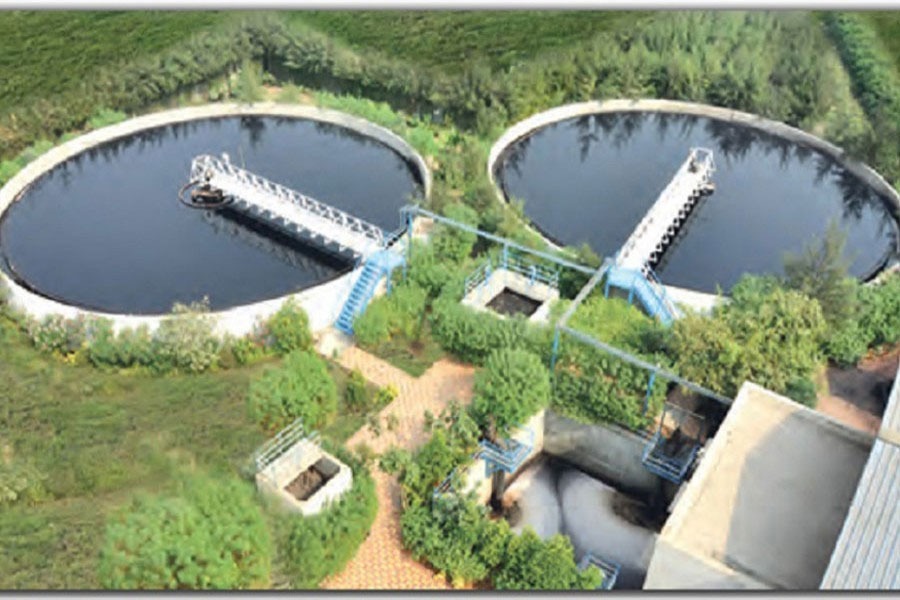
The imbroglio that the Savar Leather Industrial Park finds itself in is the result of ineptitude and concerns other than the overriding one to turn this facility into a world class leather hub. Begun as early as 2003, the relocation of many tanneries from Dhaka's Hazaribagh took place in 2017 and continued well beyond. The fracas over the industrial estates' central effluent treatment plant (CETP) and the government's false claim for readying the leather park were to blame for no mass shift by tanneries from Hazaribagh to the new location in Savar. So far, 140 of the 155 tanneries allocated plots there have started operating but the rest are yet to complete construction of their factories. Actually, tanners alone are not responsible for such prolonged shifts. It is the deposed government that is accountable for the imbroglio. The malfunctioning CETP is not only acting as a disincentive but has also stood as an impediment to obtaining Leather Working Group (LWG) certificates by deserving leather factories and getting access to high-end export markets. The country's image as a leather and leather goods producer has also seriously been compromised.

Now the implementation monitoring and evaluation division (IMED) under the ministry of planning (MOP) has assessed the weaknesses and lost opportunities of the leather industrial estate. Apart from the cost escalation and delayed construction of facilities, the number one crisis involves CETP's limited capacity and that too falling short of the standard treatment of effluent. The entire project thus fails to deliver the service it was meant to do. This failure turns out to be the main cause for hindering the prospect of Bangladesh's tannery industry. However, the fact that IMED took such a long time to investigate the tannery park's loopholes smacks either of its limitation or indifference to this potentially crucial foreign exchange earner, perhaps next to the readymade garments (RMG).

Allegedly, industrial parks or any other mega projects are undertaken mostly for personal gains by quarters involved with the process, not on patriotic consideration. Or, how can one justify the fiasco bedevilling the CETP at the Savar leather estate? The Chinese company that got the working order for the CETP should have been made to account for the useless facility. The environmental damage caused to the River Dhaleshwari and the estate's surrounding because of the failure on the part of the treatment plant is incalculable. Any government anywhere would have filed a lawsuit against the company for non-compliance.

So here is a case of mismanagement of a vital project, a lack of monitoring and supervision or misgovernance. This also highlights the underdevelopment of countries under the rule of authoritarian and oligarchic governments which do not have to be accountable to their people. A country's progress is thus pulled down by its backlogs. This country desperately needs to diversify its export basket. The leather could not only fill some of the vacuum but also earn foreign exchange 50-60 per cent more in high-end markets compared to the low-end markets. Quite a number of leather factories are producing world-class leather goods. Reportedly, seven to eight factories have earned the LWG certificates with just one in the Savar leather industrial park, which has its own CETP. If about 150 tanneries could get the LWG certificates, the leather industry here could grab a good share of the around $500 billion global leather goods market, projected to grow to one valued at $855 billion by 2032.​
 
Analyze

Analyze Post

Add your ideas here:
Highlight Cite Respond

Members Online

No members online now.

Latest Posts

Back
PKDefense - Recommended Toggle