Bangladesh Defense
Saif
Senior Member
- Jan 24, 2024
- 21,100
- 9,688
- Nation

- Residence
- Axis Group

Why Savar leather park cannot go global
The recent findings about the Leather Industrial Park in Savar by the Implementation Monitoring and Evaluation Division (IMED) have once again brought Bangladesh's struggle with industrial governance, environmental compliance and export competitiveness into sharp focus. What was once envisioned as
Why Savar leather park cannot go global
Wasi Ahmed
Published :
Nov 25, 2025 23:47
Updated :
Nov 25, 2025 23:47

The recent findings about the Leather Industrial Park in Savar by the Implementation Monitoring and Evaluation Division (IMED) have once again brought Bangladesh's struggle with industrial governance, environmental compliance and export competitiveness into sharp focus. What was once envisioned as a modern, environmentally responsible industrial cluster-capable of lifting Bangladesh's leather sector into the league of globally compliant exporters-has instead emerged as a textbook example of how systemic inefficiencies can derail even the most ambitious national projects.
The IMED's report, which lays bare an array of operational, structural, and environmental failures, underscores a deeper malaise: the absence of sustained oversight and institutional commitment in the country's major industrial undertakings. The project fell short in virtually every area that mattered-budget discipline, construction quality, timeline adherence, regulatory compliance, and environmental responsibility. The cumulative impact is not only staggering in monetary terms but reputationally debilitating for a sector that holds immense promise.
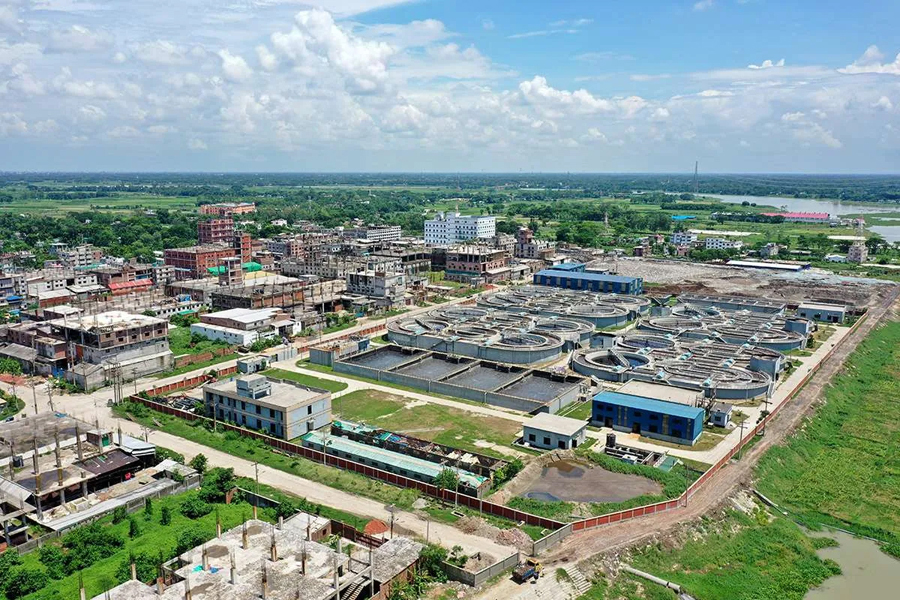
When the Leather Industrial Park was approved in the early 2000s, it symbolised a transformational shift. The relocation of tanneries from Hazaribagh-then one of the world's most polluted industrial zones-was intended to protect Dhaka's environment while building a globally competitive leather-processing hub in Savar. The project's original budget of Tk 1.76 billion and three-year timeline were modest considering the key activities to be undertaken -- a Central Effluent Treatment Plant (CETP), integrated industrial infrastructure, waste management facilities, and a clean environment that would finally allow Bangladeshi leather goods to enter premium Western markets.
Nearly two decades later, the project has ended up costing more than five times its initial budget and taking over six times longer than planned. This increase in cost and time over-run would have been tolerable, had the end result achieved its objectives. Instead, the CETP, the centre-piece of the entire project, remains noncompliant with both international benchmarks and even the government's own environmental standards. Effluent samples collected by both IMED and the Department of Environment reveal dangerously elevated levels of total suspended solids, chromium, chloride, and biochemical-oxygen demand. These indicators paint a troubling picture -- a facility that not only fails to treat industrial waste effectively but also continues to pose real threats to local rivers, ecology and human communities.
The consequences are far from environmental alone. Because the CETP does not meet international standards, leather factories in Savar are unable to procure the Leather Working Group (LWG) certification-now a global prerequisite for accessing high-value markets in the EU, USA, Australia, Russia, and beyond. The lack of certification forces exporters to divert their products to low-end markets such as China, where returns are 50-60 percent lower. Experts estimate that Bangladesh is losing over $500 million in potential export earnings each year due to this certification gap.
Beyond environmental compliance, the governance failures exposed in the project are equally alarming. Over the 18.5 years of implementation, the project saw 17 project directors, 12 of whom were part-time. Such a high turnover undermined continuity, accountability, and strategic direction. In industrial development projects, especially those involving complex infrastructure and environmental safeguards, consistent leadership is essential. Instead, the Savar leather park was left adrift, steered by revolving-door leadership with little ability to take long-term ownership of outcomes.
The IMED's inspection also uncovered glaring construction-related lapses. Cracks in roof slabs, exposed reinforcement in cable drains, inadequate waterproofing, and substandard casting point to serious oversights by contractors and weak monitoring by public agencies. For a project of such national importance, these structural flaws reflect not just poor workmanship but a broader negligence to public investment and industrial safety.
Adding to the operational challenges is the lack of essential supporting services within the leather estate. Absence of banks, insurance offices, and postal facilities may seem minor, but for tannery owners, these omissions translate into daily operational difficulties.
What emerges from the IMED review is a disturbing image of a project caught between ambition and apathy, between promises made and promises unfulfilled. The High Court's directives in 2017, which mandated proper operation of the CETP and broader environmental safeguards, remain largely unimplemented. Such institutional disregard not only weakens environmental governance but erodes public confidence in the government's ability to enforce the rule of law.
The leather sector in Bangladesh still holds significant potential. With the global market for sustainable and ethically produced leather expansion, Bangladesh could seize tremendous opportunities-if only the compliance bottleneck was resolved. The IMED has rightly warned that unless the Ministry of Industries immediately operationalises the CETP at international standard, enforces strict environmental regulations, and accelerates LWG certification for factories, Bangladesh will continue losing ground in premium leather markets.
The story of the Savar Leather Industrial Park is ultimately a cautionary tale: that infrastructure alone is not enough, that environmental responsibility cannot be an afterthought, and that governance-above all-matters. Without institutional reform, transparent oversight, and a culture of accountability, even the most well-funded industrial projects risk becoming monuments to missed opportunities.
Now that the IMED has come up with its findings on the appalling state of the CETP project, it remains to be seen whether it becomes merely another example of squandered potential, or is there any decisive action for the government to resuscitate it.
Wasi Ahmed
Published :
Nov 25, 2025 23:47
Updated :
Nov 25, 2025 23:47
The recent findings about the Leather Industrial Park in Savar by the Implementation Monitoring and Evaluation Division (IMED) have once again brought Bangladesh's struggle with industrial governance, environmental compliance and export competitiveness into sharp focus. What was once envisioned as a modern, environmentally responsible industrial cluster-capable of lifting Bangladesh's leather sector into the league of globally compliant exporters-has instead emerged as a textbook example of how systemic inefficiencies can derail even the most ambitious national projects.
The IMED's report, which lays bare an array of operational, structural, and environmental failures, underscores a deeper malaise: the absence of sustained oversight and institutional commitment in the country's major industrial undertakings. The project fell short in virtually every area that mattered-budget discipline, construction quality, timeline adherence, regulatory compliance, and environmental responsibility. The cumulative impact is not only staggering in monetary terms but reputationally debilitating for a sector that holds immense promise.
When the Leather Industrial Park was approved in the early 2000s, it symbolised a transformational shift. The relocation of tanneries from Hazaribagh-then one of the world's most polluted industrial zones-was intended to protect Dhaka's environment while building a globally competitive leather-processing hub in Savar. The project's original budget of Tk 1.76 billion and three-year timeline were modest considering the key activities to be undertaken -- a Central Effluent Treatment Plant (CETP), integrated industrial infrastructure, waste management facilities, and a clean environment that would finally allow Bangladeshi leather goods to enter premium Western markets.
Nearly two decades later, the project has ended up costing more than five times its initial budget and taking over six times longer than planned. This increase in cost and time over-run would have been tolerable, had the end result achieved its objectives. Instead, the CETP, the centre-piece of the entire project, remains noncompliant with both international benchmarks and even the government's own environmental standards. Effluent samples collected by both IMED and the Department of Environment reveal dangerously elevated levels of total suspended solids, chromium, chloride, and biochemical-oxygen demand. These indicators paint a troubling picture -- a facility that not only fails to treat industrial waste effectively but also continues to pose real threats to local rivers, ecology and human communities.
The consequences are far from environmental alone. Because the CETP does not meet international standards, leather factories in Savar are unable to procure the Leather Working Group (LWG) certification-now a global prerequisite for accessing high-value markets in the EU, USA, Australia, Russia, and beyond. The lack of certification forces exporters to divert their products to low-end markets such as China, where returns are 50-60 percent lower. Experts estimate that Bangladesh is losing over $500 million in potential export earnings each year due to this certification gap.
Beyond environmental compliance, the governance failures exposed in the project are equally alarming. Over the 18.5 years of implementation, the project saw 17 project directors, 12 of whom were part-time. Such a high turnover undermined continuity, accountability, and strategic direction. In industrial development projects, especially those involving complex infrastructure and environmental safeguards, consistent leadership is essential. Instead, the Savar leather park was left adrift, steered by revolving-door leadership with little ability to take long-term ownership of outcomes.
The IMED's inspection also uncovered glaring construction-related lapses. Cracks in roof slabs, exposed reinforcement in cable drains, inadequate waterproofing, and substandard casting point to serious oversights by contractors and weak monitoring by public agencies. For a project of such national importance, these structural flaws reflect not just poor workmanship but a broader negligence to public investment and industrial safety.
Adding to the operational challenges is the lack of essential supporting services within the leather estate. Absence of banks, insurance offices, and postal facilities may seem minor, but for tannery owners, these omissions translate into daily operational difficulties.
What emerges from the IMED review is a disturbing image of a project caught between ambition and apathy, between promises made and promises unfulfilled. The High Court's directives in 2017, which mandated proper operation of the CETP and broader environmental safeguards, remain largely unimplemented. Such institutional disregard not only weakens environmental governance but erodes public confidence in the government's ability to enforce the rule of law.
The leather sector in Bangladesh still holds significant potential. With the global market for sustainable and ethically produced leather expansion, Bangladesh could seize tremendous opportunities-if only the compliance bottleneck was resolved. The IMED has rightly warned that unless the Ministry of Industries immediately operationalises the CETP at international standard, enforces strict environmental regulations, and accelerates LWG certification for factories, Bangladesh will continue losing ground in premium leather markets.
The story of the Savar Leather Industrial Park is ultimately a cautionary tale: that infrastructure alone is not enough, that environmental responsibility cannot be an afterthought, and that governance-above all-matters. Without institutional reform, transparent oversight, and a culture of accountability, even the most well-funded industrial projects risk becoming monuments to missed opportunities.
Now that the IMED has come up with its findings on the appalling state of the CETP project, it remains to be seen whether it becomes merely another example of squandered potential, or is there any decisive action for the government to resuscitate it.