New Tweets

[🇧🇩] Forming Election Commission/Conducting Elections

G Bangladesh Defense
[🇧🇩] Forming Election Commission/Conducting Elections
297
7K
More threads by Saif


Doubts over the election have eased to a considerable extent

Badiul Alam Majumdar
Updated: 12 Dec 2025, 17: 16

1765587674586.webp

Badiul Alam MajumdarFile Photo

A considerable number of stakeholders play an important role in ensuring a free and credible election. The first and foremost of these is the Election Commission (EC). The EC is constitutionally an independent institution tasked with ensuring free and impartial elections. The Constitution clearly outlines its responsibilities. It has been vested with extensive powers.

The next key stakeholder is the government, that is, the administration and the law enforcement agencies. If the administration and law enforcement agencies do not carry out their duties impartially, it is not possible for an election to be free and fair.

If political parties engage in violence among themselves, uncertainty surrounding the election will re-emerge. At the same time, forces that are defeated or in hiding may attempt to derail the election

Then come the political parties and their candidates as important stakeholders. If political parties uphold good conduct, and if candidates do not become desperate to resort to any means, fair or foul, then a fair election is attainable.

In the current context, political parties have emerged as the most important stakeholders. This is because a non-partisan interim government is now in place. The present EC was appointed under this government, so it can reasonably be believed that they are not loyal to any particular party. But the disputes, violence, and various unwarranted situations political parties are creating over nominations are severely polluting the electoral environment and obstructing the path to a fair election.

The election schedule was announced yesterday. Now the candidates are to be finalised. At this stage, unhealthy competition may take an even more alarming turn. If contenders use every trick in the book to secure nominations, it will hinder the process of a fair election. So now the ball is in the court of the political parties.

Another important stakeholder in the election is civil society and the media. Civil society must play the role of a watchdog, raising awareness and mobilising the public. But unfortunately, a large segment of the country’s civil society has turned into “lapdogs” instead of watchdogs. The previous government weakened civil society. Bias is also visible in the media.

Among all stakeholders, political parties now hold the most crucial role. If they maintain good conduct, refrain from violence, and avoid unhealthy competition among themselves, the path to the election will be smoother.
Although there is no question regarding the neutrality of the Election Commission, there remain doubts as to whether it will act with courage.

It is also uncertain whether the Commission will be able to properly enforce the laws and regulations. Already, we have seen that although the RPO requires parties to form panels based on grassroots opinion for issuing nominations, no party has done so. This is a clear violation of the RPO, yet the Election Commission has taken no initiative on the matter.

Much of the public doubt surrounding the election has eased after the announcement of the schedule. However, challenges remain. If political parties engage in violence among themselves, uncertainty surrounding the election will re-emerge. At the same time, forces that are defeated or in hiding may attempt to derail the election. It seems unlikely that they will succeed in doing much, but if the unhealthy competition among political parties does not stop, those defeated forces will also find opportunity.

* Badiul Alam Majumdar is the former head of the electoral reform commission.​
 
Analyze

Analyze Post

Add your ideas here:
Highlight Cite Respond

A test Bangladesh cannot afford to fail
Election schedule marks a defining moment for our democratic future

1765588434783.webp

VISUAL: STAR

After the historic mass uprising of 2024, Bangladesh has now arrived at a crucial stage in its democratic transition. The announcement of the election schedule by Chief Election Commissioner AMM Nasir Uddin on Thursday marks a significant turning point, finally dispelling the uncertainties that had long clouded the electoral process. February 12, the scheduled date, will oversee a twin vote: one to elect public representatives to the next parliament and another to decide, through a referendum, on constitutional amendments that will have far-reaching implications for the country's governance and the future of our democracy.

It is reassuring that the interim government has pledged full support to ensure that both the election and the referendum are conducted in a festive, participatory, and fair manner. Political parties seeking the people's mandate have also welcomed the announcement. As campaigning gathers momentum, we hope all parties and candidates will adhere to the electoral code of conduct with utmost sincerity to maintain a congenial atmosphere. Respect for differing opinions, peaceful engagement, and democratic behaviour are essential for stabilising the country. Any language or behaviour that fuels tension or division must be avoided and discouraged.

Businesses and development partners, many of whom held back investment decisions while awaiting signs of stability, may now feel some relief. However, sustaining business confidence will require preserving peace and maintaining law and order during the campaign, on voting day, and in the aftermath.

With the poll schedule announced, the country now enters an exciting yet delicate phase. Ensuring peaceful campaigning, providing equal opportunities to all contesting parties and candidates, and guaranteeing that citizens can exercise their rights freely and without fear are imperative for credible elections. As the primary responsibility for this rests with the Election Commission, we must remind it that the nation cannot afford a repeat of the last three elections—held in 2014, 2018, and 2024—or of the chaotic and violent events that had preceded them.

It is worth recalling that this opportunity for a democratic transition has come at the cost of enormous sacrifices made by the youth. Expectations therefore rest heavily on the credibility of the process. The commission must take firm and decisive action against any irregularities, violations of election rules, or weaknesses in the organisation of the election. It must fulfil its constitutional responsibilities independently, impartially, and with full professionalism. Its actions, as well as that of the interim government and the political parties, will be crucial in restoring public confidence in elections. We need this process to succeed so that the nation can finally embark on a new trajectory towards effective democracy, good governance, and sustainable economic progress.​
 
Analyze

Analyze Post

Add your ideas here:
Highlight Cite Respond

There is no way to improve the situation without an election

ANM Muniruzzaman
Published: 13 Dec 2025, 16: 20

1765673968270.webp


In Bangladesh, there is invariably some disorder or criminal activities in the pre-election period. This time, however, the situation is more fragile than on previous occasions. The reason is that although the current government has had a year and a half since the post-revolution period, when law and order in the country had deteriorated to a very low point, it has failed to achieve any visibly significant improvement.

The kind of assessment or understanding of the situation that was required before and immediately after the announcement of the election schedule was lacking. As a result, adequate preparations were not made. A large number of weapons had earlier gone missing, but there has been no visible or vigorous effort to recover them. Consequently, we have seen major shortcomings in the measures that should have been taken to improve the law and order situation.

The election must be held at any cost. There is no way to improve the situation without an election. An election is the only path through which we can realize the dream of Bangladesh’s democratic transformation

We also know that the Awami League (now banned from political activities), particularly its top leader and other leaders who have fled to India, have been issuing various provocative statements from there. In many cases, they have directly incited disorder. The relevant forces should have had advance preparedness to deal with such developments. If such preparations had been in place, the situation would not have deteriorated, or at least should not have.

There remain serious shortcomings in the operational capacity of the forces tasked with controlling the situation. In particular, the police have not been fully restructured. The government has not been able to fully restore or rebuild this force to its previous level of effectiveness.

There are especially significant gaps in efforts to recover weapons. We have not seen any strong or decisive action in this regard. At the same time, the kind of intelligence activities or advance information that should be in place are lacking in many cases. Often, the forces are not receiving prior intelligence; their activities intensify only after incidents have occurred. Without advance information, it becomes difficult in many cases to maintain proper control over the situation.

However, we are moving toward an election. The election must be held at any cost. There is no way to improve the situation without an election. An election is the only path through which we can realize the dream of Bangladesh’s democratic transformation—a dream for which thousands of people have sacrificed their lives. Therefore, the election must take place.

To ensure that the election is conducted fairly and peacefully, there must be all-out efforts by the government and the Election Commission so that the situation does not deteriorate further.

The extent to which the law and order situation has worsened so far can be described as an initial stage. However, it is a warning sign. It would be prudent to bring it fully under control immediately—maintaining firm control over the overall situation and completely eliminating any signs of disorder.

We hope that those responsible for law and order, especially those in charge of the Ministry of Home Affairs and those leading the police and other law enforcement agencies, will play their proper roles. It must be ensured at all costs that the law and order situation does not deteriorate and that people can cast their votes peacefully. Law enforcement agencies should identify high-risk candidates and arrange special security for them from now on.

* Major General (retd.) A. N. M. Muniruzzaman is President, Bangladesh Institute of Peace and Security Studies​
 
Analyze

Analyze Post

Add your ideas here:
Highlight Cite Respond

The shifting sands of electoral scheduling in Bangladesh

1765674654832.webp


One of the hallmarks of a functional democracy is surely fair elections and a smooth handover of power. The first step, at least officially, of that election with the announcement of a timeline.

These announcements are not merely dates; they reflect the political conditions of the time — often turbulent, sometimes negotiated, and occasionally reshaped under pressure.

Election dates have been revised before due to political unrest, opposition demands, or national events, and schedules frequently reflected compromise between ruling authorities and opposition parties. Here is a look at Bangladesh's previous schedules, some of which were changed and some cancelled.

SECOND ELECTION, FIRST HICCUP

The schedule for the first election was announced on January 7, 1973, setting the polling date for March 7 that year.

The second election of 1979 saw its date changed once. Then chief election commissioner, Justice AKM Nurul Islam, in his report on the 1979 national polls, noted that the election ushered in a democratic form of government after a period of martial law.

On the night of November 30, 1978, president and chief martial law administrator, Ziaur Rahman addressed the nation declaring that he would hold parliamentary elections.

The following day, on December 1 1978, the election commission announced the schedule, fixing January 27 as polling day.

After the announcement, leaders of different parties — except BNP — declared that they would not participate unless their demands were met. These included immediate withdrawal of martial law, repeal of repressive laws, unconditional release of political prisoners, and the retirement of Ziaur Rahman from the army, said the report.

There were a series of meetings between political leaders and the president, and some demands were met. The EC modified the schedule to enable parties to reconsider participation.

The political parties, however, continued their agitation, demanding full acceptance of their conditions. They requested the EC to shift the polling date, and the EC rescheduled the election to February 12, 1979.

Still, the parties insisted that martial law be lifted. On December 26, 1978, Ziaur addressed the nation again, announcing that martial law would be lifted during the first session of the national assembly and that fundamental rights would be restored.

Following this announcement, some parties requested further revision of the programme. Accordingly, the commission fixed February 18, 1979 as the final polling date.

FROM BOYCOTT TO LAST‑MINUTE PARTICIPATION

According to the election report of the 1986 polls, the third election of Bangladesh was preceded by several announcements. In November 1983, Chief Martial Law Administrator Lieutenant General Hussain Muhammad Ershad declared that presidential polls would be held on May 24, 1984, and parliamentary polls on November 25, 1984.

Political parties refused to join. After discussions, Ershad postponed the presidential polls and announced that both presidential and parliamentary elections would be held on the same day, May 27, 1984.

As protests continued, the plan was dropped, with parties demanding parliamentary polls before presidential polls.

Against this backdrop, the EC announced on October 3, 1984 that parliamentary elections would be held on December 8. The schedule was cancelled on October 27 as parties continued their boycott.

A referendum was held in March 1985. Almost a year later, on March 2, 1986, Ershad announced that election would be held in the last week of April. On the same day, the EC declared April 26, 1986 as polling day.

Initially, only a faction of the Jatiya Samajtantrik Dal (JSD), led by ASM Abdur Rab, showed interest in running in the elections. The major opposition alliances — the 15-party and 7-party — continued their protests.

On March 21, 1986, just before the deadline to submit nomination papers, Ershad stated that some parties had shown interest in joining and that the government would take steps to ensure their participation. Later that evening around midnight, Sheikh Hasina, leader of the 15-party alliance, announced that it would take part in the polls. Jamaat-e-Islami also decided to join.

The election report of the 1991 election notes that although there is a constitutional provision to hold national elections every five years, the fourth parliamentary election were held in March 1988 after Ershad dissolved parliament on December 6, 1987.

All major opposition parties boycotted the polls, though one JSD faction (Rab) participated.

1991 POLLS ADVANCED

After the fall of Ershad, in the wake of a mass uprising, the interim government led by Justice Shahabuddin Ahmed announced on December 14, 1990 that the next polls would be held on March 2, 1991. Subsequently, on December 15, the Election Commission (EC) announced the schedule, fixing March 2 as polling day.

On December 19, the EC brought the date forward to February 27, as Shab-e-Qadr was expected to fall on March 2.

Shifting schedules and cancelled elections

According to reports published by The Daily Star, amid opposition demands for a caretaker government, the EC announced on December 3, 1995 that polls would be held on January 18, 1996.

Hours after the chief election commissioner met leaders of the ruling BNP and 59 other parties, the EC deferred the date to February 7. The three major opposition parties, however, did not attend the meeting.

On January 2, 1996, the EC extended the deadline for filing nomination papers to January 8, from the earlier January 3.

Only an hour before the new deadline, the EC revised the schedule again, fixing January 23 as the last date for submission and withdrawal of nominations, and February 15 as polling day.

This rescheduling followed verbal and written requests from major opposition parties, though the EC did not name them.

About a month after taking power, Khaleda Zia's government passed the 13th Amendment, incorporating the caretaker government system into the constitution. The EC announced June 12, 1996 as the date for the 7th national polls.

The commission later announced the schedule for the 8th parliamentary elections on August 19, 2001, fixing October 1 as polling day.

Amid political turmoil, the EC announced on November 27, 2006 that the next parliamentary election would be held on January 21, 2007. On December 7, the EC changed the date to January 23 to ensure participation of all parties. On December 20, the schedule was revised again, extending the nomination deadline to December 24. Amid further discussions, the EC changed the schedule for the fifth time on December 24, fixing January 22 as polling day and extending the nomination deadline to December 26.

The polling date was eventually cancelled on January 11, 2007 amid political violence and controversy.

LITTLE CHANGES IN 2008, 2014, 2018 POLLS

Following the assumption of power by the Fakhruddin Ahmed-led caretaker government, the military-backed administration cancelled all proceedings related to the earlier schedule.

The Election Commission (EC) announced on November 2, 2008 the schedule for the ninth parliamentary polls, fixing December 18 as polling day. The commission later changed the schedule for the third time on November 23, setting December 29 as the new date, paving the way for all parties to participate.

Amid political uncertainty, the EC announced on November 25, 2013 the schedule for the tenth parliamentary elections, fixing January 5, 2014 as polling day. The polls were boycotted by major opposition parties.

On November 8, 2018, the EC announced that the eleventh parliamentary elections would be held on December 23. On November 12, the date was revised to December 30, with changes to nomination deadlines, following demands from BNP and other opposition parties to defer the polls by one month.

Finally, on November 15, 2023, the EC announced the schedule for the twelfth national polls, fixing January 17, 2024 as polling day.​
 
Analyze

Analyze Post

Add your ideas here:
Highlight Cite Respond

Police to provide security protocols for political parties ahead of polls
BSS Dhaka
Published: 14 Dec 2025, 20: 12

1765760989620.webp


Ahead of the upcoming parliamentary elections and referendum, the police will provide security protocols for all political parties.

Under the protocol, clear guidelines will be given on how security will be ensured at residences and offices of political leaders and potential candidates in the upcoming elections and during their movement and public rallies and in cyberspace, said the Chief Adviser's Press Wing this afternoon.

In addition, initiatives have been taken to provide enhanced security to frontline leaders of the July Uprising and other key political figures.

Besides, the police have already identified the attacker and his associates in connection with the shooting of Inqilab Mancha spokesperson and possible independent candidate for the Dhaka-8 constituency Sharif Osman Hadi.

Intensive operations by law enforcement agencies are ongoing to arrest them.

The motorcycle used in the attack has already been seized, and fingerprint examinations of the suspects are being conducted.

To prevent the prime suspect from crossing the border under any circumstances, photographs and other relevant information of the suspects were given to all immigration checkpoints on Friday night.

Patrols by Border Guard Bangladesh (BGB) and RAB have also been intensified in border areas.

Although the suspects' locations have been traced several times within the country, it was not possible yet to arrest them for their frequent changes of locations.

Meanwhile, police have collected the travel history of the prime suspect. It showed that he had travelled to multiple countries over the past few years under the identity of an IT businessman.

Information indicated that his most recent trip was to Singapore on 21 July.
Several other individuals suspected of being involved in the attack have also been brought under surveillance.

Besides, the Ministry of Foreign Affairs on Sunday summoned the Indian High Commissioner and reiterated Bangladesh's request for the extradition of Sheikh Hasina and Asaduzzaman Khan Kamal, who have been convicted by the International Crimes Tribunal.

The High Commissioner has been informed that fugitive Sheikh Hasina, currently staying in India, has been continuously delivering provocative statements with the ill intention of disrupting peace, stability, and security in Bangladesh and foiling the upcoming polls, while she is also instructing her party supporters to carryout terrorist activities in the country.

The government of India has been requested to immediately stop these fascist and terrorist activities by her (Sheikh Hasina) and her associates who are absconding in India.

The Indian High Commissioner has also been urged to ensure India's cooperation with Bangladesh to prevent the perpetrators of the attempted killing of Sharif Osman Hadi from fleeing to India, and, if they managed to escape to India, the Indian authorities should immediately take steps to arrest them and extradite them to Bangladesh.​
 
Analyze

Analyze Post

Add your ideas here:
Highlight Cite Respond

Election schedule, shooting of Osman Hadi, and concerns over election

Sohrab Hassan
Updated: 13 Dec 2025, 19: 48

1765761374336.webp

Sharif Osman Hadi after being shot. Friday afternoon at Dhaka Medical College Hospital. Collected

Some of the government’s policymakers had strongly asserted that law and order would improve after the election schedule was announced. The fact that this did not happen is evident from Friday’s incident, in which Sharif Osman Hadi, spokesperson of Inqilab Moncho and independent candidate for Dhaka-8, was shot. His condition is critical. Politically, regardless of whose supporter he may be, it is unthinkable that he would fall victim to such a terrorist attack.

On Thursday night, chief election commissioner AMM Nasir Uddin announced the election schedule. Sharif Osman Hadi was shot on Friday afternoon. The 13th National Parliament elections and the referendum are scheduled to be held simultaneously on 12 February next year. The excitement and enthusiasm that were expected among the public after the schedule announcement were dampened by the shooting of Osman Hadi. There is now a tense and somber atmosphere everywhere.

Political parties across the spectrum have protested and issued statements condemning the incident. Demonstrations against the terrorist attack have taken place in Dhaka, Chittagong, and other parts of the country. Osman Hadi, who became a well-known figure through the July mass uprising, now stands at the brink of life and death. Everyone is praying for his recovery.


The chief election commissioner had, rising above all fear, called on the people of the country to exercise their voting rights without hesitation. At the same time, he emphasised the importance of creating a safe and festive environment.

But if a candidate is shot while campaigning like this, how can the election take place in a festive atmosphere? With the elections approaching, the government has decided to deploy members of the armed forces alongside law enforcement agencies. Although since taking office, members of the armed forces have already been involved in maintaining law and order.

This is not the only terrorist attack related to the elections. According to the human rights organization Human Rights Support Society (HRSS), at least 756 incidents of political conflict have occurred in the first ten months of this year. A total of 117 people have been killed, and at least 6,092 have been injured. Most of these violent incidents were caused by struggles for dominance, political revenge, violence around rallies, disputes over committee formation, extortion, and seizure of various properties.

Given the current trajectory of law and order, holding even a moderately acceptable election will be difficult, let alone conducting a historically exemplary and memorable one. There are now multiple conflicting streams within the administration. Even though, after the schedule announcement, the administration and law enforcement agencies fall under the election commission’s authority, they are not fully under its control.

On 27 November, a clash occurred in Ishwardi, Pabna, during election campaigning between leaders and activists of the BNP and Jamaat. Jamaat claims that BNP members attacked them during their campaign, while the BNP says that villagers came together and chased Jamaat members away.

Party sources report that in the Pabna-4 (Ishwardi-Atghoria) constituency, Habibur Rahman, advisor to the BNP chairperson and convener of the district BNP, is working in the field as the BNP-nominated candidate. The Jamaat candidate is Abu Taleb Mondal, Amir of the district Jamaat. In the Char Gorgori village of the upazila, tensions between supporters of the two sides had been ongoing for several days.

In the Chattogram-8 constituency (Boalkhali-Chandgaon), the person who fired shots during a BNP-nominated candidate’s public outreach event has not been identified even after a month. Police have initially confirmed that a trained shooter was involved in the incident, in which someone was killed at close range amidst a crowd of party workers, and the BNP candidate was injured.

The incident occurred on the evening of 5 November in the Khandakarpara area under Bayezid Bostami Police Station, during the BNP candidate’s election outreach. At the time, ‘militant’ Sarwar Hossain, also known as Babla, who was accompanying the BNP candidate, was killed. The BNP’s party candidate in the constituency, Ershad Ullah, convener of Chattogram BNP, along with five others, were injured by gunfire.

On 23 November, after a meeting of the law-and-order core committee at the home ministry the in Secretariat, Md Jahangir Alam Chowdhury said: “The law-and-order situation is gradually improving. When we took office, the law-and-order situation was deteriorating. Through our efforts over the past one and a half years, the situation has improved.”

Although the government has shown improvement in law and order over one and a half years, the public continues to suffer from insecurity. Not only is political violence increasing, but social crimes are also on the rise.

Given the current trajectory of law and order, holding even a moderately acceptable election will be difficult, let alone conducting a historically exemplary and memorable one. There are now multiple conflicting streams within the administration. Even though, after the schedule announcement, the administration and law enforcement agencies fall under the election commission’s authority, they are not fully under its control.

Deputy Commissioners (DCs), Superintendents of Police (SPs), and Upazila Nirbahi Officers (UNOs) tend to rely more on local political leadership than on the election commission. In such cases, they tend to favour the party that has the most influence or the highest likelihood of coming to power. A Jamaat leader, for example, was heavily criticised for saying, “The administration will act according to our word.” In reality, leaders of all parties harbour similar attitudes. This makes it difficult for administrative officials and law enforcement personnel to act impartially. Moreover, they are unable to take independent positions.

Meanwhile, breaking 16 months of silence, President Md Sahabuddin gave an interview to the international news agency Reuters. Speaking via WhatsApp from Bangabhaban, he said, “I want to step down. I am willing to leave.” However, the President also added that “I should continue to fulfill my duties until the election takes place. Constitutionally, as President, I am carrying out my responsibilities.”

The President has alleged that Professor Yunus has not met with him for nearly seven months. His public relations department has been taken over. In September, his photographs were removed from Bangladeshi embassies around the world.

Photographs of the President displayed in consulates, embassies, and high commission offices were also removed last September. In this context, he told Reuters, “Suddenly, overnight, they were all taken down. This sent the wrong message to the public, suggesting that perhaps the President was being removed. I felt deeply humiliated.” He said he had formally requested Professor Yunus in writing to restore the portraits, but no action was taken.

After the formation of the interim government, various organisations have protested demanding the resignation of President Md Sahabuddin. On one occasion, a programme to besiege Bangabhaban was also carried out. Student leaders who had led the July 24 uprising have never fully accepted President Md Sahabuddin. Multiple protests have been held demanding his resignation. Some organisations even conducted a Bangabhaban siege programme. Several political parties were also in favour of his removal. However, the BNP, citing constitutional continuity, has maintained that he should remain in office until a new president is appointed.

Once the next national parliamentary election is completed, the opportunity to elect a new president will arise. Among all the presidents Bangladesh has had, two were killed in military coups, and two were convicted in court. Some have been forced to leave office in disgrace due to falling out of favour with those in power. There was also controversy over whose name the constitutional order under the July Charter would be issued in. However, considering that the Chief Adviser’s orders could be challenged in court, that option was set aside. Ultimately, the orders were issued in the President’s name, just as after the Awami League government was ousted, the Supreme Court’s advice under Article 106 of the Constitution was sought in his name.

#Sohrab Hassan is a journalist and poet​
 
Analyze

Analyze Post

Add your ideas here:
Highlight Cite Respond

Where has law and order deteriorated? Only one or two murders occur occasionally, says CEC

Staff Correspondent Dhaka
Published: 15 Dec 2025, 18: 38

1765846914047.webp

Chief Election Commissioner AMM Nasir Uddin File Photo

Chief Election Commissioner (CEC) AMM Nasir Uddin has said the law and order situation has not deteriorated, and one or two incidents of murder occur occasionally.

The shooting of Sharif Osman Hadi is an isolated incident, and such incidents tend to happen when elections approach.

He made these remarks at an event in Gulshan, Dhaka Monday morning while replying to queries from journalists about whether the deterioration of law and order poses an obstacle to holding a fair election.

The event was organised to encourage young voters to participate in the upcoming election.

AMM Nasir Uddin said, “Where did the law and order situation deteriorate? Occasionally one or two murders happen. This incident involving Hadi—we consider these to be isolated incidents. Such incidents have always existed. Didn’t Ahsanullah Master get killed before? Didn’t former Finance Minister Kibria get killed? When elections come, such incidents tend to occur. These are not new in Bangladesh. Therefore, the law and order situation has improved rather than deteriorating.”

Regarding this, the ECE further said, “Compare it with 5 August 2024. At that time, police stations were non-functional, and police stations were not even moving. Compared to that period, the law and order situation has improved significantly. Now we can move around peacefully, travel on the roads, and sleep peacefully.”

Replying to a question about whether there are any concerns regarding the election, AMM Nasir Uddin said, “There is no concern about the election. We are fully prepared. Insha Allah, the election will be held, and it will be held with everyone, with the cooperation of all. No matter what kinds of worries arise regarding this, shake those worries out of your head. Let us all prepare together so that we can conduct a fair election.”

Stating that the Election Commission is committed to fulfilling its promise to the nation, the CEC said, “Just yesterday, we held a meeting with the top officials of the law enforcement agencies and issued the necessary instructions. Insha Allah, our forces are fully prepared. You can be assured that the election will be held on time, properly, and in a fair, beautiful, and competitive environment. The promise we made to the nation—the Election Commission is committed to fulfilling that promise. Together with everyone, we will present a beautiful election.”

AMM Nasir Uddin said, “I repeatedly say that this election is a historic election. Because for the first time in this election, we are bringing expatriate Bangladeshis under the voting system through postal ballots, which did not happen for 54 years, we are doing this time. This time, nearly one million officials and employees, including members of the law enforcement agencies who are involved in the electoral process, were never able to vote, but this time, we are arranging voting for them as well through postal ballots. Voting arrangements are being made for prisoners, for expatriates, and for government employees who are outside their own constituencies.”

The CEC further said, “Above all, a referendum will also have to be held at the same time. From all these aspects, this is undoubtedly historic. If all of you, especially the young generation, stand with our courageous step of venturing down this path, Insha Allah we will succeed. The Election Commission alone cannot succeed in delivering a free, fair, and credible election. We will do this together with everyone.”​
 
Analyze

Analyze Post

Add your ideas here:
Highlight Cite Respond

February election to lay strong foundation for democracy: Rizwana

UNB
Published :
Dec 16, 2025 14:33
Updated :
Dec 16, 2025 14:35

1765930520170.webp


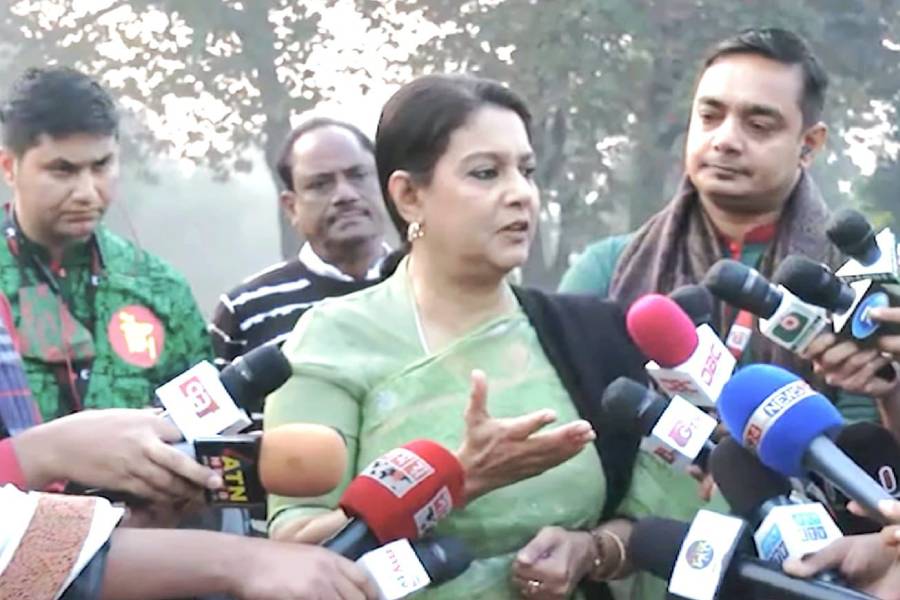
Environment adviser Syeda Rizwana Hasan on Tuesday said the election scheduled for February would lay a strong foundation for democracy by strengthening accountability to people.

“The election would help solidify democracy and bring the government under public scrutiny. The journey toward building a discrimination-free and exploitation-free society, a dream yet to be fully realised, could begin from here,” she while talking to reporters after paying tributes to the martyrs at the National Memorial in Savar.

Calling the upcoming polls more than just an election, Rizwana said it would also serve as a kind of referendum where people would be able to express their views on key reform issues.

Based on that mandate, she said, the democratic journey could begin anew in a refreshed form.

She termed attempts to suppress political opponents through violence, including assassination attempts, as unfortunate, condemnable and cowardly.

“There is no heroism in such acts. If one has strength, one must face the people,” she said adding that in a democratic state, the path to the people is well known.

The adviser said the culture of targeting opponents has no place in a New Bangladesh.

She said the government would be considered successful only if it could deliver on its commitments to free and fair elections, justice and reforms.

Rizwana Hasan said the government’s goal is to ensure a peaceful and fair election so that people can vote without fear.

She said certain forces are active in trying to disrupt the process, stressing the need to counter them alongside building social resistance.​
 
Analyze

Analyze Post

Add your ideas here:
Highlight Cite Respond

Latest Posts

Back
PKDefense - Recommended Toggle